Reaing for Tehran streets
-
Dates2013 - 2016
-
Author
Vitruvius, the Roman architect, first coined the word ‘street,’ and in his descriptions, divided
urban sites into three categories: Tragic, Comic, and Satiric. In Tehran’s ongoing scenes of
turmoil, street photography is more often seen as tragic rather than satiric.
My relationship with the city is a complex process of continual re-engagement; merely moving
through the streets, with and its ever-changing sights, scenes, and characters, blends and overlaps
the tragic and the comic, each ceaselessly fading away and being refreshed from moment to
moment. I find shelter within the walls of my house, taking refuge from the sad turmoil of
Tehran found at the heart of its streets. My imagination lies trapped, bound among the books
covering my apartment walls.
Each day, we - the urban travelers - leave our imaginations and dreams in our houses, and pass
through the streets along with fellow passengers, fast enough to forget, fast enough to block out
the scenery itself, only focusing on our points of departure and arrival. Streets are for overtaking,
not for contemplation. They’re uncommunicative, instead of telling a living, growing story.
What’s missing? Their capacity for holding, cradling our personal imaginations, and weaving
them, overlapping them, forming the collective memory of the city.
Thus, taking an awkward, sometimes painful stance against my escape, against my comfort and
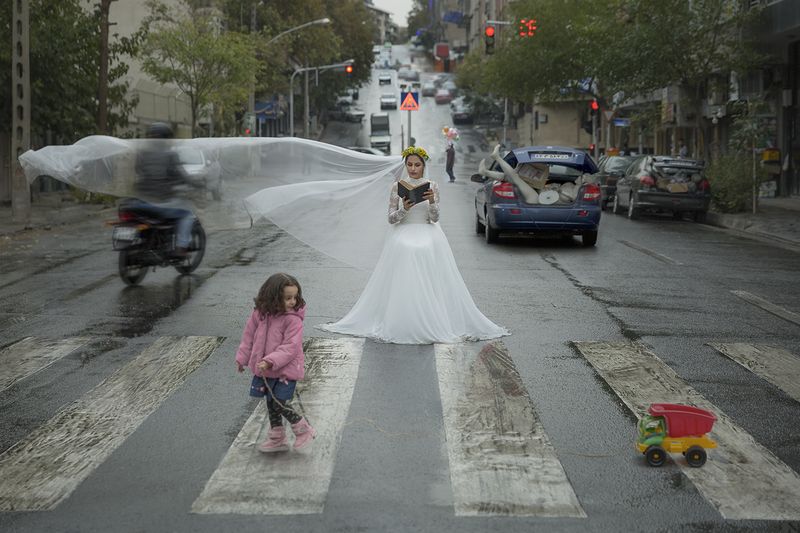
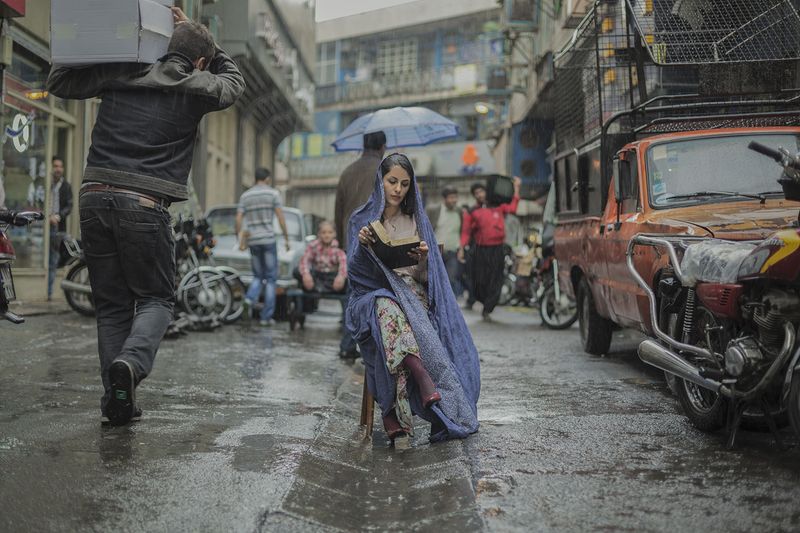
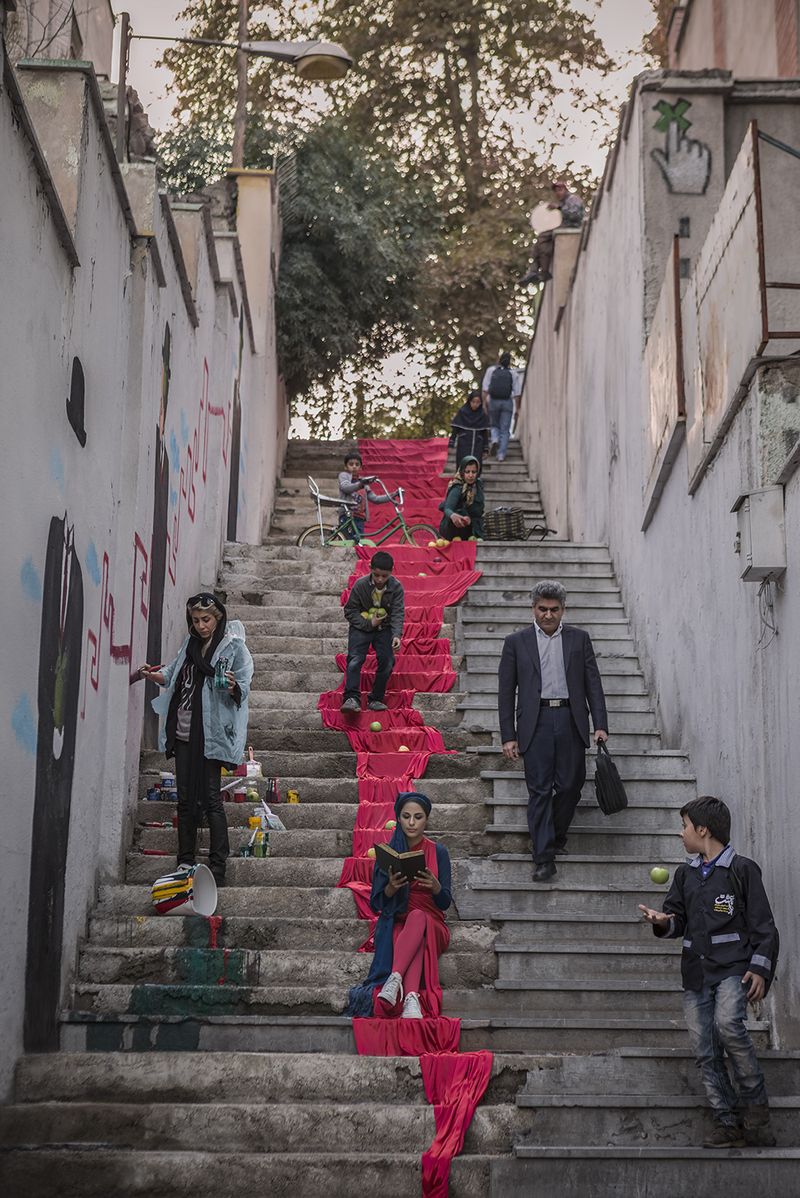
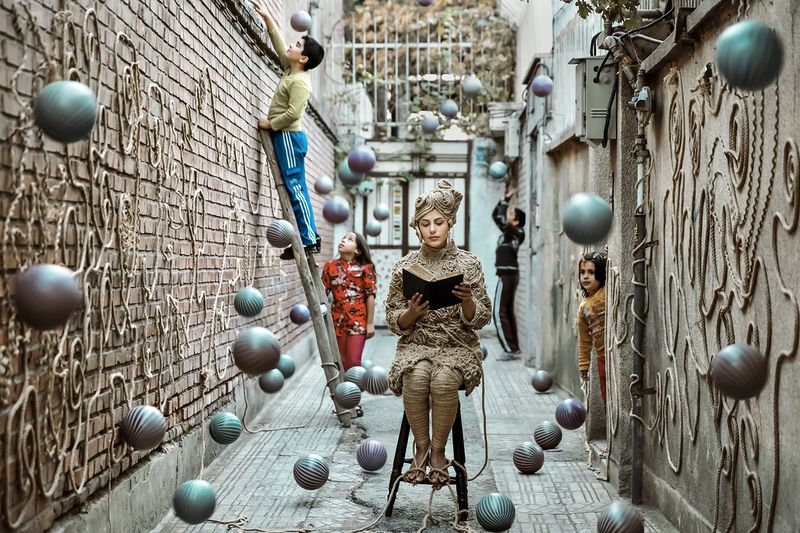
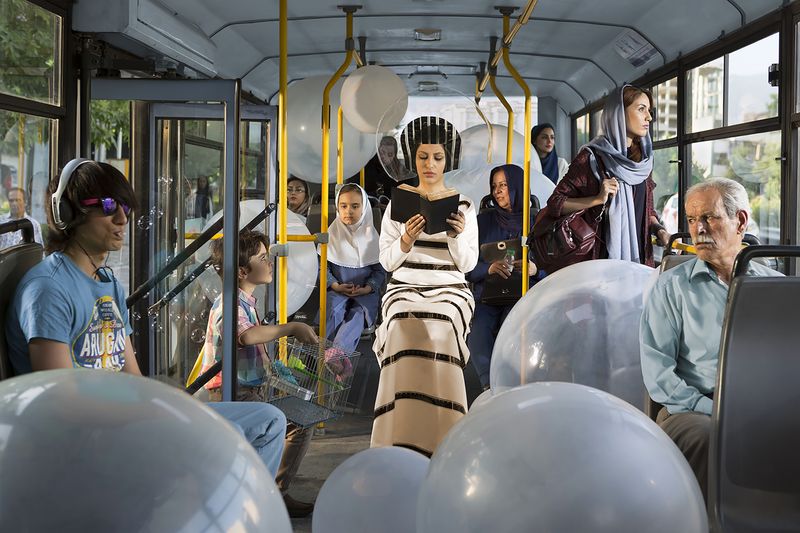
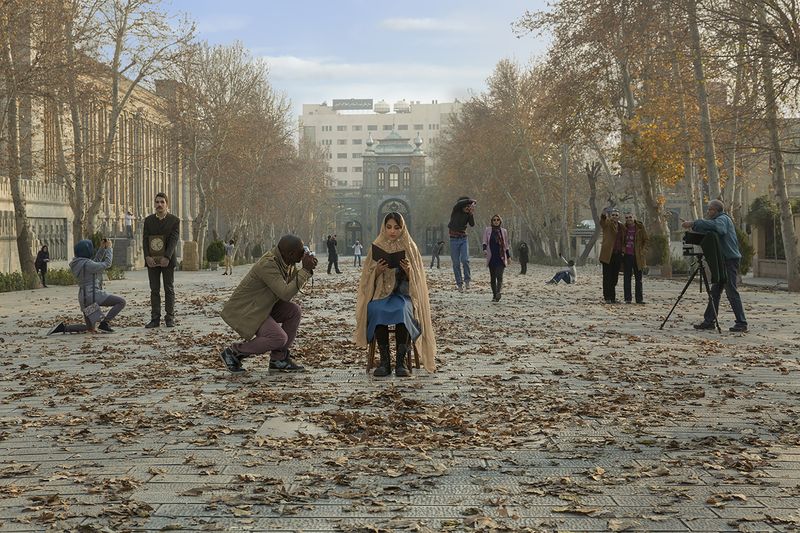
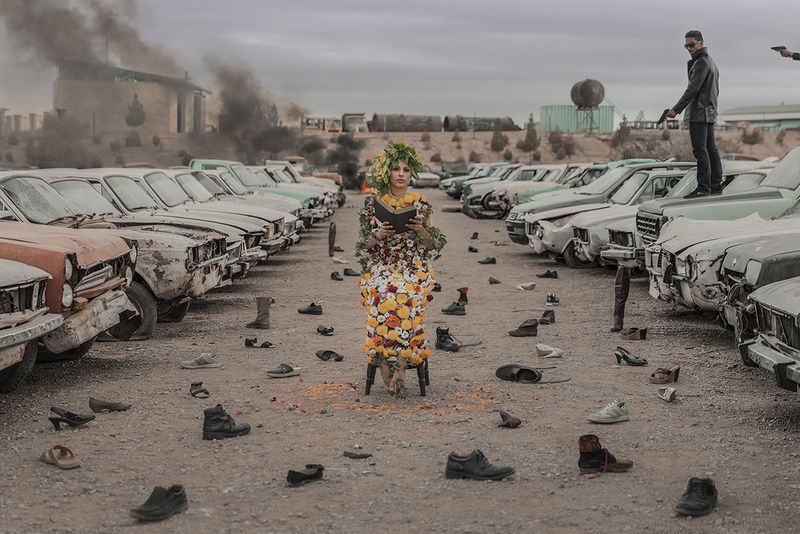
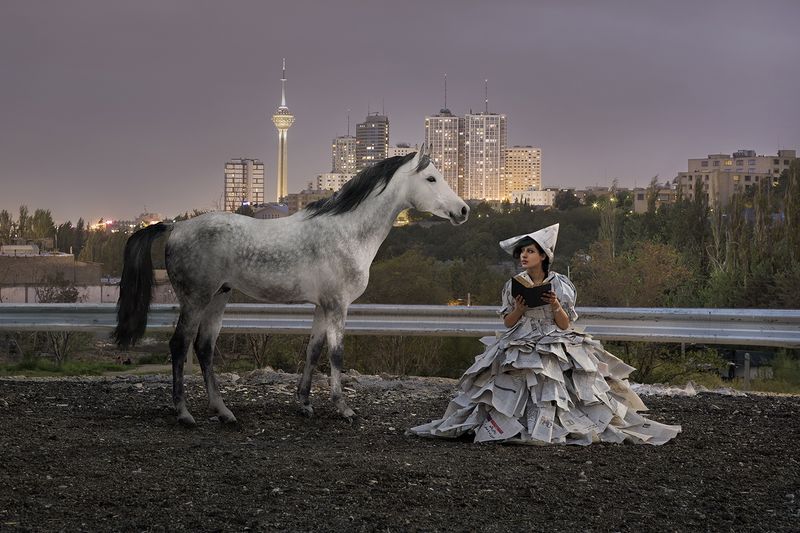
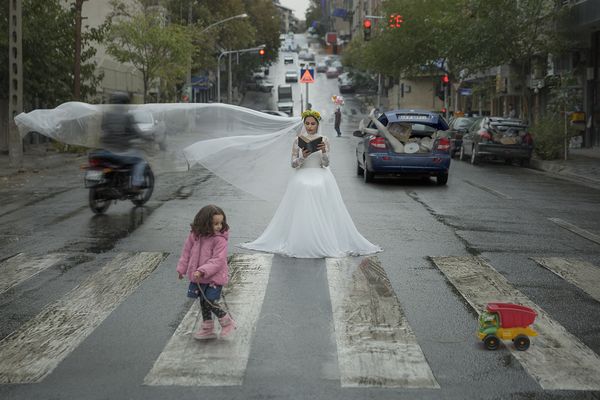
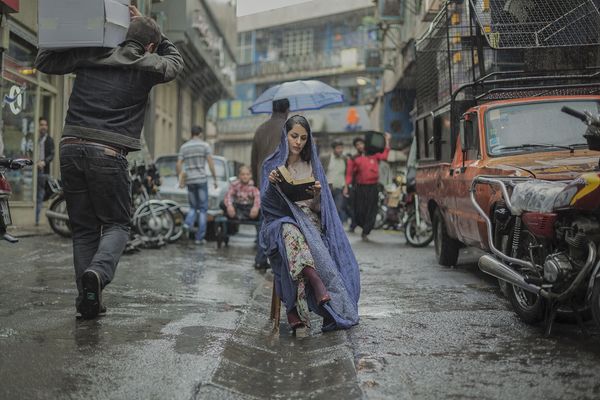
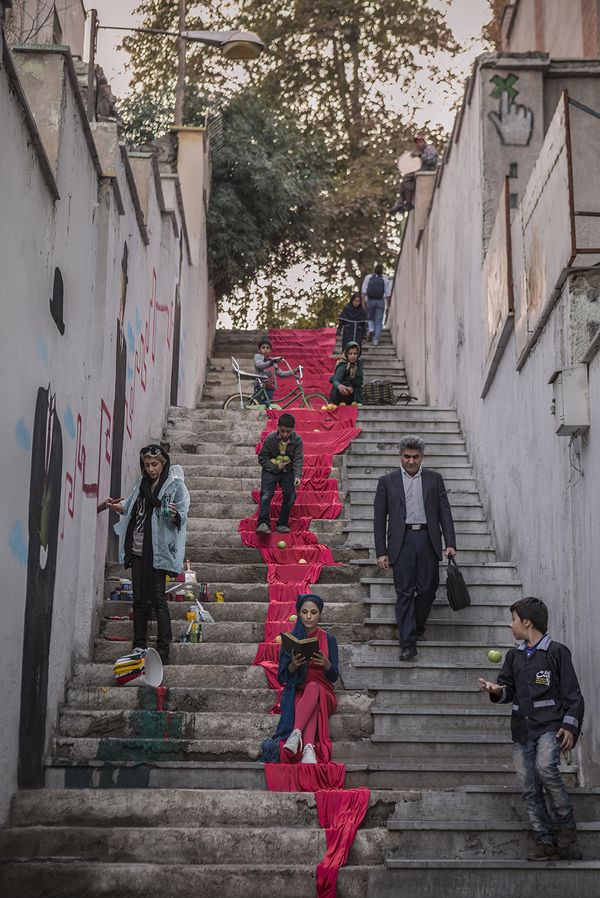
my walls of books, I step into the city. I make my personal moment public. I read. I let my
imagination free, to flow into, mingle with the city. I sit with a camera, and for a moment I
freeze myself in my imagination; perhaps imagination could make us stop for a moment, reach
out, and even begin to see our relations towards each other. The streets, for this moment at least,
offer the dim possibility of a space for contemplation and communication, one which allows us
to touch, maybe even add to, the spirit of the city.