Nowhere Land

  • Dates
    2022 - Ongoing
  • Author
  • Location United States

Nowhere Land is centered on the chronic Lyme community and examines how healthcare systems respond to contested illness, revealing how medical, social, and environmental forces converge to shape systemic and human vulnerability.

Nowhere Land is a research-based, interdisciplinary project that examines systemic failures in healthcare systems when confronted with large-scale medically contested health crises. Centered on the chronic Lyme disease community in the United States — while recognizing Lyme as a growing global public health concern, particularly in the context of climate change — the project uses this condition as a lens to investigate recurring institutional dynamics: denial in the face of uncertainty, the protection of medical authority, and the stigmatization of patient populations whose symptoms fall outside established diagnostic frameworks.

After my diagnosis of neurological Lyme disease in 2021 and limited relief through standard treatment, I turned to alternative therapies online, where I encountered a large community of chronic Lyme patients and began interviewing them, documenting their stories and shared struggles. Through photography, text, and archival materials, the work reveals decades of misdiagnosis, neglect, and stigma — highlighting the profound medical, emotional, social, and financial consequences faced by this overlooked community.

Lyme disease is a tick-borne illness transmitted through tick bites. Its symptoms range from fever, pain, and extreme fatigue to severe neurological and psychiatric disorders, cardiac problems, and autoimmune complications. Since its recognition in the 1970s in Lyme, Connecticut, Lyme disease has become one of the fastest-growing infectious diseases in the United States. Yet, nearly fifty years later, patients’ situations have not improved. Ongoing controversy and systemic denial leave many facing even harsher realities. Climate change has increased infection risk, making the crisis even more severe.

Rather than focusing solely on Lyme disease as a medical condition, the project asks a broader question: how does a healthcare system respond to what it cannot fully understand? A tiny organism — the tick — reveals a larger vulnerability in how we respond to health crises. In this sense, Nowhere Land is not only about Lyme disease. It shows how medical, social, and environmental forces converge, shaping a crisis that is both systemic and deeply human.
© Jiatong Lu - Image from the Nowhere Land photography project
i

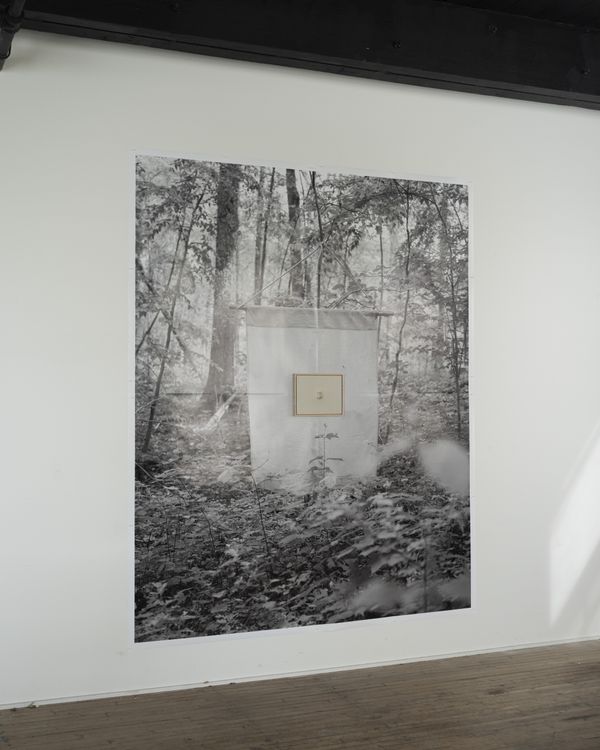
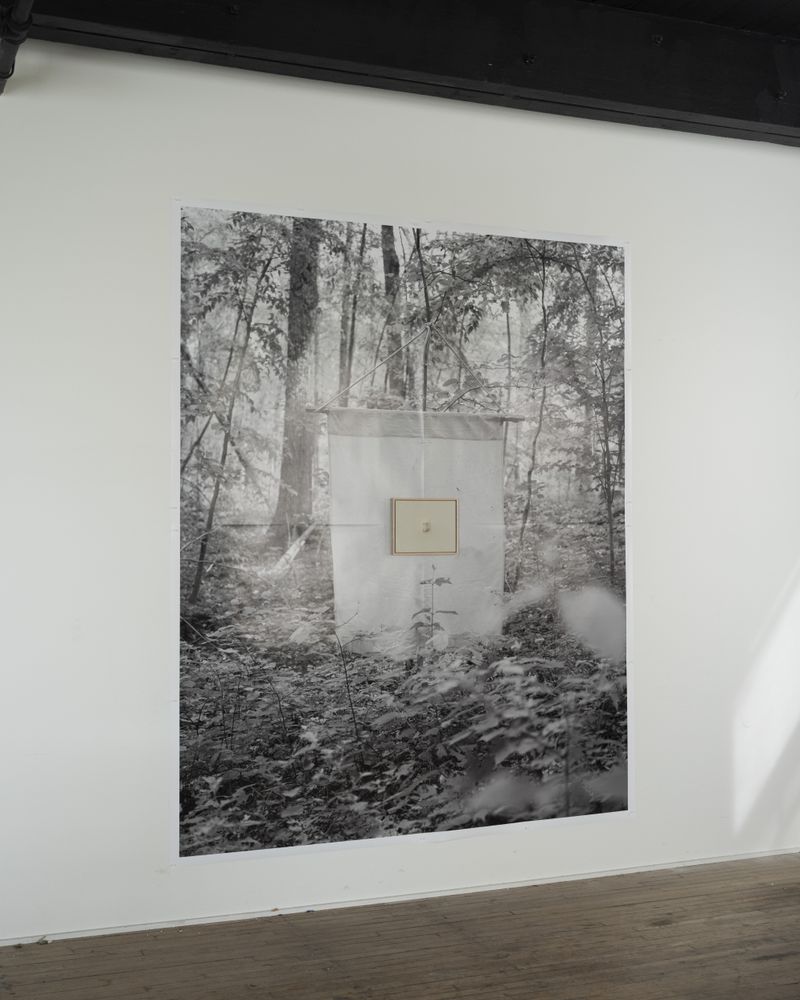
Ecological Field Study Inkjet print
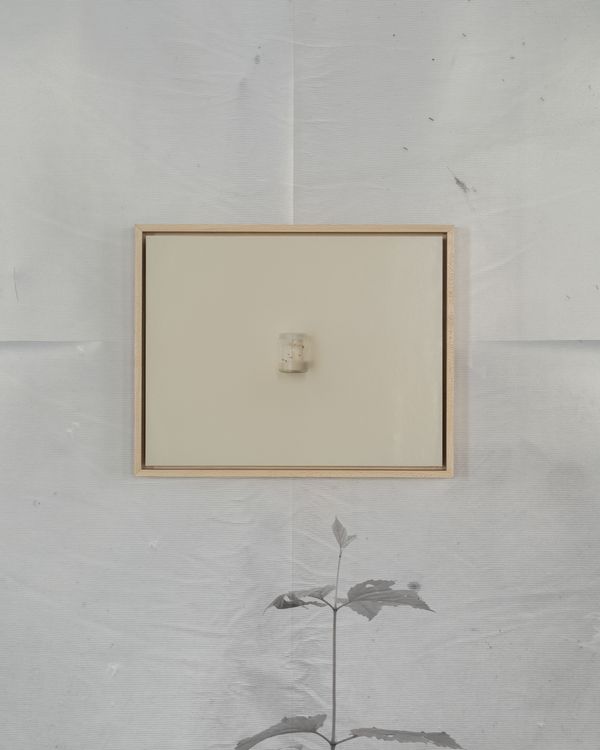
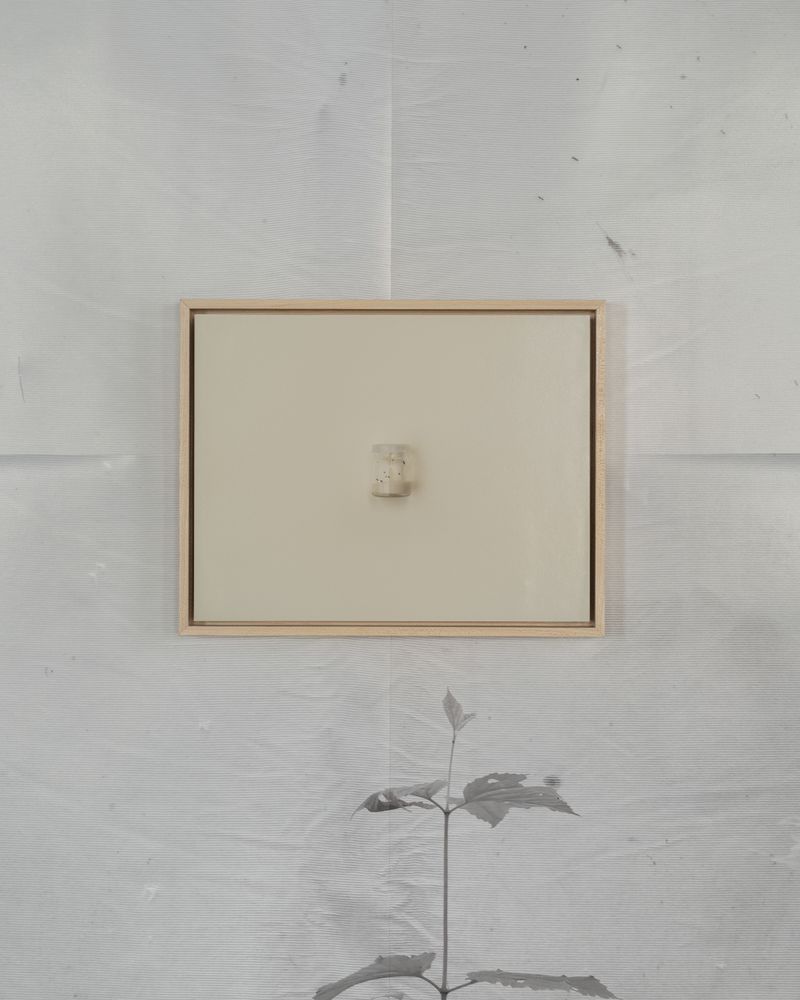
86 × 107.5 inThe installation consists of a life-size photograph of a white corduroy cloth hanging in the woods — a tool used by researchers to collect ticks for ecological studies. In front of it, a small framed photograph shows a glass jar containing over ten nymph-stage blacklegged ticks, collected that day and shown at actual scale.

© Jiatong Lu - Image from the Nowhere Land photography project
i

Black-Legged Ticks, Nymph StageInkjet print
8.5 × 11 inClimate change has extended tick seasons and expanded their range. Reported tick-borne illnesses in the United States more than doubled between 2004 and 2016. Today, Lyme disease is documented in all 50 states, and blacklegged ticks have spread into colder regions of Canada, Europe, and Asia.

© Jiatong Lu - Image from the Nowhere Land photography project
i

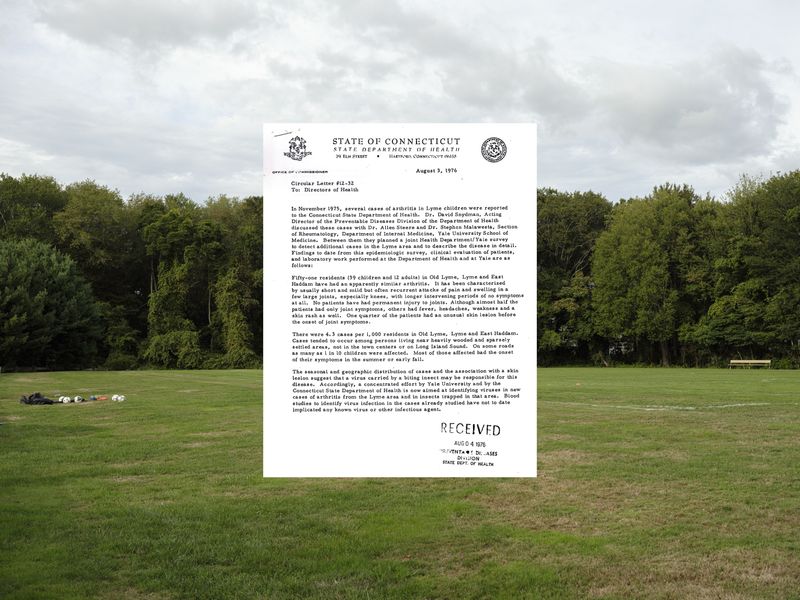
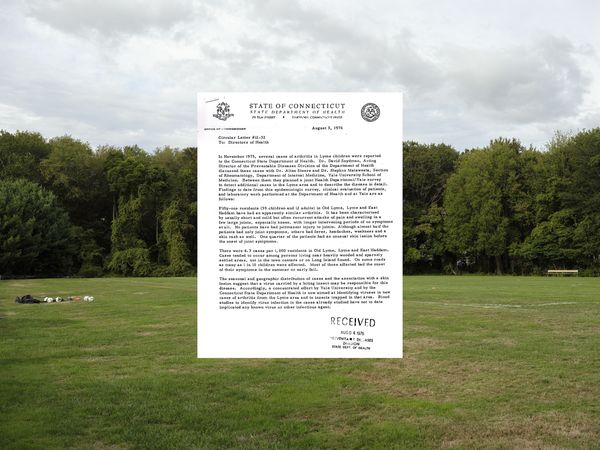
The First Report of Lyme Arthritis, Lyme, ConnecticutThis work overlays the first official report of “Lyme arthritis” onto a photograph of Lyme, Connecticut. Based on investigations led by Dr. Allen C. Steere and Dr. Stephen E. Malawista of Yale, the report framed the illness as mild. Dr. Steere’s skepticism toward its chronic nature shaped mainstream medical perspectives in the United States.

© Jiatong Lu - A letter written by Polly Murray to the New England Journal of Medicine in 1981.
i

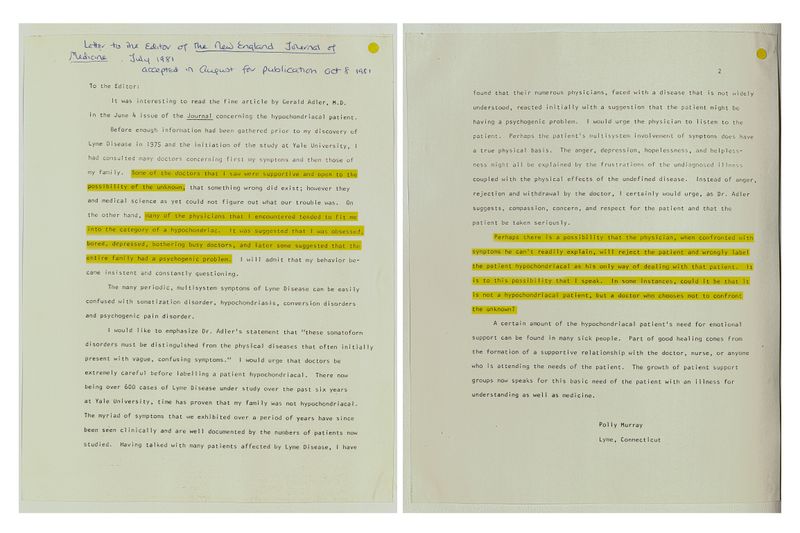
A letter written by Polly Murray to the New England Journal of Medicine in 1981.

© Jiatong Lu - Image from the Nowhere Land photography project
i

Shivani, Long Island, New YorkShivani has been largely bedridden for years due to chronic Lyme disease. She experiences severe neurological symptoms, including burning sensations, insomnia, migraines, and suicidal thoughts. Years of illness and treatment have left her physically weakened and underweight. Her father, a surgeon, does not accept her diagnosis, intensifying her isolation and trauma.

© Jiatong Lu - Image from the Nowhere Land photography project
i

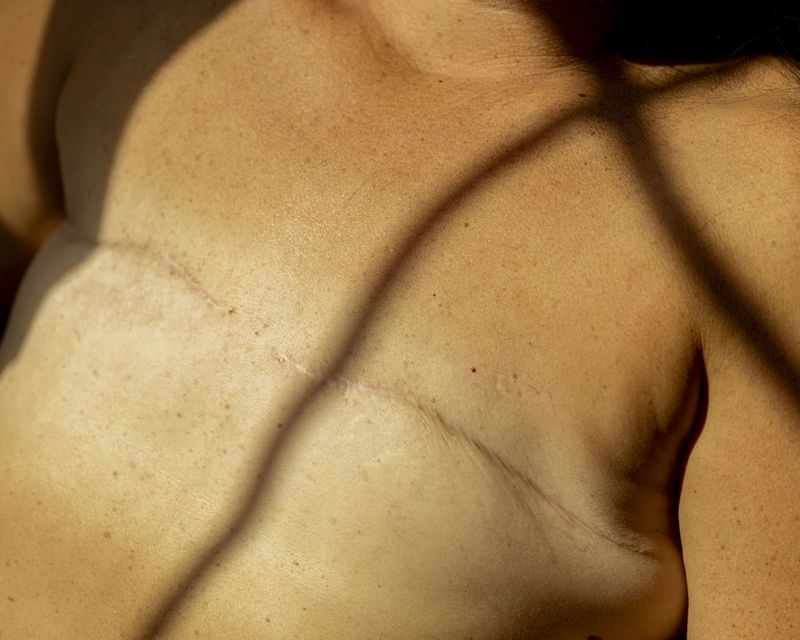
Kimberly, Longmont, ColoradoKimberly is a mother of three, all living with Lyme disease and co-infections. Years of illness have taken a severe toll on her family. Since 2022, she has undergone multiple major surgeries, including a mastectomy and hysterectomy. Complications from long-term infection led to jugular vein blockage and venous obstruction in her brain.

© Jiatong Lu - Image from the Nowhere Land photography project
i

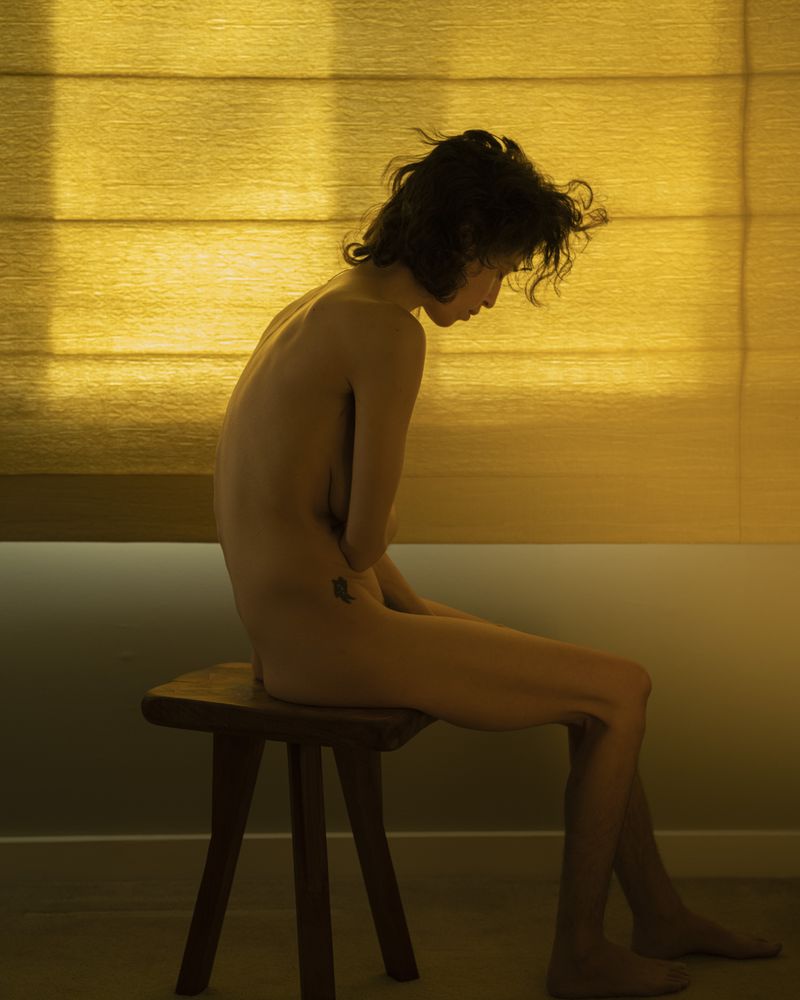
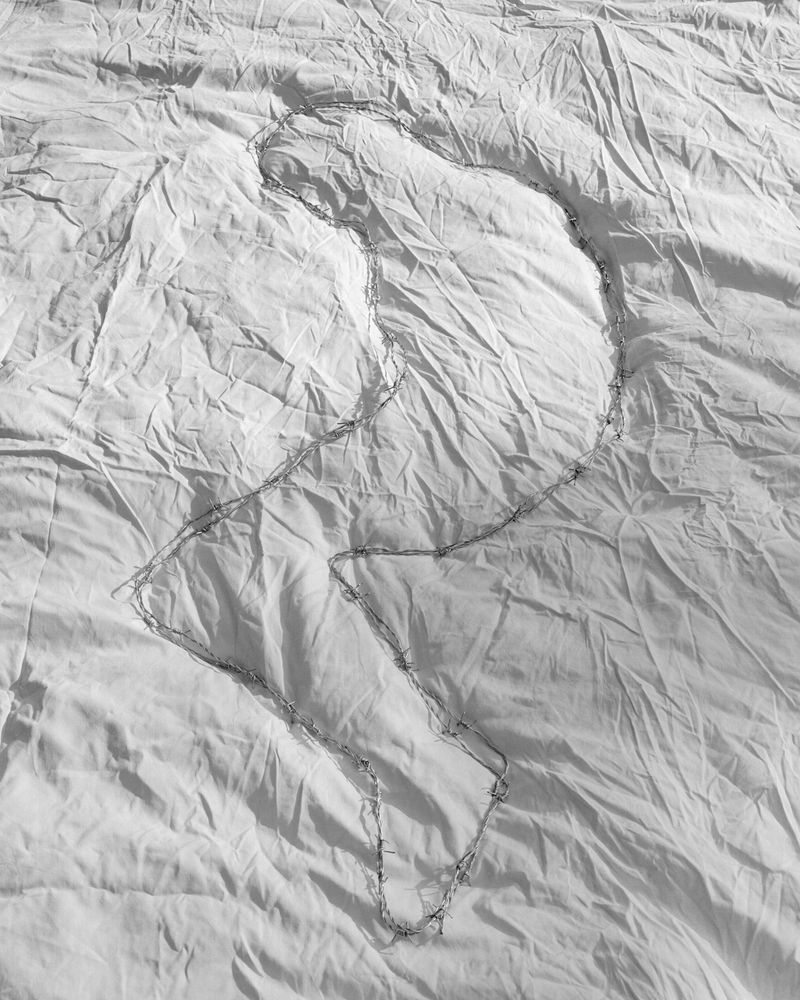
My Body with Lyme Disease, Poughkeepsie, New YorkA self-portrait made by shaping barbed wire around the outline of my body on a wrinkled bedsheet. The work visualizes the chronic pain—neurological, nerve, muscular, and joint—caused by Lyme disease, and the confinement of living within an aching body.

© Jiatong Lu - Image from the Nowhere Land photography project
i

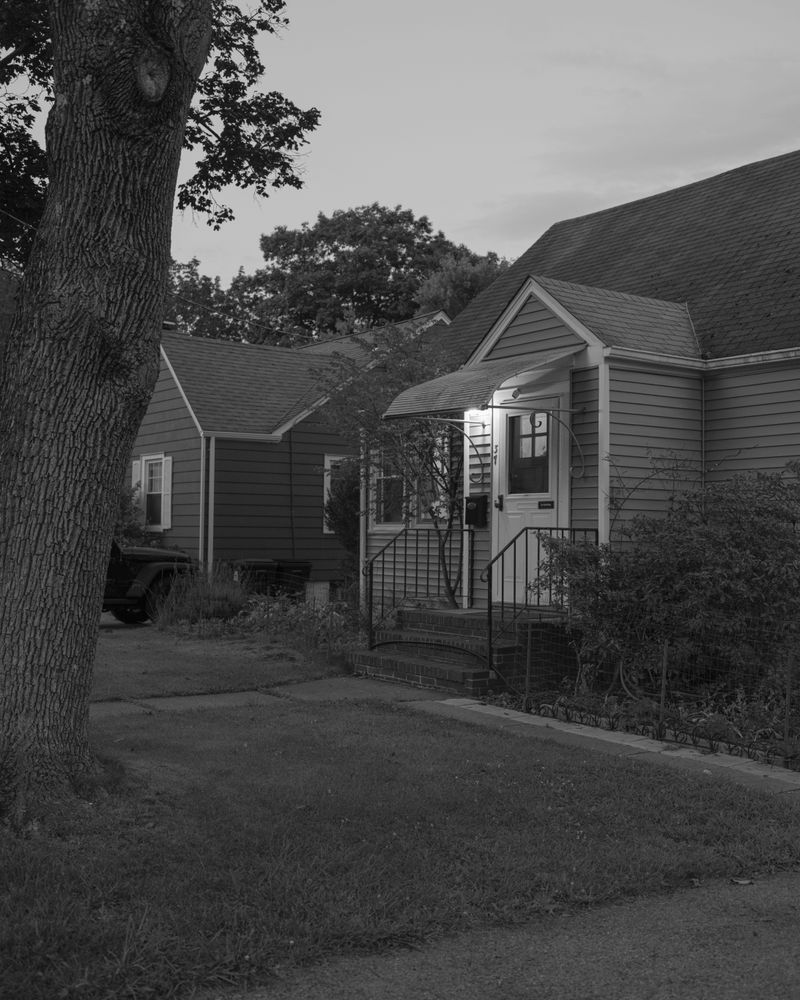
Site of Joseph’s Passing, Poughkeepsie, New YorkOn August 5, 2013, Joseph, 17, died from Lyme carditis three weeks after his first symptoms appeared. Living in a high-risk area, he was repeatedly misdiagnosed with a cold as his condition worsened. After his death, only one physician, Dr. Li, pursued an autopsy, which revealed Lyme bacteria in his heart.

© Jiatong Lu - Image from the Nowhere Land photography project
i

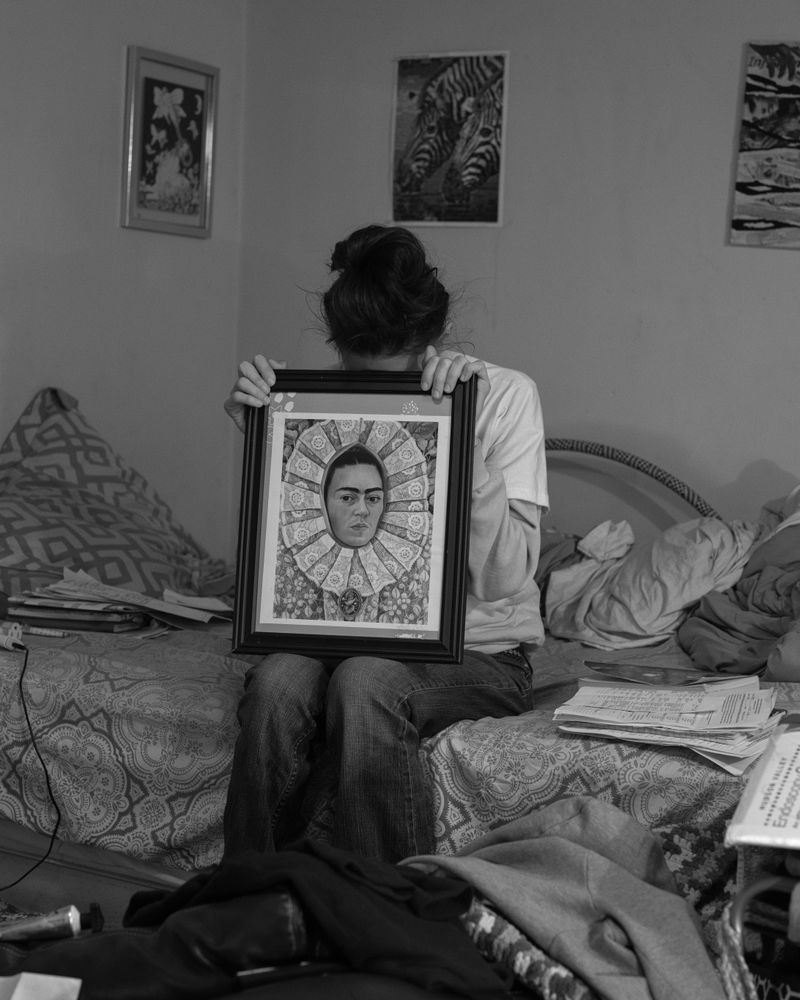
Crystal, Poughkeepsie, New YorkCrystal sits on her bed in her public housing apartment, holding a self-portrait of Frida Kahlo. On the bed lie stacks of medical documents and several rejection letters from the disability benefit agency, which does not recognize Lyme disease as a qualifying condition.

© Jiatong Lu - Image from the Nowhere Land photography project
i

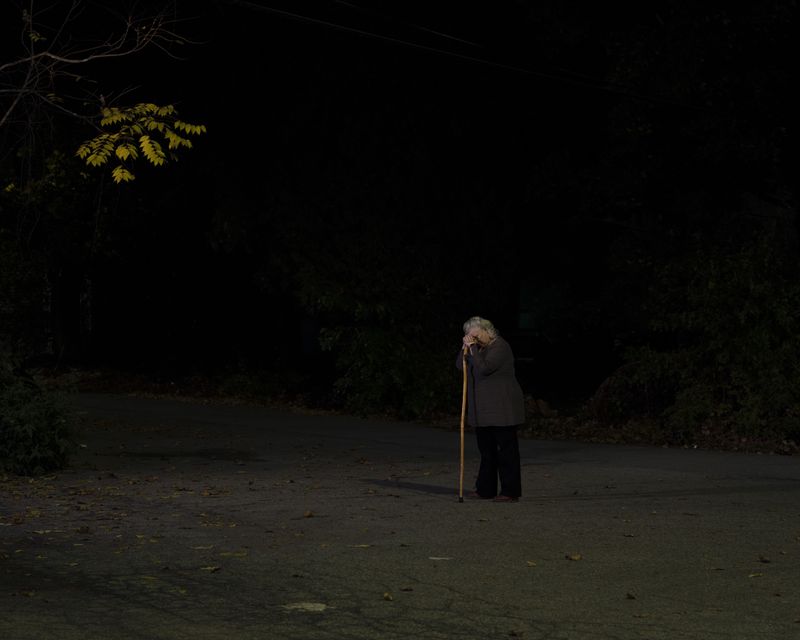
Barbara, Poughkeepsie, New YorkBarbara was an actress who gave up her career due to Lyme disease. Years of illness left her permanently disabled and unable to work. She now lives in a nursing home in poor conditions.

© Jiatong Lu - Image from the Nowhere Land photography project
i

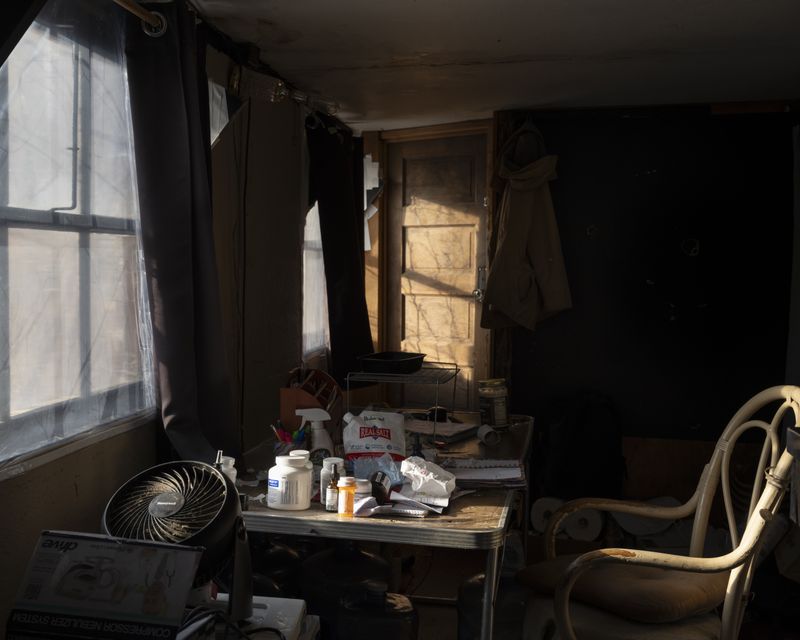
A Lyme Patient’s Home, New Paltz, New YorkThis barn in the Hudson Valley, New York, has no heat or running water. After becoming fully disabled and unable to work due to chronic Lyme disease, the patient experienced a period of homelessness before moving here.

© Jiatong Lu - Image from the Nowhere Land photography project
i

Buck, Poughkeepsie, New YorkBuck has struggled with severe Lyme disease since 2018, facing multiple misdiagnoses before receiving an accurate diagnosis in 2019. Despite consulting numerous specialists, he continues to experience debilitating neurological and physical symptoms. The progression of the illness ultimately forced him to leave his career as a filmmaker.

© Jiatong Lu - Image from the Nowhere Land photography project
i

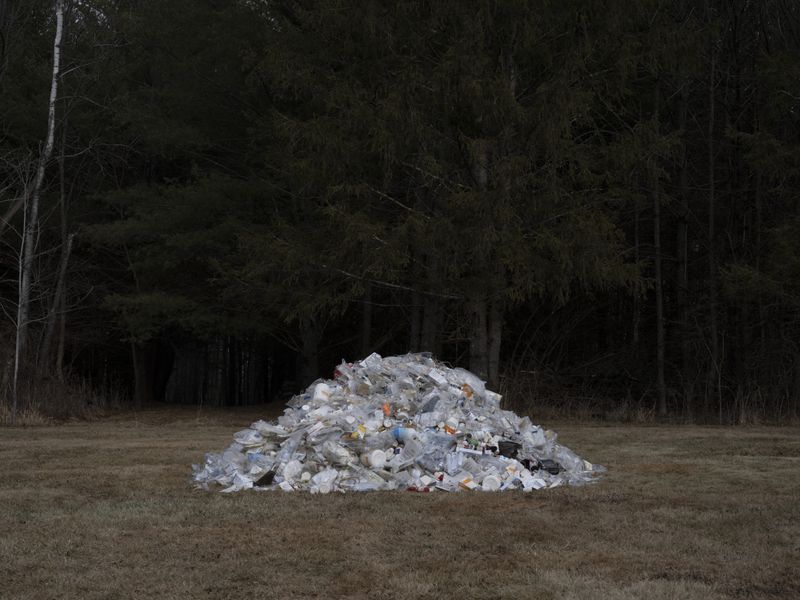
Julia’s Medications Over Ten Years, Acra, New YorkJulia’s empty medication boxes and IV infusion bags, kept by her family since 2015, in their vacation home in the Hudson Valley, New York—the place where she was bitten by a tick at age 10.