Non più, non ancora

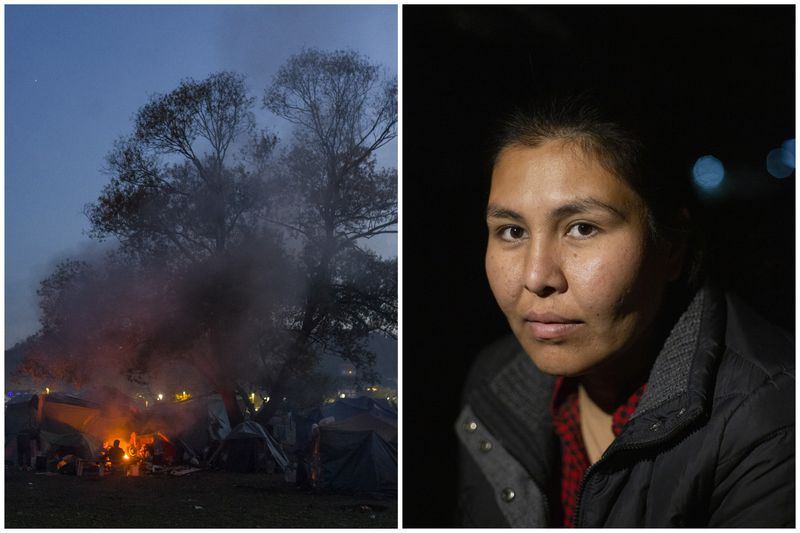
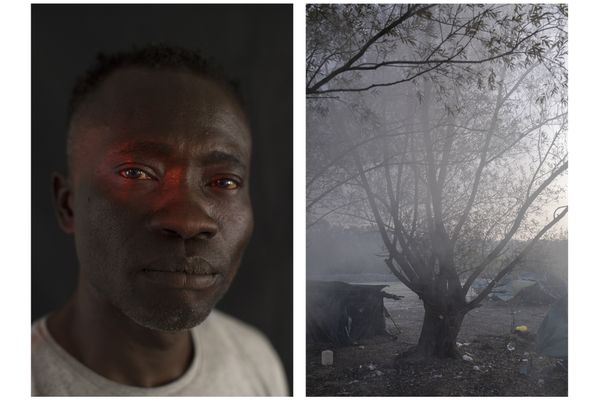
Non più, non ancora (Not anymore, not yet) is a project that explores the psychological condition of the refugees and migrants stuck in Bosnia, right in front of the gates of Fortress Europe. Refugees and migrants in Bosnia are hanging in a limbo between a past life that forced them into fleeing and a future life that is refused to them - reminding what the Algerian sociologist Abdelmalek Sayad defined as the double absence.

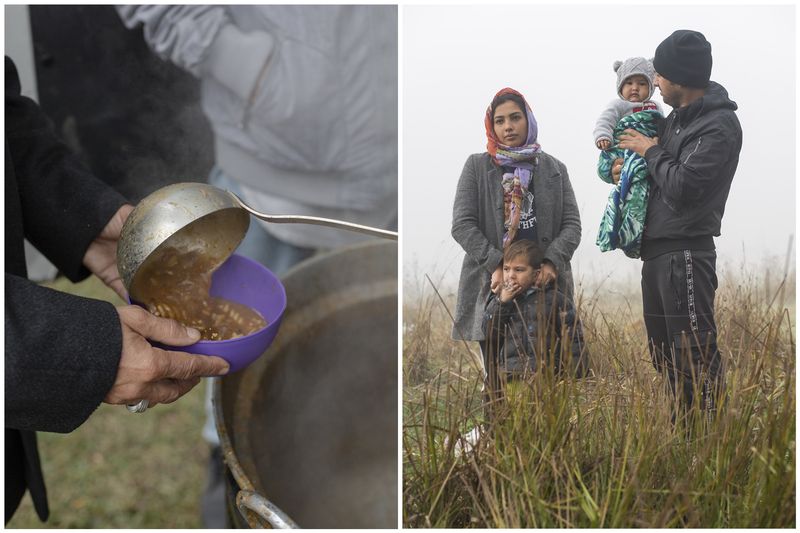
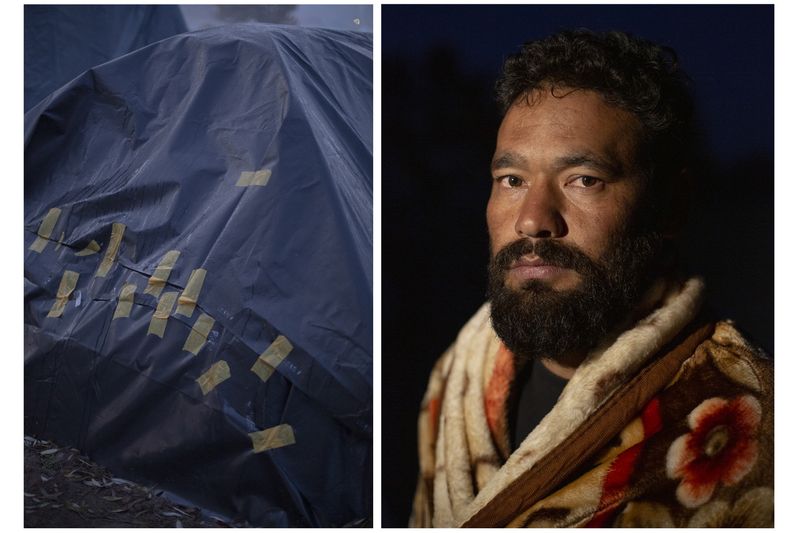
In the canton of Una Sana in the north of the country, thousands of people fleeing war, persecution and poverty, mainly from sub-Saharan Africa, the Middle East and Asia, live in makeshift settlements, in tents and shacks, in the woods and in abandoned buildings on the outskirts of cities, far from the hostile gaze of citizens and local institutions.

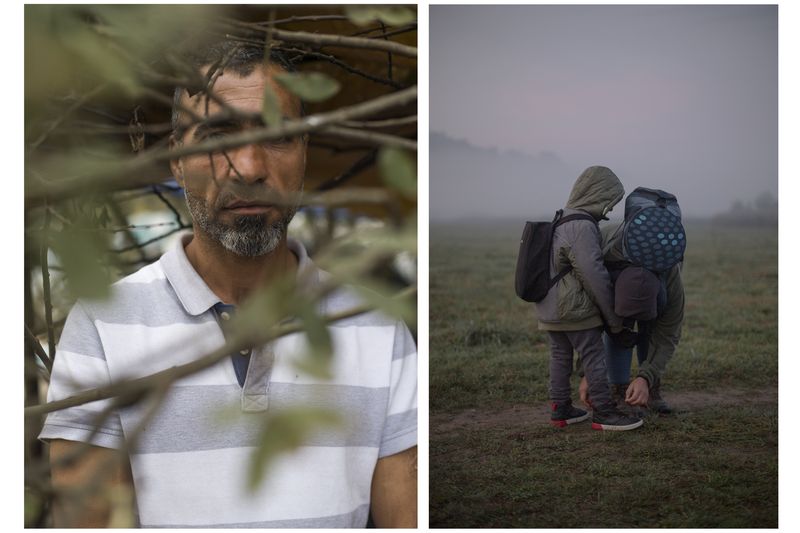
These are women and men, girls and boys, families with children as well as unaccompanied minors who struggle everyday with the psychological consequences of forced migration and border violence. Many of them report feelings of despair, humiliation, fear and hopelessness. For many, this comes as the end of a long path that is often characterised by discrimination, violence, trauma and difficulties to meet basic needs - both in their countries of origin and during the journey.

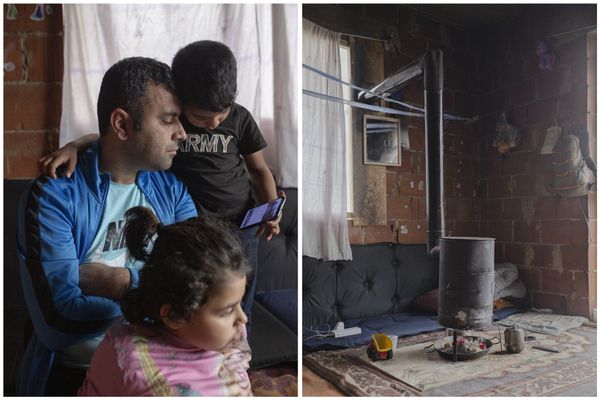
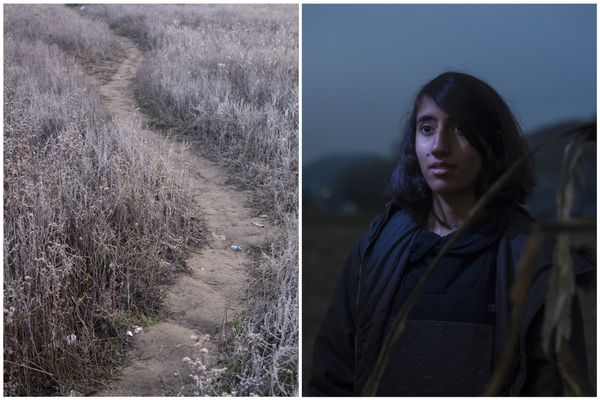
Through the projection of a dual perspective, the project aims at offering a space for reflection for the receiver. On one side, it is possible to meet the people and get to know their thoughts, their emotions and the stories that led them to flee. On the other side, the project sheds light on the fragments of present life, characterised by discrimination, isolation, vulnerabilities and suspended dreams.
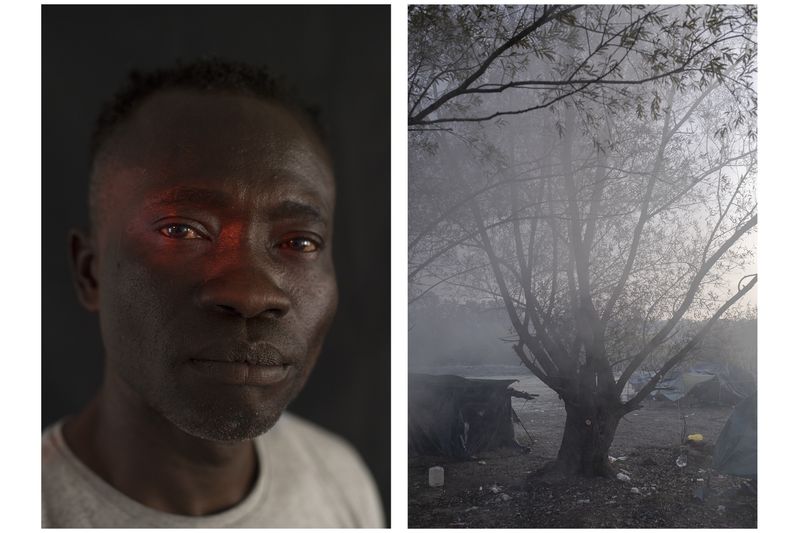
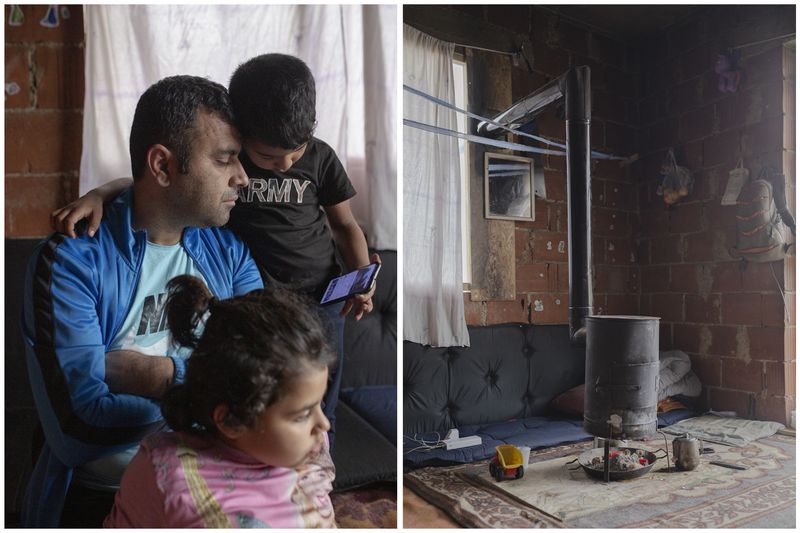
© Lapini/Muscella - Image from the Non più, non ancora photography project
i

Oliver, 40, Nigeria “I am a stateless man, suspended and fragmented. I need to become a whole person again”. Oliver is a political activist involved in the struggle for self-determination of the people of Biafra, a region in south-east Nigeria. He is a member of Ipob, Indigenous Peoples of Biafra and Massob, Movement for the Actalization of the Sovereignty of Biafra. Because of his political activism, Oliver has been harassed and threatened by the state police. In 2018 he spent almost a year in a prison from where he managed to escape during a raid staged by activists of the national #EndSars movement against police violence. “I went home to say goodbye to my mother, knowing that I would probably never see her again. I took my passport and went to Cotonou, Benin, from where I took a plane to Tehran”. It took Oliver two years to reach Bosnia from Iran, via Turkey, Bulgaria and Serbia. He now lives in a temporary shelter on the outskirts of Velika Kladusa. “I crossed the border to Croatia three times and was brought back. The second time was particularly traumatic and the methods of the Croatian border police reminded me of my treatment in prison in Nigeria: we were stopped at the Slovenian border by masked men wearing black balaclavas who fired gunshots in the air to stop us while we were escaping. They stripped us naked, searched us, mocked us and robbed us. A Nigerian boy who was with me was violently beaten because he did not want to throw his belongings into a hole dug in the ground where they asked us to throw all our belongings. Then they set fire to it and there, I lost my Bible. Then they drove us back to Bosnia in a van, voluntarily zigzagging and with the heating on full blast. There were sixteen of us in two square metres. I fainted and two guys carried me back to Bosnia in their arms, in the rain”. Oliver recounts cyclical and intrusive thoughts that keep him in a perpetual state of alertness and tells of a constant sense of agitation that does not allow him to sleep and relax. He feels humiliated and has a deep sense of shame mixed with anger. “In this centre where I live, I see injured people coming back from the border all the time. It is terrible and inhuman. I feel fragmented, broken and I need to become a whole person again”. Oliver’s dream is to reach any state where he can feel safe and continue his law studies. “My goal is to become a human rights activist and seek justice, not only for my people in Biafra, but for all those people without privilege, born on the wrong side of the world.”

© Lapini/Muscella - Image from the Non più, non ancora photography project
i

Mansoor Ahmadi, 40, Muzhada, 7, Moqadas, 6, Afghanistan “We, migrants, are merchandise, everyone makes money on us”. Mansoor is a civil engineer who worked for 12 years with American troops in Afghanistan. Because of his work, he received several death threats from the Taliban and says he made the decision to leave after learning of the killing of a former colleague. Mansoor and his family arrived in Greece, applied for asylum and spent 13 months in the Moria camp. Their application was rejected twice and they later moved to Athens, where, due to Covid restrictions, the only temporary accommodation they could find was in a public park near Victory Square. Mansoor and his family decide to leave Greece and arrive in Bosnia, via Macedonia and Serbia. They are currently living in an abandoned house with no electricity or running water on the outskirts of Velika Kladusa. “We are tired, homeless, stateless and without a future. We have tried to cross the border more than thirty times. Each time we were pushedback. The border police robbed us of our belongings and the smugglers made money on our skin. We are merchandise, everyone makes money on us”.

© Lapini/Muscella - Image from the Non più, non ancora photography project
i

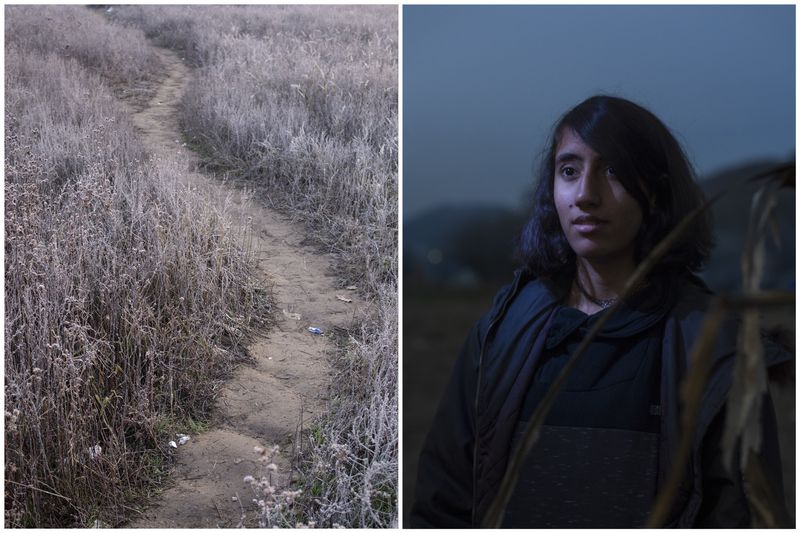
Nahid, 16,Afghanistan “In places where rights are trampled on, getting involved is necessary”. Nahid had to leave his homeland in 2016 because of threats to her family from people linked to the Taliban. From that period just before she left, she remembers worrying about the constant threatening calls her father received at night, worrying about leaving the house after an attack on her brother and the decision she made with her mother to stop going to school and continue studying alone in her room when she was only 11. After a journey through Iran and Turkey, in 2017 Nahid landed on the island of Samos with her family. Once there, her parents applied for asylum. She lived there for three years and began to learn English and take care of the schooling of the other children in the camp. For Nahid, dedicating herself to others became a duty and, as she grew up, she also became interested in the rights of migrants in her own situation. She became involved in politics and participated in the organisation of protests to demand rights. After their asylum application was rejected, they arrived in Bosnia where they have been living for six months waiting to cross the border. “In places where rights are trampled on and there is no hope, it is necessary to get involved. I don’t want my parents to think that living in this way is a failure for them, so I always bring positive energy and think about good things so that I can get through the days more easily. I have lots of dreams for the future: I would like to become a psychologist and go back to these places to collect testimonies and help people. I would like to write a book about my experiences during these last few absurd and difficult years and how, despite everything, I have never lost hope.

© Lapini/Muscella - Image from the Non più, non ancora photography project
i

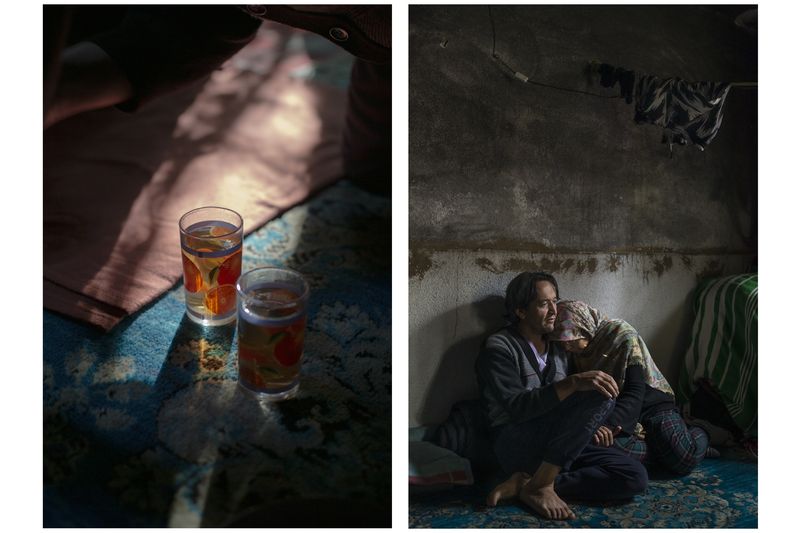
Ali Alavi, 35, Zahra, 25, Afghanistan “Stress and anxiety put a constant strain on our relationship”. Ali and Zahra have been in Bosnia for a year, living in an abandoned house on the outskirts of Velika Kladusa, a few kilometres from the Croatian border. Ali was a shepherd in a rural area not far from Kabul and Zahra was a tailor. They met at the wedding of a mutual friend. “Unlike many marriages arranged by their families, we chose each other,” says Ali. “We were happy but had to run away because of increasing discrimination against the Hazaras by the Taliban. We felt we had no future so we chose to leave for Iran where I worked as a mason for a year but we were both undocumented and it was very difficult”. Ali and Zahra lost count of the number of times they were pushed back by the Croatian police. They tell of how this precarious situation is putting a strain on their relationship but that despite the stress and anxiety about their future, they dream of reaching Germany and finally starting their lives together’.

© Lapini/Muscella - Image from the Non più, non ancora photography project
i

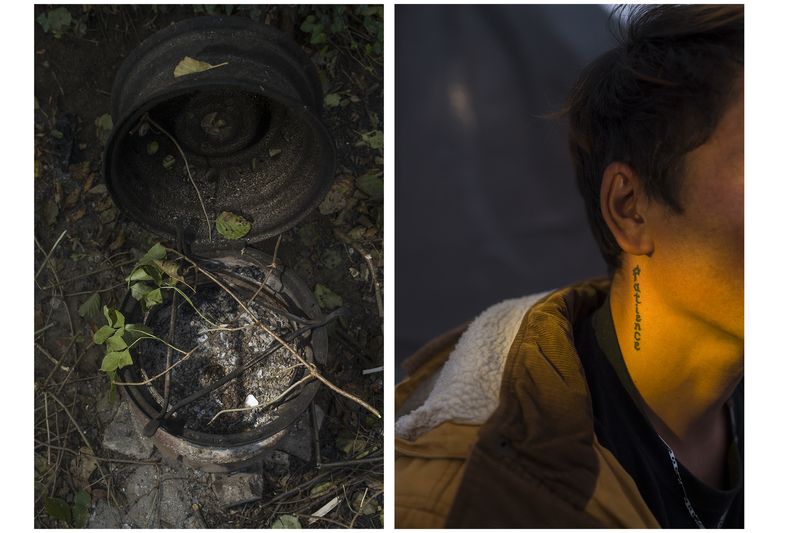
Esmat, 21, Afghanistan “I want to come to Europe and become a person unlike my father”. Esmat’s parents separated when he was only two years old. His mother married another man and his father placed him in the care of his uncle as he was unable to take care of his son due to a crack addiction. Esmat spent six years with his uncle and, following his death, returned to his father. Later, when he was only 11 years old, he was sold by his father to a man who forced him to work on the farm he owned. The boy decided to run away and, after a short period in Iran, arrived in Turkey where he found work in a textile factory on the outskirts of Istanbul. “I was living on the margins of society, alone, and with the little money I collected I embarked for Lesbos Island”. After spending two years in the Moria camp and having his asylum application rejected, Esmat decided to continue his journey and arrived in Bosnia where he was forced to stay due to the continuous pushbacks from the Croatian border police. “I feel tired, ashamed, worthless and alone. All my life I’ve been looking for a place where I can be peaceful and calm. At some moments I feel agitated and cannot sleep. At other times I feel like I can’t feel anything. But I must be patient . My greatest ambition is to reach any European country and become a person unlike my father”.

© Lapini/Muscella - Image from the Non più, non ancora photography project
i

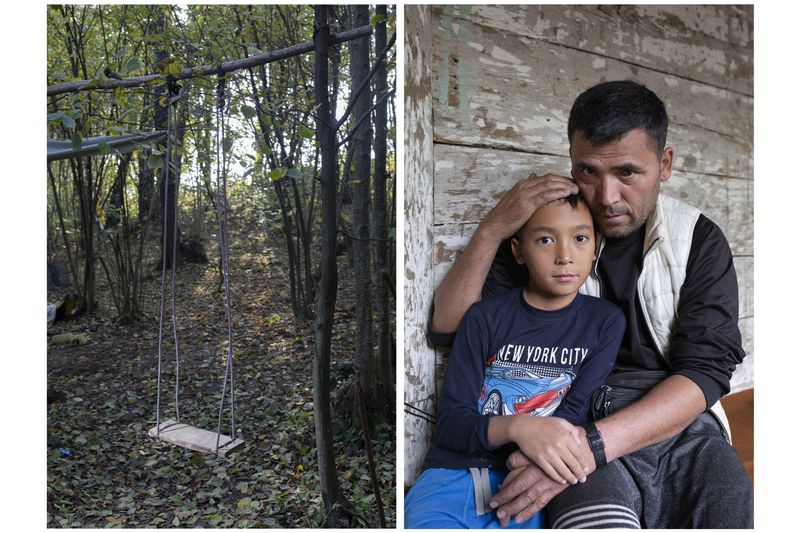
Habib Allah Daoulati, 33, Ali Akbar, 9, Afghanistan “I’m afraid that I won’t be able to protect my children from this difficult time”. Habib was working as a trader in the city of Bamiyan, Kabul province, when he returned home after work and witnessed his parents being killed by the Taliban. Habib recounts how the experience profoundly affected him: “At that very moment, I remember having a blackout and starting to have convulsions. That image still haunts me, I have difficulty in sleeping, I have constant panic attacks and sudden flashbacks. Since then, I have been afraid that any stress will bring me back into a state of confusion and I will lose consciousness. Then Habib fled Afghanistan with his wife Masun, 31, and his two sons, Ali Akbar and Ali Asgar, 9 and 6, and after a 6-year journey through Iran, Turkey, Greece, Macedonia and Serbia, he arrived in Bosnia, where he has been living in an abandoned house on the outskirts of Velika Kladusa for 1 month. Habib has only tried to cross the border into Croatia once: on that occasion he remembers the lights of the Croatian police at night catching him hiding in the forest with his family. “My wife told me that when they discovered us I had an epileptic fit and passed out in convulsions. They took us to a hospital where they gave me a syringe of sedative and then took us back to the forest at night and left us there. When I recovered, we walked back 20 km and arrived here”. Habib is currently on anti-anxiety medication. The pills help him to sleep and be calmer so that he can devote himself to his children because he wants to protect them from this difficult time.

© Lapini/Muscella - Image from the Non più, non ancora photography project
i

Zahra, 31, Afghanistan “I am a mother and that’s why I have to fight”. Zahra is an Afghan woman of Hazara ethnicity who grew up in Iran. As soon as she came of age, she decided to return to Afghanistan. “I wanted to become a policewoman because of the discrimination I suffered in Iran and the injustice I experienced every day. I returned to Herat, studied in the Faculty of Computer Science and played in the national basketball team. Then in 2016 I started to feel insecure and worried because the Taliban could not tolerate a woman like me being happy, free and even a policewoman. I had to escape and embarked on a 5-year-long journey. I spent four years in Greece, including almost a year in the Moria camp on the island of Lesvos, where I met my current husband, Ekram. We were both denied asylum. So we continued our journey and now we are here. In the meantime we have had a daughter, Sara”. Zahra and Ekram tried to cross the Croatian border more than 30 times. “At first, when we camped in the forest at night, I was afraid of every rustle of the wind and animals. The Croatian police laughed at us, robbed us and pushed us back all the time. Then I saw that my daughter was beginning to have the same problems of insomnia and nightmares at night as I did. During the day, I saw her agitated and afraid of other people. So I took strength and at the moment I am using all my energy to cross the border. Now, at night, in the forest, I am no longer afraid. When the negative thoughts come back with the feeling of being without hope and without a future, I think of my daughter and I become stronger: I am a mother and that is why I have to fight”.

© Lapini/Muscella - Image from the Non più, non ancora photography project
i

Ali Yakubi, 30, Zahra, 25, Osman, 4, Sara, 1, Afghanistan “We hope to arrive as soon as possible in a country where our children can go to school”. Ali and Zahra fled Afghanistan in 2017, when their son Osman was only 1 year old. After spending about a year between Iran and Turkey, they arrive on the island of Lesbos and find shelter in a self-built tent in Moria camp, where they decide to apply for asylum. They wait for two years. In the meantime, Zahra became pregnant again but a few days before Sara’s birth, her asylum application was rejected and Ali and Zahra received an expulsion decree from Greece. They took the Balkan route and arrived in Bosnia after passing through Albania and Montenegro. Since March 2021 they have been living in an informal camp on the outskirts of Velika Kladusa and all their attempts to cross the Croatian border have been in vain. “As parents we are worried about the long-term effects of this life on our children’s health. All this precariousness scares us more than a border police baton. My son Osman is 4 years old but has difficulty interacting with other children. His expressive abilities are not those of a child of his age. He often has difficulty articulating language and, as a result, spends a lot of time alone, in silence. We are concerned about this and that’s why we hope to arrive as soon as possible in a country where he can start going to school”.

© Lapini/Muscella - Image from the Non più, non ancora photography project
i

Ibrahim Rasoo , 32, Afghanistan “Who should answer to our claims for justice?”. Ibrahim studied computer science and worked as a football referee in a suburb of Kabul. He decided to leave Afghanistan in 2018 because of the Taliban’s rise to power and after illegally crossing Iran, he managed to arrive in Turkey. He then continued his journey to Greece and boarded a dinghy that took him to the island of Lesbos. He spent a year in the Moria camp, where he coached a football team of teenagers living in the same situation as asylum seekers. His asylum application was rejected and he decided to continue his journey to Germany. He has been living in an informal camp in Bosnia for three months and is waiting to be allowed to continue his journey. “Once I was beaten by masked and armed men. I had crossed the border into Croatia and they found me in the forest. They were drunk and they stripped me naked and mocked me in front of children from another family. That scene stayed with me and it is like an invisible wound. The effects of this life and this violence that we are suffering on a daily basis, at the moment, are unanswered because we have to get by and think about our future. But they are settling and accumulating on our skin. Who should answer to our claims for justice?”.

© Lapini/Muscella - Image from the Non più, non ancora photography project
i

Sami, 40, Hadija, 40, Iraqi Kurdistan “How will we cope with all this violence in a few years?”. Sami and Hadija left Iraqi Kurdistan in 2017 due to internal conflict between Iraqi troops and Isis militiamen, and arrived in Bosnia in 2020 after passing through Turkey, Greece, Macedonia and Serbia. They live in an informal camp on the outskirts of Velika Kladusa where Sami occasionally works as a tobacco peddler. During their numerous attempts to cross the border, they have suffered numerous mistreatments by the Croatian police. “The thing that scares me the most is the effect of this life on my son. Every time we are pushed back, my son asks me why we are going back. I tell him it’s all just a game. He’s a big boy, he understands things, but in order not to make me feel sorry, he pretends not to understand. I am watching him grow up in tents and dirt, without the possibility of receiving an education; he has witnessed a lot of violence against us, but he does not talk about the violence. We are worried and anxious about our future. How will we come to terms with all this violence in a few years?”.