Mr. Brown’s Garden at the Edge of the World
-
Dates2017 - 2025
-
Author
- Location Panama City, Panama
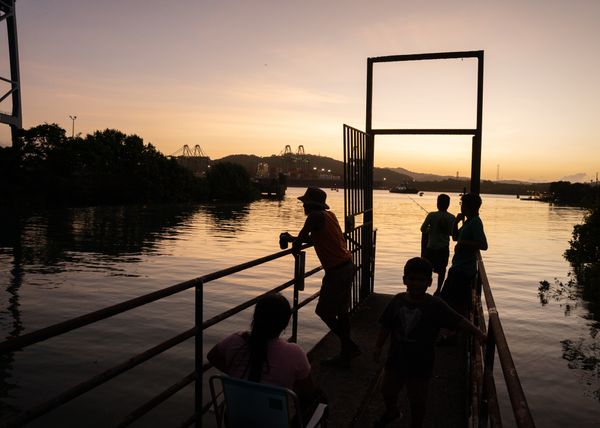
On the edge of the Panama Canal, an aging fisherman and gardener moves throughout the day among his landlocked boat and medicinal gardens. His planting becomes an act of transgression within the midst of global commerce and a former U.S territory.
Why do you think people jog? he asked aloud when a runner passed by while we were sitting in his garden. I could tell it was a lesson more than a question as he looked at me and emphasized his words. Because they are afraid to die.
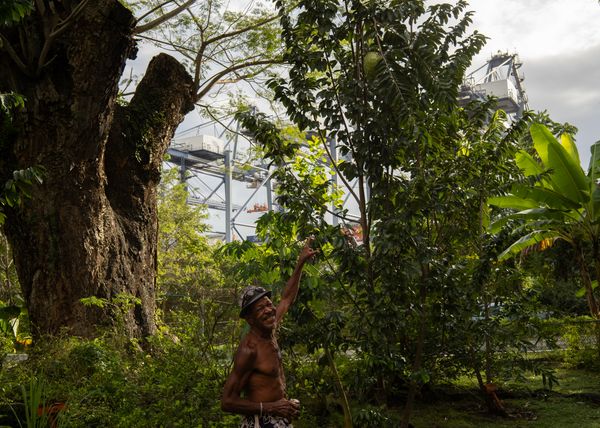
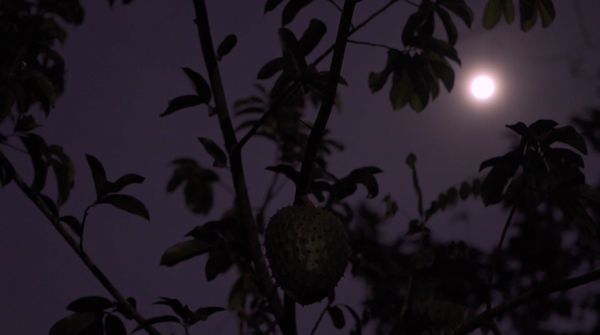
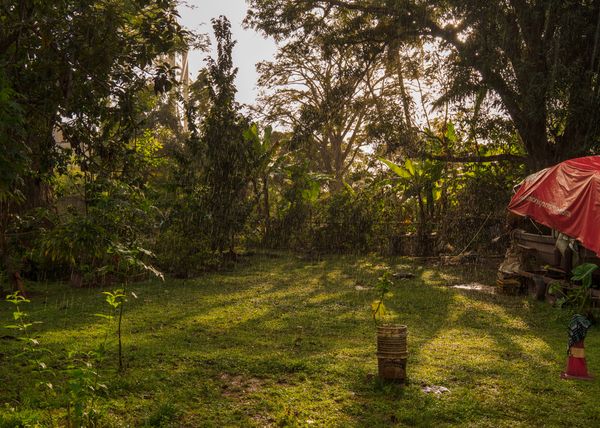
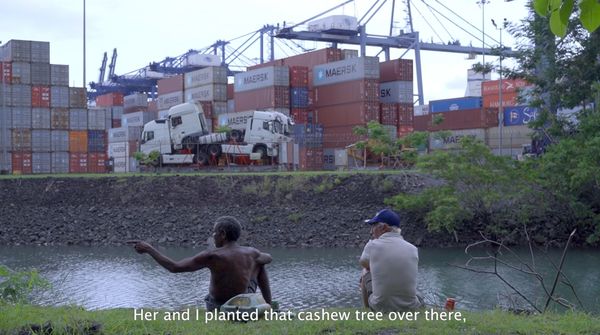
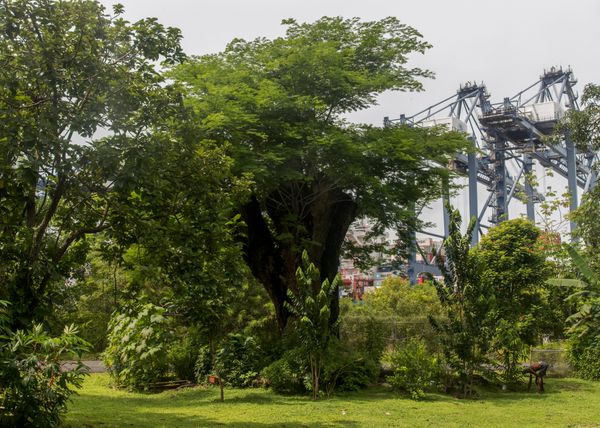
When I met Brown, his garden was situated between the Panama Canal and the Panama Canal Railway: two American infrastructural projects built to promote movement and capital, while rearranging lands, waters, humans and cultures along the isthmus. Brown’s garden was a gathering place and a site of transgression, where medicinal plants flourished. Growing adjacent to the clearcut boundary of the Canal, these plants knew no borders. And neither did the gardener.
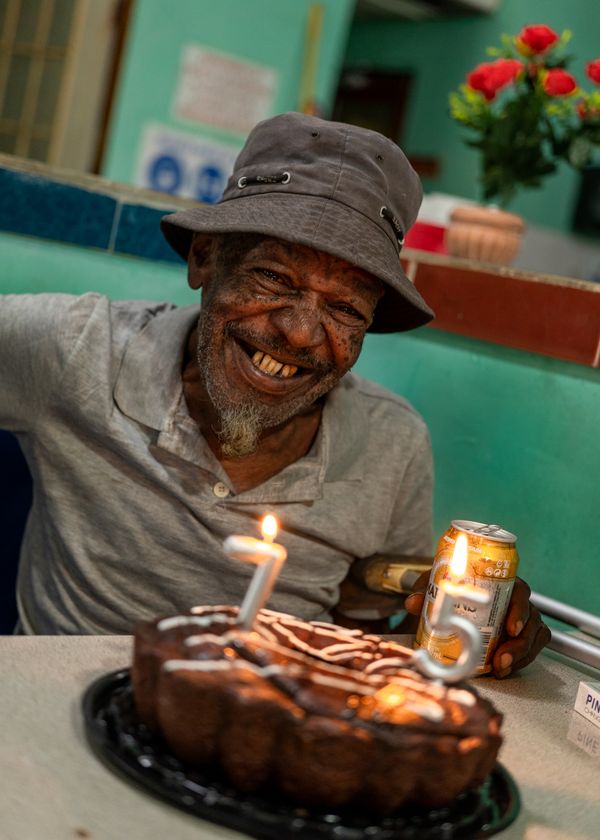
If you want to get to know the real Canal, you have to meet Mr. Brown. It is December 2017, a few months into my Fulbright grant in Panama to research and photograph the intersection of daily life and the Panama Canal. I am drinking beers with a boat builder I had made a picture of while we are waiting for the rain to pass. We are sitting in Restaurant Bar Evelyn, a lime green building at the entrance to the neighborhood of Diablo Heights, where I would come to recognize all the regulars and they would recognize me. La gringa, la fotógrafa, la estudiante de Brown.
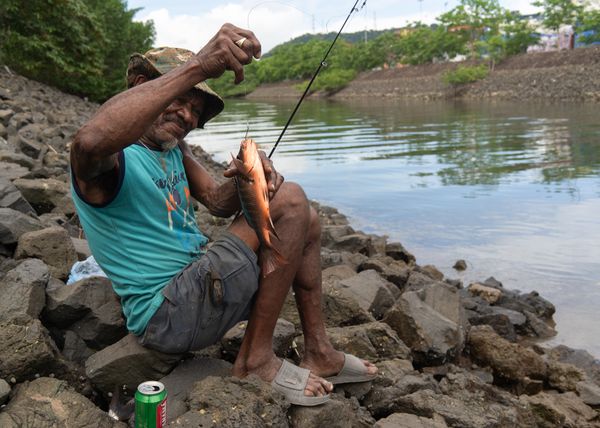
Brown could describe the soil we stood on. He used to work as an air-conditioning repair man in the former Canal Zone. I was an outsider, an American, trying to understand where I was from the ground up. Siempre hay muchos cambios aquí. He told me to return with my camera to photograph these changes. I continued to do so a few times a month for the following six years, documenting his limitless and shifting garden, on the edge of a global trade route.
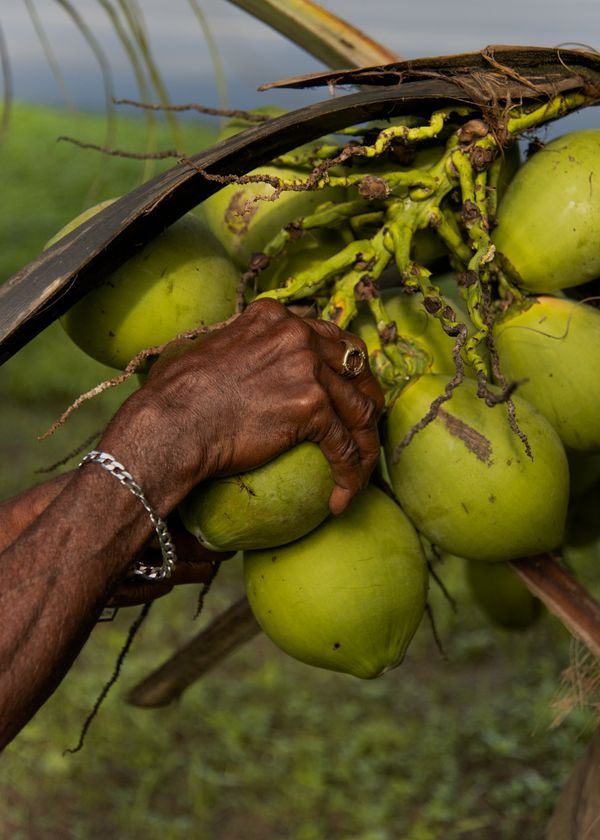
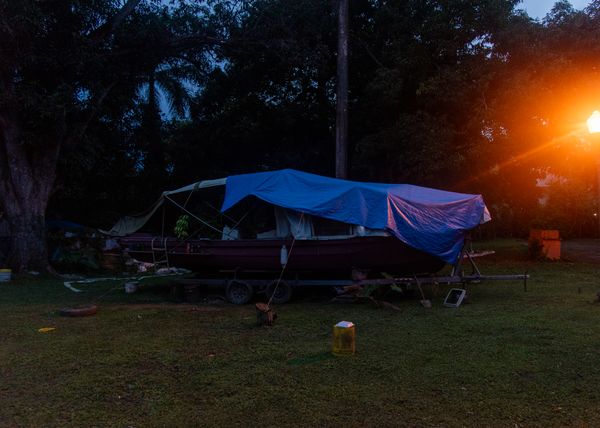
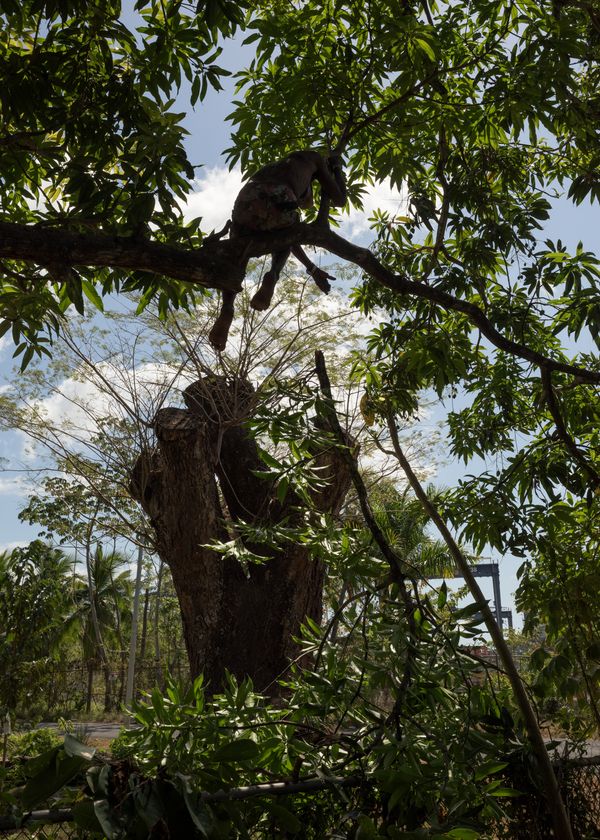
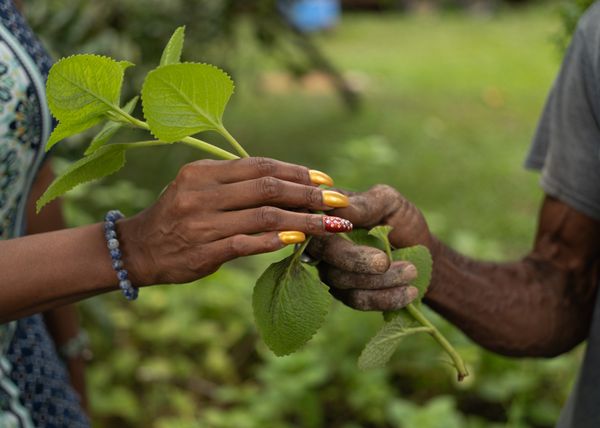
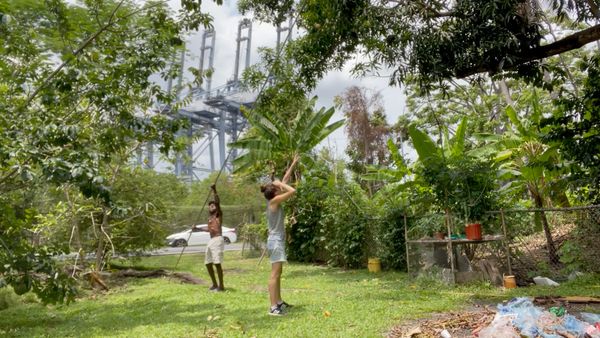
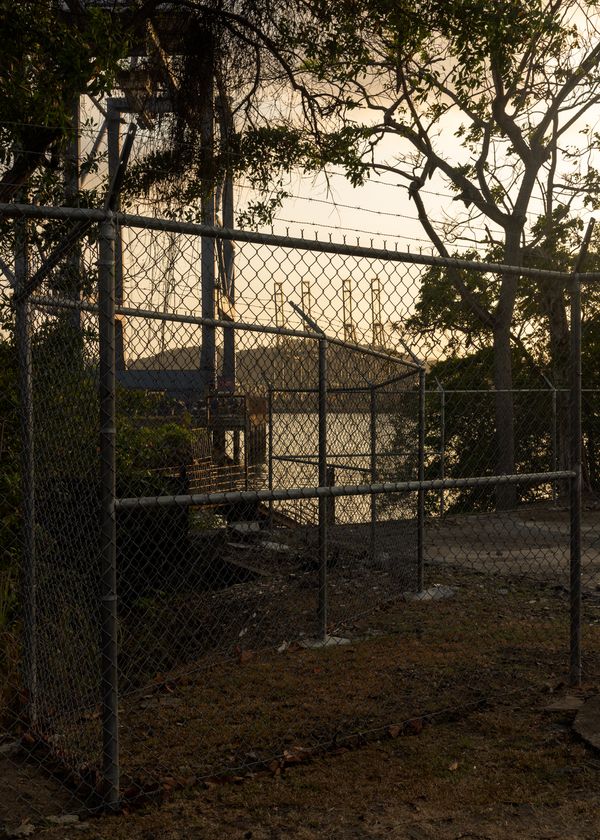
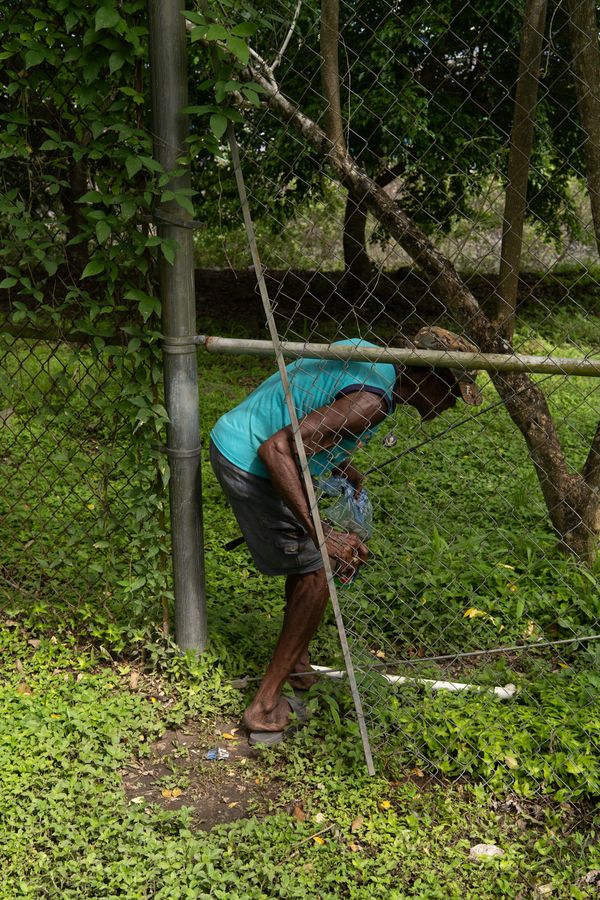
Brown dedicated himself to the plant medicine he grew up learning from his Jamaican grandmother, who moved to Panama during the construction of the Canal. In 2019, the Panama Port Authorities put up a chain link fence in Diablo so that the water was no longer accessible to the public. Brown cut a hole in the fence to continue fishing, and he began planting medicinal fruit trees on the other side. As the Canal expanded its geographical reign, Brown expanded his work so that the Canal became an extension to his garden. Meanwhile, Brown lived on his landlocked boat that he would one day take out to sea, where he would eventually die at 100 years old with a smile on his face. This was the dream that kept him going, year after year, harvest after harvest.
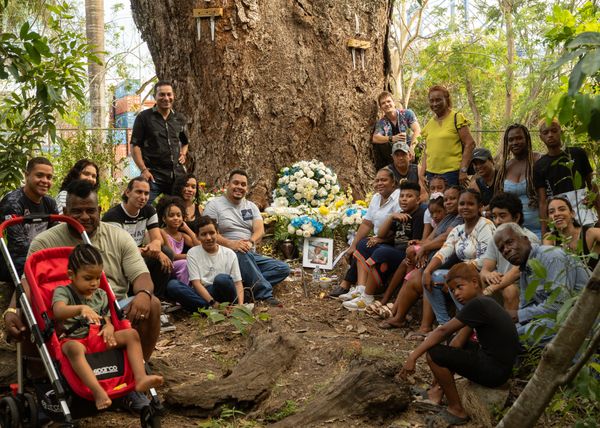
Brown died unexpectedly in February 2025 at age 75. I was no longer living in Panama but I was able to return for the memorial service his children organized in his garden. I’ve since been told his garden was paved over to make a parking lot. I’ve also been told that some of his friends have rescued his remaining plants, relocating them to their farms or patios.
The garden is grounding. The garden as a concept is associated with paradise and abundance, as well as labor, care, placemaking and exile. As much as it may evolve with the absence of its creator, a garden never dies.
This project weaves together photographs, a 20 minute film, archival images, narrative text, and collaborative poetry.