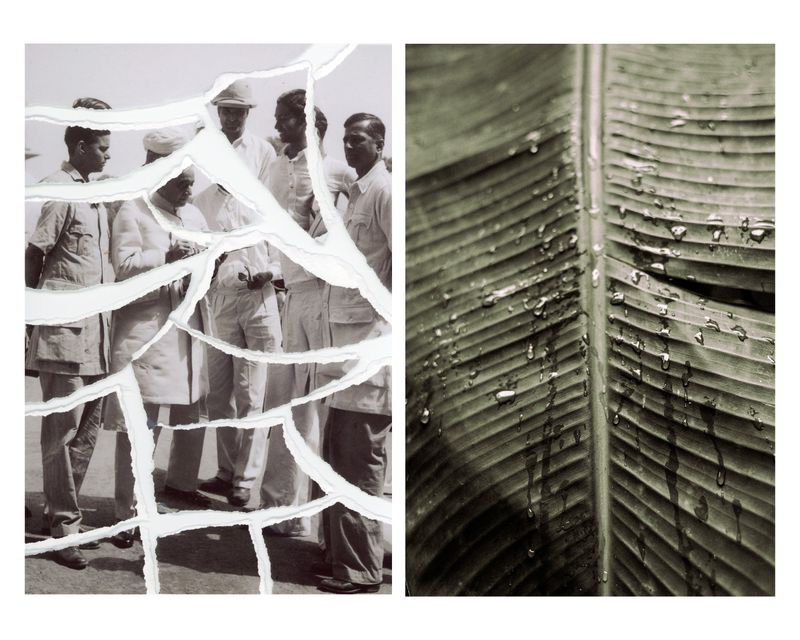
Lilies in the Garden of Tomorrow

  • Dates
    2024 - Ongoing
  • Author
  • Locations London, Chennai, Kolkata, Thiruvananthapuram

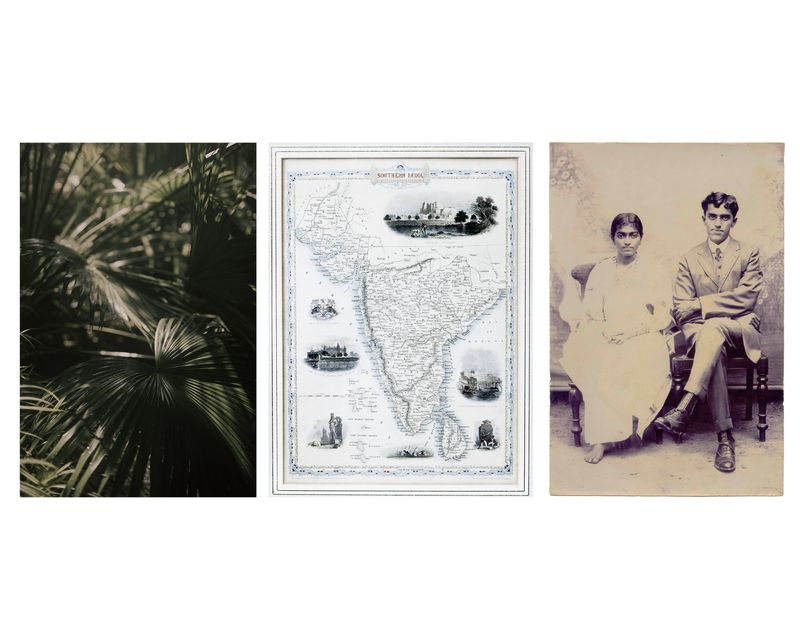
Lilies in the Garden of Tomorrow is the story of the strength, resilience and tenacity of a woman bound by societal construct amid personal and political crisis in the run up to Independence in India.
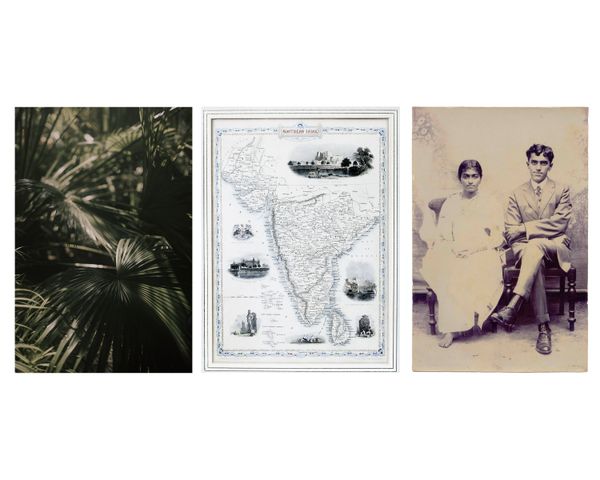
 If that work of endurance, be not finished yet, do I want to escape it? No, Lord, no: never would I choose that choice of cowardice…

We have no doubt about Tomorrow: there is always something in the thought of our Father, more profound, more beautiful than anything we can imagine.

Who has described the Lilies that grow in His Garden of Tomorrow? Not even the angels of God.

Let us run with patience the race that is set before us.


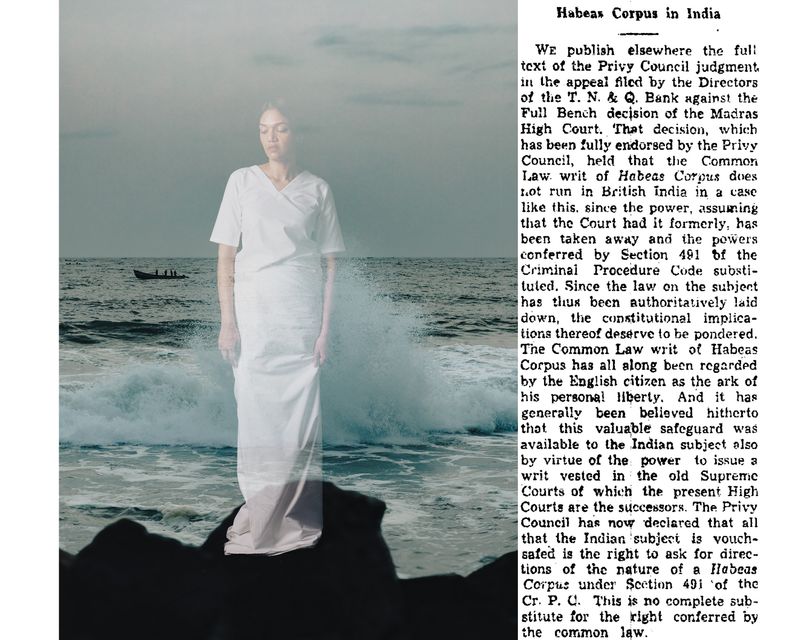
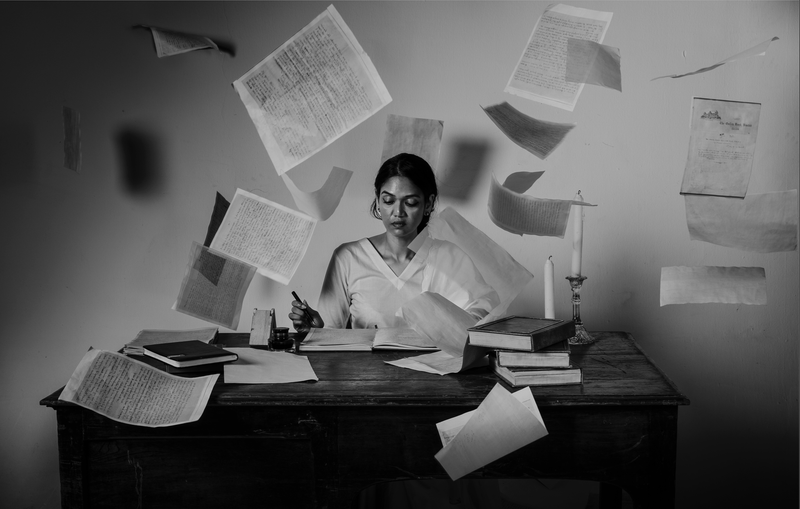
Almost a hundred years ago these words poured out of a woman crying for mercy before God. In her prayer room in Madras, robed in a pure white chattayam mundu and bent double over bible and her diary, she committed to endurance as an act of resistance --twice a day, every day, for five years.

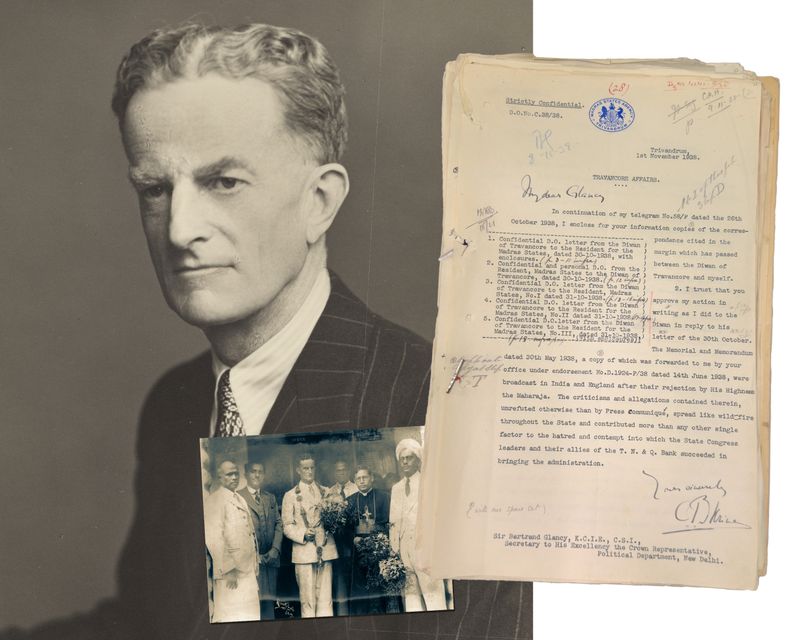
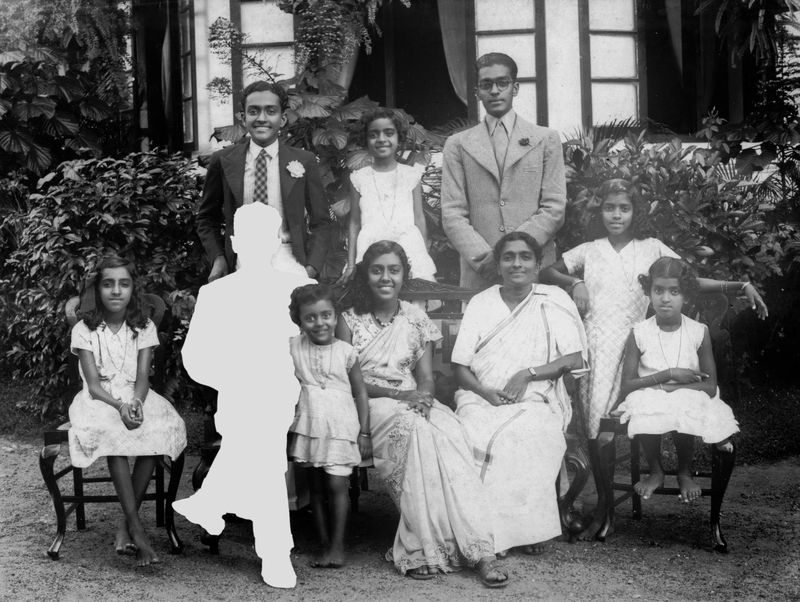
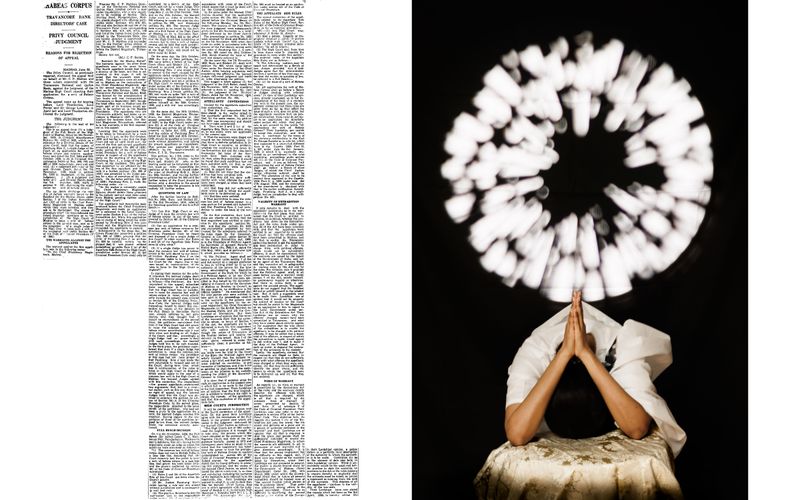
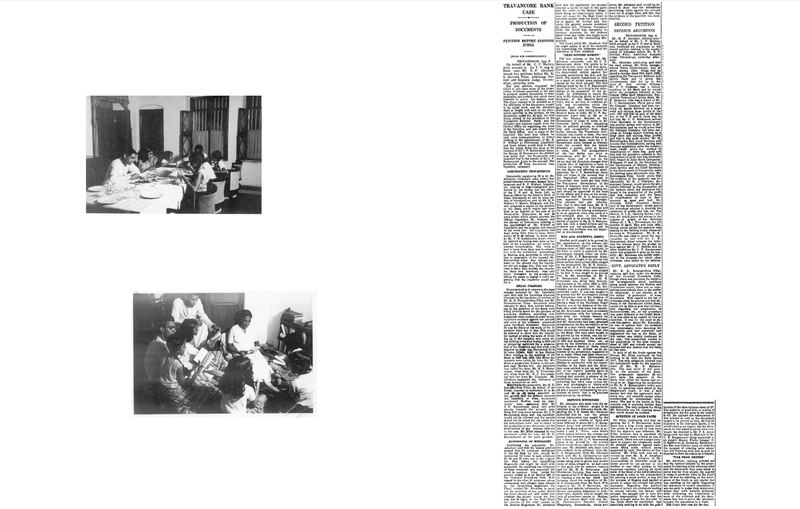
Her oppressors were the British Empire and the powerful Dewan of the Maharaja of Travancore. Together, they shut down one of the largest independent banks in India and imprisoned its Syrian Christian directors, her husband among them. He was one of thousands in what is now Kerala imprisoned in the 1930s for connections with the movement for democratic reform and increased minority representation in government. He maintained his innocence and was punished severely, leaving his wife alone, ostracized, indebted and with eight children to care for, fighting for his release.

 Her name was Eliamma Matthen and it was her express wish that her story be told. Lilies in the Garden of Tomorrow traces  Eliamma’s struggle to maintain her mind, her faith, her family, and her community. It reveals the strength and resilience of a woman bound by societal constraint, unrelenting in the efforts brought to bear against the edifice of empire, culminating in a brief appearance at the pinnacle of governance.  

 It is reflection on the often unseen, untold, and undervalued role of women in crisis, both as witnesses to injustice and as active agents of creative resistance.

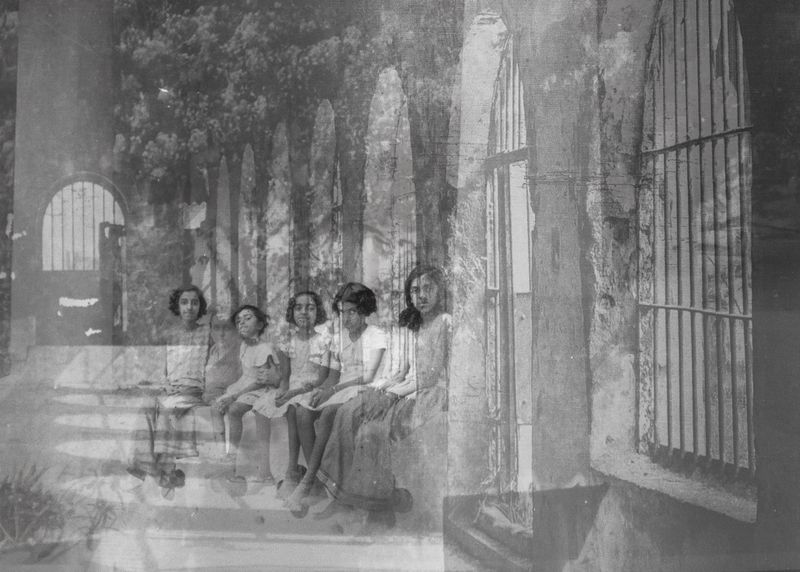
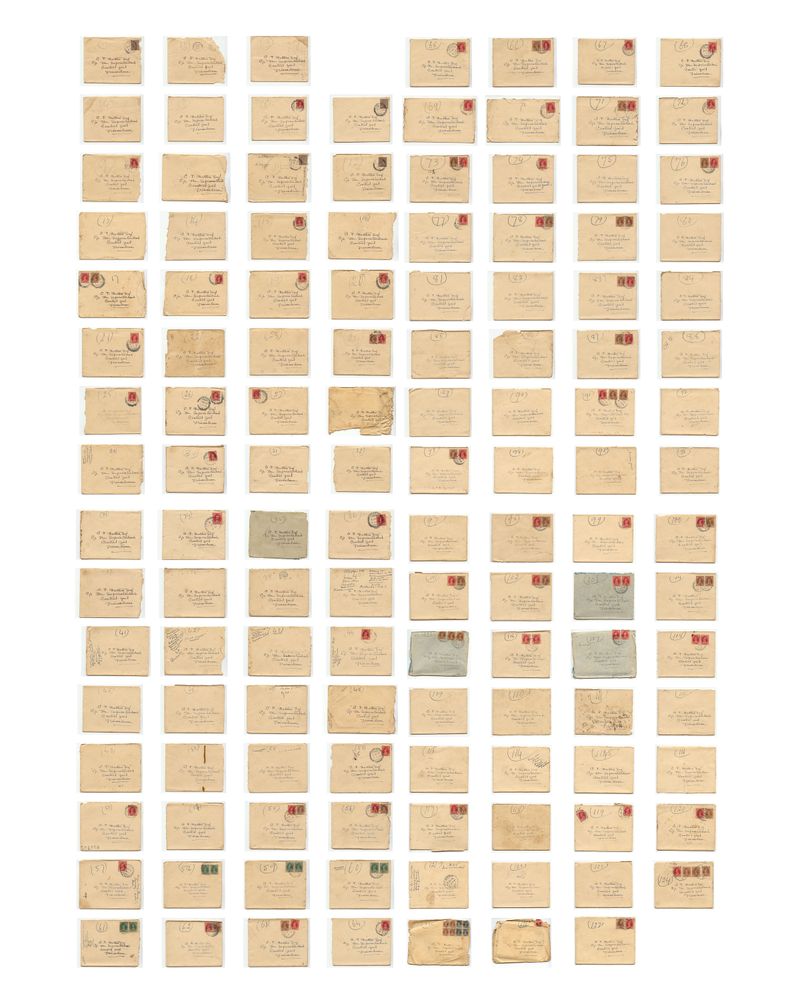
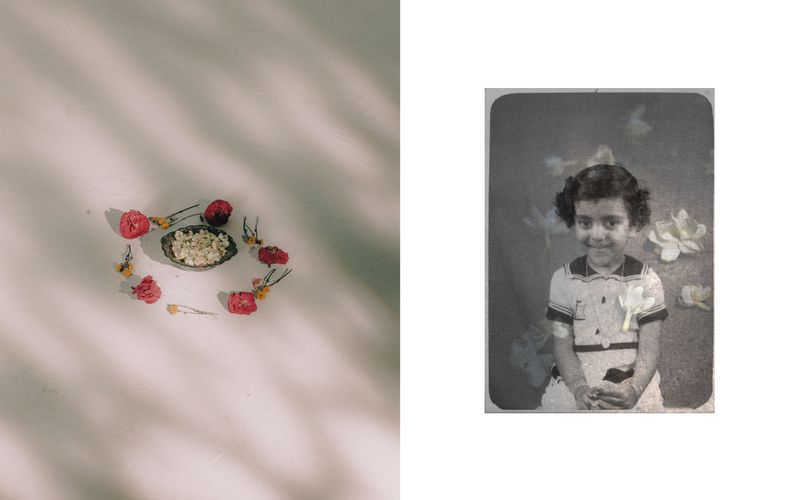
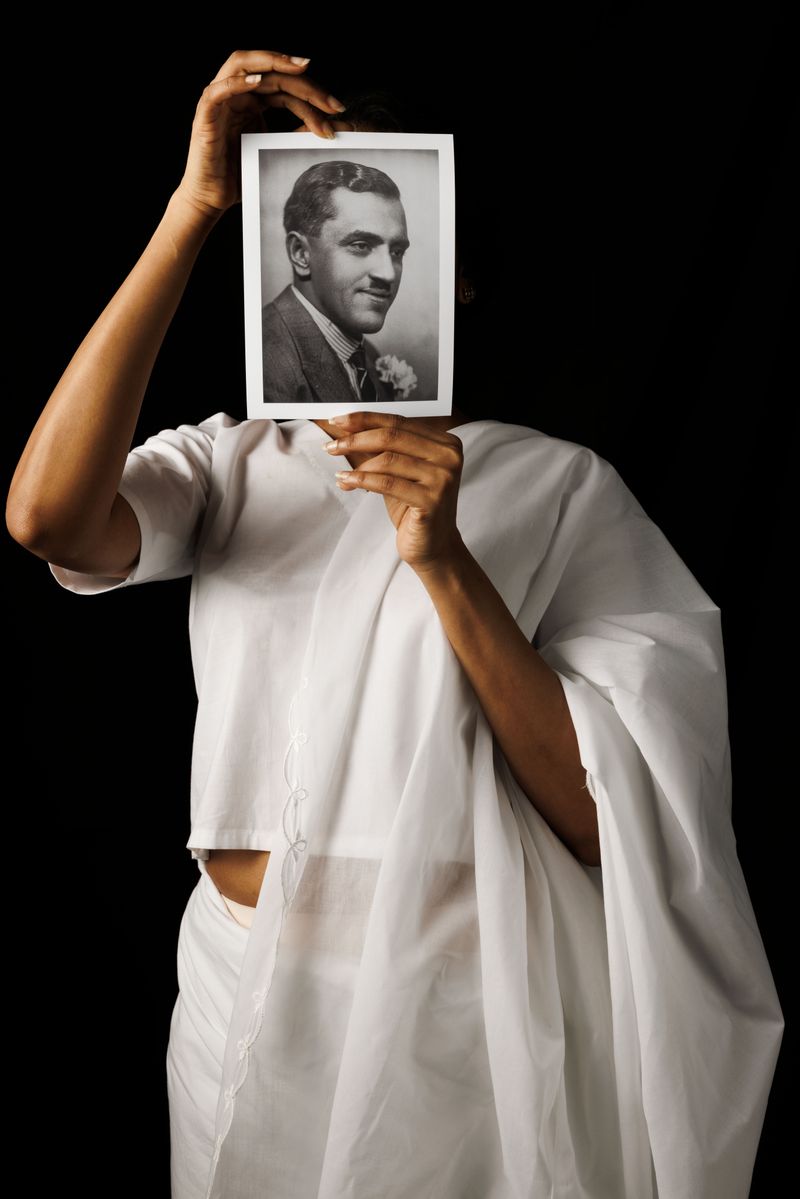
 This story, activated in visual practice for the first time, is not my work alone. It is the steady work of female collective memory. It began with Eliamma herself and the ten volumes of diaries (1938-42) in which she recorded her psychological, spiritual, familial and material struggles. It lived on in retellings by her children, and their children, and their children after them. It lived in photographs stored in brown paper bags by daughters and daughters-in-law one to another, in letters and drawings preserved and cherished, in family jokes and threats and tales shared in drawing rooms and kitchens, at baptisms, weddings and funerals, on high days, low days and holidays.

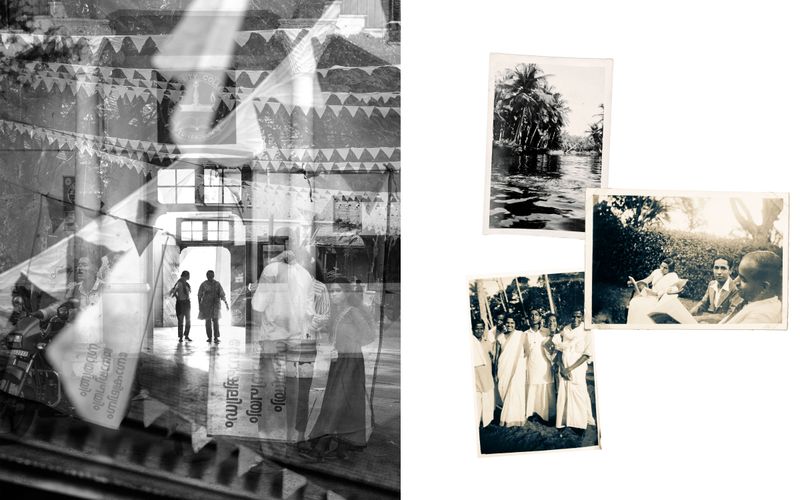
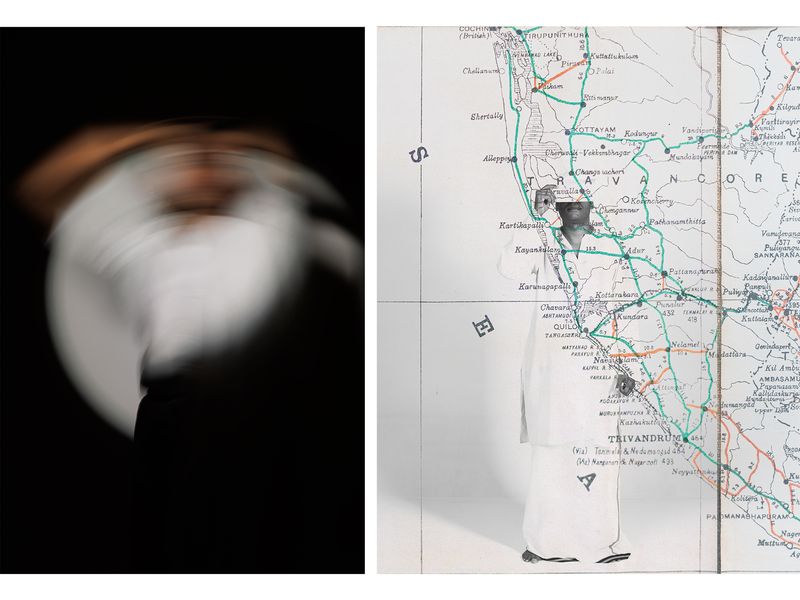
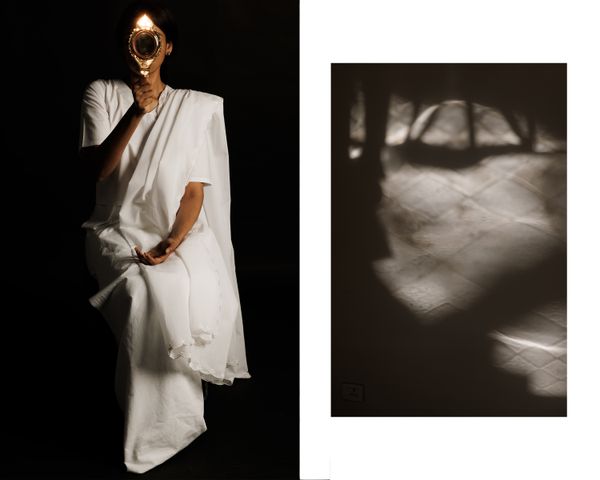
 I am a daughter-in-law of this house. Together with the family, I join Eliamma’s words with archival documents held in London, Chennai, Kolkata and Thiruvananthapuram, I join old black and white 2x3’s  of family made to send to a father in prison with newly made portraits made of family today, I join the still life of treasured objects of survival and the everyday practices of Syrian Christian culture. Together with family I explore the embodied dimension of memory within the studio, posture, proximity and gesture through which the past is carried forward. The images we made are not reenactments acts of relational mapping. They trace of the process of memory and its residues, bridging time and emotional distance.

 This work embraces interplay of memory, archive, photography, and embodied practice and holds them in dynamic tension. I chose to offer multiple entries into the story as a way of reflecting the nuances of reading history, the process of developing understanding. It is a way of showing my working out, and a way of allowing the reader to exercise their own criticality in triangulating meaning.

 Eliamma Matthen could not see her Tomorrow, and yet here we are in it, her lilies, living testimony to her strength. Lilies in the Garden of Tomorrow seeks not only to honour one woman’s story, but to open a broader conversation: about how women carry history, how female memory resists power, and how new futures might be imagined through acts of remembrance.

[The captions with these images are excerpts from the diaries of Eliamma Matthen.]
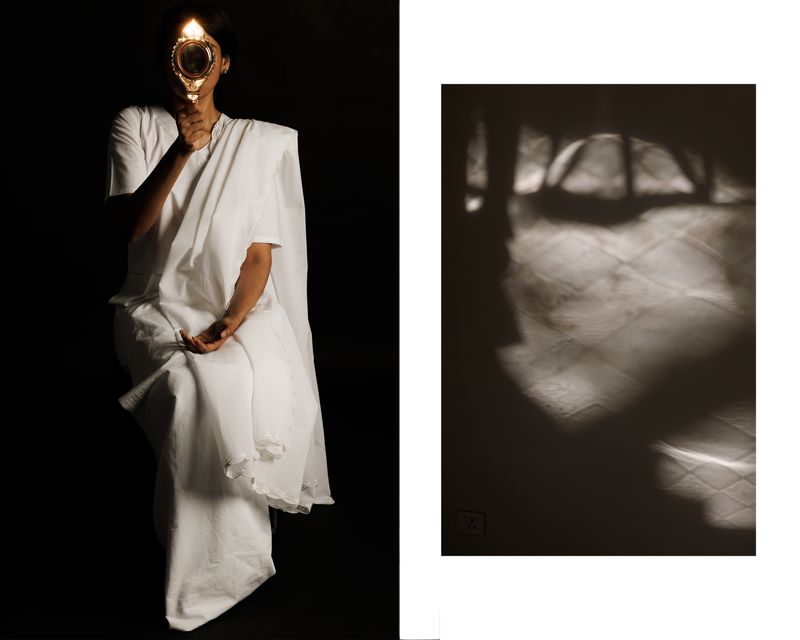
© Sarah Chandy - Image from the Lilies in the Garden of Tomorrow photography project
i

If that work of endurance, be not finished yet, do I want to escape it? No, Lord, no: never would I choose that choice of cowardice. We have no doubt about Tomorrow. Who has described the Lilies that grow in His Garden of Tomorrow?Not even the angels of God. Let us run with patience the race that is set before us.

© Sarah Chandy - Image from the Lilies in the Garden of Tomorrow photography project
i

For our Children: Through life's troubled waters steer them, Through life's bitter battle cheer them, Father, Father, be Thou near them, Read the language of our longing, Read the wordless pleadings thronging, Holy Father for our children, And wherever they may abide, Lead them home at even tide.

© Sarah Chandy - Image from the Lilies in the Garden of Tomorrow photography project
i

12 May 1938: Our Silver Wedding. Trouble seems to be everywhere. We are so buffeted that we hardly know how to hope for anything so simple & direct as a straight course across the field of life.

© Sarah Chandy - Image from the Lilies in the Garden of Tomorrow photography project
i

7 June 1938: Wonderful experiences at Quiet Hour & prayer. The conviction came that I can definitely pray for help from the Reserve Bank because it was the only right course. Making up with the Dewan C.P. Ramaswamy Aiyar & Travancore is compromise with evil.

© Sarah Chandy - Image from the Lilies in the Garden of Tomorrow photography project
i

26 September 1938: Terrible time in Travancore. Repression has not crushed the movement [for responsible government by the State Congress] an inch. In fact, it has been ‘oil on fire’. The whole land is as one man. Nothing but the strong hatred of this wicked man [C.P. Ramaswami Aiyar] & his wickedness could have brought about such a union in Travancore [of Christians, Muslims & Ezhava Hindus].

© Sarah Chandy - Image from the Lilies in the Garden of Tomorrow photography project
i

29 October 1938: I was at a very low ebb the whole day especially in the evening. K.T. Thomas of the State Congress is come. He was speaking about Mrs Accama Cherian, the last President. Wonderful woman, a regular 'Joan of Arc'. CP Ramaswamy Aiyar, in his attempts to crush the Syrian Christian, has only fanned up the flame. The persecution has brought out all that was good & noble & courageous.

© Sarah Chandy - Image from the Lilies in the Garden of Tomorrow photography project
i

20 October 1938: The arrest. I was giving out things in the store when Unny came in & said, “Kunju, don’t be upset. They have come with an extradition warrant from Travancore for us all.” That dirty Skrine (no other Englishman would have lowered himself to this) has signed the extradition made on charges absolutely false! "Vengeance is Thine Lord." Thou wilt repay C.P. Skrine for this!

© Sarah Chandy - Image from the Lilies in the Garden of Tomorrow photography project
i

4 November 1938: Desperate days. Justice nowhere. I fail.The case is going on. What use. The judges are not giving a fair hearing. They are pre-decided! What is the use of dashing against blind walls. It is blind walls everywhere and our Father is silent. It is "above that we are able".

© Sarah Chandy - Image from the Lilies in the Garden of Tomorrow photography project
i

5 November 1938: Last night before dawn when I was lying awake, I thought of writing to C.P. Skrine & came here & wrote a thunderbolt. I am fully convinced I should send it. Nobody gives full consent. It is not sent today. His visit to Madras is a fact. Govindhan phoned to London about the appeal to the Privy Council. A long cable was sent at about 8pm for special leave for appeal.

© Sarah Chandy - Image from the Lilies in the Garden of Tomorrow photography project
i

11 Nov 1938: I overhead little Sara standing in a corner alone & singing while weeping "one day my father will come, one day my father will come" in the tune in snow white where she sings "one day my prince will come". That was taught in school and she was singing of her "snatched off" father. It broke my heart and I went away & wept in secret.

© Sarah Chandy - Image from the Lilies in the Garden of Tomorrow photography project
i

24 December 1938: Christmas Eve. As usual I went to the penitentiary. The boys came later. As we were leaving George started wishing Appa. I told him to stop, saying it is no Christmas for us. We must forget December 25 tomorrow. The children decorated the Prayer room and tried to make cheer in the hall. I took no dinner & didn't join family prayers, for with tears flowing I dare not face them.

© Sarah Chandy - Image from the Lilies in the Garden of Tomorrow photography project
i

19 January 1939: It has come to a dead lock between two courts and only the Imperial government can help. Will they? If they don’t, a terrible injustice would be done to the thousands of creditors. Travancore will swallow the assets and nobody will be able to see even a fraction of it. They don’t want to give up their prey and so [use] all these underhand methods.

© Sarah Chandy - 3 April 1939: The Privy Council Appeal absolutely dismissed our case. Lord I am perfectly alone.
i

3 April 1939: The Privy Council Appeal absolutely dismissed our case. Lord I am perfectly alone.

© Sarah Chandy - Image from the Lilies in the Garden of Tomorrow photography project
i

3 July 1939: My beloved, How shall I thank you for the most precious letter that I received this morning? The case must be going today. I cannot even think of my darling in the dock. Pardon my outbursts. Why should it hurt you my precious? They were only my hearts uncontrollable bitterness against your persecutors, but I never realised its effect on you, my brave, courageous noble husband.

© Sarah Chandy - Image from the Lilies in the Garden of Tomorrow photography project
i

8 September 1939: I completely broke down and wept, sorely burdened with everything, tired out in body & soul. Food & servants need much supervision. The children have nothing in the evening for tea and they were hungry, Omana is run down. The anxiety about her [pregnancy], funds needed and the fact that I have to bear everything alone is not self pity. It is the cry of a poor burdened child.

© Sarah Chandy - Image from the Lilies in the Garden of Tomorrow photography project
i

12 October 1939: At family prayers I was reading to the children. Babu & Shiels were at some mischief. I scolded them & asked Shiela “do you hear this? Suppose you are asked, what would you choose?” Without a moment’s hesitation & as if surprised that I ask: അപ്പേ വേണം എന്ന് പറയും. I want my father, that’s what I would say.

© Sarah Chandy - Image from the Lilies in the Garden of Tomorrow photography project
i

13 August 1940: Appeal. I wrote a long letter to Trivandrum to tell Unny that through many an evolution I have reached the place of peace and Absolute trust. O God should I go? Have I the strength? It has been a deep strain and a fresh wound for us both last time we met. I haven’t got over it yet. If I realised, I wouldn’t have gone. It was it was the worst & unendurable 16 days I ever had.

© Sarah Chandy - Image from the Lilies in the Garden of Tomorrow photography project
i

5 November 1940: Nehru four years rigorous imprisonment. Gandhi about to fast. India on the verge of great trouble. My Quiet Time was over before lunch and so I rested after lunch. Then I got up and did needlework long due. There were 6 more sheets to be stitched. I have no time for machining or mending or any of a woman's duties in the home.

© Sarah Chandy - Image from the Lilies in the Garden of Tomorrow photography project
i

28 October 1940: What is the use of it all to us in the "Independent" Travancore courts! They are independent of every existing law & custom in the rest of the world! Case will be one thing but judgement quite another. Independent of truth & justice entirely!

© Sarah Chandy - Image from the Lilies in the Garden of Tomorrow photography project
i

9 December 1940: High Court of Travancore gives verdict. Satan was very busy making the best of the occasion, rousing hope against myself & then twisting, turning every thought till I reached my limit by evening. A few min past 7pm the telegram came. Each one of the poor children were waiting the whole day. They read out: Sentence reduced to 5 years rigorous imprisonment & a fine.