Land of the Flea
-
Dates2024 - 2024
-
Author
Land of the Flea explores the intersection of politics, commerce, and identity in a divided America.
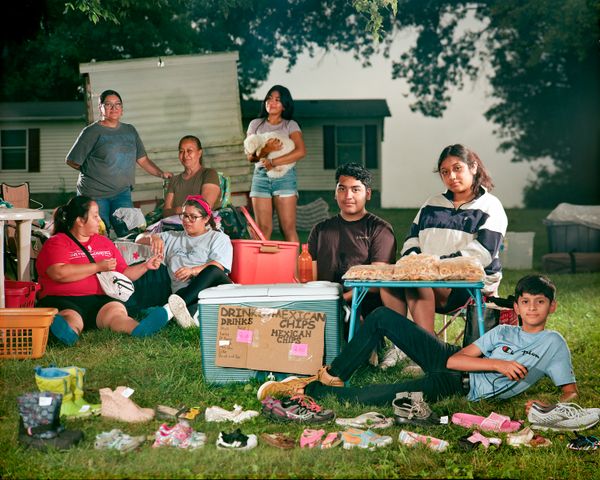
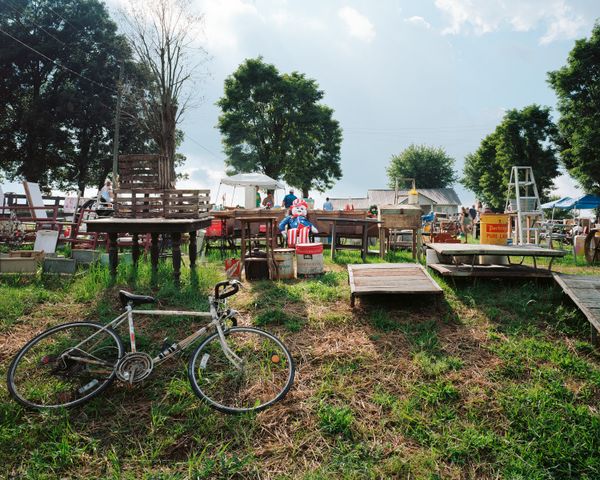
Every August, the World’s Longest Yard Sale stretches nearly 700 miles along Route 127, winding through the American South and Midwest. For four days, roadsides, front yards, and empty lots transform into an open-air economy of discarded histories. The event—part spectacle, part necessity—reveals the quiet but deeply felt realities of American life: who sells, who buys, and what objects hold meaning in times of uncertainty.
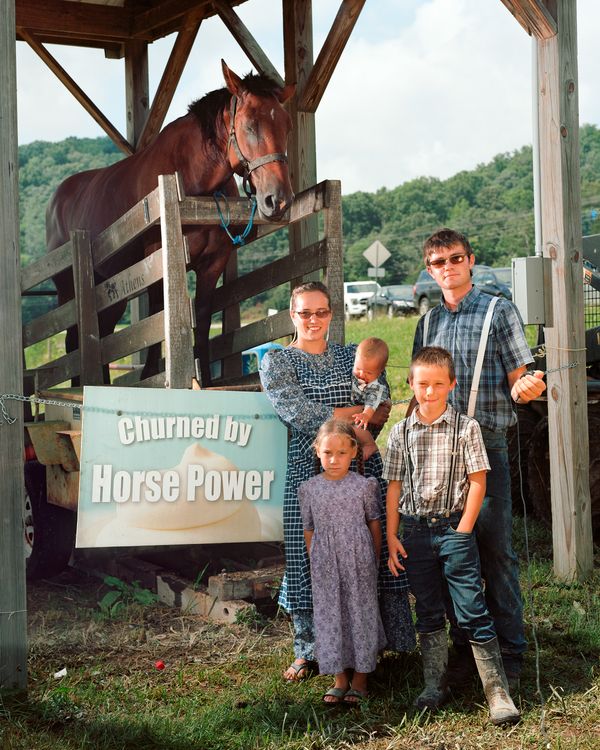
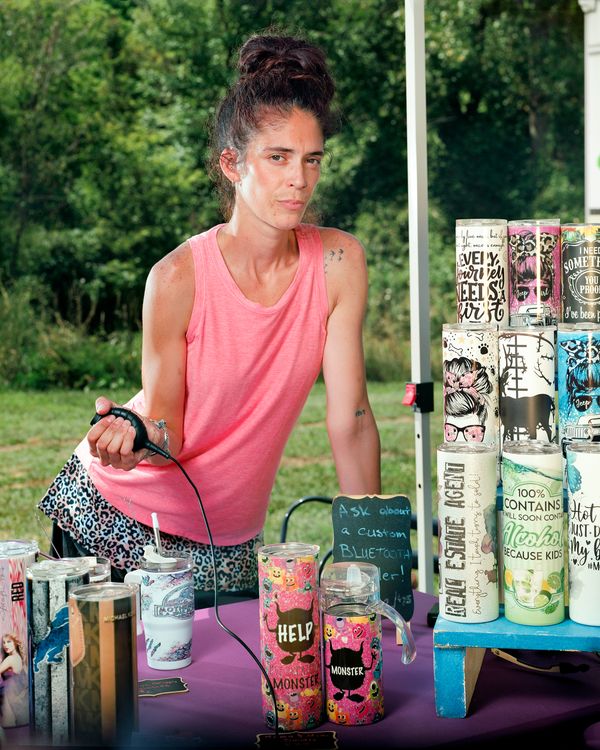
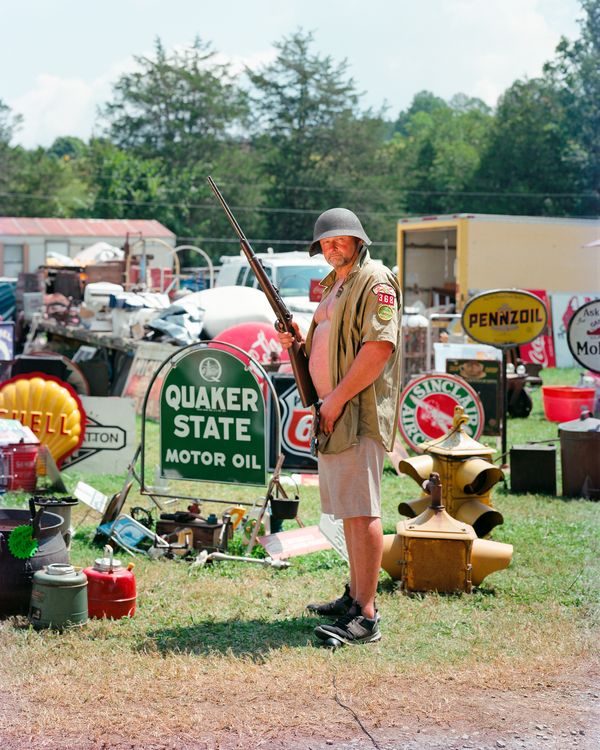
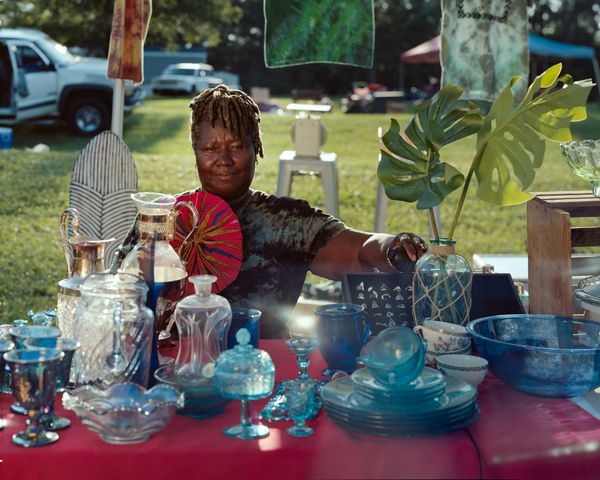
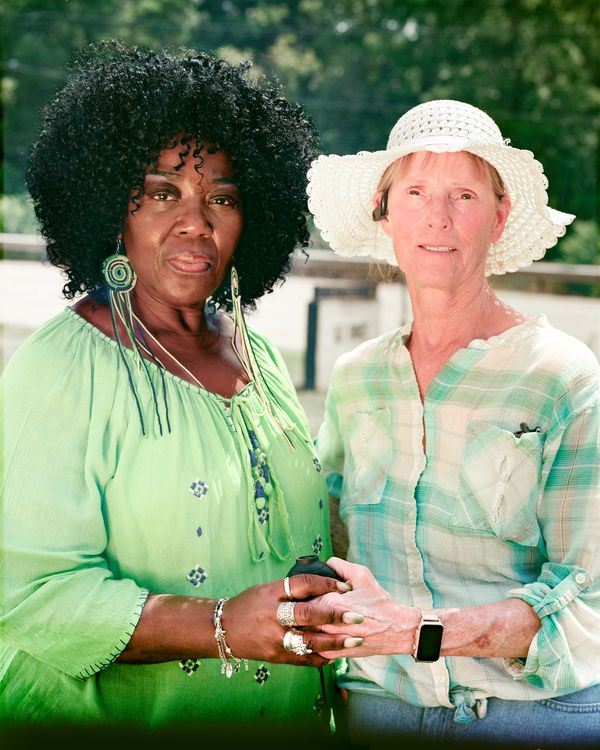
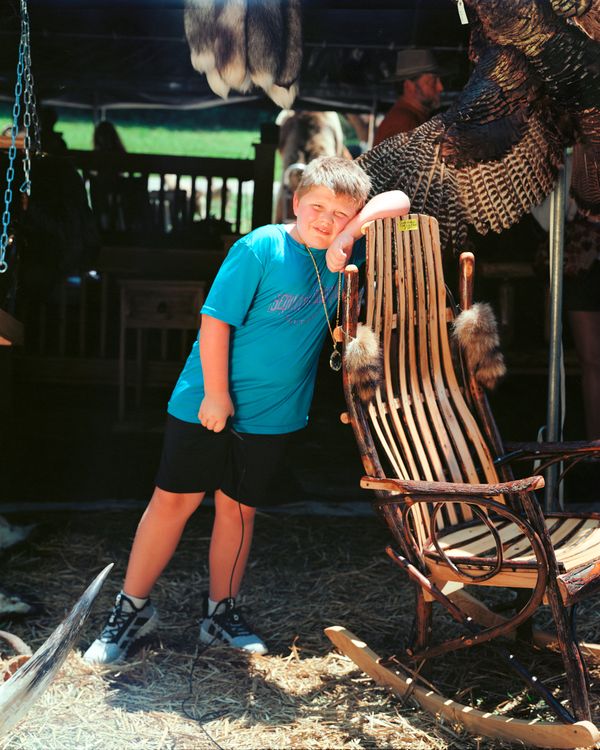
In the summer of 2024, as the country braced for another contentious presidential election, I traveled this route with a large-format 4x5 film camera. I composed the images and then handed the shutter release bulb to my subjects, allowing them to take their own portraits. The result is a collective self-portrait of the yard sale—an intersection of survival, nostalgia, and identity.
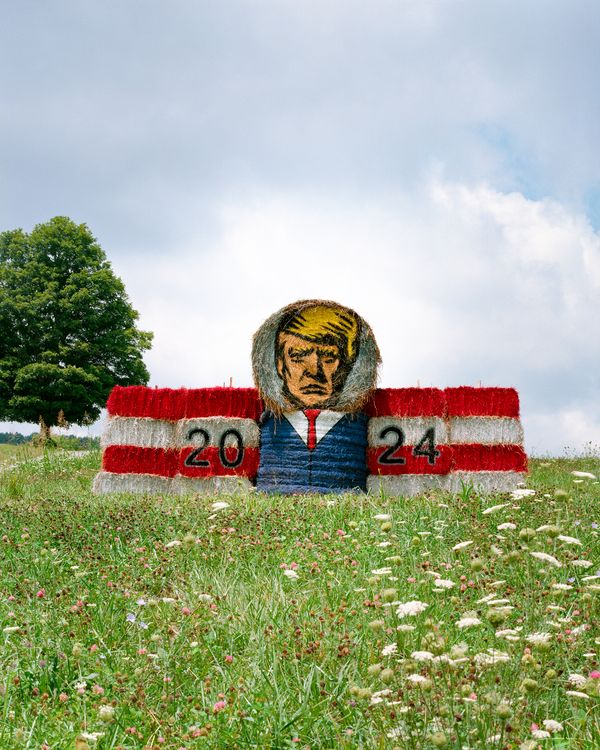
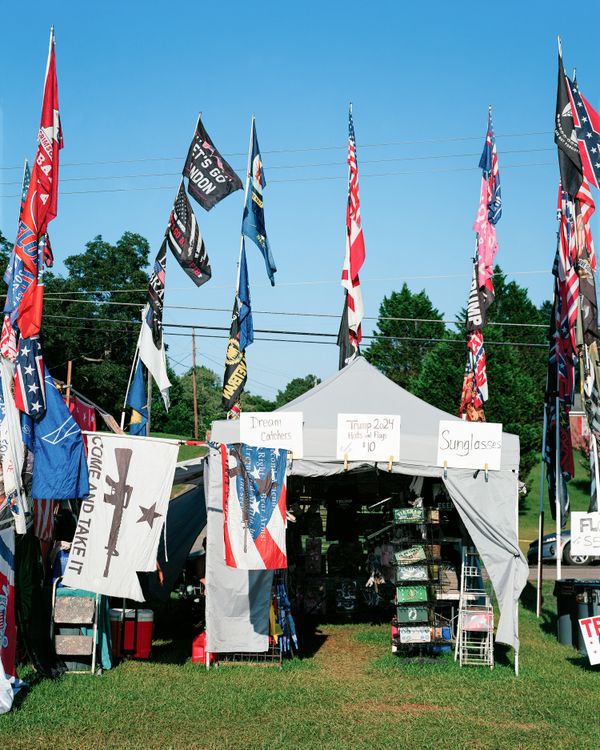
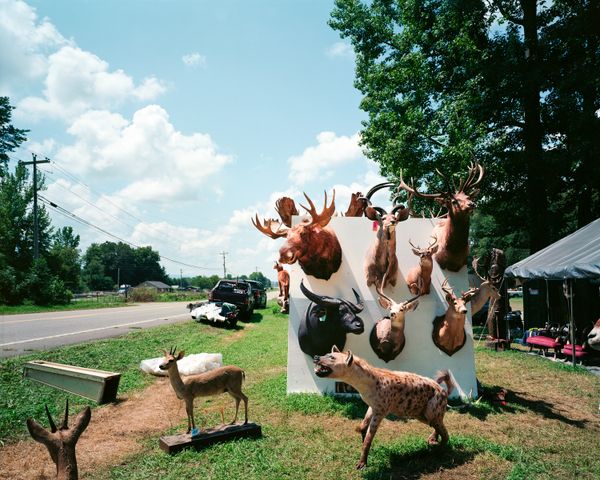
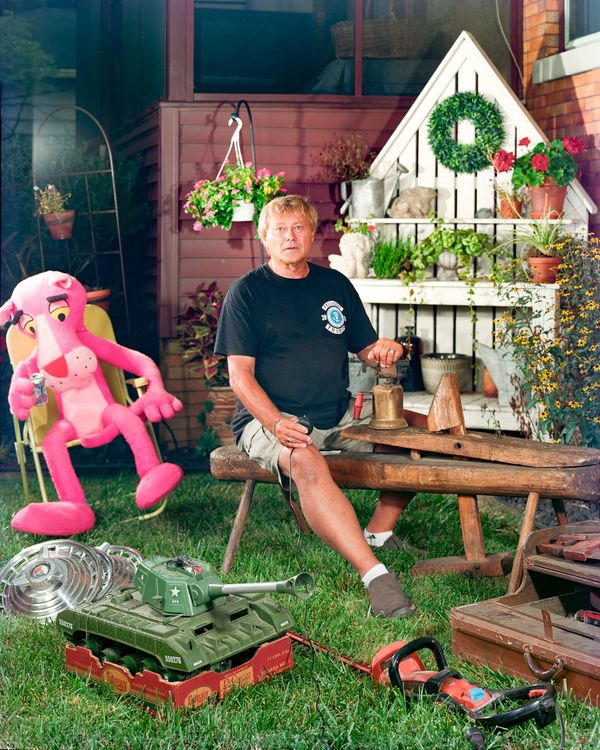
The political undercurrents were inescapable. Vendors sold Trump 2024 merchandise alongside sunglasses and dreamcatchers, blending commerce and ideology in ways both casual and intentional. A man in a Trump 2024 shirt sat next to a Pink Panther plush, a toy tank at his feet—a surreal tableau of childhood, militarism, and partisan allegiance. Across the highway, taxidermy deer and a snarling hyena stood frozen in time, remnants of conquest now reduced to decor. This strange economy—where history, power, and fantasy are bartered like everyday goods—reveals an America simultaneously clinging to its past and desperate to offload it.
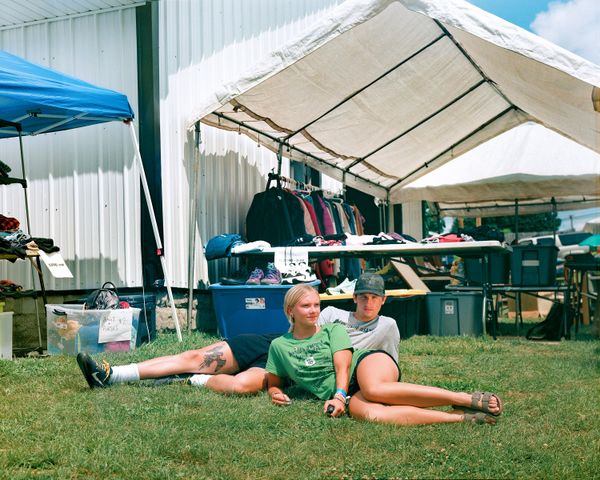
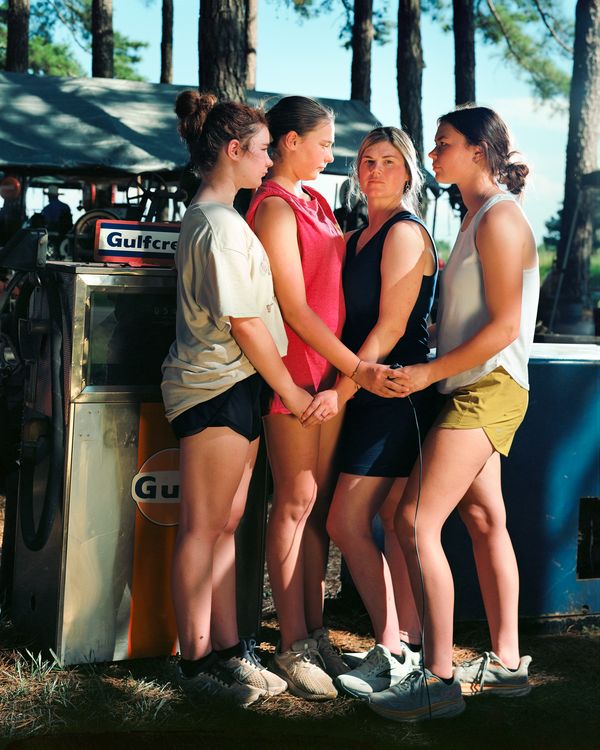
Yet amidst the spectacle, moments of intimacy emerged. A mother and her three daughters stood hand in hand by a gas pump, their quiet unity contrasting with the noise of the sale. A young couple lounged in the grass, their ease with each other making the chaos around them seem distant. These portraits are reminders that beneath the grand narratives of politics and commerce, people are still finding ways to hold on to each other, to carve out spaces of connection in a country constantly shifting beneath their feet.
As a queer, Chinese-Indonesian immigrant to America, my presence in these spaces was both invisible and hyper-visible. I was an observer, yet often observed. I couldn’t vote in the country, yet I found myself embedded in a process just as political—negotiating my place in America through images, encounters, and exchanges. The yard sale exists in predominantly white, conservative spaces, yet it is also a meeting ground—where race, class, and politics collide in ways both mundane and profound.
This project is not just about objects exchanged, but about what those exchanges reveal—the ways people claim space, make ends meet, and present themselves to the world. Land of the Flea is a document of an America in transition, where the past is constantly for sale, and where identity—personal, political, and national—is negotiated with every transaction.