KAMI NO UDE
-
Dates2025 - 2026
-
Author
- Locations Spain, Tokyo
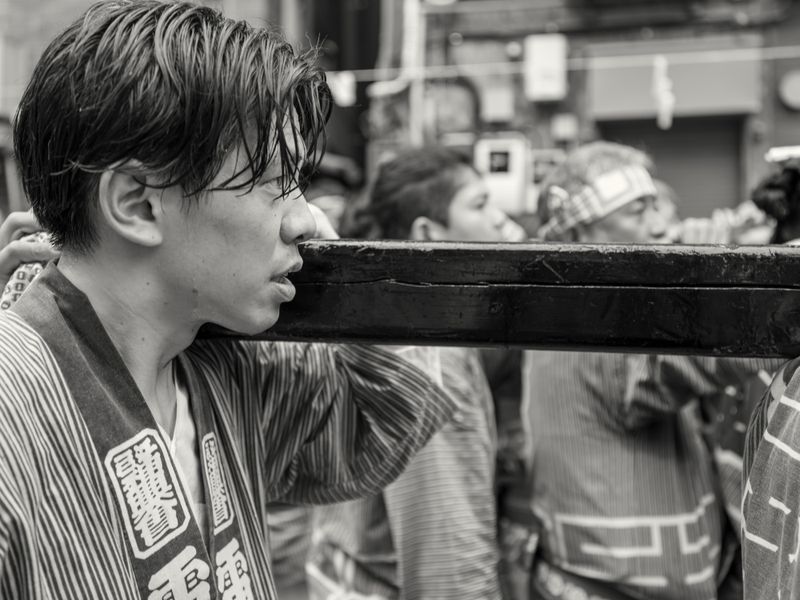
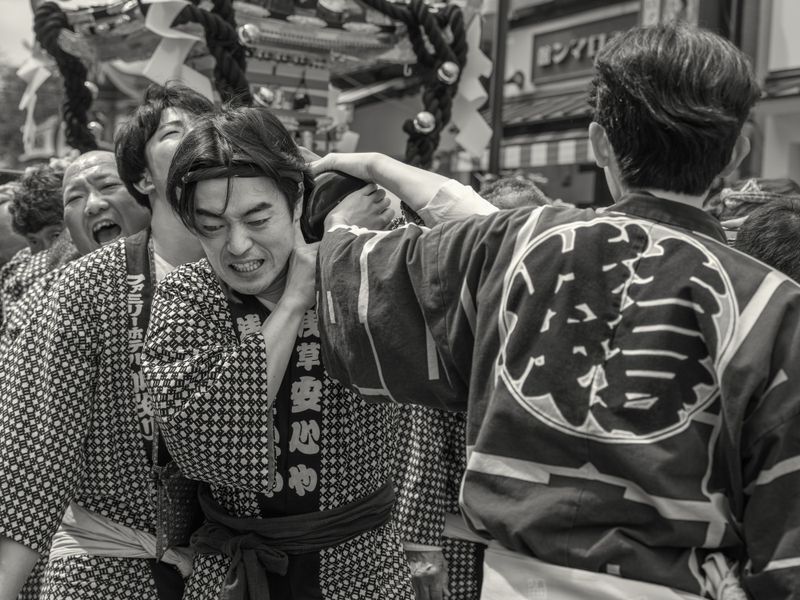
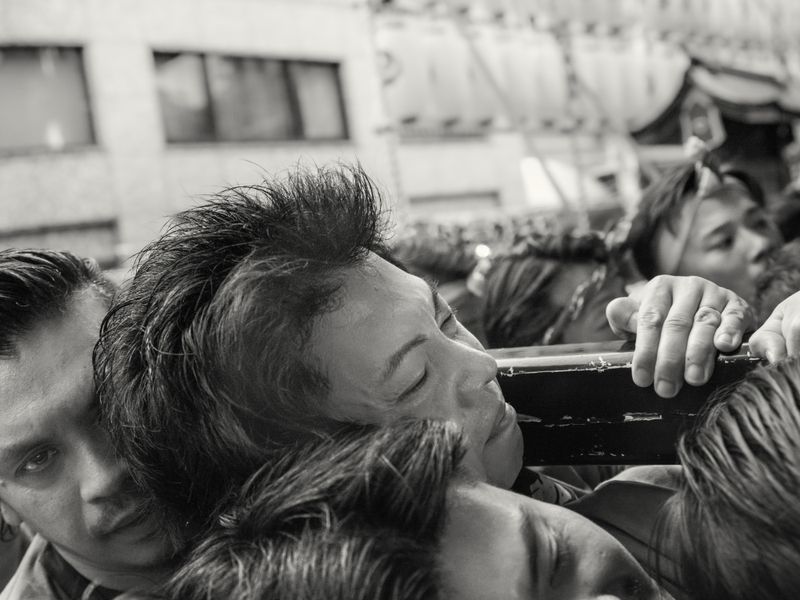
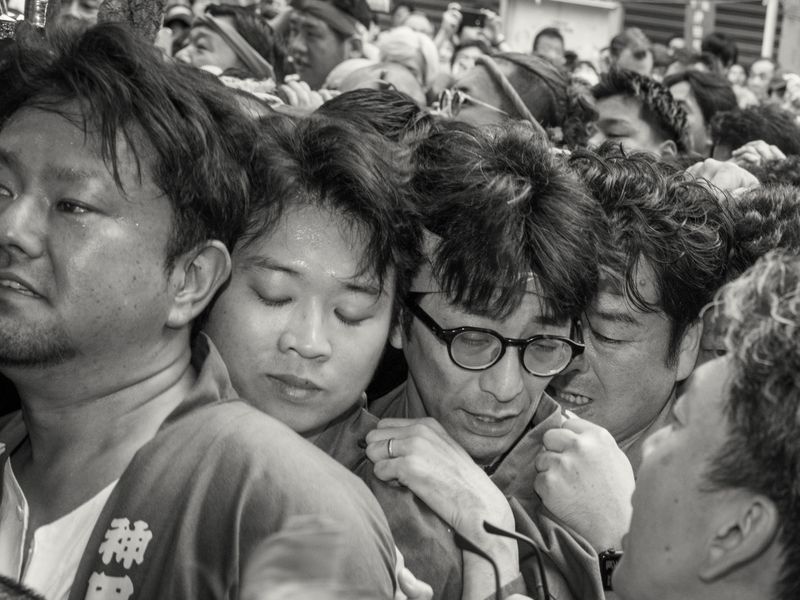
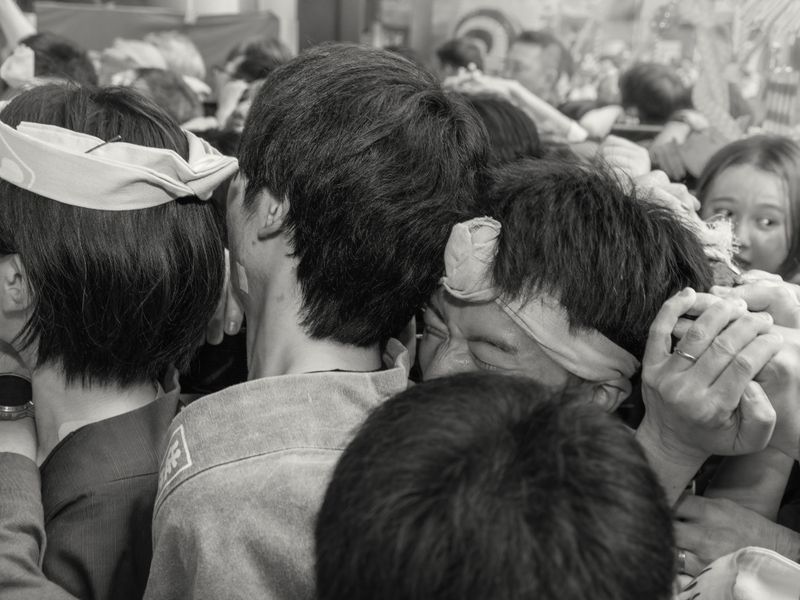
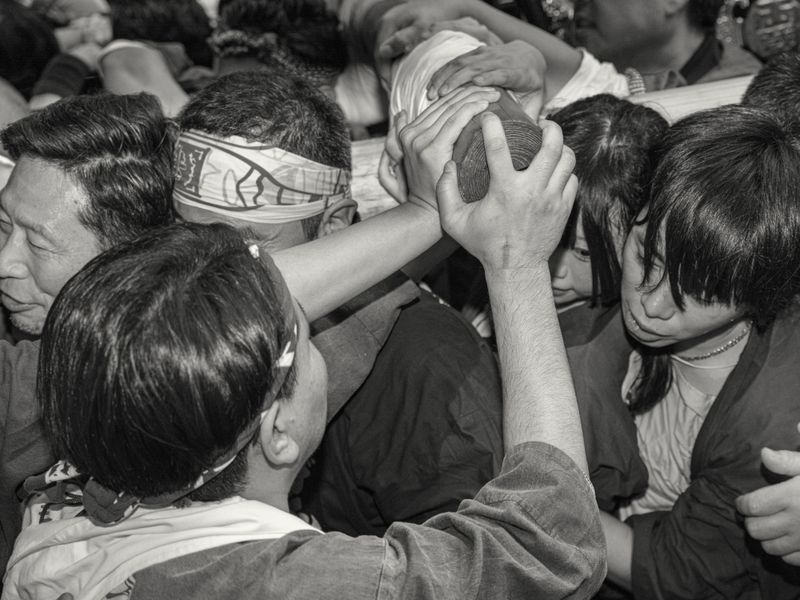
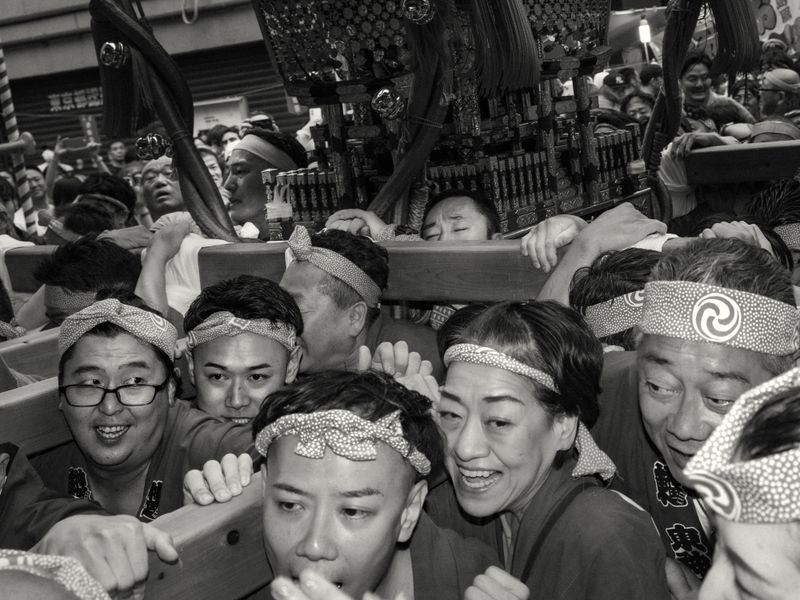
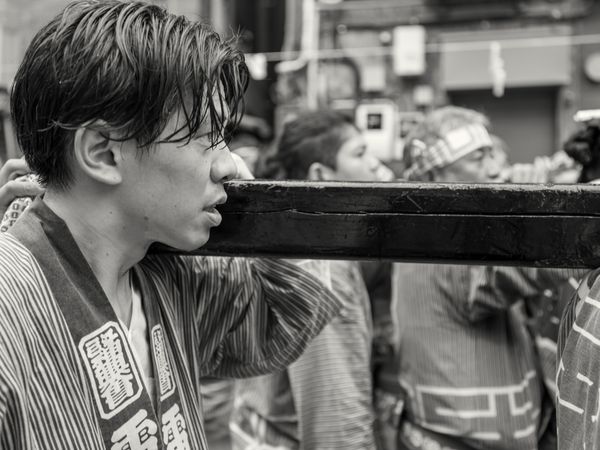
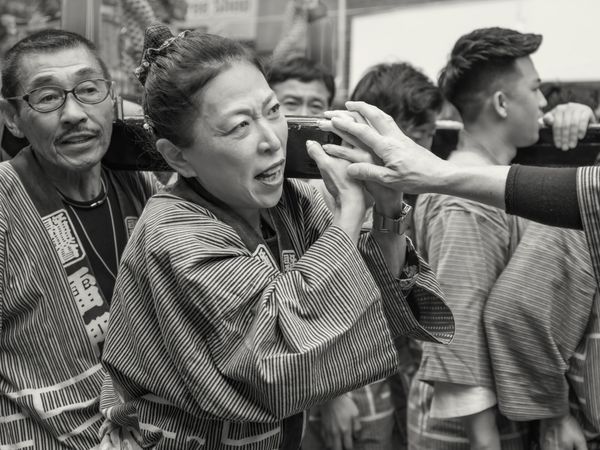
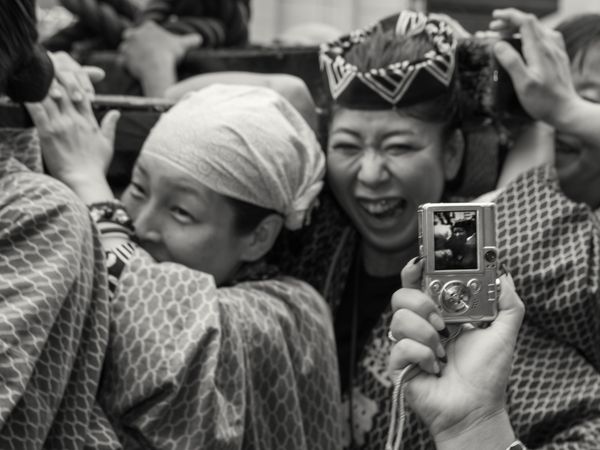
A photographic displacement: rather than the mikoshi, Leache photographs those who carry it — arms, torsos, faces in exertion. The sacred inferred through those it moves: ritual islands surviving as diagrams of culture, politics and contradiction.
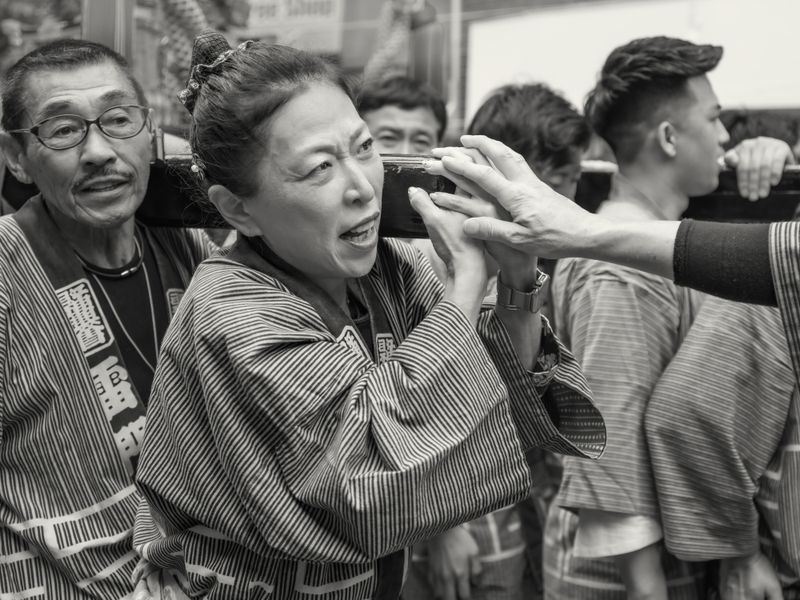
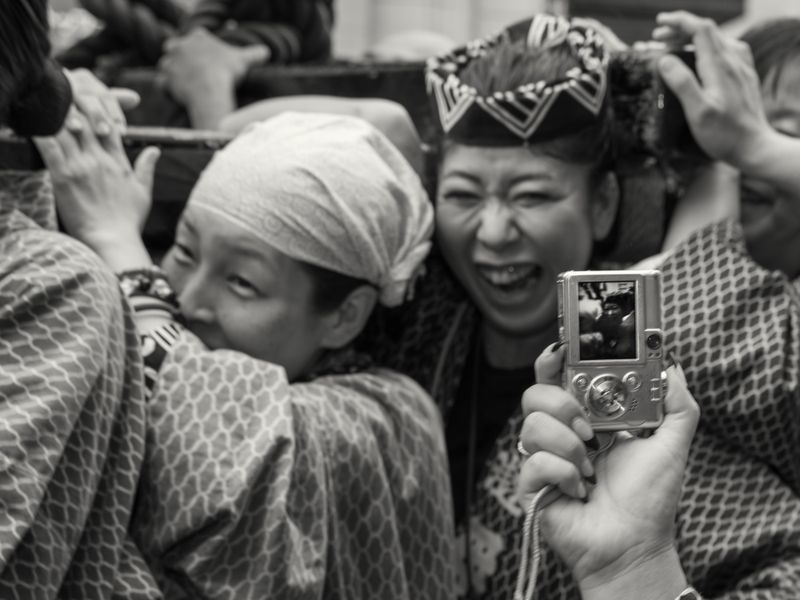
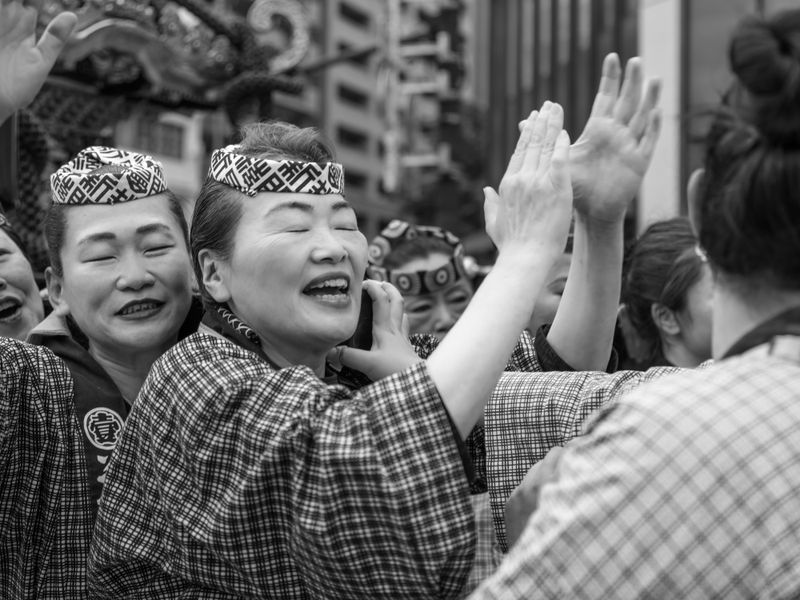
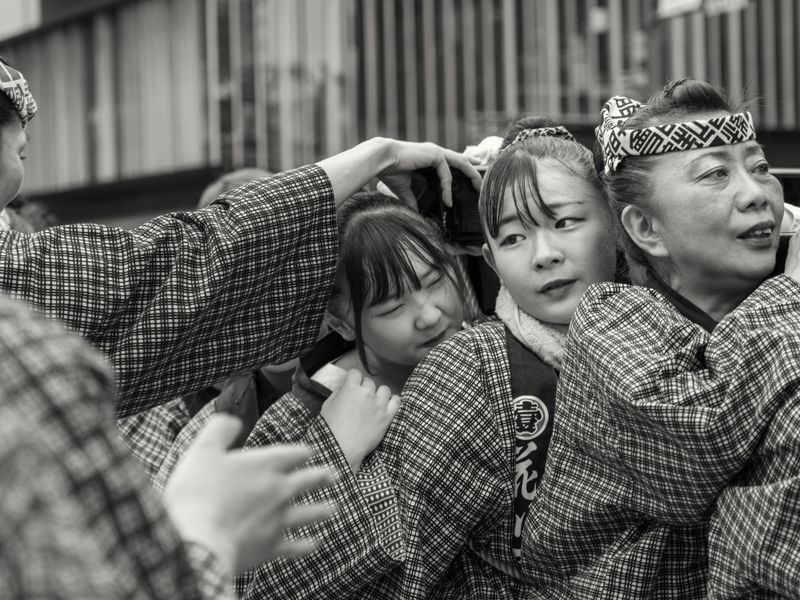
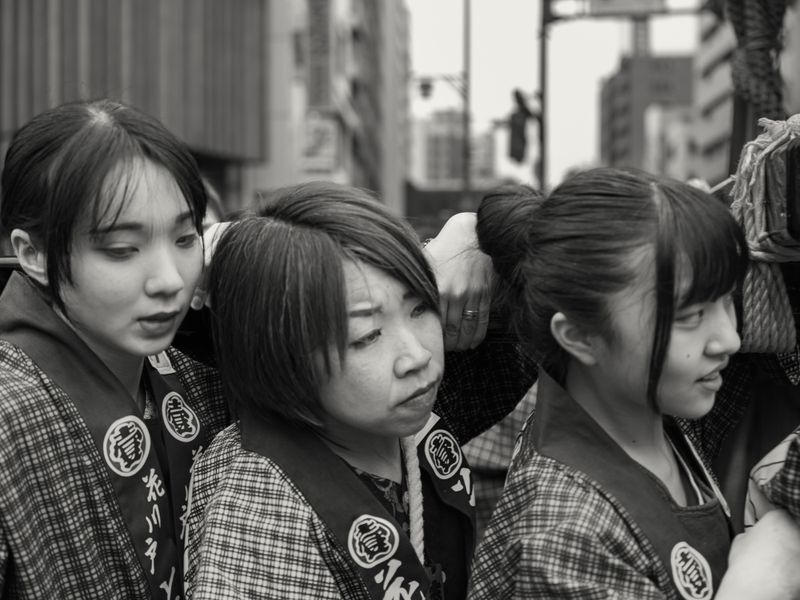
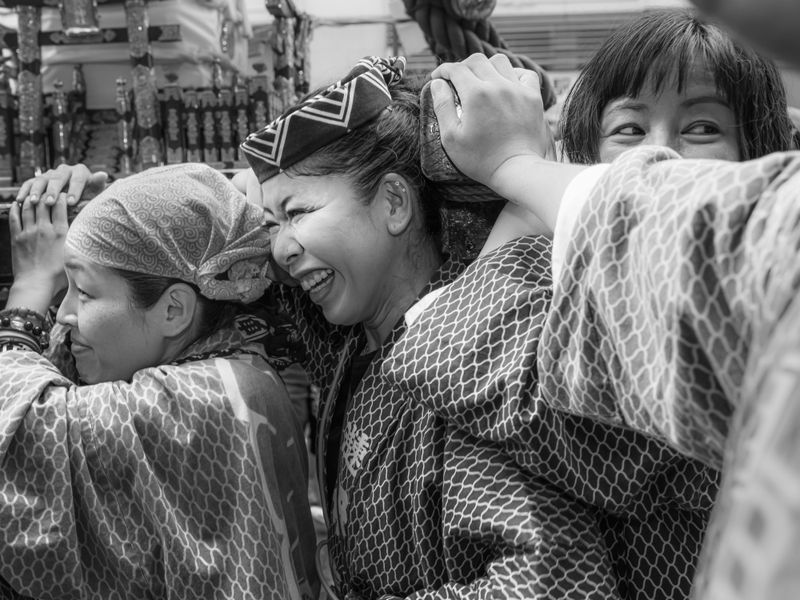
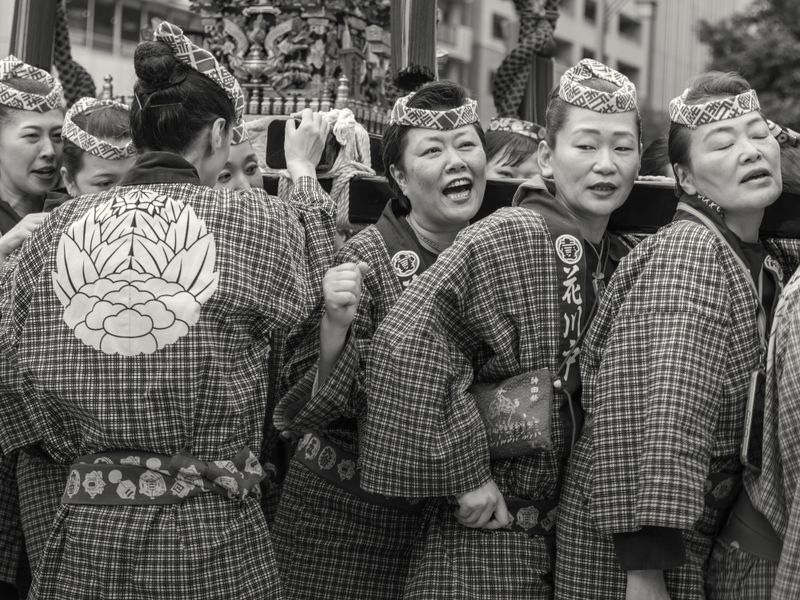
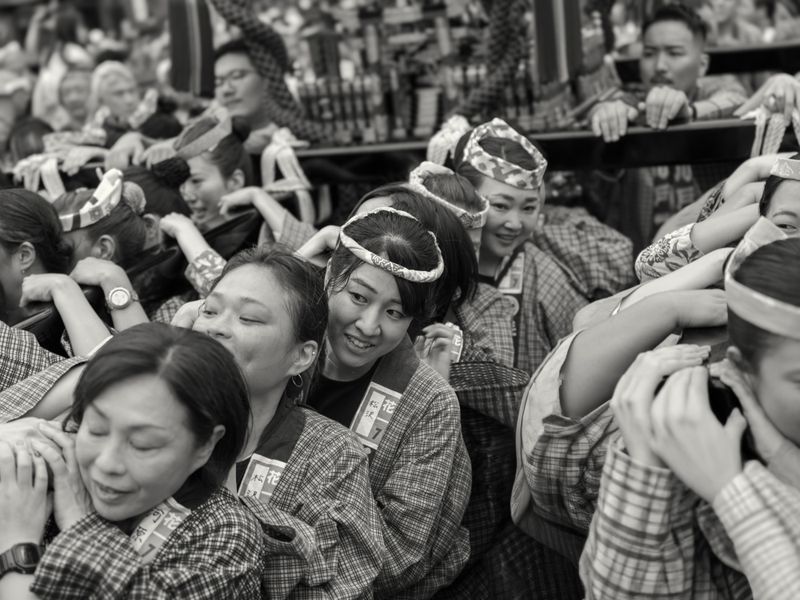
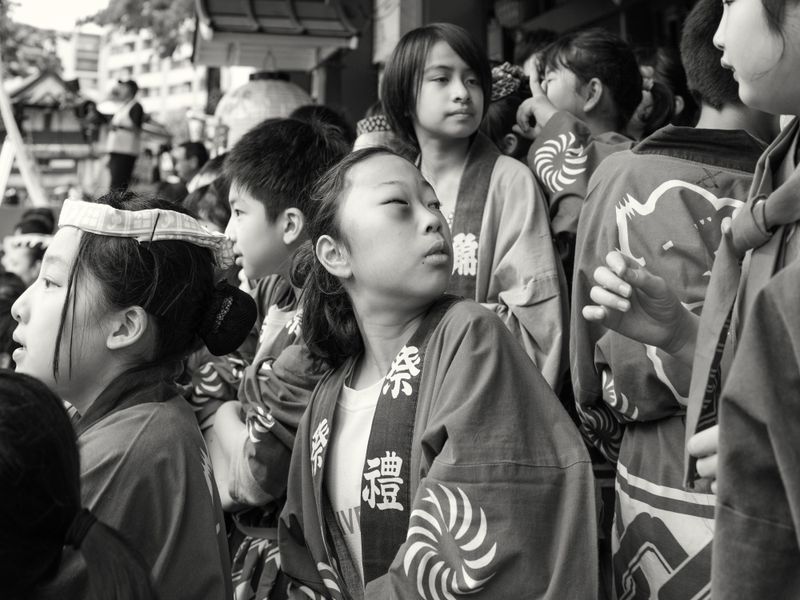
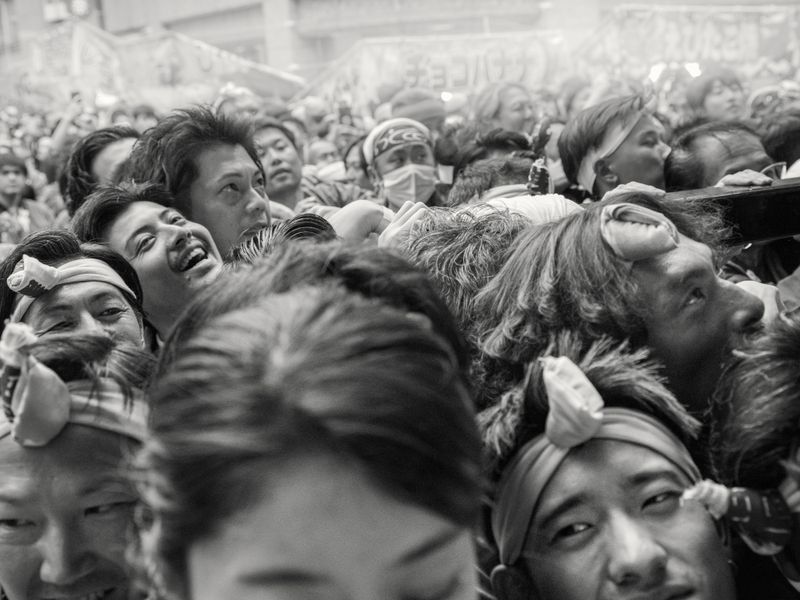
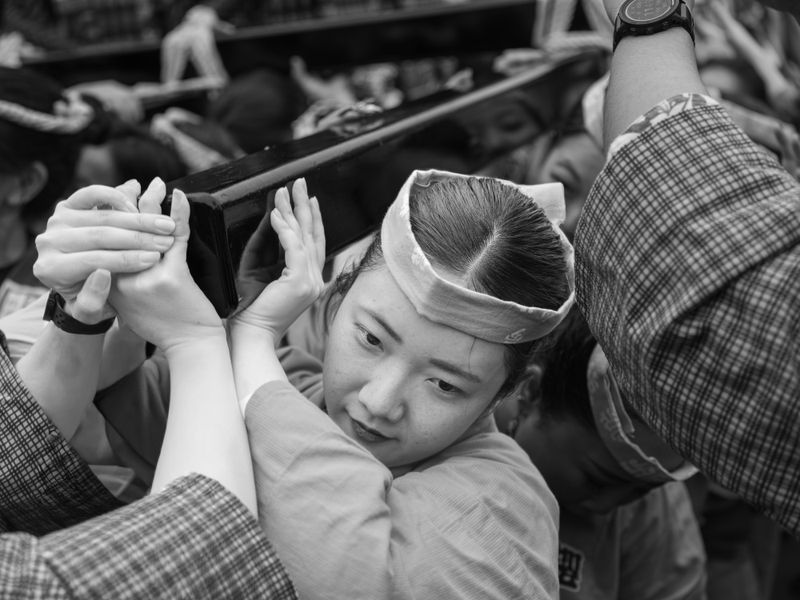
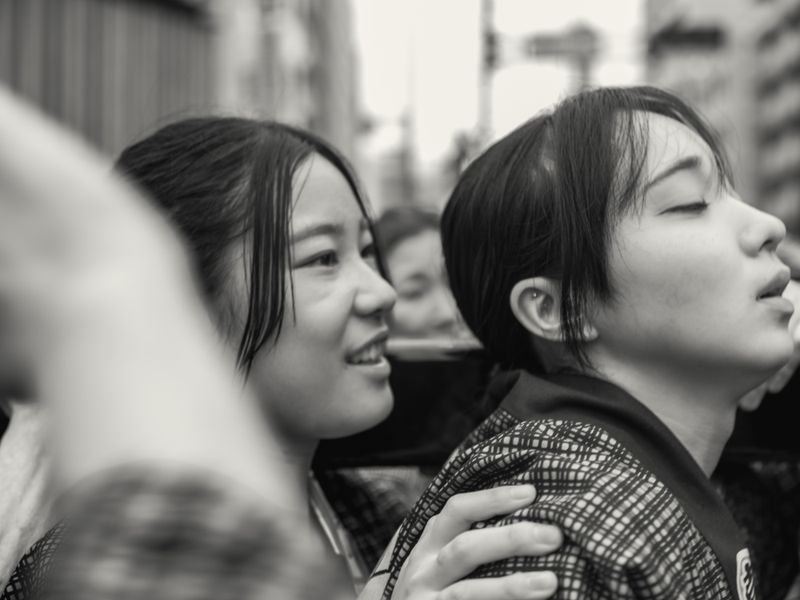
Kami No Ude — "Sacred Arms" — documents the Kanda and Sanja matsuri, Tokyo's most significant Shinto festivals. Its central photographic strategy is an act of displacement: rather than photograph the mikoshi — the portable shrine that carries the divine — Leache turns his lens toward those who bear it. Arms, torsos, faces in exertion. The sacred is not shown; it is inferred through those it moves.
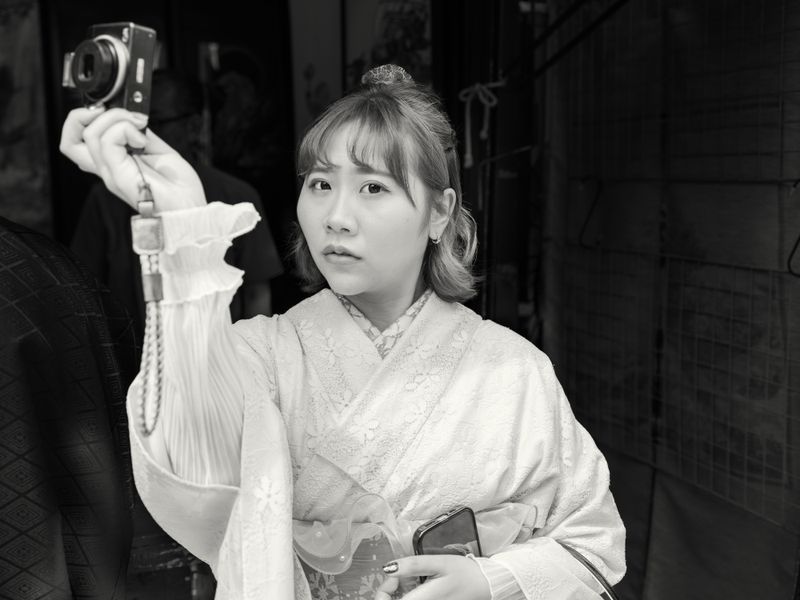
These festivals persist as ancient islands within contemporary Tokyo — enclaves that resist modernity without remaining intact. Kami No Ude registers the points where different cultural circles overlap and reconfigure: women carrying the mikoshi alongside men, a practice excluded for centuries by the concept of kegare — ritual impurity associated with menstruation — rooted in Buddhist-Confucian influence absorbed into Shinto from the Heian period onward. The 1947 constitution, drafted under American occupation, abolished that exclusion. The irony is structural: the same power that imposed gender equality on Japan maintained anti-miscegenation laws across thirty of its own states — laws that would not fall until 1967. The rite is not a fixed tradition but a living diagram — islands of culture, politics, and foreign pressure that intersect, withdraw, and leave new configurations in their wake. A logic that is not exclusive to Japan, but the way every culture exists.
These images are part of the photobook of the same name, published by HEADS TAKE AWAY (www.headstakeaway.com), 2026.