Hi Biйнi

  • Dates
    2017 - Ongoing
  • Author
  • Topics Portrait, Social Issues, War & Conflicts

Ksenia Les (1988) and Lisa Hermes (1990) studied Photography and Media at the University of Applied Sciences Bielefeld. Since their graduation in 2015, they are working as freelance photographers. Several of the works were published in various German-language print media.

Although officially the Minsk protocol was signed by Russia, Ukraine and the European security organization (OSCE) in an attempt to stop fighting in East Ukraine, war continues to

rage on. Almost every week people still die in the region. Despite the agreed cease-fire, there are ongoing battles between government soldiers and the pro-Russian rebels. The situation is trapped. Economic activity continues to worsen and people are forced to leave their homes. The country is torn apart.

We set out to discover what impact this long-term conflict has on the psyche of the people for whom war has long became part of their everyday life. While researching this underrepresented topic, we found out: when talking about war, in private, public and in politics – the women’s perspective is mostly set aside. In the debate, they are displaced from the public into the private, domestic sphere. War seems to be a man‘s thing. Courage, strength and heroism are attributes traditionally associated with men.

We wanted to give those women a voice that are not heard. How does the conflict impact the traditional image of Ukrainian women; how does it influence women on a political and social level, but also in their everyday life. What dreams, desires, fears and hopes do they have? We visited soldiers' mothers and female fighters, housewives and activists, young and old women to find the answers to these questions. The women we visited are living close to the frontline on the Ukrainian territory. Some of them support the Ukrainian and some - the Russian side of the conflict.


The result is a conglomerate of intimate and personal stories from an invisible frontline in Europe.
© Lisa Hermes - Image from the Hi Biйнi photography project
i

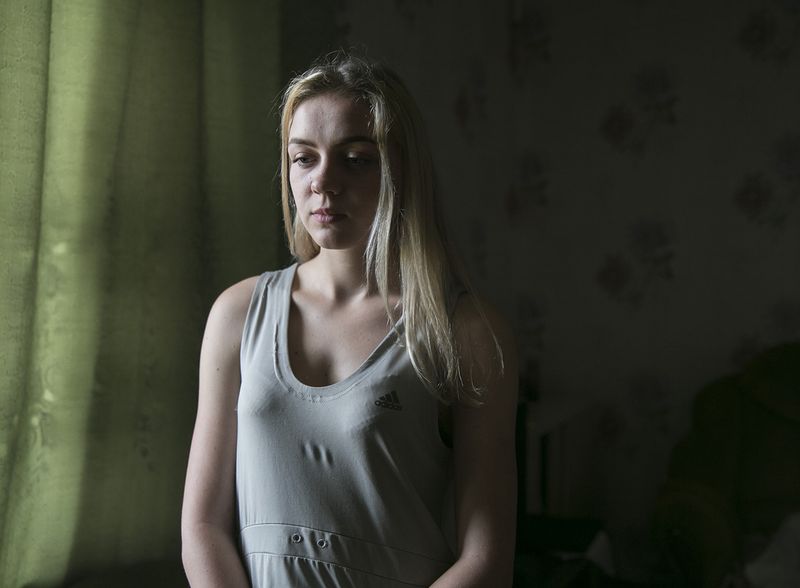
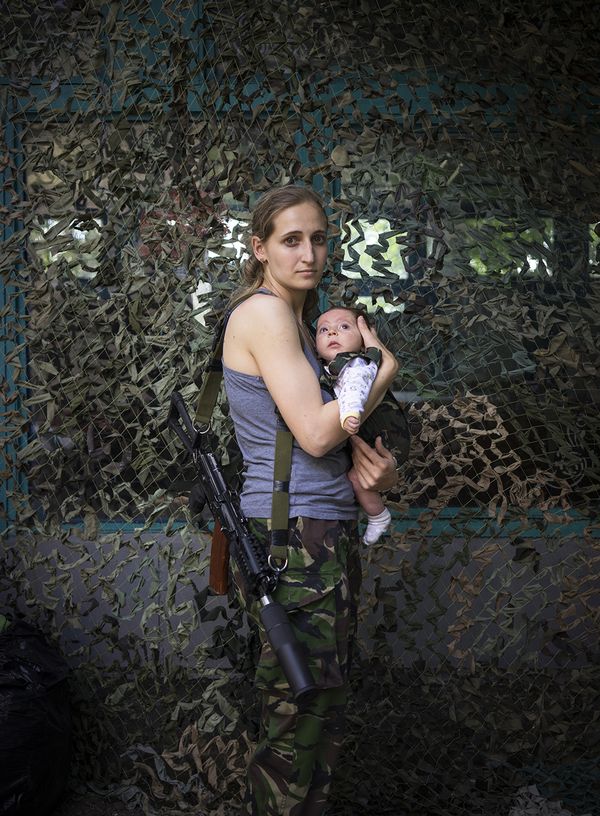
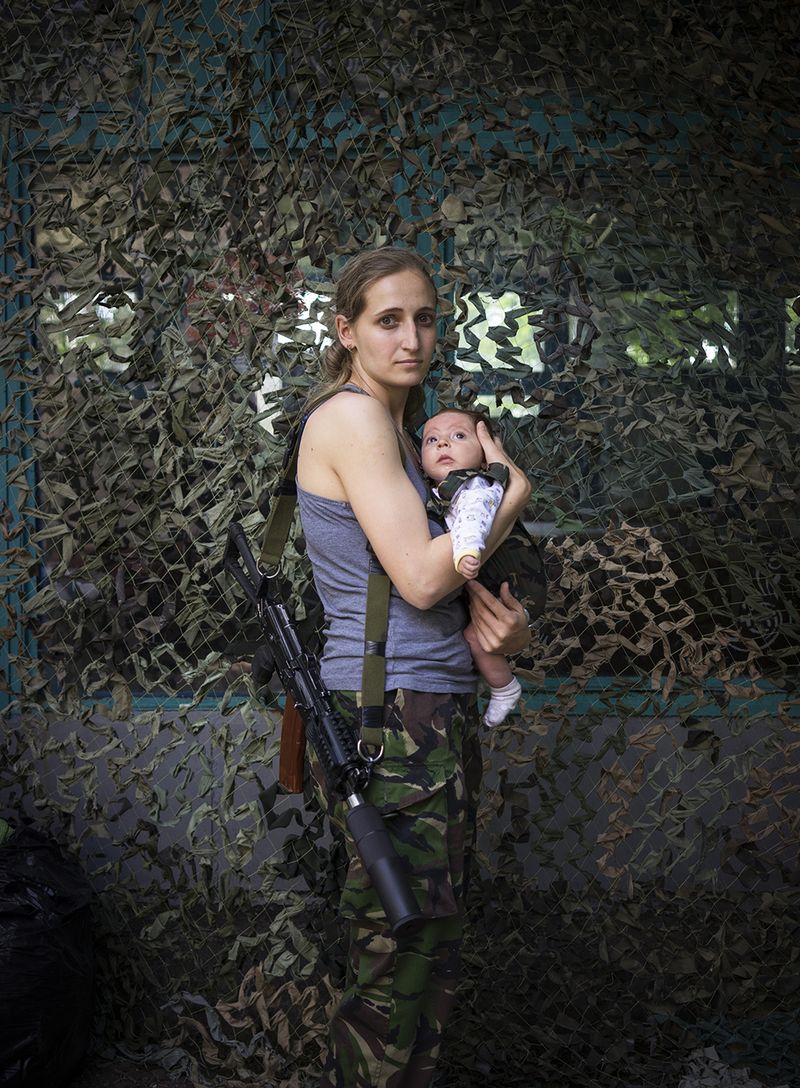
Iyna (20) was six, when her father taught her how to shoot with a gun. Now, during her spare-time between Uni and caring for her child, she prepares “anyone who wants” for the armed fight at the frontline. „I don't want to waste my live being a housewife. I want to be independent. If I fight, I have a purpose – I can fight for me, I can fight for others, I can fight for my country.” Even though she is on the death list of the ministry of DNR (Donetzk Peoples Republic), she decided to celebrate her wedding at the frontline near Avdiivka. “I went with my white wedding dress carrying a gun. When there was a grenade coming from the Separatist side, we needed to throw ourselves on the ground. I was lucky. But I was not afraid. And I am still not afraid.”

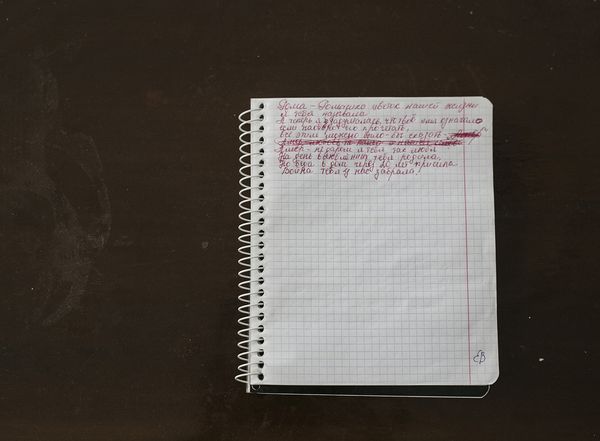
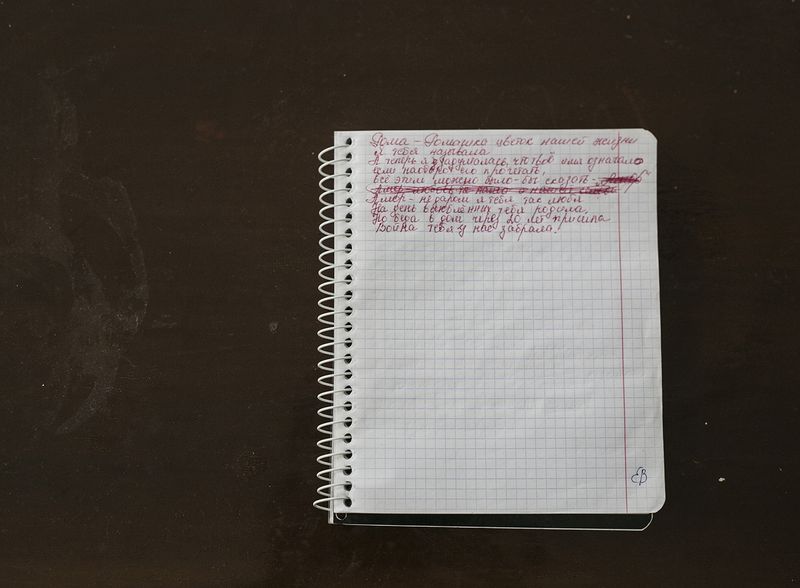
© Lisa Hermes - A poem from Lena to her son Roma, „Romashka“ who was „taken by the war“.
i

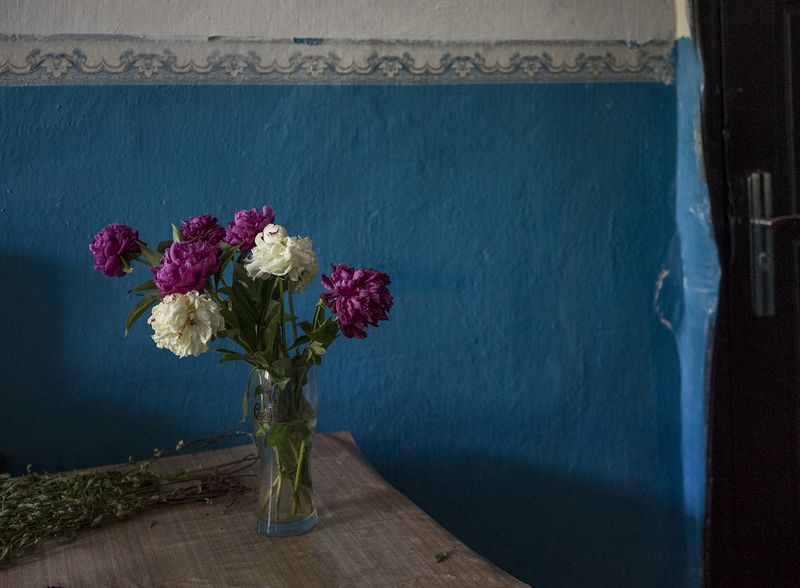
A poem from Lena to her son Roma, „Romashka“ who was „taken by the war“.

© Lisa Hermes - Image from the Hi Biйнi photography project
i

Lilya (38) lived in a village called Spartak, near Donetsk Airport. On the 29th of April 2014 she fled with her son from the war to live with her girlfriend in Odessa. A few weeks later she was diagnosed with the 2nd stage of womb cancer. Lilya needs to undergo a series of chemotherapies, 10 000 Hryvnia for one treatment. The monthly subsidy for people with a disability is only 3 000 Hryvnia (approx. 100 Euro). “Donbass won’t be conquered. Our people stood up and said we won’t allow Kyiv junta to suppress us. Why should I quit speaking Russian, my mother tongue? Only for that threats we could rip their jaws.“

© Lisa Hermes - As a result of shelling on the 24th of May the psychological clinic in Semenovka (part of Slavyansk) was heavily damaged.
i

As a result of shelling on the 24th of May the psychological clinic in Semenovka (part of Slavyansk) was heavily damaged.

© Lisa Hermes - Image from the Hi Biйнi photography project
i

„The war is evil. I am for peace“ Oksana (34) was pregnant with the second child Nikita, when the siege over Slavyansk has started. She couldn’t leave her old grandmother alone in the town. Oksana, her partner Andrey and her three year old girl Sasha stayed in their summer house and would hide almost every night in the basement. Slavyansk was occupied by pro-Russian forces of the “Donetsk People’s Republic” (DPR) from April 12 – July 5, 2014, when the Ukrainian army regained control.

© Lisa Hermes - Image from the Hi Biйнi photography project
i

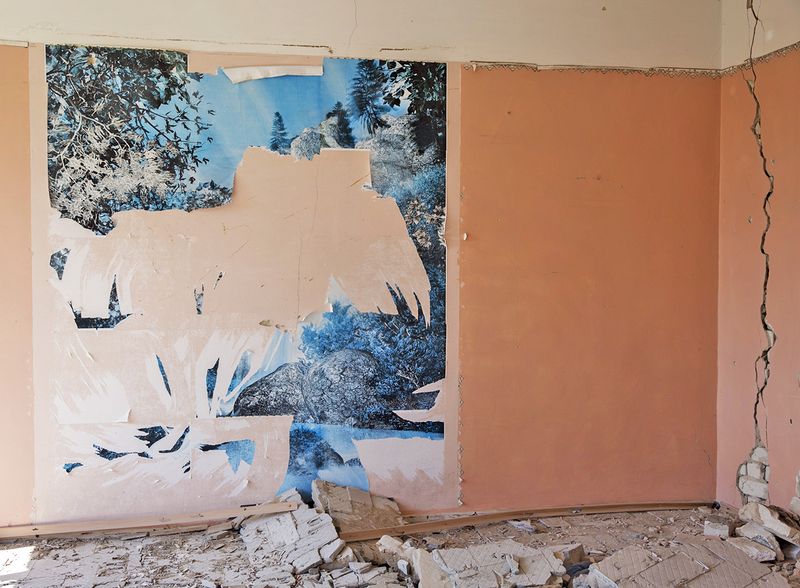
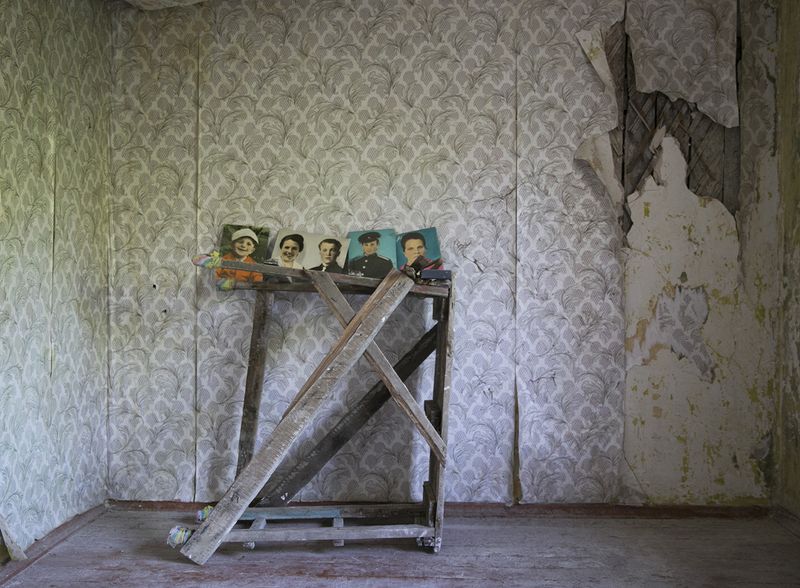
A flat in Semenovka which was destroyed by heavy shelling. The inhabitants of the house improvised a memorial for their relatives and friends which died in the house due to direct and indirect impacts of the war.

© Lisa Hermes - Image from the Hi Biйнi photography project
i

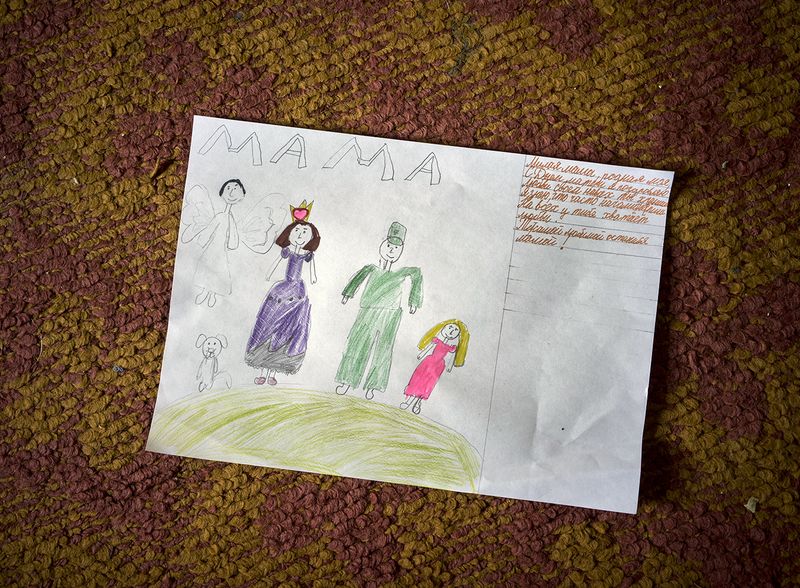
Oksana (12) painted this picture for her mother on mother's day. On the left she painted her brother as an angel and beneath him her little dog. She is hardly overcoming the loss of her oldest brother Roma who served for Ukrainian army near Mariupol and died tree month ago. After Romas burriel his friends bought a little puppie for Oksana. “My dog always knows when I’m sad. He became my best friend.”

© Lisa Hermes - Image from the Hi Biйнi photography project
i

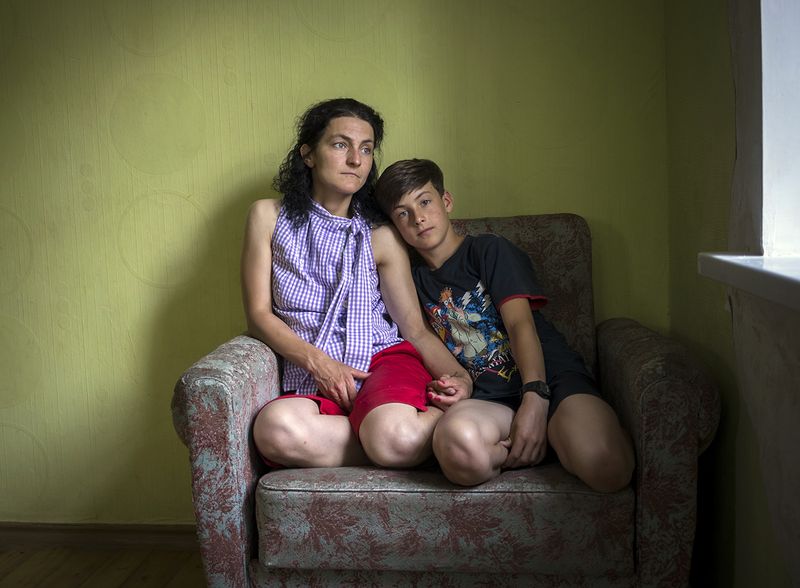
Lena’s (46) son, who just turned 20, was shot by a sniper near Mariupol. He wanted to save his comrade who was shot in the belly, but immediately caught a bullet in the neck himself. “It is three months now that Roma passed away. After Roma‘s death all the pity to the other side had gone. My daughter Oksana is the only hope and joy which is left for me.“

© Lisa Hermes - Image from the Hi Biйнi photography project
i

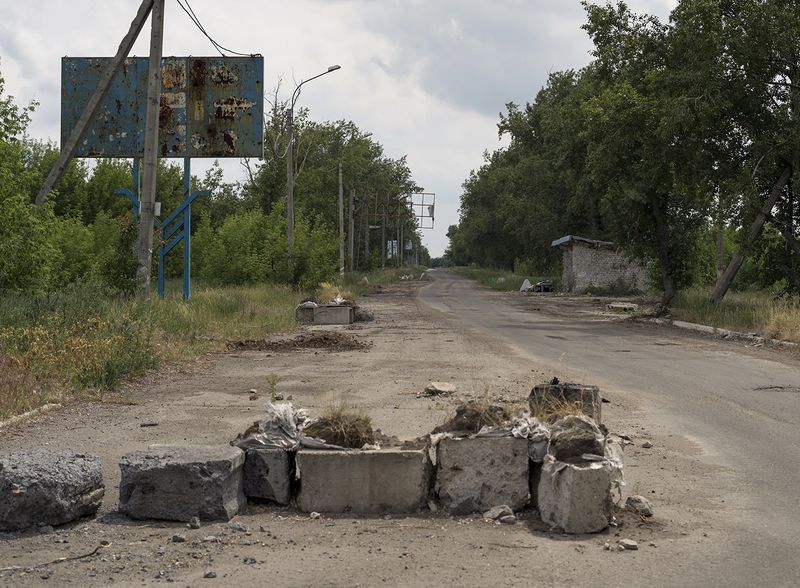
The road is closed because the front line lies between Avdiivka and Donetsk. This site is controlled by the Ukrainian military, the region further down the road by pro-russian separatists. “With the closure of the road to Donetsk, they cut an important cultural and social connection for us people in Avdiivka. We used to visit friends in the city, brought our kids to cinemas or sports clubs. Before the battle in 2014, people started buying houses here - it was a quiet place, at the same time peop- le could enjoy all the virtues of a million city.” - says the english teacher Svetlana who is still living in Avdiivka.

© Lisa Hermes - Image from the Hi Biйнi photography project
i

Svetlana (37) lives with her family in Avdiivka. Despite the proximity to the front and the daily danger of the shelling, the family has decided to stay in their home. „I do not bring it over my heart to move somewhere else. Our life is here. If we would leave, we have to start from scratch. Sometimes we even forget that we live in the middle of the war. e sounds of the daily bombard- ments are now part of every- day life.”

© Lisa Hermes - Image from the Hi Biйнi photography project
i

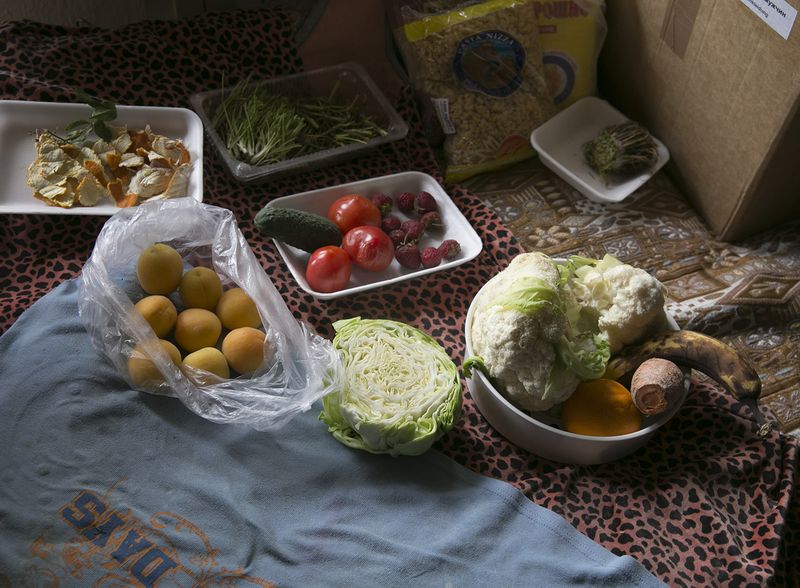
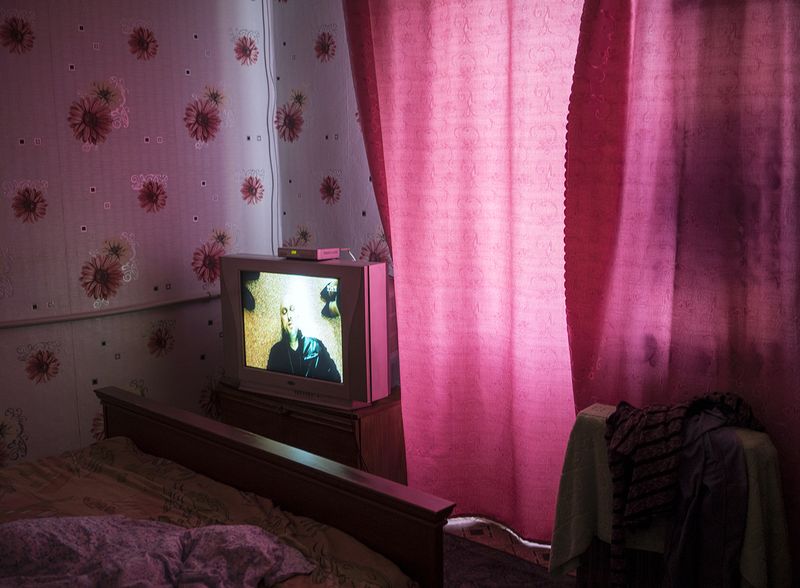
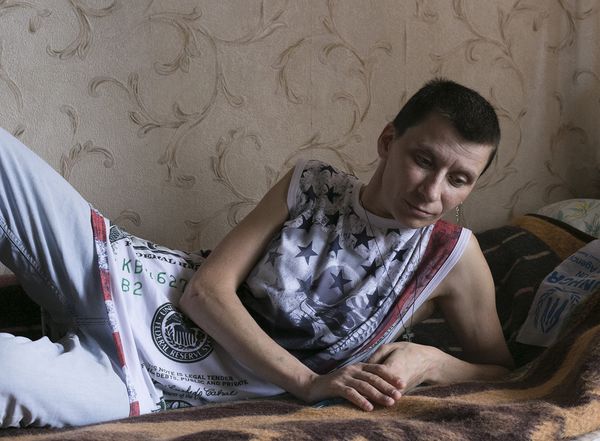
Because of the lack of space, the bed is used as a table during the day. Alla (55) and her daughter Ljuba (32) and a granddaughter Margarita (14) are living in a home provided for IDP’s by the government. They share a room of 13 square meters. Here they cook, sleep, eat, wash and prepare homework. „Our home in Makeevka, 30 km of Donetsk was burned. Here we do survive, not live“.

© Lisa Hermes - Image from the Hi Biйнi photography project
i

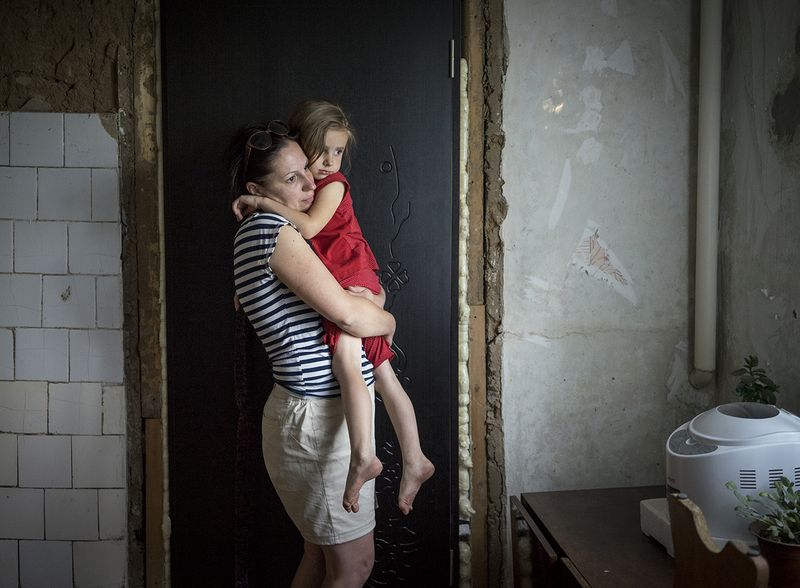
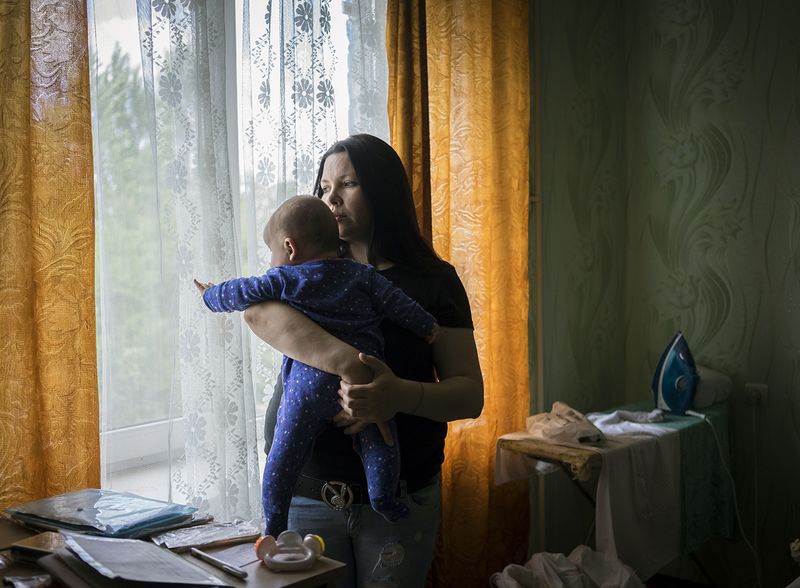
Sveta (42) escaped from Donetsk to Slavyansk, leaving her husband and her 18 year old son in a a self-proclaimed Donetsk People‘s republic (DPR). “One of the worst things in war for me was that I won’t be able to realize my dream and have a second child - a baby girl. My husband stay- ed in DPR to watch over our ats and I couldn‘t stand bombing anymore and moved to the territory of Ukraine. en during his short visits I got pregnant. I knew it’s gonna be hard - but I kept the baby. In fact, I receive only 800 Hryvnia for my baby a month. And I need to send money to my husband becau- se he lost his job. So I must work and carry my 6 months old So a with me all the time when I show a at for rent for a client”.

© Lisa Hermes - Image from the Hi Biйнi photography project
i

The doorframe and the wall next to the entrance to a at are freshly painted to cover the traces of shrapnel. Nevertheless the bend in the doorframe is still visible. People are trying to forget, but the traces of the war will stay.

© Lisa Hermes - Image from the Hi Biйнi photography project
i

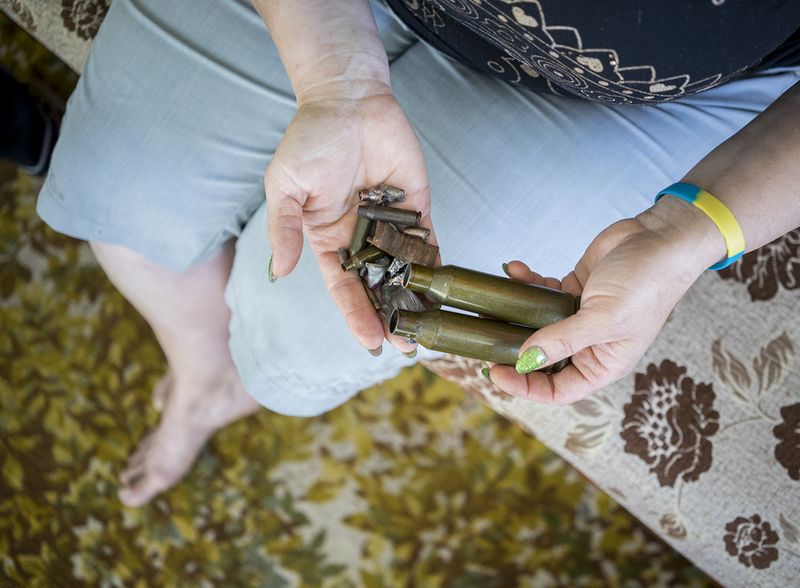
Lena collected the empty brasses from shooting in her garden. “We always knew in advance when a shelling was imminent because our cat Ryzhik would always run under the bed a few minutes before. We were holding each other shivering and praying. Finally our house was pretty destroyed by our ukrainian fellas from the 80th division, by a mistake. The pro-russian separatist were just in the house next to ours.“

© Lisa Hermes - Image from the Hi Biйнi photography project
i

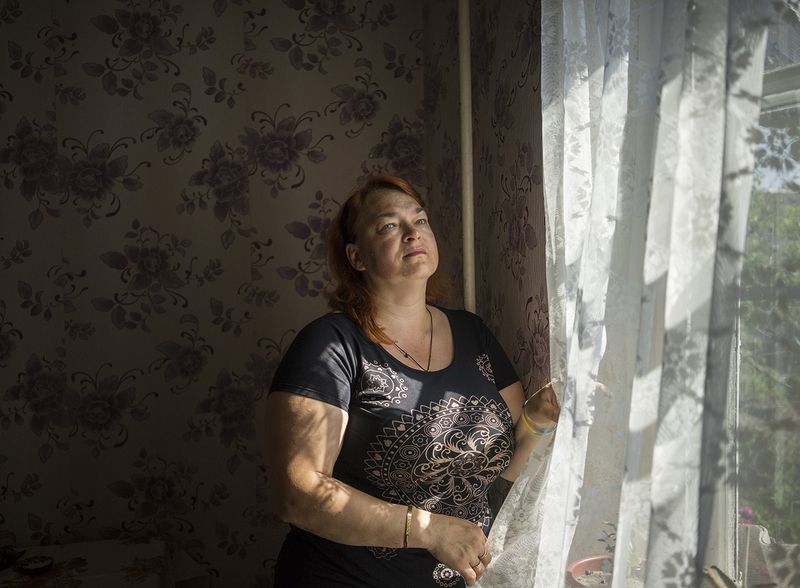
Tanya (18) is living in one of the few remaining houses in Semenovka. The town was badly shelled and suffered air bombing during the period of May-July 2014. About 300 private houses were destroyed. “We were trapped between the pro-russian militants and the ukrainian army – we were like between the sky and the ground. e bullets were raining through the yard. And we were at home lying on the oor and were afraid to stand up for hours. I wasn’t afraid to die, I am more afraid of spiders.” Tanya says without having lost her humor.

© Lisa Hermes - Image from the Hi Biйнi photography project
i

Tanya (18) moved to the former room of her grandmother. The old lady couldn’t stand living there anymore after the loss of her husband, who didn’t survive the tension of the war. Tanya is still positive: “Only two rooms were destroyed in the at. Well, the kitchen, corridor and the toilet stayed untouched. We restored it with the help of the whole family and friends - not a big deal when you have such a big positive family.”

© Lisa Hermes - Image from the Hi Biйнi photography project
i

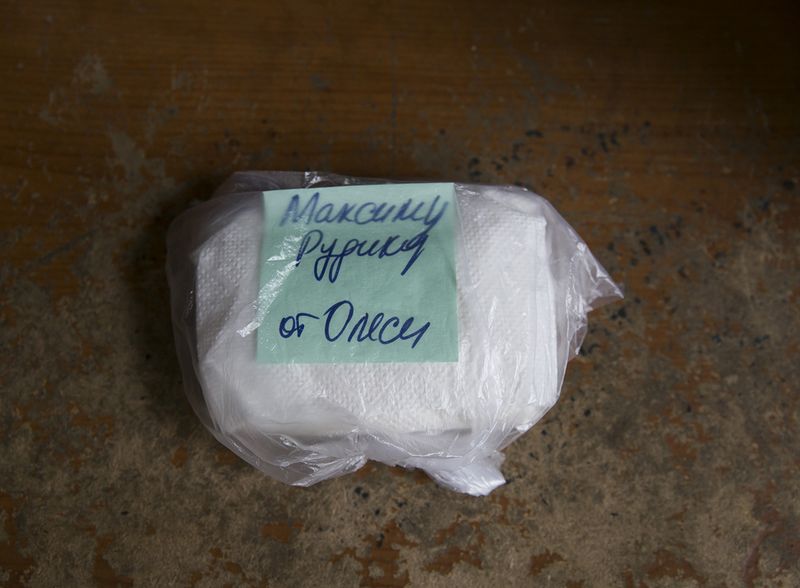
„To Maksim from Olesya“. One of the volunteer initiatives in Dnipro (which borders with Donbass) is a special room for commuting soldiers in the train station, open 24/7. Ladies serve tea and snacks, chat and make soldiers feel a bit more like home during long waiting hours. The napkins are one of the little usefull presents from a volunteer Olesya to a soldier Maksim. She gave it to him to carry it on his way to the frontline.

© Lisa Hermes - Image from the Hi Biйнi photography project
i

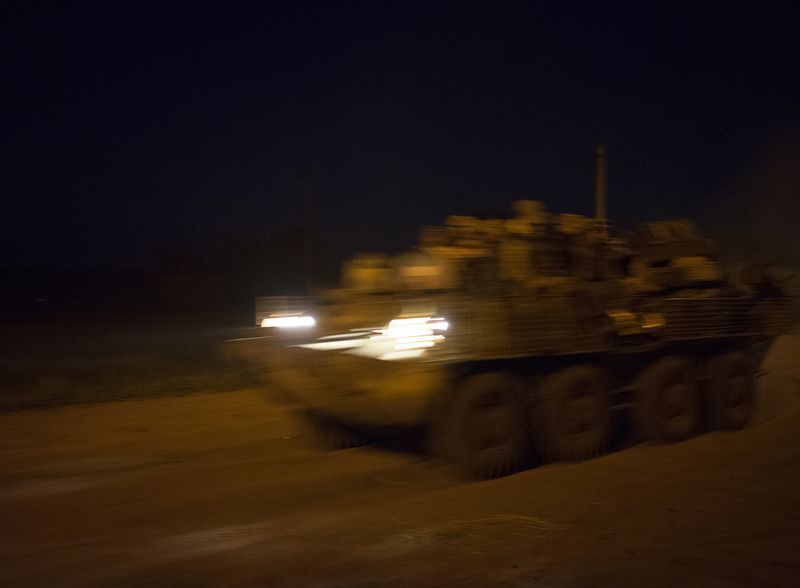
New tanks arriving in the military base in Sloviansk. The conflict in the Eastern Ukraine has turned into a trench warfare, which again and again results in fierce fighting. So in January 2017 in Awdijiwka, north of Donetsk Airport. Within a week, several soldiers and civilians died.

© Lisa Hermes - Image from the Hi Biйнi photography project
i

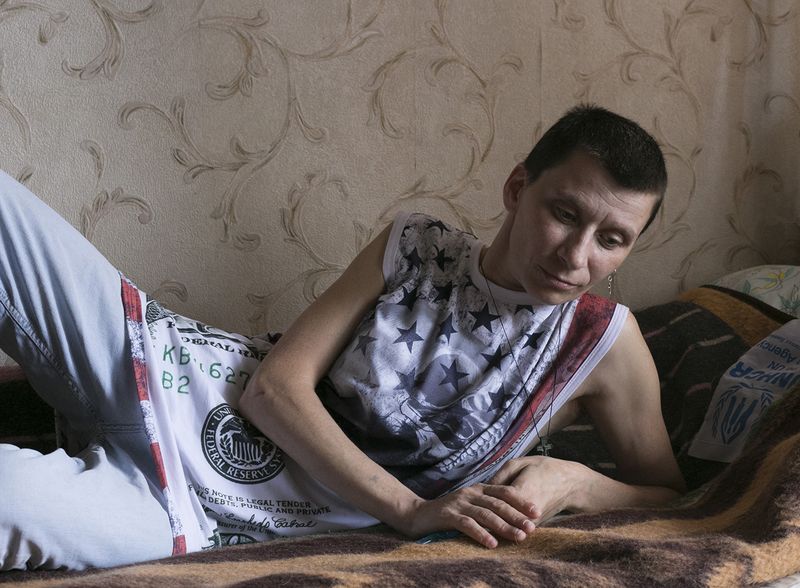
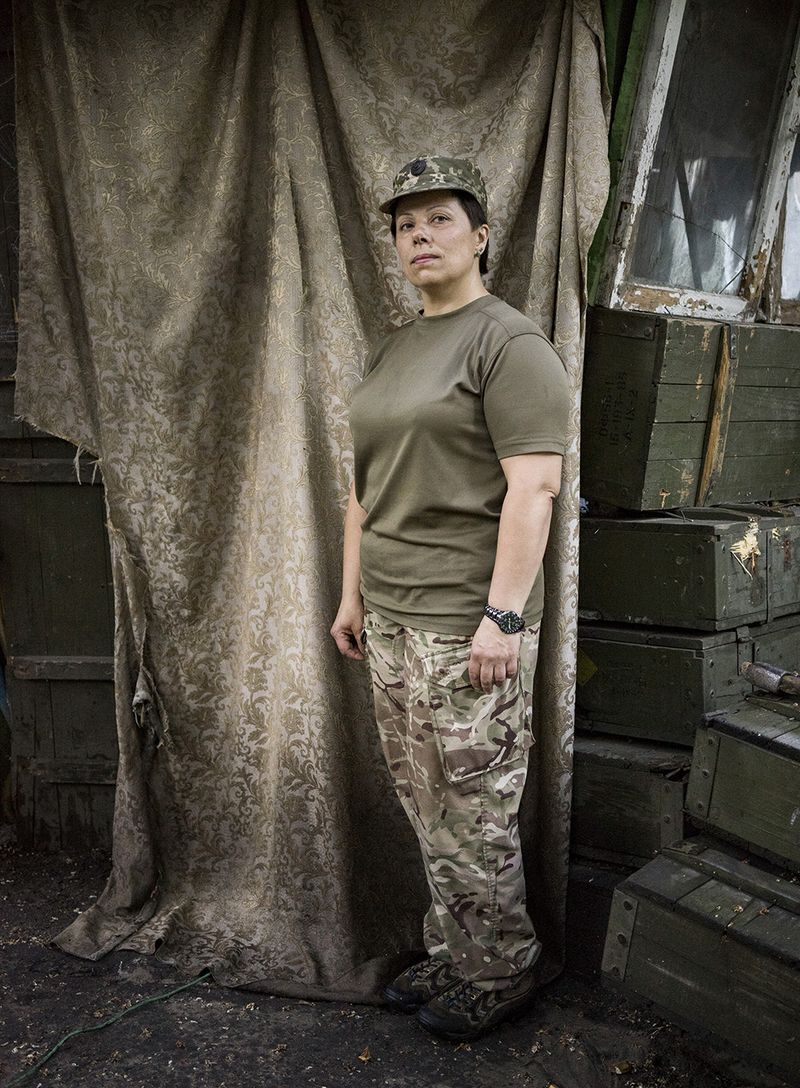
Irina (36) started working as a military paramedic in 2014, when the war started. She belongs to the 8.5 per cent of women who are working in the Ukrainian military. “ Through my income of this work, I can support the studies of my sons. Being a single mother, supporting them would be almost impossible if I hadn’t this job. But it’s also great fun here. In contrast to my marriage, I can now live more independent and at least experience something.”

© Lisa Hermes - Image from the Hi Biйнi photography project
i

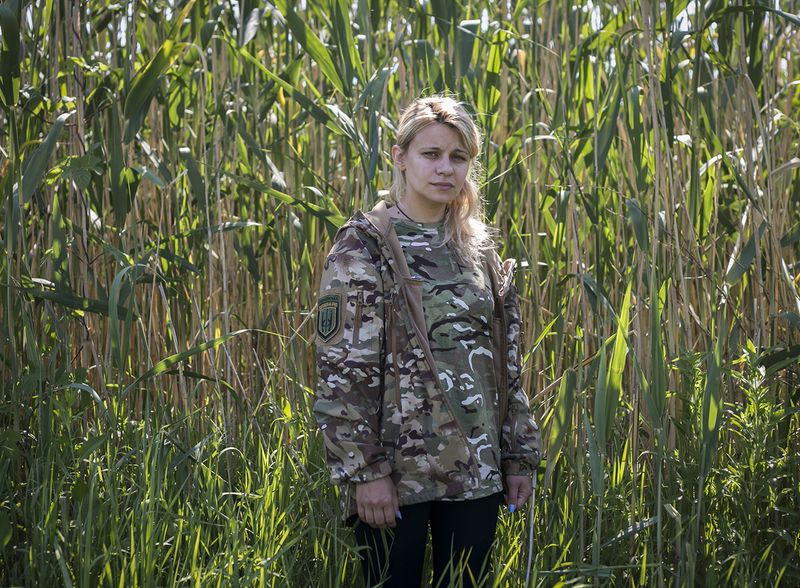
Tanyas (30) husband Andrey was shot in the war, when their son was only one-year old. “I didn’t know how to cope with it. I started baking cakes like mad, but it didn’t help. When I heard from a friend that he joined a volunteer battalion to fight against separatists, I finally knew what to do. My mom couldn’t bear to leave our family flat in Luhansk. Nowadays she is afraid to go out on the streets because if the information about me, being a volunteer for the Ukrainian army, comes out, she won’t be safe anymore. Now that I’m on the official death list of the separatists, the risk is even higher.” Without the volunteer battalions, in 2014 Ukraine would hardly have been able to push back the separatist fighters. Today however these groups are becoming a problem because they resist control from Kyiv.