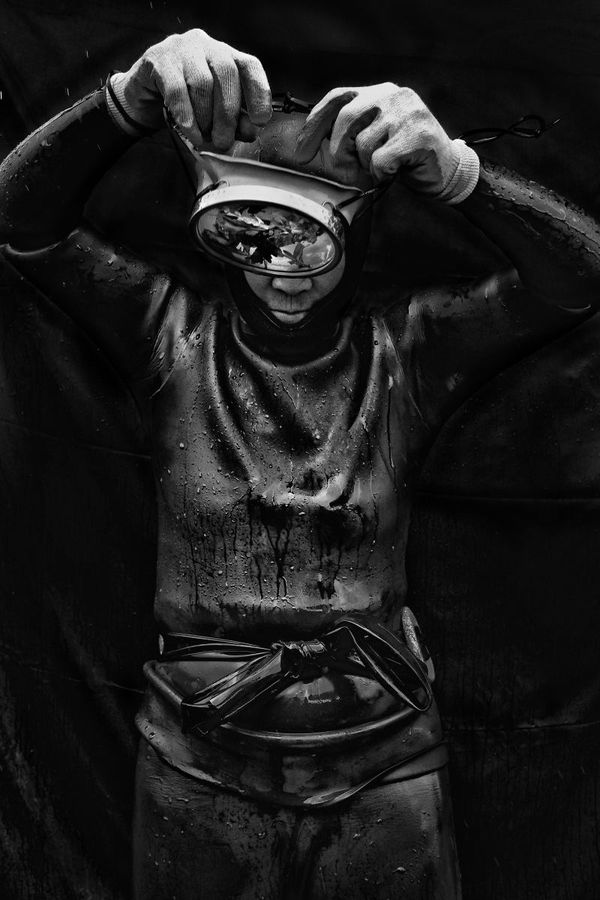
Grandma Divers

South Korea, Jeju island, known for its characteristic basalt volcanic rock, sits off South Korea. It is the home of the renowned Haenyeo or women of the sea who free dive off the black shores of Jeju harvesting delicacies from the sea. Wearing thin rubber suits and old fashioned goggles, this aging group of women are celebrated as a national treasure and inscribed on the UNESCO list of Intangible Cultural Heritage, but the tradition is slowly fading as fewer women choose this extremely hazardous profession. Today, the majority of Haenyeo are over the age of 50 and many are well over 70. In a society obsessed with education, the future of this physically arduous activity would appear bleak, and yet… Efforts by the government and local communities to preserve and promote this ecological and sustainable lifestyle have brought renewed interest from young people disillusioned with urban life and eager to return to their roots. It is perhaps a renaissance.
© Alain Schroeder - Image from the Grandma Divers photography project
i

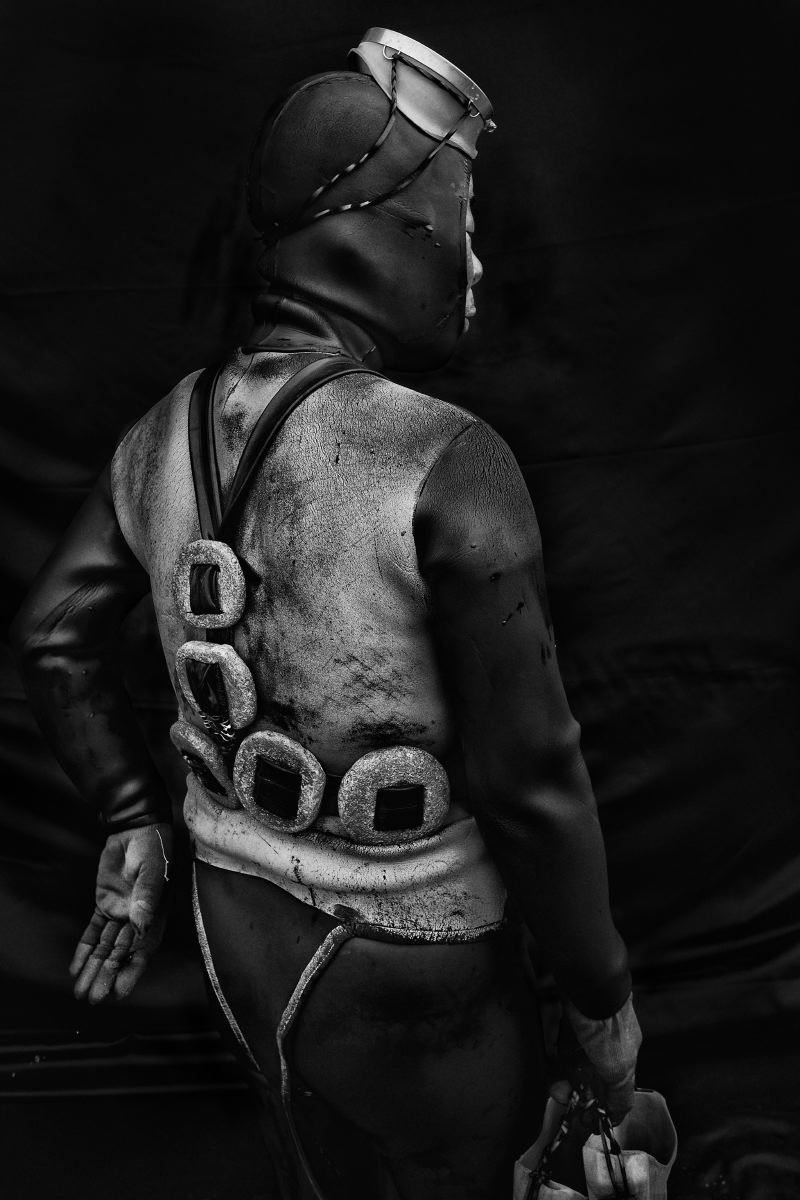
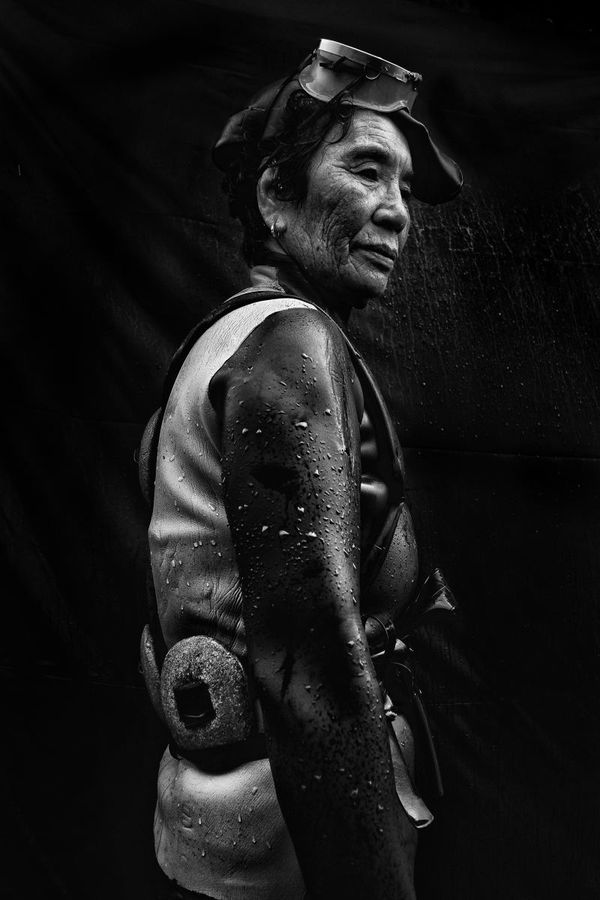
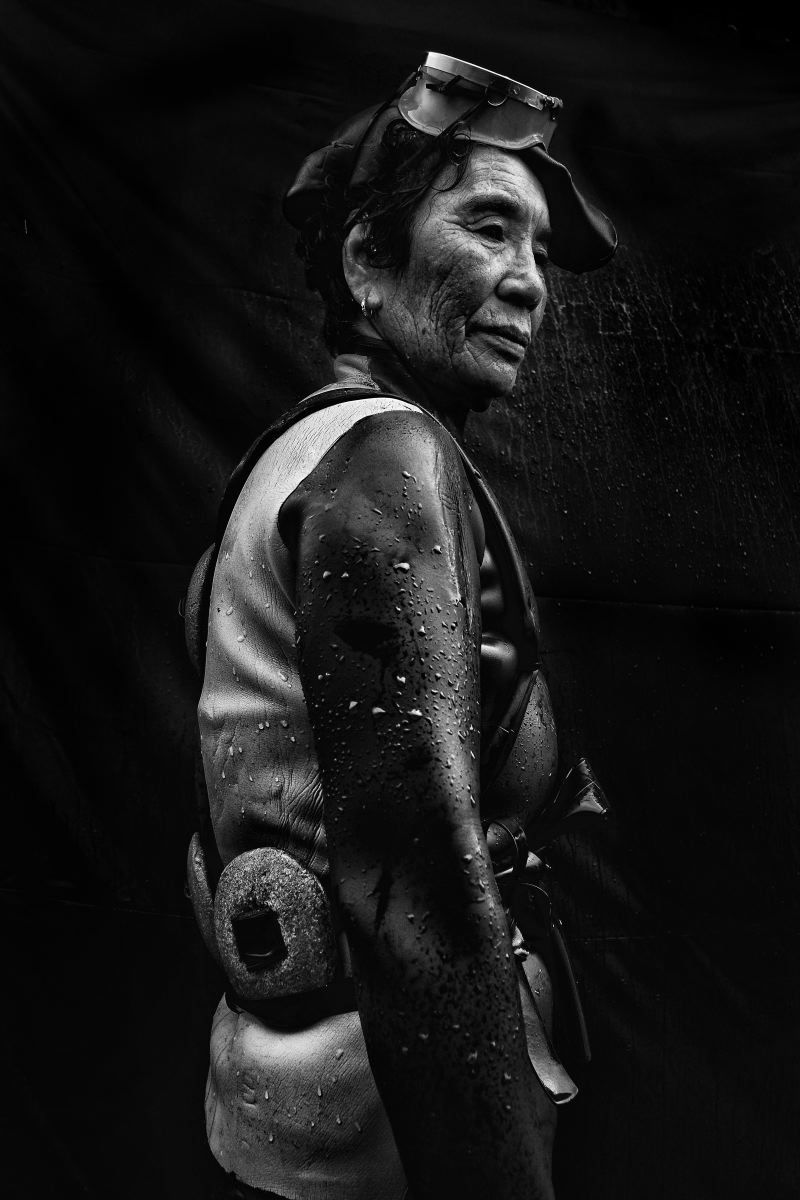
Soon Hwa Kim, 71 years old comes from Myeonsu-dong village. She has been diving 60 years. She has one son and daughter but she did not encourage her daughter to follow her path because the work is too hard. She has just put on her homemade weight belt and is preparing to dive despite heavy rain.

© Alain Schroeder - Image from the Grandma Divers photography project
i

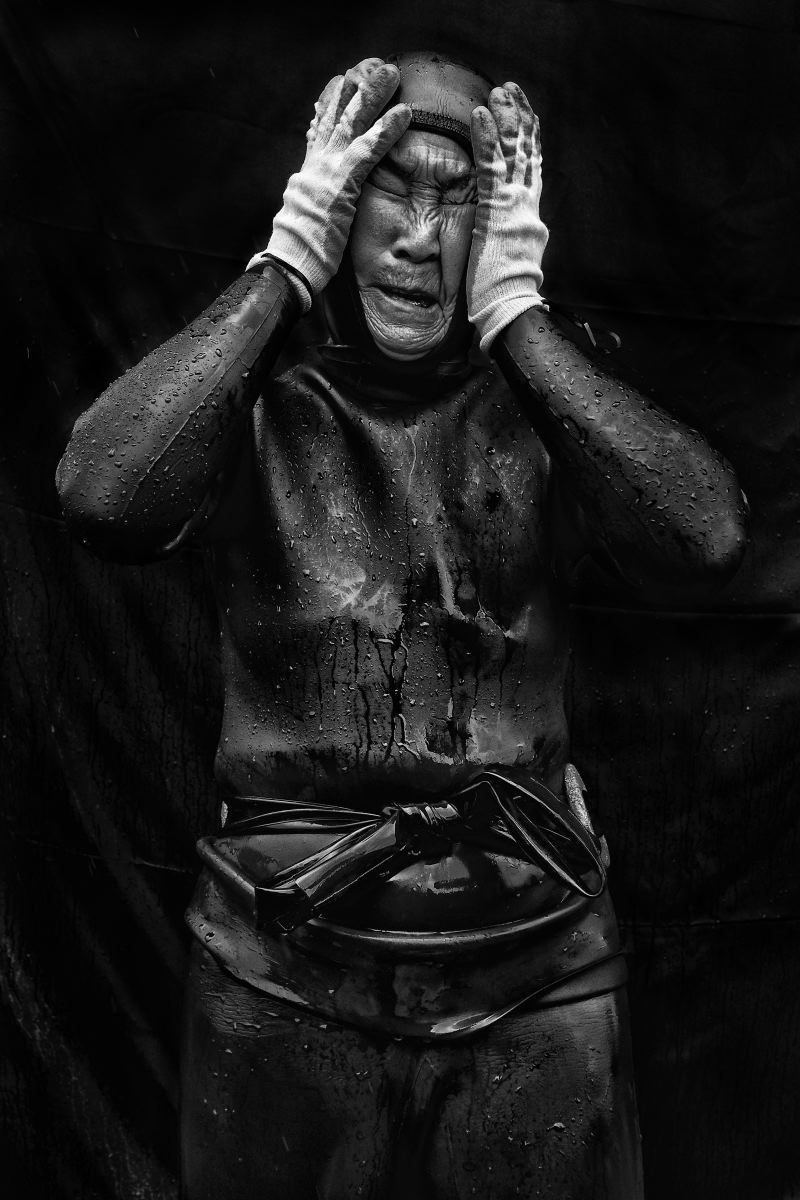
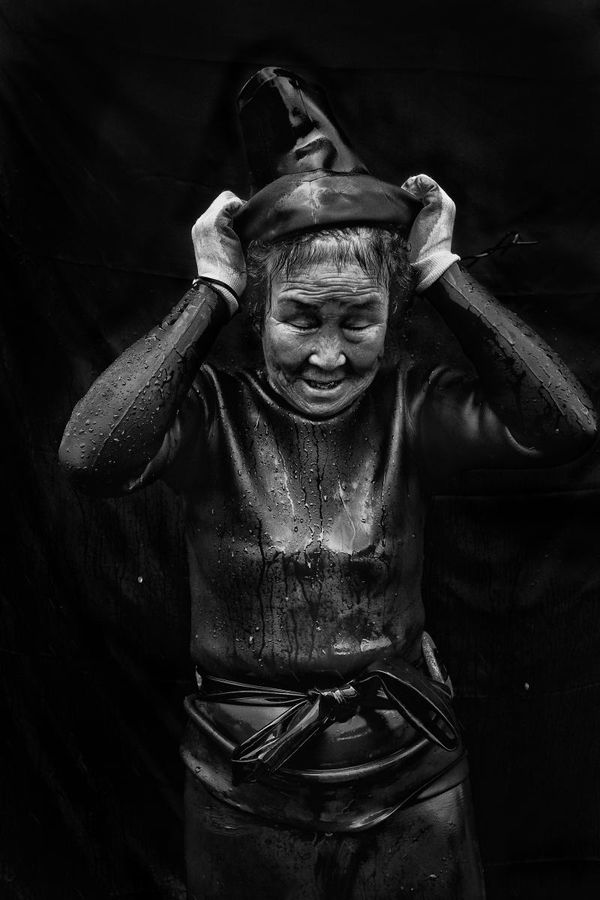
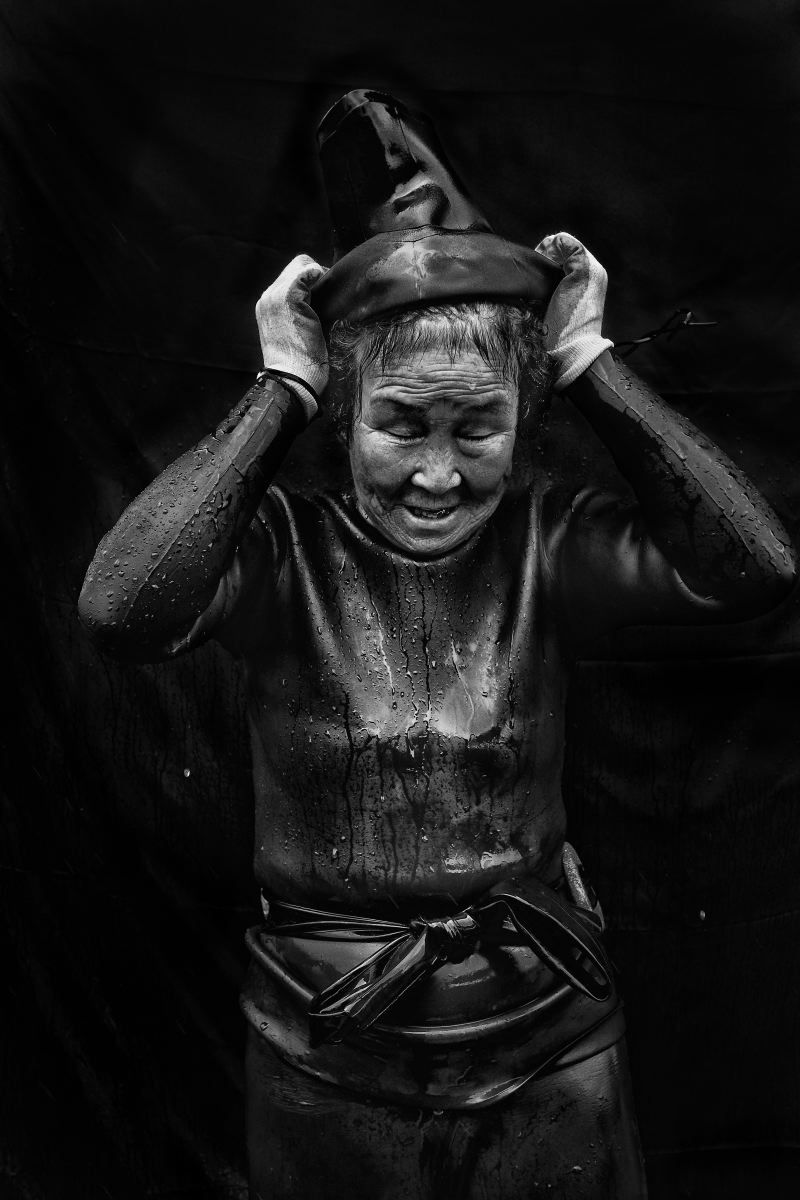
Anja Son, 76 years old, comes from Myeonsu-dong village. She puts her gloves on and then her hood. She has been diving for 40 years, but has never encouraged any of her children to become free divers as it is a difficult and dangerous profession for little gain. In fact, like most Haenyeo, she must supplement her income with other work; predominantly farming.

© Alain Schroeder - Image from the Grandma Divers photography project
i

Anja Son, 76 years old, comes from Myeonsu-dong village. She prepares her mask with a branch of mugwort a common species of aromatic plant. Like saliva or baby shampoo used by many divers, the plant will leave a film on the glass preventing condensation. Mugwort’s odor also has a calming effect on the divers.

© Alain Schroeder - Image from the Grandma Divers photography project
i

Wonja Kang, 83 years old comes from Myeonsu-dong village. There is no retirement age for Haenyeo. The vast majority of active Haenyeo are over the age of fifty with many over eighty. They are organised in categories, usually the oldest and more experienced divers go further out to sea and deeper and subsequently have the chance harvesting the more valuable catch. Oxygen tanks have been available for many years but the ecologically-minded Haenyeo continue to free dive to avoid over-fishing and to maintain the ocean’s resources. Ahead of their time for sustainable fishing.

© Alain Schroeder - Image from the Grandma Divers photography project
i

Bok-yeon Oh (76) is a grandmother. She has been diving for 40 years, but has never encouraged any of her four children to become free divers as it is a difficult and dangerous profession for little gain. In fact, like most Haenyeo, she must supplement her income with other work; predominantly farming.

© Alain Schroeder - Image from the Grandma Divers photography project
i

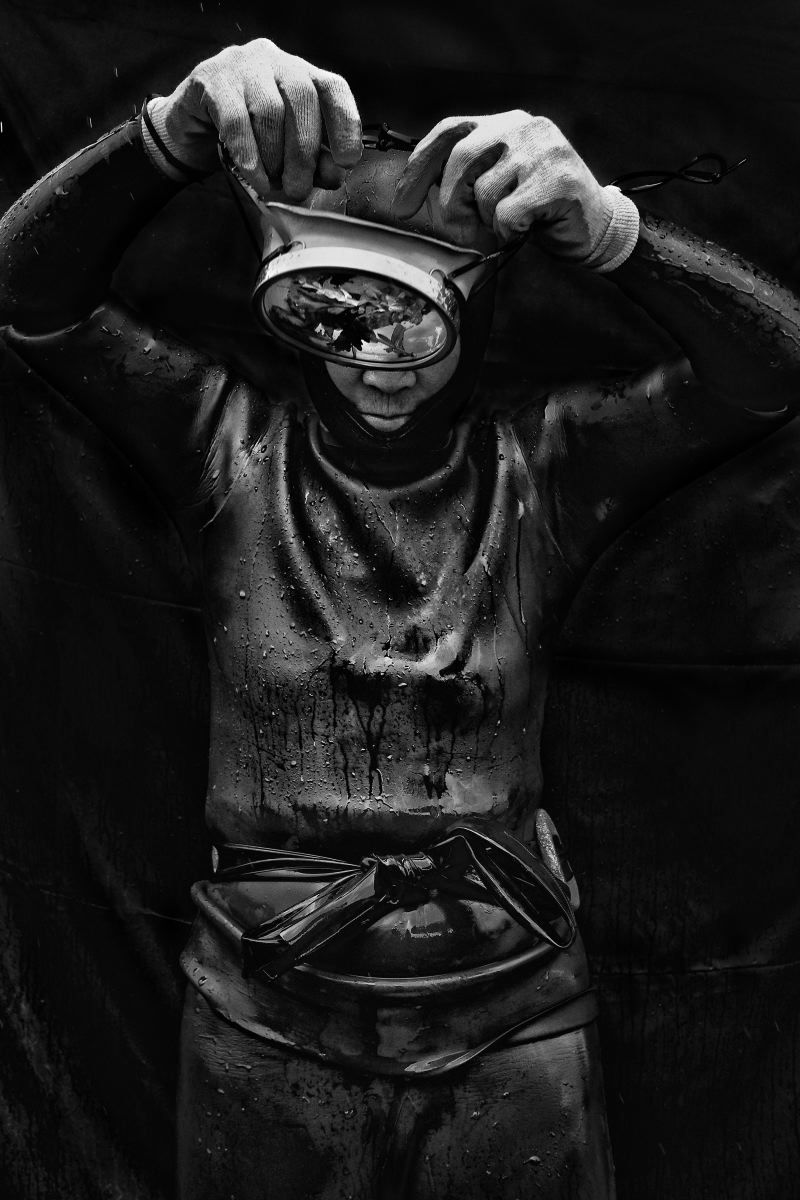
Anja Son, 76 years old, comes from Myeonsu-dong village. She puts her gloves on and then her hood. As she adjusts her hood she is careful not to tear the delicate rubber suit.

© Alain Schroeder - Image from the Grandma Divers photography project
i

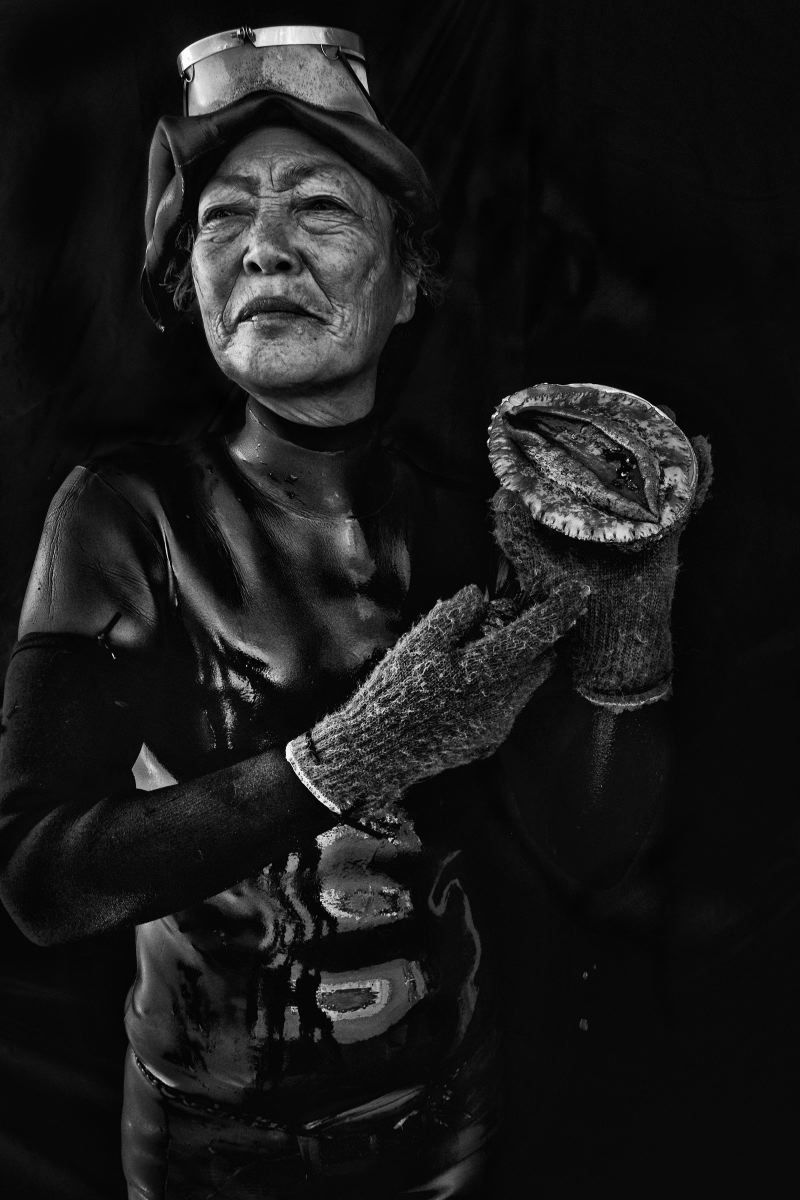
Hyunsuk Oh, 65 from Seongson, shows off a giant abalone, the most precious catch this morning that she brought back in the special pouch all Haenyeo carry in case of this rare find. While small abalone are abundant and sell well locally, larger specimens are harder to dislodge from the rocks often 10 meters down requiring the strongest Haenyeo to hold their breath for upwards of two minutes.  However, the effort will be well-rewarded as this delicacy will likely find its way to an upscale neighborhood in Seoul where diners are willing to spend 50,000 won (about $50) for a mouthful.

© Alain Schroeder - Image from the Grandma Divers photography project
i

Oksun Kim, 80 years old, comes from Myeonsu-dong village. She has 4 children but none of them are divers. She has just put on her homemade weight belt. Oxygen tanks have been available for many years but the ecologically-minded Haenyeo continue to free dive to avoid over-fishing and to maintain the ocean’s resources. Ahead of their time for sustainable fishing.

© Alain Schroeder - Image from the Grandma Divers photography project
i

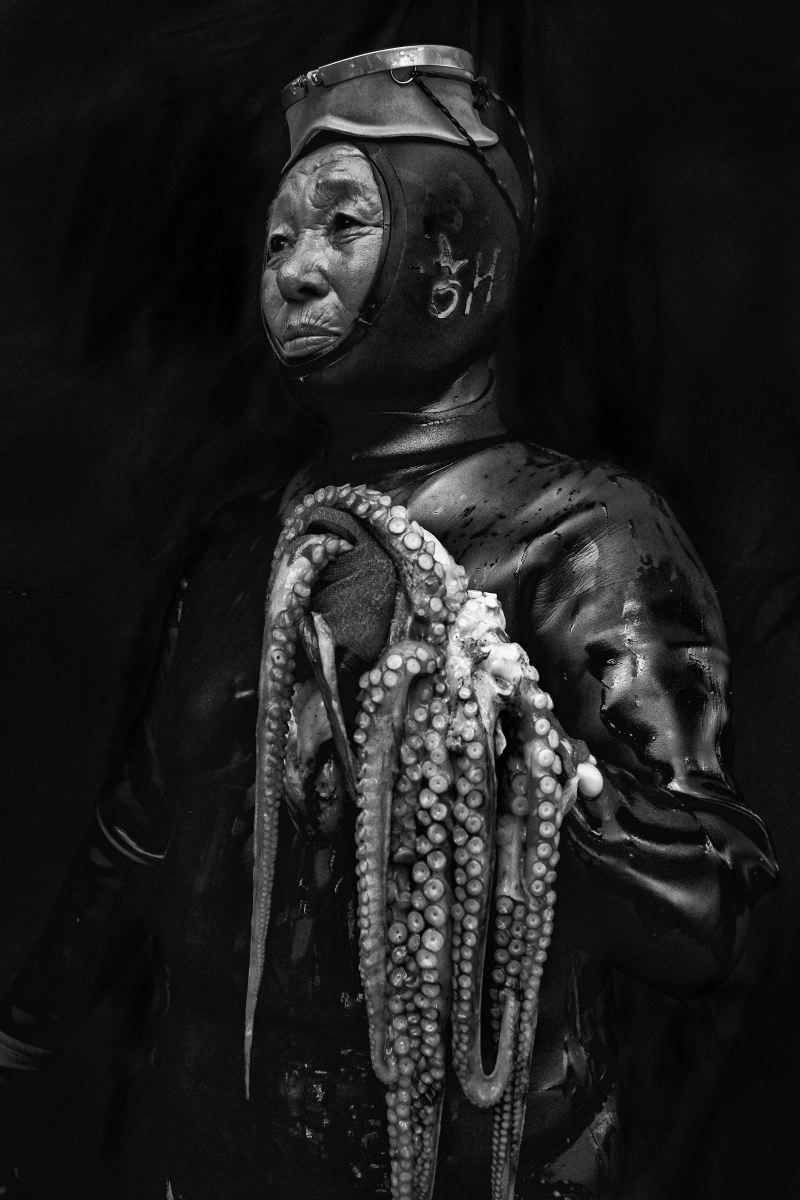
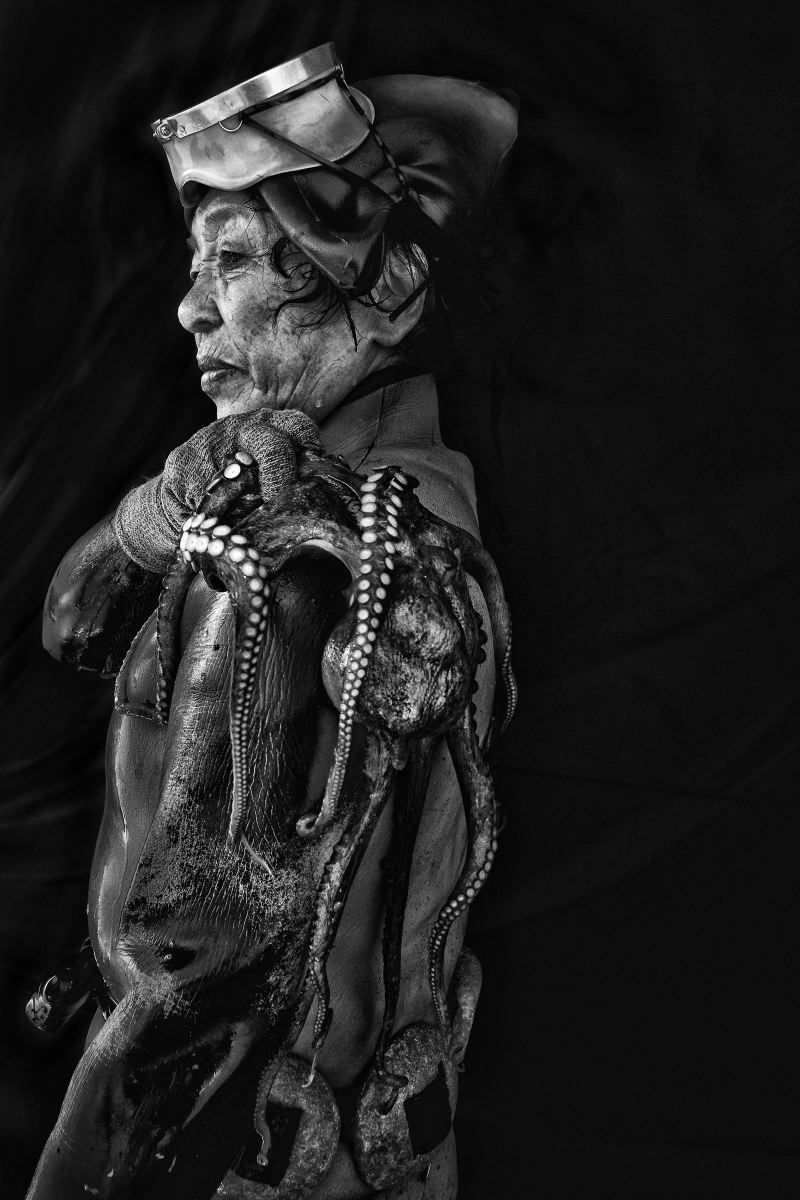
Soon-ja Hong of Seongsan comes out of the water holding an octopus.  She explains that she and her fellow Haenyeo set traps to catch octopuses which come in a variety of shapes and sizes. Today she was lucky to catch this large specimen. Now 69, she is at the peak of her career, It has taken Soon-ja many years to build up her endurance and fine-tune the hunting techniques that enable her to dive most efficiently.  But even the most experienced divers must follow the strict rules imposed by the fishing cooperatives including diving cycles that allow the women to work seven days on and eight days off in order to recuperate.

© Alain Schroeder - Image from the Grandma Divers photography project
i

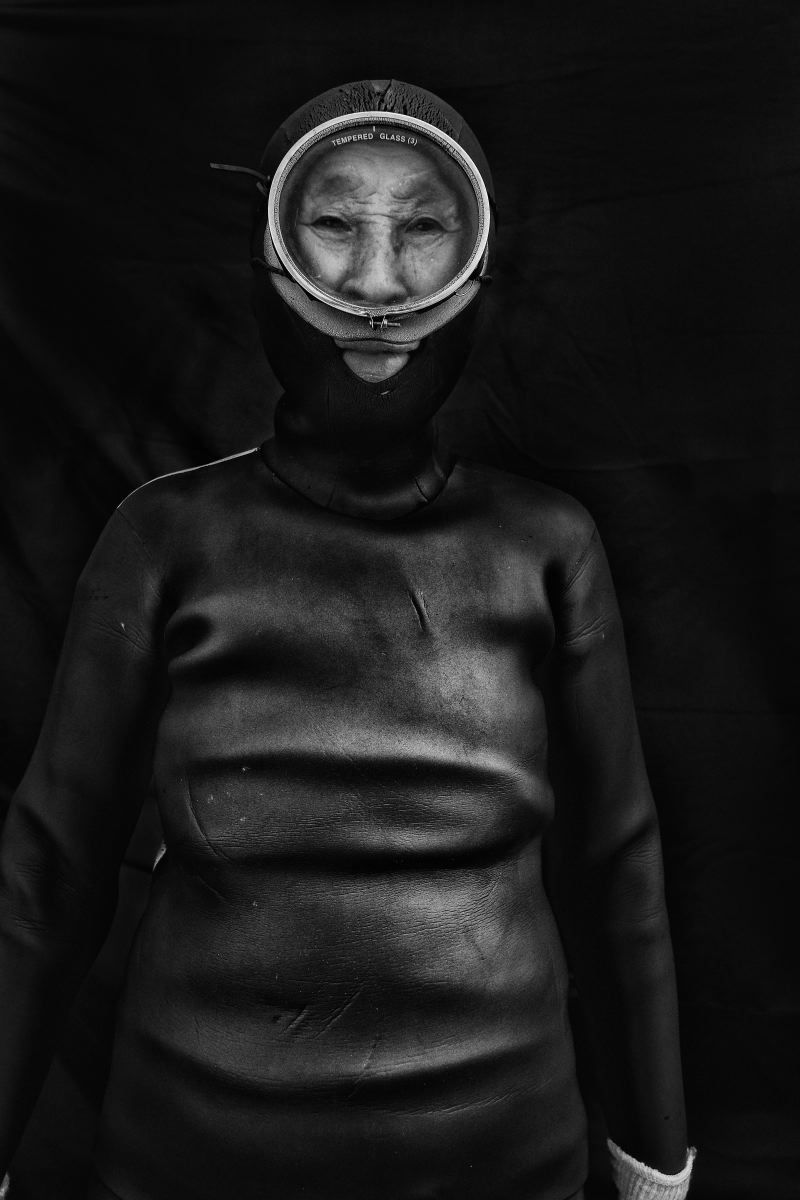
Oksun Kim, 80 years old, comes from Myeonsu-dong village. She adjusts her vintage oval mask. The problem with the old-fashioned masks that they insist on using, is that they cover the nose preventing the Haenyeo from equalizing their ears which leads to ear barotrauma, hearing loss and migraines. The Haenyeo also regularly suffer from decompression illness, blackouts, and hypothermia, just some of the reasons why the fishing cooperatives have established strict rules for diving.

© Alain Schroeder - Image from the Grandma Divers photography project
i

Anja Son, 76 years old, comes from Myeonsu-dong village. She puts her mask on and then vehemently demontrates how to catch marine delicacies such as rockfish, sea cucumber, octopus and sea urchin, using a long, sharp instrument called a kkakkuri or golgakji. For more stubborn abalone, a bitchang with a piece of string attached is used to pry this valuable catch from the rocks.

© Alain Schroeder - Image from the Grandma Divers photography project
i

Soon-ja Hong, 69 years old, proudly poses with the live octopus she just caught. Other divers have come out of the water with similar specimens, but this one is by far the largest catch of the day. By the time she removes her mask, it has already been sold to customers standing by at the beach restaurant ready to eat the fresh delicacy.

© Alain Schroeder - Image from the Grandma Divers photography project
i

Anja Son, 76 years old, comes from Myeonsu-dong village. She puts her gloves on then adjusts her hood carefully to avoid tearing the delicate rubber of the suit. She will place a branch of mugwort, a common species of aromatic plant, inside her mask that she’ll discard once in the water. Like saliva or baby shampoo commonly used by scuba divers, the plant leaves a film on the glass preventing condensation. Mugwort’s odor also has a calming effect on the divers.

© Alain Schroeder - Image from the Grandma Divers photography project
i

Oksun Kim, 80 years old, comes from Myeonsu-dong village. She adjusts her vintage oval mask. The problem with the old-fashioned masks that they insist on using, is that they cover the nose preventing the Haenyeo from equalizing their ears which leads to ear barotrauma, hearing loss and migraines. The Haenyeo also regularly suffer from decompression illness, blackouts, and hypothermia, just some of the reasons why the fishing cooperatives have established strict rules for diving.

© Alain Schroeder - Image from the Grandma Divers photography project
i

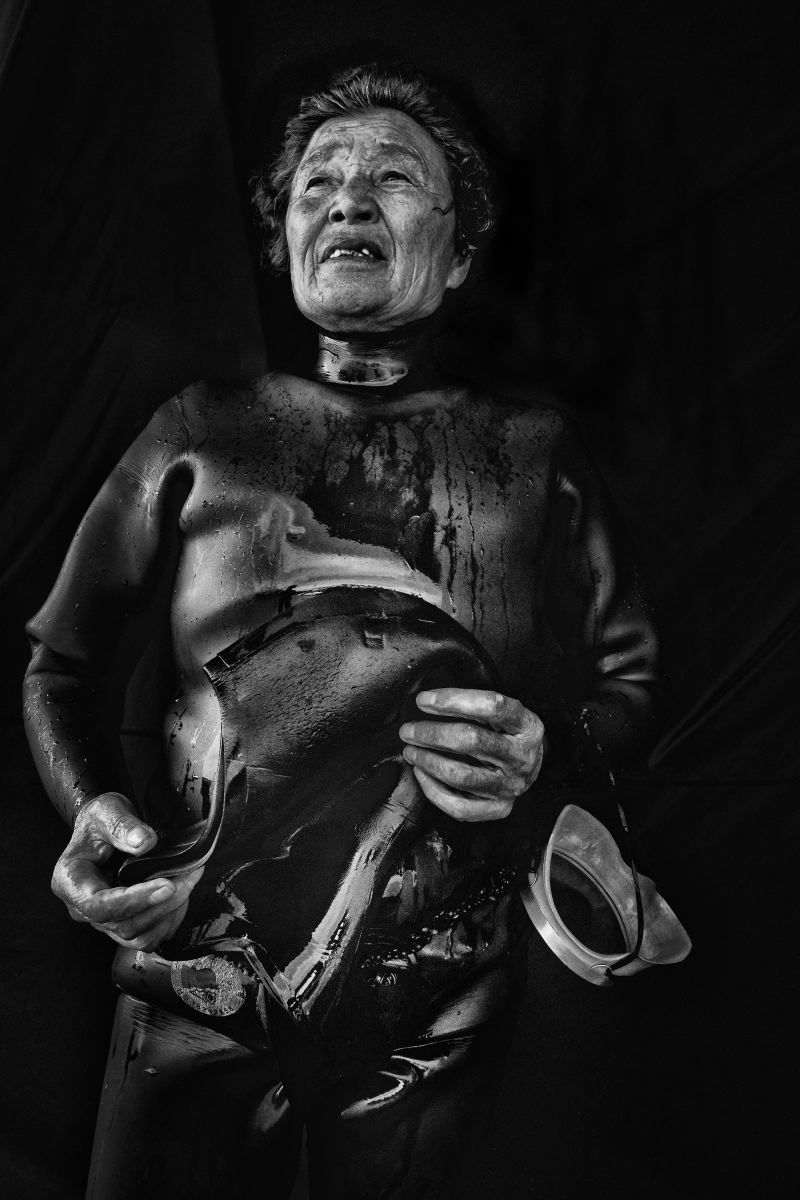
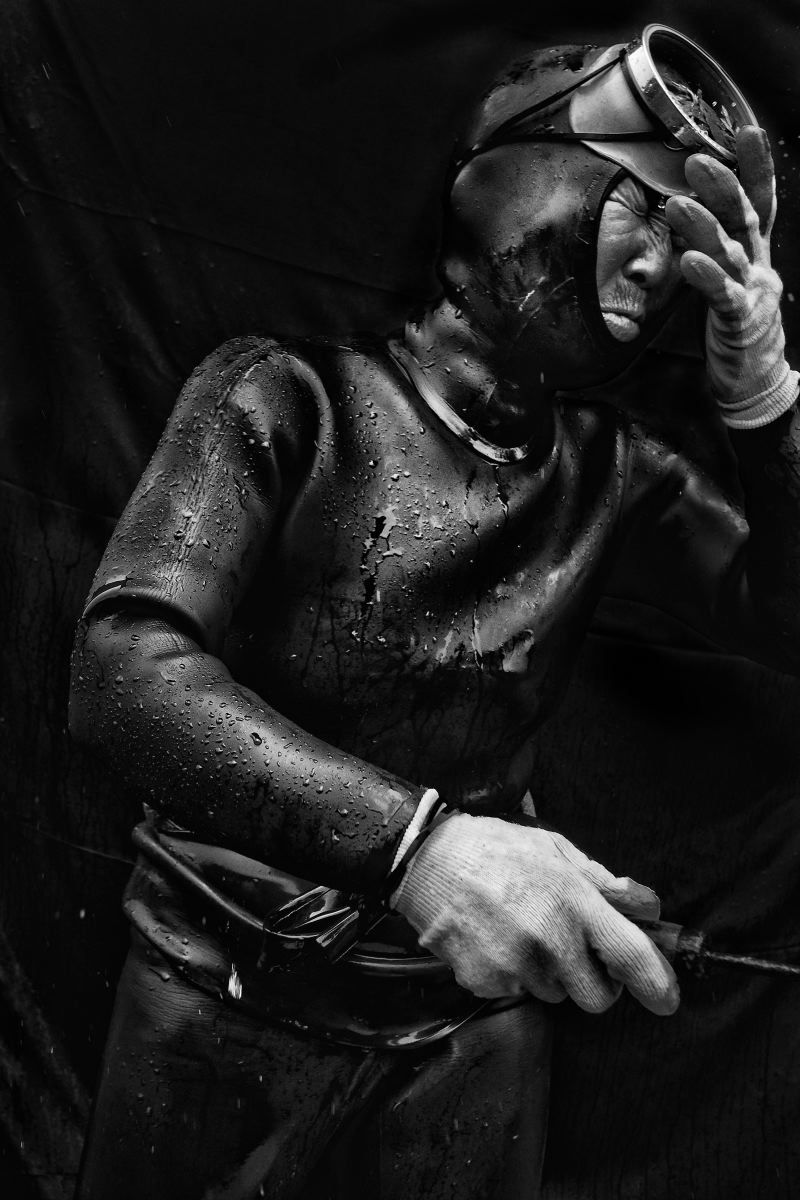
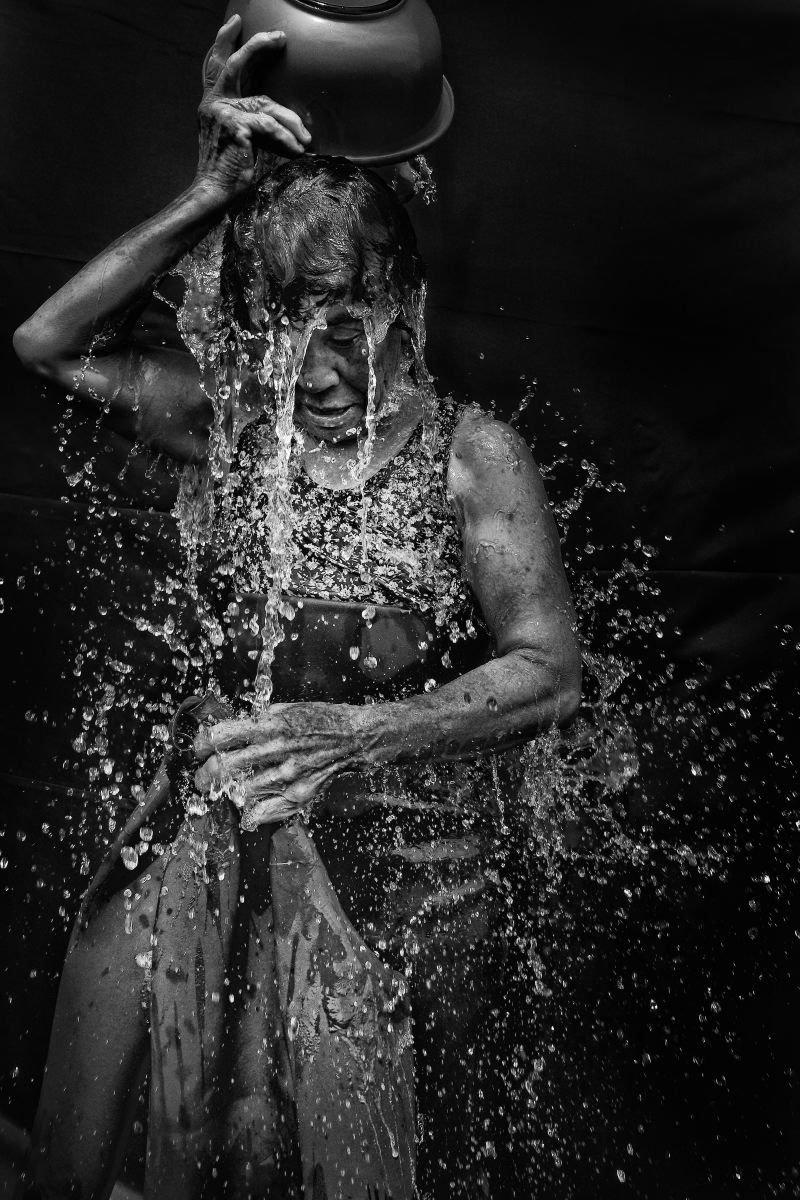
Soon Hwa Kim, 71 years old comes from Myeonsu-dong village. She has been diving 60 years catching marine delicacies such as rockfish, sea cucumber, octopus and sea urchin. She pours fresh water over and inside her wetsuit to remove it. The water prevents the rubber of the suit from tearing.