Geometric Constraints: Light as a Captive of Form
-
Dates2015 - Ongoing
-
Author
- Locations Germany, France
Geometry as a cage: this series explores the psychological weight of industrial voids. From rusted grids to the jarring, toxic green of a wartime hangar, light is framed as a captive of form, concluding in a golden, urban stasis of isolation.
"Geometric Constraints" investigates the psychological tension between architectural rigidity and the ephemeral nature of light. In this body of work, geometry transcends its role as a mere structural foundation, evolving into a metaphorical vessel of confinement. The series explores the sensation of being 'encaged' within the built environment, where heavy industrial frameworks do not merely support space but actively dictate the limits of our perception.
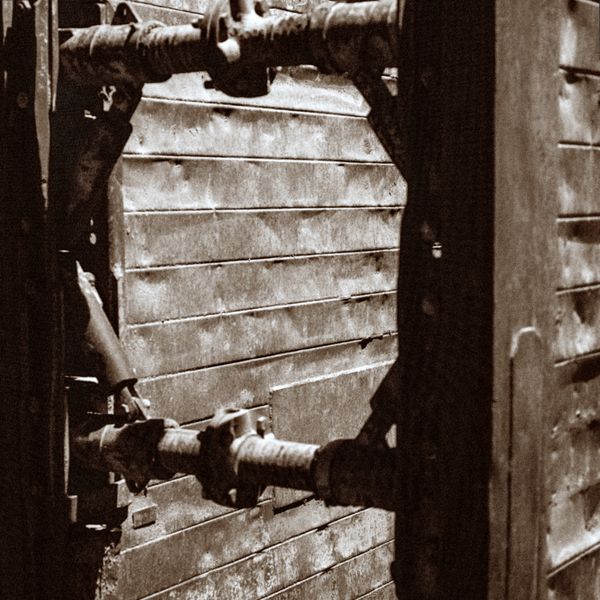
The narrative arc is defined by a deliberate chromatic evolution. We begin with the tactile, rusted barriers of industrial decay, moving into the vast interior of a wartime hangar. This space is submerged in a jarring, noxious green light—a hue that evokes a sense of historical malaise and chemical stagnation, rendering the atmosphere almost physically oppressive.
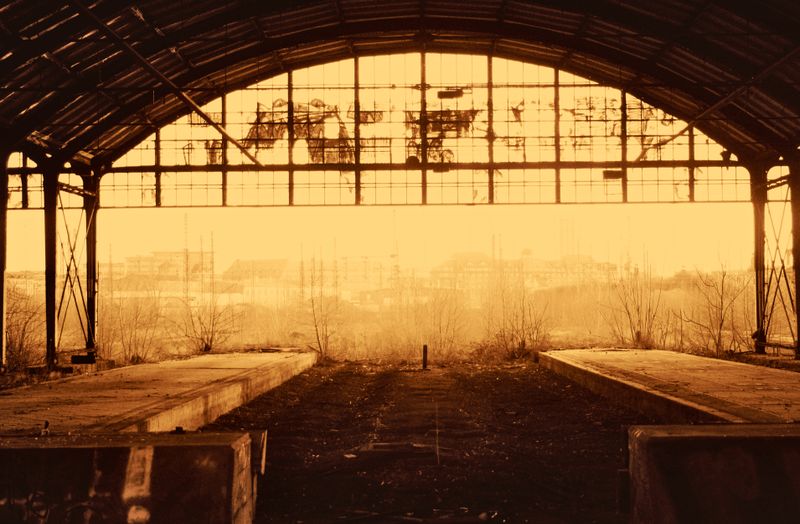
This tension eventually finds its resolution in the final movement: the abandoned station. Here, the palette shifts dramatically to a saturated, golden yellow. This transition from the toxic green of the military relic to an ethereal urban glow marks a passage from active confinement to a state of nostalgic stasis. The geometry remains a cage, but the light has softened into a gilded veil, framing the distant city as a remote, shimmering mirage. The silence of these spaces is no longer empty; it is rendered as a tangible, heavy presence.
The Narrative Sequence
I. The Threshold: The Lattice of Confinement (2020)
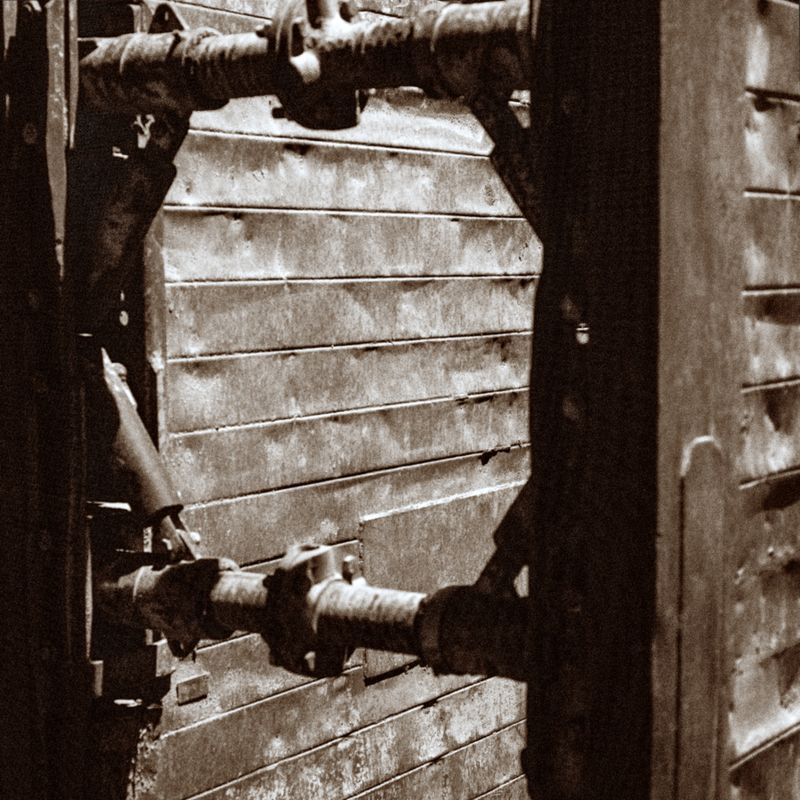
The series opens with a confrontation. The tight mesh and corrosive textures of the metal grid establish the primary motif: the frame as a cage. The light is filtered and fractured, immediately signaling a loss of autonomy.
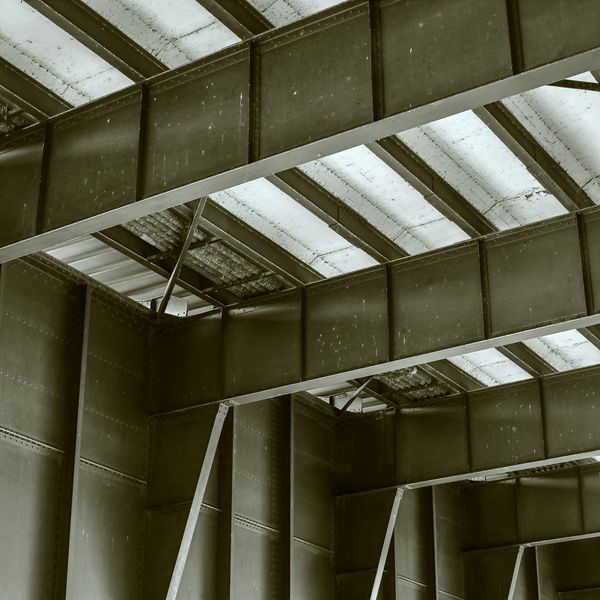
II. The Transition: Structural Isolation (2020)
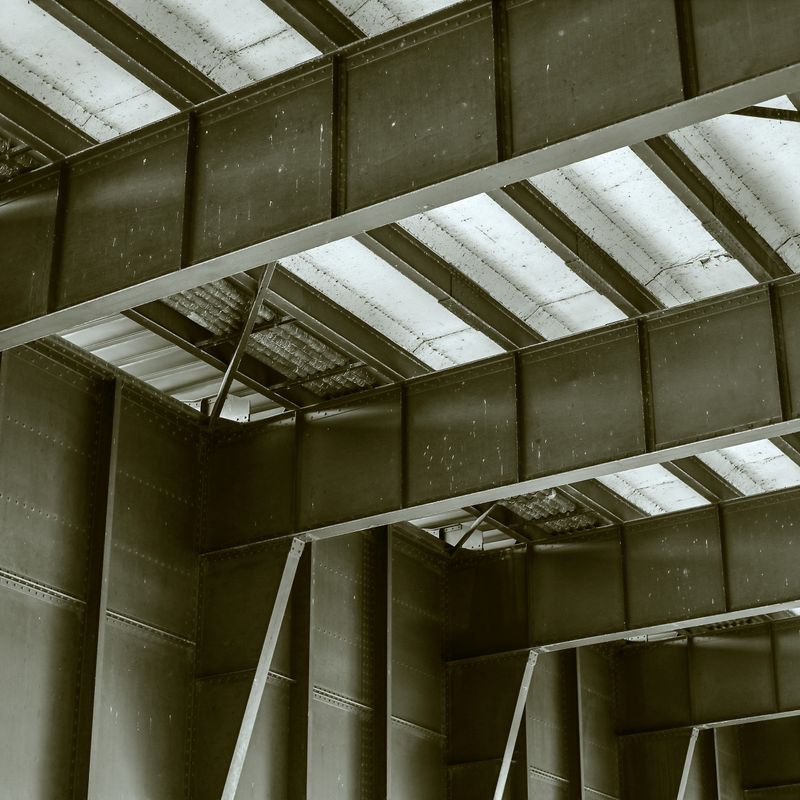
As we move deeper, the structural elements become more imposing. High-contrast shadows bisect the frame, creating a visual language of isolation. The geometry here functions as a psychological barrier, severing the connection between the observer and the exterior world.
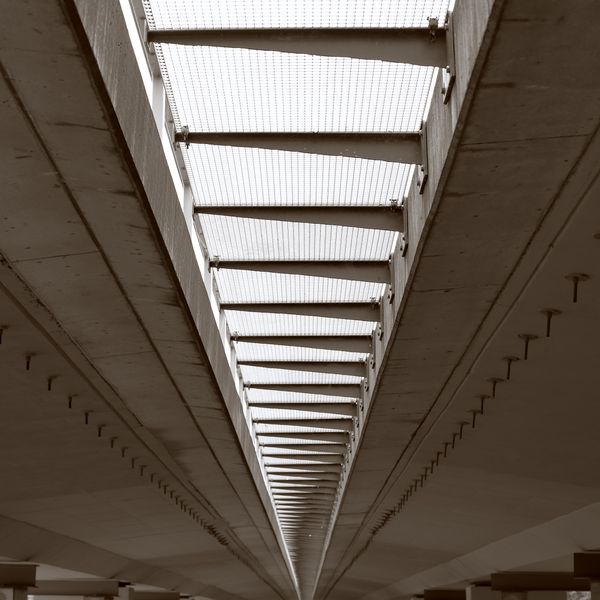
III. The Perspective: The Concrete Conduit (2020)
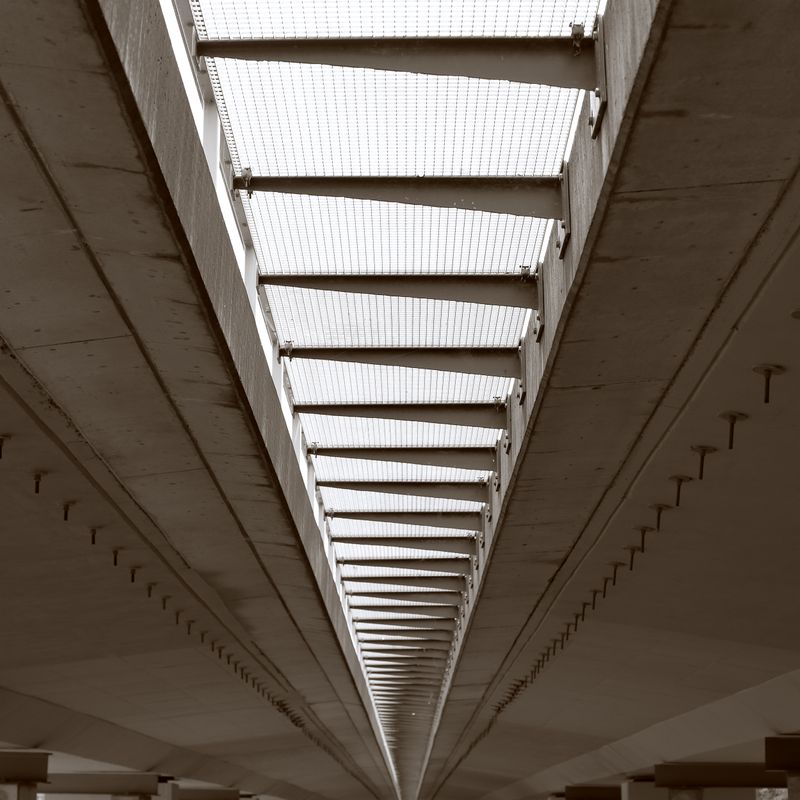
The perspective shifts to an infinite, yet claustrophobic, 'tunnel of light'. Rather than suggesting a route of transit, the brutalist underside of the motorway acts as an abstract conduit leading toward an existential void, further heightening the sense of entrapment.
IV. The Monolith: The Submarine Monolith (2025)
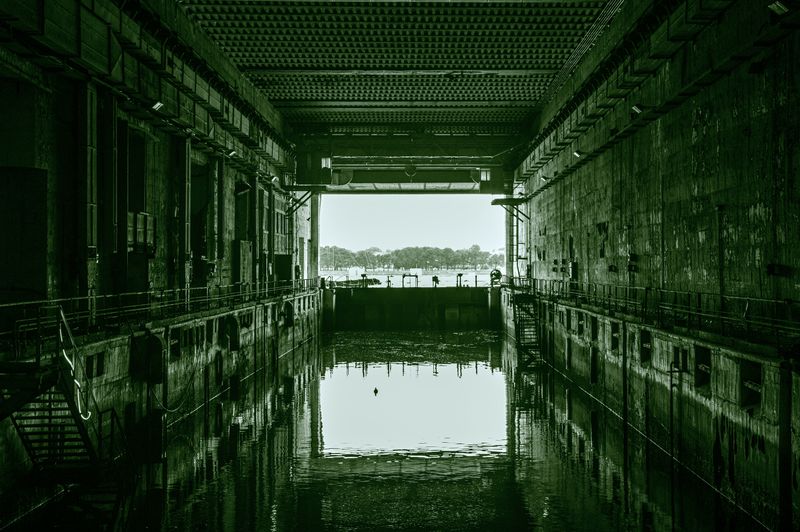
Within the immense void of the wartime hangar, the atmosphere is defined by a poisonous green luminosity. This deliberate use of colour serves as a psychological irritant, linking the structural immensity to a sense of historical unease. The distant aperture of light acts as a remote horizon, a sliver of sanctuary that remains perpetually out of reach behind the chemically-stained walls of the monolith.
V. The Resolution: The Gilded Terminus (2015)
The sequence concludes with the architectural remains of a former postal station. The previous toxicity of the hangar is replaced by a profound golden warmth, bathing the urban structure in a light that suggests both grandeur and expiration. While the city's silhouette is finally visible in the distance, the station’s geometry continues to serve as a frame, capturing the urban landscape in a state of beautiful, permanent isolation.
Technical Statement
The artist employs harsh contrasts and meticulous framing to accentuate the 'prison-like' qualities of industrial decay. By focusing on the tactile reality of rust and the uncompromising lines of structural engineering, the work challenges the viewer to confront the inherent melancholy of abandoned spaces and the oppressive beauty of the void.