Gaza's amputees still wait for artificial limbs
-
Dates2026 - 2026
-
Author
- Topics War & Conflicts, Social Issues, Documentary
- Location Gaza
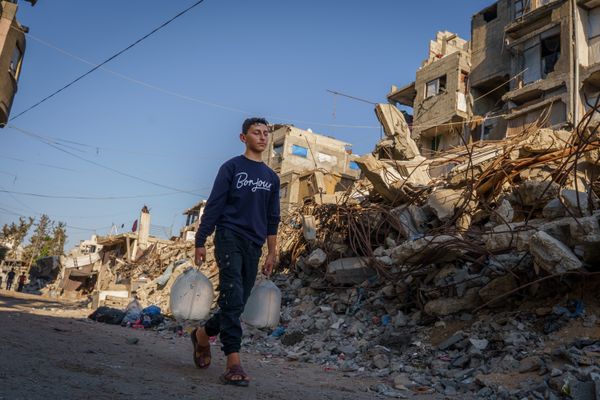
Gaza has more than 5,000 war amputees and two centres still making artificial limbs. They work by phone light and no longer make limbs for children. Amputees like Meral, Yousef, and Moaz are stuck in an interminable wait. License via Middle East Images.
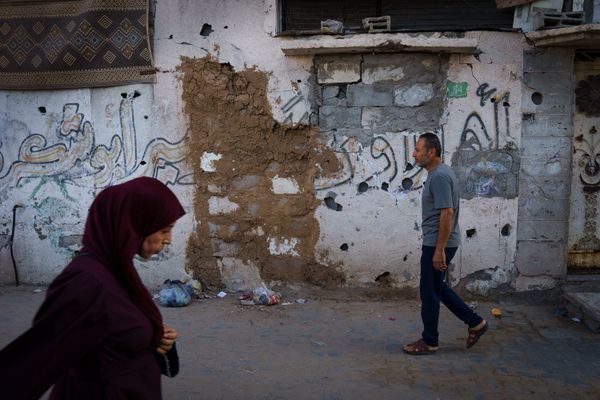
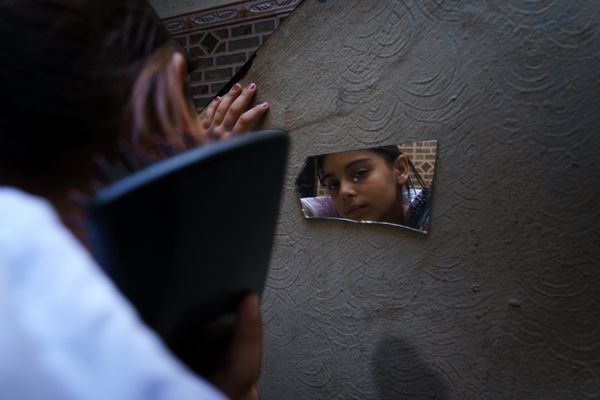
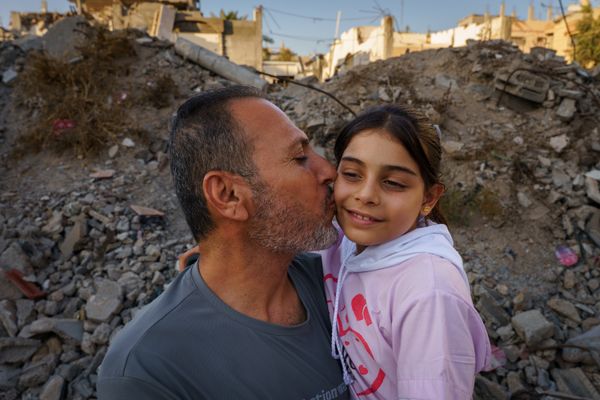
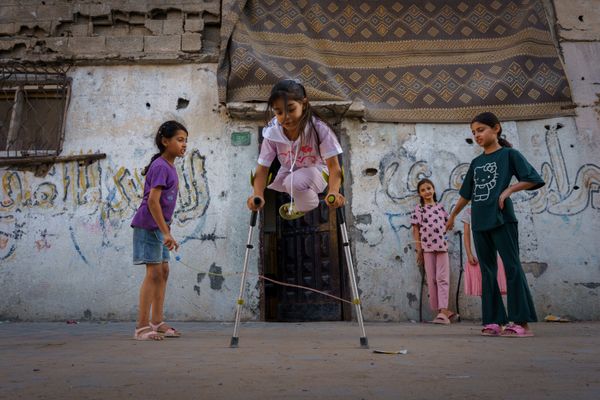
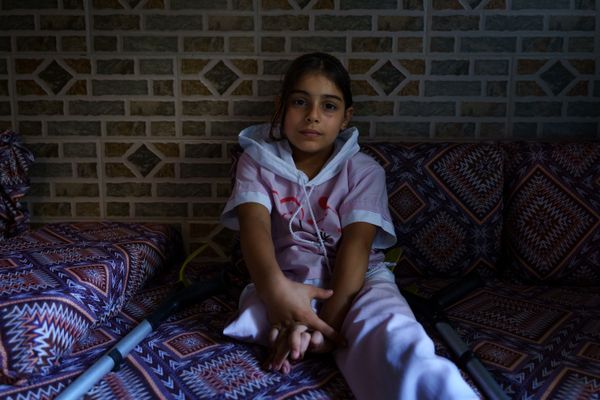
Meral is eight. She skips a plastic rope with her friends in a street in al-Nuseirat, swinging between a pair of crutches, in front of the wall where her family sheltered on the night of 14 November 2024. A strike hit the house. It took her leg and killed her mother.
“When we arrived, we found dead and shattered bodies,” says her grandfather Mohammed, recalling the moment he reached the site of the strike. “We couldn’t tell the living from the dead. Meral was still breathing, her mother’s arms wrapped around her.”
No ambulance could reach them. The medics told him by phone to tie a cloth around her leg with a wooden stick. He carried her to hospital on his shoulders at first light. “At first I refused to let them amputate,” he says. “They told me that if we had come a few hours earlier, they could have still done something.”
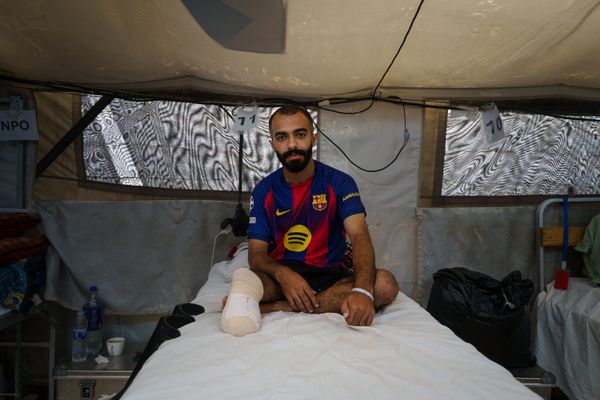
More than 5,000 people in Gaza have undergone amputations since October 2023, according to the World Health Organisation. UNRWA has reported that Gaza has the highest number of child amputees per capita in the world.
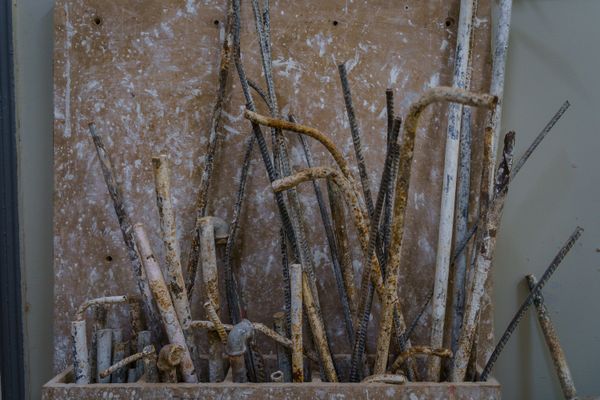
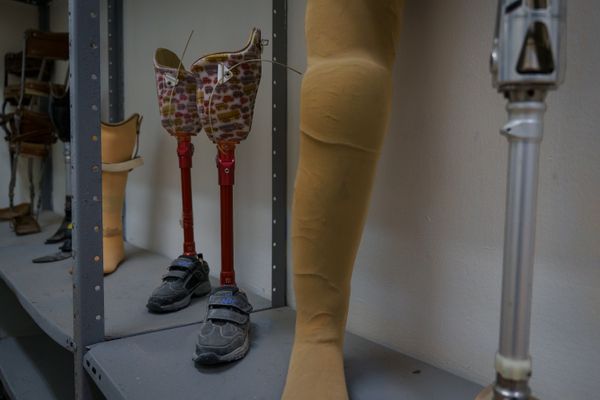
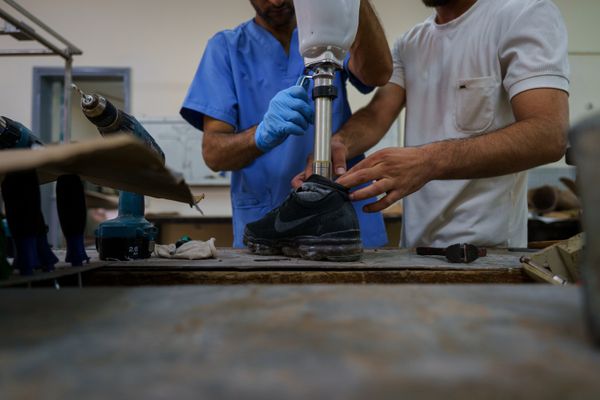
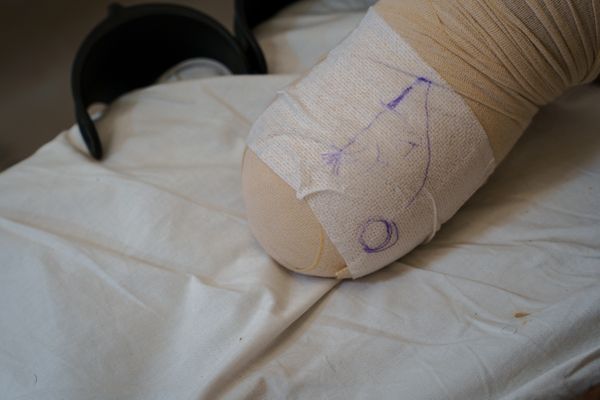
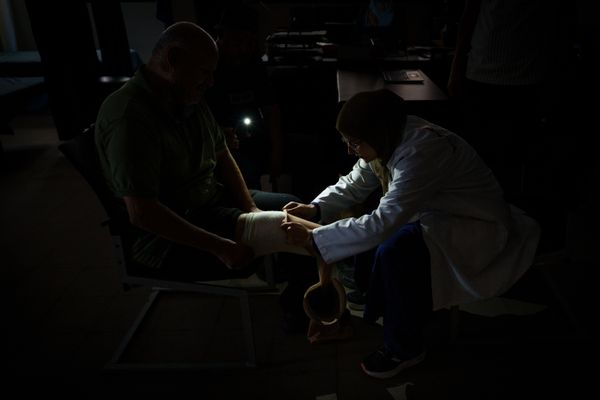
The crisis did not end with the injuries. Two public centres still produce artificial limbs in the Strip. Materials sit at the crossings. WHO recorded an average wait of 136 days on shipments of assistive products, the longest 526 days. Staff build limbs from rebar and pipe salvaged from bombed buildings, and cast sockets by the light of mobile phones when the power fails.
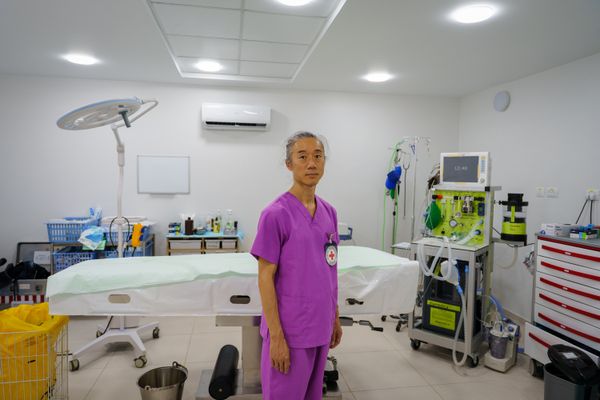
“We suffer severe shortages, especially plaster and spare parts,” says Dr Fares al-Saleh at the Artificial Limbs and Polio Centre in Gaza City. To conserve what is left, the centre has stopped fitting whole categories of patient. “We don’t make artificial limbs for the elderly. We don’t make prostheses for above-knee amputations, as they use more plaster. We also don’t have the materials to make limbs for children.”
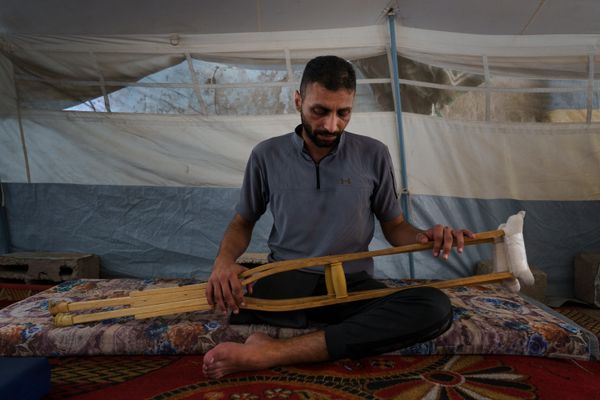
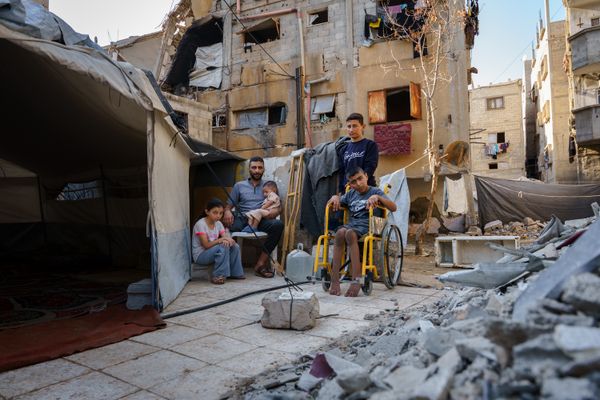
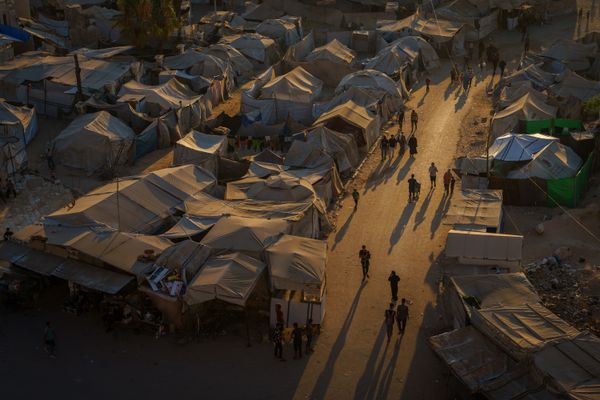
Meral is waiting for a leg. So is Yousef, 38, whose own leg was run over by a truck at the Zikim crossing while he tried to reach food during the famine, and who no longer leaves his tent. Neither expects one soon.
Photographed in Gaza, 2026. Licensing via Middle East Images.