EDO
-
Dates2026 - Ongoing
-
Author
- Topics Archive, Contemporary Issues, Daily Life, Editorial, Landscape, Nature & Environment, Portrait, Social Issues
EDO is an Ewe word that carries two simultaneous meanings: the younger of twins, and the void. I am EDO.
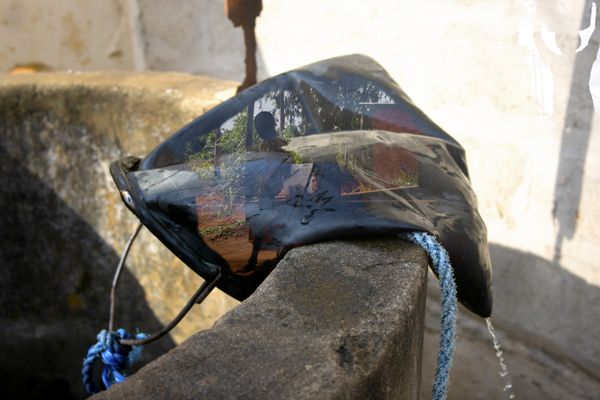
My twin brother fell into a well. The rituals were never completed. In Ewe tradition, twins share a single soul. When one departs before the rites are fulfilled, the one who remains is left incomplete. A diviner once told me to feed him every time I eat. That his spirit should accompany me everywhere as protection. That souls who sacrifice themselves for a purpose do not leave the earth until that purpose has been fulfilled.
EDO is a film and photographic series built from within this reality. A ceremony.
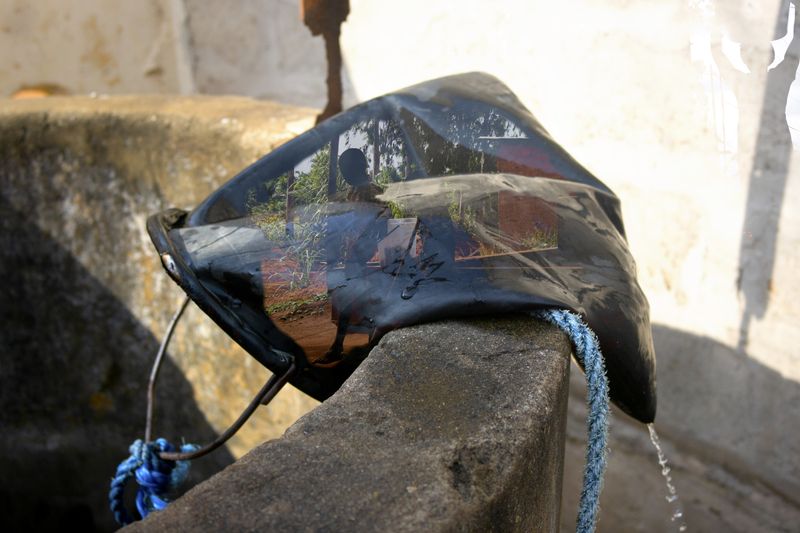
The series opens with a downward gaze into the stone of a well in a family courtyard in Lomé. The date of its construction is engraved into the concrete: 17 02 1981. It continues with a man seated on a woven straw mat, two plates placed before him, eating in silence. The second plate is never touched by visible hands. The cloth moves. Powder shifts. The rope of the well tightens without a body.
The patterns woven into the cloth are not decorative. They are transcriptions of the Ewe cosmological order, the same codes carved into Togbui Zikpui sculptures, into venavi figures sculpted from iroko wood to receive the souls of deceased twins. Every cloth worn in this film is a text. Every body is a page.
The sound does not explain. Water falling into a plate of uncooked beans. Children’s voices recorded elsewhere, in another time. Katigo, the incantations for twins, recorded in the field, in Ewe, without translation.
EDO does not say that my brother died. It says that he went to the river. That he is not far away. That he will return soon.