Down by the Hudson
-
Dates2013 - Ongoing
-
Author
- Location Poughkeepsie, United States
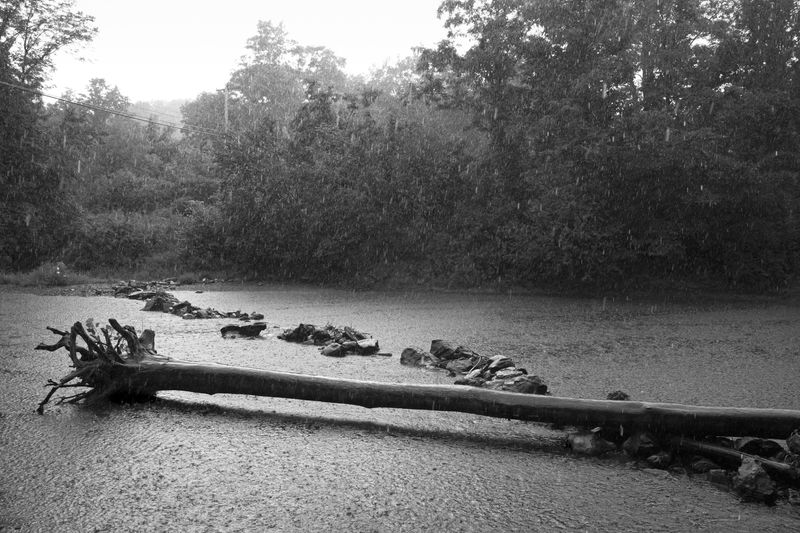
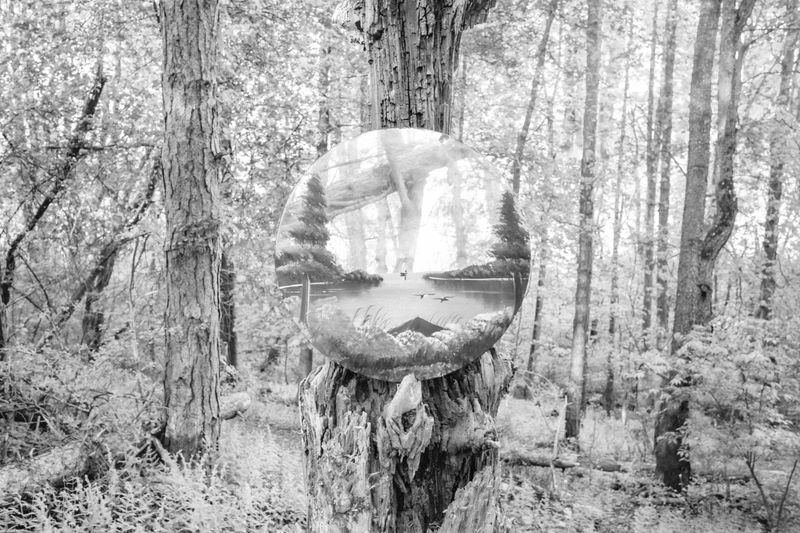
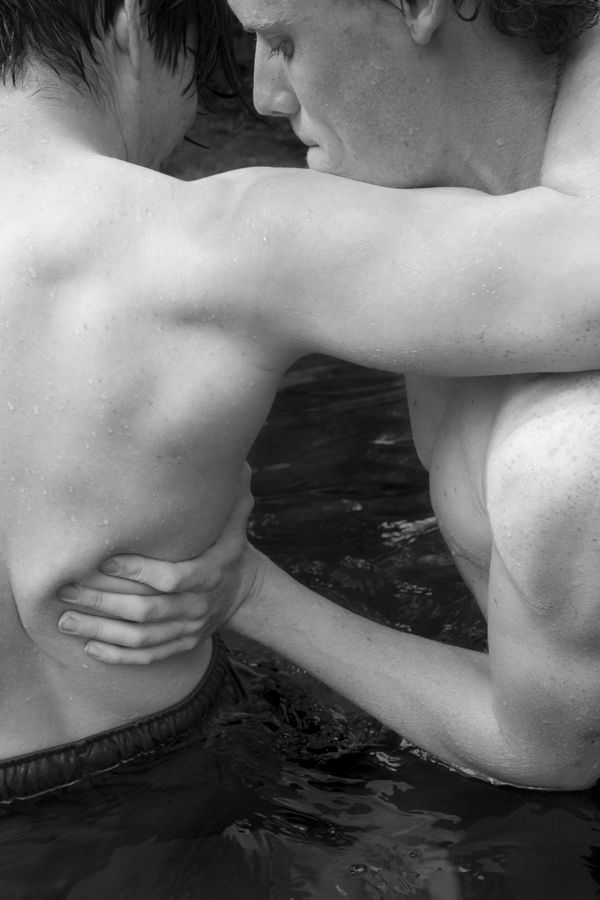
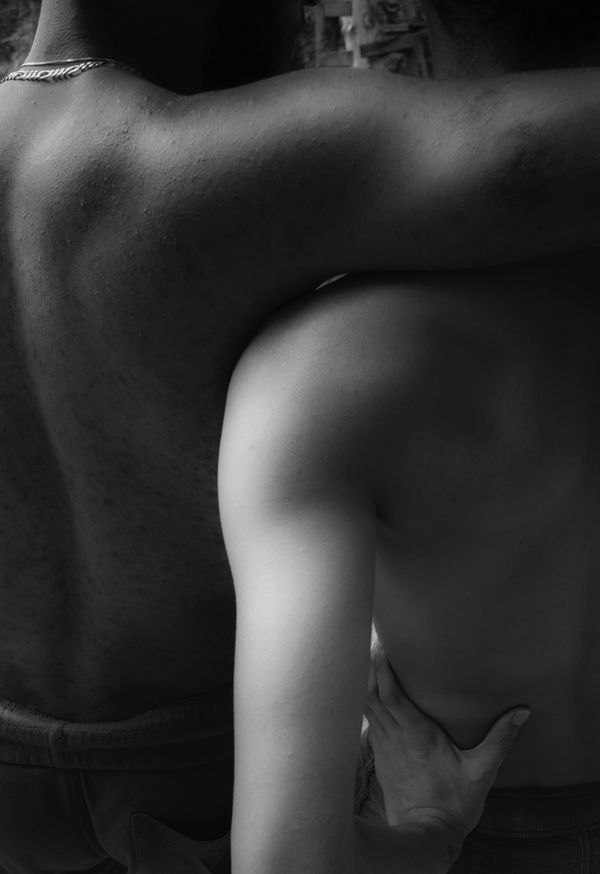
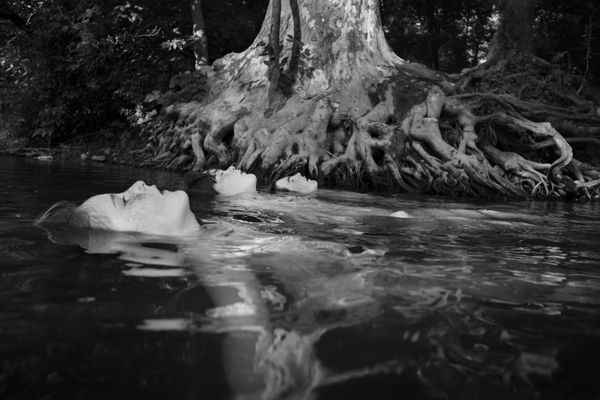
‘Down by the Hudson’ is my personal ode to an Edenic creek in Poughkeepsie, NY, a small town in New York State where I lived, on and off, between 2013 - 2024 and where I continue to make work.
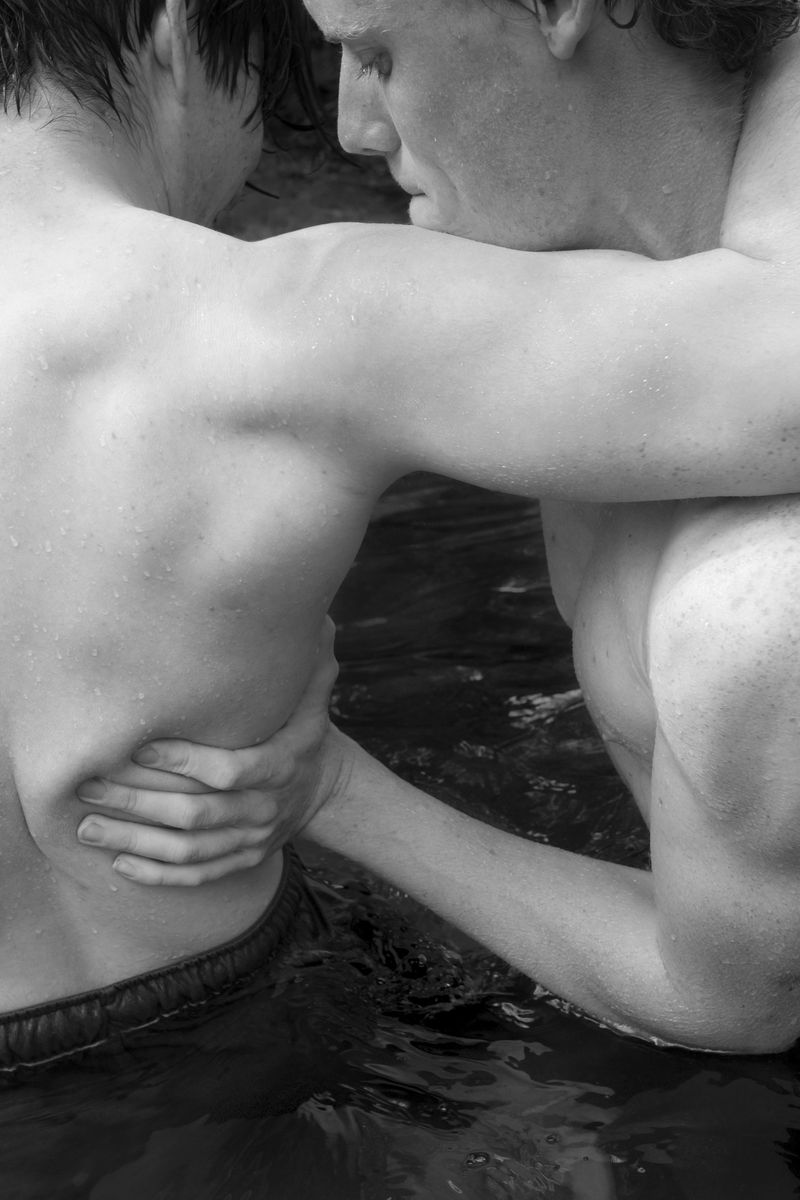
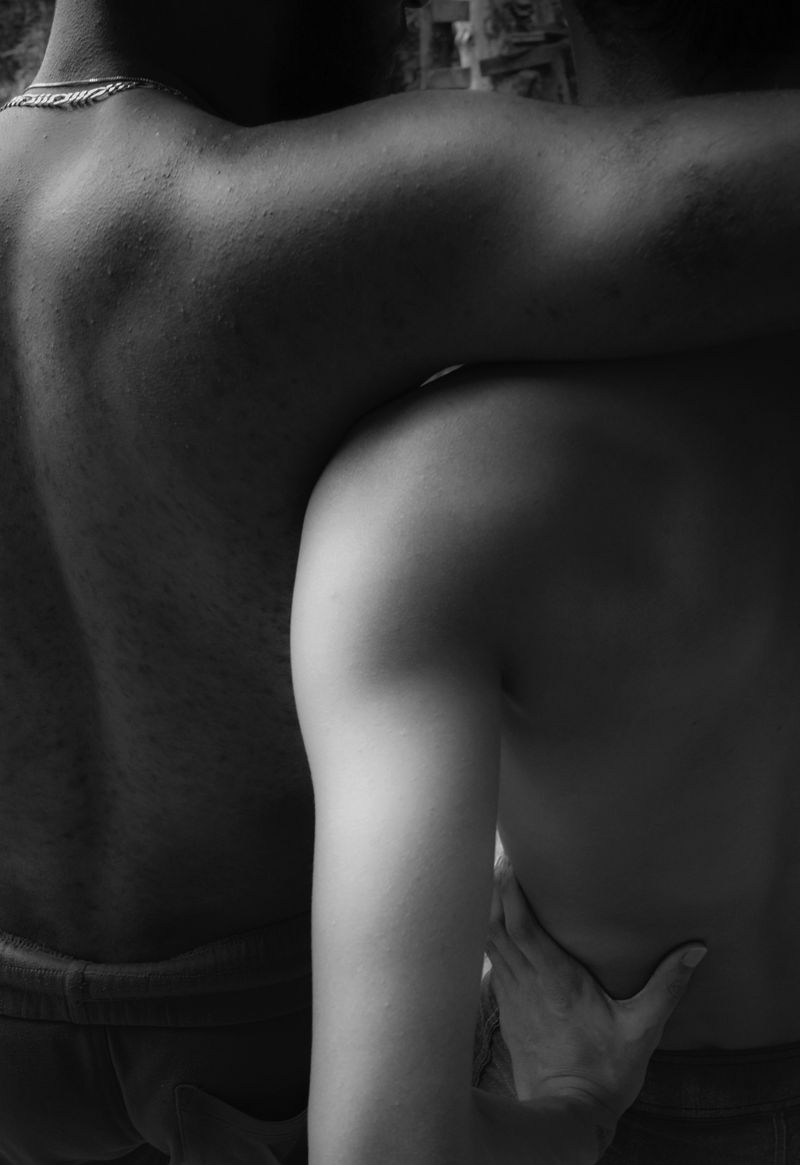
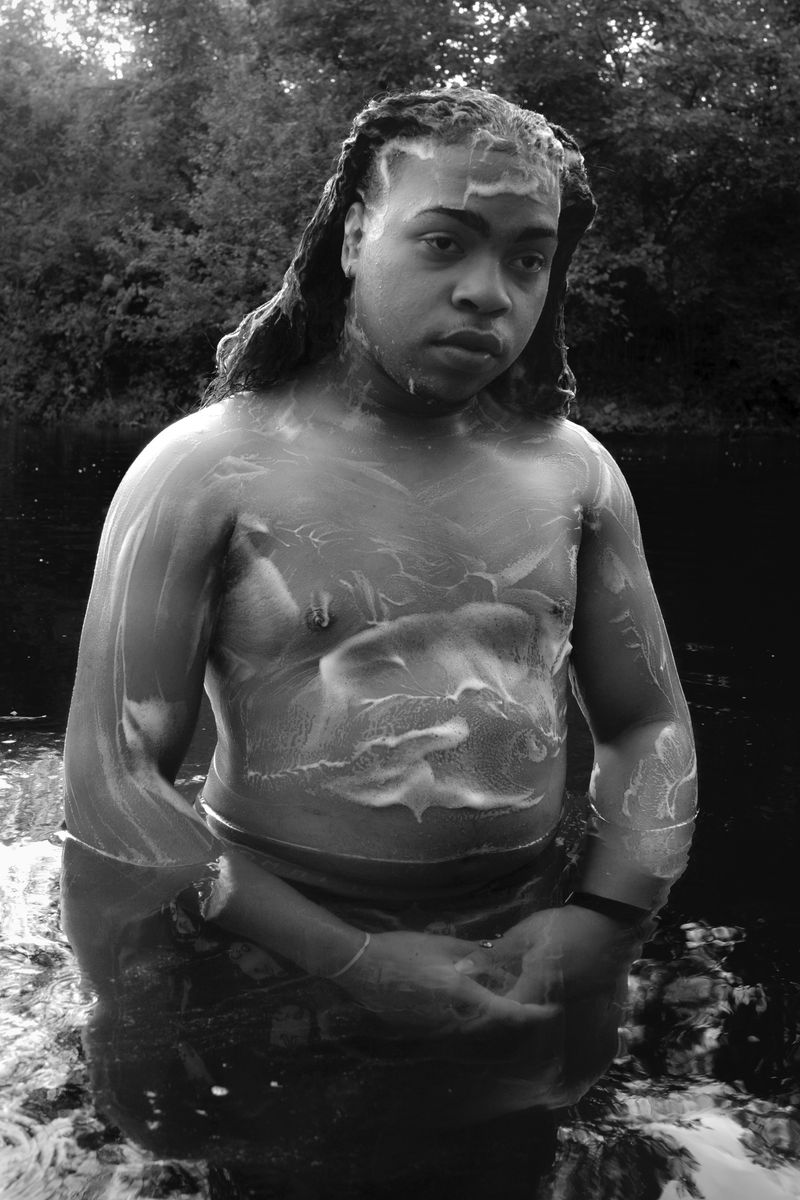
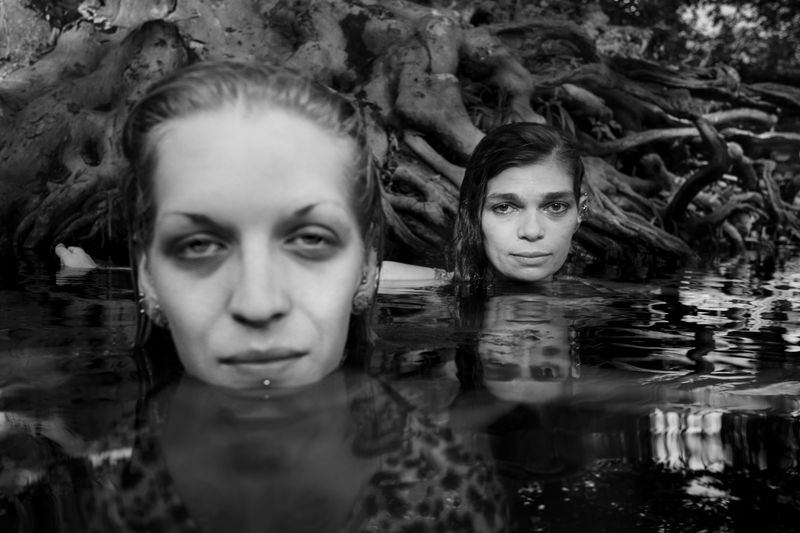
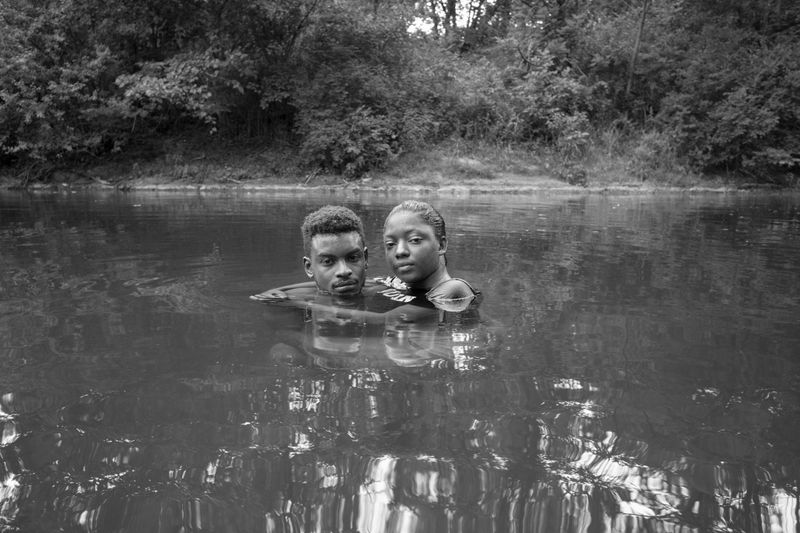
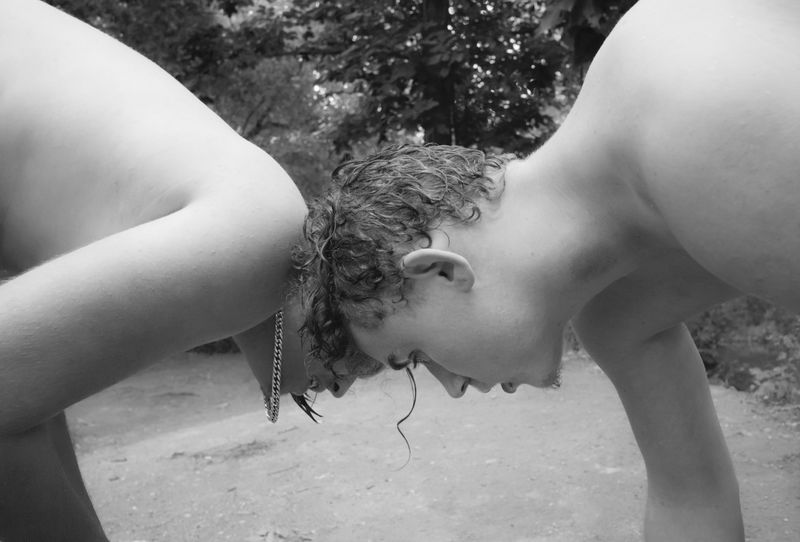
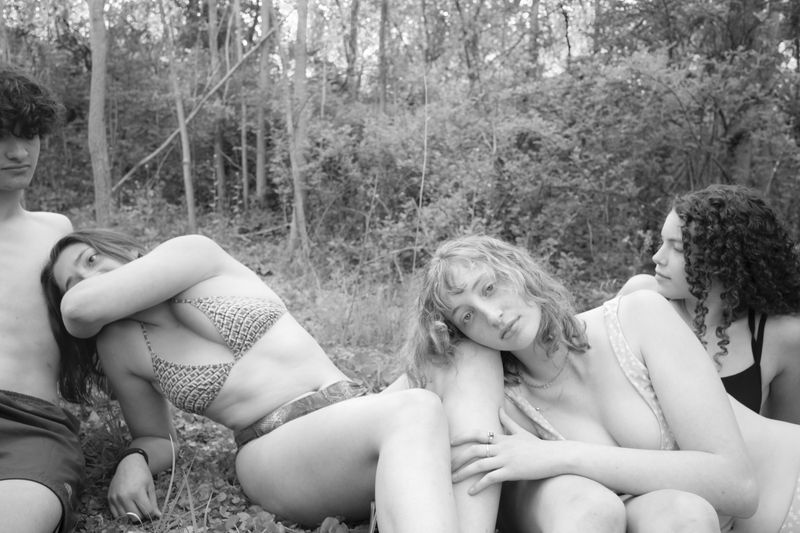
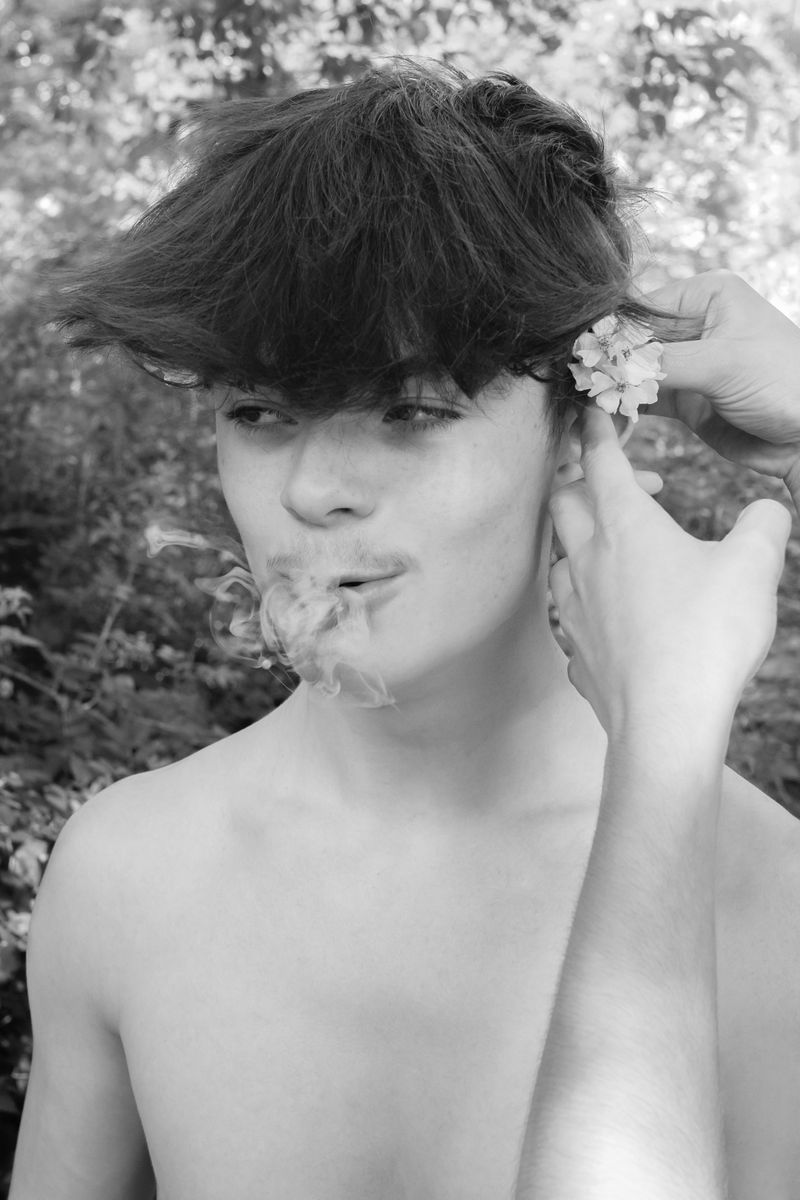
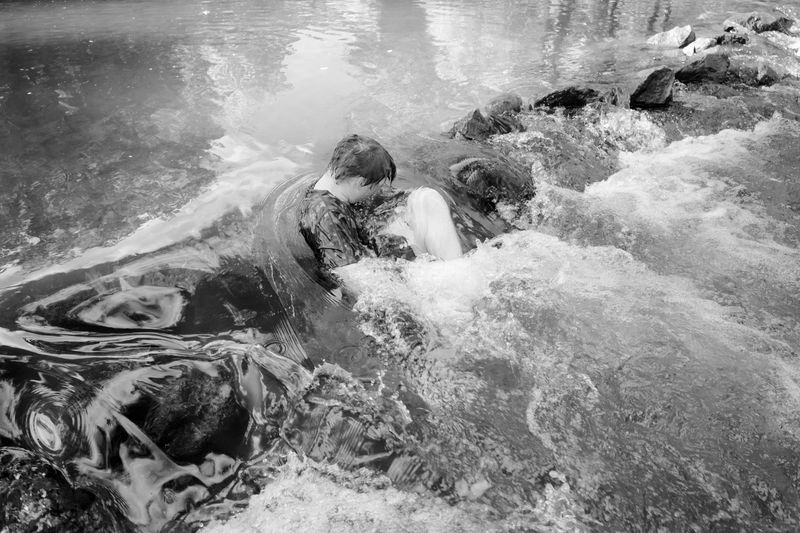
‘Down by the Hudson’ (2013-ongoing) is my personal ode to a creek in Poughkeepsie, NY, a small town in New York State where I lived, on and off for closet to a decade and where I continue to make work. 'Down by the Hudson' is the product of collaborative relationships with the people I photograph. With each of the photographs I want to convey a lyrical, loving expression of the playful exchanges between me, the photographer, and the people I’m photographing. These photographic exchanges can lead to something that feels like a transcendental clarity, vulnerability, and tenderness.
This work cannot exist apart from its political context. In 2016, the presidential and local elections were almost neck-and-neck between political parties in Poughkeepsie, to the point where you could have fit the difference into a bar on a Saturday night. The day after the election, the sense of tension and conflict became palpable as I walked down Poughkeepsie's Main Street. I learned that in the 1990s, IBM's local headquarters downsized and left thousands unemployed. In many ways, Poughkeepsie is like countless other small American towns grappling with the effects of post-industrialization. This heated political moment marked a turning point for this project. It wasn’t only about understanding this mythologized conception of America, but it was also about grappling with this conflict through photography and its extraordinary capacity to bridge specific moments and details with broader notions of the universal and the collective.
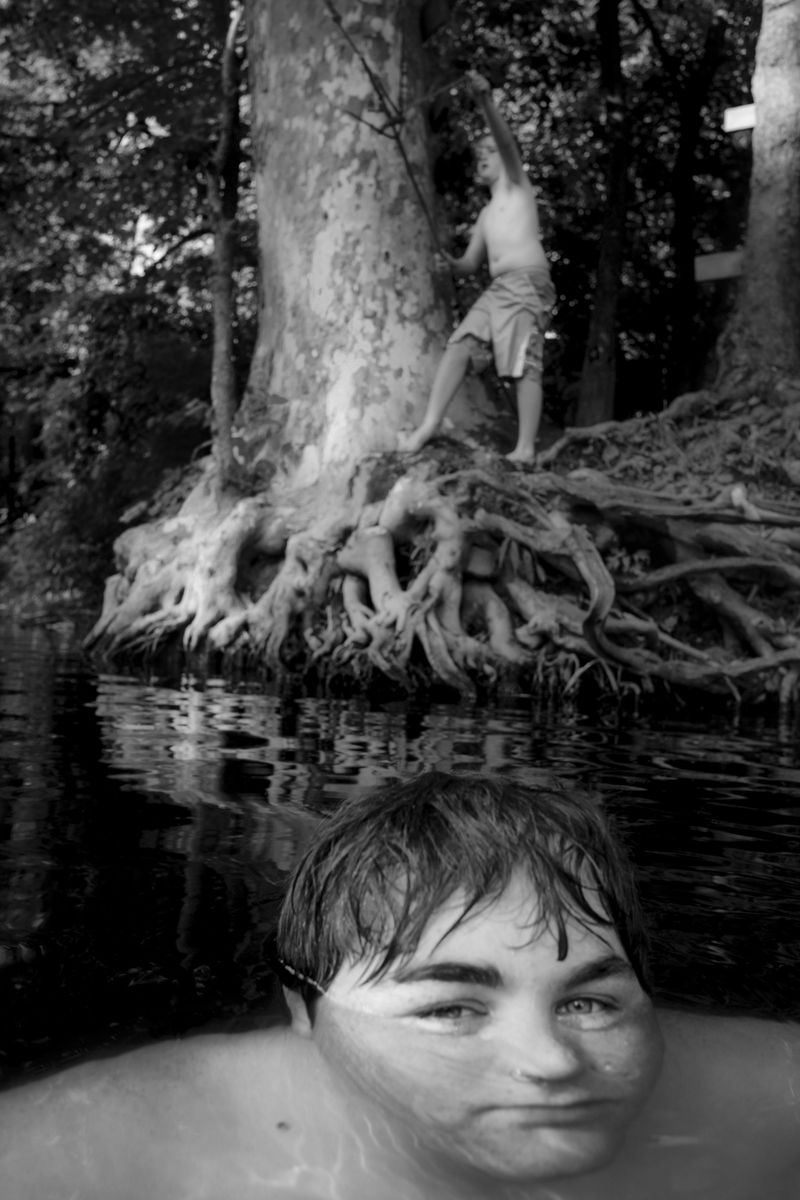
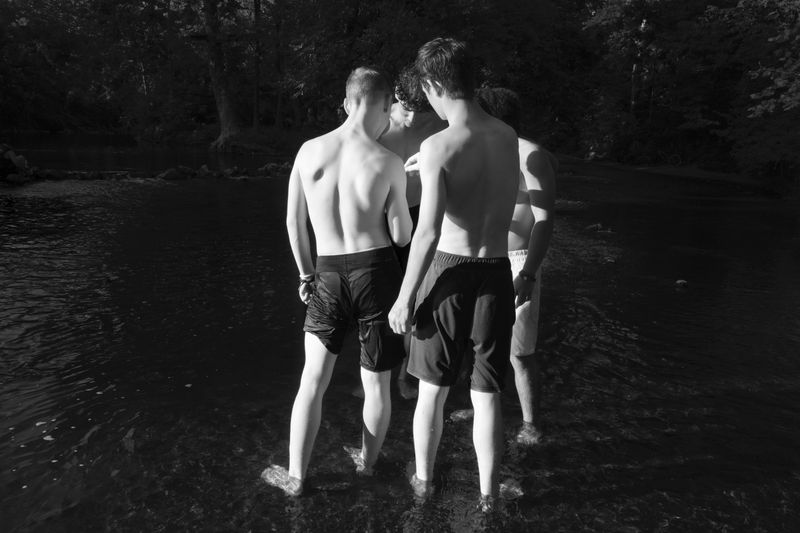
It was during this time that I started going to a local watering hole, a modern-day Eden tucked away behind a drive-in movie theater on the outskirts of town. The watering hole became a central component of my work because it represented an idyllic space where people from all walks of life came together and let their guard down. The more time I spent at the watering hole, the more I wanted to convey the struggles and beauties of this town with care. For several years I photographed at this watering hole, developing close relationships with many of the people I collaborated with and sharing the work with them as it developed. I became fascinated by the ways in which people carried themselves in this space, how the natural environment brought people together; in fact, county regulations forbid people from gathering in this space, and so the whole experience of simply being at this watering hole is informed by this sense of joyfully illicit activity.
This work will be published as a book by Palo Press in 2026, with texts by Amitava Kumar, Anita N. Batemen, Daniel Wolff, and Matt Carey-Williams.
Amitava Kumar's text:
We are water.
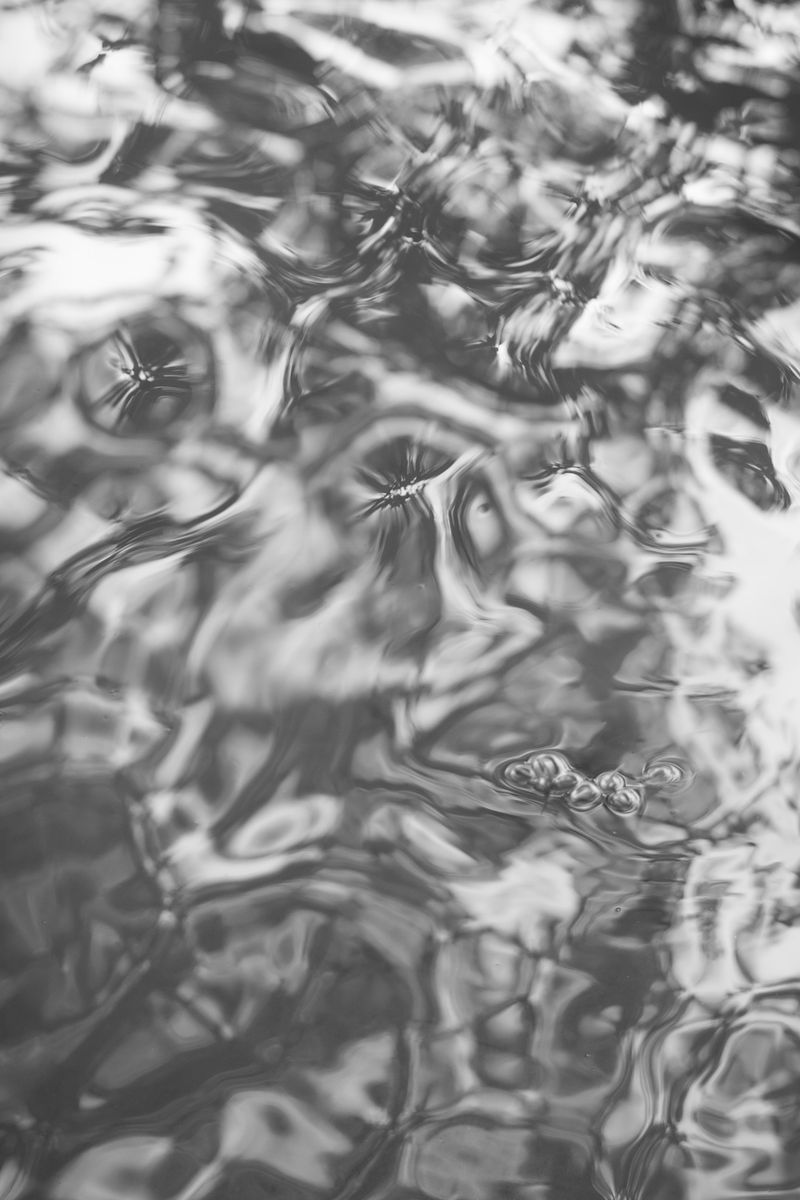
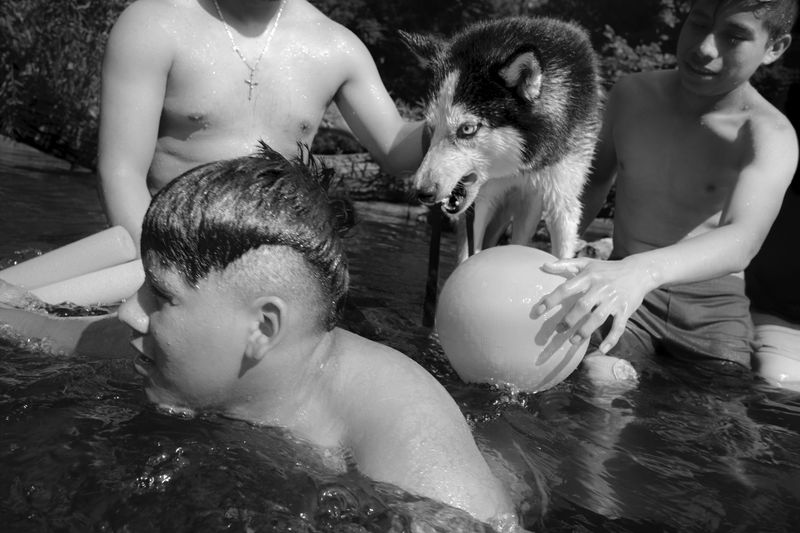
Most of the human body is water. How much of the world is water? Here, from that ocean of common knowledge called Wikipedia, is the response to that question: 71 percent. ‘About 71 percent of the earth’s surface is covered by water, and the oceans hold about 96.5 percent of all the earth’s water. Water also exists in the air as water vapor, in rivers and lakes, in icecaps and glaciers, in the ground as solid moisture and in aquifers, and even in you and your dog.’ (Even in you and your dog—see p. _ of Caleb Stein’s Down by the Hudson.)
And yet, and yet. The fight in the future will not be for land but for water. On some sad nights you have sat at home, sipping a drink maybe, watching a documentary from which you learn that women and children walk for hours to bring back to their shanties a pail of water. Where it is scarce, and even where it is abundant, water calls to us.
I’m talking from experience. The other evening, in a report about Delhi, I heard a man say ‘Even if you try to borrow water from someone, you won’t get it. You can bor-
row money, but you cannot borrow water.’ And then, on a bumper sticker on the car parked next to mine in the parking lot I saw these words:
WE BELIEVE
LOVE IS LOVE
SCIENCE IS REAL
BLACK LIVES MATTER
WATER IS LIFE
NO HUMAN BEING IS ILLEGAL
FEMINISM IS FOR EVERYONE
KINDNESS IS EVERYTHING
What is the meaning of that line in the middle? Water is life. It is the slogan of the protest at the Standing Rock Indian Reservation against threat posed by the Dakota Access Pipeline to the Missouri River. In Bolivia, in Nicaragua, in Egypt, in Tunisia, in South Africa, there have been movements of social protest against the privatization of water.
In a 2005 commencement speech delivered at Kenyon College, David Foster Wallace tells a story about two young fish coming across an older fish swimming the other way who nodded at them and said, ‘Morning, boys. How’s the water?’ The two young fish kept swimming awhile before one fish turned to the other and asked, ‘What the hell is water?’ In Foster Wallace’s speech, water is a metaphor. He is saying that ‘the most obvious, important realities are often the ones that are the hardest to see and talk about.’ Water is the tedium and frustration of daily life; water is also our default response to it, a response full of anger and impatience and judgment. Against the automatic and unconscious assumptions about our own importance, Foster Wallace wants us to show awareness and pay attention. Once we start doing this—and here I have Caleb Stein’s camera in mind—we transform ourselves and the world.
Foster Wallace says, ‘It will actually be within your power to experience a crowded, hot, slow, consumer-hell type situation as not only meaningful, but sacred, on fire with the same force that made the stars: love, fellowship, the mystical oneness of all things deep down.’ Stein has been attentive and aware and disciplined in his photo- graphic practice, all these are the qualities that Foster Wallace recommends. With his camera in hand, Stein has chanted, ‘This is water. This is water.’
In Stein’s photographs, water flows through an eternal summer of youth. The bod-
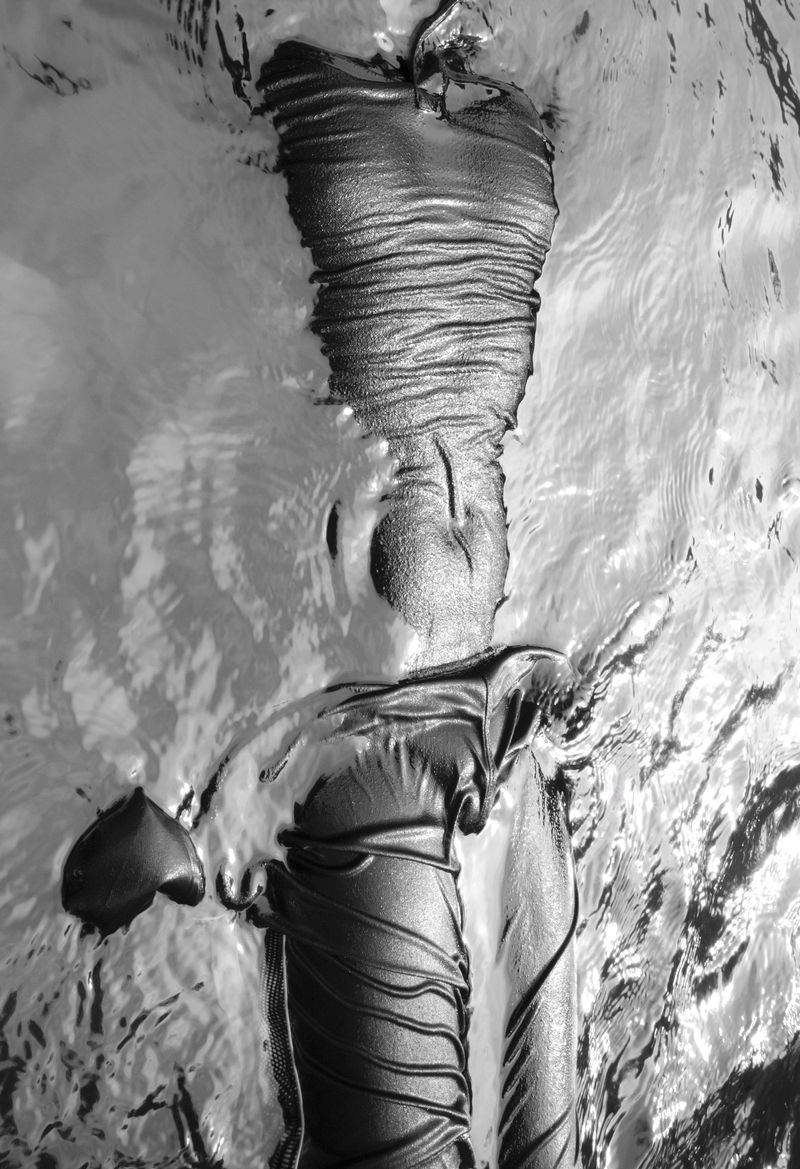
ies that we see in a musical dance wear a skin of water and inextinguishable light.
We are in nature. We are looking at bodies at play in the public commons. Equally astonishingly, all this refulgence is far away from corporate banners and the glare of advertising. We are away from all the faded walls and broken windows that speak of urban detritus. No closed signs, no abandoned buildings, no arid talk of postindustrial decline. No pandemic, no masks.
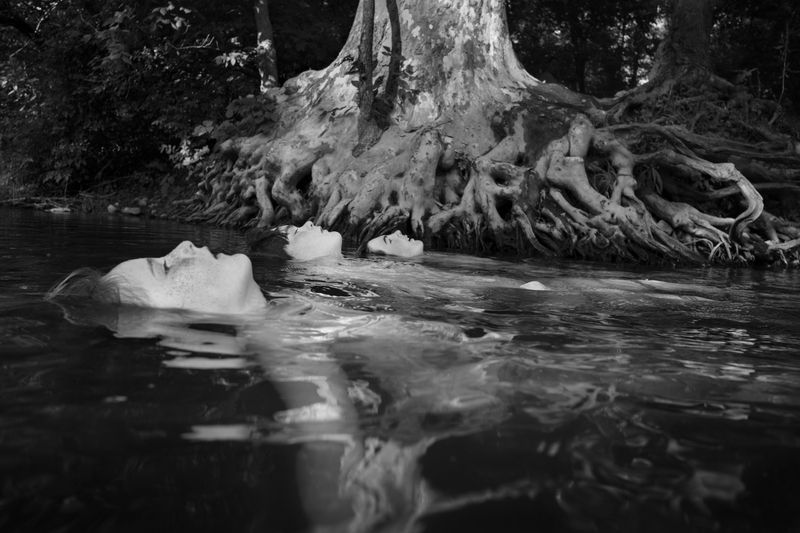
The creek is flowing but time has stopped still. There is no burden of history here. You are with your friends, afloat in the water. It is not only your body—it appears even breath is finally weightless.
Anita N. Bateman's Text, 'Waves':
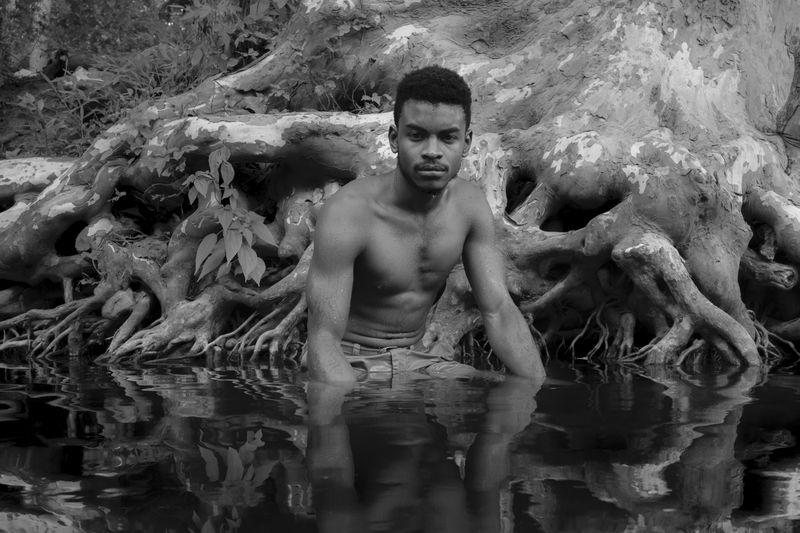
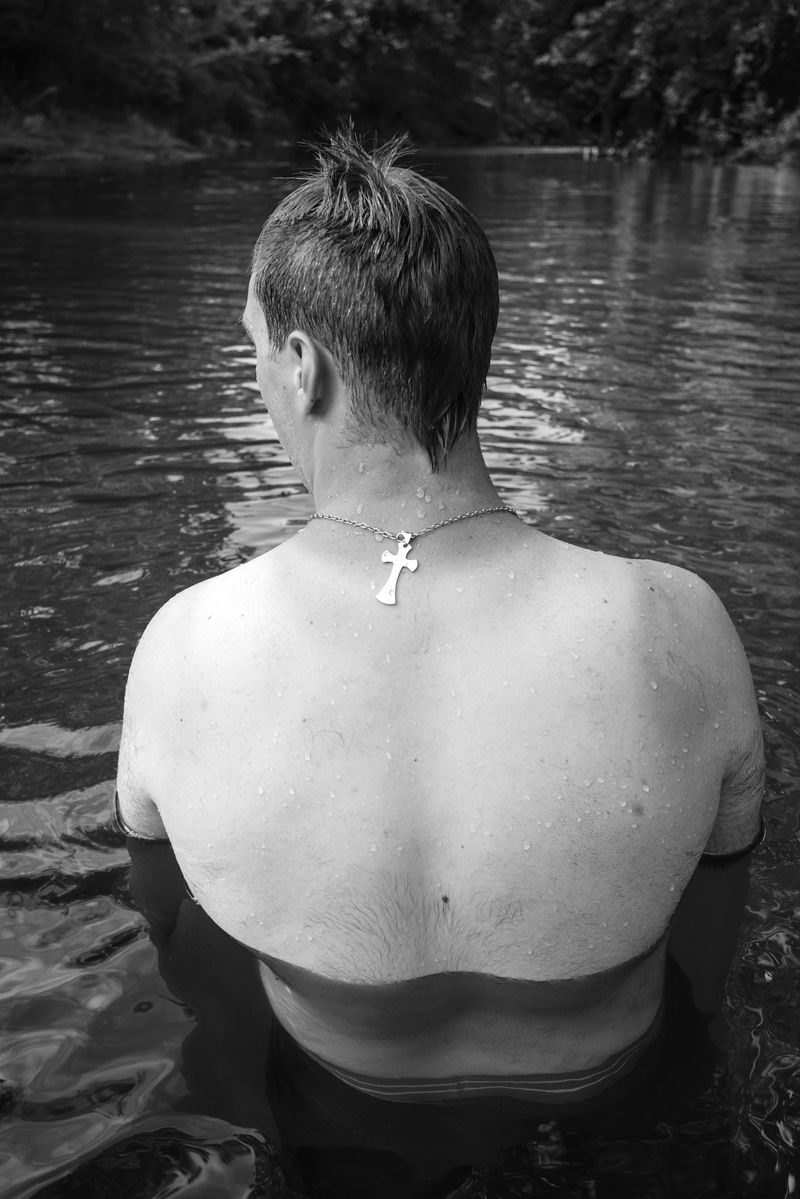
Faceless, but named, Taeshawn has his back to the viewer in what some might call a quiet refusal to be seen entirely. A decontextualized vision of solitude, his body occupies the center of the black and white composition. Framed by leaves surrounding him, Black man in boscage: are you still thinking of summer? Is the Hudson your refuge? Your heaven?
The feelings come in–
Waves
He takes in his environment or, perhaps, for a half second with closed eyes, he breathes in deeply, ceasing to think about anything in particular with the exception of remaining present. Rooted in place, or maybe the opposite: transporting himself above the thicket, above the sinews of his body ,with each exhale.
Are fugitive moments replaying as you venture inward?
Breath like hair, coming in waves–
A cadence that mirrors ripples of water, reverberations of skipped stones across surface Travelling to reach unclaimed depths. There are no perfect lines in nature, only undulations
We do not think of water as incorrigible, like people, but it shifts itself and moves
An unruly actant
Waves are evidence of this, lapping around– unbounded by time or shape. Free in their concentricity
Moving until they break open. A held breath, released.
People and water share many traits. Like Toni Morrison recounts, the Mississippi River was straightened, like hair, to encourage compliance. Its flooding, a protest. Reverting to its own coiled logic, unashamed.
Or better yet, she calls it “remembering”, evoking autonomy to move where it once was, to occupy space. To breathe deeply and spread.
“All water has perfect memory and is forever trying to get back where it was.”
Later, Christina Sharpe writes, “We must become undisciplined.” Her metaphor of lives drenched, lost
First, a small ripple. A crowning.
Freshwater
Fresh
Waves
Line-up
Shape up
Low tide /tied-up
Low fade
Waves
Trained
“Despite knowing otherwise, we are often disciplined into thinking through and along lines that reinscribe our own annihilation.” Sharpe again.
There is a reason why perfect lines do not exist in nature
Nature may repeat, like history, but does not reinscribe
Or contain
Levees breach because
Water goes where it wants, where it remembers
It has an unkempt memory.
Maroons would venture into swamps, into secluded forests
Hidden from view, moving through trees
Wild men and women
Fleeing, finding themselves, among the the leaves and branches
Unrouted
Kept only by the need to revert
Like washed hair. Like the unstraightened Mississippi
Free
Flowing
As disturbance, melding air and skin away in pure being
Waves
Here,
Taeshawn’s faded tattoo shows an imprint of a life lived before this forest one
There is a story, there
A prick in time on the skin
Layers of pattern, defined under brush
Waiting to be cut
Laid, stretched
His head tracks time, inadvertently-
Rooted and re-routed
But not lost
Wolfing, undisciplined, refractory–hair
In preparation for 360
Waves
Wolfing to eventually shed, transform
Moonchild, who sees you? Black man, still
Taeshawn, know that you are free and have the sight.
To never look behind
Only
Forward
Matt Carey Williams text (excerpt):
When Stein confronts Poughkeepsie's residents, he does so with equal elasticity, creating often confrontational, forthright images that speak volumes in spite of the immediacy of their capture and which can be wildly different in tone and mood. I...] We have all visited The Watering Hole in Poughkeepsie before. Many times, over many visits, crossing many millennia. It's down by the Hudson, by the Styx, by the Jordan and the Euphrates. Whilst Stein's images are contemporary portraits of a time, place and people, they are also those little snippets excavated from the ether of time, sharing and communicating the fears and hopes; loves, lives and dreams of time immemorial. Stein takes us down by the Hudson, at a time when life is full of irresolution. There we seek absolution in solution; hope in history; peace and harmony that only The Watering Hole can provide. Stein's powerful, achingly beautiful Down by the Hudson is a dip in the waters of serenity, community and solidarity. A dip we all so desperately need today.
Excerpt from 'Caleb Stein's Watering Hole: The Baptism of Identity in the Pool of Perpetuity' by Matt Carey-Williams
Legacy Russell text:
I so appreciate the dream-state presented in Down by the Hudson and the complex negotiation of boyhood, as it stands in the tension of a gendered binary. The surreality found in mirroring. What water does, and how our bodies can be carried by water as a site of play, pleasure, joy, healing.