Discs of the Sun



-
Dates2025 - Ongoing
-
Author
- Topics Social Issues, Contemporary Issues, Nature & Environment
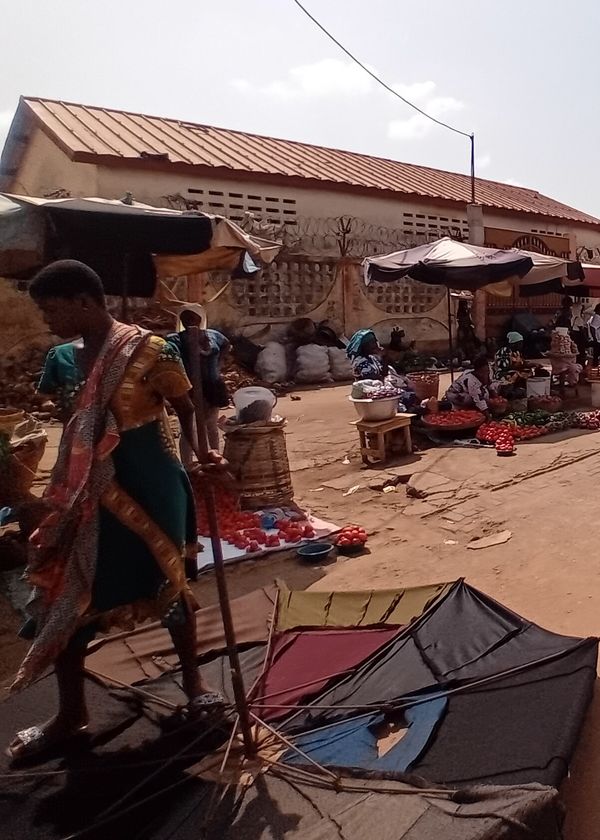
In Lomé, a market umbrella is more than shade. It is a business registration, a land title, a declaration of economic existence.
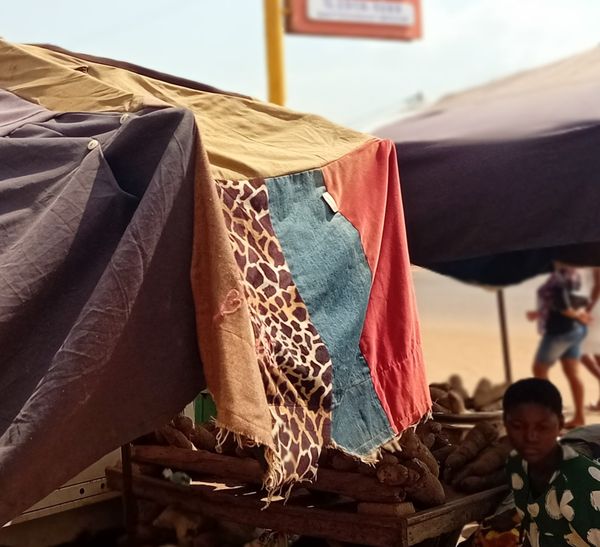
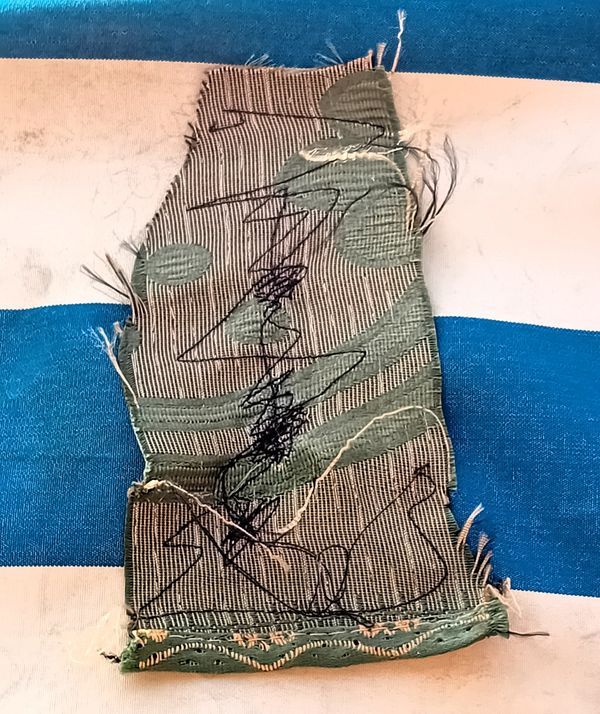
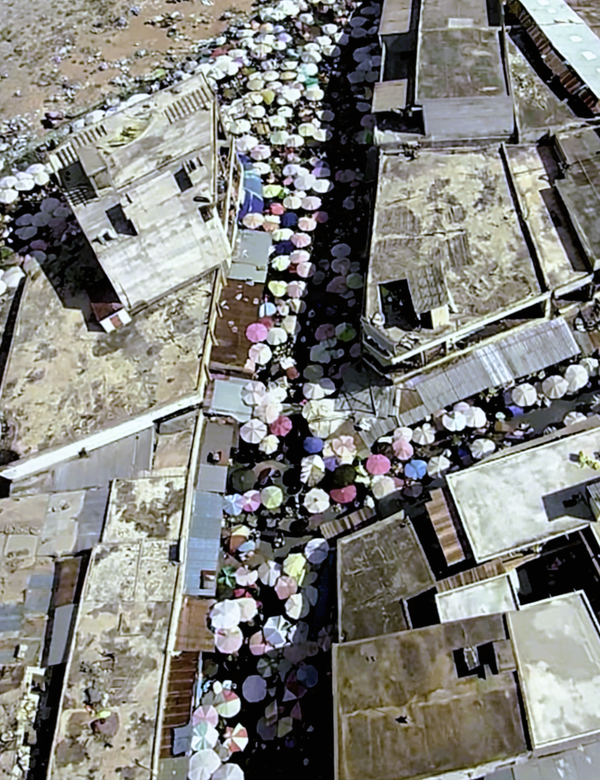
Discs of the Sun investigates how Global North fashion waste becomes Global South climate infrastructure through informal market vendors' adaptive practices. In Lomé, tailors construct umbrellas from secondhand European and American clothing (H&M, Gap, German cotton), protecting 150,000+ informal vendors. Each umbrella assembles 5-8 textile fragments based on tailors' embodied material knowledge—which textiles hold tension, absorb heat, distribute stress. This technical intelligence remains unmarked by fashion industry's "circular economy" narratives. 15,000+ tonnes of textile waste arrives Lomé annually; informal workers earn €5-12 daily sorting and repurposing it into survival architectures. Through aerial photography and ground-level documentation, the project reveals geometric patterns (pastel circles) while exposing construction details. The work refuses both romanticization and victimization—maintaining productive ambiguity: umbrellas simultaneously beautiful and symptomatic, sophisticated and precarious. Forthcoming installation concept: suspending 500-700 umbrellas to create monumental spatial installation investigating vendor agency and political architecture in West African cities.