dia'fragma
-
Dates2016 - 2024
-
Author
- Location Oslo, Norway
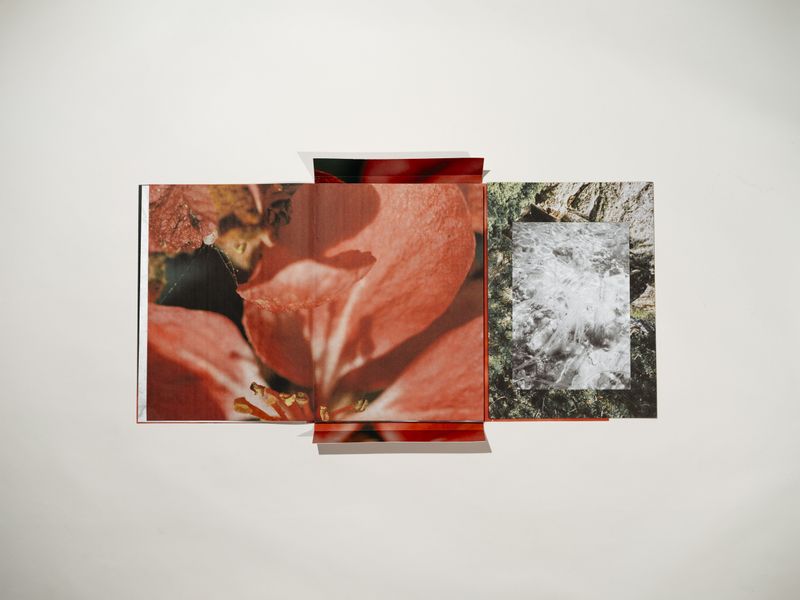
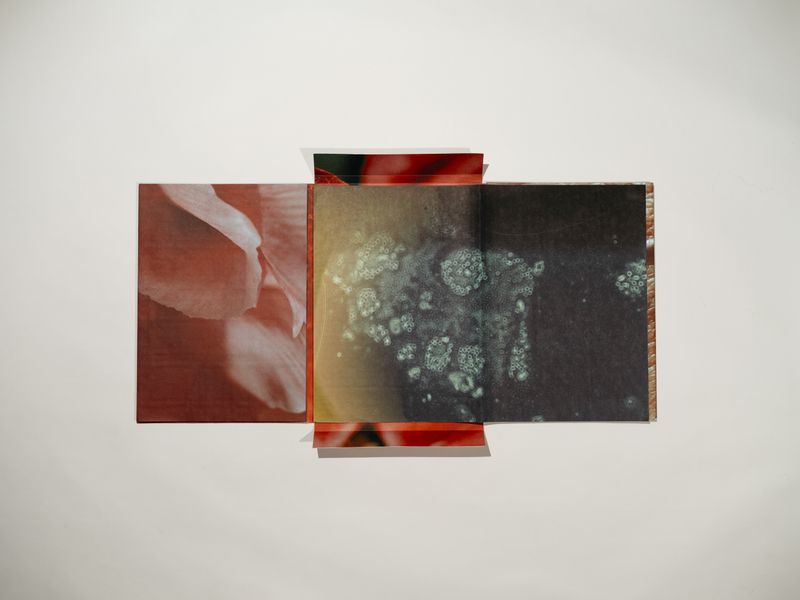
dia'fragma is an artistbook abouth breathing, and the tension that comes from holding it. I strive to go beyond and capture what is on our inside and wonder if photography can capture the invisible lines that span through different cycles of life.
In the artistbook DIA’FRAGMA I am curious on how photography can go from being a two dimensional medium to becoming three dimensional: something you can touch, feel and most preferable - be in. I strive to go beyond what is photographed and capture what is on the inside, what has texture. Like, how it feels to hold your breath, breathe in, then out again. How it is to hold on to someone or something and then let go, and the invisible lines that span through different cycles of life.
The word diafragma is most commonly used about the doom-shaped muscular partition separating the chest from the stomach. It plays a major role in breathing, as its contraction increases the volume of the thorax and so inflates the lungs. It can also be used for a thin sheet of material forming a partition and a contraceptive cap. Its name derives from greek “phren”, meaning mind, soul and intellect. The term is also applied to any dividing walls in the body, like diaphragma oris, diaphragma pelvis and diaphragma urogenitale, all influenced by breathing
Diaphragm paralysis stems from damage or dysfunction of the phrenic nerve, leading to respiratory problems like breathlessness. Trauma or injury often trigger it, though in many cases, the cause remains unknown
Breathing, or the lack thereof, has influenced my physical experience and perception of the world. I am looking for something my body knows, and I wonder if it is possible to experience photography physically. Can a photo show what I carry inside my body while I take it? Can it show how it felt to be where I was when I clicked the shutter?
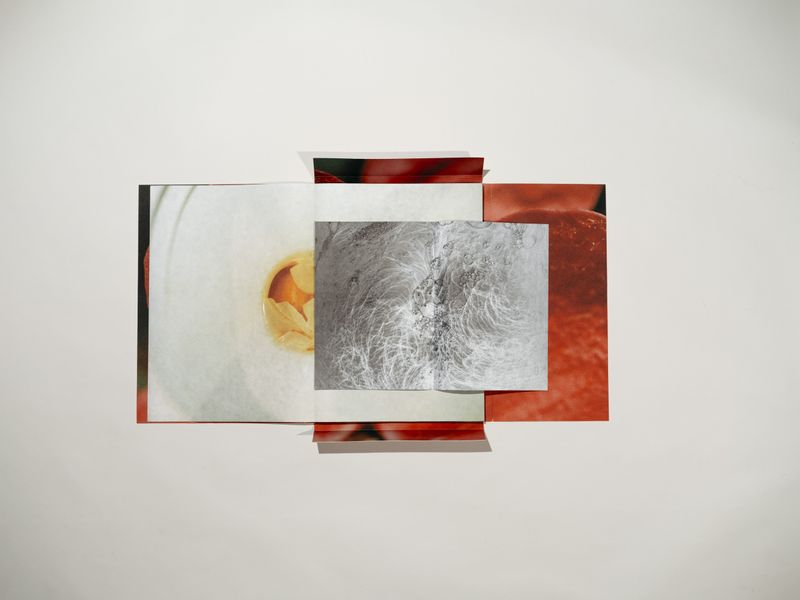
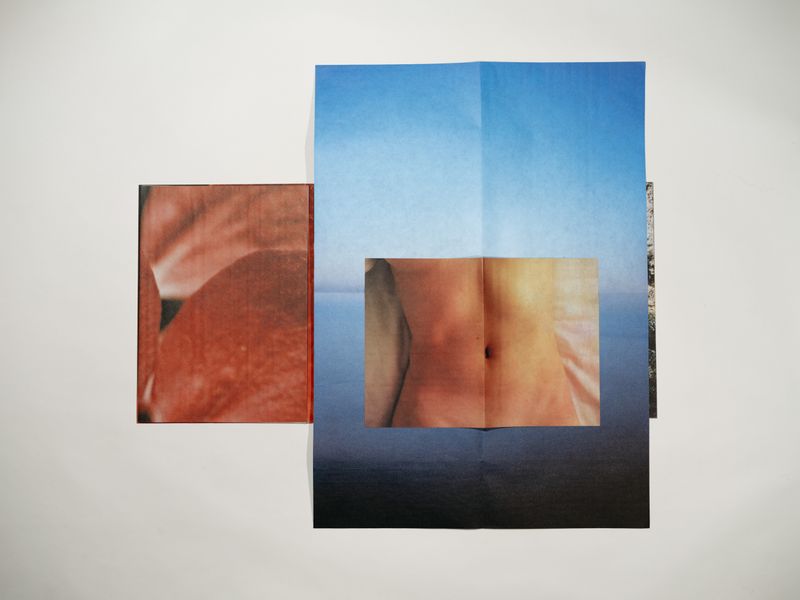
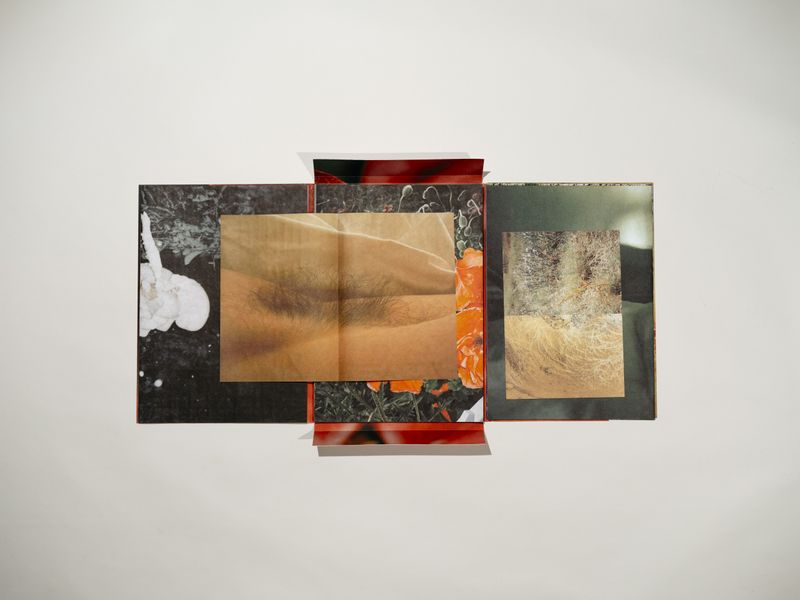
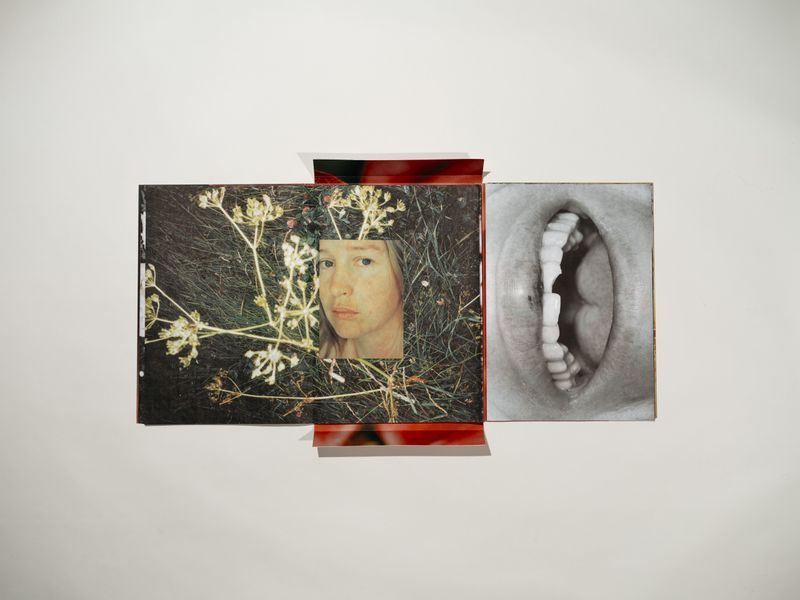
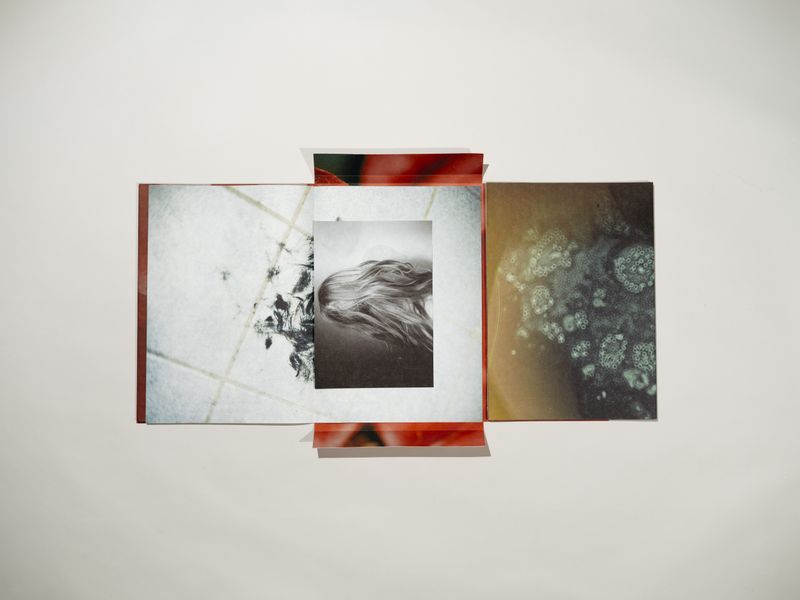
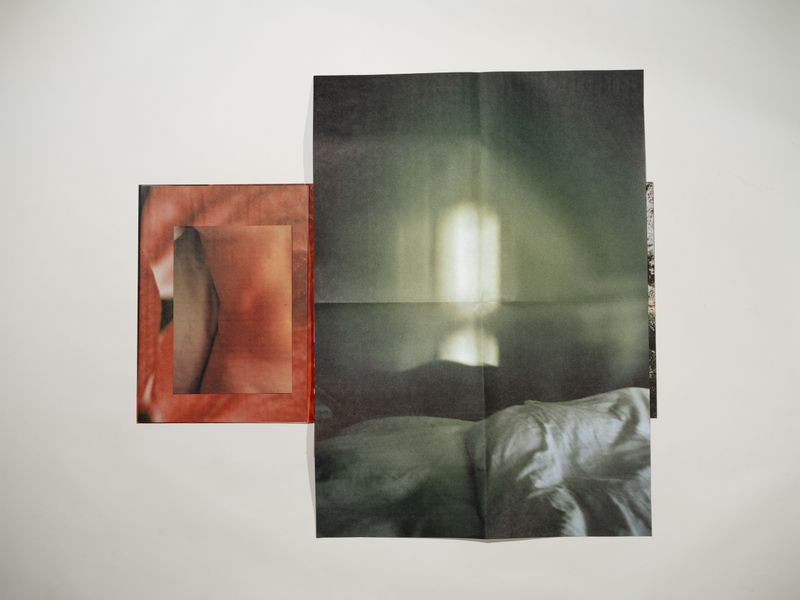
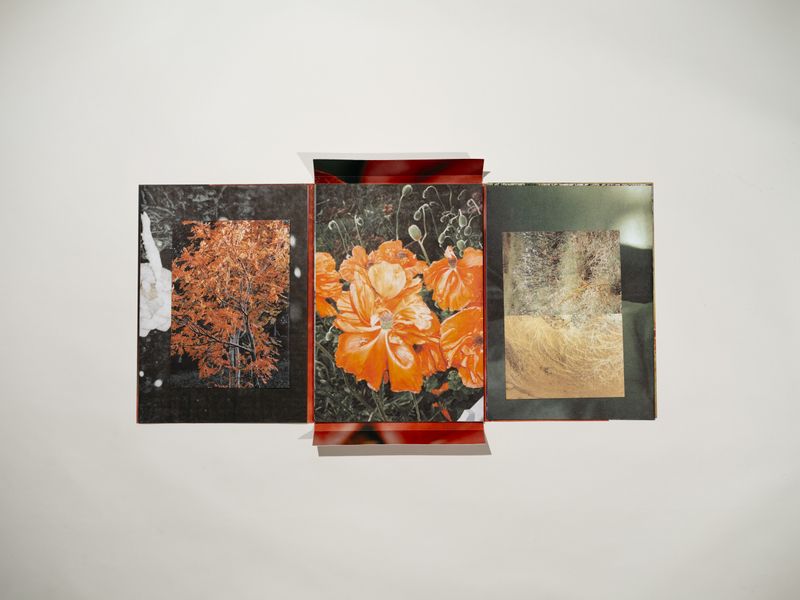
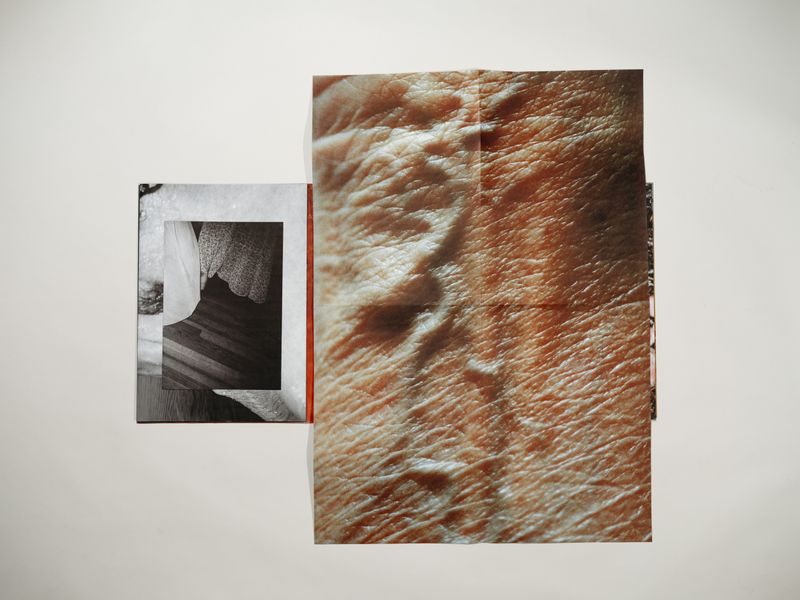
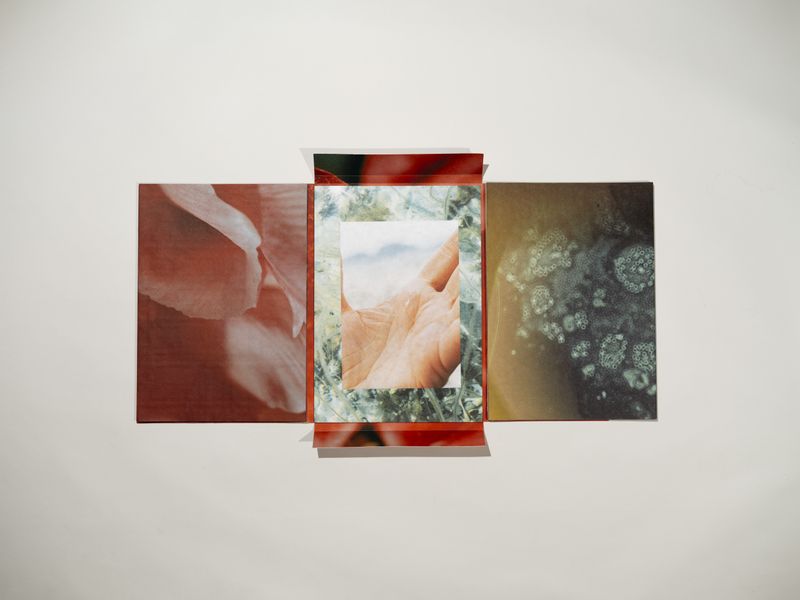
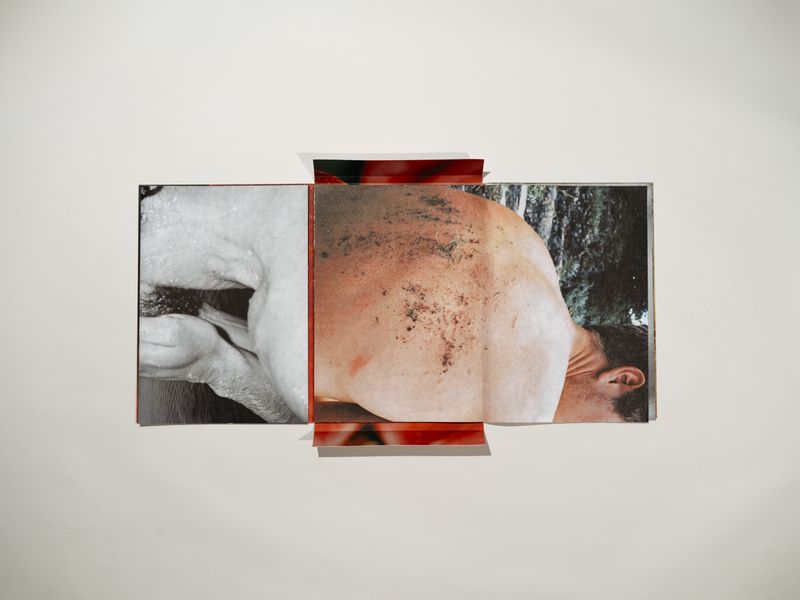
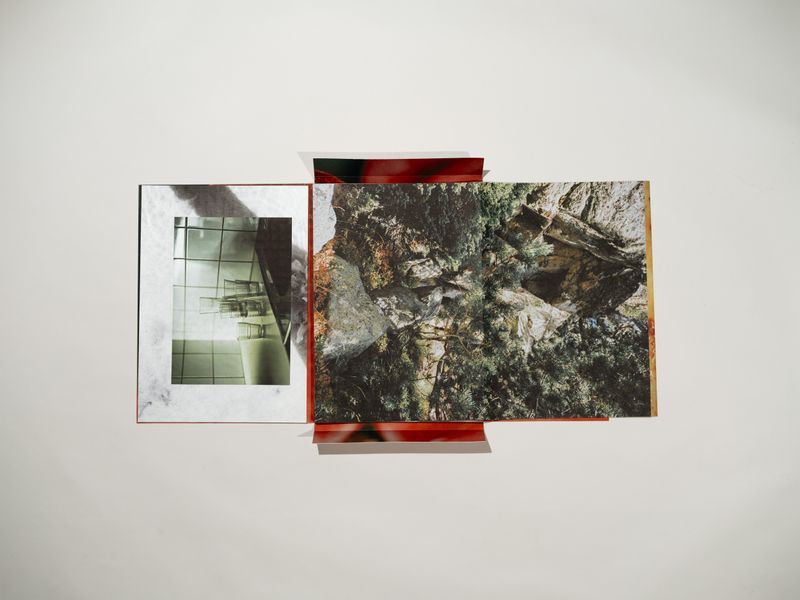
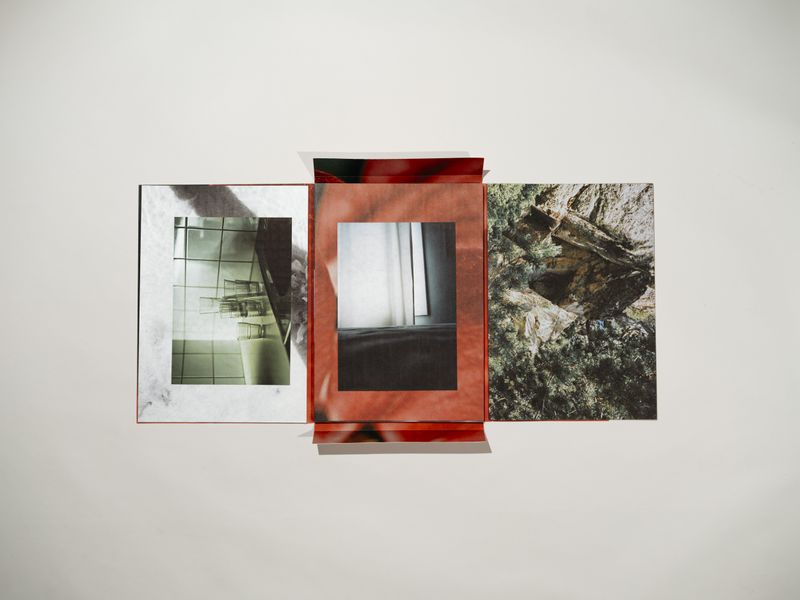
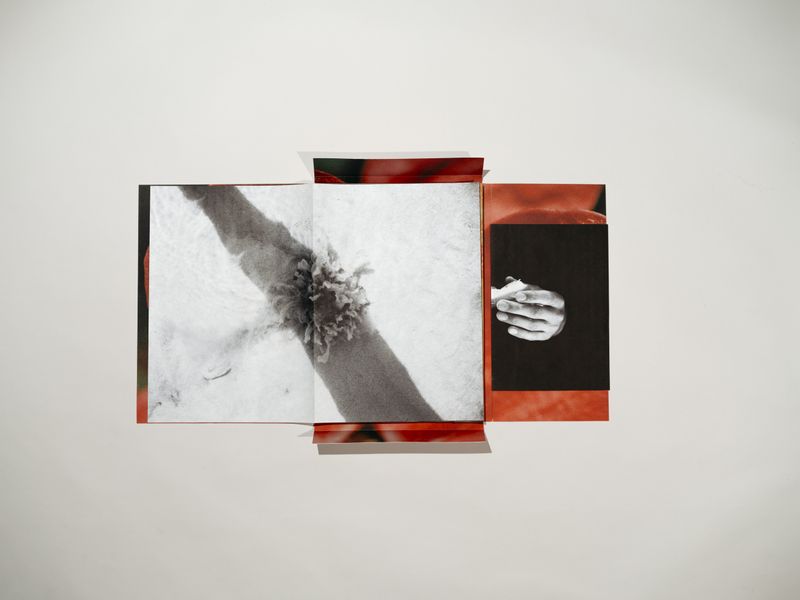
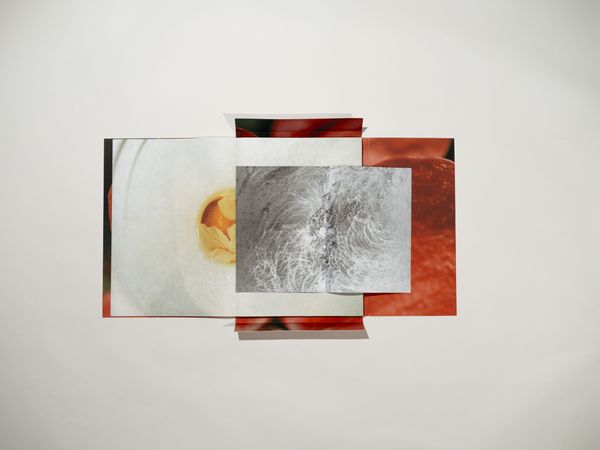
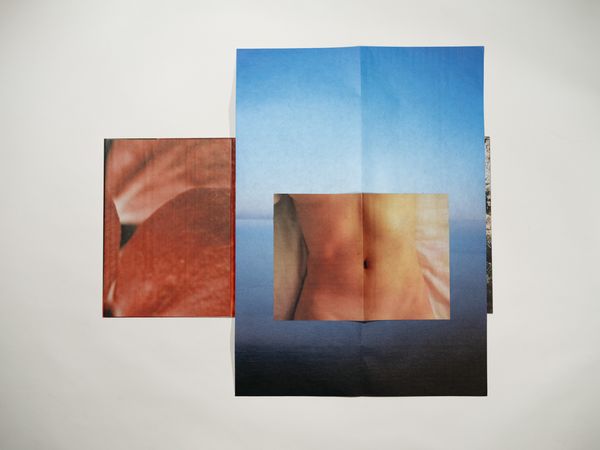
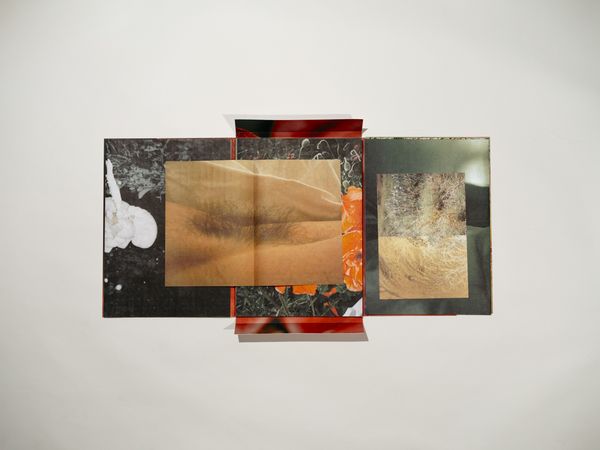
DIA'FRAGMA contains of loose photographs that are folded together and that can unfold in different matters. The photographs are inkjet-printed on 70 gsm Awagami paper. This paper is see-through when holding up towards the light. The folded pages are placed in a handmade folder.
The book has no chronicle narrative. Instead the folded photos will be laid differently from each time you open and close the book, just as thoughts swirl through your mind in no correct order. The photographs will also change and appear more like double exposures when seen towards light, as memories blend or are seen differently as closer or further away they are from you.
DIA'FRAGMA is made as a fragile object to make the viewer take time: to sit down and unfold the book. Since the paper is delicate, this needs to be done carefully unless tearing the paper. In that way the viewer will have to feel the materiality, stay close to it and see one fold at the time, and in that way be in it and breathe with it.