Crying Meri. Violence Against Women in Papua New Guinea
According to the statistics, in Papua New Guinea two thirds of women are constantly exposed to domestic violence and about 50% of women become victims of sexual assaults (in Chimbu and Western Highlands provinces, 97% and 100% of women surveyed, respectively, said they had been assaulted).

According to the statistics, in Papua New Guinea two thirds of women are constantly exposed to domestic violence and about 50% of women become victims of sexual assaults (in Chimbu and Western Highlands provinces, 97% and 100% of women surveyed, respectively, said they had been assaulted). Local men do not respect their meri (“women” in PNG Pidgin), constantly beating them, often using bush knives and axes.

The main danger comes from the “Raskol” gangs that rule the settlements in the capital city. Raping women is a “must” for the young members of the gang. In most Papua tribes, when a boy wants to become a man, he should go to enemy’s village and kill a pig. After that, his community will accept him as an adult. In industrial Port Moresby women have replaced pigs. While in traditional villages such attitudes toward women could be attributed to tribal culture, today in Port Moresby violence against women shocks modern society.

Often violence against women in PNG takes savage forms. Sorcery-related brutality is widespread all around the country, but mostly in rural areas of the Highlands region. In case of an unexpected death in a village, its residents accuse a random woman (usually a relative of the dead person) and torture her, forcing to admit that she is a witch. Many of these "punishments" result in the victim’s death. But even if the woman survives, she would be expelled from the community for good. The PNG Government neither has a program of helping survivors of sorcery-related violence nor provides any shelter for those women.

© Vlad Sokhin - Image from the Crying Meri. Violence Against Women in Papua New Guinea photography project
i

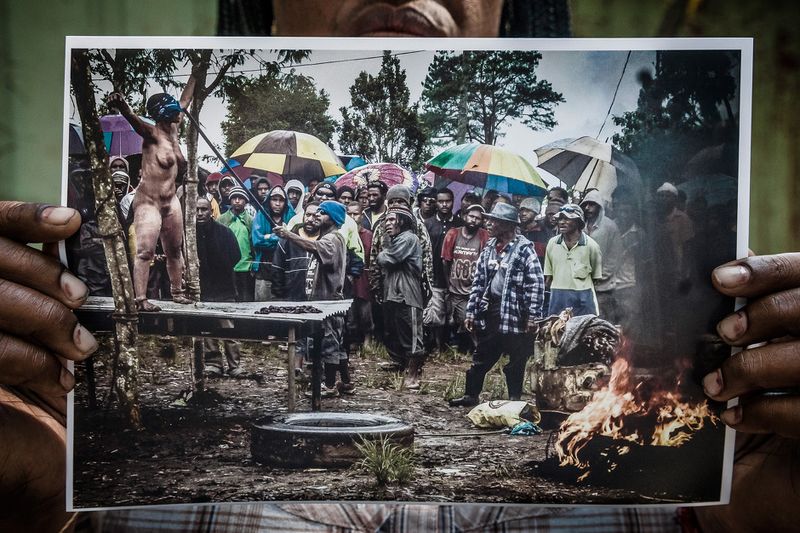
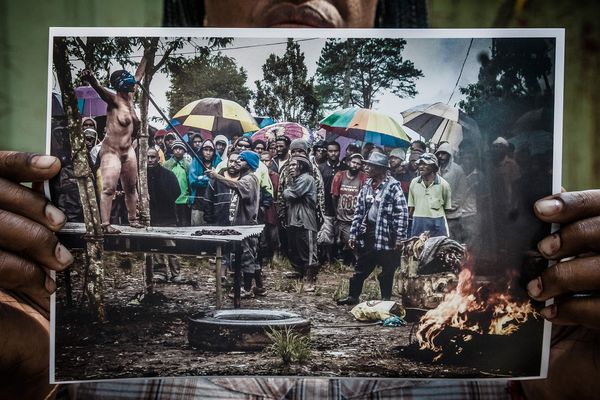
A woman advocate shows a photo of the torture of another woman, who was accused of being a sorcerer by people from her village. The torture happened in August 2012 in the Highlands Region. The crowd undressed the victim, tied her up to a tree, beat her and burned her body with hot iron bars, planning to burn her alive. Later the torture was interrupted and the woman survived.

© Vlad Sokhin - Image from the Crying Meri. Violence Against Women in Papua New Guinea photography project
i

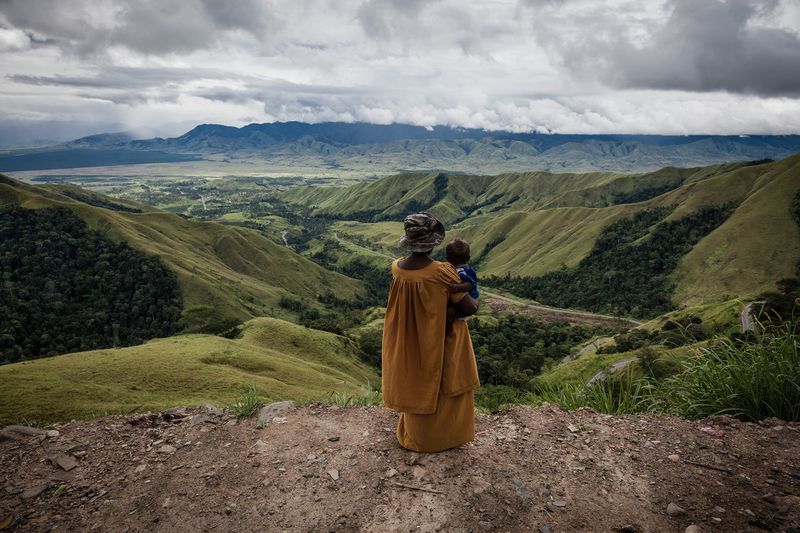
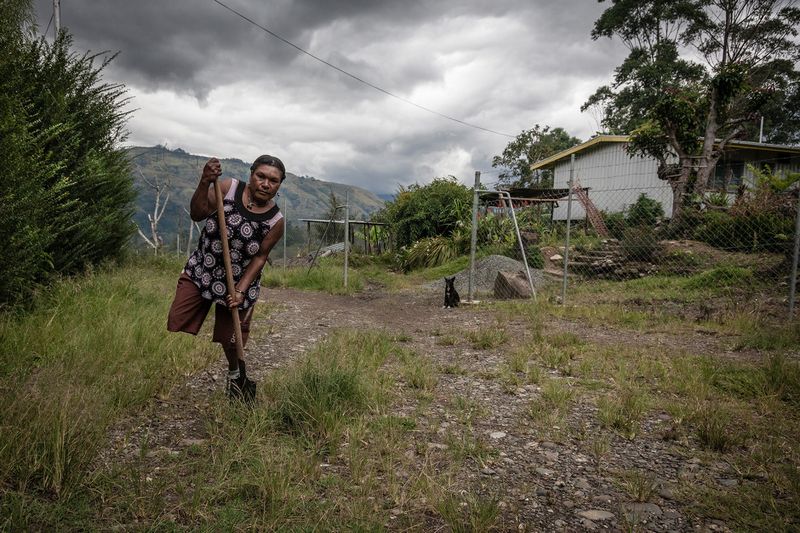
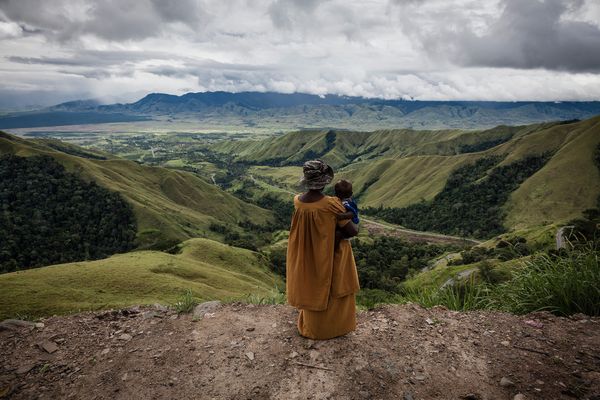
The beautiful landscape of PNG’s highlands belies the brutal reality of life in the region, where more than 90 per cent of women report suffering gender-based violence.

© Vlad Sokhin - Image from the Crying Meri. Violence Against Women in Papua New Guinea photography project
i

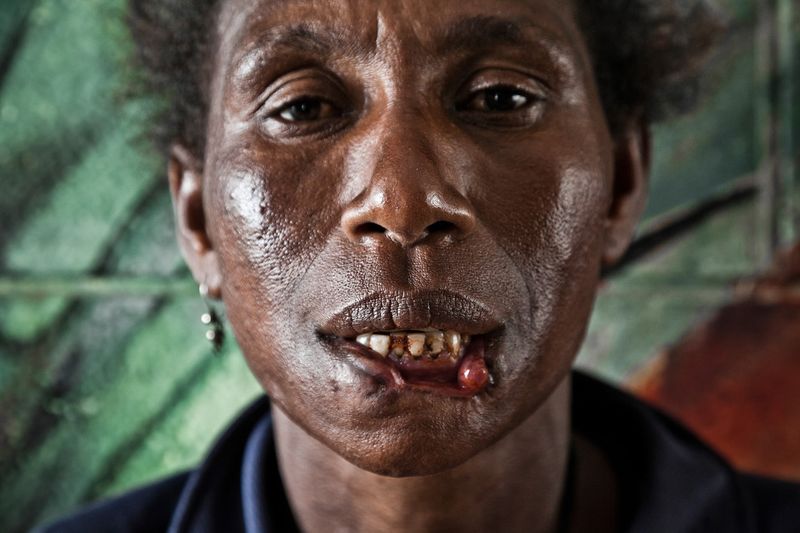
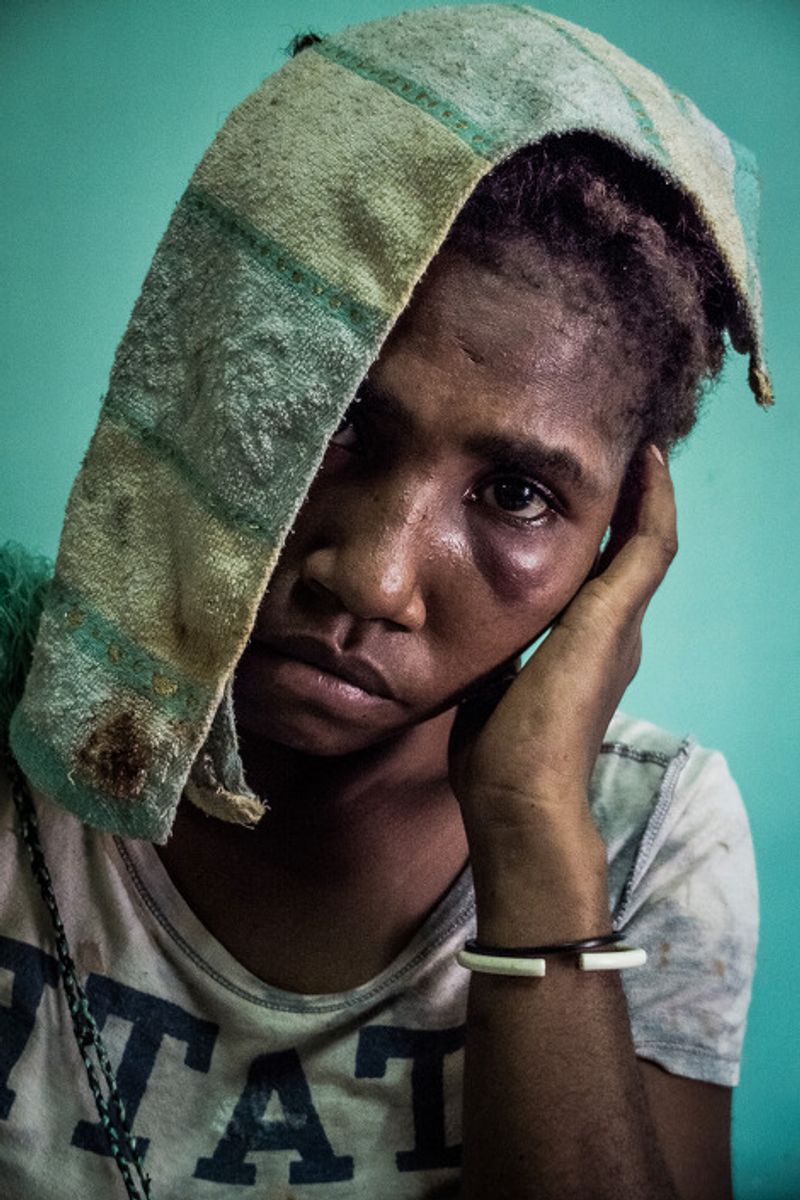
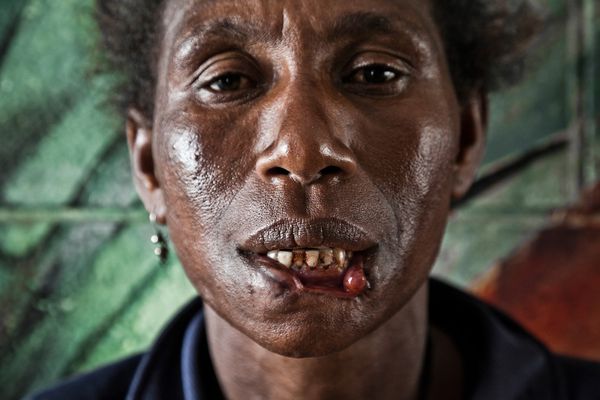
Helen (40), mother of seven children. On 27 December 2011 she was attacked by a "cannibal" near the Boroko police station, in the central part of Port Moresby. The attacker bit off Helen's lower lip and tried to sink his teeth into her throat. She managed to escape by kicking her assailant in his testicles and biting three of his fingers, forcing him to release her. Police arrested the man and found out that this was his third attempt to eat human flesh. After spending spent three days in the hospital, Helen went to the police station to initiate criminal proceedings against the cannibal, but discovered that he had been released due to lack of complaints. Helen is still waiting for the hospital’s approval to start surgery for a skin graft on her missing lip.

© Vlad Sokhin - Image from the Crying Meri. Violence Against Women in Papua New Guinea photography project
i

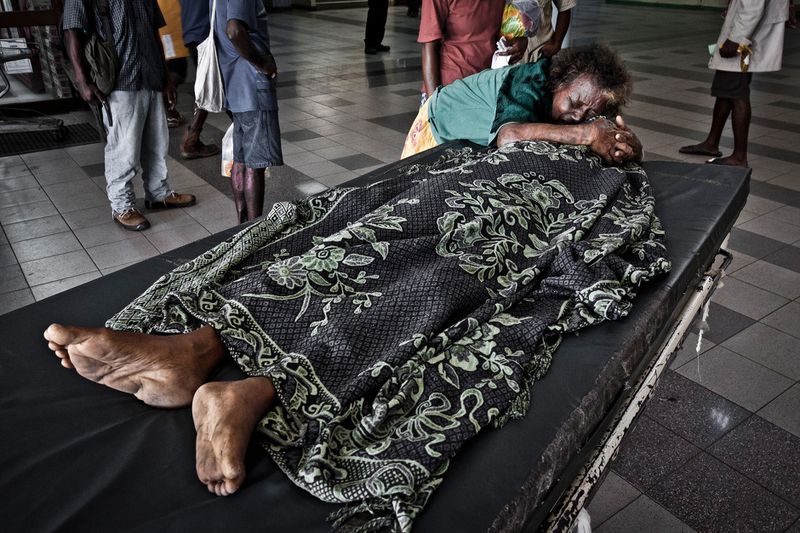
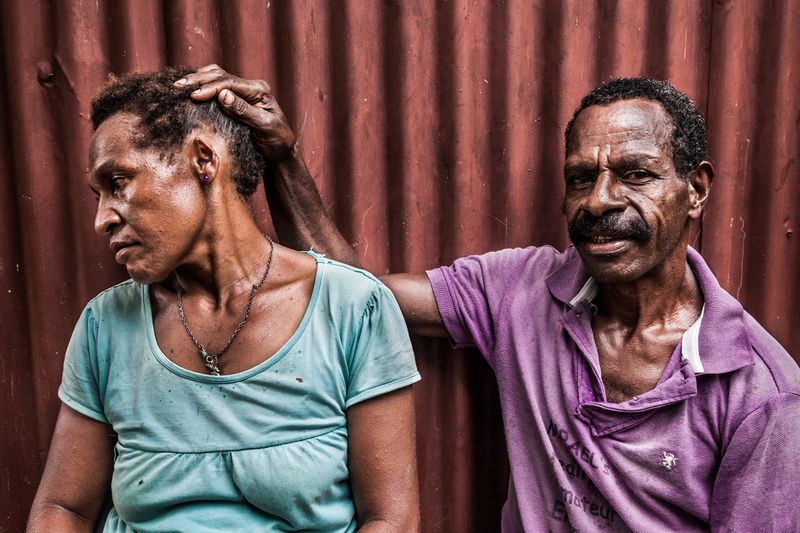
Linda grieves the death of her 25-year-old daughter Amanda, who died at the Emergency section of the Port Moresby General Hospital after being raped on the street by members of Raskol gangs. The raskols stabbed the victim several times resulting in multiple stab wounds, from which she died without regaining consciousness.

© Vlad Sokhin - Image from the Crying Meri. Violence Against Women in Papua New Guinea photography project
i

Richard (45) shows the disfigured ear of his wife Agita (32) in the Morobe block of Port Moresby. In December 2010 after coming home drunk, Richard took a bush-knife and cut off half of Agita’s left ear. He spent one night in the police station and was released the next morning due to "insufficient evidence" to initiate criminal proceedings. Agita’s relatives did not allow her to leave Richard, having received 500 kina compensation from him for the “potential damage” caused.

© Vlad Sokhin - Image from the Crying Meri. Violence Against Women in Papua New Guinea photography project
i

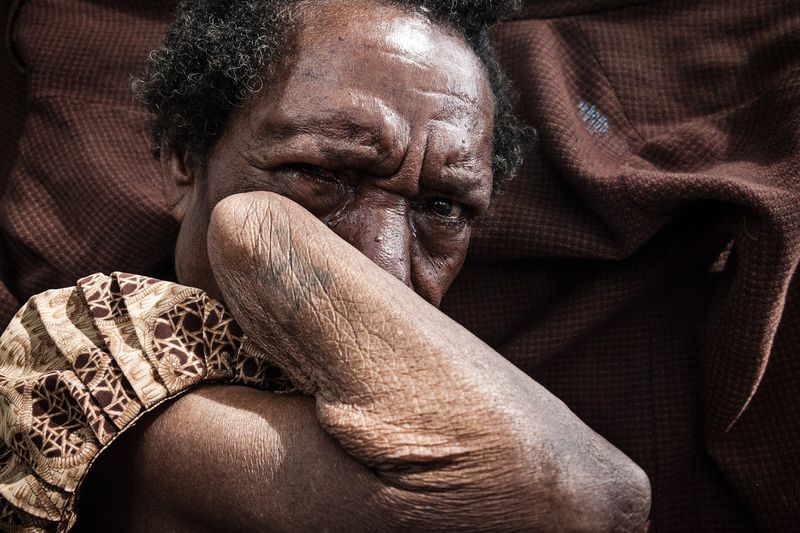
Rasta was accused of sorcery by people in her village after the death of a young man in 2003. She was set upon by a crowd at his funeral, beaten and strangled until she escaped. She lost her hand in the attack.

© Vlad Sokhin - Image from the Crying Meri. Violence Against Women in Papua New Guinea photography project
i

Dini, a survivor of a sorcery attack shows wounds she received after she was accused of using black magic to kill her own son.

© Vlad Sokhin - Image from the Crying Meri. Violence Against Women in Papua New Guinea photography project
i

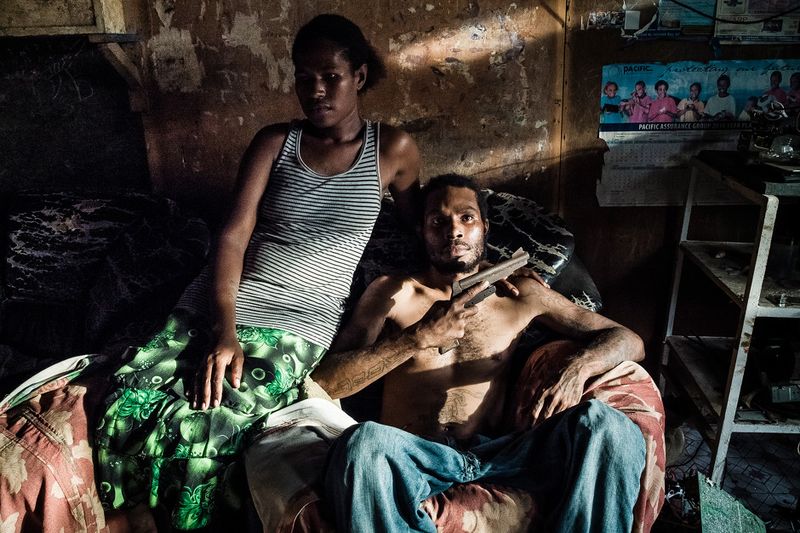
Omsy (31), ex-member of “Kips Kaboni” (“Red Devils”) Raskol gang, with his wife Carol (24) in their house. Omsy was a rapist and a thief, but few years ago he left his gang activities and became a bas guitarist. His band “Amua Durupu” has won international awards. Omsy says, that after he quitted the gang, he also stopped beating his wife. However, he keeps his handmade gun for family protection, as they still live in Kaugeri settlement – the most dangerous place of Port Moresby.

© Vlad Sokhin - Image from the Crying Meri. Violence Against Women in Papua New Guinea photography project
i

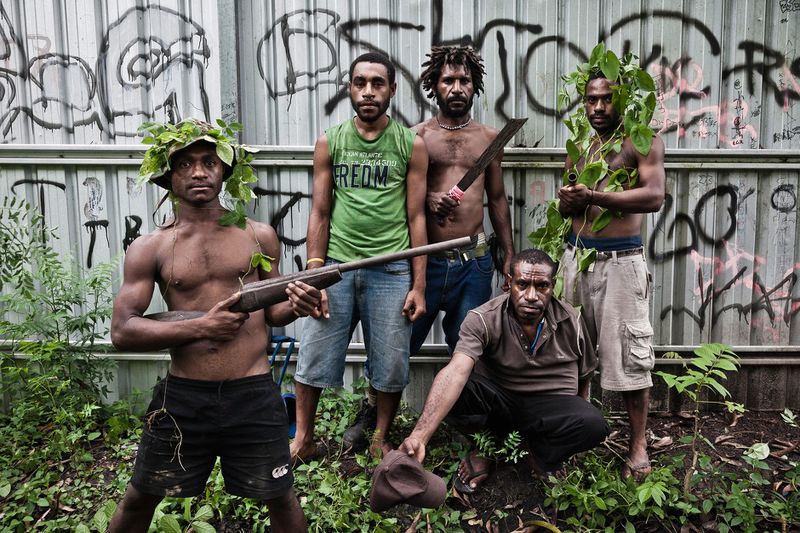
These men call their gang “Dirty Dons 585” and admit to rapes and armed robberies in the Port Moresby area. They say two-thirds of their victims are women.

© Vlad Sokhin - Image from the Crying Meri. Violence Against Women in Papua New Guinea photography project
i

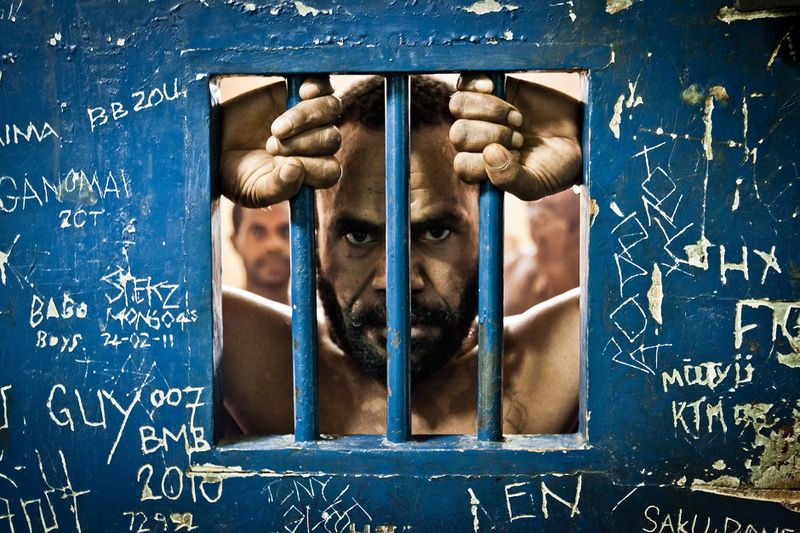
Andres (39) is waiting for his court trial in his prison cell, having been accused of multiple rapes. Port Moresby, Boroko Police Station.

© Vlad Sokhin - Image from the Crying Meri. Violence Against Women in Papua New Guinea photography project
i

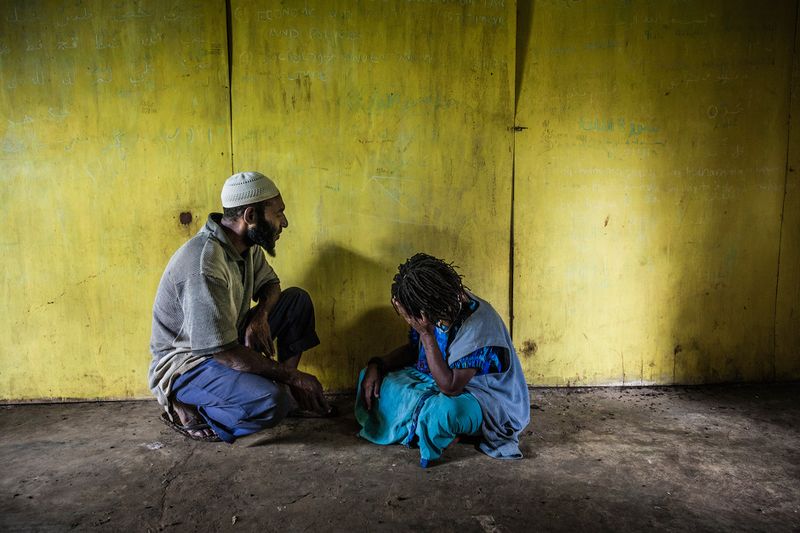
Mariana (36), a victim of domestic violence, in the imam's house near the mosque of Waigar village (Simbu Province). Mariana’s husband constantly beats her and often kicks her out of their house. Though Mariana is not Muslim, she is always welcomed by the imam, Abdul Salam (39), who gives her moral support and shelter.

© Vlad Sokhin - Image from the Crying Meri. Violence Against Women in Papua New Guinea photography project
i

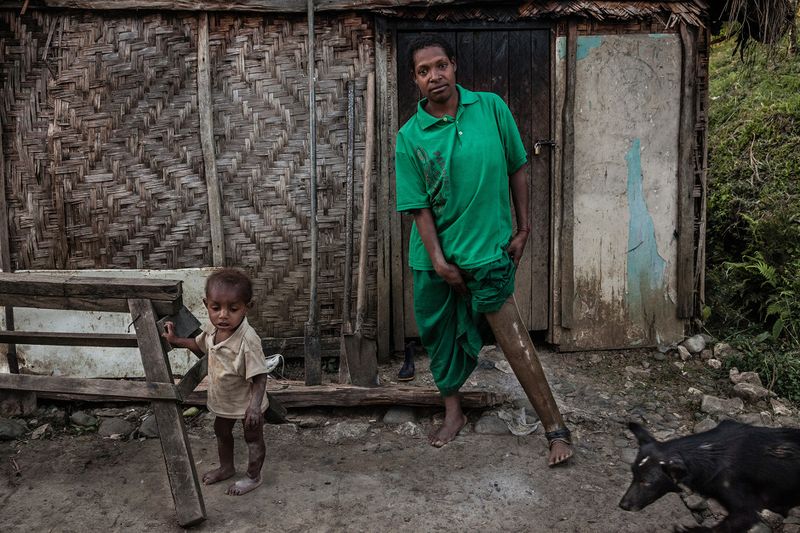
July (19) shows her prostatic leg in Kundiawa town, Simbu Province. July's father attacked her and chopped off her leg when she was 9 moths old. In July 2011 July she went to Lae town to make a new prostatic leg. There she was raped by members of the local Raskol gang and got pregnant. She lives now with her son James (on the left) in Kundiawa town, Simbu Province.

© Vlad Sokhin - Image from the Crying Meri. Violence Against Women in Papua New Guinea photography project
i

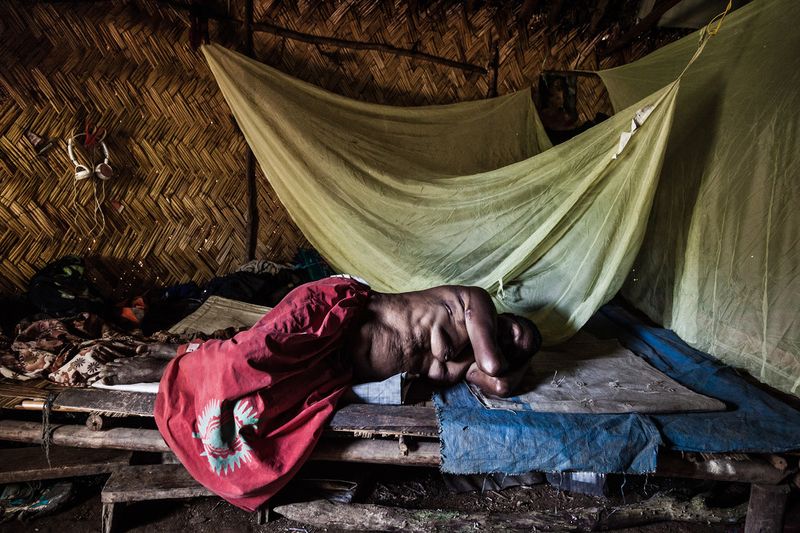
Hellen (about 38 years old), lost her leg in 2005 during a fight with her drunk husband, Alai Kawa. Alai chopped off Hellen’s right leg with a bush knife infront of their young children, who later called for help. Alai was arrested by police, however after receiving treatment, Hellen left her home out of fear that her husband might be released. She only returned in 2010 when she found out that Alai died in prison. She now lives together with Alai's sister and they both run a small shop in Kundiawa town, Simbu Province.

© Vlad Sokhin - Image from the Crying Meri. Violence Against Women in Papua New Guinea photography project
i

Banil came to the Antenatal Clinic of Port Moresby after having been sexually assaulted by her ex-boyfriend. The day after their separation, her former partner came to her parents’ house and threatening her with a knife, dragged Banil to a bush area. There he beat her and raped her. Banil’s father managed to find his daughter laying unconscious on the ground and brought her to the hospital.

© Vlad Sokhin - Image from the Crying Meri. Violence Against Women in Papua New Guinea photography project
i

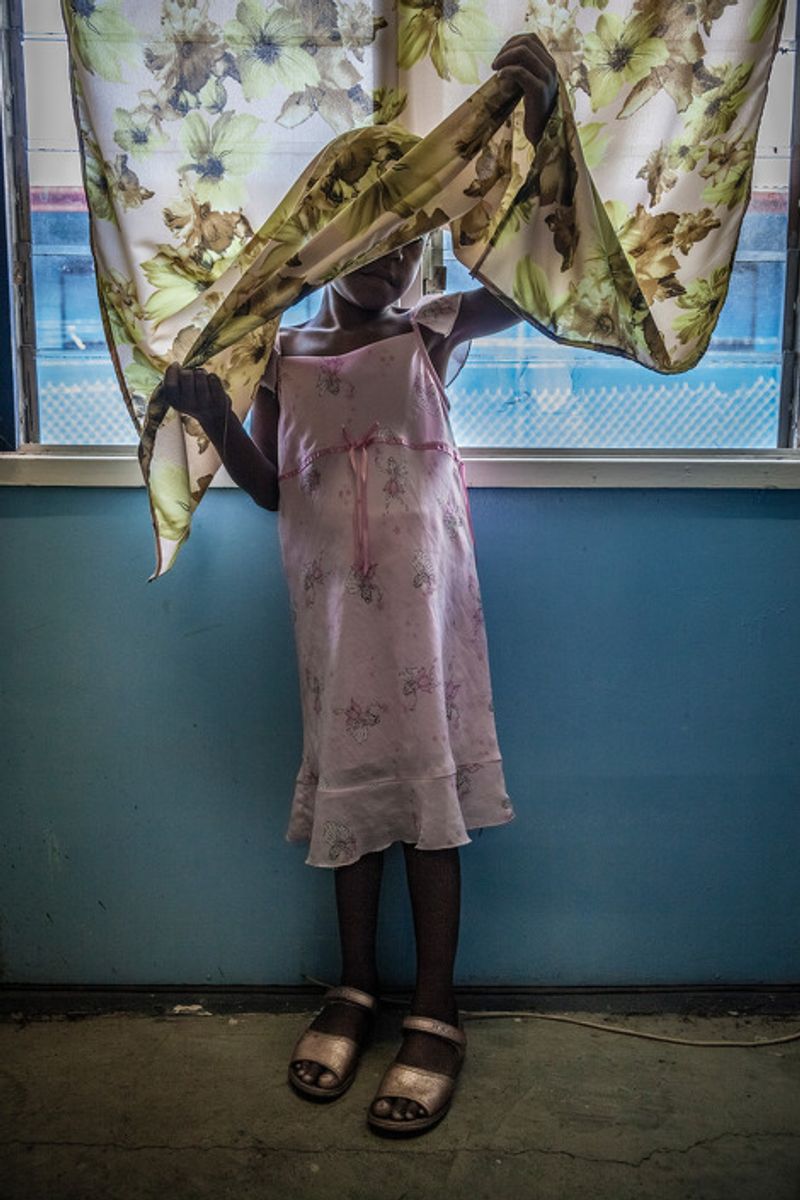
Early in April 2012 6-year-old Julie was kidnapped and assaulted by four men in Lae city. The men raped the young girl for eight hours and then left her in the street. Julie spent more than three weeks in the hospital, and is now receiving psychological treatment. Because of the injuries inflicted on her, Julie can barely walk and can never have children. Her tormentors were arrested by the police and are awaiting trial in custody.