Contact Traces
-
Dates2022 - Ongoing
-
Author
- Locations Federal Territory of Kuala Lumpur, Portugal
Photographic collages layering family archives with textiles — origami patterns and lace — to explore the histories embedded within them. These fused images give form to what lives in the spaces between languages, cultures, and generations.
Contact Traces
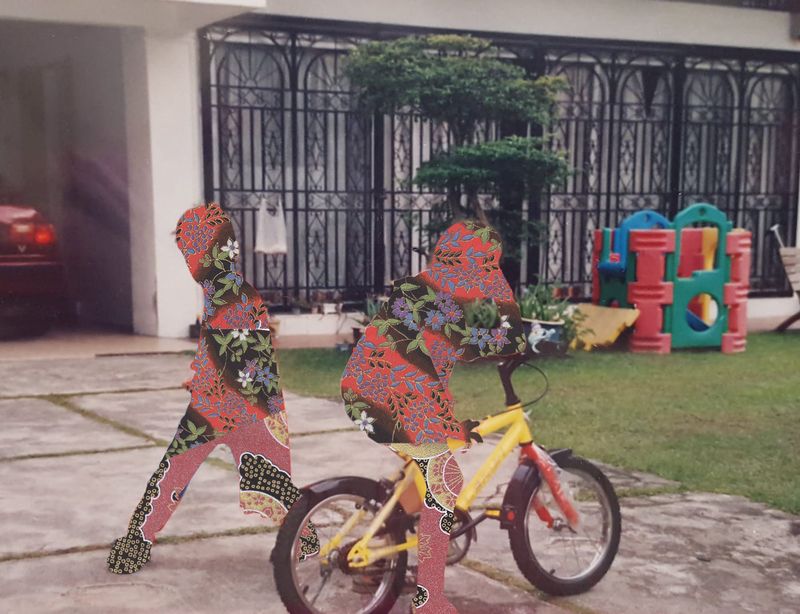
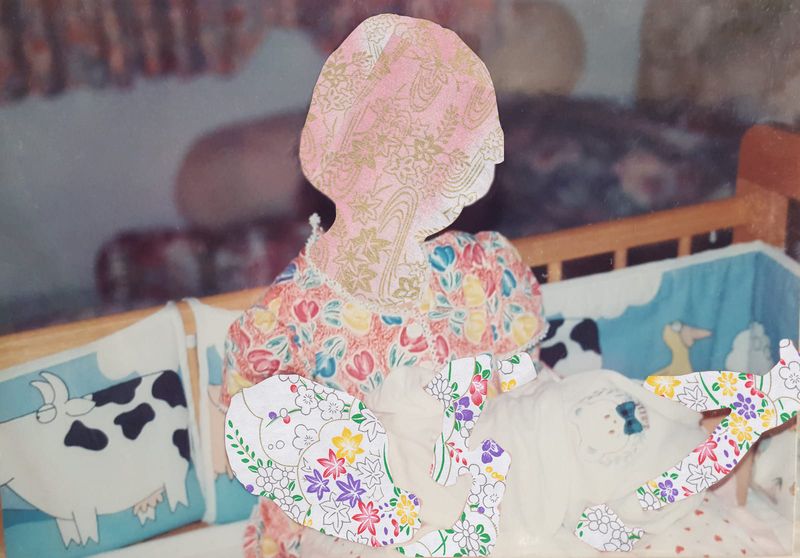
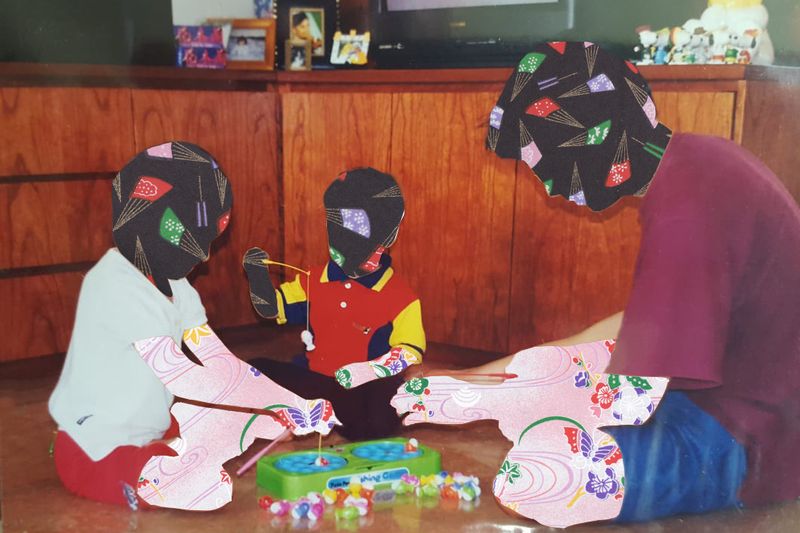
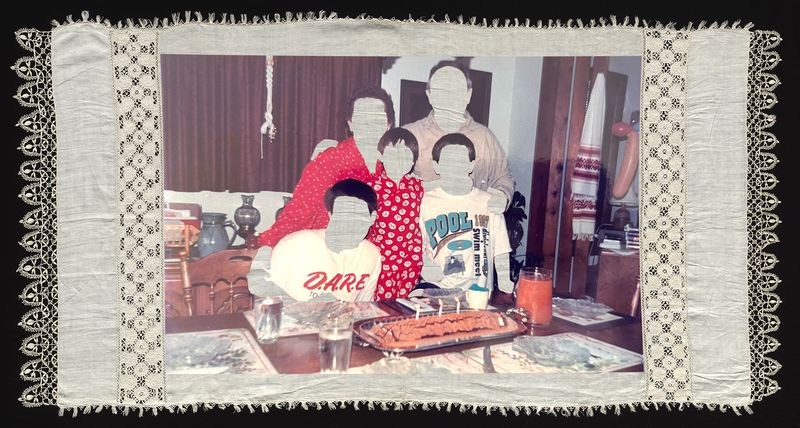
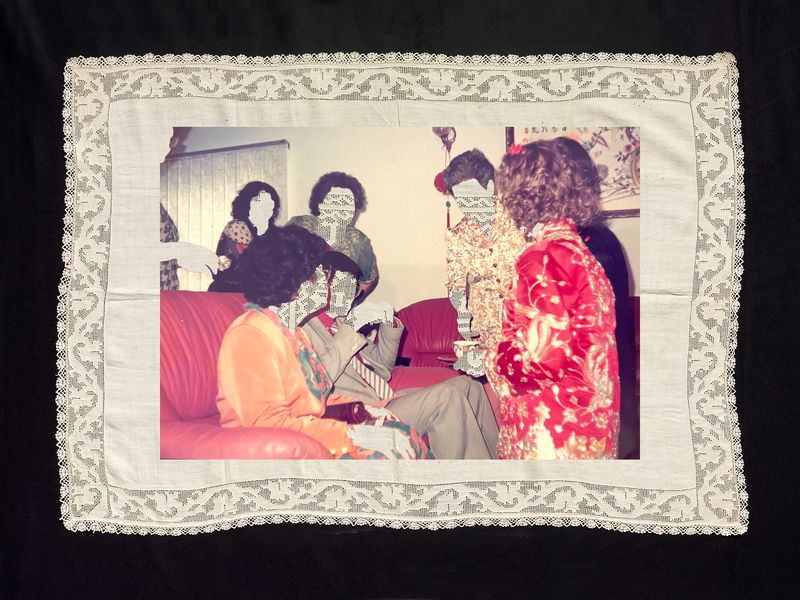
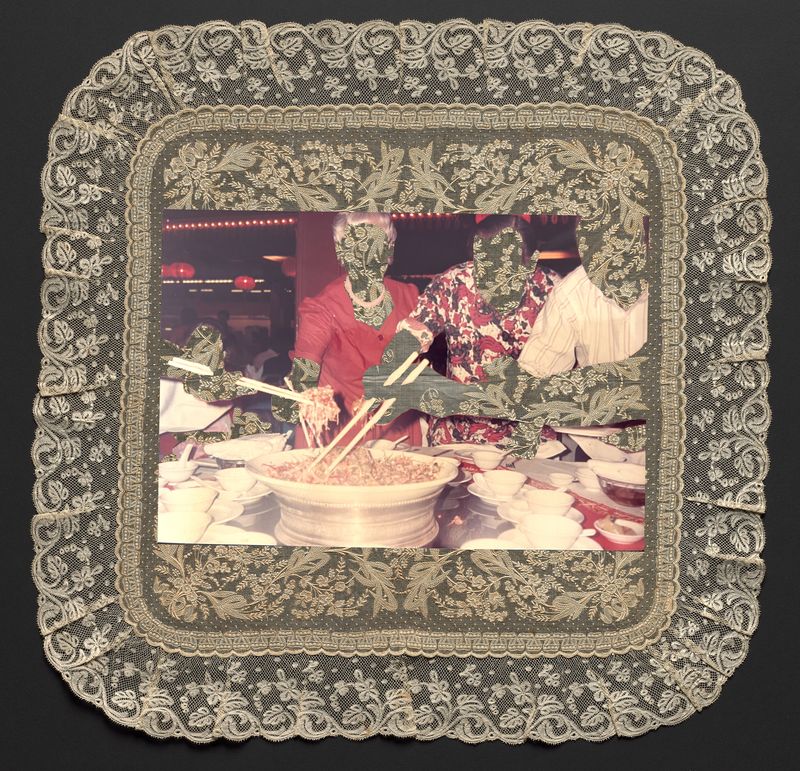
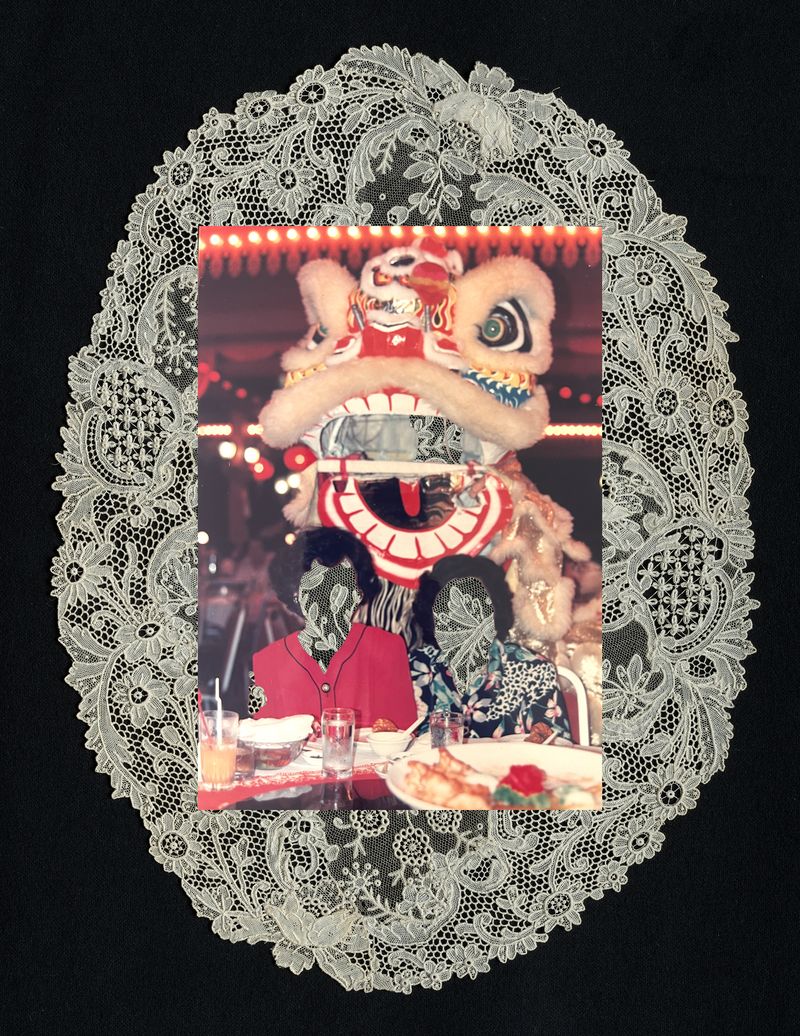
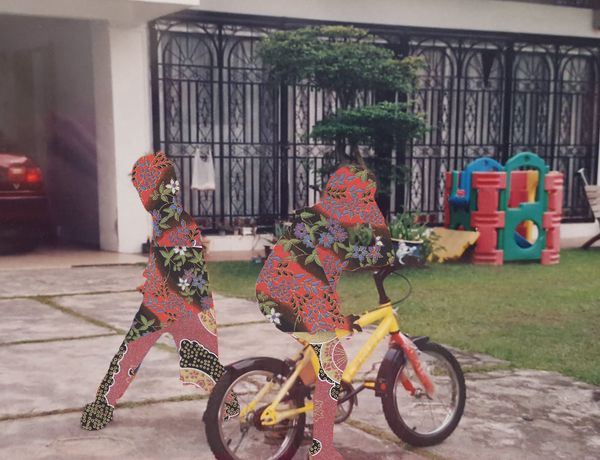
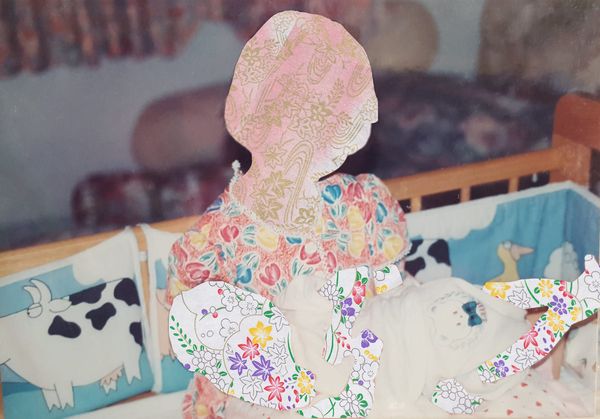
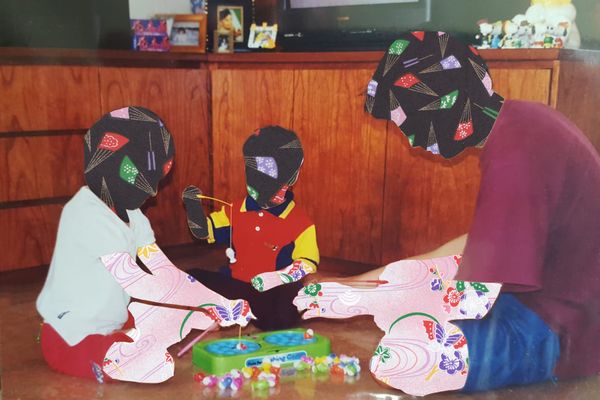
These photographic collages begin with an archive of family portraits, gatherings around food, and special events. From these images, bodily representation is selectively removed, an invitation to look at the surroundings instead.
By incorporating textiles, origami patterns and lace, materials that carry their own histories of movement, design, and function become part of the image. A photograph is itself a contact trace: light touching a surface, leaving a mark. To work with family archives is to handle evidence of moments that no longer exist. The collage method enacts this physically, pressing one layer against another, allowing things to bleed through.
In the first body of work, origami patterns are layered into family portraits to visualise family dynamics. My father, a Chinese-Malaysian who speaks three languages, shares only English with me. The collage holds these dissonances by layering, allowing things to fit.
In the second, lace is incorporated with archival photographs of family gathered around food. Lace did not exist in Asia before European contact. Its presence in Malaysian domestic life is a material trace of trade routes. Lace is structurally made of webs woven together. Placed within family images, it becomes a woven record of that history: the encounters that shaped the people.