Composition in Red, Yellow, and Commerce

-
Dates2026 - 2026
-
Author
- Topics Fine Art
- Locations Accra, Ghana, Kade, Nyakrom
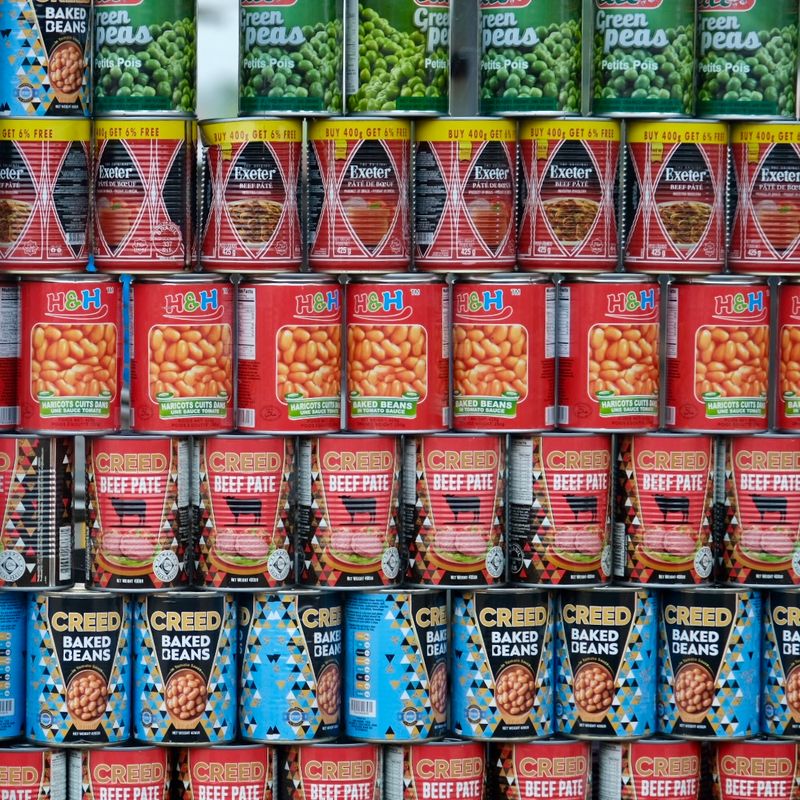
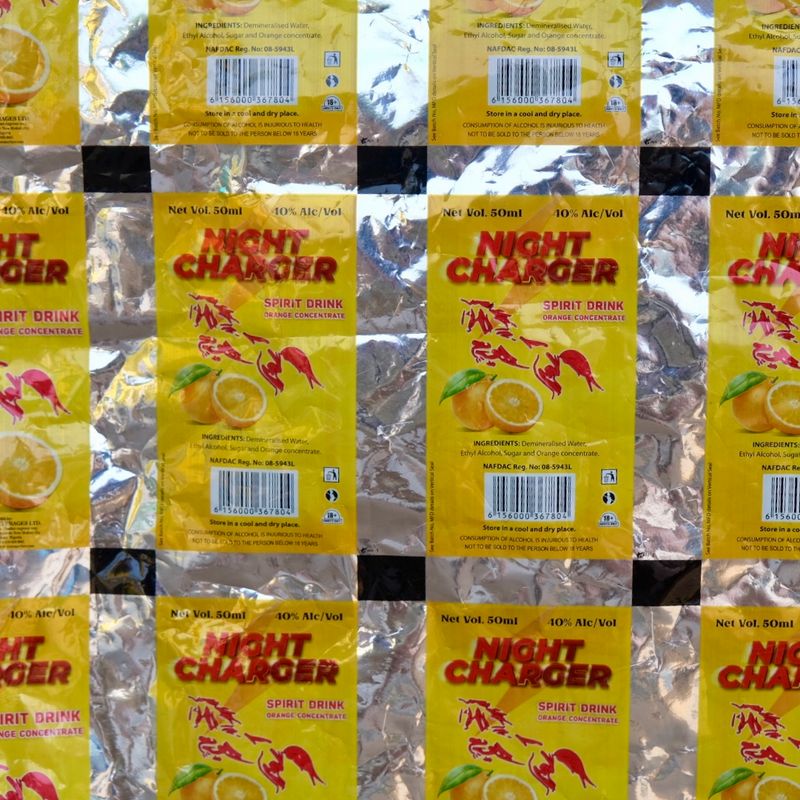
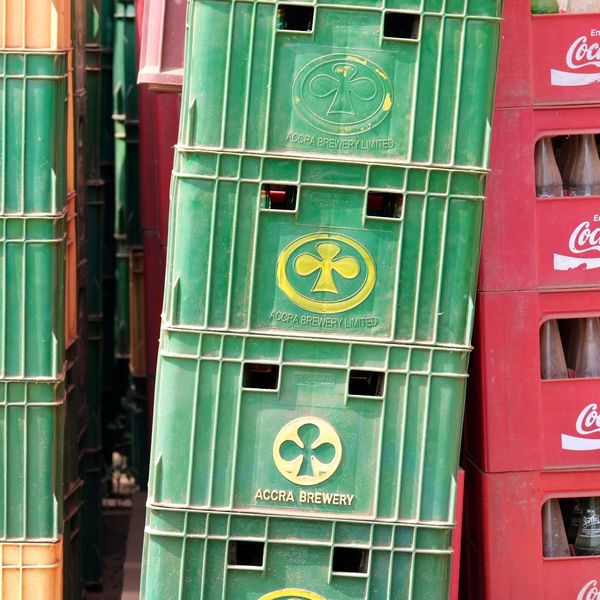
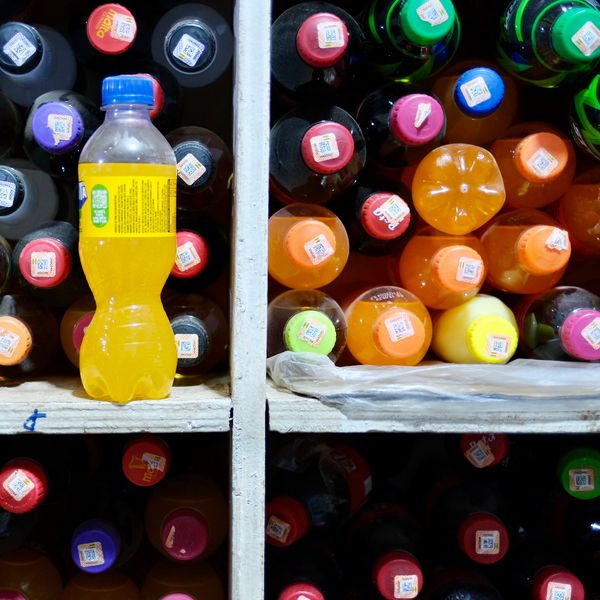
Store shelves as readymade Mondrians. The reds, yellows, and blues of product packaging create geometric grids that echo De Stijl—capitalism’s inadvertent tribute to modernist abstraction, renewable daily by stockers who’ve never heard of either.
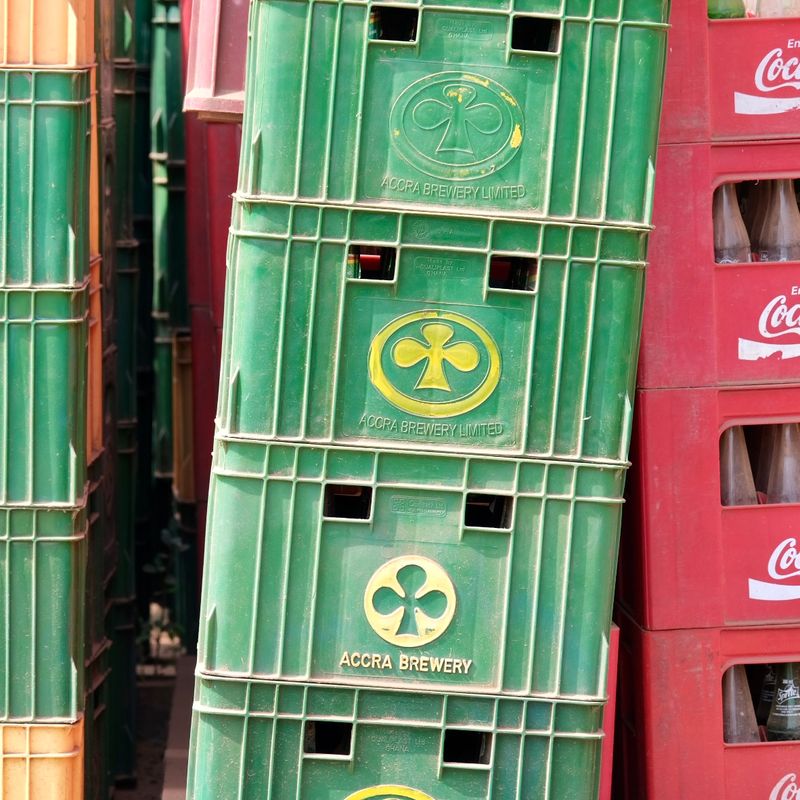
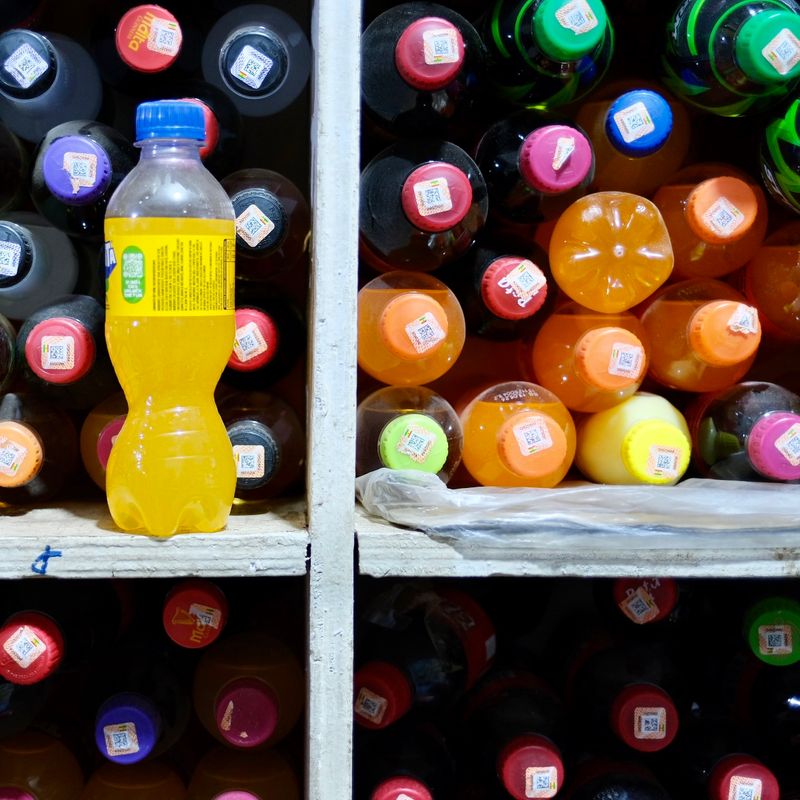
Walking through markets in Accra, Kade and Nyakrom, all in Ghana, I noticed something unexpected: the visual language of geometric abstraction, hiding in plain sight among stacked bottles and canned goods. What Piet Mondrian pursued through careful reduction—primary colors, perpendicular lines, balanced asymmetry—has been inadvertently recreated by the logic of retail display.
This series began with a single photograph: colorful bottle caps arranged in a grid, separated by white shelf dividers. The resemblance to Mondrian was so striking that I began looking for it elsewhere—and found it everywhere. Store shelves become canvases. Product packaging provides the color blocks. The infrastructure of commerce—racks, crates, display grids—supplies the structure.
But where Mondrian sought spiritual transcendence beyond the material world, these compositions are entirely material. They’re temporary, utilitarian, remade daily by workers arranging inventory. No one designs them as art, yet they achieve a surprising formal coherence.
The series asks: Has capitalism accidentally fulfilled modernism’s dream of universal visual harmony? Or does recognizing Mondrian in supermarkets reveal how deeply commercial aesthetics have colonized our sense of order and beauty? Perhaps both. These are compositions nobody painted, yet everybody sees.