Ardha

After a romantic breakup, I moved in with the family of a longtime friend in a small town in Kerala, southern India. Like me, he was approaching thirty and had recently gone through a separation. His relationship with his childhood sweetheart had been disapproved of by his parents because they belonged to different communities, a factor that continues to shape romantic lives in India, where caste, religion, and language still deeply influence social relationships.

This breakup prompted his parents, like those of many friends before him, to begin searching for the "ideal partner" before he reached the symbolic age of thirty.

Our parallel experiences led me to reflect on union and loss, universal themes that run through all human lives. I began documenting these questions among my extended circle of friends from different communities in Kerala, then in Tamil Nadu, before my encounters gradually took me to other parts of India.

Every year, more than ten million couples marry in India. Only a small proportion marry for love. The vast majority still follow the path of arranged marriage. In this system, often misunderstood in the West, families play an active role in finding the partner considered most compatible, balancing social stability, cultural expectations, and family interests.

Whether viewed as a rite of passage or as an alliance between two family lineages, marriage remains one of life's defining moments.

Although practices vary across regions and religions, one principle appears again and again, the search for the ideal match. Traditionally, spouses are expected to share the same caste, religion, and a comparable level of education. Among Hindus, and sometimes even among some Christians, astrological compatibility assessed by an astrologer remains an important criterion.

In this vast marriage market, age sets the pace. After thirty, the search often becomes a race against time, leading many young people to abandon their first loves in order to meet family expectations.
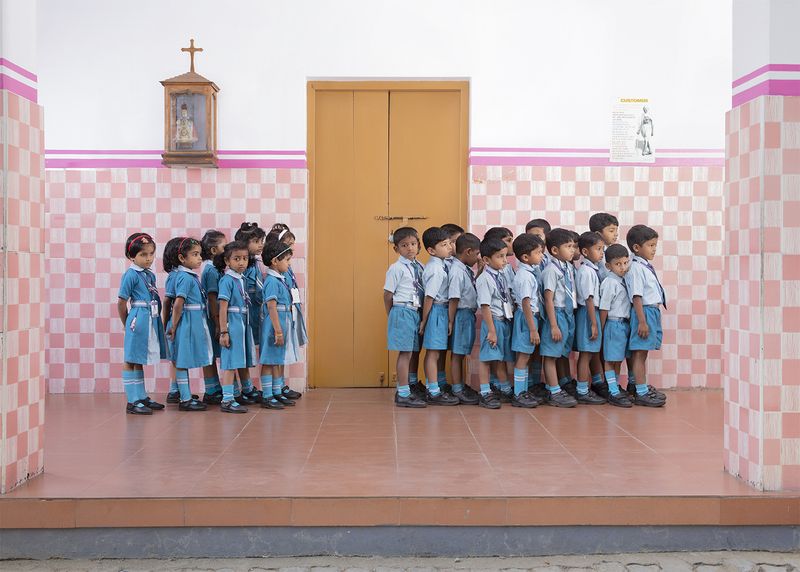
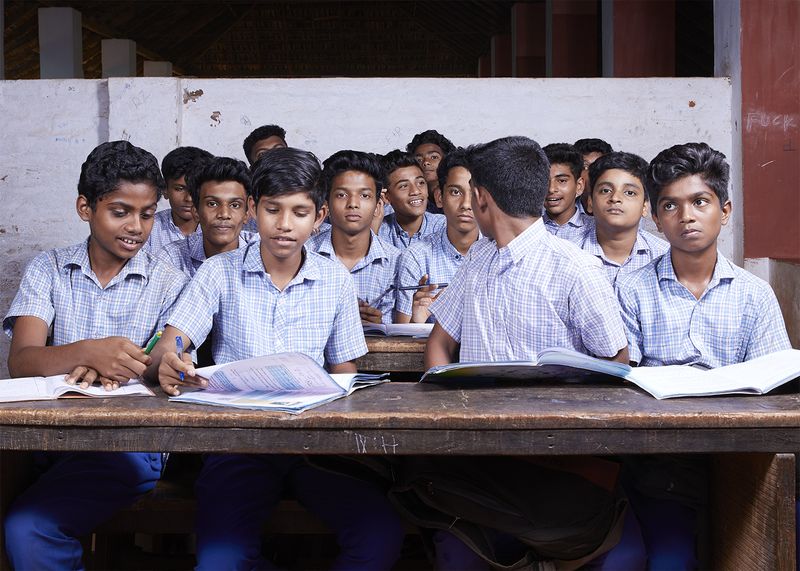
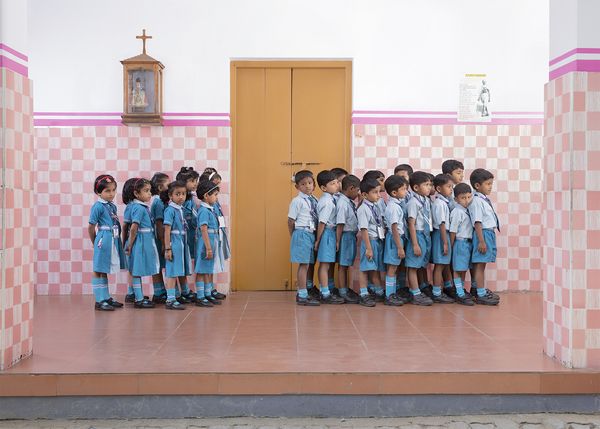
© Anouchka Renaud-Eck - School Kids, 2020; from the series Ardha Elementary school pupils from the same class. Boys and Girls .
i

School Kids, 2020; from the series Ardha Elementary school pupils from the same class. Boys and Girls .

© Anouchka Renaud-Eck - Image from the Ardha photography project
i

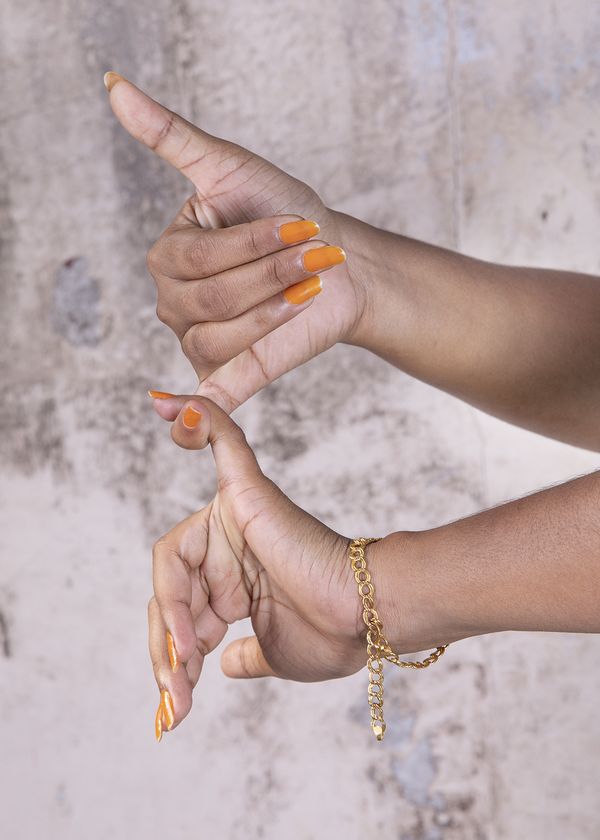
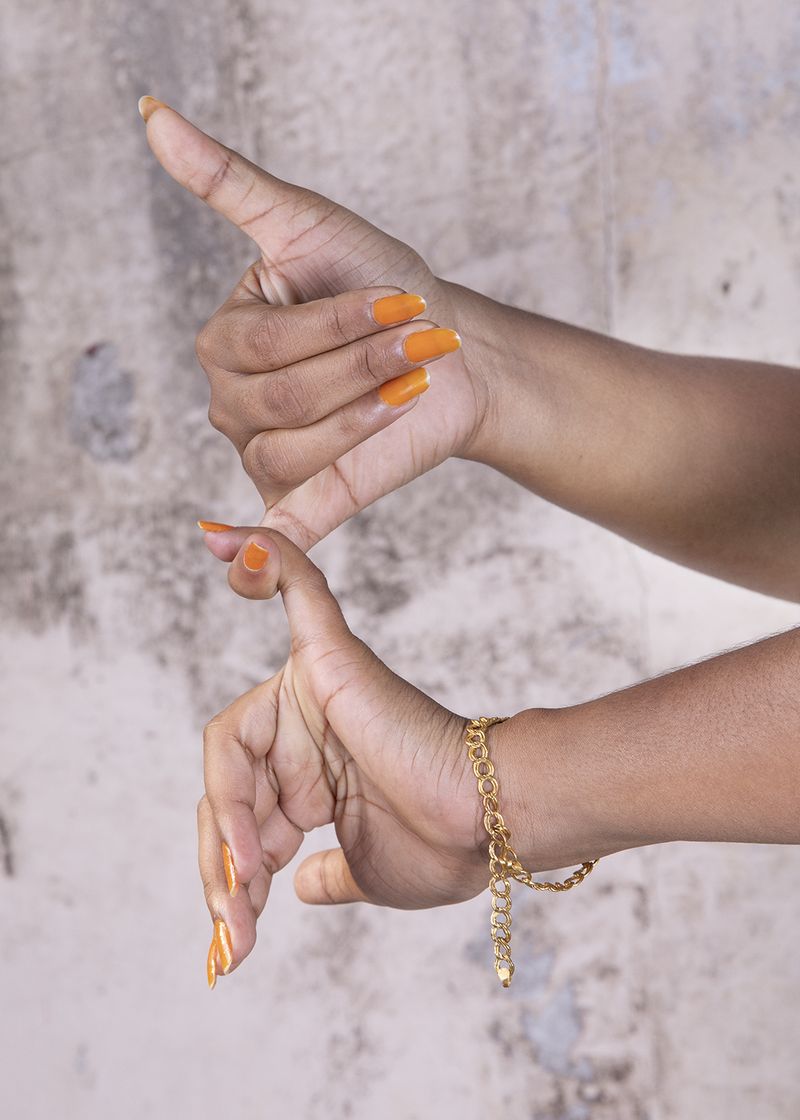
Mudra of Union, Love and Affection, 2020; from the series ArdhaTraditional dance position from Bharatanatyam called Mudras. These gestures express the emotions and state of mind in the dance counting epic love stories.

© Anouchka Renaud-Eck - Image from the Ardha photography project
i

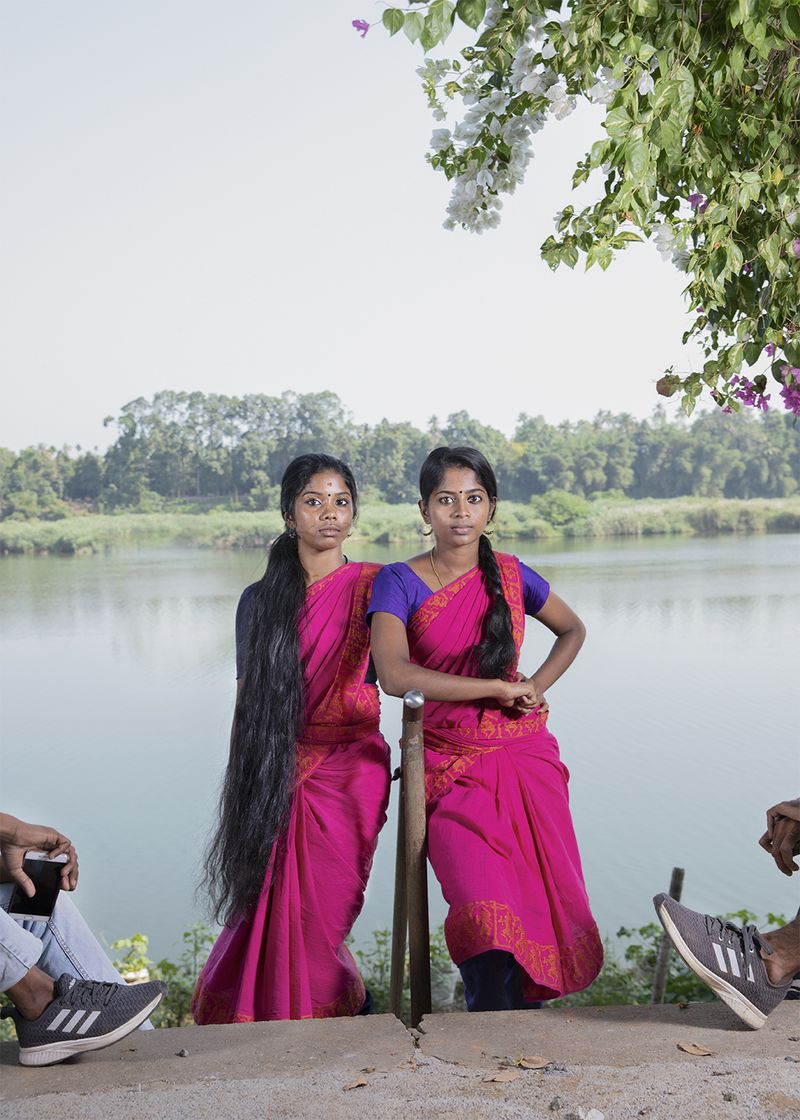
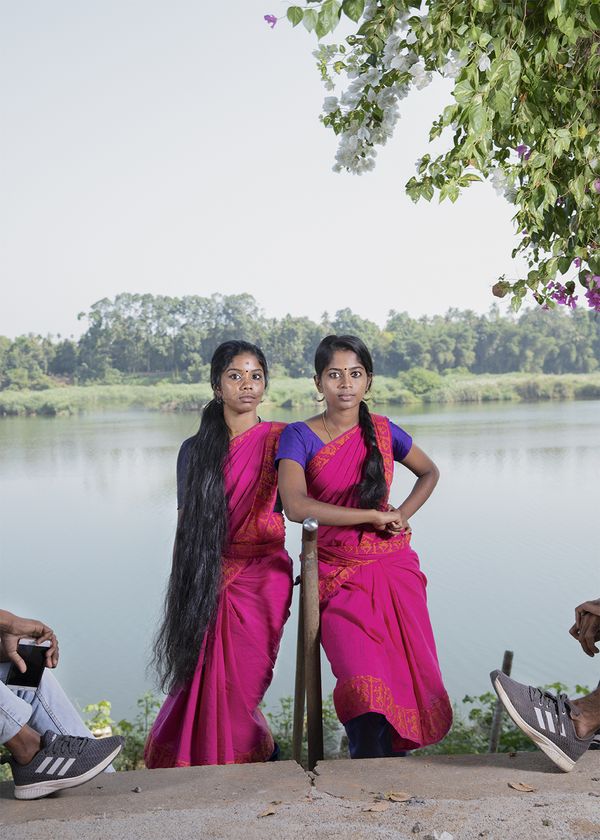
Girls surrounded by boys, 2020; from the series Ardha. Traditional dance students spend time after class with their friends near the river bank.

© Anouchka Renaud-Eck - Image from the Ardha photography project
i

Scrolling through details, 2020; from the series Ardha. Girl scrolls through profiles on marriage app. Details such as income, caste, education and astral birth chart are searchable in order to verify compatibility.

© Anouchka Renaud-Eck - Image from the Ardha photography project
i

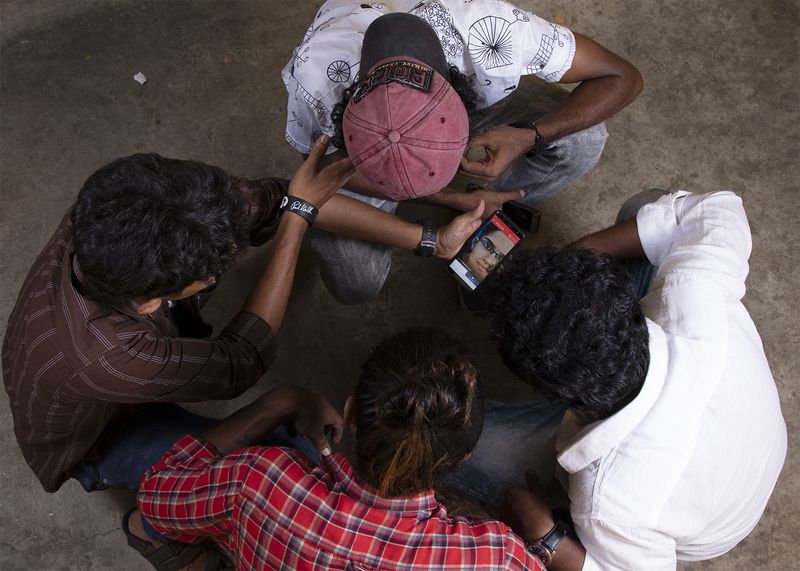
The chosen one, 2020; from the series Ardha Boy shows his friends the profile of the girl his older brother has chosen for him on his marriage app. The app account of the future bride, and groom, is controlled by their parents, the elders responsible for the arranged marriage.

© Anouchka Renaud-Eck - Image from the Ardha photography project
i

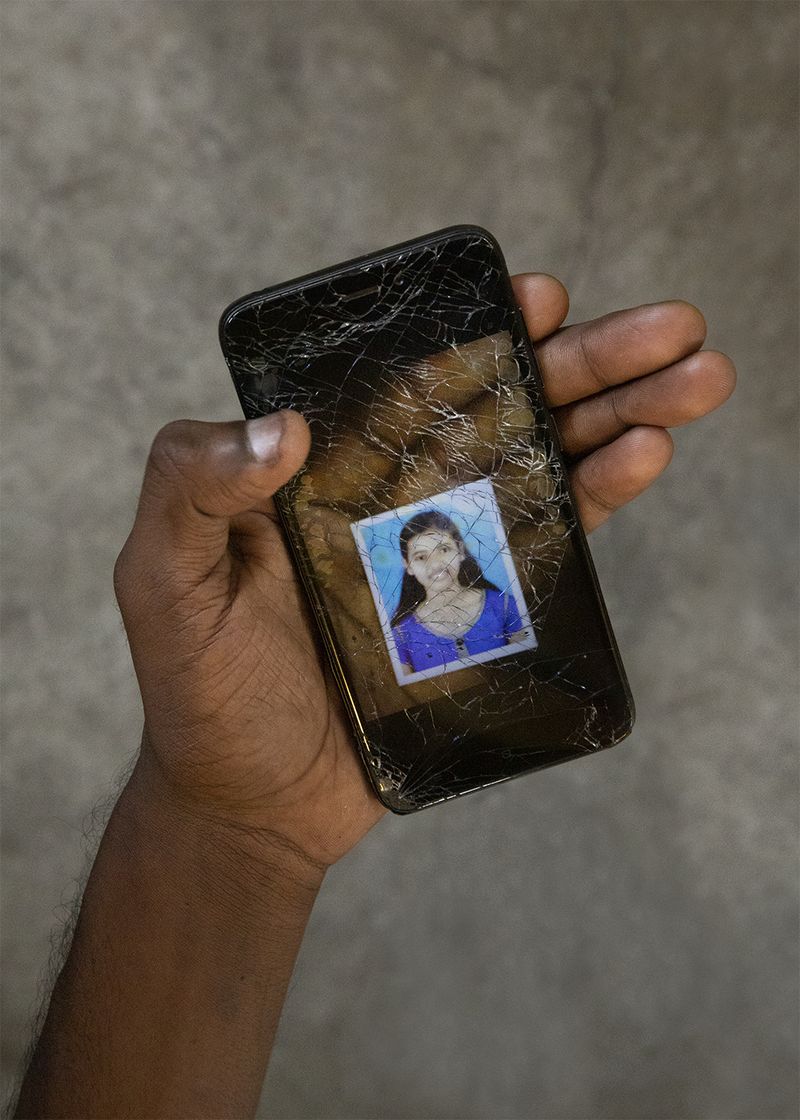
Memory of a teenage romance, 2020; from the series Ardha. Young man shows a portrait of his teenage crush in the palm of his hand, the only souvenir left.

© Anouchka Renaud-Eck - Image from the Ardha photography project
i

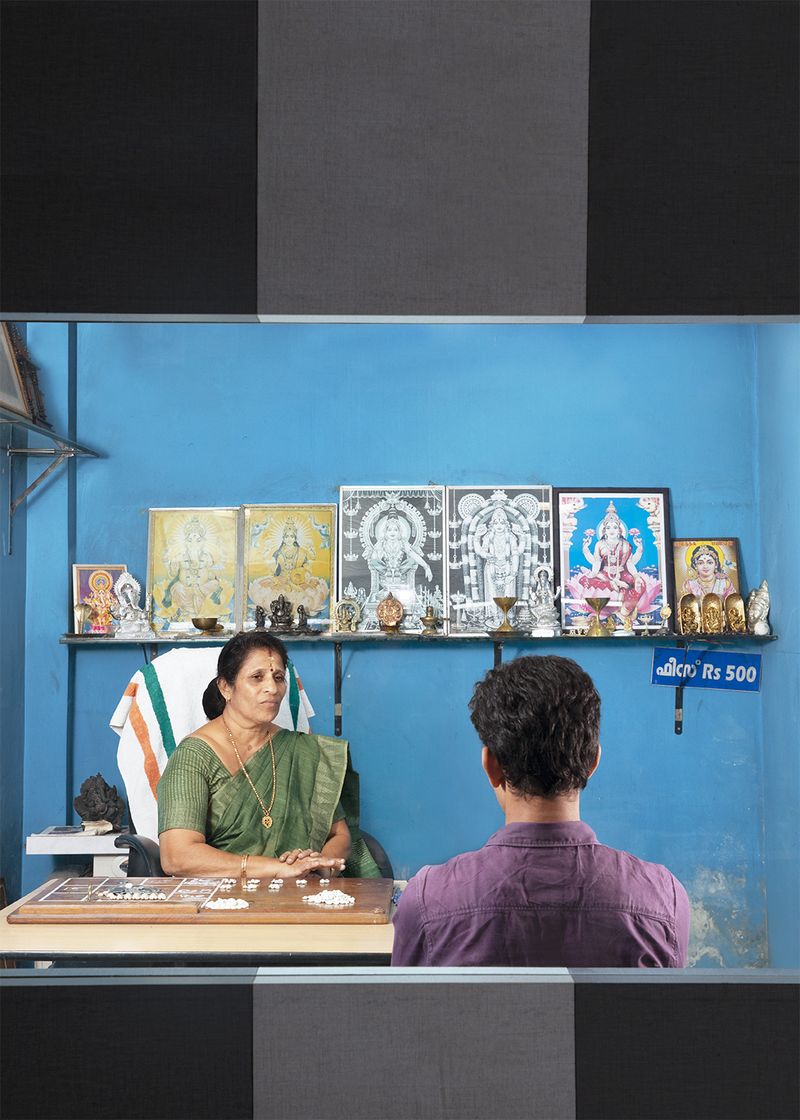
The Astrologer, 2020; from the series Ardha.  Young man has an appointment with an astrologer to check the auspicious time for his future wedding known as «shubh muhurats ».

© Anouchka Renaud-Eck - Image from the Ardha photography project
i

The Boys' side of the class, 2020; from the series Ardha. Boys of a 5th standard class, initials of lovers and the word «Fuck» are tagged on the wall.

© Anouchka Renaud-Eck - Image from the Ardha photography project
i

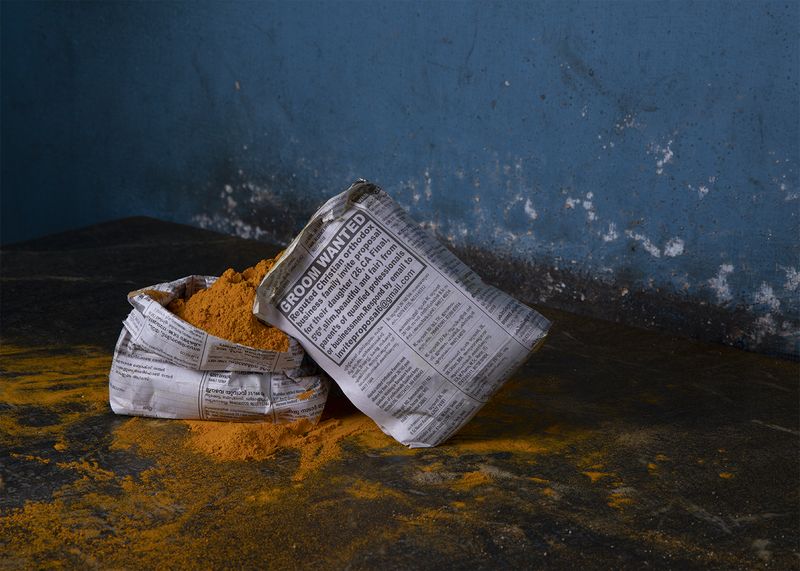
500g of Haldi, 2020; from the series Ardha. Turmeric (Haldi in Hindi) is a spice used daily, it is also a spice that has the function of purifying and blessing the spouses during a ceremony on the eve of the wedding.

© Anouchka Renaud-Eck - Image from the Ardha photography project
i

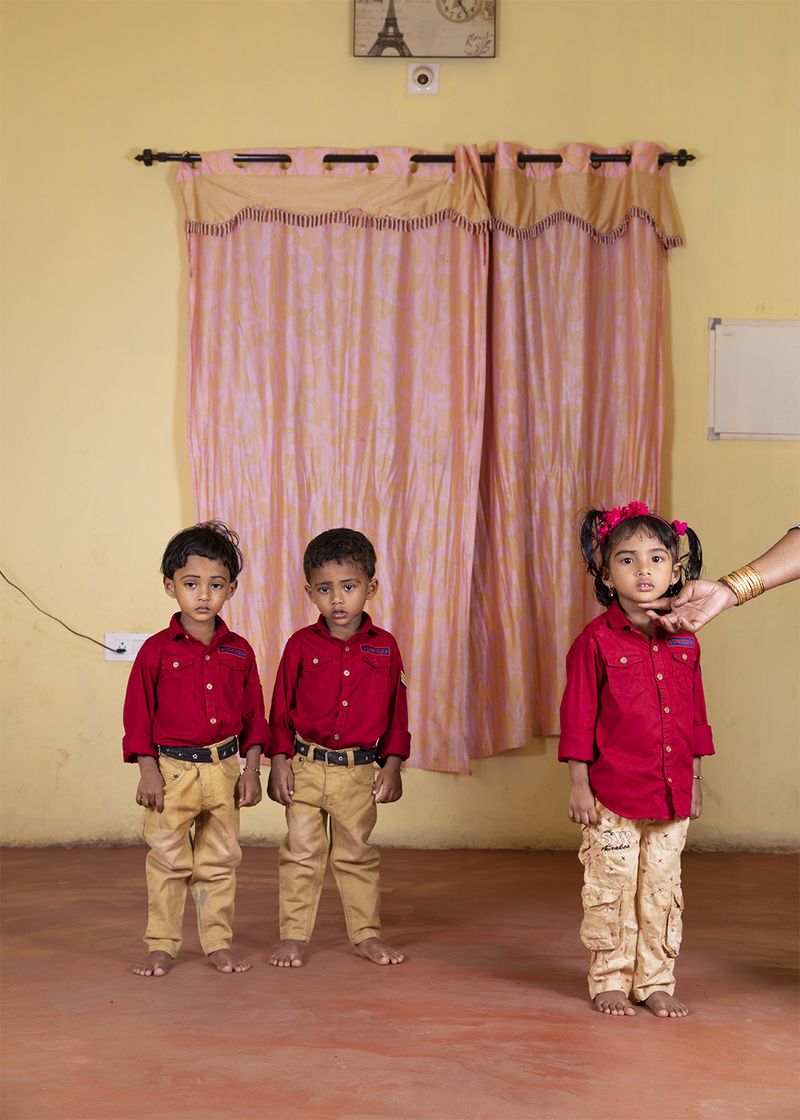
The triplets’ fate, 2020; from the series Ardha. The triplets wear a shirt embroidered with the word «united». However their future will be drastically different.
A large number of Indians live in a joint family. After their marriage the boys will stay in the family house . The girl will leave for her in-laws.
The mother lifts up her daughter’s chin, for her to face her fate. The mother herself wears a set of bracelets, a sign of married women.

© Anouchka Renaud-Eck - Image from the Ardha photography project
i

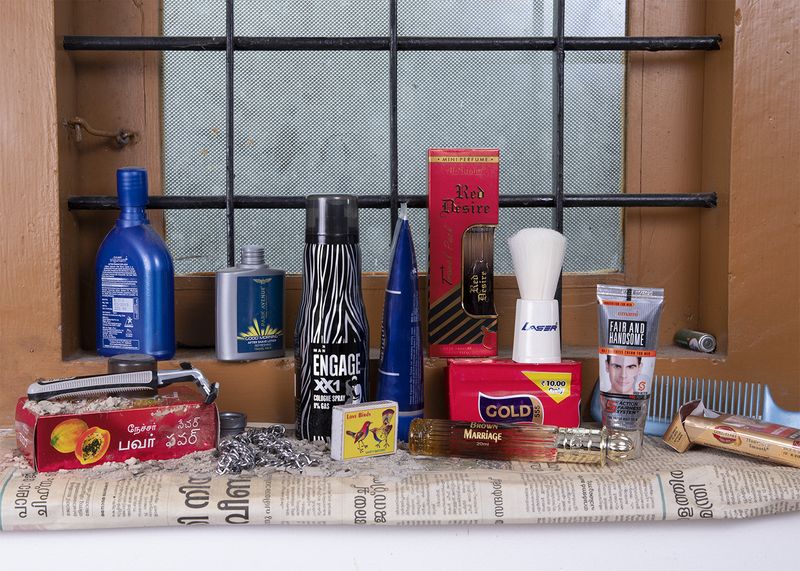
Bachelor’s cosmetics on a window sill, 2020; from the series Ardha. Young man’s cosmetics placed on his bedroom window sill. The products packaging refer to the characteristics that a young man must have to be attractive in the marriage market, and his romantic aspirations of union.

© Anouchka Renaud-Eck - Image from the Ardha photography project
i

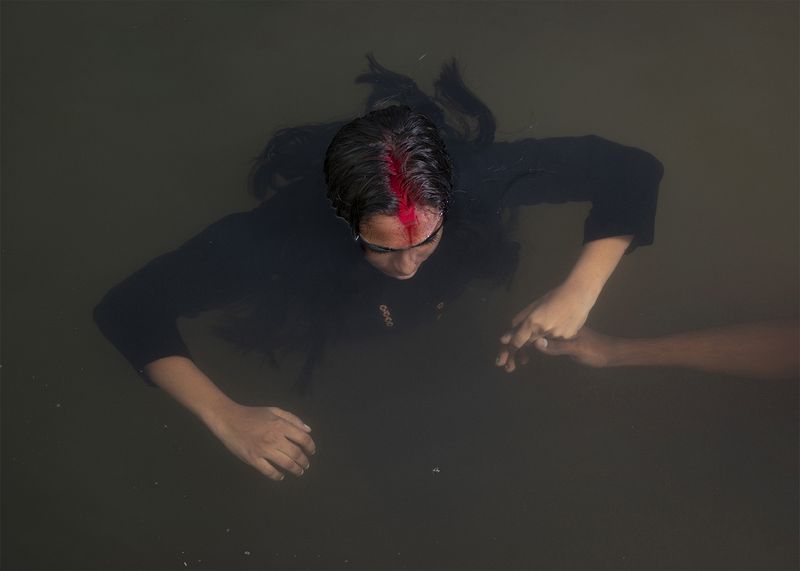
The immersion, 2020; from the series Ardha. Young hindu married woman wearing Sindoor on the top of her head. The sindoor is first applied to the woman by her husband on the day of her wedding; this is called the Sindoor Daanam ceremony. After this, traditionally she applies it herself every day and ceasing to wear it usually implies widowhood.

© Anouchka Renaud-Eck - Image from the Ardha photography project
i

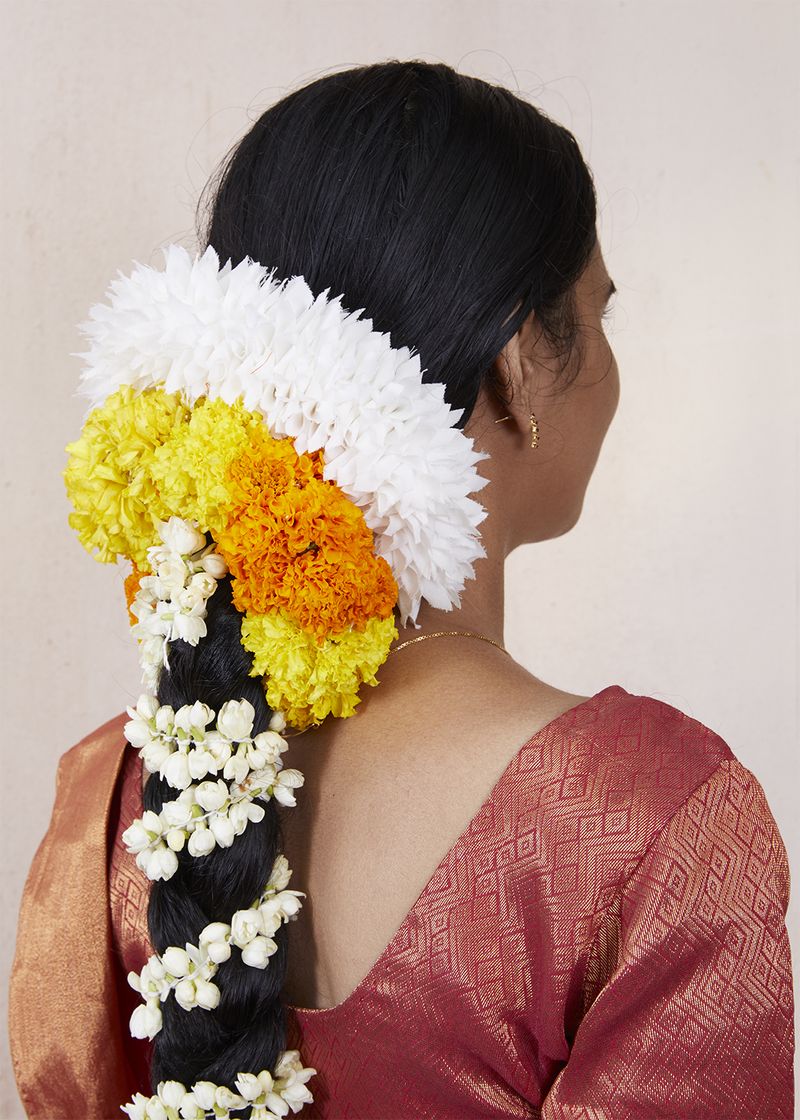
Malayali Bridal hairdress, 2020; from the series Ardha. Young Malayali bride wears jasimin flowers in her hair, a typical ornament for a Malayali wedding.

© Anouchka Renaud-Eck - Image from the Ardha photography project
i

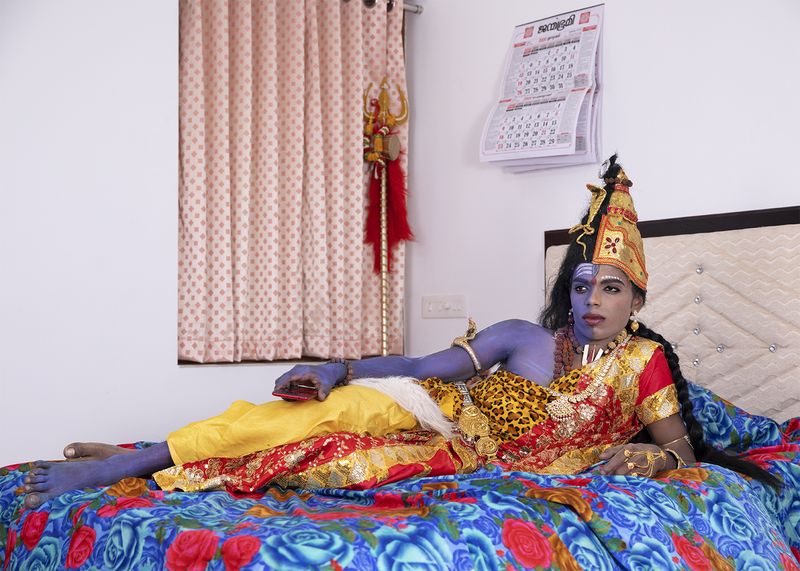
Ardhanarishvara on bed, 2020; from the series Ardha. Ardhanarishvara is one of the forms in which Shiva and his wife Parvati appear as one body. This form represents the synthesis of masculine and feminine energies of the universe (Purusha and Prakriti) and illustrates how the female principle of God, is inseparable from the male principle of God.

© Anouchka Renaud-Eck - Image from the Ardha photography project
i

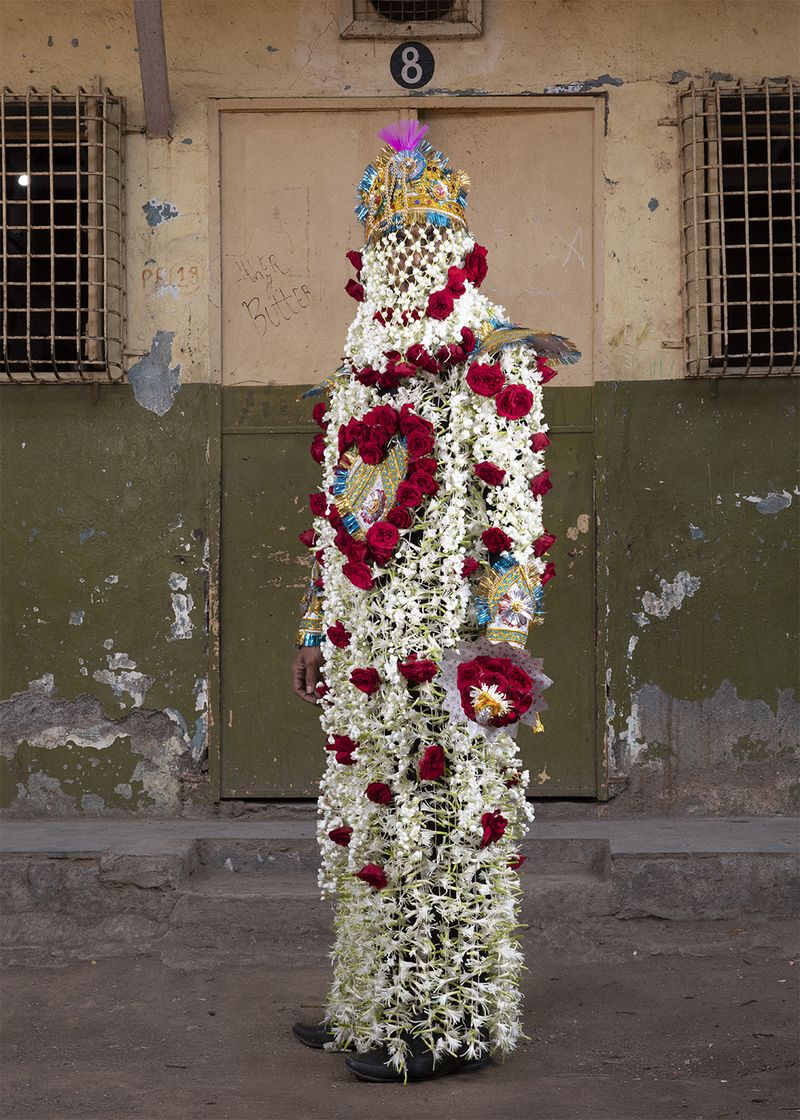
Young groom with Sehra, 2020; from the series Ardha. Young Muslim Groom wears a Sehra on the day of his wedding.
The Sehra is intended to ward of the evil eye during the procession when the groom is going to fetch his wife-to-be at her parents. Traditionally the spouses are not supposed to see each other before their wedding ceremony.
Sehras are more prominently worn in North India than in other parts of the country.

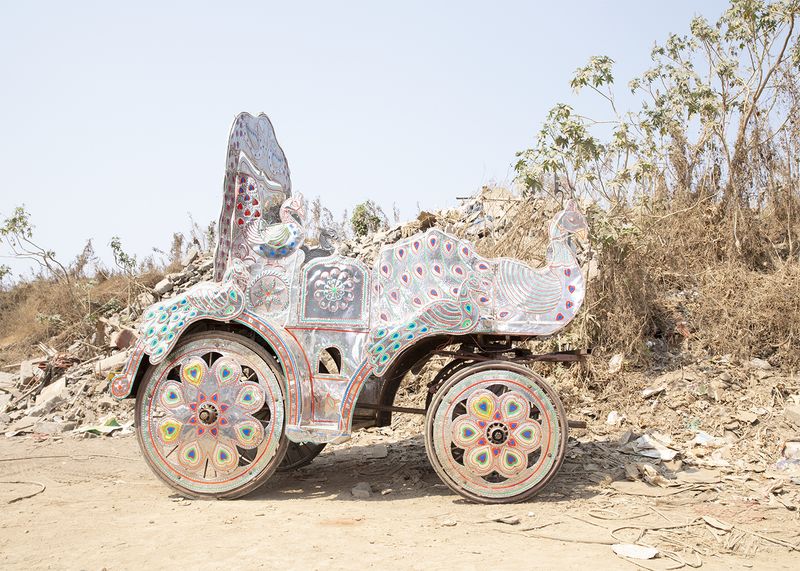
© Anouchka Renaud-Eck - The love birds float, 2020; from the series Ardha. Wedding float ornamented with love birds parked on a wasteland.
i

The love birds float, 2020; from the series Ardha. Wedding float ornamented with love birds parked on a wasteland.

© Anouchka Renaud-Eck - Image from the Ardha photography project
i

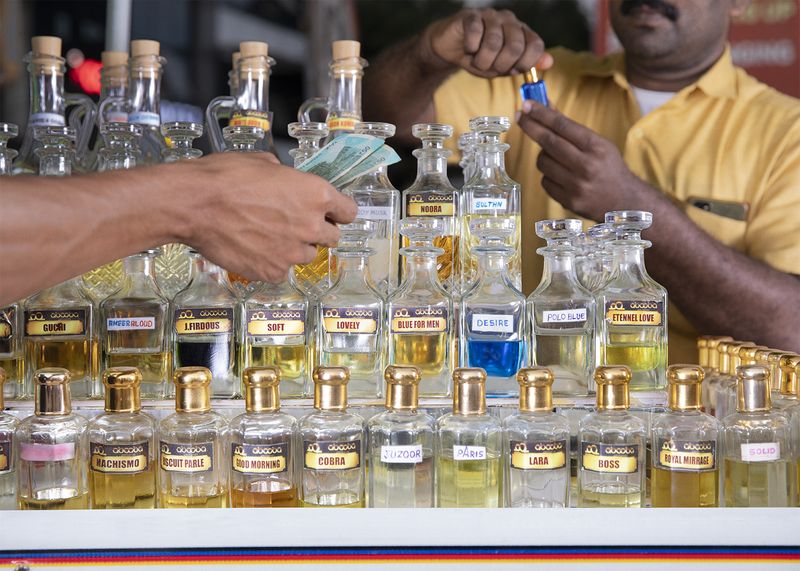
Desire, 2020; from the series Ardha. Street vendor of perfume. A young man buys blue «desire» perfume to offer to his wife after a date in the cafe next door.

© Anouchka Renaud-Eck - Image from the Ardha photography project
i

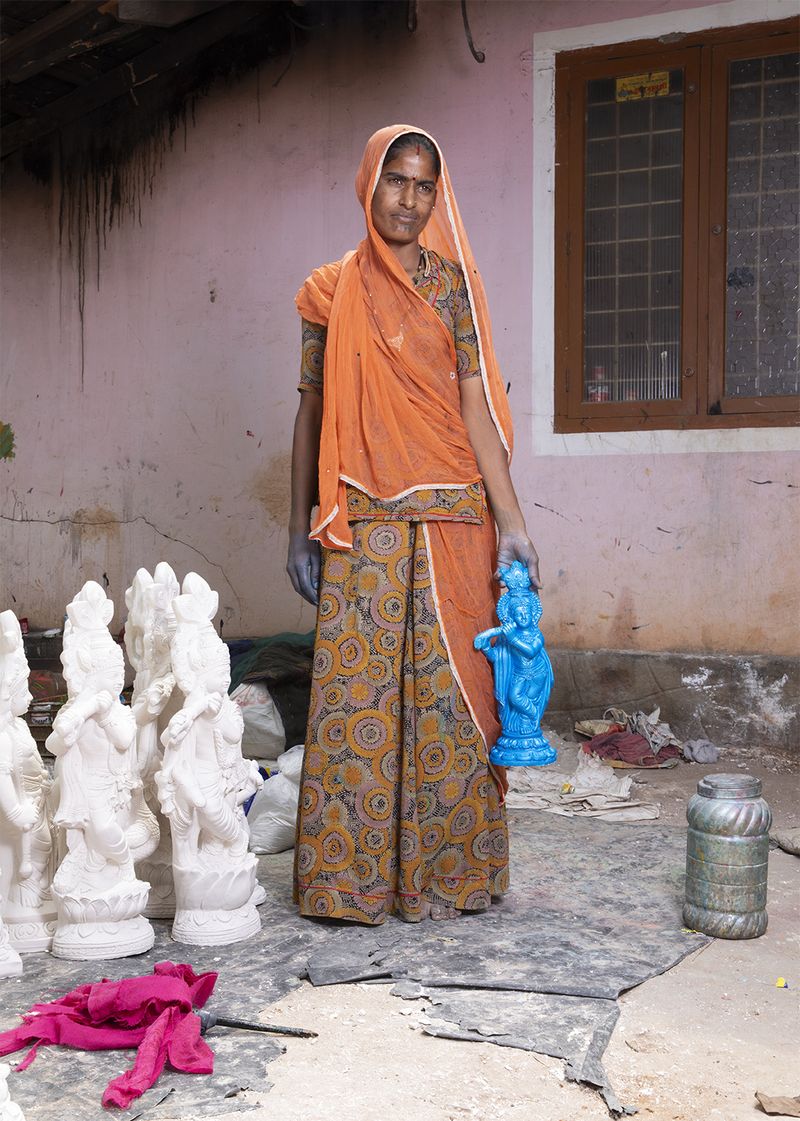
Holding love, 2020; from the series Ardha. Potter woman holds one of the Krishna statues she has made. As a Hindu married woman, she wears a mangal sutra necklace and sindoor on her fore head.

© Anouchka Renaud-Eck - Image from the Ardha photography project
i

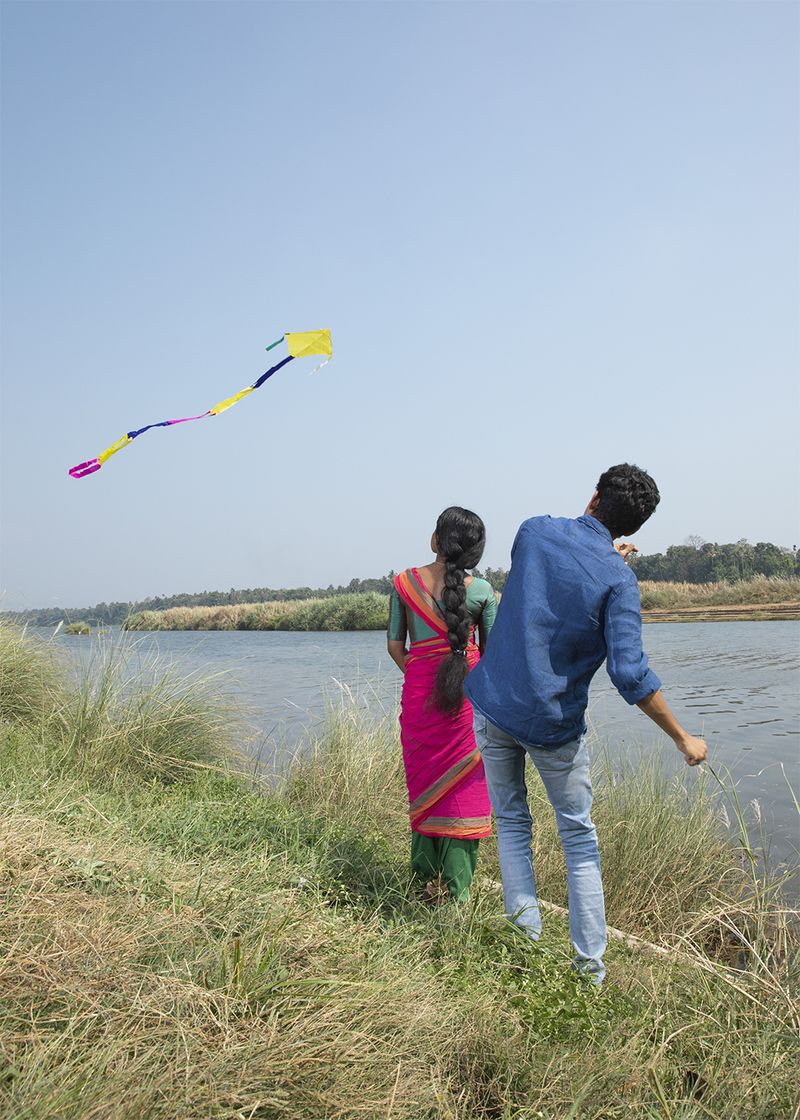
The kite of life, 2020; from the series Ardha. Young couple plays with a kite on the riverbank. He is driving, she is watching the scene.

© Anouchka Renaud-Eck - Image from the Ardha photography project
i

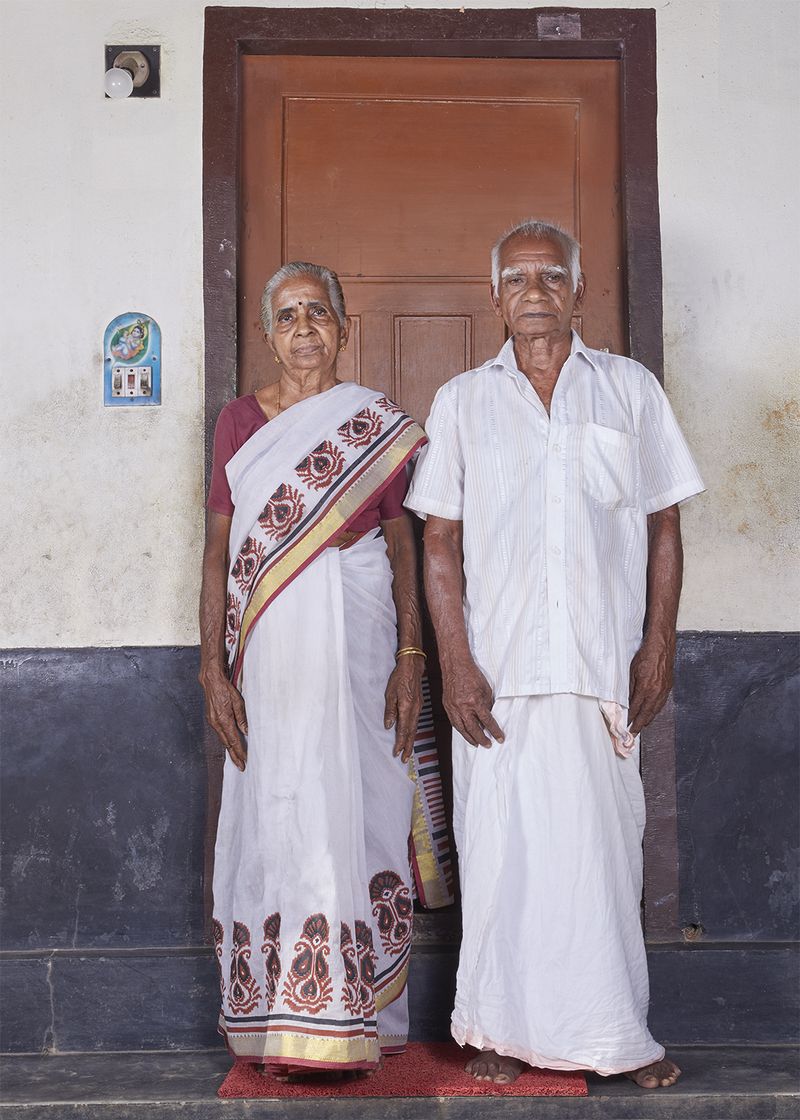
Married for 58 years, 2020; from the series Ardha
. Old couple from Perumbavoor district, Kerala, married for 58 years in front of their home. They were 23 and 21 years old when they got married. Above the doorbell Lord Krishna, God of love and compassion is represented.