AN MITAN GRAN BWA

Within a metaphorical narrative, the forest reflecting my family memory becomes an inhabited space of visible and invisible presences, where fragmented inheritances circulate through archives, self-portraits, and textile installations, shaping identity.

The series An mitan gran bwa (Inthe heart of the forest) unfolds as a narrative in which the forest becomes both a physical and spiritual territory, reflecting the complexity of my family memory.

Drawing from my personal history, I explore the forest as an inhabited space, crossed by visible and invisible presences, where transmission, tension, rupture, and rebirth intertwine. The family, like the forest, appears as a site of circulation for fragmented inheritances, silences, and absences that contribute to the construction of identity.

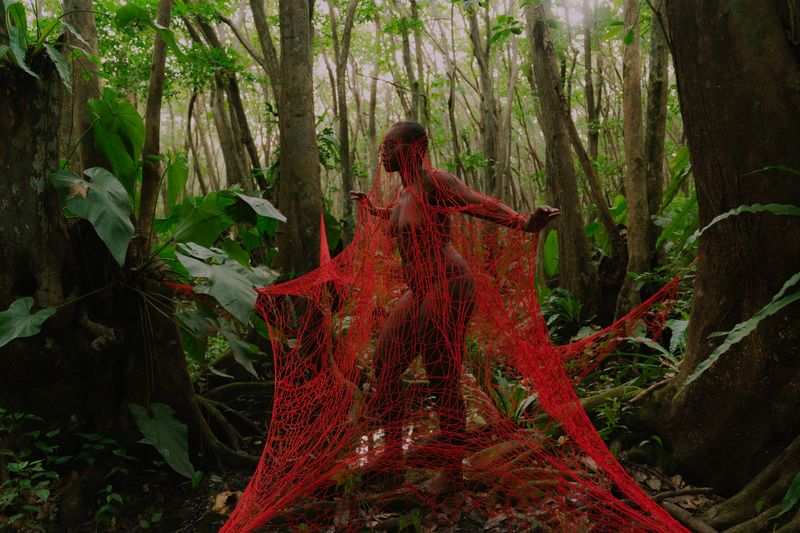
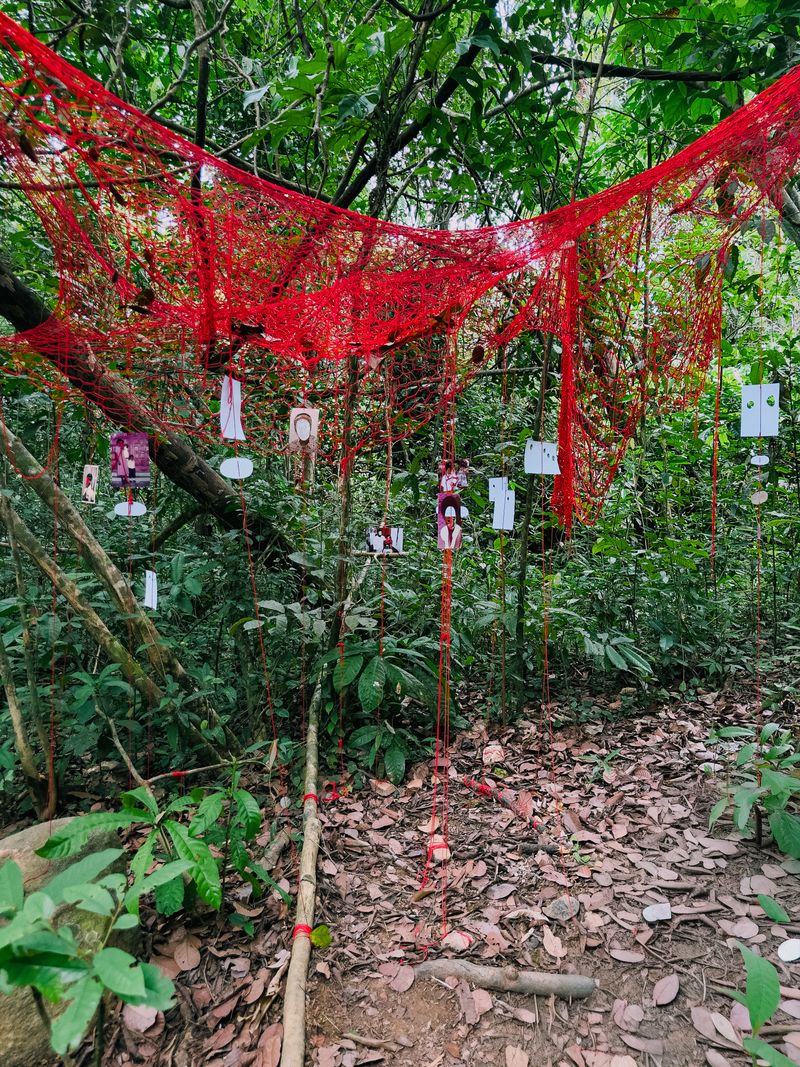
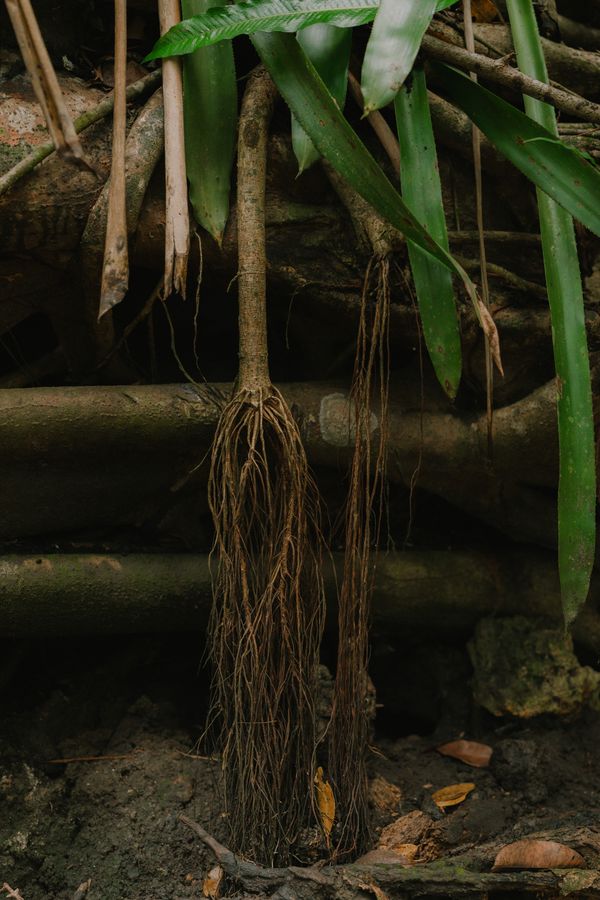
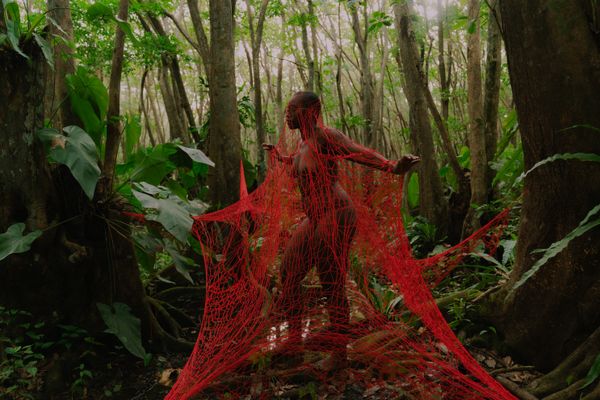
Through my familly photographic and textual archives, self-portraits, and textile installations, I examine how heritage circulates—what is passed on and what is transformed. The textile installation, particularly the crocheted net, echoes forest roots and vines, materializing the invisible networks that connect generations. The forest thus becomes a space of passage, where absences act as portals and where intimate memories meet ancestral ones.

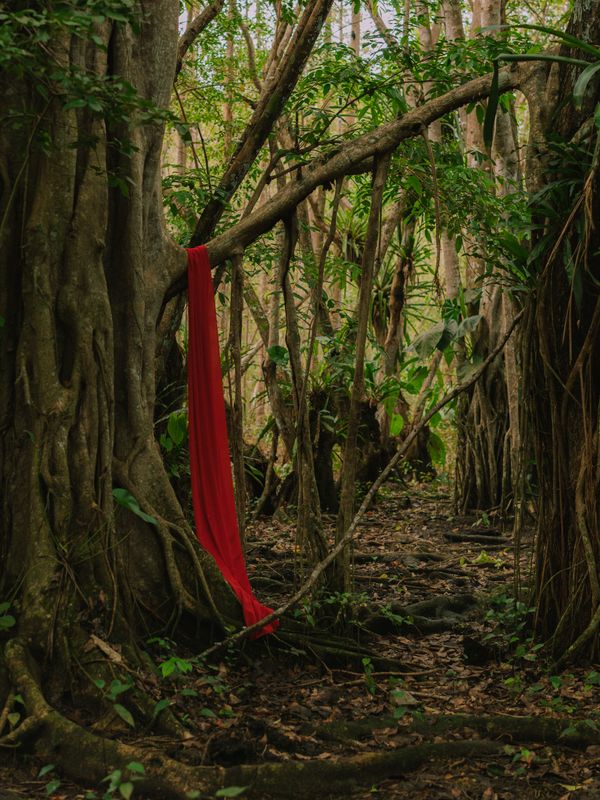
The recurring use of the color red structures the project as a central visual and symbolic element. It refers to love and vital energy, while also evoking danger and the traces of historical violence buried within Caribbean territories.

An mitan Gran bwa offers a reflection on the invisible bonds that shape us and influence our trajectories and identities. Questioning these entanglements allows me to better understand the nature of the familial ties that bind me, to acknowledge their influence, and, at times, to free myself from them.
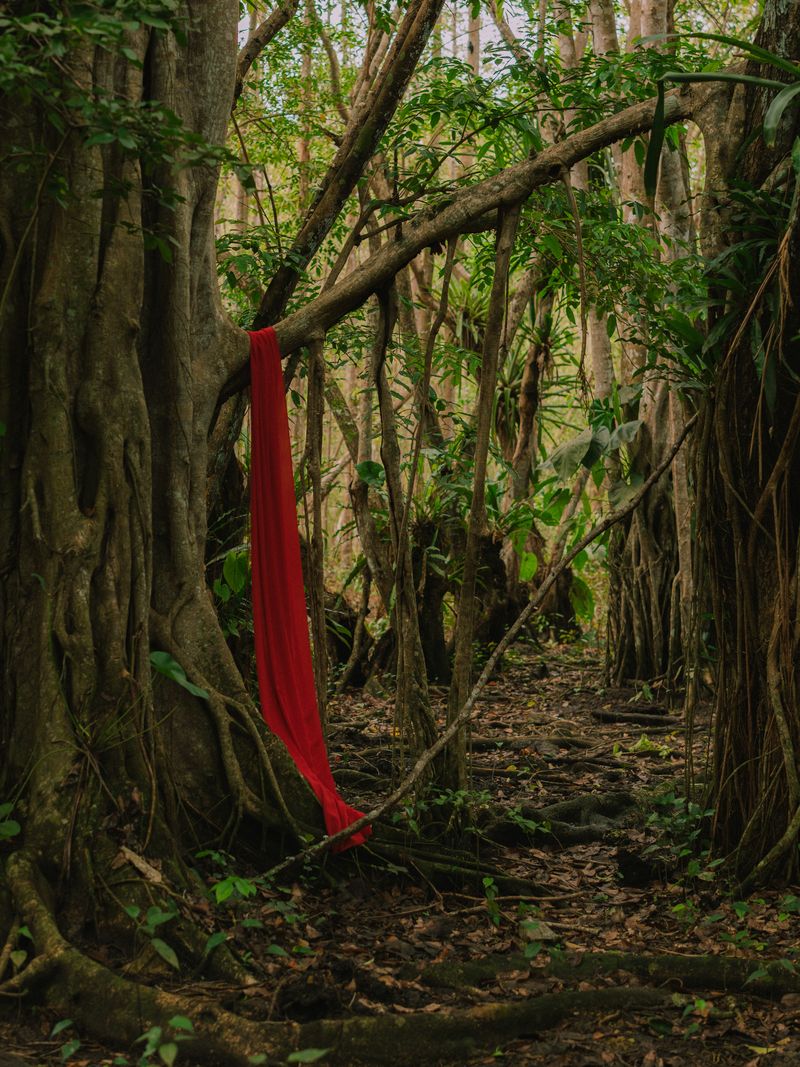
© RaÏssa Bibrac - From where you stand —The symbolic presence of my ancestors watching over me and guiding me throughout my life’s path.
i

From where you stand —The symbolic presence of my ancestors watching over me and guiding me throughout my life’s path.

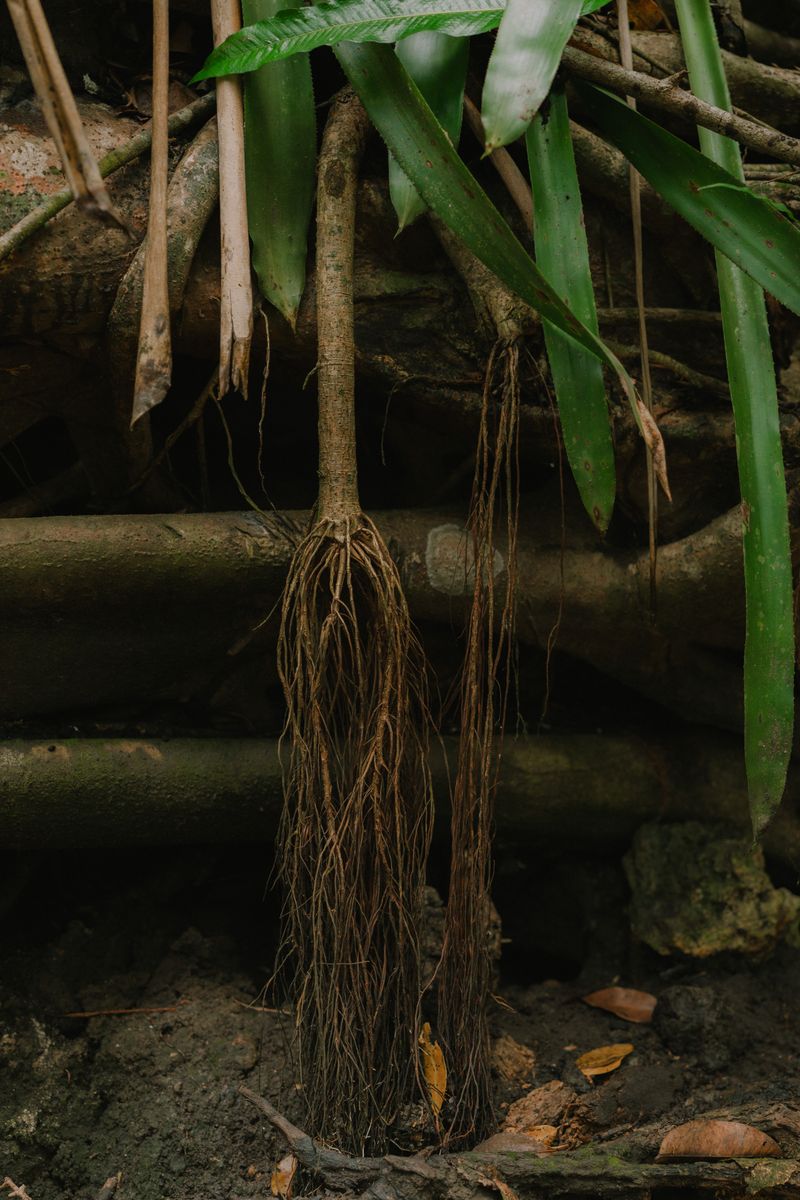
© RaÏssa Bibrac - Roots
i

Roots

© RaÏssa Bibrac - Image from the AN MITAN GRAN BWA photography project
i

Memory marks —A self-portrait in which I am caught in the nets of my family heritage, like a web through which I seek both to root myself and to free myself from what does not belong to me.

© RaÏssa Bibrac - Image from the AN MITAN GRAN BWA photography project
i

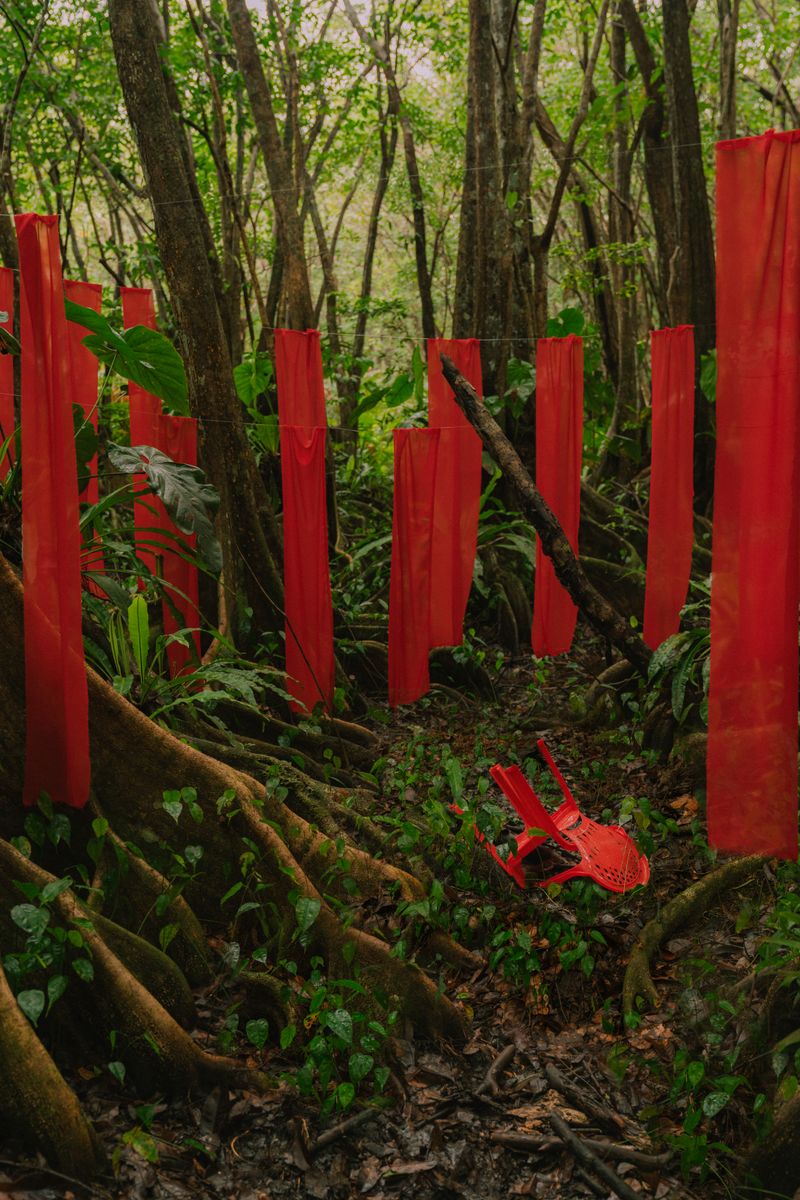
In the middle — The symbolic presence of my ancestors surrounding and guiding me, and my emancipation from the burdens of family heritage, embodied by the overturned child’s chair.

© RaÏssa Bibrac - Image from the AN MITAN GRAN BWA photography project
i

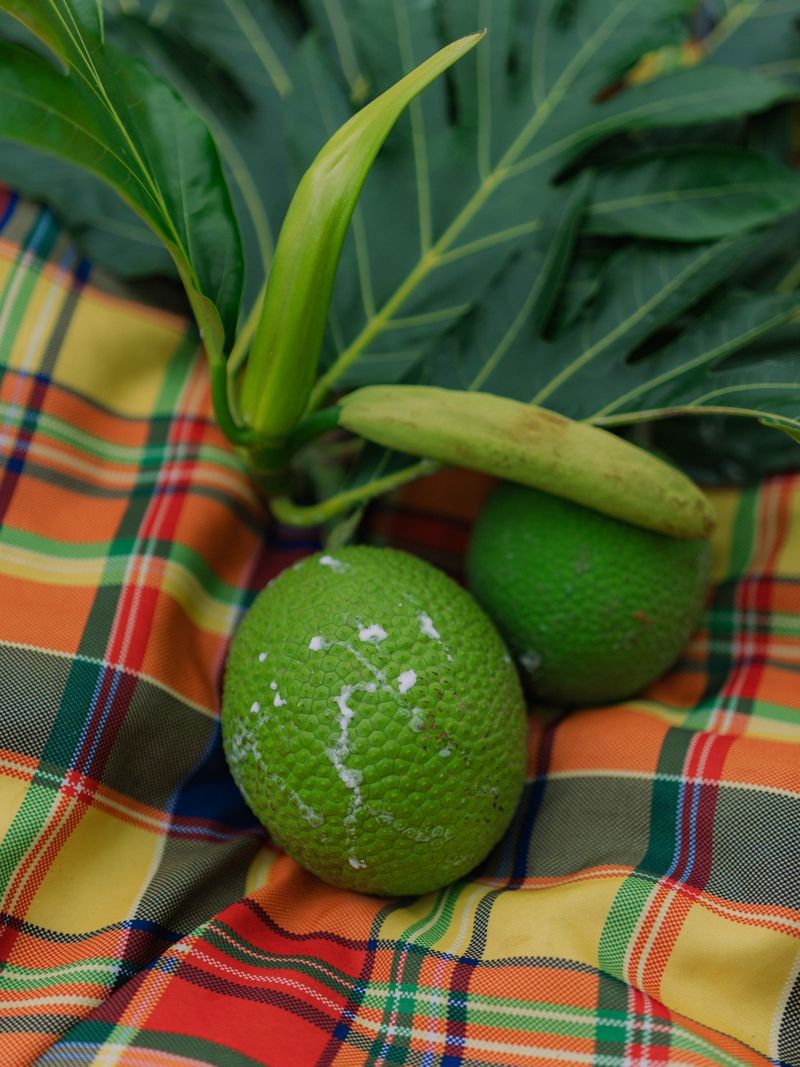
Long nicknamed “the poor man’s fruit” in Guadeloupe, breadfruit is deeply rooted in the island’s social history it became an essential resource for the most disadvantaged.Breadfruit embodies my family’s resourcefulness. My grandmother raised her children with it despite poverty and mockery, honoring the quiet dignity and resilience passed down through generations.

© RaÏssa Bibrac - Image from the AN MITAN GRAN BWA photography project
i

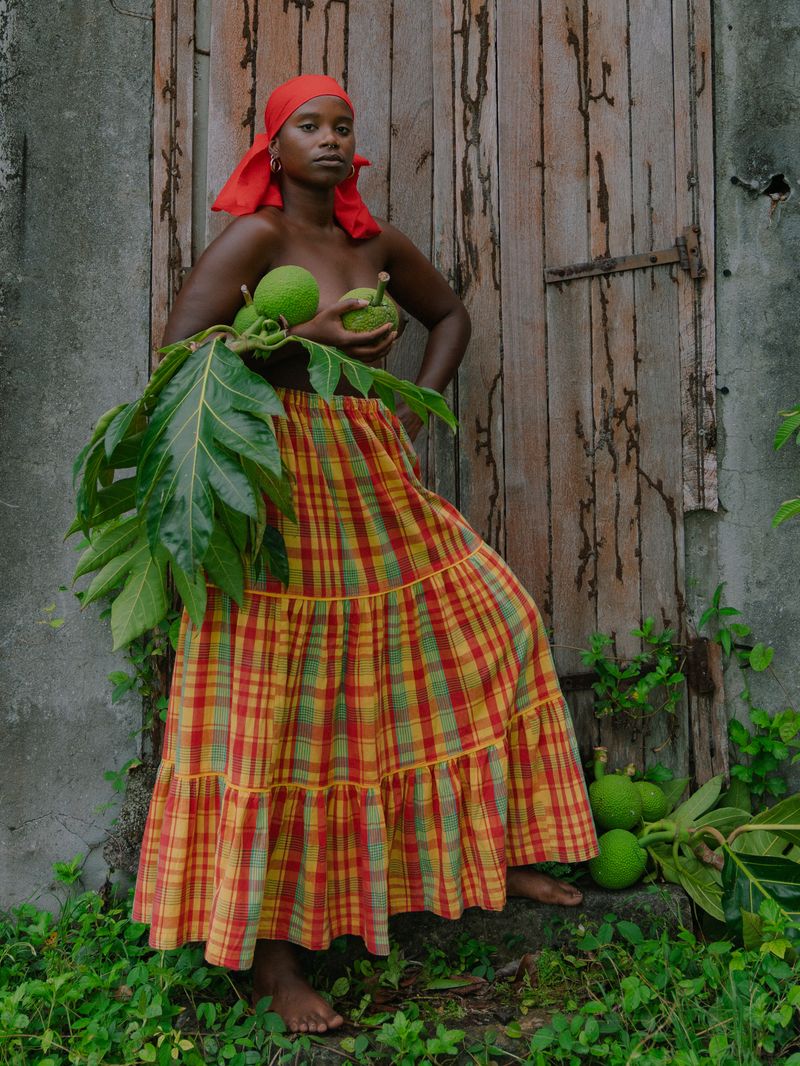
This self-portrait symbolizes the matriarchal strength and resilience of my grandmother, whom I have chosen to embody. I draw inspiration from the way women posed in historical photographs, proudly holding a breadfruit long considered “the poor man’s fruit,” a symbol of shame. Yet it was this very fruit that enabled my grandmother to persevere, nourishing the minds and spirits of her 14 children.

© RaÏssa Bibrac - Image from the AN MITAN GRAN BWA photography project
i

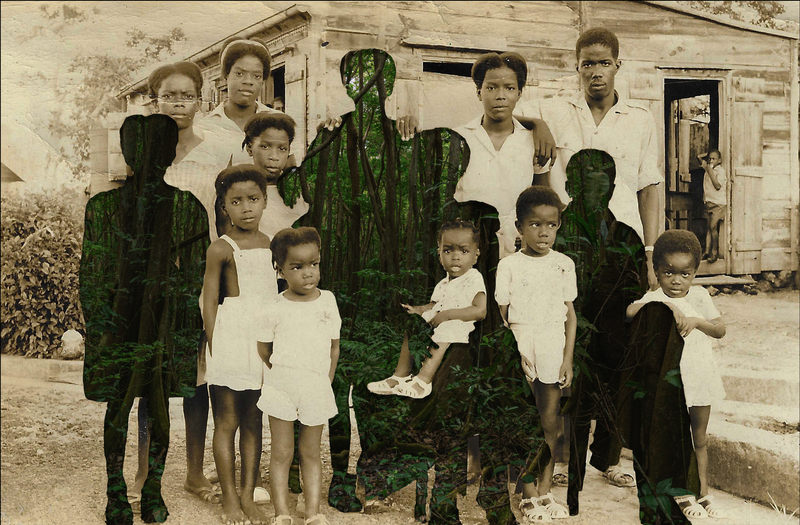
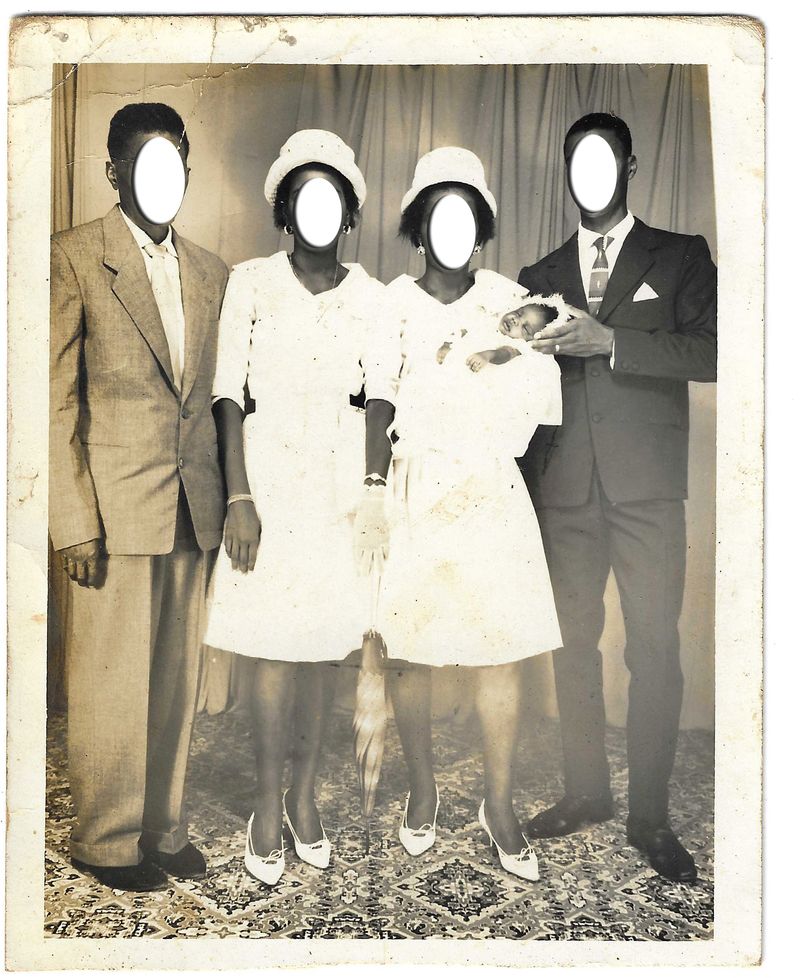
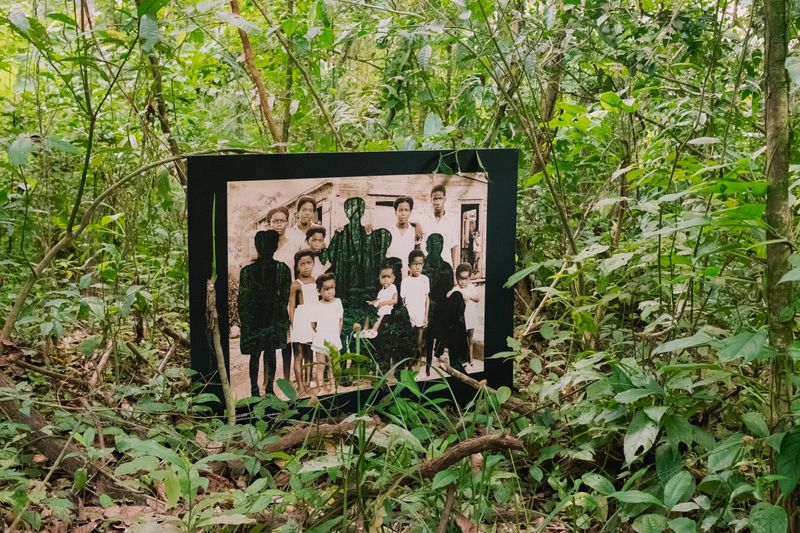
Archival photograph of the earliest known family portrait of my maternal family, taken in the 1960s. My mother, the youngest of fourteen children, had not yet been born. The absent figures — those who have since passed away — are replaced by the forest. The trees act as a symbolic presence, embodying the memory of those no longer physically present .

© RaÏssa Bibrac - Image from the AN MITAN GRAN BWA photography project
i

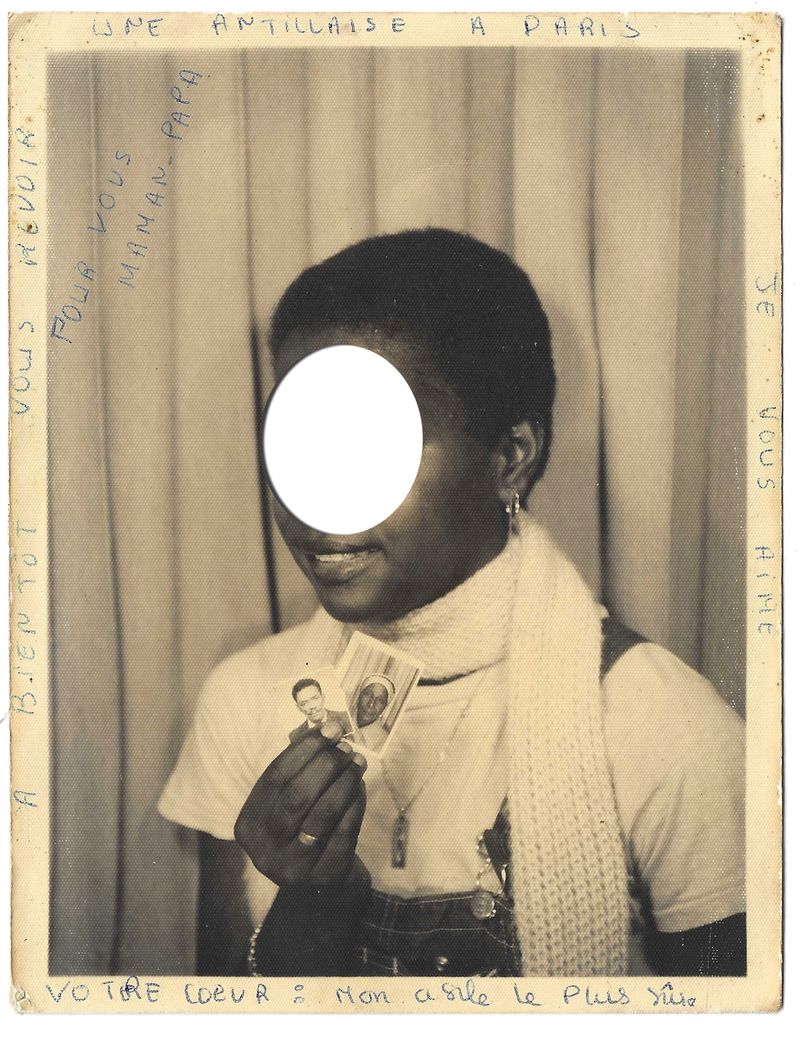
Archival photograph of my aunt in Paris in the 1980s. The text inscribed on the image reads: “See you again soon. A Caribbean woman in Paris. I love you. Your heart: my safest refuge.”

© RaÏssa Bibrac - Image from the AN MITAN GRAN BWA photography project
i

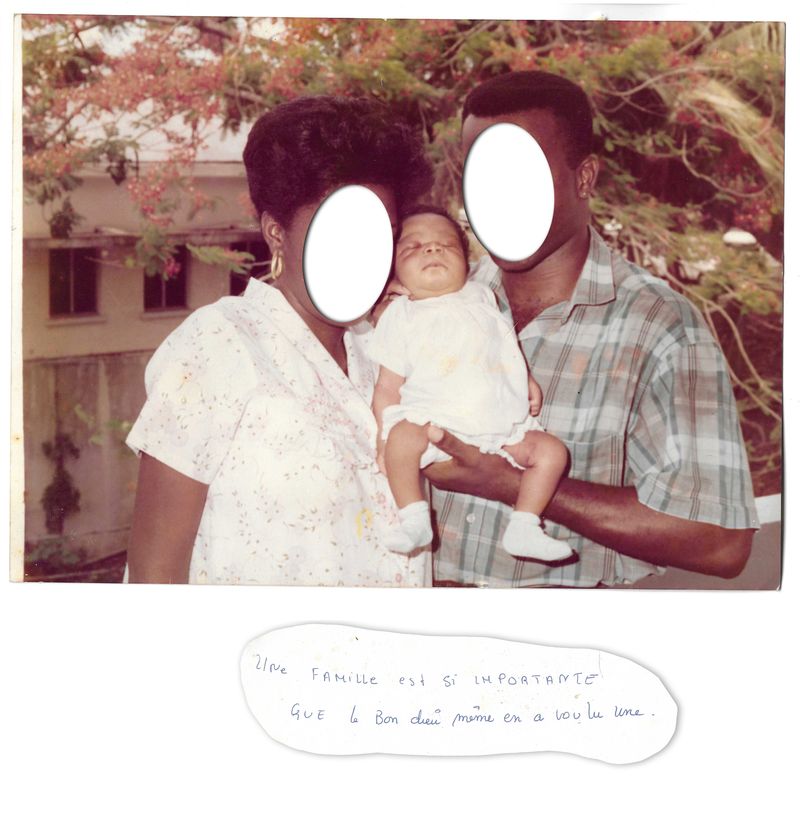
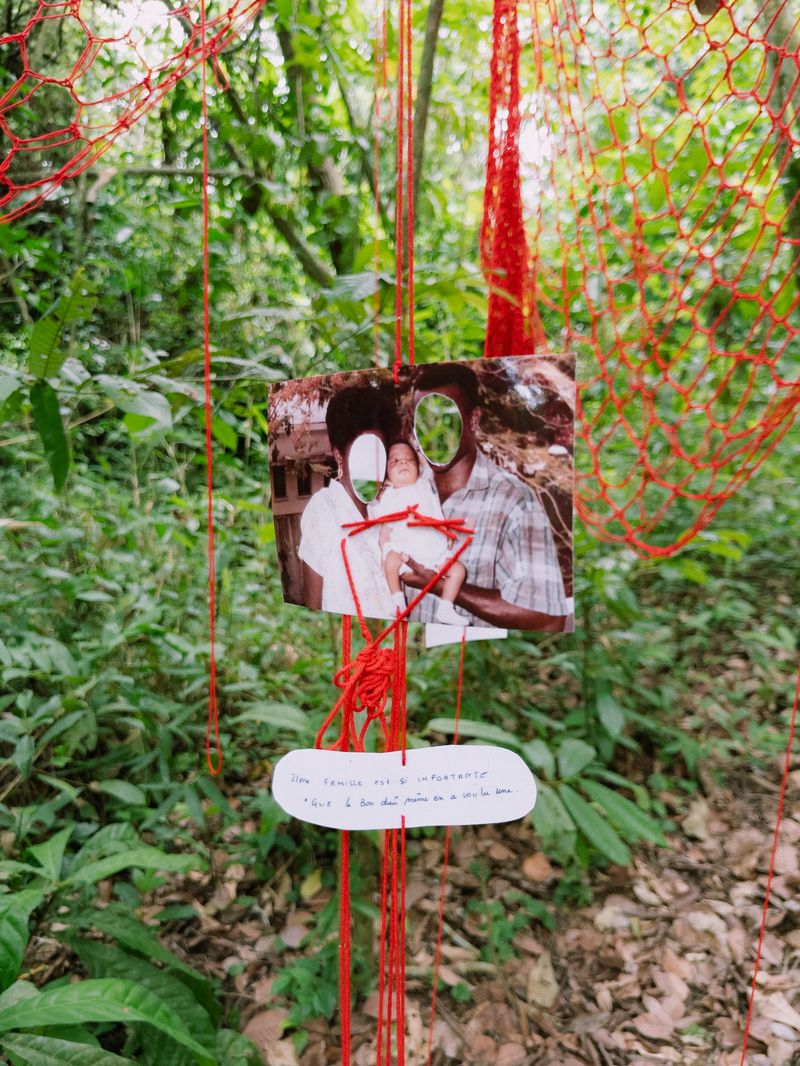
Photographic archive of my parents in front of the clinic at the time of my brother’s birth in 1989,accompanied by an archival text drawn from my aunt’s handwritten annotations in the family album that reads: “A family is so important that even God wanted one.”

© RaÏssa Bibrac - Image from the AN MITAN GRAN BWA photography project
i

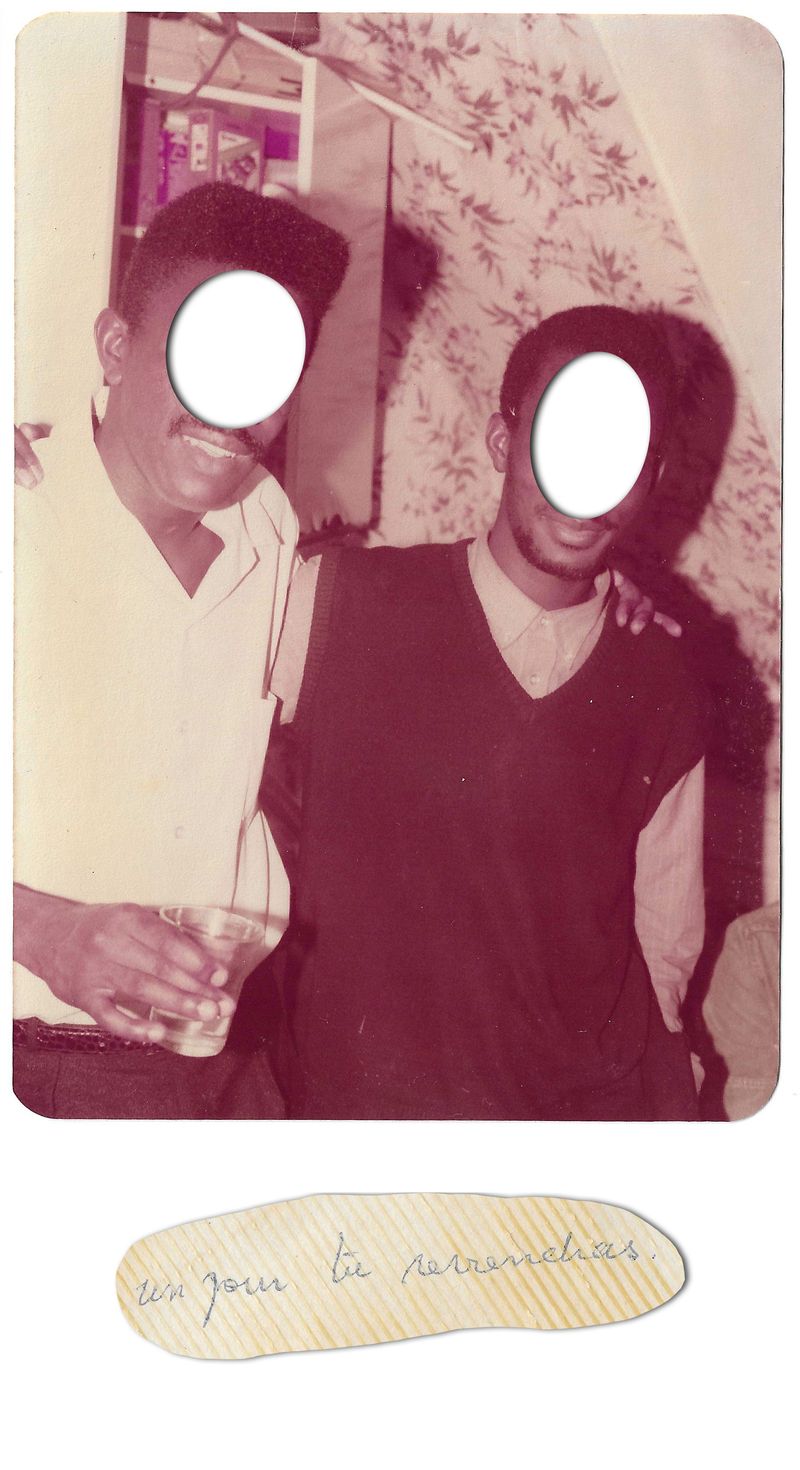
Archival photograph of my maternal uncles in Paris in the 1980s, after leaving Guadeloupe in search of a better life, accompanied by an archival text drawn from my aunt’s handwritten annotations in the family album that reads: “One day you will return.” Thirty years later, they never came back. My uncle on the right passed away in Paris in October 2025 and was buried in Guadeloupe.

© RaÏssa Bibrac - Archive of my mother’s baptism
i

Archive of my mother’s baptism

© RaÏssa Bibrac - Archive of my grandmother and her eldest son Hugues at my grandfather’s bedside, taken in the 1980s in the family home.
i

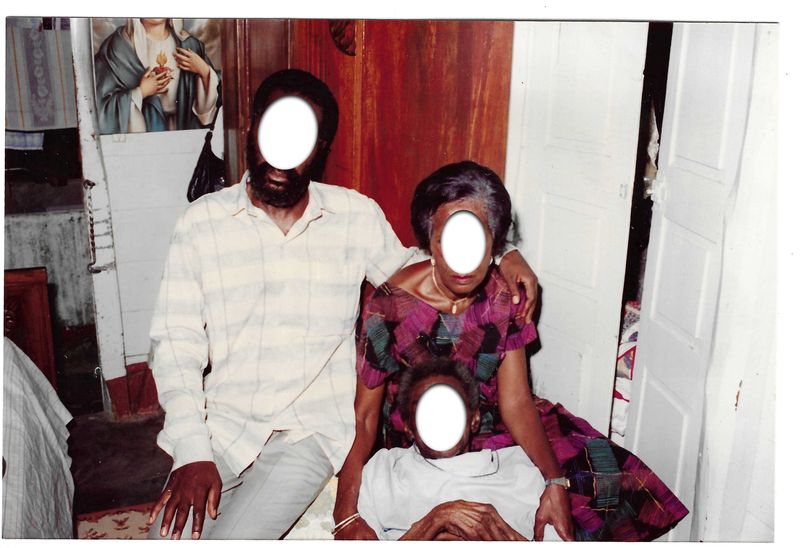
Archive of my grandmother and her eldest son Hugues at my grandfather’s bedside, taken in the 1980s in the family home.

© RaÏssa Bibrac - Image from the AN MITAN GRAN BWA photography project
i

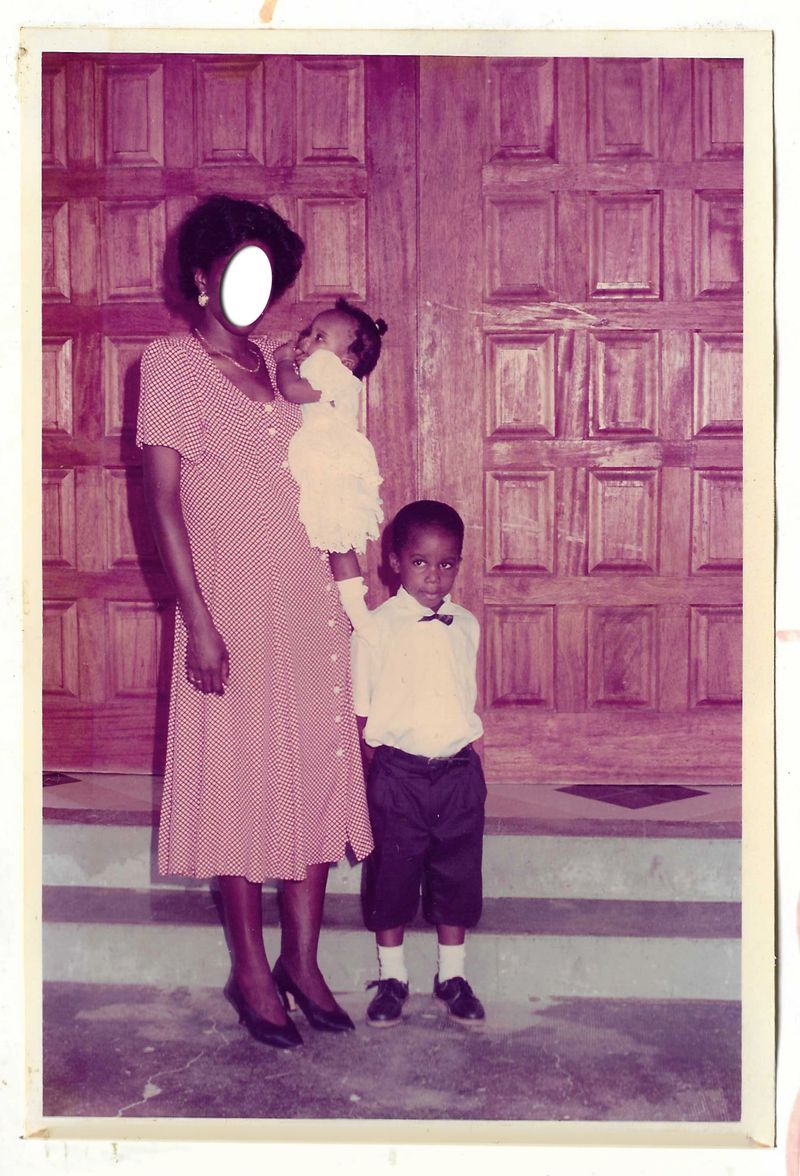
Archive of the baptism of my elder brother’s and I in 1993, with my mother holding me in her arms, in front of the church in Morne-à-l’Eau.

© RaÏssa Bibrac - Image from the AN MITAN GRAN BWA photography project
i

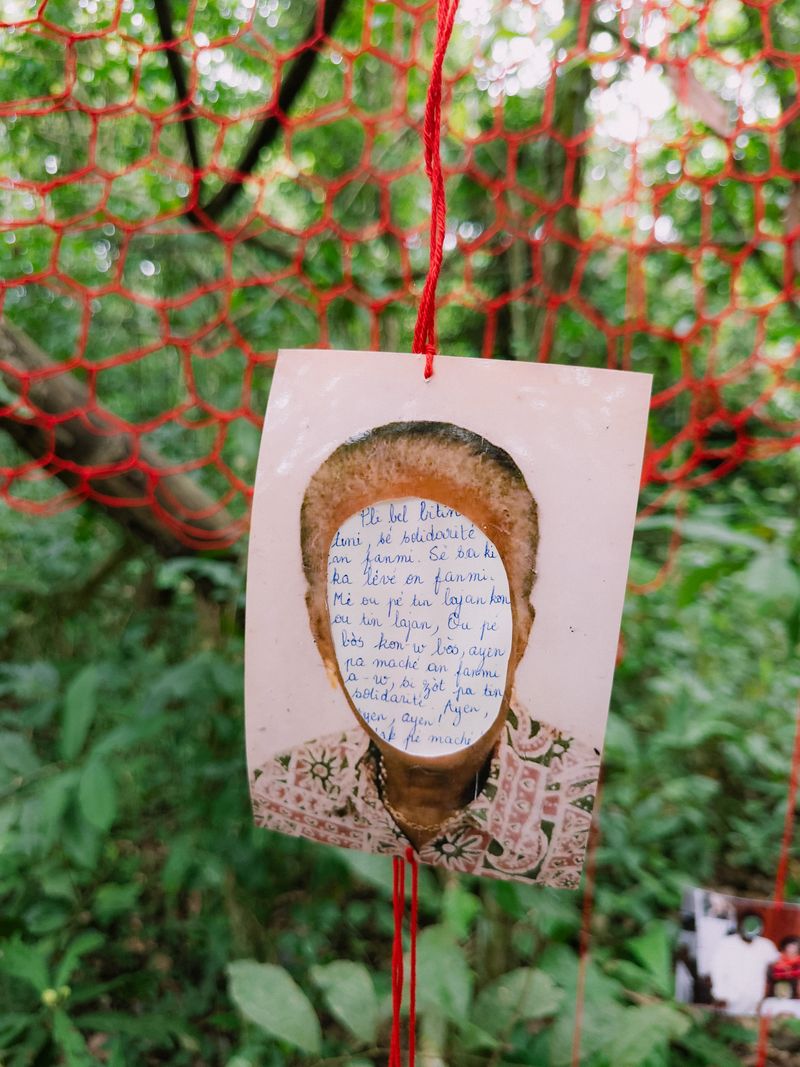
A fragile hand-crocheted net holds twelve family photos with missing faces. These absences reveal inherited silences, not erasures. Light, wind, and movement pass through the voids, linking family memory with the memory of the places it inhabits.

© RaÏssa Bibrac - Image from the AN MITAN GRAN BWA photography project
i

Archival photograph depicting a portrait of my maternal grandmother. The archival text, drawn from her biographical book, quotes her as saying:“The most beautiful thing that can exist is family solidarity. It is what uplifts a family. You may have as much money as you want, you may be a powerful leader — nothing will work within your family if there is no solidarity. Absolutely nothing.”

© RaÏssa Bibrac - Exhibition view : Photographic archive of my parents
i

Exhibition view : Photographic archive of my parents

© RaÏssa Bibrac - Image from the AN MITAN GRAN BWA photography project
i

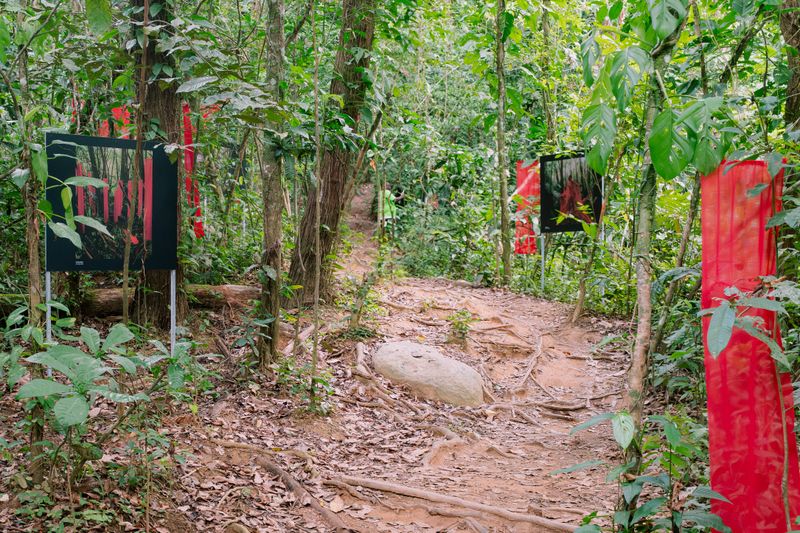
The presence of red veiling throughout my exhibition symbolically embodies the invisible entities that accompany me, as well as the visitors, along the path in the heart of the forest (An mitan gran bwa). For me, it is a way to represent the forest as a lived-in space, traversed by both visible and invisible presences.

© RaÏssa Bibrac - Image from the AN MITAN GRAN BWA photography project
i

Archival photo of my maternal family c.1960s, before my mother was born. Absent relatives are replaced by the forest, whose trees embody memory, linking the living to ancestors and bearing witness to family history.