7X7=49


-
Dates2025 - Ongoing
-
Author
- Location Paris, France
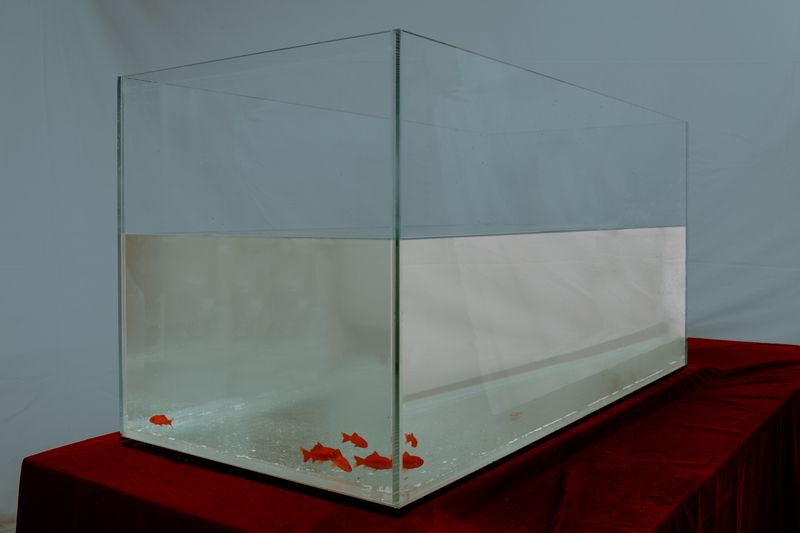
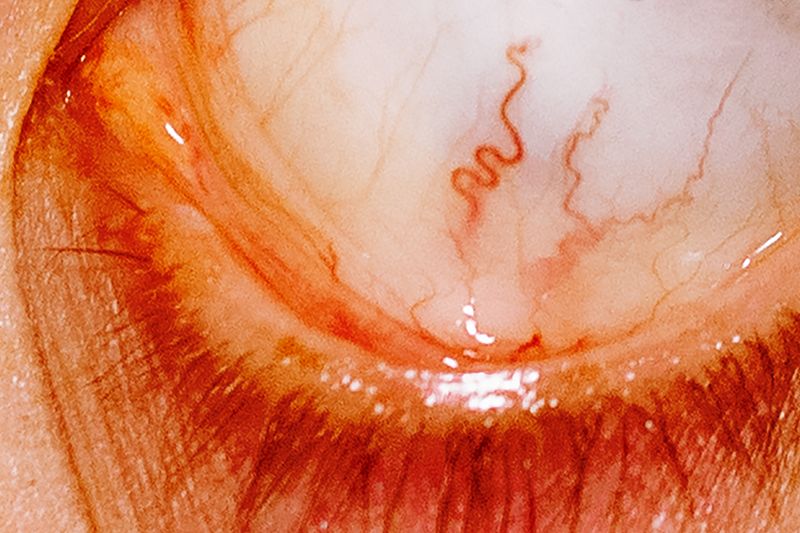
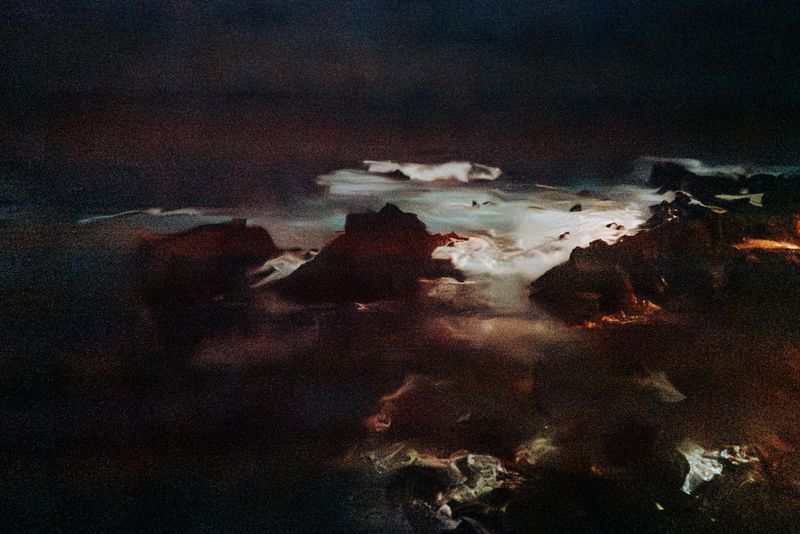
The 7x7=49 project intertwines emotional memory, neuroscience, and self-portraiture: from childhood roots to identity exploration, photography becomes the language of the unspoken, turning implicit emotions and inner fragments into a visual narrative.
7X7=49
“The thing I remember best was taught to me by my father when I was eight years old, and
from that moment on I never forgot it: the multiplication table of seven. It was so exciting that
even today it remains one of the clearest memories I have of elementary school. What became
indelible was not only what I learned, but above all the emotion I felt in that moment.”
Implicit, or non-declarative, memory is a form of memory that we cannot consciously access, that
we cannot verbalize, and yet it deeply guides our lives. It is stored by the amygdala, which
contributes to the formation of emotional memory and influences the perception of feelings.
Emotions and memory are therefore closely interconnected: sudden reactions in front of a work of
art, such as crying before a painting, reveal how art touches the deepest areas of memory, beyond
rationality.
Art thus becomes a vehicle for intimate experiences, capable of activating unconscious memories
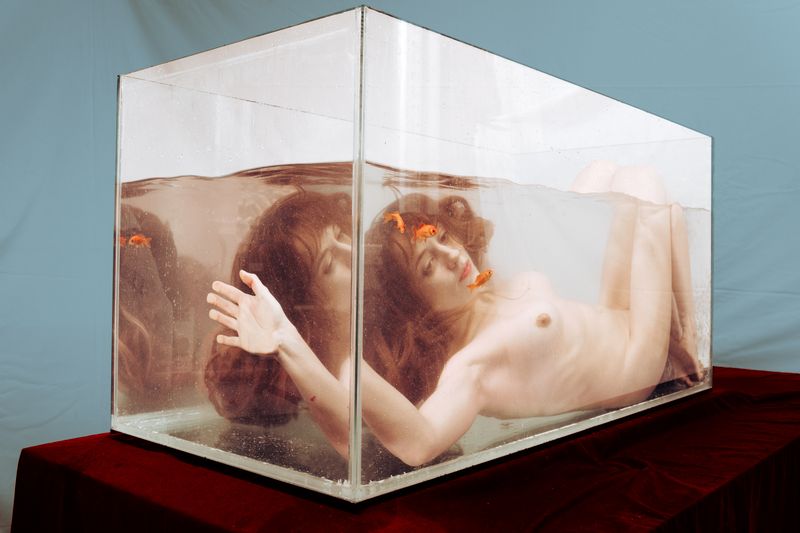
and provoking emotional revelations. In this perspective, the self-portraits in the project are not
mere images, but tools to bring out fragmented and hidden parts of the self, giving shape and voice
to what often remains incommunicable. This process helps to build a more coherent narrative of
one’s identity and provides a visual language to translate the invisible into the tangible.
Contemporary psychology shows us how early emotional experiences profoundly influence the way
we learn to regulate emotions. Alterations in the circuits that connect the amygdala and the
prefrontal cortex can lead to difficulties in affective regulation and in the stability of self-image.
Such imbalances are found, for example, in conditions like borderline personality disorder, where
emotional swings, fear of abandonment, and unstable relationships prevail. Beyond clinical
diagnosis, these dynamics reveal how identity fragility and emotional intensity are part of the
human experience and can also emerge through artistic creation.
Contemporary art, in this sense, must offer new perspectives on how our mind reacts to visual
stimuli, allowing us to reflect on the connection between emotions, brain, and creation. Not by
chance, the Computational Neuroscience Laboratories of the Advanced Telecommunications
Research Institute International (ATR) in Kyoto have developed pioneering studies capable of
monitoring brain activity and extracting images directly from the brain, translating subjective
experiences into visual forms.
The research of Professor Yukiyasu Kamitani, based on functional magnetic resonance imaging
(fMRI), has shown how it is possible to predict the content of dreams with an accuracy of 60%, by
associating participants’ descriptions with patterns of brain activity. These experiments open
fascinating scenarios: the possibility of decoding the neural representations of perception and
imagination brings scientific research closer to the language of art, questioning the very nature of
the post-photographic image.
From this perspective, photography takes on a dual function: documentation of inner processes and
subjective interpretation of reality. The project 7x7=49, born from a positive and particularly vivid
childhood memory, situates itself within this dialogue between neuroscience and contemporary art.
The images oscillate between clarity and confusion, between intimacy and abstraction, visually
restituting the invisible processes of memory and identity.
Art thus becomes a tool of self-exploration and healing, capable of transforming silence into
language and fragmentation into narrative, opening new paths of understanding between science,
perception, and artistic creation.