Fiction, Realism, Speculation: Salvatore Vitale's Transmedia Narratives
-
Published23 Mar 2026
-
Author
The Italian artist's practice dissects the layers of our contemporary world, while posing a question: what are the renewed possibilities of photography today?
Transmedia storytelling is an approach that favors the coexistence of multiple media to narrate a story. While a central narrative holds everything together, space is created for different non-linear perspectives to emerge. These strata allow for true complexity to unfold – a much needed quality in our contemporary world. Photography is still at the core, yet its vocabulary has expanded, pushing against its own stillness.
Salvatore Vitale’s practice has evolved within this constantly renegotiated space for the past seven years, after he published his seminal book How To Secure A Country (Lars Müller Publishers). His research has since expanded into curating, artistic direction, and education – roles he views not as a hierarchy, but as facets of the same artistic inquiry.
This vision defines MEDIAE – PhMuseum’s Online Masterclass On Transmedia Storytelling, now accepting applications for its fourth edition. Through collaboration and a process-oriented mindset, head professor Vitale approaches teaching as a collective act of knowledge creation. He believes that by establishing a ground for experimentation and freedom, artists are empowered to discover ethical, plural representations. We caught up with him to discuss his philosophy, how it informs the program, and the importance of community within an online environment.
Ciao Salvatore, we are happy to confirm your Masterclass Program for the fourth consecutive year. How has your experience been so far?
My experience has been definitely positive. The way the masterclass is conceived is lively and dynamic, making it engaging and stimulating. The online environment doesn’t hinder the production aspect of the masterclass. Instead, it enhances the exchange and group dynamics. The accessibility and welcoming of different backgrounds among the participants is a significant added value that I greatly appreciated. There is something special about becoming part of a small community that meets regularly to discuss works and exchange ideas on various topics within photography. This sense of community fosters creativity, support and a deeper understanding of the medium, enriching the overall experience.
During the masterclass, students start with a project and make their process grow. What is this process usually like?
The process embraces a non-linear approach, reflecting the nature of our work in the masterclass. Jokes aside, I give a lot of freedom to the students in how they want to develop their projects. While some classes are fully devoted to understanding how to work within a transmedia environment and think about their work in relation to a multi-layered narrative, a significant amount of time is also dedicated to discussing works and references, dissecting narrative structures, learning to use different tools, and exploring how photography can coexist within a broader media landscape.
The masterclass is process-oriented, so I tend not to put too much pressure on the outcome. I believe that giving space to experimentation and enjoying the process is a winning approach when tackling transmedia storytelling. Theory and a specific toolkit play crucial roles in the process, but there is ample room to expand and build upon these foundations. We also discuss strategies to present works in a spatial understanding of photography and we devote a good amount of time to understanding the relationship between the production of the project in correlation to the way it is delivered and consumed by the audience. This approach is meant to encourage the participants to develop their unique approaches and fosters a deeper engagement with their work.
Why do you consider transmedia storytelling relevant these days? Which aspects of it do you find most challenging for the participants, and which are more inspiring?
Transmedia storytelling is an approach that favors the co-existence of multiple media to narrate a story. I believe it is particularly relevant today as it allows for a certain level of complexity, enabling the development of different narratives and storylines that, together, provide a more comprehensive picture of the story. This approach addresses a visible need in our contemporary world: delving deeper, using narrative strategies to find ethical representations and creating work that embraces a plurality of voices and media.
Furthermore, transmedia storytelling allows for considerable freedom in adopting different strategies, such as fiction, non-fiction, immersive experiences, and experience-based approaches. It also actively involves the audience in the story's construction, making them participants rather than mere spectators. This reflects our current way of consuming images and, more broadly, content. We now engage with stories across various platforms, each medium offering a unique perspective that contributes to a richer, more engaging narrative experience.
This approach not only enhances storytelling but also fosters a more inclusive and dynamic way of sharing and interpreting stories.
It’s been more than 7 years since you published How To Secure A Country. How do you think your work has evolved since then? What are the topics and methods that stayed, and which new directions do you feel the urge to explore today?
My work has been evolving in a direction that now includes a slightly different way of using photography in the production of the works.
I believe that while How To Secure A Country was very rooted in a photographic approach, over the years, I have started exploring new media and directions that help me explore more of the complexity of the subjects that I investigate.
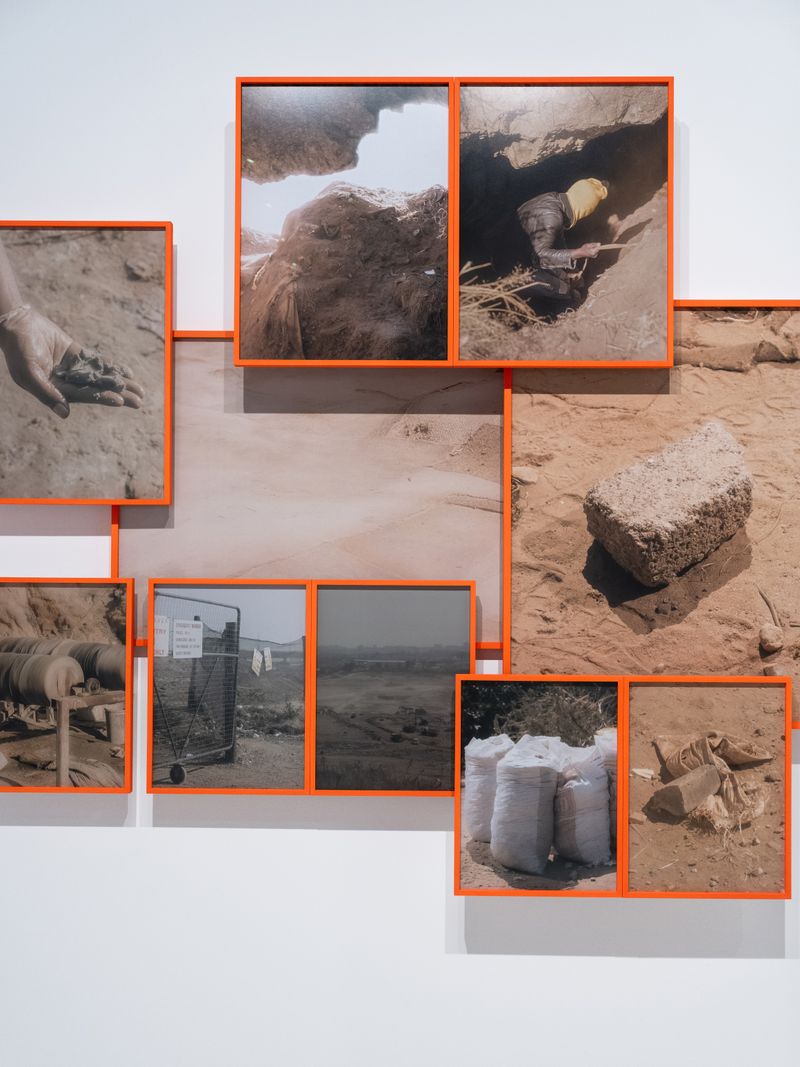
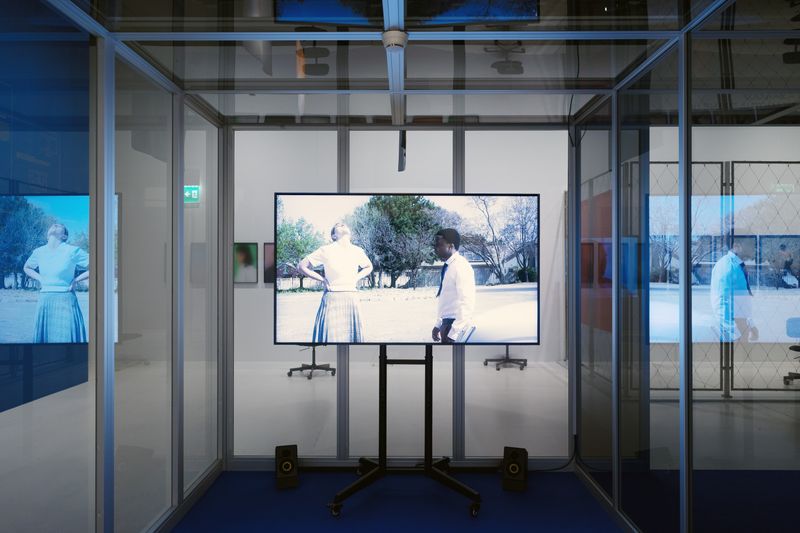
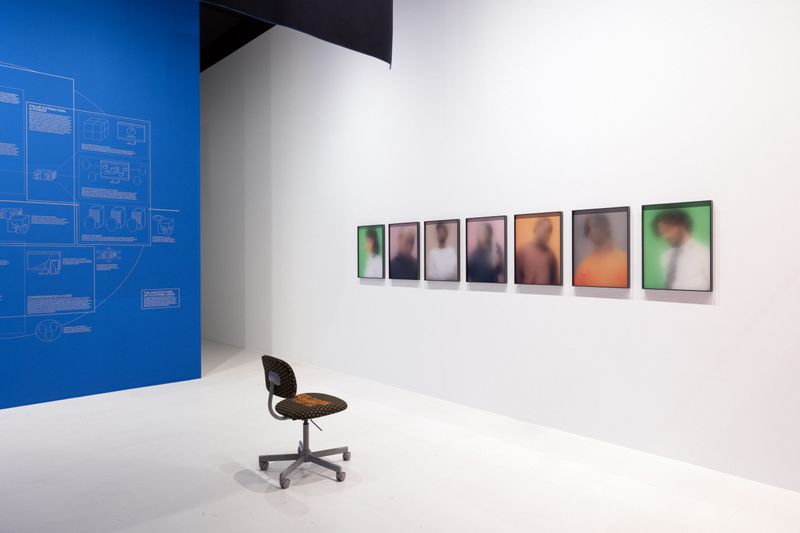
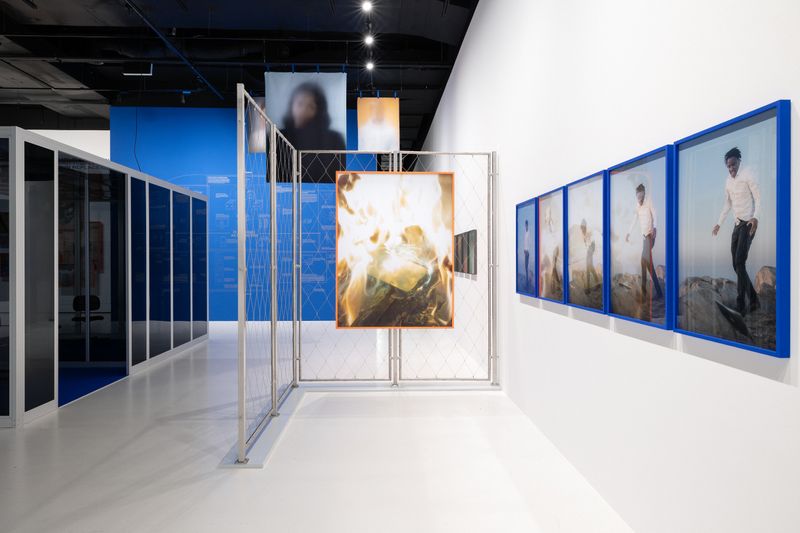
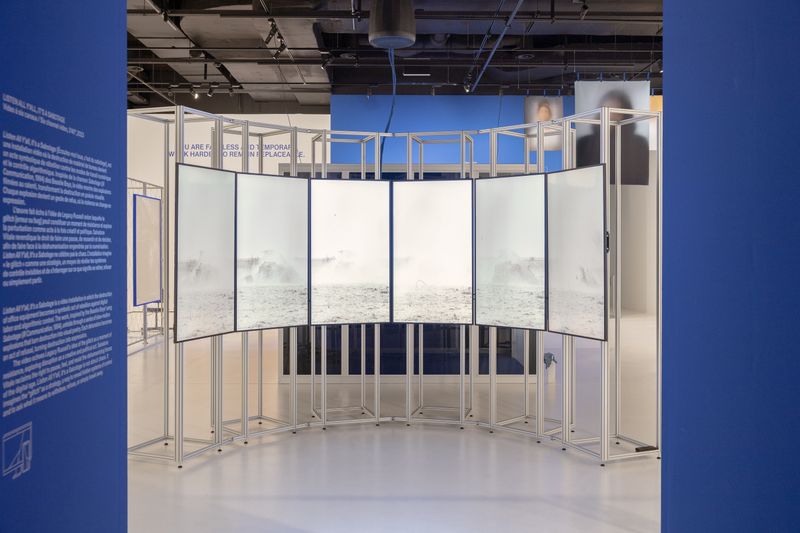
I still make use of photography, and I am still interested in dissecting my subjects from a very research-driven and analytical perspective. But what I have started doing is further exploring this idea of the intersection between fiction, realism and speculation, through the use of media installation and a mixed approach that helps me experiment with narratives.
So I would say that my research and approach, as well as this idea of working within systems, have stayed the same. Topic-wise, I am still interested in exploring the invisible systems that shape modernity. At the same time, my approach has expanded by embracing other ways to produce work.
Your practice spans several roles, from artist and researcher to educator and artistic director. How do they influence the way you think about presenting work to the public?
I do not make a clear distinction between my different roles. I see my artistic practice as spanning across the different activities I engage in and the different ways in which I explore my interests and subjects. Sometimes this happens by producing works, other times by curating work, and other times through research or by participating in the academic field.
For me, the idea of presenting work, whether it is mine or work by other artists that I intersect with, has always been a way to explore the possibilities that the medium offers in terms of creating experiences.
The exhibition space, for instance, is never just a space to show work. It becomes part of the work itself and therefore has conceptual value. I always try to work in a way that gives value to the space so that it becomes an integral part of the work.
This allows me to create different types of relationships with audiences, while also offering different levels of engagement with the exhibition. Audiences can interact with the work from a more superficial level or move into a much deeper level of engagement. To some extent, this also allows me to explore different layers of narrative within the space.
For me, exhibition-making is therefore not simply about putting work out there. My relationship with the audience becomes a way to complete the work by adding conceptual layers to it.
Transmedia storytelling allows for a vast complexity of languages. How do you guide participants so they don't get lost in the sea of different media and ensure they maintain a solid, coherent narrative core?
Transmedia storytelling requires an understanding of editorial practices, as well as storytelling practices. Of course, there needs to be a certain level of guidance when approaching this type of methodology.
My approach is to guide and give the students tools and references to understand how to structure a message in a way that welcomes different perspectives.
The way I guide participants in the masterclass is by making sure that together we formulate specific questions and standpoints that can lead to multiple perspectives. Of course, there is always an overarching narrative, a central narrative that holds everything together and around which everything revolves. This is where the work happens.
However, if you want to know more about this approach, I would suggest applying for the masterclass and participating in it, because there is a lot to explore and develop.
This approach can be very useful both if you intend to work on your own artistic production and if you want to work on different kinds of projects, whether curatorial or more academic.
What draws you to teaching, and do you have any core ideas or methods that you wish to share through it?
Teaching is definitely a vital part of my artistic research. I enjoy sharing my own experiences and contributing to the creation of projects that explore various aspects of the world. Teaching is a dynamic experience that fosters discoveries. I find it exciting not only to share knowledge but also to create it collaboratively within a group.
In my previous replies, I mentioned some of my methods. I deliver structured content, but I also emphasize the importance of the process, leaving ample space for students to find their unique voice. This unique voice can become a milestone in their creative process and, consequently, in the construction of their work. I never impose a rigid method; instead, I structure my teaching around a blend of theory, practice and open dialogue.
I believe that creating an environment where students feel encouraged to experiment and explore is crucial. This approach helps them develop their own perspectives and methodologies. One of my goals is to facilitate a learning experience that is both informative and transformative.
In the broader panorama of photography education, what do you aim for this program to bring to the table? Do you have any advice to share with prospective participants?
My wish is that this program inspires students from diverse backgrounds to understand photography in a broader, more inclusive way. To join this masterclass, students need to come with an open mind and a willingness to explore methodologies not typically included in a traditional photography program. However, based on my experience, I see that this broader approach is already being embraced in several academies.
This program aims to provide a comprehensive overview of what is possible in the realm of photography and visual storytelling. It is structured to give the participants tools to broaden their conceptual and critical thinking. It encourages a more complex, deeper understanding of the medium, highlighting non-linear and multi-layered narrative approaches. By integrating various techniques and perspectives, students can develop a richer, more nuanced view of photographic storytelling. Furthermore, this program emphasizes the importance of interdisciplinary learning and the co-existence of different media to tell a story. It reflects the current trends in how we consume and produce content, fostering a more holistic approach to visual narratives.
--------------
MEDIAE Online Masterclass On Transmedia Storytelling is part of PhMuseum's educational program, comprising five different masterclasses that will all share a single intake period running until 28 May, with classes beginning in October 2026 and ending in May 2027. Alternating collective tutoring, seminars, individual sessions, and studio visits, each masterclass exists in a community-driven environment, while providing concrete opportunities to exhibit, publish and distribute your work.
You can take part in one or more programs. Check them out phmuseum.com/m26
--------------
Scholarships and participation fee
Before 30 April – If you apply by this date, you are eligible for the full scholarship. In your motivational letter, explain why you’d be a strong candidate, and how you would benefit from this support.
Before 30 April – If you apply by this date, you can save €350. All applications will be automatically eligible for the Early Bird Fee of €1,850.
Before 28 May – If you apply by this date, you can join the program by paying the Regular Fee of €2,200. Since applications will be reviewed on a continuous basis, early submissions receive priority for seat allocation.
If you are offered a place, PhMuseum is happy to write you a supporting letter when you try to secure any external funding opportunities. In previous editions of our masterclasses program, the candidates' fees were covered thanks to the generous contribution of the IWMF Howard G. Buffett Fund for Women Journalists, Mondriaan Fonds, Arts Council Malta, and other programs. Read our guide to 2026 Education Funding for Visual Artists to discover opportunities.