Photobook Review: The Killing Ditch by Damien Wootten
-
Published25 Feb 2026
-
Author
Head to the North of England and eventually you reach Hadrian’s Wall. This was the northernmost reach of the Roman Empire in Britain. The Killing Ditch records the wall and the traces of empire, borders, and exclusion that still resonate in Britain today.
The Killing Ditch is a great book, a sober book, a book that is straightforward but also complex, that, unusually for a British book, is historically literate and yet relevant to contemporary Britain. It's not a very fashionable book in some ways, but who cares about that. It will be one day.
It is a book about the ditch built around 2,000 years ago that runs parallel to the north of Hadrian’s Wall. It’s a bleak wall that runs through a bleak area, one that is hostile to those who like gentle landscapes and a gentle climate.
The first time I visited was on a school trip when I was 11 years old. We wore our school uniforms on the 200-mile trip north from my school near Manchester. On the way up, we were a marauding horde. We stripped the service stations we stopped at of their crisps and sweets and when we got to the main site at Housesteads, it was freezing cold, a bitter wind blew, snow covered the hill side and all I can remember is having a snowball fight below the wall, pressing rocks into the snowballs to make them a little more effective and returning to our stinking coach with numb fingers and sodden shirts after a day out that a few decades down the line sounds way more fun than the tedious cold misery that we endured at the time.
I’ve been back many times more recently, and to be fair, it hasn’t changed much. It’s still bleak, it’s still isolated, the surrounding countryside a mix of grouse moor, forestry plantation, military training site, and bogs that masquerade as sheep-grazing grounds.
It was to this area that the Romans sent their legionnaires back in the day when the Romans did that sort of thing. They arrived, like all migrants to Britain 2,000 years ago, in boats (mostly medium-sized, but sometimes small) and built roads, hot baths, introduced wine, olives, medicine, and sanitation among other things.
But for a legionnaire brought up in Sicily or Carthage, coming to Britain was not a bucket-list posting. You could be in the South of France, Greece, or Egypt, but instead you find yourself in a provincial backwater where porridge is your top meal of the day.
And to make matters worse, you’d be stationed on a wall under constant attack from the marauding northern hordes, and that’s where the ditch comes in. That’s the knuckle-end of affairs, the place where the killing happened.
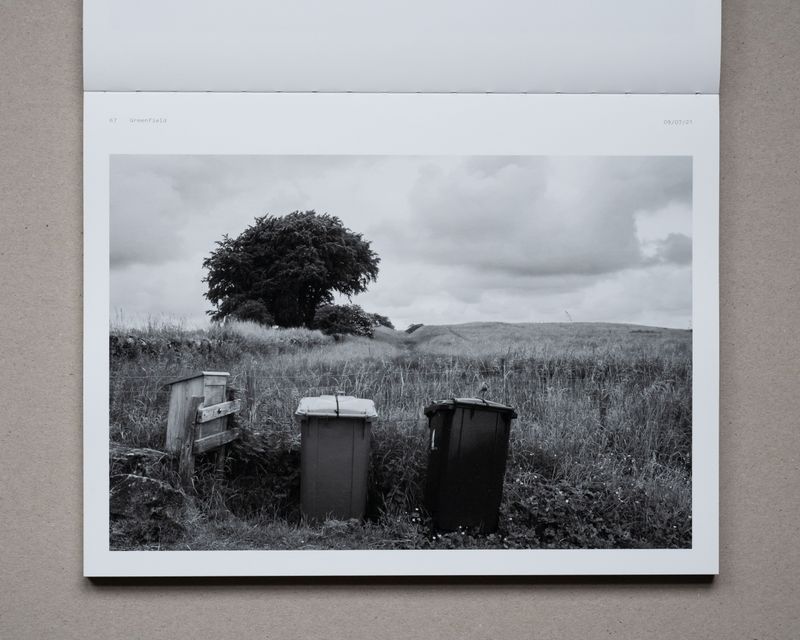
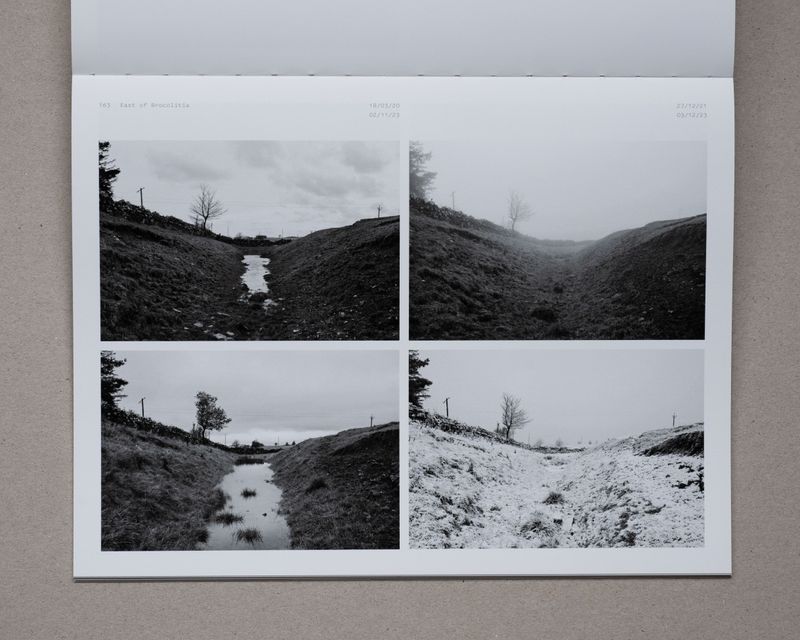
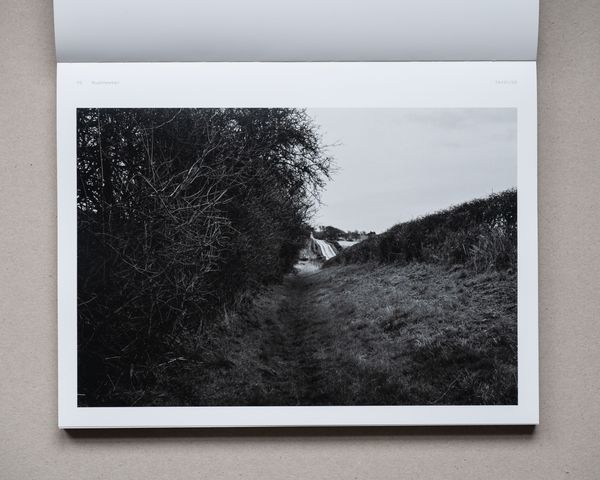
So that’s the background to The Killing Ditch. Made over five years, the book is a series of black and white landscapes that trace the topography of the ditch as it runs close to the current border between Scotland and England.
The ditch is referenced in the cover, which has a stylised diagram of the ditch running across its length, the ditch in charcoal, the air in a warm white, the title and the author written in upper-case red letters.
Open the book, and the story begins, the first image showing the scruffy backyard of a pebble-dashed house somewhere northwest of Newcastle. It’s a landscape where the city becomes the countryside, where the liminal spaces of the Edgelands begin to make their mark, where the traces of Hadrian’s Wall and its killing ditch have all but been erased.
That idea of the liminal is apparent throughout the book. We’re between past and present, between north and south, between the Picts and the Romans.
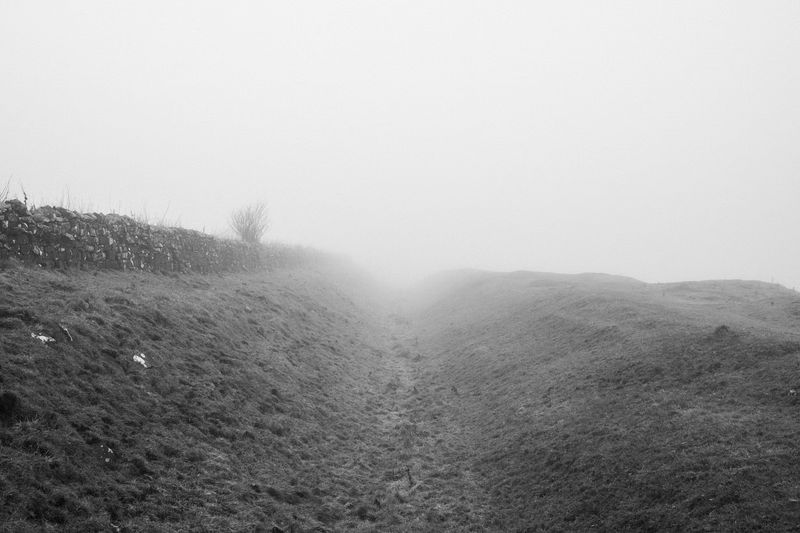
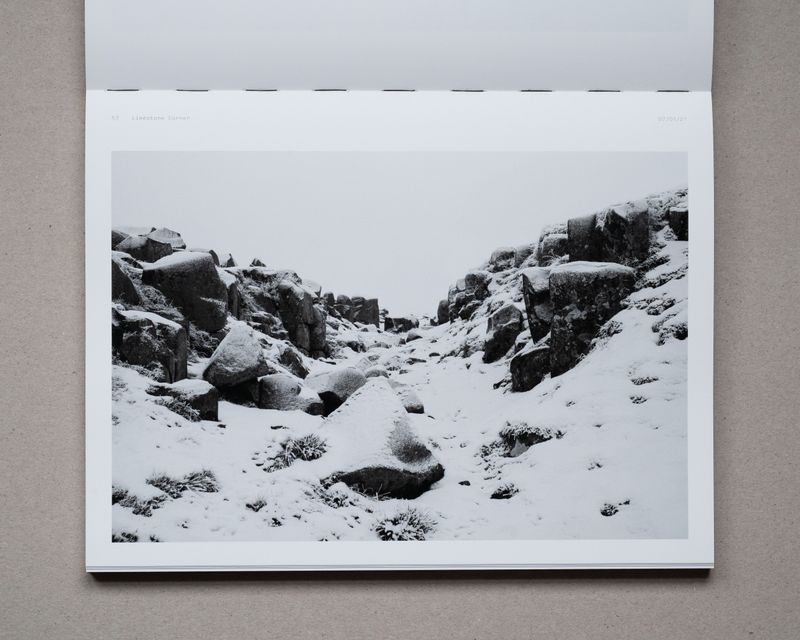
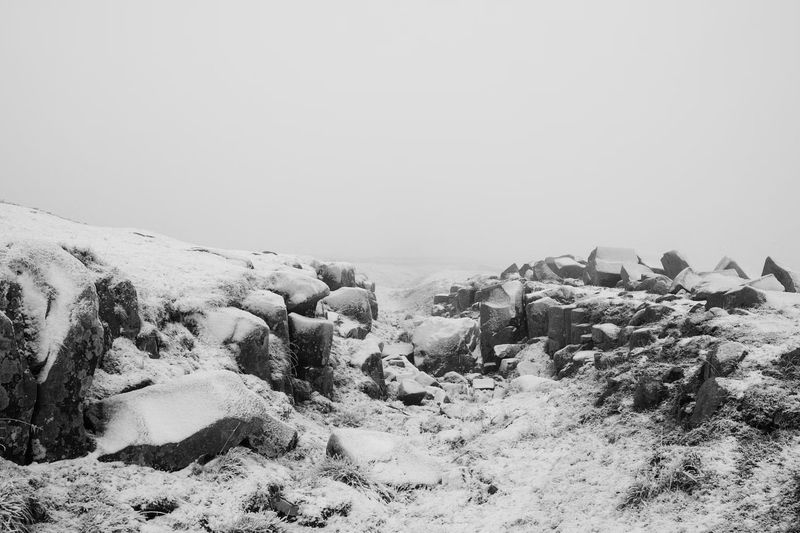
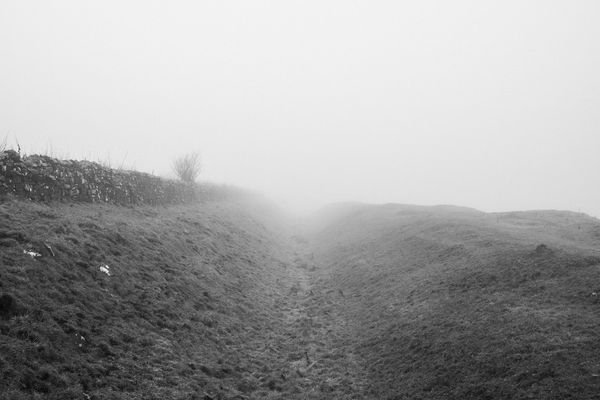
And that’s emphasised in the second image, this time showing very present traces of the wall, the building blocks rising on both sides and then collapsing into the middle and disappearing into the mist as it recedes into the background.
There’s a lot of weather around Hadrian’s Wall, and there’s a lot in the book. It adds a layer of mystery, a texture of the damp and cold, which adds a sensory element to the book. It cuts across time and takes you into another place, another time. Photography is very good at that, being stuck in its constant feedback loop between past and present, life and death, the real and the two-dimensional.
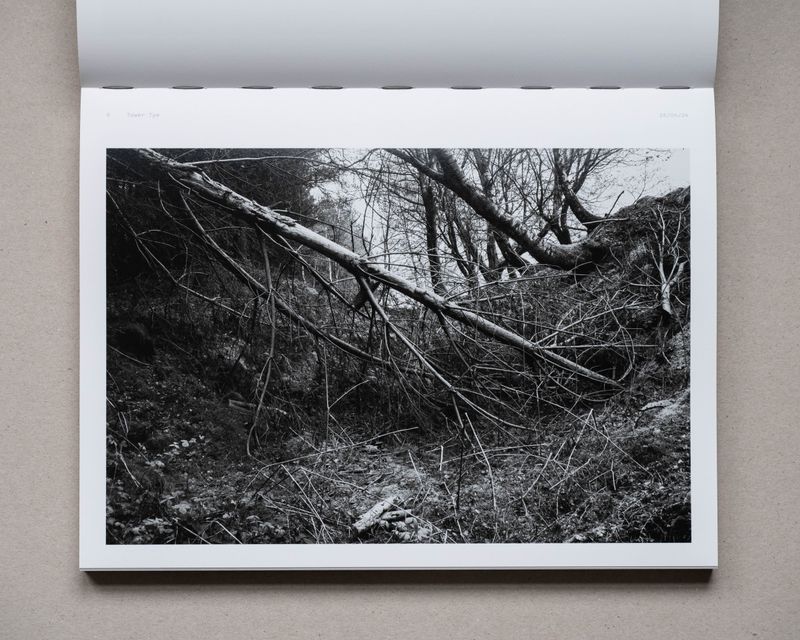
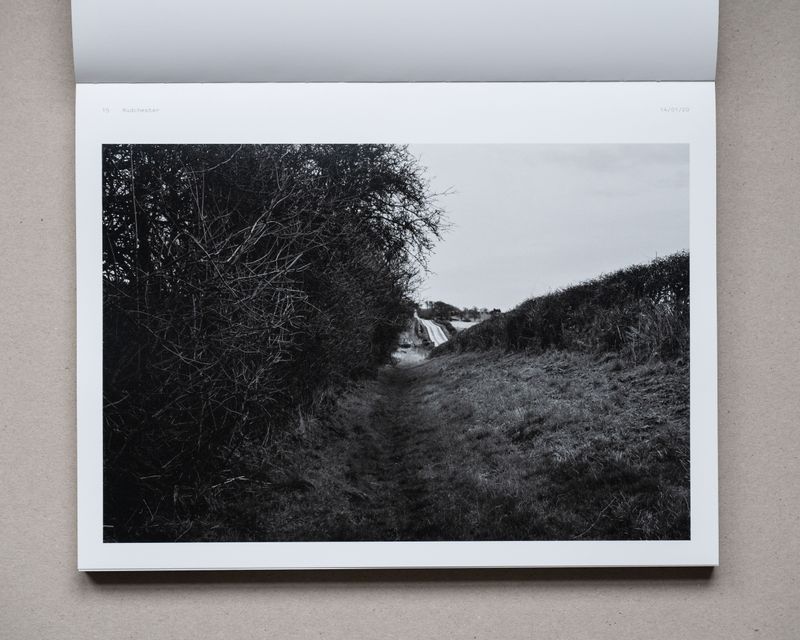
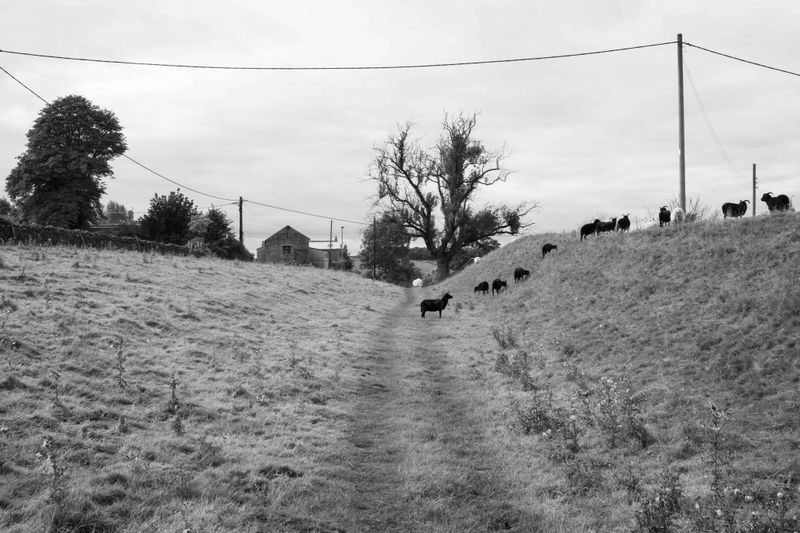
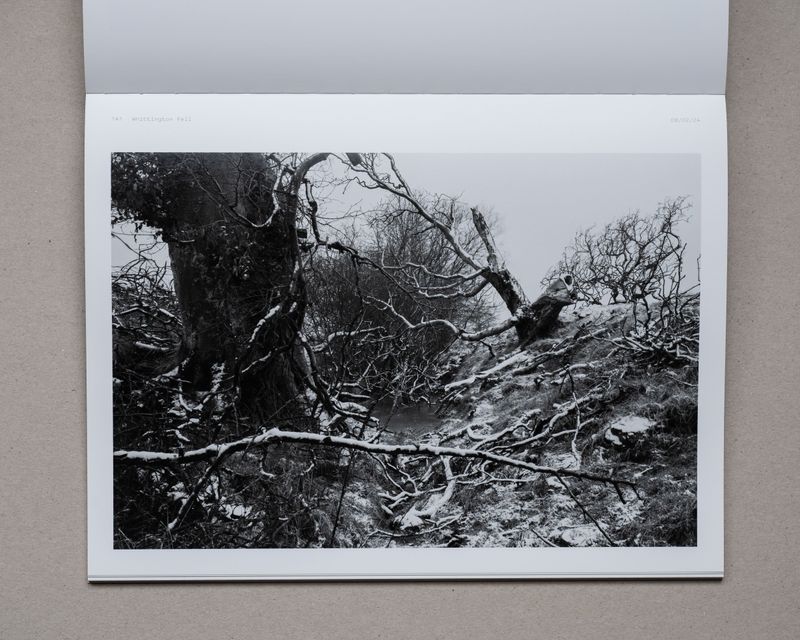
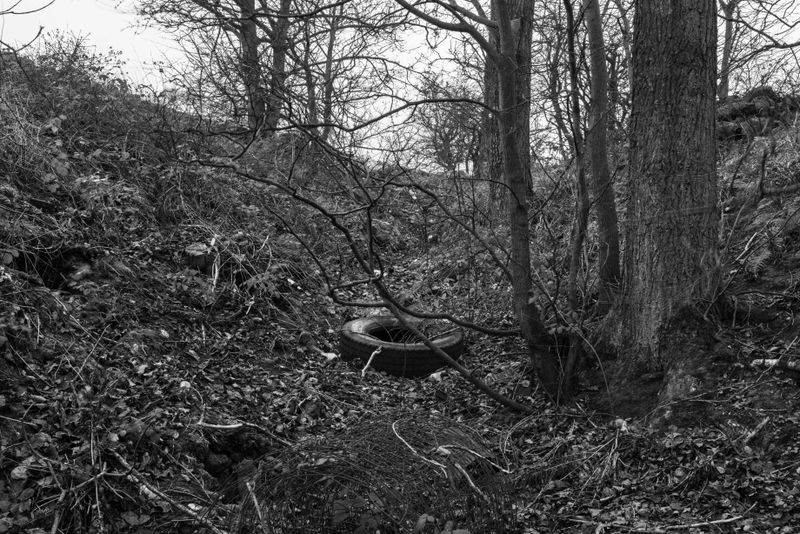
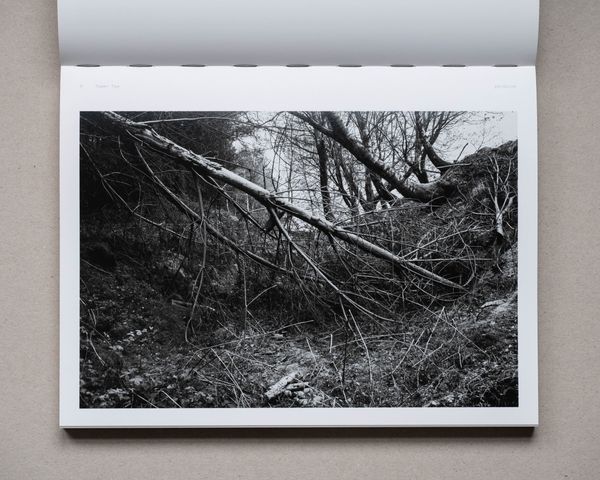
As you go deeper into the book, the topography of the ditch takes hold, the curve of the land a unifying feature through the pages of the book. There are mounds of fallen trees (there are a lot of fallen trees around Hadrian’s Wall, victims of the storms that pound the northernmost parts of England), thickets of undergrowth, and ponds and bogs that form as the ditch dips into the landscape. There are also pathways, roads, dividing walls, and layers of cloud, snow, and mist.
In some ways, The Killing Ditch is like a field guide to liminal spaces; it has all the markers of those landscapes that are marginal and not completely obliterated by human development and destruction. There are masses of ferns, outcrops of rocks, collapsed walls, hedgerows, fences, bogs, and drainage ditches.
We go through the seasons as we move through the book, we move through walking time and historical time, and agrarian time.
The big killer though is imperial time, the time the Roman Empire ruled. It seems distant now, but the ideas that lay behind the construction of the wall are still present in contemporary Britain; the border, the barrier, the marauding hordes, a construction that will keep people out.
Wootten is very much invested in this flow of time throughout the book. At the end of the book, there is an illuminating text on the importance of borders, the idea of ‘frontier’ and the role that photography has played ‘…as a tool of imperialism, mapping and recording unknown territories and peoples’.
The book ends with an afterword by Dr. Sana Al-Naimi, an architect who has moved from Baghdad to a house that backs onto Hadrian’s Wall itself.
‘Two years ago, and two decades after living away from Baghdad, my war-torn home, the house where I grew up was sold. The house sale was not an easy decision for my brother and me, but after residing away in Newcastle-upon-Tyne for the past two decades, letting go of the house in Baghdad felt like a severance of my roots.’
Al-Naimi feels an affinity for the land around Hadrian’s Wall, she feels a connection to a place where she could ‘face and acknowledge memories of war while transforming both present and future into peace and well-being.’
And so she builds a house there, the connections between past and present, between the easternmost and northernmost reaches of the Roman empire. And as she builds it, she wonders at the struggles for identity she faces, and the struggles for identity faced by all concerned in Roman times. She wonders at the purpose of the wall, at its past and at its present.
‘Was Hadrian signalling an end to the previously unquestionable march of the Empire to all corners of the world?’ she asks. ‘Or was he perhaps only too aware that empires are doomed to collapse under the very weight of their greed.’
--------------
The Killing Ditch by Damien Wootten is self-published
Self-published 2025
Softcover, 1st edition
ISBN: 978-1-0369-1726-5
--------------
All images © Damien Wootten
--------------
Damien Wootten is a British documentary and art photographer. Much of his research focuses on the North of England, a place that has a rich photographic history and a strong contemporary presence. Damien's work draws from that history and the wider photographic tradition of recording the land and our place within it. His practice, in part, looks at how history and politics are embedded in both our communities and landscape.
Colin Pantall is a photographer, writer, and lecturer based in Bath, England. His next online courses and in-person workshops begin in April 2026. More information here. Follow him on Instagram.