Photobook Review: Maputo Diary By Ditte Haarløv Johnsen
-
Published23 Apr 2026
-
Author
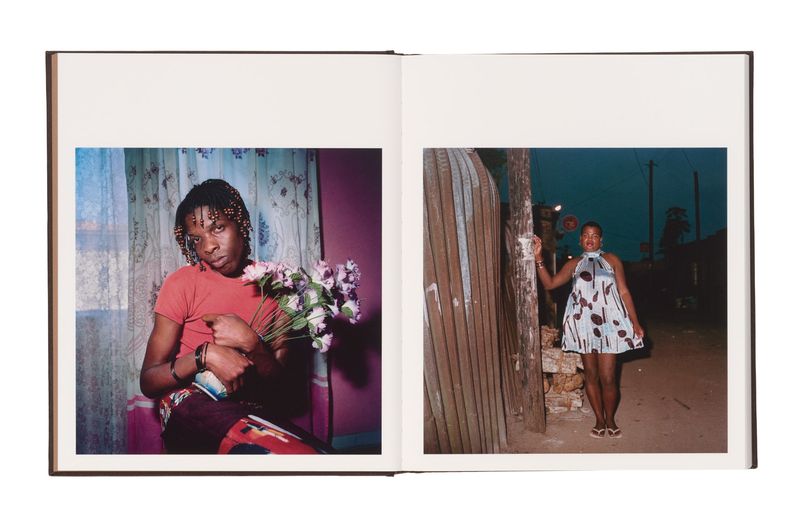
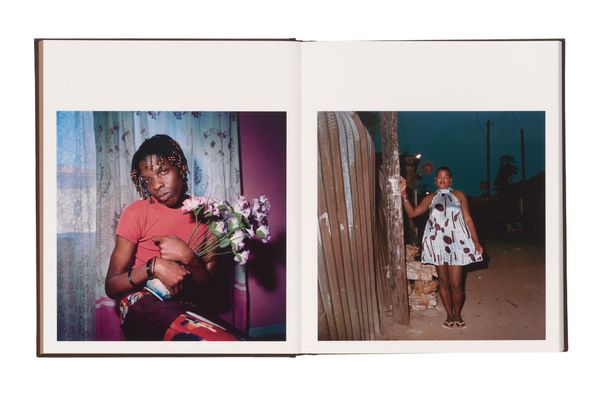
Maputo Diary is a photographic expression of love for the city of Maputo, and for its people, in particular the Manas, the queer community that Johnsen befriended and photographed over a period of 20 years.
Ditte Haarløv Johnsen first lived in Maputo in 1982. She was five years old, a brutal civil war had just ended and her parents had moved into a local apartment block to help with the rebuilding of the nation.
Johnsen went to a local school, part of a class of 50 children. Her classmates were her friends, but she knew that as a white girl she was different. Unlike the other children, she was never beaten, and she always had a chair to sit on.
‘I spent my childhood roaming the streets with my friends,’ she writes, ‘there were no cars because fuel was impossible to get. I was just as good a dancer as any of the other kids, but I didn’t belong for real. I didn’t have a family member who had been killed in the Civil War. My parents had chosen to come; and they could choose to leave again.’
Johnsen found herself moving between Denmark and Maputo with her family until, at the age of 20, she returned as a volunteer at a local photo school. It was here she first met Ingrácia and Antonieta, part of a local queer community who called themselves manas (sisters).
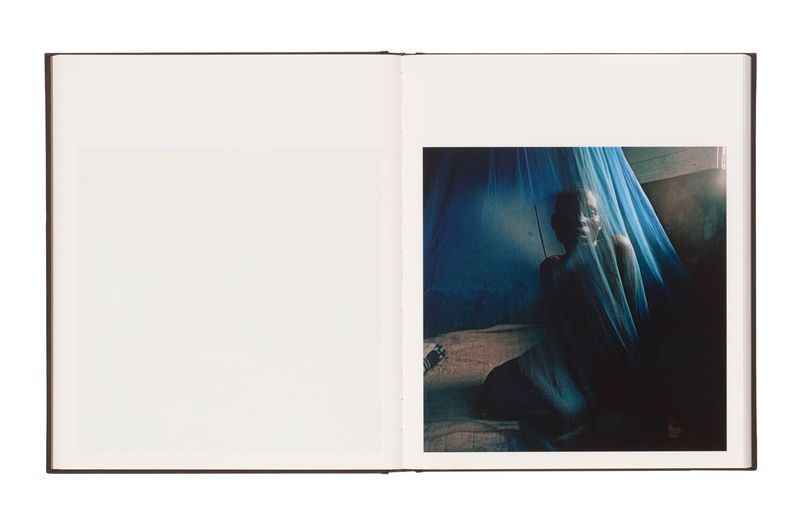
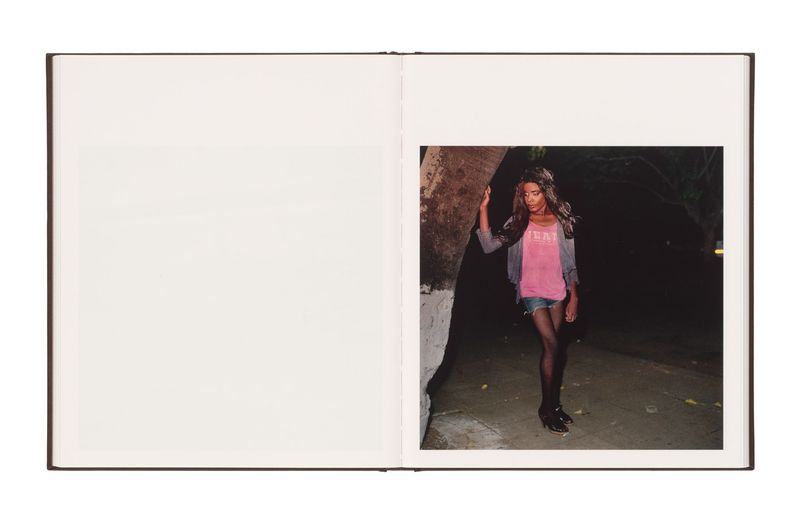
Over the coming years, they spent time together, they drank together, they became friends, and she learnt about their lives; the hardship of Antonieta working the streets, the strategies for survival, the conviviality, the storytelling, the violence, and the deaths.
This book is the result of those meetings, over 20 years of photography condensed into one book.
It’s not a clean and simple book in other words, the layers of family, friends, interior and street scenes come up against essays and captions that bring in broader economic and political undercurrents and reveal the toughness of living in a country emerging from decades of conflict.
The book begins with a view from an apartment taken while Johnsen is listening to music with friends. It’s concrete and it’s brutal, but it’s home. We see Ingrácia on the street in her dress after she’s beaten up some kids who have been mocking her.
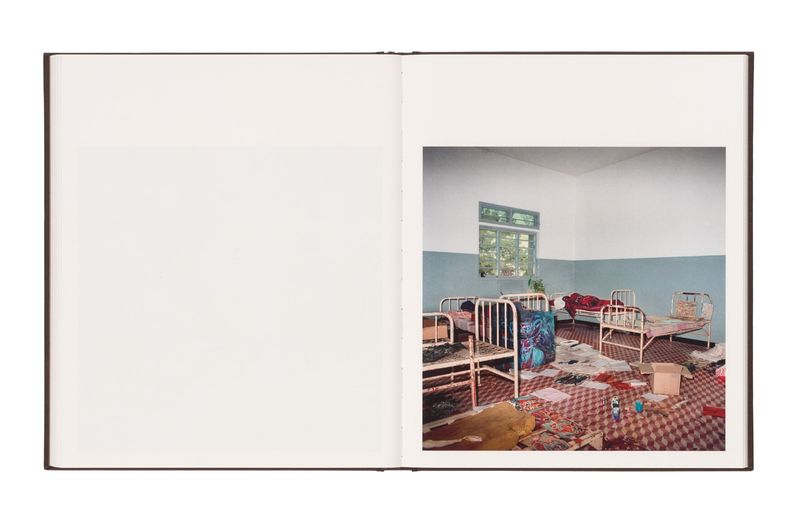
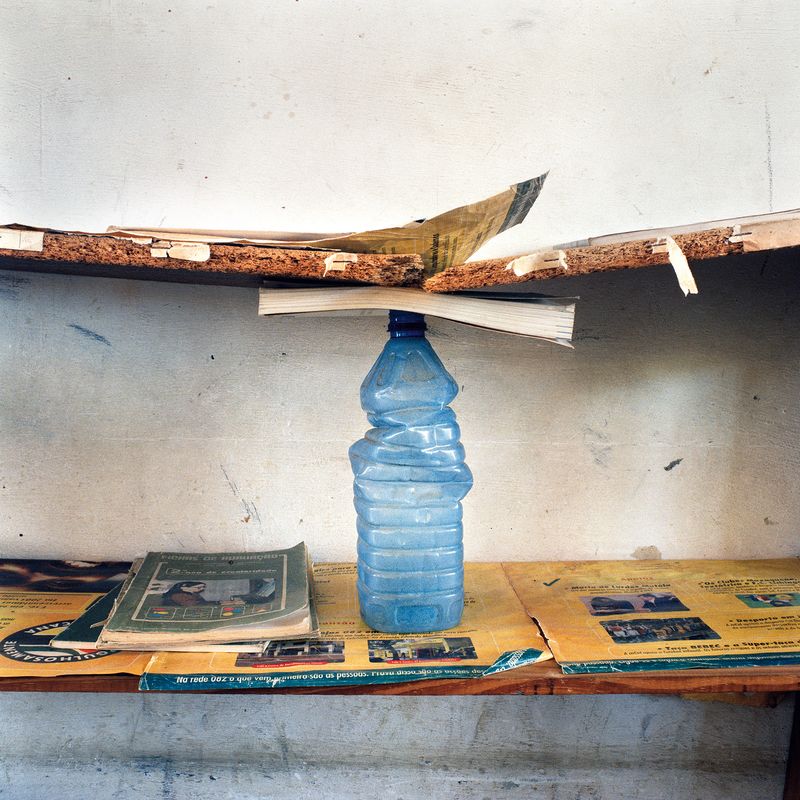
Street locations feature in the book; it’s where people hang out, do business, but there are apartment interiors, beds, and interiors of hospitals and prisons that reek of stale sweat and decrepitude. Johnsen photographs a prison library, a broken and decaying bookshelf held up by a squashed water bottle. The prison governor, she thinks, hopes her pictures will somehow increase funding for the dilapidated prison.
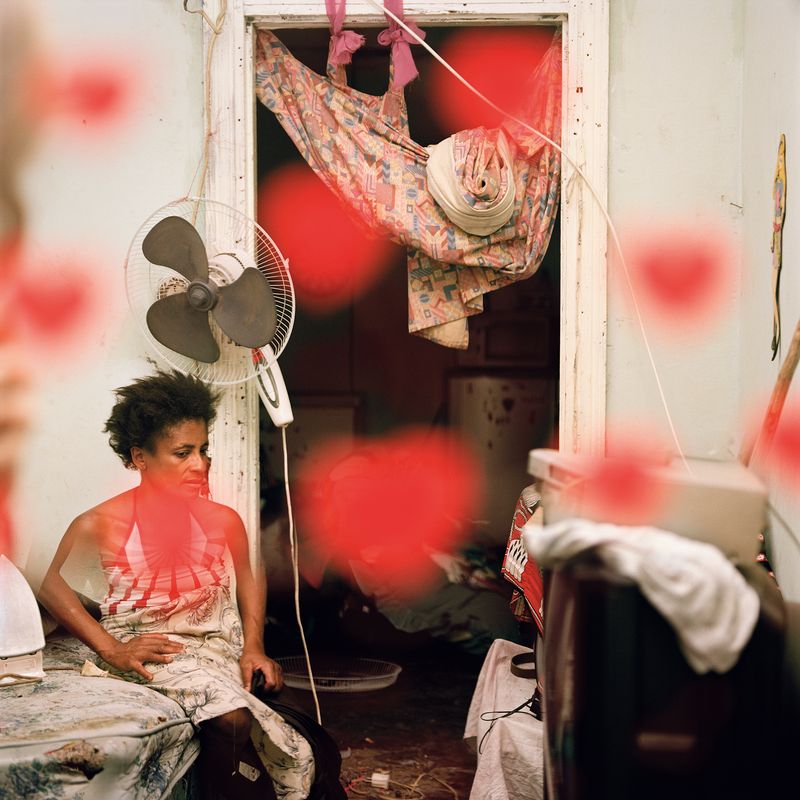
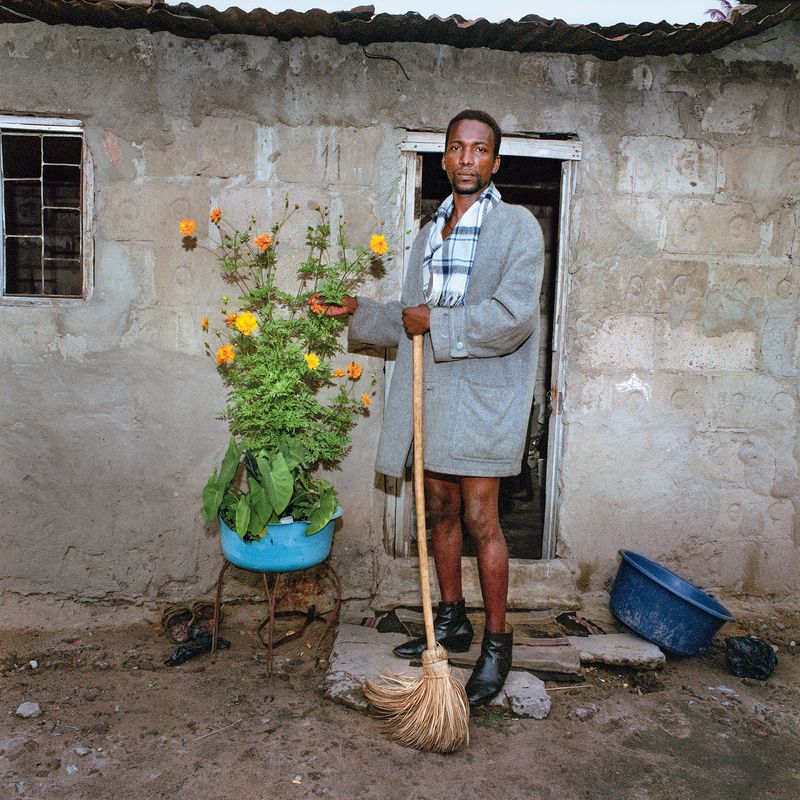
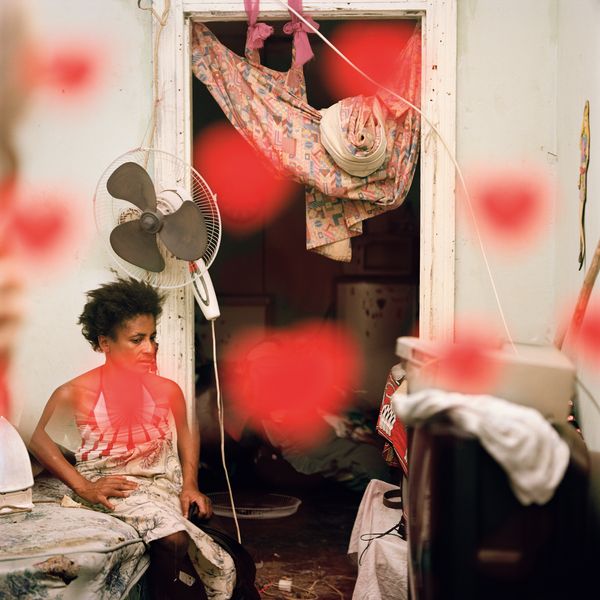
We see Surai reflected in a mirror, explosions of red out-of-focus in the foreground; there’s a touching portrait of Rui standing in an ill-fitting jacket with the flowers he tends since coming back from DDR. That’s where he came out, and that’s where he worked until the fall of the Berlin Wall and the loss of his job. He’s still unemployed at the time the picture was made.
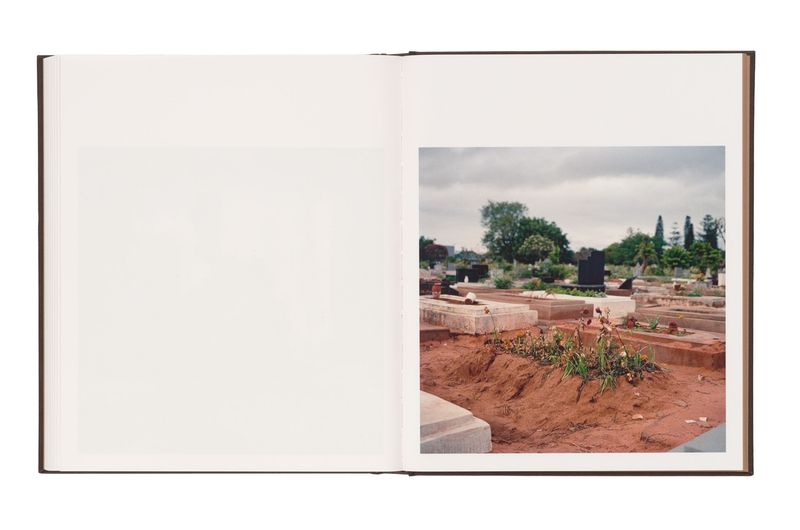
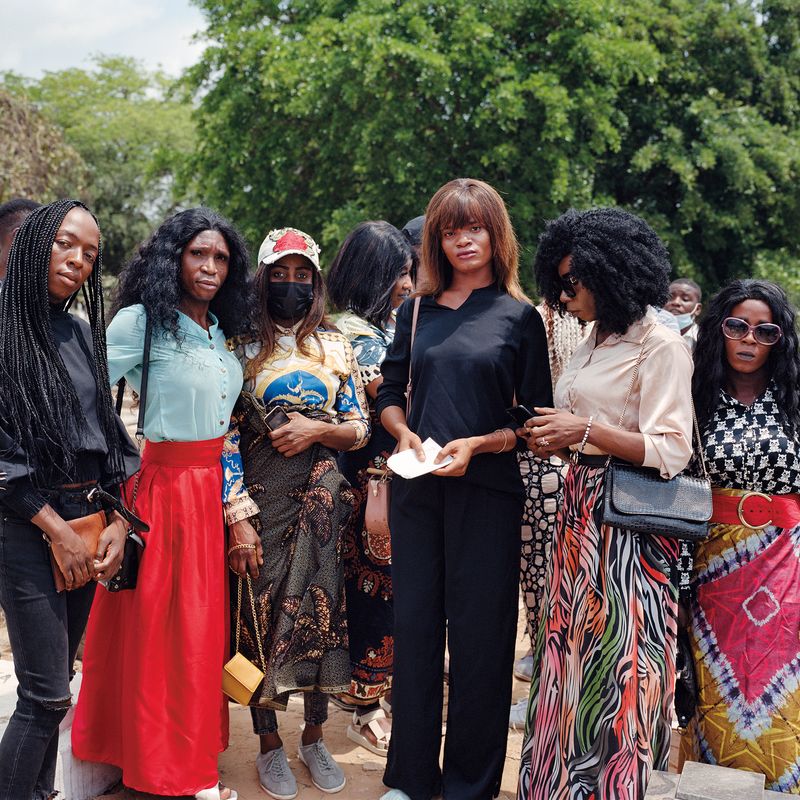
And then the manas start dying and we see morgues, and funerals, and the sorrow and fatalism that surround death. Some die of ‘the disease’. Others, like Yara, are murdered, and we see a morgue and mourners at a funeral. The final picture is of a grave, wilting flowers poking out of a mound of red soil, the grave of Johnsen’s friend, Yara.
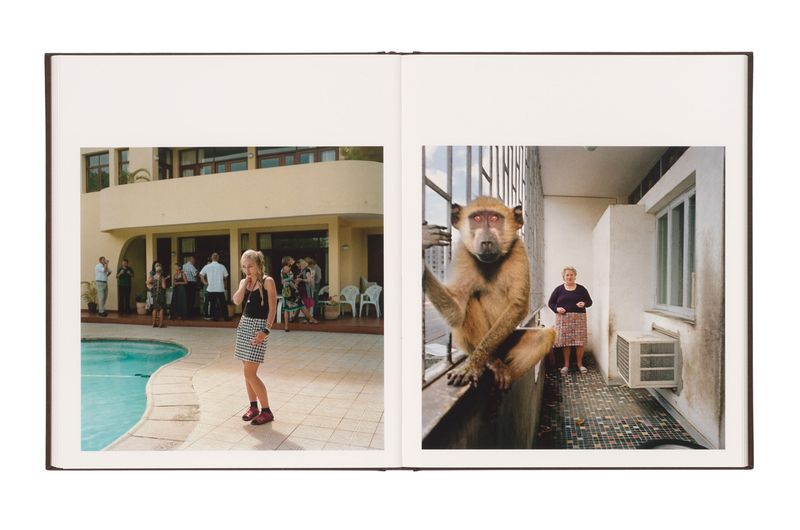
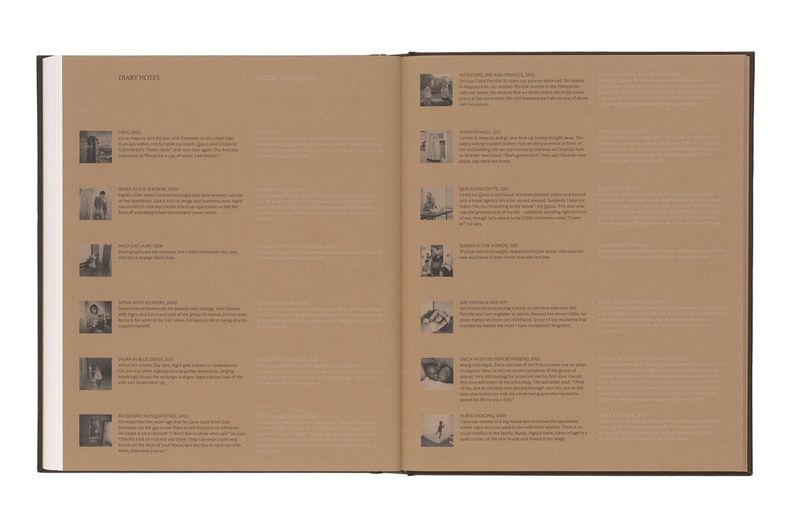
The book gives the feeling of life in Maputo, both for the manas and for Johnsen’s white family. We get snippets of text that reveal the realities of life in Mozambique, the economics of family ties, the people who join the army or work in the mines in South Africa, all interspersed with images of dead animals, both domestic and wild. But we also see the pleasures of life, the drink, the dance, the parties, the loves.
It’s an honest book in other words, one that doesn’t come with a grand statement or claim any great virtue or revelation, but contains it nonetheless through powerful and direct photography that focuses on the multiple layers of people’s lives, on the details that make life worth living, on the spaces we inhabit, the clothes we wear, the gestures we make.
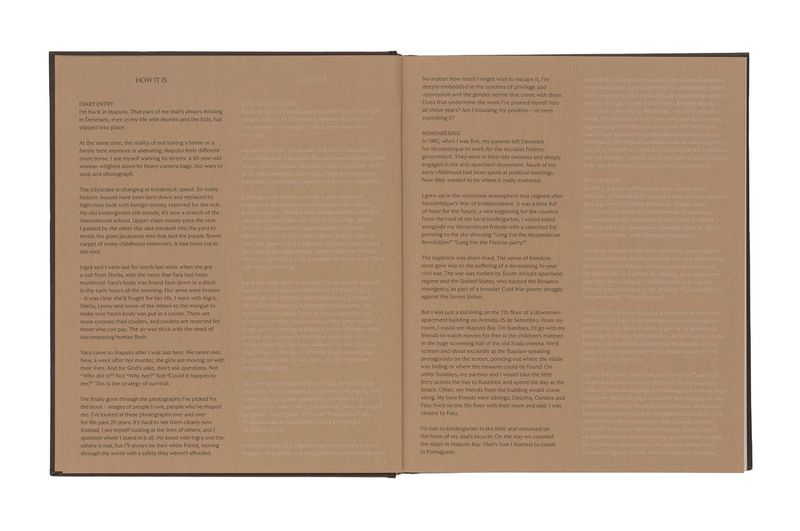
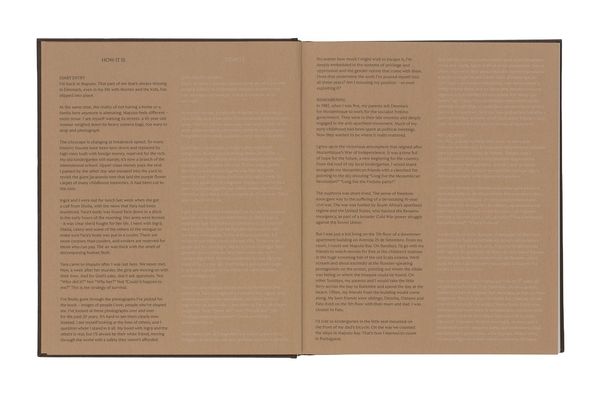
Johnsen is also aware of her own status. She writes in the introduction to the book, ‘I’ve finally gone through the images I’ve picked for the book – images of people I love, people who’ve shaped me. I’ve looked at these photographs over and over for the past 20 years. It’s hard to see them clearly now. Instead, I see myself looking at the lives of others. And I question where I stand in it all. My bond with Ingra and the others is real, but I’ll always be their white friend, moving through the world with a safety they weren’t afforded.
No matter how much I might wish to escape it, I’m deeply embedded in the systems of privilege and oppression and the gender norms that come with them. Does that undermine the work I’ve poured myself into all these years? Am I misusing my position – or even exploiting it?’
The relationship she had with the people she photographed is undoubtedly strong, and the book was made with consultations of the people in the book. This is not a fly-in project, and there is a relationship between Johnsen and the people she photographed that goes well beyond the photographic. It’s a relationship, one feels that has warmth, wit, generosity, love, and sorrow in the mix.
The book ends with another text titled ‘To be seen is to be remembered’ by Eliana N’Zualo:
‘Mozambique’s recent history has been made up of dichotomies typical of the colonial framework; the sacred vs. the profane, white vs’ black, god vs. devil, master vs. slave, us vs. the others, man vs. woman.
But what happens when we do not fit into some of the rigid dichotomies framing our society?
We’re now naming ourselves: we’re Manas.
We will not be erased from history. We refuse to let these stories die with us…. To be seen in an environment that is so hostile to my existence is deeply transformative; the visibility of my full self with all its contradictions, joys, struggles, without the need to conform or erase any part of who I am.’
--------------
Maputo Diary by Ditte Haarløv Johnsen is published by Diskobay
Clothbound debossed hardcover
232 pages
22 × 26,50 cm
Edit & sequence by Stinus Duch and Ditte Haarløv Johnsen
Introduction and diary notes by Ditte Haarløv Johnsen
Text by Eliana N’Zualo
Language: English and Portuguese
Edition of 1100
Printed by Narayana Press
ISBN 978-87-975274-5-0
Published 27 November 2025
--------------
All images © Ditte Haarløv Johnsen
--------------
Ditte Haarløv Johnsen (b. 1977) is a Danish documentary photographer and filmmaker who grew up in Mozambique, where her parents settled after the country gained independence from Portugal. As a teenager, she moved to Denmark with her father but continued to photograph during her travels back to Maputo, where her mother and youngest sister remained. She has studied at the National Film School of Denmark, Ryerson University in Canada, and Fatamorgana – The Danish School of Art Photography. Her award-winning documentary films have been shown at numerous international festivals, and the series Maputo Diary has been exhibited in various stages in Europe and Mozambique.
Colin Pantall is a photographer, writer and lecturer based in Bath, England. His next online courses begin in September, 2026. More information here. Follow him on Instagram.