Photobook Review: Goalkeepers – From The Fields Of Europe by Hans van der Meer

-
Published10 Jun 2026
-
Author
In Goalkeepers, Hans van der Meer continues his search for the soul of football in the lower reaches of the European fields; a soul found in the location of the pitch, the struggle against the elements, and the ultimate absurdity of the beautiful game.
The FIFA World Cup is about to start in Mexico, Canada, and the United States. Before it’s even started, it’s a bloated monstrosity of a thing tainted by price-gouging ticket and transport prices, politicised by ongoing conflicts and wars, the spectacle ruined by extended half-time schedules, the kind of event you’re gagging to see play to empty stadiums just to see the humiliation poured on the heads of the organisation’s ridiculous leaders.
So it’s pretty much the same as every other World Cup that’s taken place since the Italians kicked their way to the trophy in Mussolini’s 1934 edition, probably the most blatantly corrupt event in the history of football.
Football has always been used as a tool of politics. When General Videla’s Argentina won the tournament in 1978, the political prisoners held in the notorious ESMA torture centre could hear the cheers of the crowd. Some were forced to watch the final on TV, some were taken in breaks from their torture sessions to the street celebrations before being murdered, their bodies dropped from a helicopter into the Atlantic Ocean. The primary protests against the tournament came from the black hoops that the stadium groundsmen painted around the base of the goalposts in memory of the tens of thousands of people murdered in Argentina’s dirty war.
But never mind that; football is still the beautiful game, the only question is whether we can shut out the noise of money-grubbing owners, sports washing petro-states, fascist-adjacent club support, sponsors who deal in addiction and despair, or the never-quite acknowledged background of misogyny and domestic violence that accompanies the sport (when England lose a World Cup game, incidents of domestic violence increase by 38% and by 26% when they win).
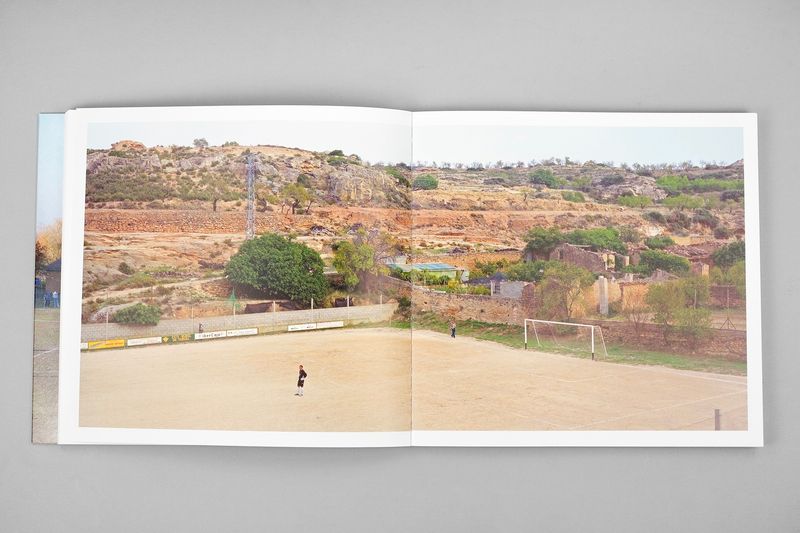
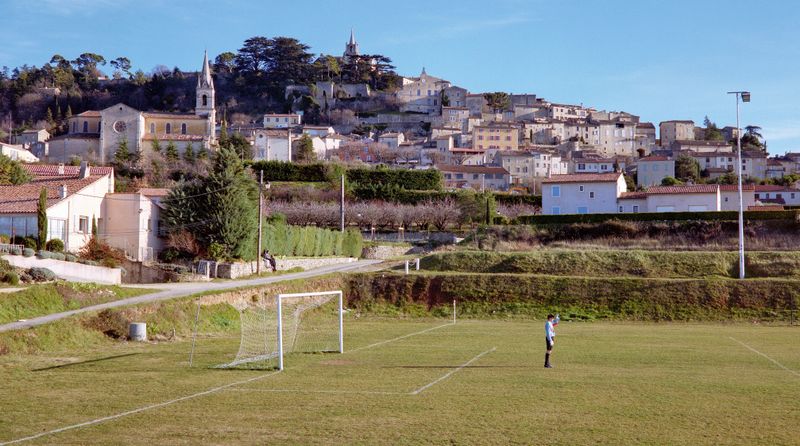
And if we can’t shut that out, where is the soul of the game? Perhaps it’s in the smaller leagues, in the places where people struggle to carve out a pitch against the crush of the mountains, the sea, or the crush of urban development.
That’s where Hans van der Meer comes in. Since 1995, he has been photographing the fields where non-league teams play. It is wonderful, evocative work where the sense of footballing place takes precedence over the grand narratives of the major leagues.
Van der Meer’s work stands out for its soulfulness and its quiet melancholy. For all its presence on television, in the press, in our daily lives, there is relatively little of football in photography, literature or film drama. The stand-out football scene in cinema is still the one in Ken Loach’s 1969 film Kes, when the cold misery of school sports is expressed perfectly through Brian Glover who plays Mr Sugden the bullying PE teacher, resplendent in his Man United shirt, not a million miles in looks from FIFA supremo Gianni Infantino (the one who gave Trump the FIFA Peace Prize) both in persona and looks.
It’s a scene that shares a lot with van der Meer’s work; the school pitch set against a backdrop of hills, the presence of the cold and the wind, and the texture of the grass and the mud.
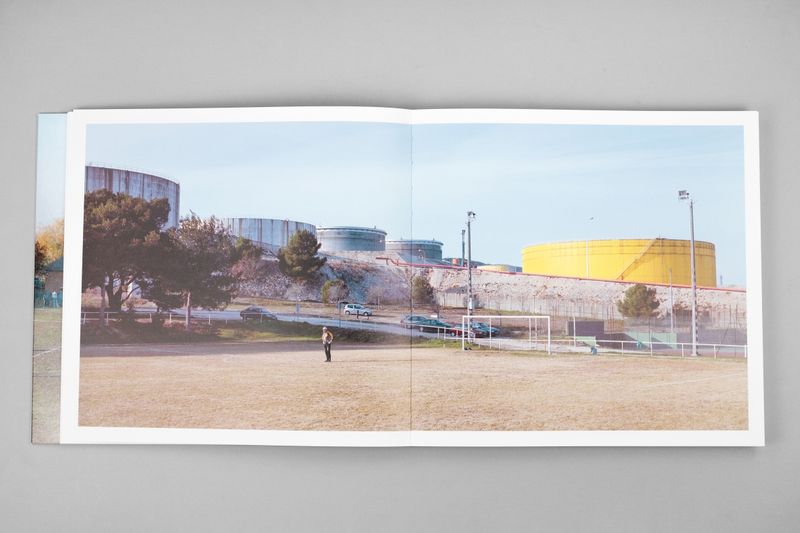
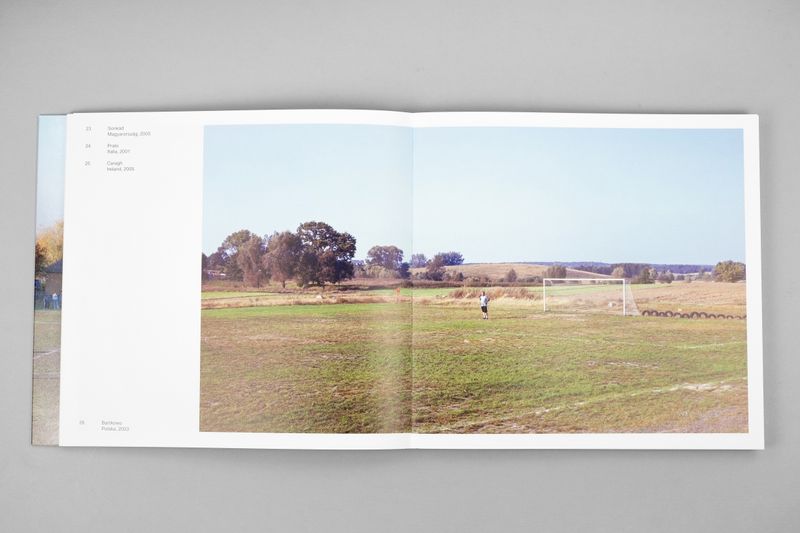
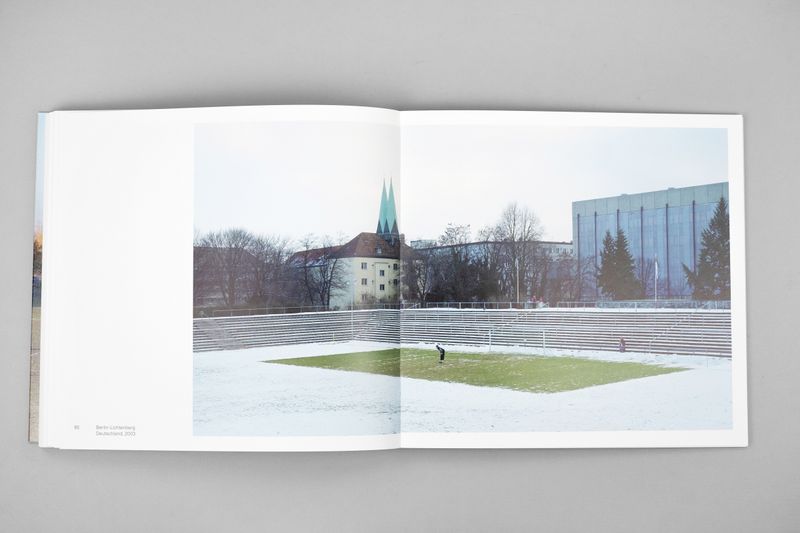
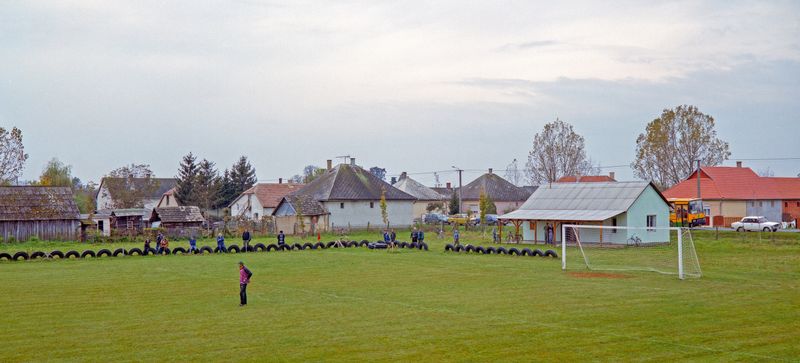
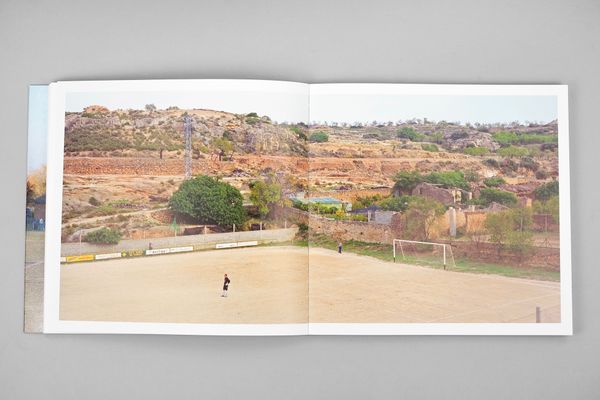
Goalkeepers (From The Fields Of Europe) brings those elements to the fore. It begins with a pitch from Frauenhagen in Germany. The field is threadbare, the small tufts of grass growing in rows worn out on the wings, and they are not very big wings. The 6-yard box has an island of brown where all the grass has been worn away. The pitch is photographed from high, the agricultural land stretching out into a hazy background, tractors parked beyond the stadium fence. The keeper stands near the edge of the 18-yard box, his hands in his tracksuit jacket pockets, not exactly ready to spring into action, a disinterested and almost reluctant keeper.
The pitch at Mytholmroyd in England is set in a pastoral Autumn setting, the trees on the hills in the background colouring in the faint mist. The keeper stands in green shirt and baggy yellow shorts, full nylon as he stands just outside the penalty box, the markings of the pitch barely visible on a field that slopes from left to right.
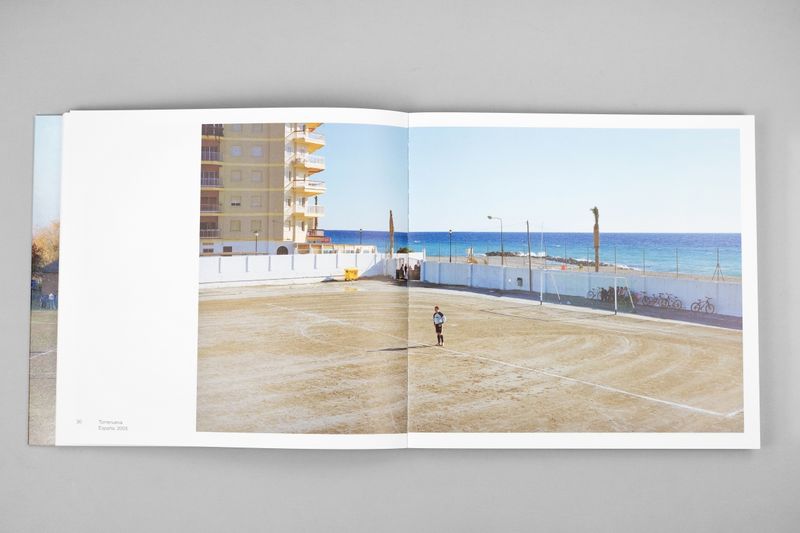
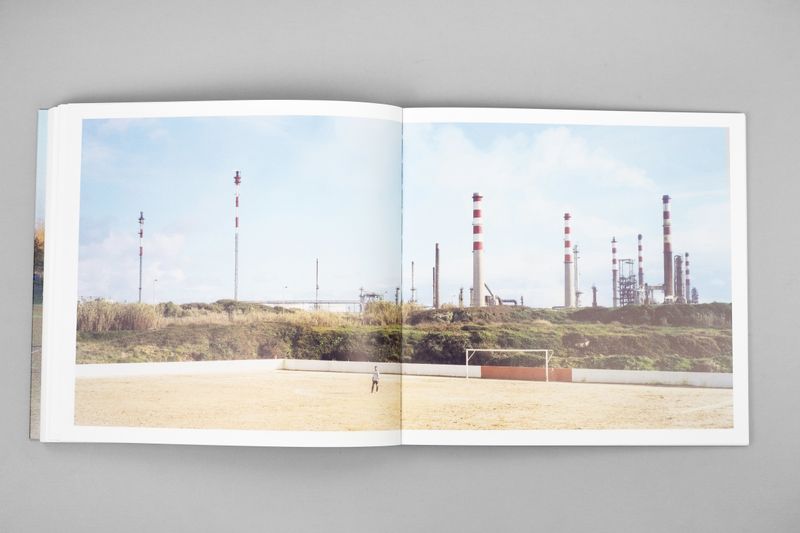
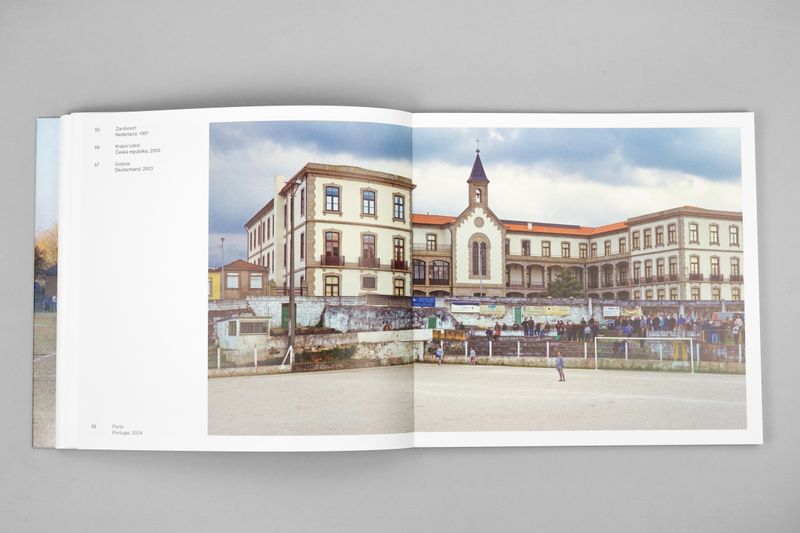
Head to Spain and Portugal and the grass disappears. Instead, there are sand or dirt pitches, set up right against the town, as with the pitches shown in Porto or Barcelona, apartment blocks and bridges towering over the field as the keeper stands waiting for the ball to come his way.
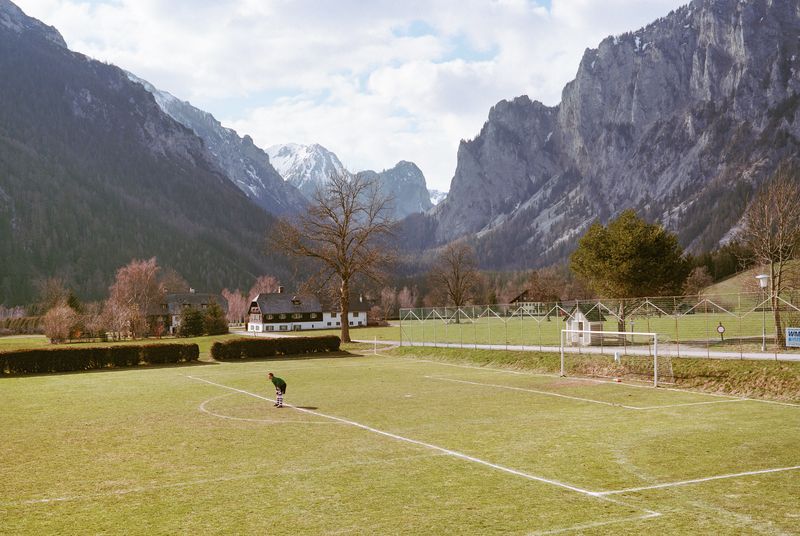
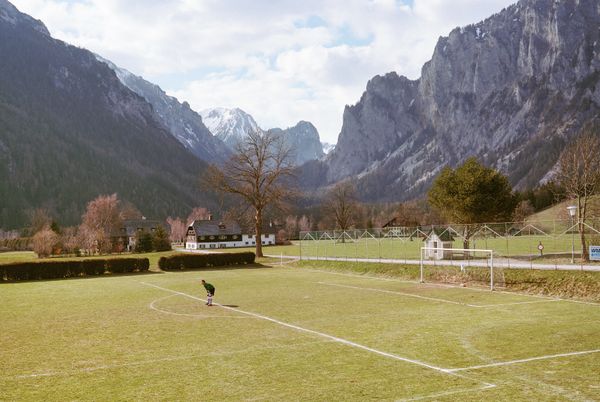
There are pitches by the sea, and pitches by the mountains; the one in Tragöß in Austria is especially picturesque with the snow-capped mountains rising in the background.
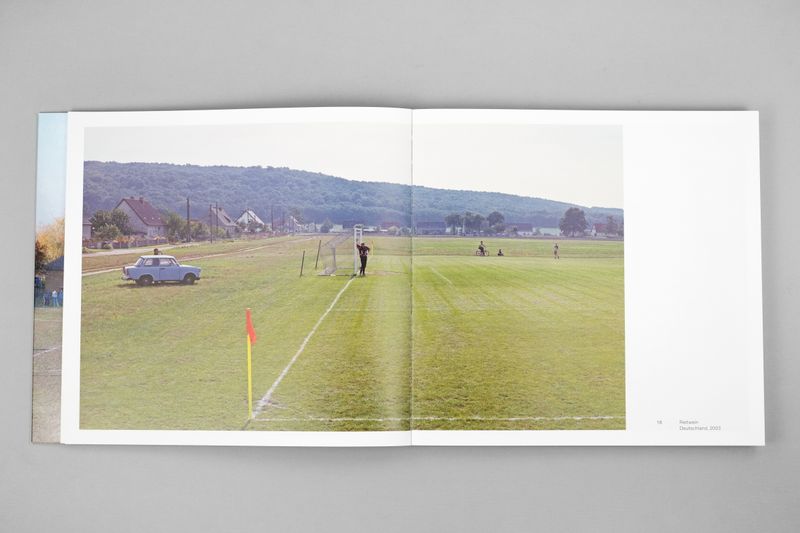
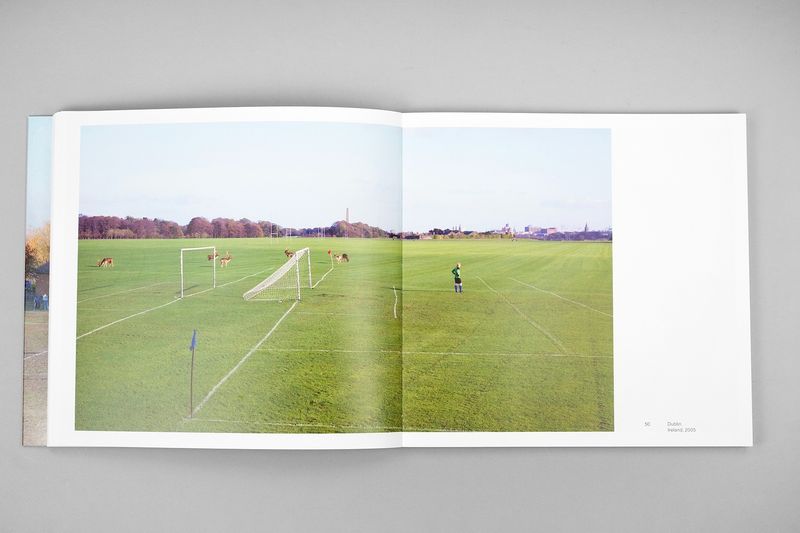
No two pitches are quite the same, and there is a pleasure in finding the small details that resonate. You know that the pitch from Retwein was chosen because there is a sky-blue Trabant car parked by its side (part of a long tradition of cars being parked by pitches), and that the sheep, horses, and deer that are fieldside are equally connected to footballing histories of animals that have invaded the pitch, a tradition that in the age of hermetically sealed stadia, is sadly receding.
Then there’s the goalkeeper himself (these images were made before the expansion of women’s football), the last stand against attack, the outsider of the team, the only player whose mistakes can provoke a nervous breakdown. Not that the stakes are that high here. The final picture shows the goalie sitting by the post, the chalk-strewn mountains no solace for the tedium he has to sit through.
One keeper in Hebden Bridge stands with his hands on his knees as he waits to face a penalty, his mind fixed in concentration on one of the three choices he has to make, the goalkeeper’s fear of the penalty spurring his existential crisis. There are hands on hips, hands on thighs, hands on knees, and hands by side, and there’s the ultimate goalie pose, with his ass on the floor, the ball in the net behind him, his role revealed as a gatekeeper of doom. In the end, a goal will always be scored; in the end, a game will always be lost. The ultimate football song is not World In Motion or Three Lions, it’s Fussball by Lee Scratch Perry with lyrics that tell you to kick the ball and win the game; football is the same as dogs chasing balls, but it’s men, and there are rules, and it’s very important.
Just like the World Cup, the evil tournament that’s about to start. I don’t care about it right now, but I’ll get sucked in because I like dogs chasing balls and men chasing balls even better, and I’ll get excited and hope England win, just in time to be disappointed, because disappointment is what the game is all about, especially where England’s concerned.
--------------
Goalkeepers by Hans van der Meer is published by FW:Books
168 pages
23 x 22 cm
English
Softcover
Swiss binding
81 photographs
Text by Hans van der Meer
French and German edition available at Hartmann Books
ISBN 978-90-836127-7-5
--------------
All images © Hans van der Meer
--------------
Since 1995, photographer Hans van der Meer has documented lower-league football matches, capturing not only the game but also its surroundings. Beginning in the Netherlands with the book Dutch Fields (1998) and later expanding across Europe in European Fields (2006), his work highlights the relationship between sport and place. Photographed from fixed, often elevated viewpoints, the scenes frequently show solitary goalkeepers waiting as play unfolds at the far end of the pitch. These quiet moments form a tribute to the remote fields where amateur players pursue their passion, far from the spotlight of the FIFA World Cup or UEFA Champions League.
Colin Pantall is a photographer, writer, and lecturer based in Bath, England. He has written for a range of publications and organisations across the world, including Magnum Photos, The British Journal of Photography, World Press Photo, Foam, Aperture, and The Far Eastern Economic Review. His photography focuses on domestic environments and family, and includes his books Sofa Portraits, All Quiet on the Home Front, and German Family Album, projects where the conflicting narratives of family, cultural, and political histories overlap with ideas of memory, the environment, and fragile documentary. In 2022, his image, My Parents in Woolley, was acquired for the collection of the Kunstmuseum Den Haag. He teaches on the Falmouth University Photography MA and runs independent online workshops linking contemporary photography to global, historical, and theoretical perspectives. Follow him on Instagram.