MEDIAE 2025/26 Alumni On The Online Transmedia Storytelling Masterclass
-
Published4 May 2026
-
Author
In preparation for the upcoming edition of the program, MEDIAE 2025/2026 participants share their experience on developing a multi-layered narrative.
MEDIAE - Online Masterclass on Transmedia Storytelling is designed to guide photographers and visual artists through creating a transmedia body of work, experimenting with diverse research, production, and dissemination strategies. Running from October 2026 to May 2027, the upcoming edition will be led by the artist, director, and professor Salvatore Vitale.
With enrollment open until 28 May, we touched base with Corey Dziadzio, Chetna Vaidyanathan, Harry Oliver, and Silvia Bertoldo, who are just now concluding the 8-month program.
Follow the evolution of their projects by joining MEDIAE’s Year-End Live Presentation this Thursday, 7 May, at 3pm CEST.
Which medium have you chosen to combine with photography in your transmedia project, and why does it feel like the right complement to your visual language?
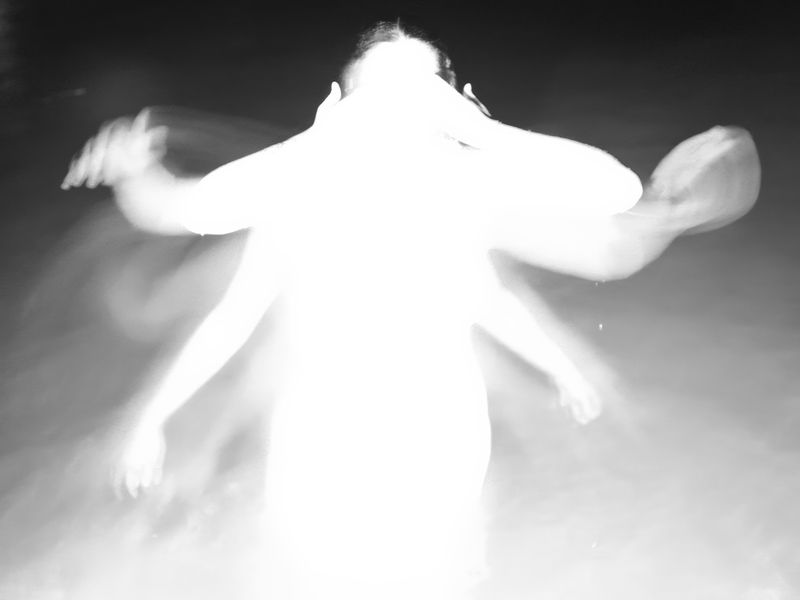
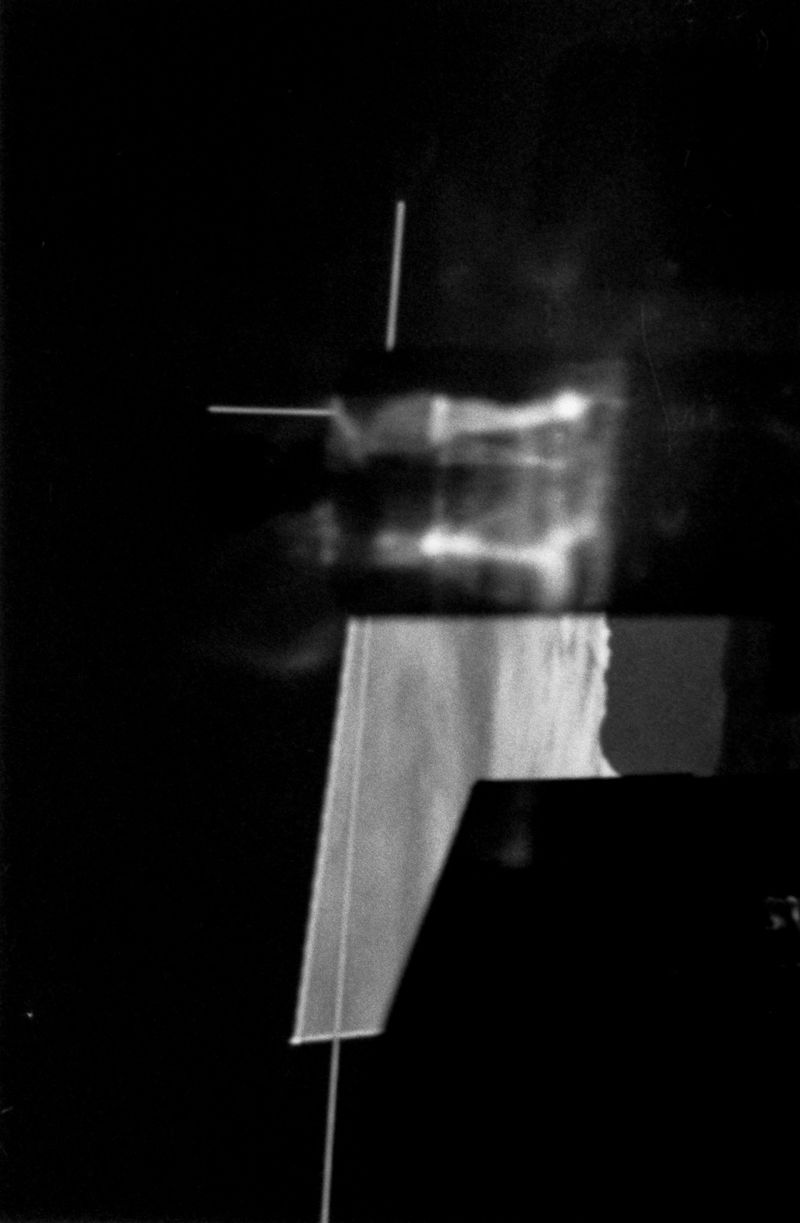
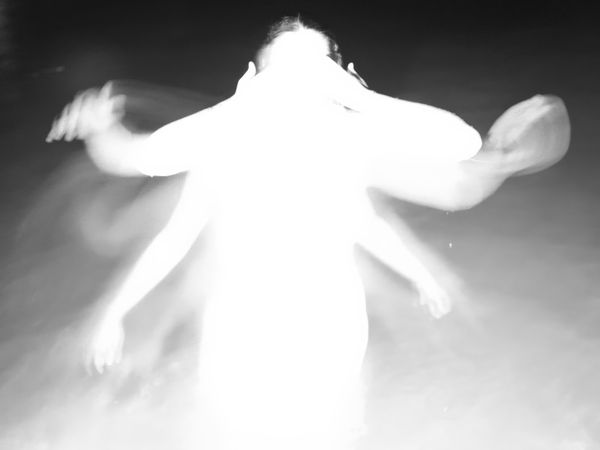
Corey Dziadzio: Photography is the core medium of the How To Burn A Memory series/project, but encountered in forms that push against its traditional presentation: large-format transparency prints, archival Super 8mm footage projected beyond the exhibition's boundaries, and a hand-built film loom that continuously weaves and unweaves celluloid in motion. These choices feel right because the medium already carries the project's logic. How To Burn A Memory is grounded in epigenetics research suggesting that inherited trauma isn't only psychological, it can alter gene expression, embedding experience at a cellular level. Photography works the same way. Light leaves a mark. The mark persists. What it means changes depending on whose body received it. Pressing that medium into unfamiliar forms, threaded through a machine, spilling past walls, makes that transmission physical and experiential rather than illustrative.
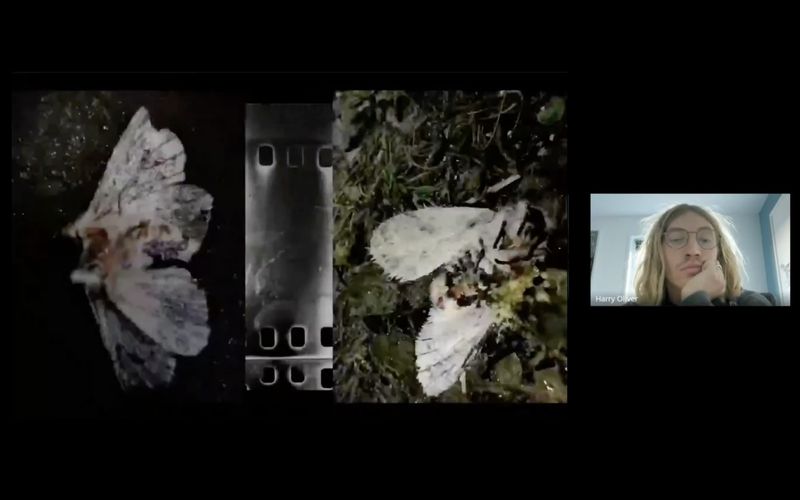
Harry Oliver: A pseudo sci-fi narrative to let the projects, concepts, and themes play out in a more ‘fantastic’ speculative space. This feels like a good compliment because, as mentioned, it gives me lots of space to play with imagined scenarios relevant to the project in the fictional world I am building.
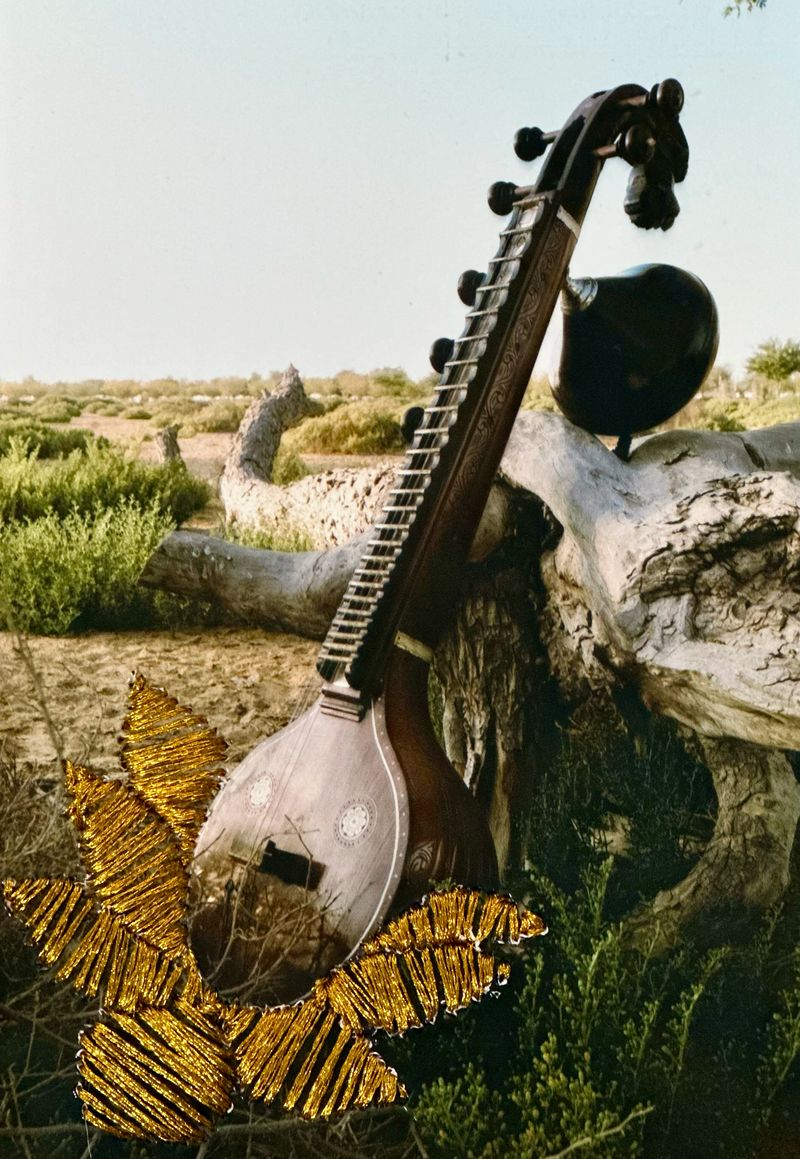
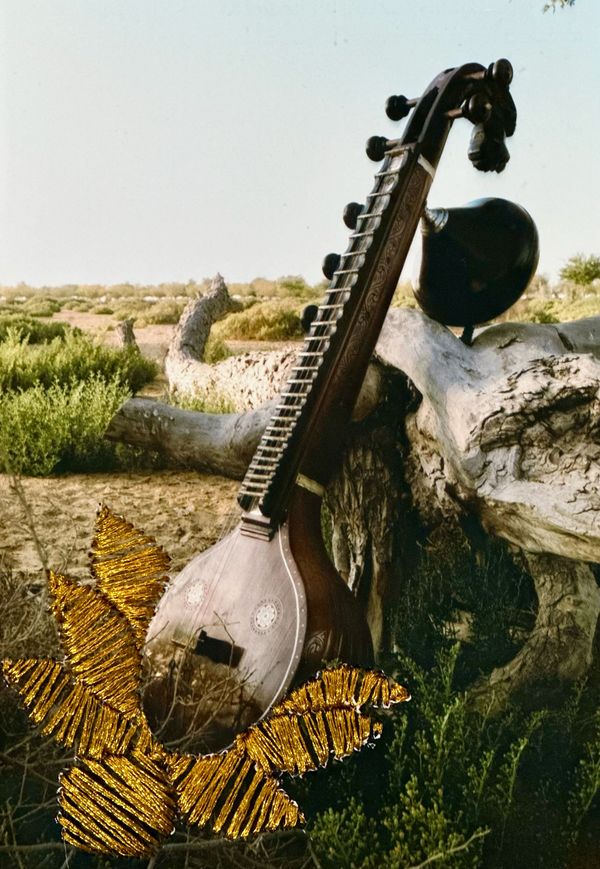
Chetna Vaidyanathan: My goal was to create an immersive, sensory experience that feels both tangible and deeply evocative. Even for people with no prior knowledge or connection to the instrument, I wanted the work to resonate on a subliminal level, not just through music, but through the people and stories surrounding it. The project explores how the Veena continues to persist despite not being widely known. I chose to combine photography with multiple complementary media, including sound, video, written narrative, and interactive elements. These extend the photographs by capturing the resonance of the instrument, the movement of performance, and the layered histories behind it. Pairing photography with these media allows the work to move beyond documentation into a more immersive experience. Sound and video bring the Veena to life, while text and interactivity provide context and invite deeper engagement. Together, they encourage dialogue and allow the audience to actively connect with the instrument, its roots, the musicians, and the artisans.
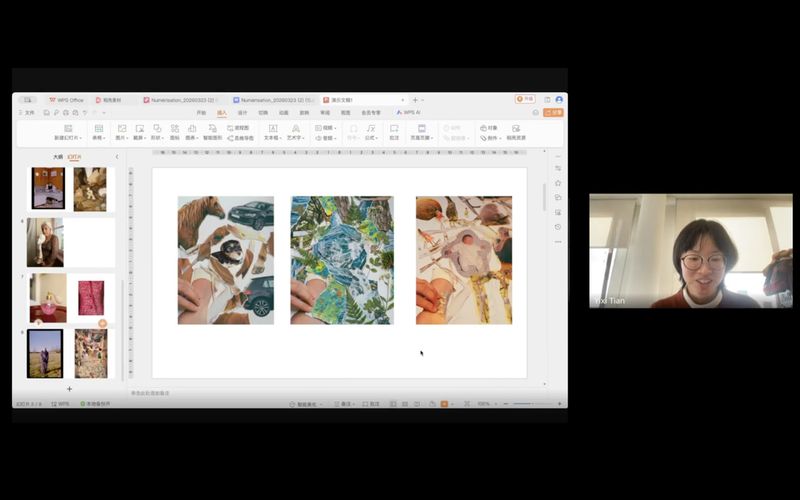
Silvia Bertoldo: I chose to work with installation because, while photography remains my primary medium, I have often felt constrained by its two-dimensionality. I felt a strong need to expand its physical boundaries and explore a more sculptural presence in space. This project also gave me the chance to reclaim a scientific background that I had set aside over the years. I was able to find a common ground for the two sides of my identity: the analytical and the sentimental. Installation feels like the right complement because it allows these two worlds to converge, turning a flat image into a multi-layered, physical experience.
How has the experimental and process-oriented approach encouraged by Salvatore Vitale influenced the development of your project?
Silvia Bertoldo: It really helped me distill a large volume of ideas down to the core of my project. It was incredibly valuable to have a safe space to experiment and even to be told when something wasn't working. In this kind of collaborative environment, even mistakes become useful. I gave myself permission to explore options that, in everyday professional environments, are usually restricted by time, budget, or space constraints.
Harry Oliver: Salvatore's encouragement of my already experimental practice supported me to follow through in this halfway developmental stage of the project – meaning I kept focus when distracted by my last job on the project – which I fear would have idled without this opportunity.
Corey Dziadzio: Salvatore pushed me away from accumulation and toward intention. Early on, I was adding: more components, more layers, more conceptual threads. The course trained me to ask not just "does this work?" but "does this work with everything else?" The film loom, the transparencies, the projector, each had to justify itself in relation to the whole. Salvatore's practice modeled a systems thinking where form and concept are inseparable. That gave me a framework for editing toward coherence rather than addition.
Chetna Vaidyanathan: Salvatore’s experimental and process-oriented approach has had a strong influence on the development of my project. He presents his own work as a holistic practice, often using it as a reference to guide us in thinking more broadly about our projects. Through our sessions, he has encouraged us to consider not only the overall narrative but also how each medium can independently communicate aspects of the story. In a transmedia project, each medium functions as a piece of a larger puzzle and it becomes our responsibility as artists to assemble these elements in a meaningful way to convey the stories. This perspective has allowed me to step back from my project from time to time and critically assess it, paying closer attention to how the different mediums interact and support one another. As a result, I have become more intentional about how the work is structured and how it is ultimately presented to the audience.
What was the most challenging or surprising aspect of shifting from a traditional photographic mindset to a transmedia storytelling approach?
Chetna Vaidyanathan: In the early stages of my project, I really enjoyed the research process and experimenting across multiple mediums to bring the work to life. It was during the production phase, however, that I realized how much my role had expanded beyond that of a traditional photographer. I found myself juggling multiple responsibilities, thinking not only about image-making, but also about narrative structure, sequencing, and how different mediums would interact with one another. The most challenging part of this shift was moving away from a singular, image-focused mindset to a more layered approach where meaning is distributed across various media.
Corey Dziadzio: Learning to see the work as a stranger would. I'm close enough to this material that I stopped being able to distinguish between what was actually in the work and what existed only in my head. A transmedia installation depends on how its elements interact, and that interaction has to be legible to someone walking in cold. Genuinely trying to experience the space as a first-time visitor became one of the most important creative acts of the process.
Silvia Bertoldo: The biggest challenge was maintaining consistency across materials, practicing reduction and building a coherent dialogue between different elements. Building a narrative with a single medium is definitely simpler and more linear. When you shift to a transmedia approach, the possibilities multiply, which makes it much harder, but also more rewarding, to keep everything cohesive and tied together.
Harry Oliver: My project reflects on the real suffering of both people and the environment. When combining it with the sci-fi narrative idea, I was worried about taking away from the reality/meaning of the project. However, Salvatore put me at ease and, with his approach of multiple standalone elements within the project, showed that the sci-fi narrative adds an extra layer of accessibility/means of engaging with the project.
Was there a specific exercise, discussion, or moment that helped you overcome a creative block or rethink your storytelling strategy?
Corey Dziadzio: There was a session where we were asked to describe what the viewer's body does in the space, not what they see or read, but what they physically do. That reframe pulled me out of my own perspective in a way that conceptual critique hadn't. I'd been focused on whether the ideas were correctly expressed. I hadn't fully asked whether the experience was coherent for someone else. It led directly to stripping back certain elements and sharpening others.
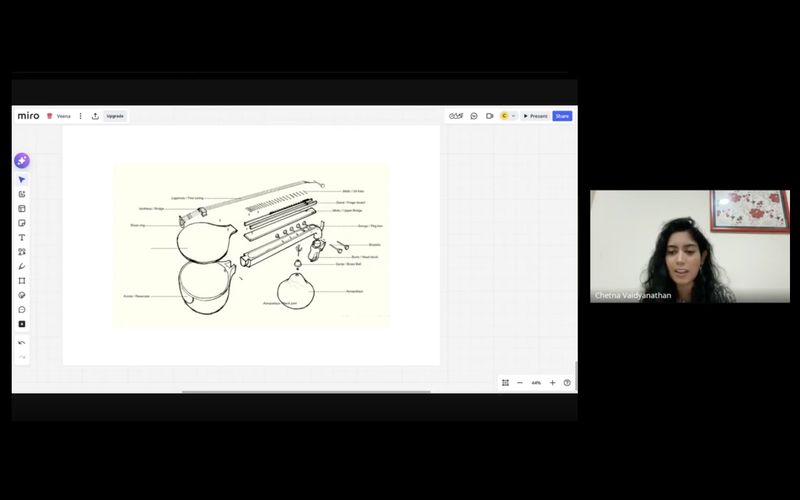
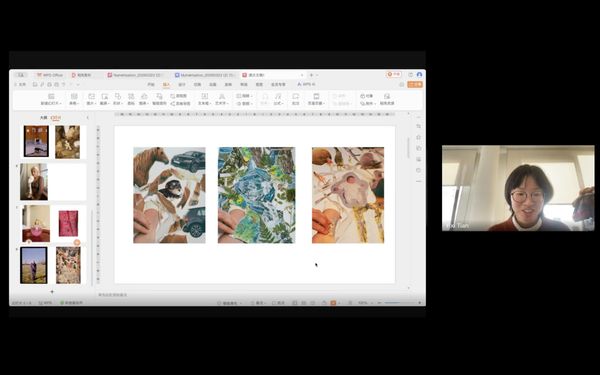
Chetna Vaidyanathan: I think our first task was one of the most interesting and impactful ones. Salvatore asked us to create a media map, exploring possible storylines, characters, and media formats that could work for each concept. I had never used Miro before, so this exercise felt very hands-on and engaging. I ended up collecting and placing a wide range of reference images, videos, and music onto my board, gradually beginning to map out the ideas I was most drawn to. What made this exercise particularly useful was that it shifted my thinking from something internal and abstract to something visible and structured. Instead of holding the idea in my mind, I was starting to see how it could take shape spatially, with connections forming between different references and media choices. This made it easier to identify which directions felt stronger and which ones were less developed.
Silvia Bertoldo: A key moment was a specific exercise where we were asked to answer a series of questions designed to shape our projects from a transmedia perspective. It forced me to prioritize and make sacrifices for the sake of the project's ecology, meaning I had to decide what was truly essential and what was not. This process of refinement was eye-opening. It wasn't just about answering questions, but about seeing the project as a living system. The visual ideas that emerged from these reflections and the way they evolved through discussions with Salvatore and the group were exactly what I needed to break through my creative block and find a more cohesive storytelling strategy.
Harry Oliver: When discussing exhibition plans, Salvatore suggested that the map of the waste I had initially planned as massive could be miniature, akin to Marwadi traditional painting styles. He observed my playing with scale in the documentary piece I was working on, as well as how relevant it is to the project overall. I will miss his thoughts and opinions on the direction of the development of work.
Which Studio Visit particularly resonated with you, and why?
Silvia Bertoldo: The visit with Annegien van Doorn resonated with me the most. I loved her object-based research, conceptual photography, and the sculptural display of her images. Her work has a playfulness and subtle irony to it, it’s minimal yet highly impactful, blending different media while remaining perfectly coherent. It’s an artistic sensitivity that I find fascinating and very close to my sensibility and suggestions. Seeing this approach successfully applied by a professional was deeply inspiring and validating.
Harry Oliver: There was a Dutch artist who works a lot with waste, which made me think differently about my hoard of an archive of images of waste strewn around the world. Also, the American bookmaker we had early on was inspirational, as much as anything, for his story and determination to get things made. Honestly, all of them were really insightful. I just wish I hadn’t been working so much during the course, and I would have probably taken a little more in.
Corey Dziadzio: Thomas Struth's. His work spans family portraits, museum interiors, and research facilities, and what connects all of it is patient attention to the conditions under which things are seen. What I took from it was a lesson in restraint. Struth doesn't over-explain. The images create a field of attention and trust the viewer to inhabit it. His example was a reminder that clarity comes from removing what stands between the viewer and the essential experience, not from adding more.
Chetna Vaidyanathan: I particularly enjoyed Brian Paul Lamotte’s Studio Visit. During the session, Brian walked us through some of his publications and discussed the design decisions behind them. In Brian’s talk, I was particularly drawn to how he not only discussed the graphic elements surrounding photobooks, but also the intentional use of typefaces, color, and layout in relation to each publication’s concept. His collaboration with Nick Sethi on Khichdi was especially striking. I hadn’t encountered a publication like it before and I find myself actively looking for my own copy of the book. The vivid saturation and rich imagery work together in a way that I hope to translate in my own practice. Brian’s experience was clearly reflected in his lecture, as he spoke so eloquently about the artists he has worked with and how he adopts a different creative mindset depending on the publication he is working on.
How does interacting with participants from different cultural and professional backgrounds influence your creative process?
Corey Dziadzio: I came in from data consulting while most of my cohort came from photographic or fine art traditions. But the more important difference wasn't professional, it was cultural. Participants came from all over the world, and that meant the work was being encountered through genuinely different frameworks of memory, family, and inheritance. Critiques from those perspectives were some of the most valuable I received, because they couldn't be anticipated or pre-empted. I couldn't assume shared references or a common emotional vocabulary. Each response revealed something different about what the work was actually doing versus what I intended it to do.
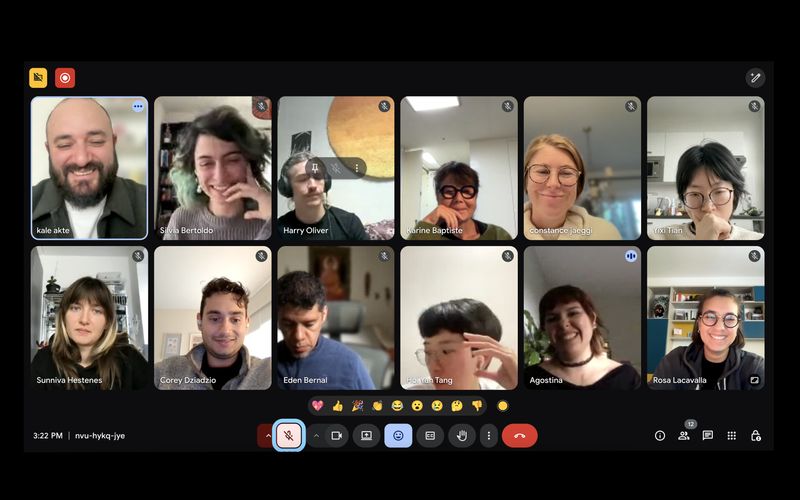
Chetna Vaidyanathan: Throughout the course, interacting with my fellow coursemates had a strong influence on my creative process. I especially looked forward to the group presentation sessions, where we not only shared our own project developments but also engaged with the diverse approaches of others. Salvatore and Rosa encouraged us to ask questions and offer feedback, which created a collaborative and open environment. These exchanges pushed me to think more critically about my work, consider new perspectives, and refine my ideas in ways I might not have otherwise. Even though the course wasn’t conducted face-to-face like a traditional classroom, the experience still felt dynamic and enriching. Being part of a group with varied backgrounds led to a wide range of distinct and thoughtful projects, which in turn expanded how I approached my own creative decisions.
Silvia Bertoldo: Our imagination is essentially built on references. Whenever our path intersects with others, we gain new elements to expand our vision. Working alongside people from diverse cultural and professional backgrounds is an invaluable opportunity for growth. Connecting with different stories, perspectives, and visual languages helps you understand your own practice better, discover alternative solutions, and ultimately, surprise yourself.
Harry Oliver: Seeing how different artists function helps to streamline your own.
What skills or perspectives gained during the masterclass do you think will have the most lasting impact on your future practice?
Chetna Vaidyanathan: Having seen Salvatore share his own practice, as well as the work presented by other artists during the Studio Visits, I’ve come to realize that projects can often take years to develop before they reach a stage where they are ready to be exhibited. This has reinforced the idea that art requires time, patience, and careful consideration. In my own practice, I have often felt frustrated when things do not meet my expectations of perfection, and I have also found myself getting stuck in the process. Among the most valuable skills I have gained during this masterclass are patience in practice and a more holistic way of thinking. It is often more effective to begin by broadening an idea and then gradually refining it, especially within transmedia storytelling. Overall, this has been an enriching experience that I will continue to draw from and develop in my future artistic practice.
Silvia Bertoldo: Definitely the project management aspect: learning how to organize an expressive need, which can often be chaotic, into a structured and effective form. This helps both internally, to organize my own thoughts, and externally, to present my chosen themes and media clearly to others. The masterclass provided us with a wealth of practical examples, from the initial planning stages to managing commissions. It gave me a clear, well-organized workflow that is highly adaptable to any future job or project.
Harry Oliver: The idea that in a larger body of work you can have individual standalone projects as well as the whole works.
Corey Dziadzio: Editing for coherence rather than completeness. My instinct was always to include everything that felt meaningful. But every element in a room creates an expectation and a relationship with everything else, and the more you add, the harder it becomes for any single thing to land.
What advice would you give to future participants to make the most of their experience in the program?
Silvia Bertoldo: Come in with a strong idea, know where your roots lie, and allow yourself to imagine what currently feels unreachable.
Chetna Vaidyanathan: Make the most of every group and one-to-one session, as these are valuable opportunities to present your work consistently. Repeatedly sharing your ideas not only pushes you to actively develop your project but also helps you gain clarity on the direction and approach you want to take. Engaging in discussions with fellow participants and with Salvatore can further strengthen your critical thinking, offering new perspectives and constructive feedback. These interactions are especially helpful when you feel stuck, as they can help you move past creative blocks and regain momentum.
Harry Oliver: Try to make a community with your peers. Time is short and it will be over before you know it, but connections like those can last for life, though.
Corey Dziadzio: Don't explain the work before you share it. Let people encounter it cold; that encounter will tell you more than any critique that begins with your own framing. The most useful feedback I received came from people who were confused.
--------------
MEDIAE - Online Masterclass on Transmedia Storytelling is part of PhMuseum's educational program, comprising five different masterclasses that will all share a single intake period running until 28 May, with classes beginning in October 2026 and ending in May 2027. Alternating collective tutoring, seminars, individual sessions, and studio visits, each masterclass exists in a community-driven environment, while providing concrete opportunities to exhibit, publish and distribute your work.
You can take part in one or more programs. Check them out phmuseum.com/m26
--------------
Participation fee
Before 28 May – If you apply by this date, you can join the program by paying the Regular Fee of €2,200. Since applications will be reviewed on a continuous basis, early submissions receive priority for seat allocation.
If you are offered a place, PhMuseum is happy to write you a supporting letter when you try to secure any external funding opportunities. In previous editions of our masterclasses program, the candidates' fees were covered thanks to the generous contribution of the IWMF Howard G. Buffett Fund for Women Journalists, Mondriaan Fonds, Arts Council Malta, and other programs. Read our guide to 2026 Education Funding for Visual Artists to discover opportunities.