Last Year's Recipients On Receiving The PhMuseum 2025 Photography Grant
-
Published20 Jan 2026
-
Author
Amy Kim, Billy H.C. Kwok and Zekun Wang discuss how grants and open calls shape their projects, opening new opportunities while becoming part of the creative process. They reflect on growth, risk-taking and offer advice to future applicants.
As submissions are open for the PhMuseum 2026 Photography Grant, we reconnected with last year's prize recipients to reflect on their experience and explore how their work has evolved since.
What motivated you to apply for the PhMuseum Photography Grant, and what makes this a worthwhile opportunity for you?
Amy: I first applied because I felt like I had a good project. I was also motivated to apply by looking at past winners of the grant and their work, and career growth. I appreciate the curatorial approach of PhMuseum. Rather than being tied to the traditional well-made image or "documentary" approach of photography, the curators at PhMuseum are interested in artists and works that explore both the documentative and ambiguous properties of the medium. Finally, I appreciated the attention that is put into the jury selection. The jurors are consistently internationally diverse, high-caliber, and fluent in contemporary dialogue.
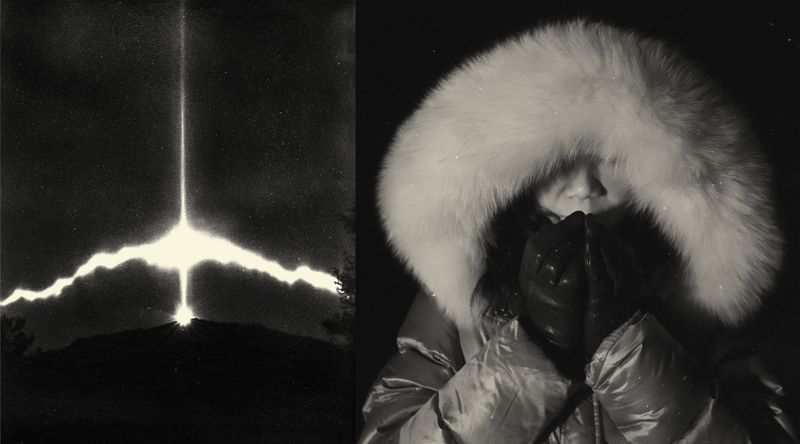
Zekun: Applying for the PhMuseum Photography Grant is not only a natural extension of my artistic creation but also a crucial opportunity for me to engage in a dialogue with global photography. As an international platform dedicated to promoting contemporary photography, PhMuseum has been committed to discovering projects that are both thought-provoking and socially concerned. This value aligns perfectly with my creative direction - I hope my works can go beyond mere visuals and trigger viewers' deep reflection on Shimenkan. Therefore, applying for this funding is an important step for me to complete the project and integrate it into a broader artistic dialogue. I am looking forward to leveraging the support of PhMuseum to transform this visual exploration into a work with lasting influence.
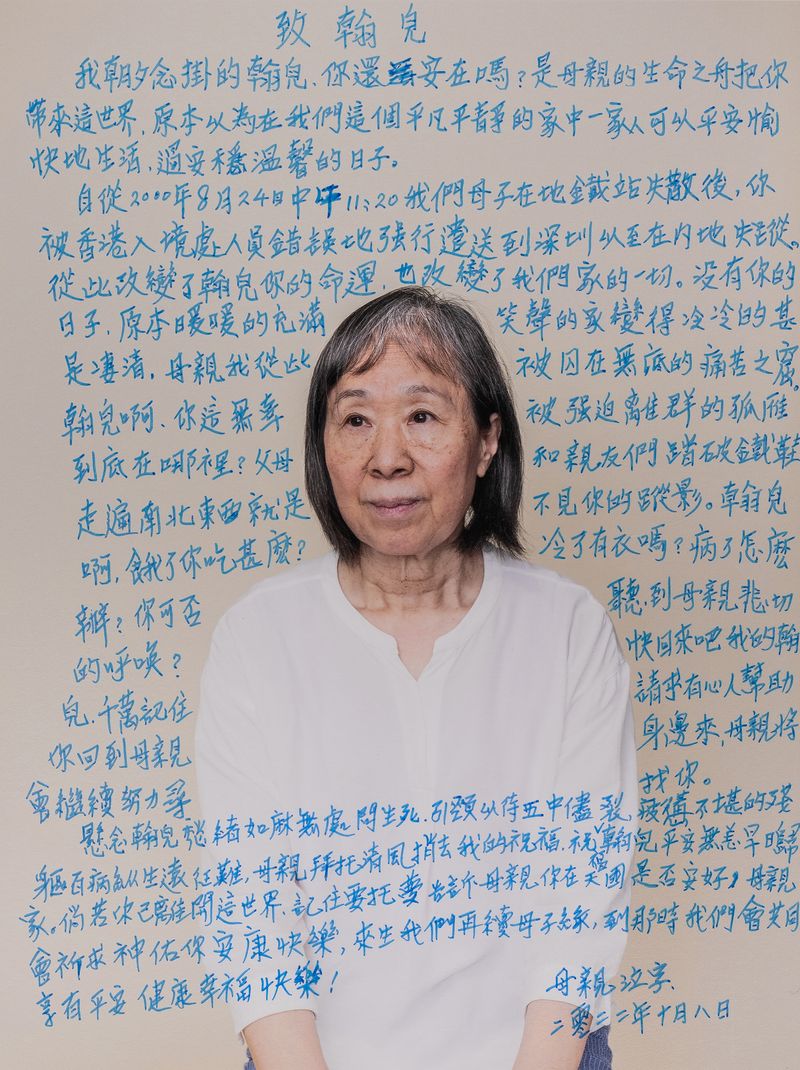
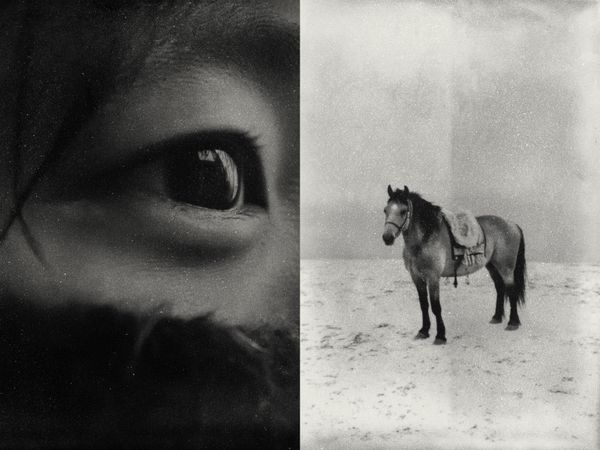
Billy: For me, this grant is a valuable opportunity and support to continue the project and also for its exposure. More importantly, it confirms that the work has its own value and trustworthiness, which gives me the confidence to continue creating.
How do you personally approach the world of grants and open calls, and is there any specific way you work through your applications?
Zekun: My earliest exposure to grants and open calls was mainly through Instagram accounts of art institutions, magazines, and curators that I followed. These accounts often posted open opportunities from around the world. When it comes to applying, I tailor the image selection and editing logic of my work differently for each call. This differs from preparing for a physical exhibition—exhibitions emphasize spatial awareness and on-site experience, whereas presenting work for an application is more like preparing a "visual narrative." I think about how to clearly and rhythmically convey the core of the project through a limited number of images on a screen. Over time, I’ve come to realize that the application process itself is a form of creation—one that requires you to reimagine how your work "breathes" in different contexts.
Amy: There are many types of grants and open calls. I pay close attention to the calls that fit my art practice. I look at the previous winners and note the type and strength of the works. The jury is also an important consideration. Some jurors will have a focus in my field or topic, and some juries will stand out for their achievements or affiliations. I started to keep a calendar and tracker in Google Sheets for submission deadlines. Checking this calendar daily has helped from missing call deadlines.
Billy: For me, applying for grants was never just about the funding. Before receiving any support, I saw the application process as a chance to step back and rethink the project—how it should be structured, edited, and eventually presented. That process helped me clarify my own thinking first, and only then could the project communicate its importance more clearly to others.
An international grant often acts as a catalyst for an artist's career. Looking back over the past year, what has been the most significant or unexpected door that has opened for you?
Billy: The grants gave the project wider exposure, but what mattered more were the people who genuinely connected with the work. Their responses led to new exhibition invitations and opportunities for further development, which were both unexpected and encouraging.
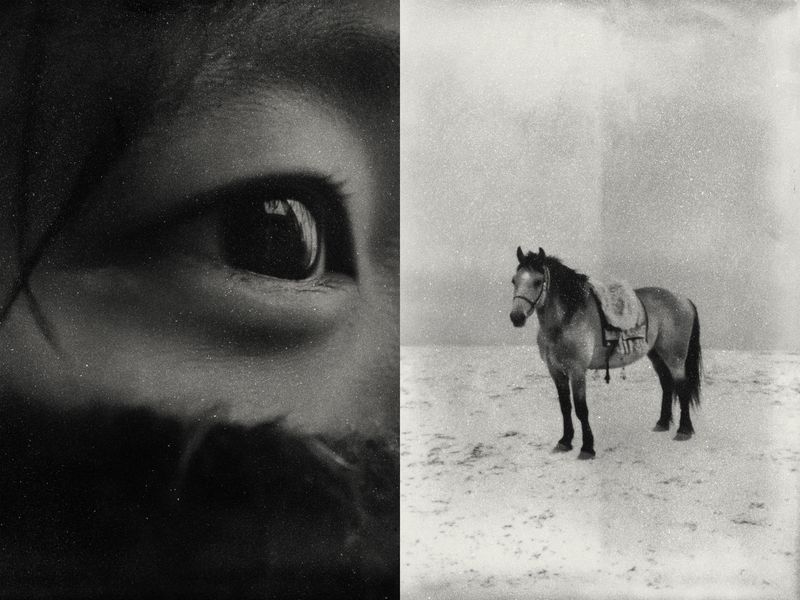
Zekun: The PhMuseum 2025 Photography Grant was my first systematic attempt at submitting work to an international open call. It marked one of the most significant efforts I made over the past year. Winning the New Generation Prize for Before Falling Into the Deep Valley was a delightful surprise. This recognition holds milestone significance in my journey of pursuing visual storytelling—it acts as a catalyst, propelling me forward on this path.
Amy: I am looking forward to opening this door in 2026, either as solo or group shows.
Recognition can sometimes bring in a new kind of pressure. How have you navigated the 'What’s next?' question while trying to stay true to your own practice’s pace?
Zekun: Recognition does bring a subtle kind of pressure—especially when others start anticipating your ‘next work.’ For me, maintaining authenticity in my pace is essentially practicing a form of immersive focus: returning to the core of the project itself, rather than being pushed forward by external voices. Take Before Falling Into the Deep Valley as an example. I’ve never treated it as a series that must be concluded quickly. Instead, I want it to remain alive, growing. Each exhibition invitation or open call becomes an opportunity for the project to evolve. With every presentation, I adjust and respond—rearranging images, sequences, or even display formats—tailoring them to the space, medium, or context. It’s like writing different chapters for the same story, or capturing its facets through alternate lenses. In this way, pressure transforms into nourishment. Change becomes inherent to the creative process. There’s no need to force a pivot for the sake of ‘innovation’; instead, the project grows its own organic trajectory. Slow progress, in the end, feels faster—and truer.
Billy: Before receiving the grant, I already knew what I wanted to pursue next. In that sense, the funding didn’t change my direction—it added an extra layer. What I found most valuable were the unpredictable outcomes that came with it, rather than any fixed expectation of progress.
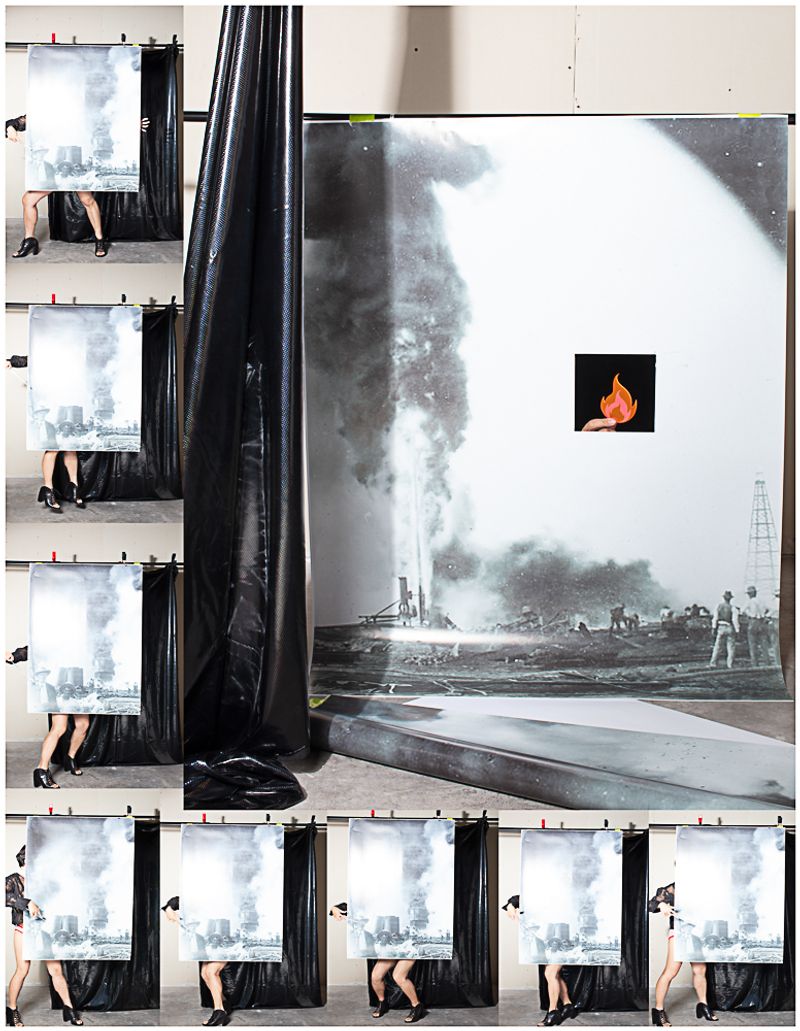
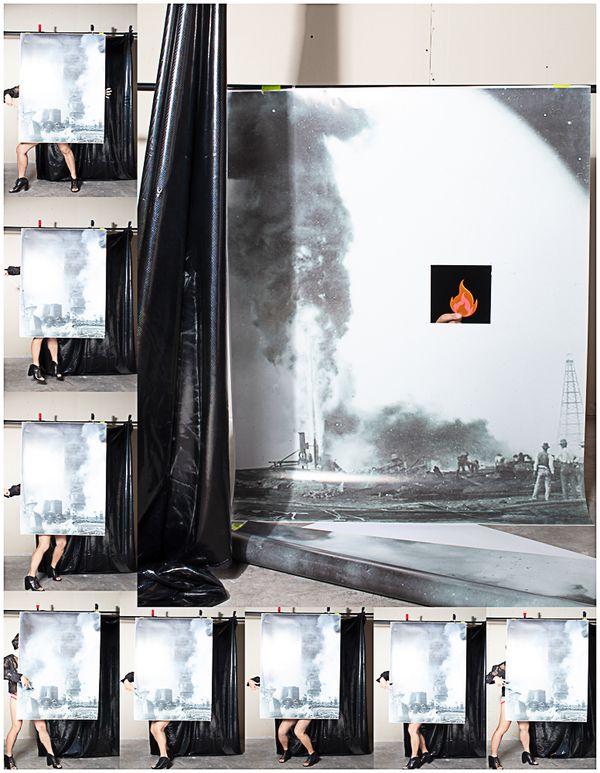
Amy: Because of a job offer, I had to move from Texas to Michigan, which is the other end of the United States. Being remote from my research and photography site posed a lot of challenges regarding access and expenses. I was forced to think creatively. What helped me was taking an online collage workshop with artist Nathalie Kirk at an organization called Santa Fe Workshops. Collage is a genre that is, of course, uniquely photographic. I had little experience with collage, and I wanted to try it. Along with this class, I have also started to integrate beading and appliqué into my work. Working with a new form, daily, has helped me with the question of what is next. These forms open up new ways to articulate my artistic concepts, which is the rise of American nationalism foregrounded by the colonial history of oil extraction.
Reflecting on your application, how has the project evolved? Did the grant allow you to take a creative risk – stylistically or conceptually – that you might have avoided otherwise?
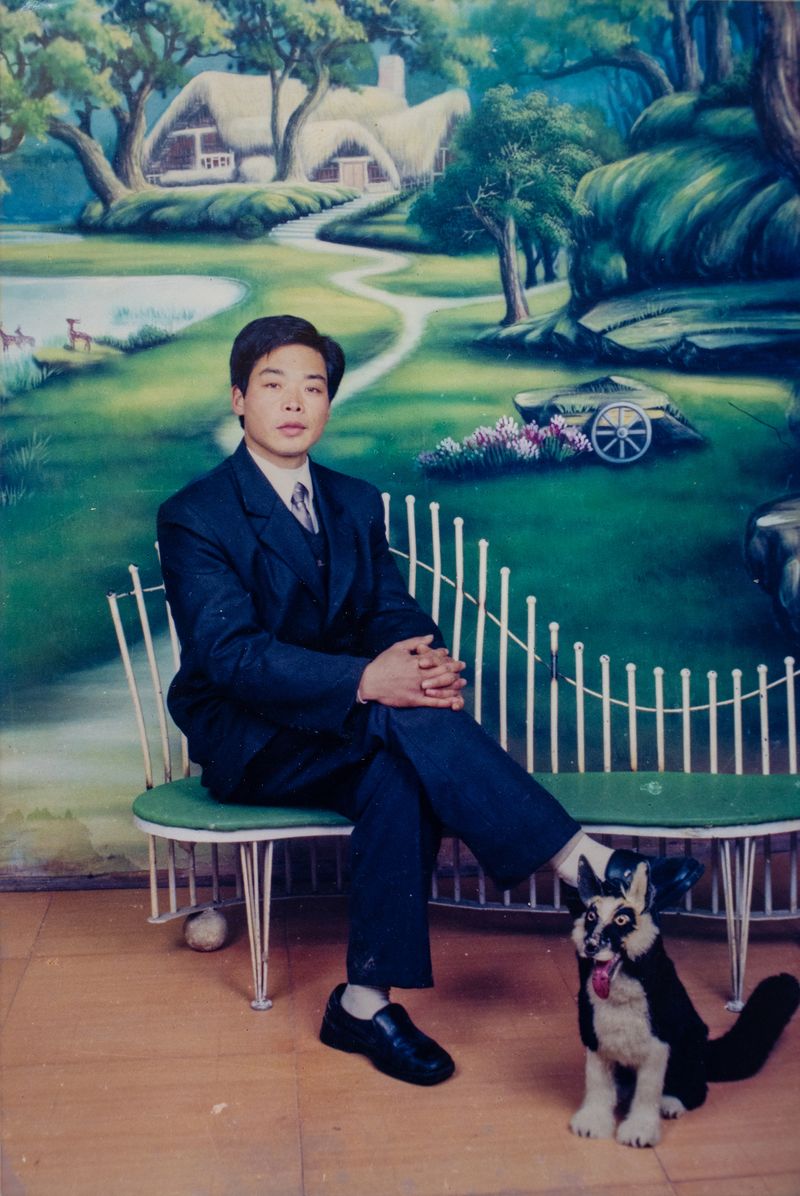
Zekun: Looking back at the entire project, its evolution stems from an inherent tension: the story of Samuel Pollard is profoundly remembered in Shimenkan, yet remains enveloped in a delicate silence due to historical complexities. My initial hesitation sprang precisely from this weight—a desire to honor this legacy, coupled with a visceral fear of its erosion beneath the tides of time. Thus, the project was never conceived as mere documentation. As articulated in the proposal, it became an "experimental ground"—a space to re-examine and reanimate its significance for the present. In this way, the work mirrors Pollard's own pilgrimage to Shimenkan: a pursuit of idealism, retraced.
Billy: Definitely. Without the funding, the project would have moved forward much more slowly. I think taking risks is an essential part of being a creator, but the support allowed me to be more adventurous—to think more freely about both form and concept.
Amy: Yes. The grant juror Sheida Soleimani's statement, gave me the affirmation that I was “on to something.” Based on the PhMuseum Photography Grant, I have applied for other grants, including a $5,000 internal grant at my academic institution. I have started a new, related body of work, Viscous Empire. It expands the scope of Wolfcamp Catalogue, which was awarded by PhMuseum.
Grant recipients use their funding in vastly different ways, from financing a specific trip to simply 'buying back' their time to think. Where does your series stand today? Are you still working on it, or has it culminated in a photobook or exhibition?
Billy: The project is still ongoing. It has gone through several mid-term presentations and exhibitions, and that in-between phase has been especially important to me. It created space to pause, take in different perspectives, and reorganize the work before moving more deliberately toward the next stage.
Zekun: Currently, I’ve allocated most of the funding to on-site research in Shimenkan, aiming to delve deeper into the stories and traces connected to Samuel Pollard. This process goes beyond mere data collection—it feels more like an extended dialogue, a slow conversation with the people, the land, and the memories veiled by time. As for the final presentation, I envision it as a photobook or an exhibition. But for now, what matters more is allowing this history to emerge gradually, in its own time. Once it feels fully realized, the right form will reveal itself naturally.
Amy: Wolfcamp Catalogue is not finished yet. I have an idea on how to develop it into a photobook.
Photography is often a slow process. How have you developed this body of work in the past year? Have you discovered any hidden themes or specific images that you now want to revisit or expand upon?
Amy: I am interested in amassing and collecting historic images from the oil producing areas. Archival images are great, but I am more interested in collecting photos from albums of ordinary people. In addition, I plan to expand on the oil excavation research that has been so far based in Texas out to international territories, including the oil producing areas of the Niger Delta, Middle East, and Alberta, Canada.
Billy: Yes, many. Stepping back allowed new angles to surface—things I simply wouldn’t have noticed without stopping and giving the work time to unfold.
Zekun: Over the past year, I've revisited and reconsidered this project. I've come to see the entire journey as a search for "utopia" — not some unattainable ideal, but rather a place where my mind finds stillness. For me, Shimenkan has become precisely that kind of place.
What is your best piece of advice for applicants who are currently dealing with their submission process?
Zekun: Through the PhMuseum platform, one can explore multidimensional creations by artists worldwide and engage with the most significant mediums of our era. To fellow artists preparing their application materials, I’d say: Be bold and try. Regardless of the outcome, this process itself will be a valuable learning experience.
Amy: Allow yourself enough time to build a strong application. Research the organization and the kind of work they are interested in. Also, determine if and how the organization will benefit your artistic development. In addition to the statement, it sometimes helps to include information on single pieces that need contextual explanation.
Billy: Choose a subject you truly care about, and tell the story clearly from an angle that feels right for that project.
---
Over the last 14 years, the PhMuseum Photography Grant has established itself as a key international prize, championing contemporary photography and supporting emerging artists through financial awards, exhibitions at major festivals, educational programs, and online visibility. To learn more and apply, visit phmuseum.com/g26. Early Bird Deadline: 29 January. Final Deadline: 19 February.