FOLIO 2025/26 Alumni On The Online Photobook-Making Masterclass
-
Published27 Apr 2026
-
Author
As we welcome applications for the 7th edition, FOLIO 2025/26 participants share their experience transforming photographs into cohesive narratives within the format of a book.
FOLIO – Online Masterclass on Photobook Making is designed to guide photographers and visual artists through the process of finalizing a body of work and making it ready for publishing. Running from October 2026 to May 2027, the upcoming edition will be led by photographer Vasantha Yogananthan accompanied by Cécile Poimbœuf-Koizumi, co-founder and creative director of the independent publishing house Chose Commune. Her seminars will provide practical and theoretical guidance on design, printing, and circulation, while Yogananthan will follow each participant's working process.
With enrollment open until 28 May, and the opportunity to apply for a fully-funded scholarship before Thursday 30 April, we touched base with Stefanie Langenhoven, Julia Bohle, Marge Westreich, Stephanie Schwiederek, Raul Guillermo, Vivian Poey, and Justina Leston, who are just now concluding the 8-month program under the guidance of Nicolas Polli, photographer, graphic designer, and founder of the independent publishing house Ciao Press.
To see how their projects came to life, join FOLIO's Year-End Live Presentation this Thursday, 30 April, at 3pm CEST.
Can you briefly describe the project you’ve been working on during FOLIO, and the reason why you want it to become a book?
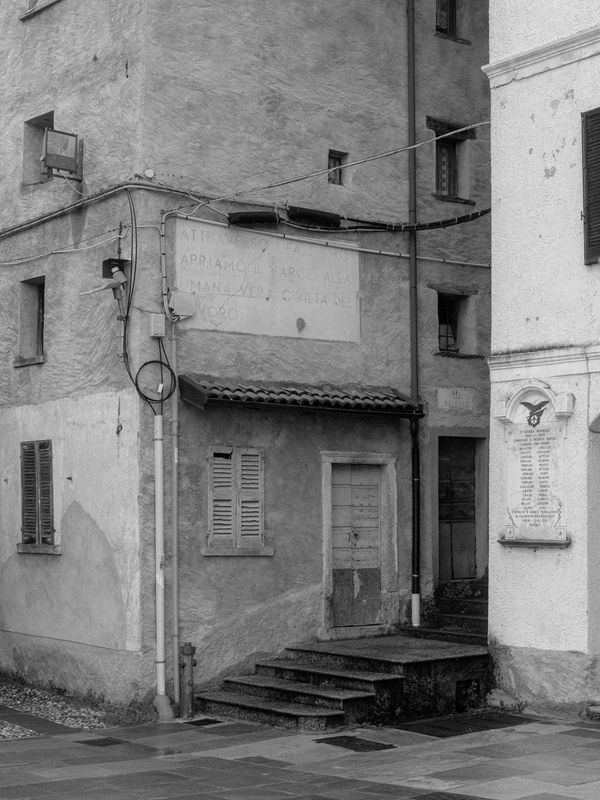
Marge Westreich: I started this project when I moved to a small town. Feeling like a tourist in my own home, I began staging scenes with actors throughout the town, reflecting my own sense of loneliness and search for belonging. By inserting these constructed moments into familiar spaces, the work became a way to navigate my fears of isolation and the challenge of integrating into a close-knit community while remaining an outsider. The book format offers the ideal space to bring together the different layers of this experience – combining photographs and writing to explore the tension between fiction and reality. It allows the work to unfold over time, while also creating a form through which it can reach a wider audience.
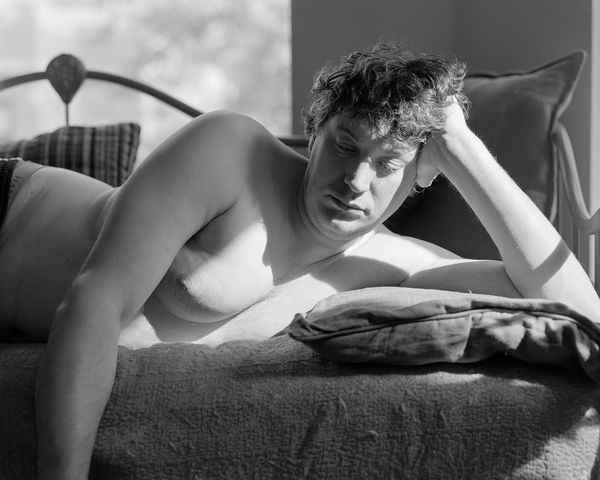
Stephanie Schwiederek: For the past few years, I have been photographing myself and my partner, on and off, over the course of our more than decade-long relationship. What began as an intimate record has gradually evolved into a means to examine intimacy, partnership, and power. I found myself questioning the hierarchy of the gaze and how it has historically shaped the way women’s bodies and relationships are viewed. Through embracing and navigating my queer identity as a bisexual, bigender woman, I began to consider my own outward gaze; the way I look at my partner, at myself, and at the spaces between us. I believe this work should be published as a book because this form can effectively capture the slow accumulation of images, messages, and shifts that define a monogamous relationship. As a book, it invites viewers into an exchange that resists a single decisive image, and instead embraces vulnerability and change.
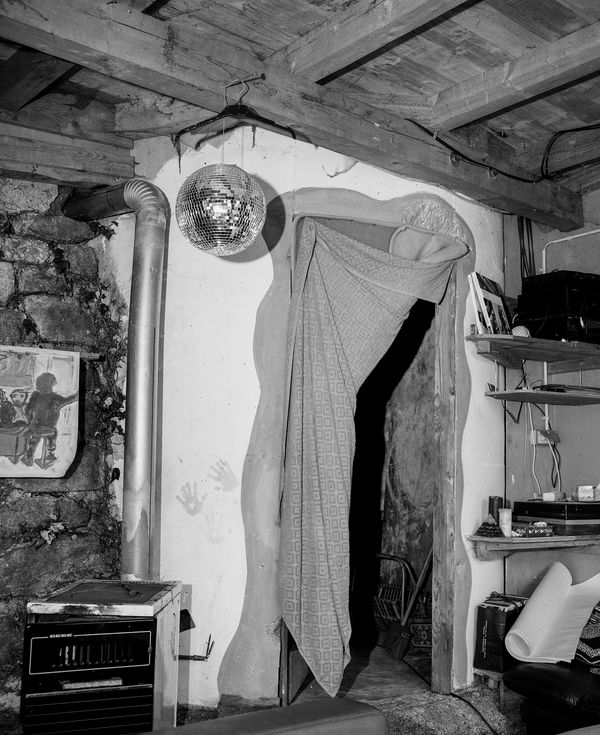
Justina Leston: Horas Mías questions Alzheimer’s disease, aging, and women’s domestic life through my grandmother’s diary, which I found some time after her death. Writing had been recommended by her doctor as an exercise to support her memory. I began combining her writings with archival material from family albums. Later, I developed a glossary, adding context from my own perspective. Alongside this, I started creating ceramic pieces inspired by objects that appeared in the photographs, things she mentioned, or items I remember from her home. As more elements began to emerge, I realized that a book would be a compelling way to bring all these materials together.
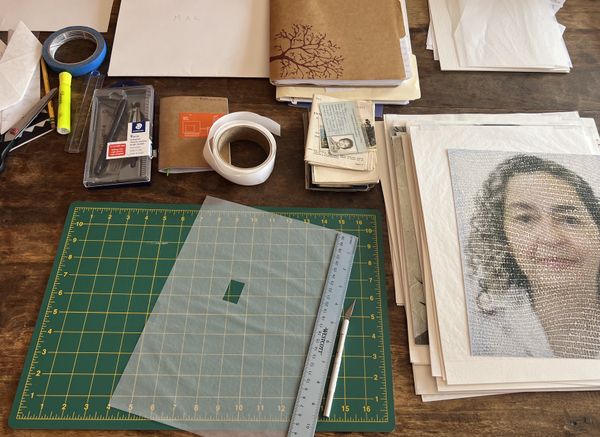
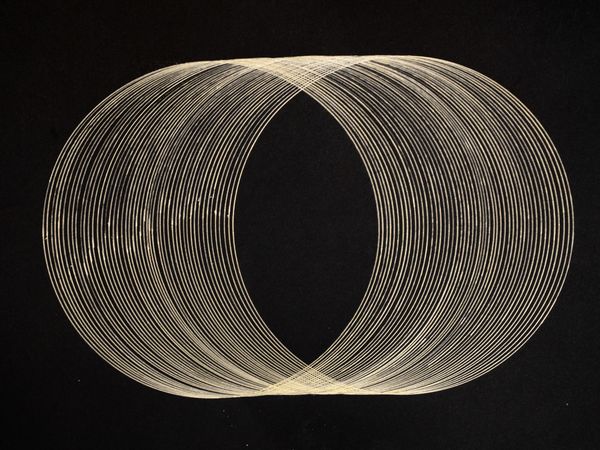
Julia Bohle: This Place Was A Desert is part of my current PhD studies, which look at the aura of the artist book and how a sense of presence can be created, with particular attention to materiality, narration, and emotional attachment in site-responsive practice. The work is situated in arid landscapes in rural Australia, where the place is shaped by dust, heat, and extreme conditions of the desert. Since my research deals with questions around the artist book, I am interested in testing how to create a series of materials and images within book form, which can also be understood as a more experimental approach to publishing.
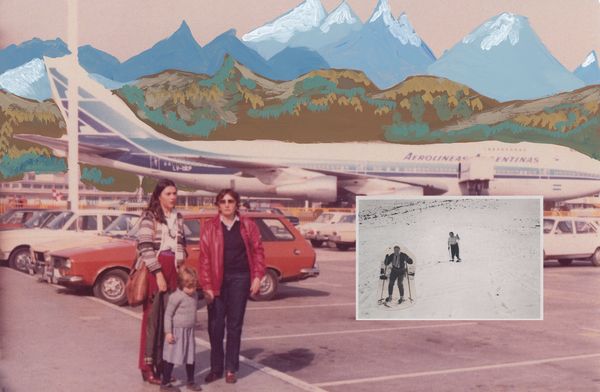
Stefanie Langenhoven: I Do Not Want To Become My Mother explores my relationship with my mom, shaped by apartheid and toxic patriarchy in South Africa. She was expected to prioritise her role as a mother and caregiver, suppressing her own artistic aspirations and political views. From a young age, I witnessed it all culminating in a debilitating depression that made me fear I'd follow a similar path. I examine how mother-daughter relationships can reflect broader societal expectations of women. Using archival family photos, vintage magazines, and performative self-portraiture, I construct a more subconscious reality. By involving my mom in the process, I look at the complexities of our bond. As FOLIO evolved, the book evolved as well. I think it will speak to a lot of women. Even though it’s a personal experience, it is also universal. I use humour, satire, and dramatisation as means to expose something much more poignant in our society.
Vivian Poey: My project, Un Pedacito de Mar, explores issues of migration and freedom of movement through my maternal story of migration from Cuba and placing it in the historical context of migration by sea in the Caribbean.
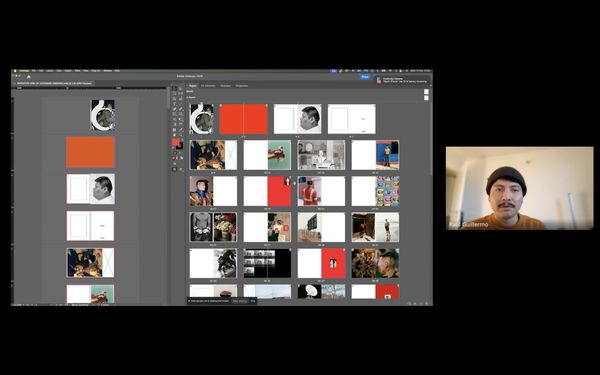
Raul Guillermo: During FOLIO, I worked on a project examining Peruvian masculinity – how men in Peru construct, perform, and negotiate their identity within cultural and social contexts. The project started in 2022, drawing on Norma Fuller's work, which argues that masculinity is not a biological given but a cultural construction that must be constantly demonstrated and renegotiated throughout life. The reason I want it to become a book is rooted in a very tangible necessity: to have a physical object that can carry these ideas beyond the screen or the studio, and serve as a real tool for exploration and as a reference. As Fuller suggests in her research, understanding masculinity requires looking at concrete, situated cases – and a book feels like the right format to do exactly that: to reach other audiences who could be interested in the subject – researchers, students, or simply curious readers – and to open a conversation about what masculinity means in a Latin American context today.
Looking back to day one, what was the most unexpected thing you’ve learnt?
Julia Bohle: Balancing between a core concept and visual language, while allowing a certain openness, and seeing a loose structure as a benefit. Trying out different concepts and finding ways of potentially merging them.
Marge Westreich: Leaning into ambiguity – allowing the images to make the viewer question what they are seeing, rather than trying to resolve that tension. After a couple of months, I started to notice the project shifting. I became more comfortable embracing staged elements and blurring the line between fiction and reality. That shift was exciting and made me more motivated to keep going. The result feels newer and more exciting, but also closer to my own voice and more true to myself.
Raul Guillermo: I realized that my pictures were deeply colorful – vivid, saturated, full of life – and that this was not accidental. It was a direct reflection of Peru itself, its streets, its people, its energy. For a while, I resisted it. But then I understood that the book had to lean into that – that the color wasn't a visual excess, it was the message. Instead of avoiding it, I started building the book around it – letting the palette become part of the narrative itself.
Vivian Poey: I realised that making my book would be like starting a whole new project. I thought I had a body of work, and I just needed to translate it to a book format. Instead, Nicolas' feedback and questions opened up a whole world of possibilities.
Stephanie Schwiederek: I realized how the inconsistent sizes and ratios of my images were compromising the quality of my work. The lack of visual hierarchy meant that no single image could properly command attention. Instead, they competed with one another for space. The turning point for me came when I began to scale back and make more intentional, focused decisions about the size and proportion of each photograph within the book. The images started to inform each other rather than clash.
Justina Leston: I realized that it was more interesting to start blending everything together rather than treating the materials as separate chapters. I allowed myself to get a bit lost in the process again, returning to the playfulness and spontaneity that guided me at the beginning of the project. During FOLIO, I also created new pieces that I hadn’t anticipated at all before starting.
Which aspect of the photobook-making process do you find to be the most challenging, and which are you enjoying the most?
Stephanie Schwiederek: The most challenging aspect has been incorporating text in a way that feels meaningful and cohesive, where it supports the photographs rather than competing with them. Balancing white space, typography, and the pacing of the sequence has been one of the most demanding parts. What I have enjoyed the most is the opportunity to return to the work with a renewed sense of curiosity. Each revisit allows me to undo and redo, to see the photographs and writing from a slightly different perspective, and to permit myself to experiment with layout, pairings, and rhythm without needing everything to feel perfect. That sense of openness has made the process feel more like exploration rather than an obligation.
Raul Guillermo: The most challenging part has been the editing and sequencing. This book doesn't really tell just one story – it holds many of them simultaneously. Each image carries its own weight and its own narrative, and the difficulty lies in bringing them all together in a way that feels coherent without flattening that complexity. The part I've been enjoying the most is the design. There's something genuinely exciting about that stage – the sheer number of possibilities, the different materials you can explore, the way a layout decision or a typographic choice can completely shift how an image is read.
Marge Westreich: The most challenging aspect was finding a rhythm in the sequencing. I placed so much importance on each image that it often felt like they were competing with each other. I was also working with different styles of photographs, which made it difficult to bring everything into a cohesive whole. The most enjoyable part was seeing how the idea evolved over the past year, and gradually realizing which images were still missing. That process helped me understand what the book actually needed in order to fully come together.
Justina Leston: Editing is one of the most challenging aspects of my process, and at the same time, the one I enjoy the most. I love moving things around and trying a million different possibilities, but it can also drive me a bit crazy. Another challenge comes when I need to deal with production details – especially since I usually work with a limited budget.
Sequencing is often where a project truly finds its rhythm. Has the process of rearranging images for the book format changed or challenged the way you perceive your own work?
Julia Bohle: It has definitely both changed and challenged my perception. Rearranging images within the book helped me to think more about a story, while also questioning a linear way of storytelling, and how a more unconscious way of narrating can be achieved. How material studies can be embedded within the flow of images, and how the book can be transformed into an object with original material pieces.
Marge Westreich: It definitely challenged the way I see my own work. I had to let go of many images I really loved in order for the rhythm to work. It was difficult to separate myself from the experience of making the photographs and instead think from the perspective of someone encountering them for the first time. I had to step back and view the work with a bit more distance, which ultimately helped me make the book more cohesive.
Stephanie Schwiederek: I often struggle with the sequencing and structure of my images. I notice myself being drawn to the same types of photographs, paying less attention to the spaces in between. I honestly didn’t expect to make new images during FOLIO, but as the sessions continued, I felt increasingly inspired. I began to see where the gaps were. That realization pushed me to make images that could bring a renewed balance to the sequence. I’m learning that it’s not just about my strongest images, but about how they connect on the page, and how the spaces between them carry just as much weight as the images themselves.
Beyond the technicalities of bookmaking, how has FOLIO shifted your mindset as a visual storyteller? Did your overall philosophy regarding the photobook evolve during these months?
Marge Westreich: FOLIO shifted my mindset from thinking about individual images to thinking more about the overall experience of the work. I became less focused on trying to clearly explain everything within a single photograph. Over time, I started to trust that meaning can be built through sequencing, and that not everything needs to be resolved in just one photo. Pacing, space, and even confusion can play an important role.
Stephanie Schwiederek: My understanding of photobooks has expanded significantly. I’ve come to recognize the book form as an extension of my work, an object in its own right, rather than simply another way to display images. This feels very different from the experience of presenting work in a gallery where the viewer encounters the images within a controlled, often fleeting environment. The photobook is intimate and mobile, something the viewer can hold in their hands, return to, and live with (literally). The turning of each page becomes a small, physical collaboration between viewer and maker.
Julia Bohle: It shifted my mindset from seeing bookmaking as a predictable path with steps you can follow, to understanding it as a very fluid and organic process that needs time. A mixture of making decisions, knowing when to stop collecting material, and being open to transformation.
Raul Guillermo: Being able to observe other photographers and artists at work – understanding where they draw their inspiration from, how they think, and how they make decisions – has been enriching. There's something rare about getting access to other people's creative depth. But perhaps, the biggest mindset shift came from realizing that, at some point, you have to stop looking sideways and trust your own path. FOLIO taught me that the process is yours, and the sooner you own it, the stronger the work becomes. Before FOLIO, I appreciated books as finished objects. Now I see all the layers behind: the decisions, the doubts, the iterations. What surprised me the most was realizing how fluid and modifiable the process really is. Things that seem fixed can always be revisited, and often should be.
Which Studio Visit particularly stuck in your mind, and why?
Marge Westreich: One of the Studio Visits that really stayed with me was with Brian Paul Lamotte. Coming from a background in graphic design, it was especially interesting to see how he approaches photobooks and collaborates with artists. What stood out to me was how each book felt very different, yet always stayed true to the artist’s voice. It made me think more about how design can support a project without overpowering it.
Stefanie Langenhoven: Oh, I really enjoyed every Studio Visit. It’s so hard to choose, and there are a few that stuck out to me, but if I had to choose one, it would probably be with Brian Paul Lamotte. His approach to design really opened my eyes to what is possible in sequencing and designing a photobook, and actually, I have drawn a lot from this Studio Visit when I approached the design of my photobook. But overall, all the studio visits were excellent.
Stephanie Schwiederek: All of the Studio Visits were wonderful and inspiring, which made this an especially difficult choice. The session with Max Houghton, however, has lingered in my thoughts for weeks. She demonstrated how to speak about complex, emotionally charged histories with both rigor and sensitivity. Her visit not only broadened my understanding of the subject matter but also offered a model for how I might approach difficult historical content in my own practice moving forward.
Raul Guillermo: Brian Paul Lamotte and Thomas Struth. What made them both memorable was how differently they approach their work – and yet how much I took from each. Brian, coming from graphic design, opened my eyes to the way visual decisions are made with a liberal kind of thinking. The way he thinks about composition, hierarchy, and the relationship between elements gave me tools I hadn't considered before as a photographer. Thomas Struth, on the other hand, offered something different – the perspective of someone who has built a deeply rooted and long-standing body of work. Seeing how he approaches his practice, the patience and intentionality behind each project, was genuinely inspiring. What both visits had in common was that they gave me concrete insights I could actually bring back to my own workflow. Not just inspiration in an abstract sense, but real ways of thinking and working that I found myself applying almost immediately.
How has your perception of online education evolved, and what kind of relationships developed within the group?
Stefanie Langenhoven: I was pleasantly surprised by how much I was able to engage and learn throughout. I would have never been able to do this amazing course if it wasn’t for this online format. Also, PhMuseum is extremely professional yet so down to earth and friendly. And last but not least, the friendships, support, and camaraderie with the other participants were invaluable; we became really close.
Marge Westreich: It shifted my perception of online education and showed me that a sense of community is still possible, even without being physically in the same space. At first, I was skeptical about how much connection could actually happen in an online setting. But the motivation and discipline of everyone to stay engaged – and to organize additional meetings outside of the sessions – made it feel much more personal than I expected.
Stephanie Schwiederek: I’ve often been skeptical of online education. However, this course has changed my perspective. From the beginning, the organization and communication were exceptionally strong. Nicolas and our class coordinator, Rosa, consistently provided clear, concise guidance and made expectations easy to understand. Their combined support helped create a sense of structure that put me at ease.
What advice would you give to future participants to get the most out of FOLIO, both creatively and personally?
Stefanie Langenhoven: Keep an open mind and allow yourself to be challenged; it can be a huge growth opportunity if you go with the process. Don’t be afraid to try things that make you a bit uncomfortable. And ask questions. I am personally a very anxious person when it comes to speaking in groups, but it does get better. Overall, it was one of the best decisions of my career and the development of myself as an artist thus far.
Julia Bohle: Taking notes from each session, going through the material and inspirational references, kind of keeping a small diary. I worked with Padlet, which I constantly updated, and it was great to review and go through the process over time.
Stephanie Schwiederek: Stay as flexible as possible. As artists, we often compare ourselves to one another and measure how far ahead or behind we feel; in a course like this, those feelings are almost inevitable. Coming in with the understanding that things will shift, may ease some of the self-doubt you might experience. I would also highly recommend participants meeting with each other, be it as a collective group or one-on-one with someone you particularly connect with, and get feedback. For me, making time to get together and exchange ideas and feedback was crucial, both creatively and personally. Allow yourself to experiment, to pivot, and to let go of ideas that no longer serve you. Lean into curiosity rather than perfection. At the end of the day, you have to be happy with the work you make. Take the feedback, sit with it, reflect honestly, and then go with your gut. Your voice matters more than anyone else’s opinion of it.
Marge Westreich: Be open to letting your project evolve, even if it moves away from your original idea. At the same time, make an effort to stay engaged with your classmates outside of the regular sessions. Those informal conversations and exchanges can be just as important as the structured feedback, both creatively and personally.
Raul Guillermo: Come prepared – not with a finished idea, but with a direction. It will give you a foundation to build from and makes every conversation much more productive. Alongside that, bringing references that resonate with your work is invaluable. Not to copy them, but to have a visual language to communicate from – something that helps you articulate what you're drawn to and where you want to go. But perhaps the most important advice, both creatively and personally, is to be patient with the process. Things won't come together all at once, and there will be moments where the project feels uncertain or unresolved. That's not a sign that something is wrong – it's just part of how a book gets made. Trust that the process is working even when it doesn't feel like it, and give yourself the time to let things evolve naturally.
--------------
FOLIO Online Masterclass On Photobook Making is part of PhMuseum's educational program, comprising five different masterclasses that will all share a single intake period running until 28 May, with classes beginning in October 2026 and ending in May 2027. Alternating collective tutoring, seminars, individual sessions, and studio visits, each masterclass exists in a community-driven environment, while providing concrete opportunities to exhibit, publish and distribute your work.
You can take part in one or more programs. Check them out phmuseum.com/m26
--------------
Scholarships and participation fee
Before 30 April – If you apply by this date, you are eligible for the full scholarship. In your motivational letter, explain why you’d be a strong candidate, and how you would benefit from this support.
Before 30 April – If you apply by this date, you can save €350. All applications will be automatically eligible for the Early Bird Fee of €1,850.
Before 28 May – If you apply by this date, you can join the program by paying the Regular Fee of €2,200. Since applications will be reviewed on a continuous basis, early submissions receive priority for seat allocation.
If you are offered a place, PhMuseum is happy to write you a supporting letter when you try to secure any external funding opportunities. In previous editions of our masterclasses program, the candidates' fees were covered thanks to the generous contribution of the IWMF Howard G. Buffett Fund for Women Journalists, Mondriaan Fonds, Arts Council Malta, and other programs. Read our guide to 2026 Education Funding for Visual Artists to discover opportunities.