Against Perfection: Erik Kessels On Authentic Vulnerability
-
Published16 Mar 2026
-
Author
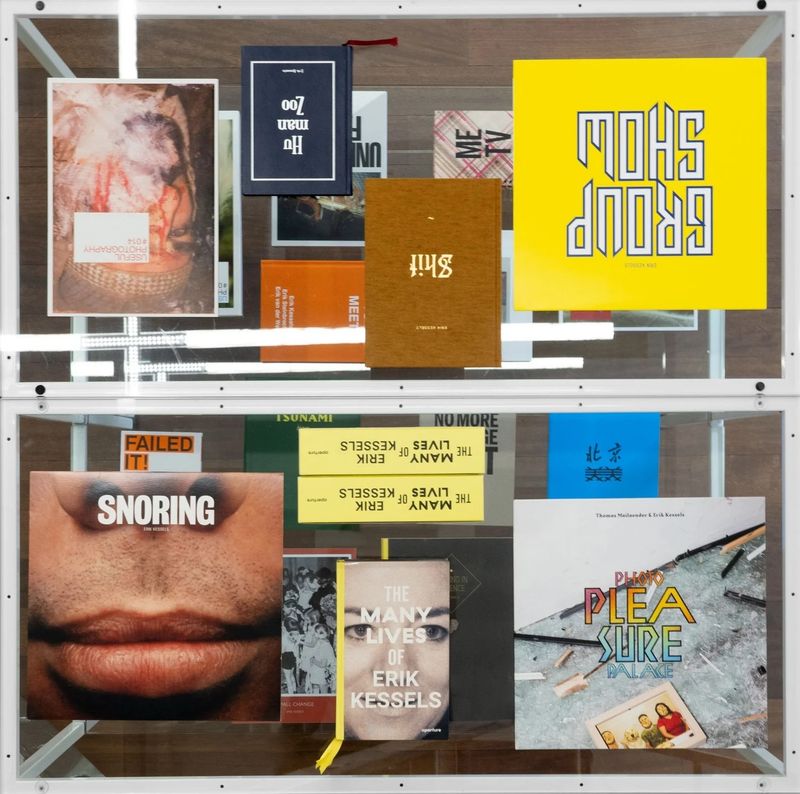
The author of Failed It! – and countless other publications released since 1997 – has always believed in mistakes and discomfort over posed attempts at perfection.
As an educator, the Dutch artist, designer and curator challenges artists to look inward and dismantle their protective layers. It is from a place of both honesty and discomfort, he suggests, that one can forge and communicate a strong artistic identity that belongs to them alone.
Led by Kessels, the fifth edition of CURAE – PhMuseum's Online Masterclass On Artistic Development – is rooted in this philosophy. We sat down with him to discuss the evolution of his program, which looks back at the etymological root of CURAE – the act of taking care of one's identity, work, and trajectory.
Ciao Erik, thanks again for joining our Masterclass Program for the fourth consecutive year. How has the journey been so far?
It has been an intense course where I work with many artists and curators from different parts of the world and collaborate closely. In a period of several month, you see already a big personal and professional development.
After three editions focused on curatorial practice, you’re now shifting to the etymological root of CURAE – the act of taking care. In an era of disposable digital noise, what do you think is the most radical way an artist can truly take care of their work today?
Taking care of your work as an artist has all to do with your own authenticity. How can you bring your own personality and your own personal style into your work? And how can you in your own unique way communicate about your work? Visual artists like photographers are very good in the works they make, but often lack the ability to communicate about them and themselves as artists and creative professionals.
Curating for oneself is a private act, but branding is public. How do you teach an artist to take care of their audience without pandering to them or losing authenticity?
If you understand why you are making the work and what drives you, you don’t need to adapt yourself to trends or expectations. Taking care of your audience doesn’t mean pleasing them, it means respecting their intelligence.
Your teaching style is famously provocative, often pushing people out of their comfort zones from day one. How does this approach help participants stop performing and start being honest about themselves and their work?
Many artists unconsciously perform a version of themselves they believe the art world expects. By challenging them early, I try to dismantle that protective layer. Discomfort is productive, it reveals habits, insecurities, and clichés. Once those are exposed, there is space for honesty. And honesty is where meaningful work begins.
A big part of a career trajectory is what we choose not to do. Will the Masterclass guide participants to curate their opportunities as much as their images?
To be a creative person and become an artist, you need to be brave and take risks. What are the challenges of starting to work for yourself? When do you say yes and when do you say no to certain challenges? Saying no to something is often more important than saying yes.
Time is a fundamental component of this journey. In an era of immediate gratification, how does an eight-month process allow participants to deepen their self-reflection and truly transform their professional trajectory?
Over eight months, participants go through cycles of doubt, discovery, revision, and consolidation. That rhythm cannot happen in a short workshop. Time creates trust within the group, and trust allows vulnerability. When artists feel safe enough to question themselves, real change can occur, not just in their projects, but in how they see their role in the field.
You talk about working on the possibilities and obstructions of a career. What is the most common blockage you see in talented photographers today?
Courage, to choose, to define, to stand for something, is often the missing ingredient. These are often obstructions in the process and development of a work that is in progress.
Teaching in CURAE sometimes led you to collaborate with former participants, or involve them in new projects. Can you mention some of these experiences, and tell us more about them?
Yes, and that is one of the most rewarding aspects. Sometimes a dialogue that starts in the Masterclass evolves into a professional collaboration, whether through exhibitions, publications, or advisory roles in new projects. There are a few occasions where I showed the work of participants in a curated group exhibition or was involved in a new publication they developed.
What is one thing you wish all participants to take away from working with you?
Confidence in their own voice. Not confidence as arrogance, but as clarity. If they leave with a stronger awareness of who they are, what they stand for, and how to protect and nurture their practice, then the course has succeeded.
--------------
CURAE Online Masterclass On Artistic Development is part of PhMuseum's educational program, comprising five different masterclasses that will all share a single intake period running until 28 May, with classes beginning in October 2026 and ending in May 2027. Alternating collective tutoring, seminars, individual sessions, and studio visits, each masterclass exists in a community-driven environment, while providing concrete opportunities to exhibit, publish and distribute your work.
You can take part in one or more programs. Check them out phmuseum.com/m26
--------------
Scholarships and participation fee
Before 30 April – If you apply by this date, you are eligible for the full scholarship. In your motivational letter, explain why you’d be a strong candidate, and how you would benefit from this support.
Before 30 April – If you apply by this date, you can save €350. All applications will be automatically eligible for the Early Bird Fee of €1,850.
Before 28 May – If you apply by this date, you can join the program by paying the Regular Fee of €2,200. Since applications will be reviewed on a continuous basis, early submissions receive priority for seat allocation.
If you are offered a place, PhMuseum is happy to write you a supporting letter when you try to secure any external funding opportunities. In previous editions of our masterclasses program, the candidates' fees were covered thanks to the generous contribution of the IWMF Howard G. Buffett Fund for Women Journalists, Mondriaan Fonds, Arts Council Malta, and other programs. Read our guide to 2026 Education Funding for Visual Artists to discover opportunities.