Atefe Moeini And Carlos Idun-Tawiah On The Politics Of Intimacy
-
Published2 Jun 2026
-
Author
Deloitte's Photo Grant encourages photographers to engage with social reflection and awareness – as seen in the 2025 edition, which highlighted the two works under the theme Contrasts. Learn more and apply to the 2026 open call through 14 June.
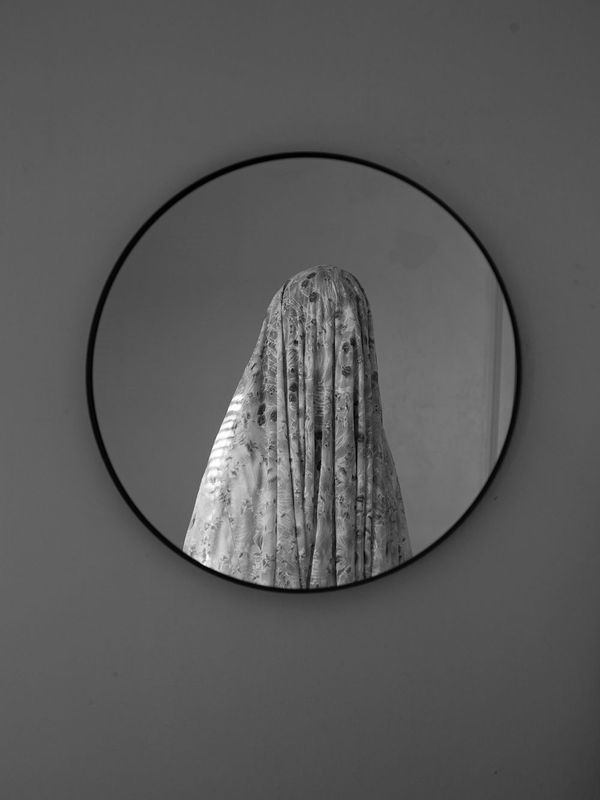
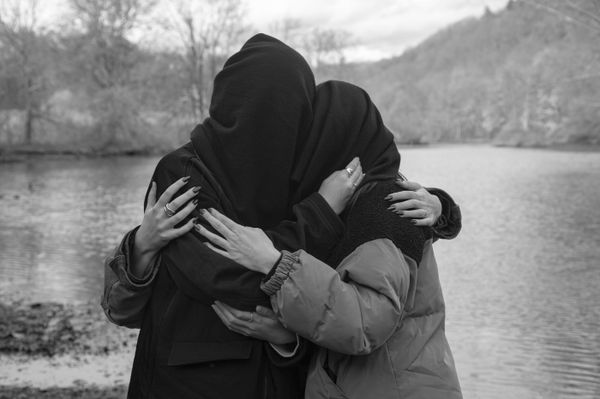
Moeini’s images in Go Live directly emerge from her lived experiences under the Iranian regime, and her subsequent exile. Idun-Tawiah's commentary on Black fatherhood is shaped by a personal story of absence. Their narratives powerfully intertwine the personal and the political, while emerging from a setting of deep, intimate collaboration.
As recipients of the 2025 Deloitte's Photo Grant, both artists received financial support to further their creative visions alongside the opportunity to exhibit at the Triennale in Milan. With Carlos Idun-Tawiah's solo show having concluded this January, and Atefe Moeini's dedicated exhibition scheduled for winter 2027, we delved into their influences, creative methods, and the pressing questions raised by their works.
Ciao Atefe and Carlos, what are the political and social themes addressed by your works, and how are they linked to your personal stories?
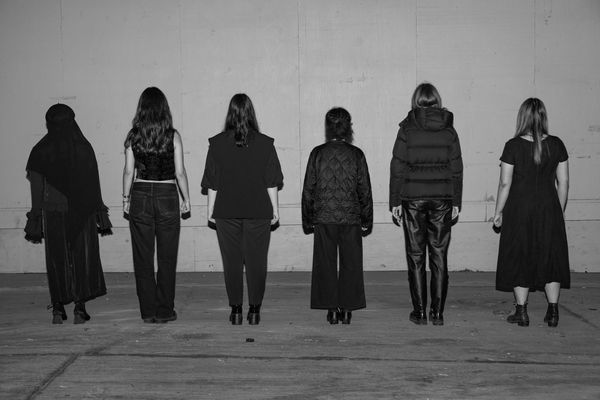
Atefe Moeini: My project Go Live was made after I was arrested by the morality police in Tehran in 2018 when I was 19 years old for wearing torn jeans. I grew up under the Islamic Republic regime in Iran; it’s one of the bloodiest regimes of our time, and it has affected my life and many other people’s lives in many ways. I had to leave home and live in exile because of them. This past January, they committed a massacre and killed tens of thousands of civilians. It’s impossible for me to separate my work from the experience of being an Iranian. My work is very personal and intimate, and I’m not trying to illustrate political ideas directly in my work; what I do comes from lived experience, but politics is always present in the background.
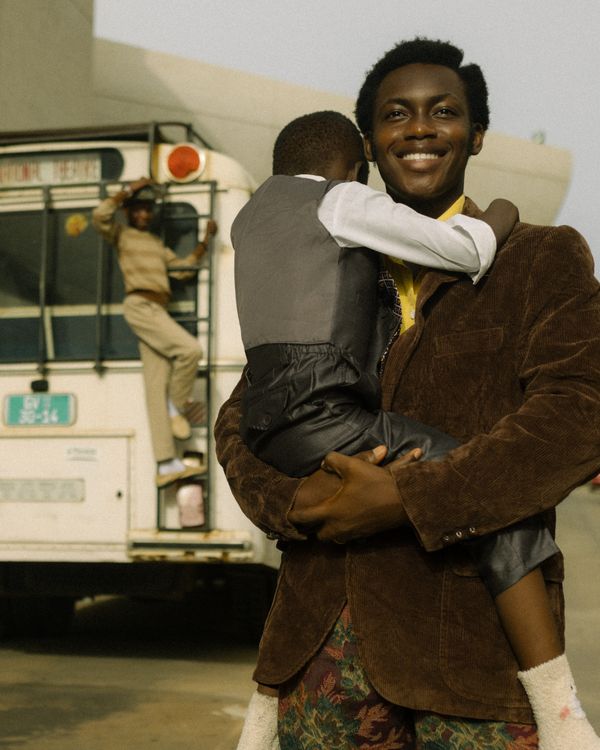
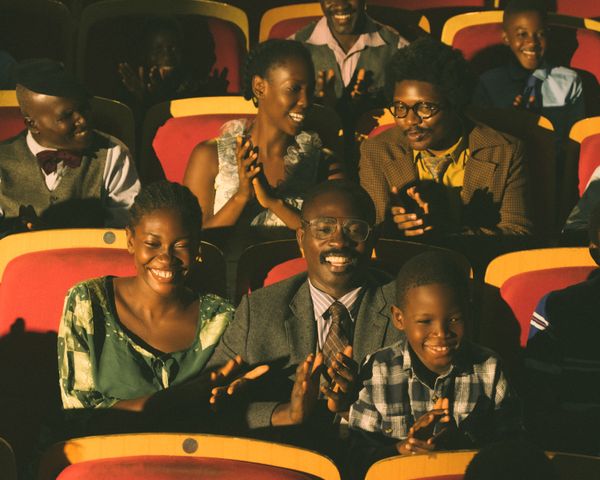
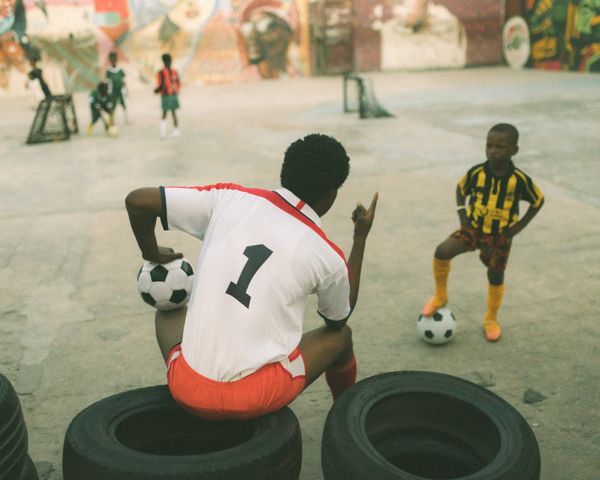
Carlos Idun-Tawiah: My work has always blurred the lines between past, present, fact, and fiction. Hero, Father, Friend offers an even more layered response. It holds the emotional contrast between grief and longing, the visual contrast between staged portraits and intimate reconstructions, and the political contrast between dominant narratives of Black fatherhood and the nuanced, everyday care that often goes unseen.
Your projects are rooted in personal experience, and take life within the intimacy of friends and family. As artists and as spectators, do you think personal narratives should be brought to the forefront – and why?
Atefe Moeini: For me, photography has always been connected to having a voice. I usually point my camera toward people, spaces, landscapes, and things that are important to me personally, so the work is autobiographical in one way or another. I think personal narratives matter because they create emotional and psychological closeness. Sometimes through something very personal, you can speak about much larger histories and collective experiences.
Carlos Idun-Tawiah: As much as I’m grateful whenever my work resonates with the world, I still feel it has to be personal first. I try not to think too much about making work for an audience. At the beginning, at least, I have to make it for myself. I think it’s only then that we can truly make something sincere and unmistakable, especially in a world where everything can so easily begin to feel alike.
Performance seems to play a crucial role in your work: what draws you to staging, and what is the role of a controlled environment in the way you make images?
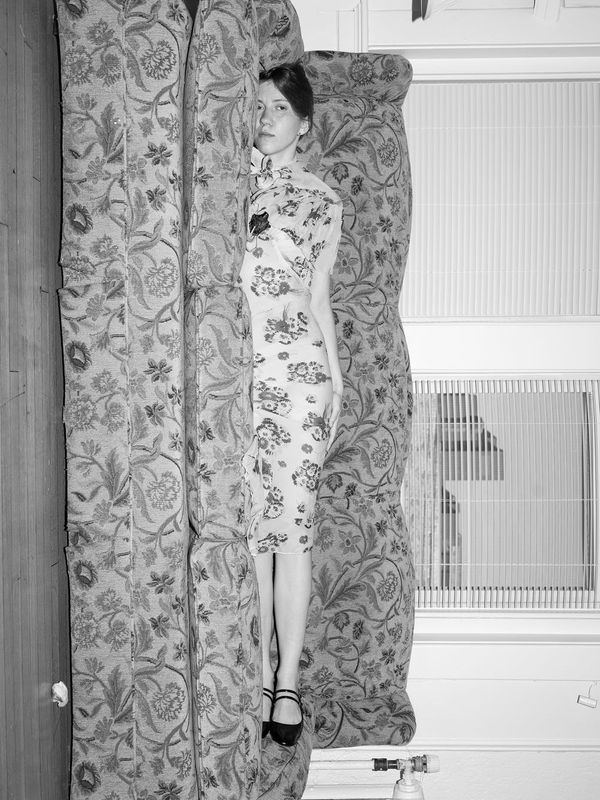
Atefe Moeini: I think photography for me is equally about chance and control. I usually plan things carefully beforehand. I resist the word staging, and I prefer to look at my work more as documentation of a performance, a performance for the camera. I plan what someone wears, where we photograph, the time of day, the quality of light, etc. These are the elements I can control. But the rest is often very loose and open. I’m interested in moments where something accidental happens inside a controlled structure. For example, I like the idea of things falling in an image. I can plan that I want a scarf to fall, where I want it to fall, what’s in the background, and who throws it, but I can’t completely control how it moves in space. The hope is to press the shutter at the right moment. So often we repeat gestures many times until the image arrives.
Carlos Idun-Tawiah: I prefer to see staging in my work as a kind of social experiment. It is fun to sometimes treat the process that way, where I place my subjects in certain scenarios and observe what they naturally make of the plot. When they are at their most animated, I take the photograph. I think that approach always brings something fresh and unpredictable to the work. Instinctively, I would always love to direct and have things my way, but giving that agency to my subjects brings something I could never fully plan.
Could you guide us behind the scenes of a specific photograph?
Atefe Moeini: It’s a secret :) But usually the process involves a lot of conversation, trust, repetition, and improvisation. Even though the photographs can appear spontaneous, many of them are carefully constructed through collaboration and experimentation.
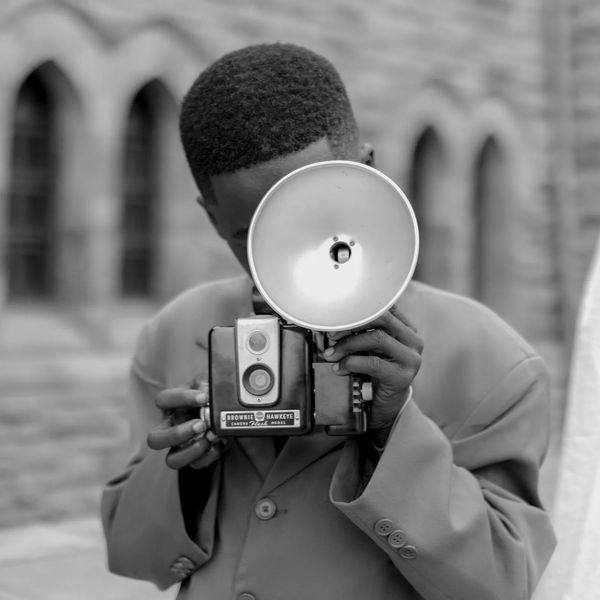
Carlos Idun-Tawiah: I’d say Mommy, Smile, 2022. That photograph was actually a test shot and was originally much wider. But in the corner, I saw this young boy fidgeting with a camera from the prop box, and it took me directly back to my early curiosity and excitement with cameras as a kid. The moment felt just right and was no longer only about the scene I had initially imagined. That’s what I love about allowing the work to stay open. Sometimes the image you are trying to make makes room for another image. It creates a new story within an old story, and that makes it all the more special.
Who are the people in your photographs, and to what extent do they contribute to the shaping of your work? Would you describe your practice as a collaborative one?
Atefe Moeini: My practice is definitely very collaborative. I enjoy working with people a lot. Sometimes I photograph people very intuitively, out of curiosity, without fully knowing why I’m drawn to them yet. I like photographing friends, family, actors, rappers, dancers, politicians, activists, Iranians, women, lesbians, bisexuals, and people who are great at performance and are open to play and dance in front of my camera. Recently I’ve also become interested in photographing people who make me uncomfortable, or people I disagree with. In the past I mostly photographed people I loved, but now I’m curious about what happens when I challenge myself emotionally. I’m interested in surprise, discomfort, and not fully knowing what the image will become.
Carlos Idun-Tawiah: I love photographing friends and strangers who may not have much experience in front of a camera. I think that novelty brings something new to the work. And absolutely, my work is collaborative. I love being able to solicit as many opinions as possible throughout my process, and I don’t shy away from that at all.
Carlos’ images look like dreamlike, cinematic scenes, thoroughly directed and carefully composed. Atefe’s photographs carry a rough energy, where the everyday often meets the absurd. How did the specific aesthetics of your work take shape, and what meaning do you assign to them?
Atefe Moeini: I don’t think I assign fixed meanings to my work. I can talk about why I made something at a certain moment in my life, but meaning is more complicated than that. The meaning of a photograph or any work of art changes depending on the time, place, and context in which it is seen. It also changes depending on what people project onto me as the maker of the work, where I come from, the history attached to that place, and the assumptions people carry with them. Meaning has a lot to do with perception.
Carlos Idun-Tawiah: I draw a lot of inspiration from African cinema. I love Ousmane Sembène, Djibril Diop Mambéty, Kwaw Ansah, King Ampaw, and many others. It is a tall list. These filmmakers shaped my perception of the image, especially my love for making work that feels nostalgic. People often say my photographs feel cinematic, almost like film stills, as though the subjects could move, but somehow they don’t. I think a lot of that comes from the way cinema taught me to think about the medium.
In your works, photography draws specific experiences and subjectivities out of the invisibility that threatens them. What is your relationship with photography as a tool for representation, and what agency does it have in your life?
Atefe Moeini: Photography is a powerful medium to work with, but it has its own limitations. Unlike video, it does not have sound, and it’s more difficult to build a linear narrative through it. I think what makes photography a special medium is that it’s very good at capturing the in-between moments. It brings out a moment out of time’s continuum and suspends it. It is able to stop gravity. And I think because of these qualities I have been able to make images that are symbolic, like the photographs of figures punching, bodies in motion or fabrics falling through space. Photography allows these gestures to become suspended somewhere between reality and abstraction.
Carlos Idun-Tawiah: My use of fiction, I believe, gives me another chance to consider who and what gets to be remembered in the photographic canon, and why. I love the idea of being able to colour the grey areas and fill the gaps in photographic history, almost interfering with the archives and inserting a fact that deserves to be there. That’s how I choose to respond to my duty as a photographer. To represent my people with care, and to make room for the stories and images that should never have been left out in the first place.
What are the main influences that shape your artistic approach?
Atefe Moeini: I think a lot about my family and our history when I make work. My experience of exile, being a nomad, memory, and growing up in Iran shapes the way I think visually. I’m also influenced by cinema, performance, literature, and everyday life, especially the emotional atmosphere of spaces and relationships.
Carlos Idun-Tawiah: Over the years, I have been heavily inspired by Black and African photographic archives. The likes of James Barnor, Alex Webb, Roy DeCarava, and Gordon Parks. Their work allowed me to see photography as both personal and political, and has collectively shaped my photographic language.
How did your work evolve since you received the Deloitte's Photo Grant? What are the next steps?
Atefe Moeini: After receiving the grant, I traveled to Los Angeles to photograph members of the Iranian diaspora and exiled Iranians living there. Los Angeles has one of the largest Iranian populations outside Iran, especially people who moved after the 1979 Islamic Revolution. I grew up watching music videos produced by Iranian pop artists in Los Angeles, so visiting and photographing there had a personal and historical significance for me. I’m looking forward to photographing the Iranian diaspora and their homes in Europe.
Carlos Idun-Tawiah: It has been a couple of months since winning the award, and I’m still processing it all. Winning the Deloitte's Photo Grant has given me a lot to think about. In many ways, it has made me more aware of the responsibility I carry as a photographer, and has deeply renewed my love for the form. For now, I’m working on a new body of work and spending time with the research, questions, and emotions behind it. As much as possible, I’m trying not to rush the story. I’m willing to sit with the idea until I feel I have something honest to say.
--------------
Deloitte's Photo Grant 2026 is open for applications until 14 June, with no entry fee. Under the artistic direction of Denis Curti, this new edition invites photographers to stimulate social reflection through intellectual awareness. Centered around the theme Proximities, the grant offers two prizes totaling €75,000 and solo exhibitions at Triennale Milano, Italy. Find out more on their website.
--------------
Atefe Moeini is a researcher, photographer, video and visual artist based in Iran. Her work combines imaginative visual narratives with an intuitive approach to image-making. Drawing from personal experiences, she creates photographs that explore the intersections of individuality and shared human connection. As part of the 2023 Tehran Biennale, Moeini presented a photo installation titled Six Windows and a Balcony in an apartment in downtown Tehran, where she had lived during the 2022 protests in Iran. Her work has been featured in group exhibitions such as "Woman-Life-Freedom" at the Nobel Peace Center in Oslo (2023), "Another Birth" at Jossa by Alserkal in Dubai (2023), and the Tbilisi Photography and Multimedia Museum (2022). Her series "This Is 18" for The New York Times was exhibited at the Sydney Opera House (2019), PhotoVille in Los Angeles (2018), and published as a book by Jessica Bennett (2019). In 2021, Moeini received the Penumbra Foundation/Image Threads Scholarship for the Long-Term Photobook Program and she also participated in the Tbilisi Photo Festival’s program Isolated Communities: New Narratives, New Ways of Being and Living. Her work has been published in the British Journal of Photography, Lenscratch, and The Quick + The Brave Journal. Moeini is currently an MFA candidate at the Yale School of Art.
Carlos Idun-Tawiah is a Ghanaian photographer and filmmaker based in Accra, Ghana. Drawing deeply from African archives – both personal and collective – his work reimagines the evolving landscapes of the continent, blurring the lines between fiction and non-fiction, past and present, memory and imagination. His photographs centre on the quiet power of everyday life – relationships between generations, the rhythms of youth, the bonds of friendship and faith. With a careful, intuitive eye, Carlos makes images that are intimate yet expansive, rooted in emotion and attuned to the subtleties of the human experience. Through each story, he seeks to honour the beauty and complexity of contemporary African life – not as an outsider looking in, but from within – with sincerity, grace, and an enduring belief in joy and hope as resistance.