Images As Belief Systems: David De Beyter On Exhibiting At PhMuseum Days
-
Published7 Apr 2026
-
Author
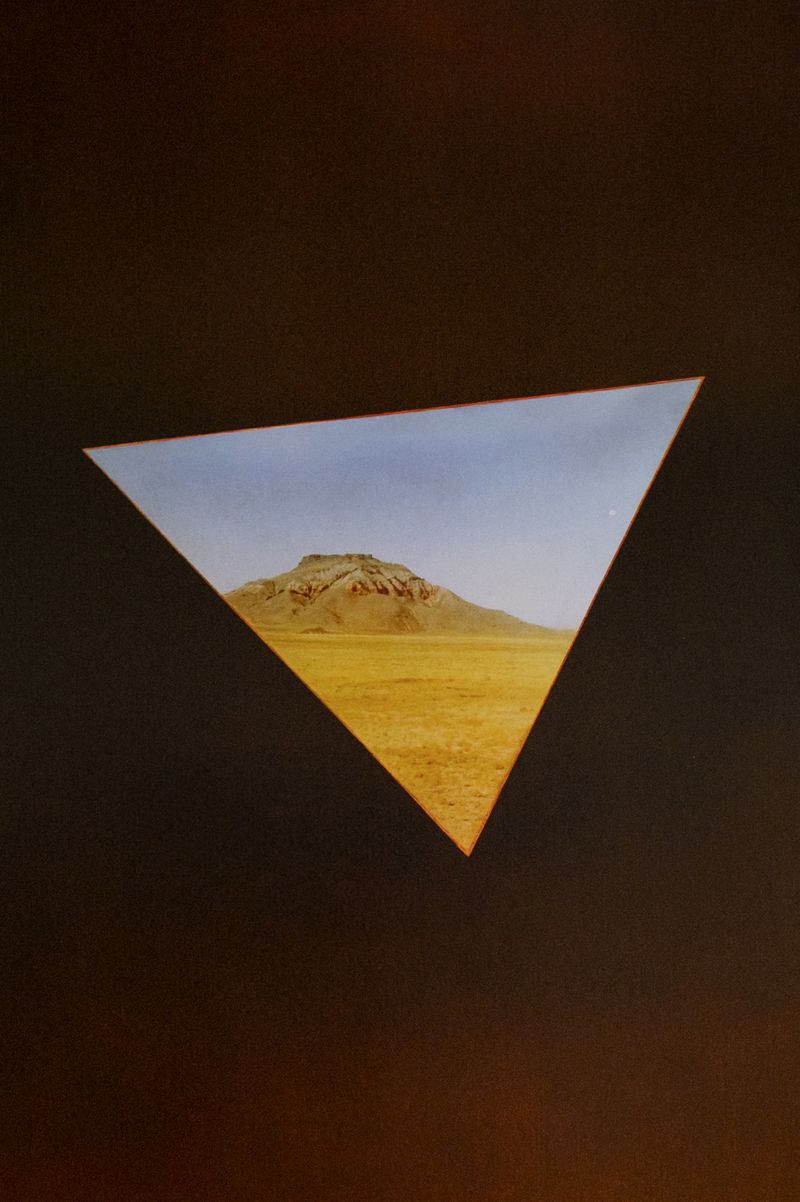
Pulling together the perspective of believers and non-believers, The Skeptics is a trace of the culture surrounding UFOs, and of the way it employs photographs as persuasive tools.
Can we really trust images? How truthful are they?
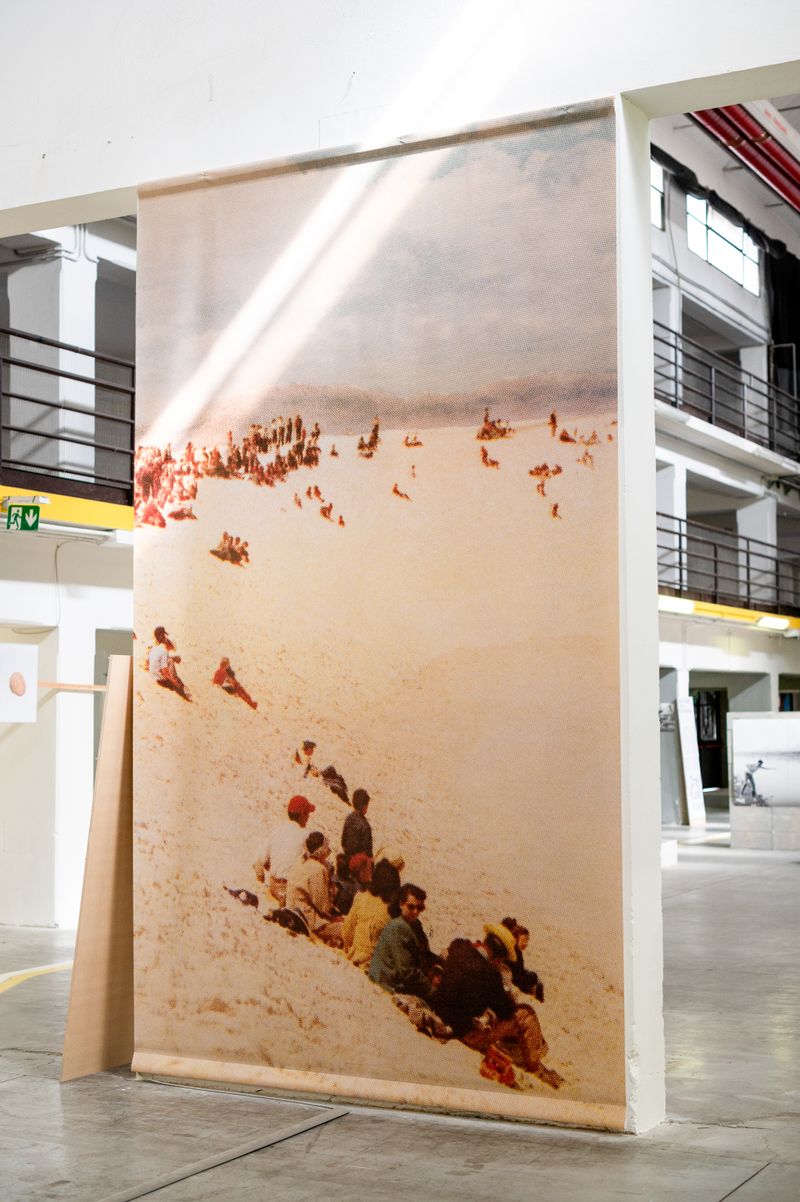
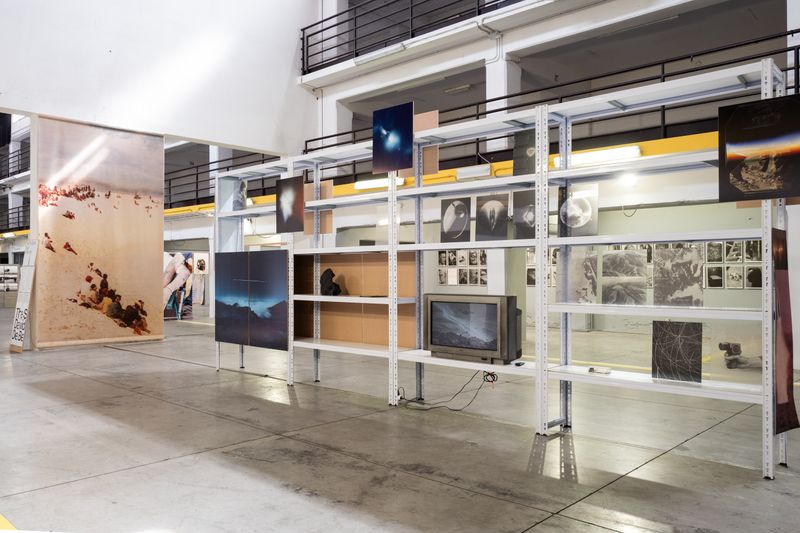
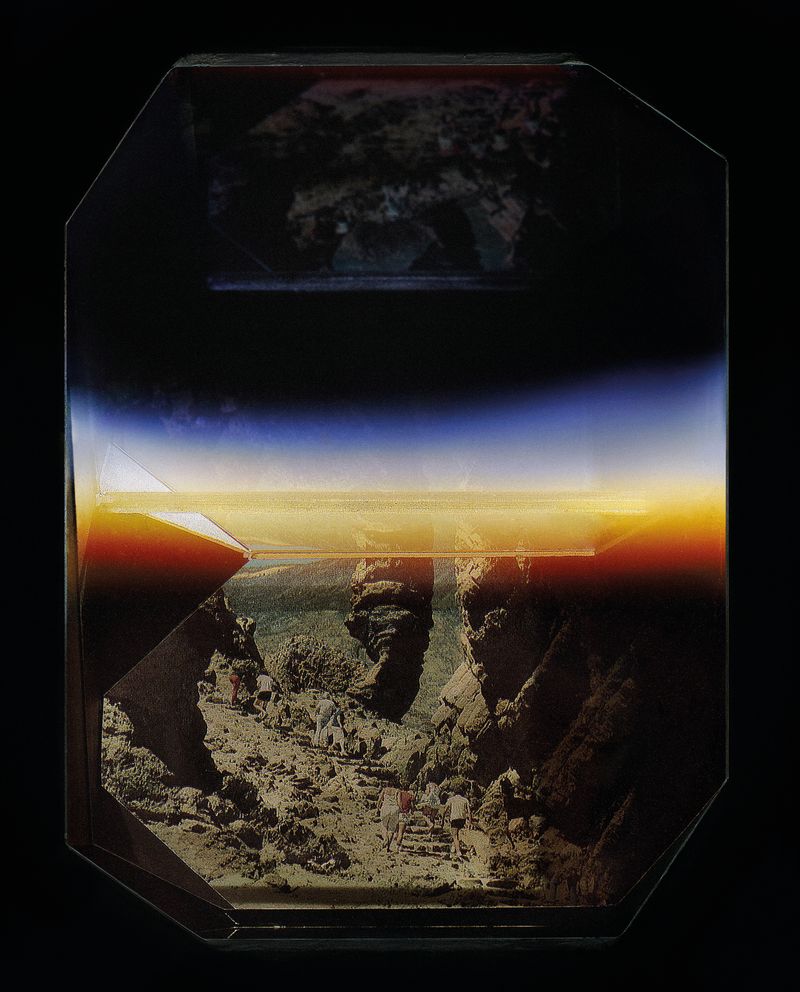
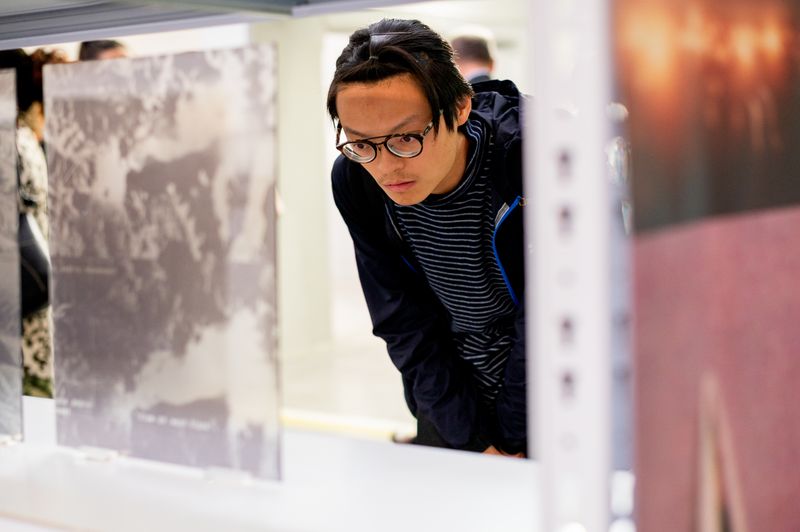
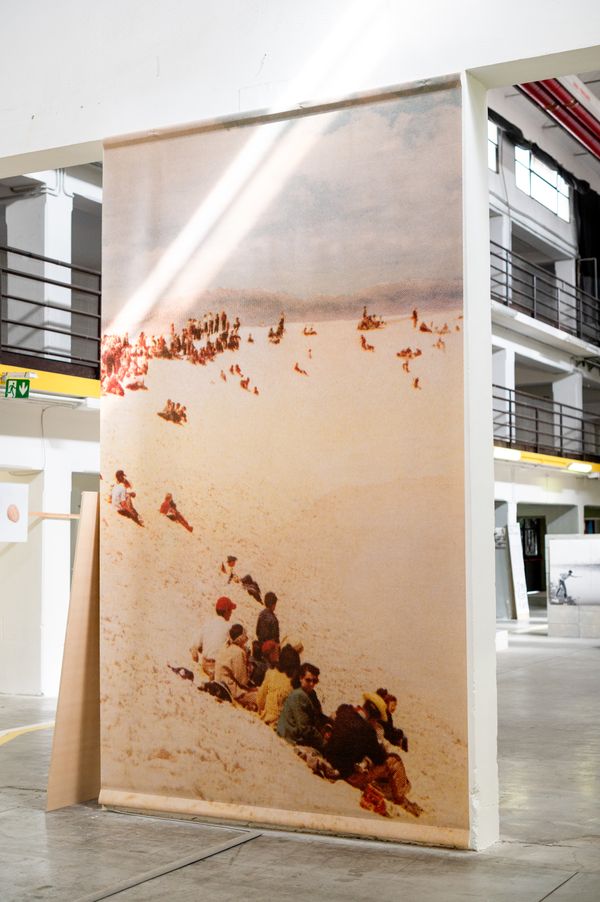
Exhibited in Bologna through the PhMuseum Days 2024 Open Call, The Skeptics assembled an open archive of objects on a shelving system. Archival documents were printed on self-standing, semi-transparent plexiglass, making them visible from both sides. Altered documentary photographs and cameraless images were mounted on MDF boards, seemingly floating, while a video piece looped on a 1980s tv. Each of these artifacts was related to UFOs and their visual culture. Somewhere between rigorous methodology and magical thinking, visitors naturally moved in circles as they searched for the truth. What they found was a comprehensive illustration of how images function as persuasive systems – surfaces upon which we project a hypothesis, as well as its complete opposite.
With the PhMuseum Days 2026 Photography Festival Open Call now open for submissions and offering four more artists the opportunity to exhibit this October, we touched base with David De Beyter to delve into his process, exhibiting practice, and recently published book.
Ciao David. What is scientific ufology, and how did you first come across it? What fascinated you about it?
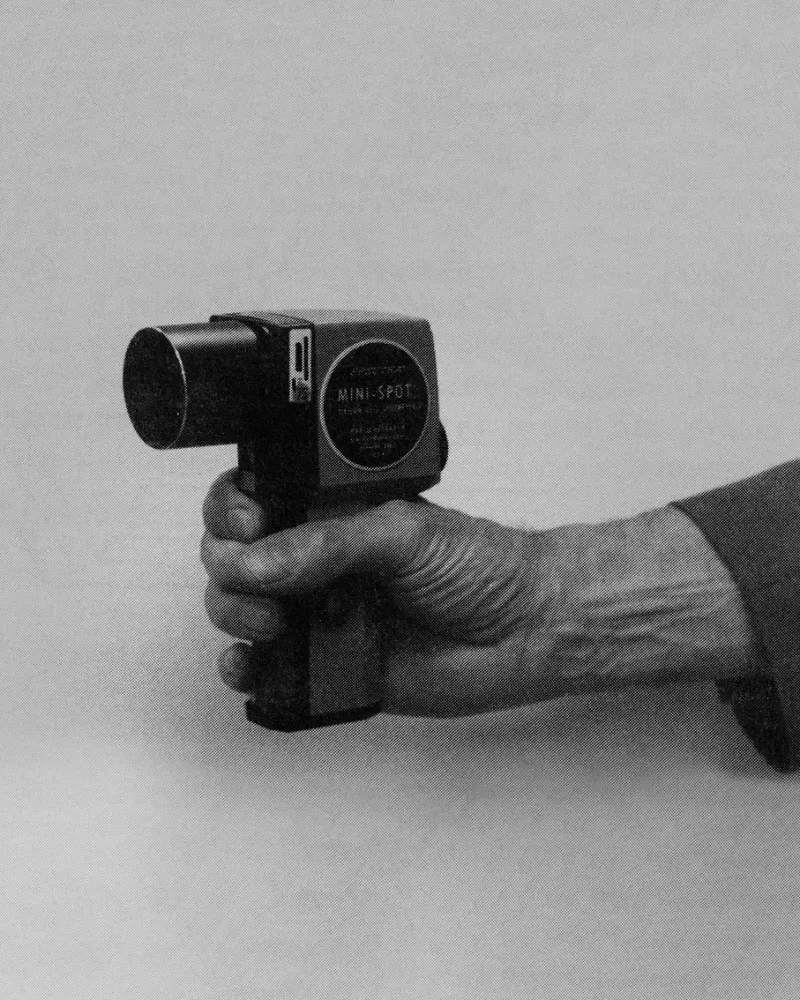
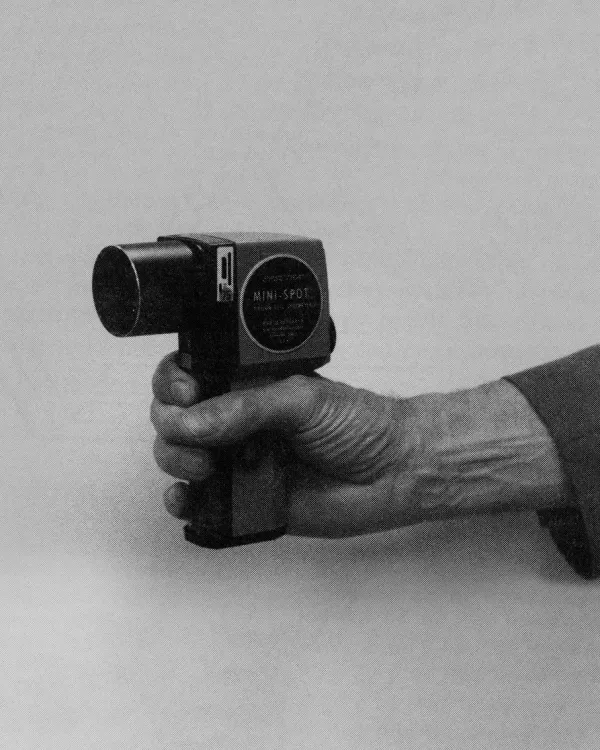
One of the starting points of my research at the Casa Velázquez in Madrid in 2018 was my encounter with Vicente Juan Ballester Olmos in Valencia, Spain. He is one of the key thinkers of scientific ufology. Scientific ufology represents a skeptical school of thought, in the sense that it reduces UFOs to a contemporary myth. In this regard, one can speak of pseudo-science. What fascinated me is that the practice of scientific ufology consists of analyzing amateur photographic images and demonstrating that what is perceived as a “UFO sighting” is merely a photographic artefact. This artefact then becomes an object of speculation. It is important to situate the golden age of this practice in the period of fully analog photography.
In your work, the ‘skeptics’ approach merges with the story of alleged UFOs sightings in the Canary Islands in the 1980s. Where do you see yourself among these two perspectives? What do you think we can learn from them?
Ufology is a field where very diverse groups coexist, comprising both amateurs and marginalized scientists. Broadly speaking, two positions can be distinguished: believers and skeptics. Reducing the UFO myth to a simple matter of photographic error is a premise that underpins part of the skeptical discourse, but one that strikes me today as rather limited, even regressive.
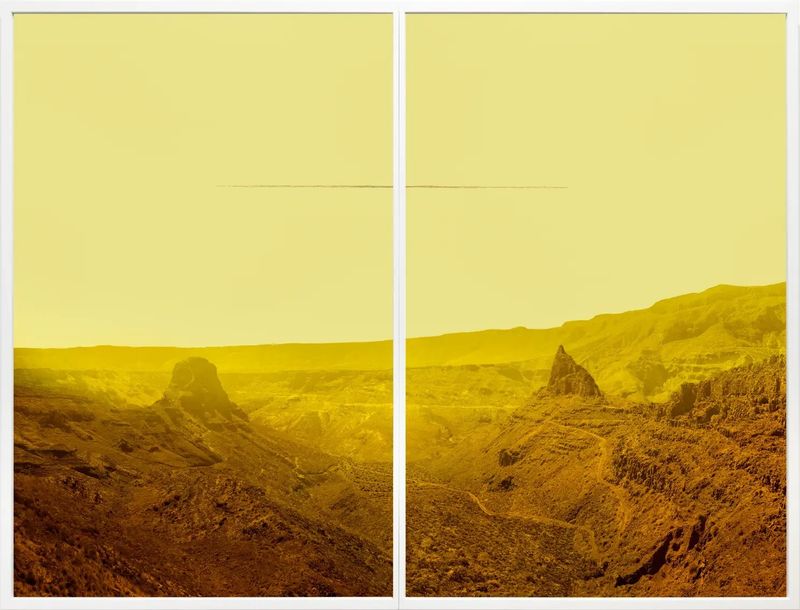
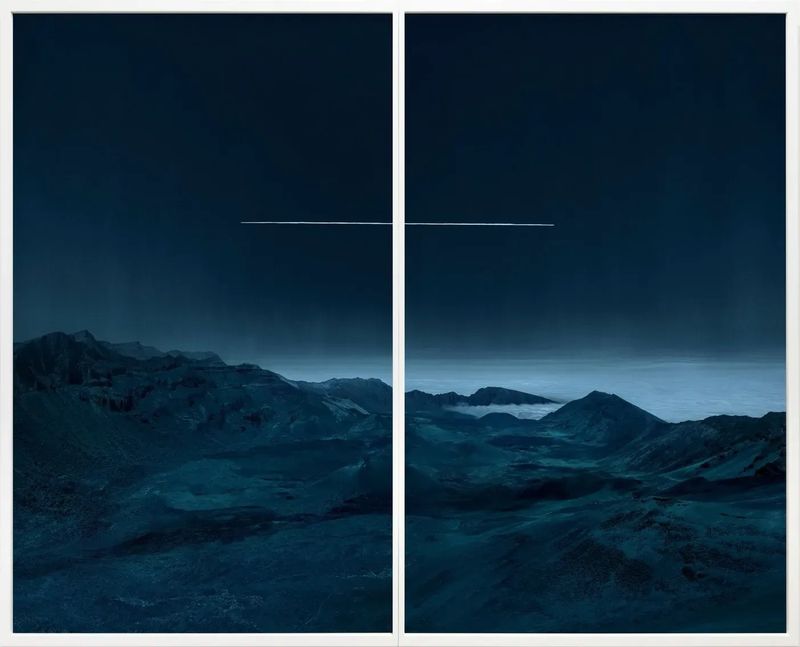
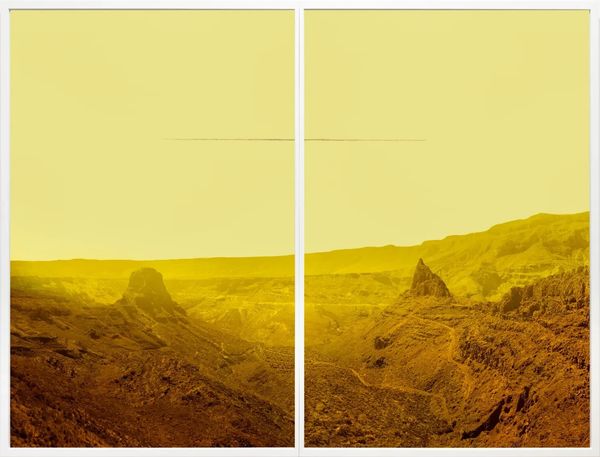
With The Skeptics, the aim is therefore neither to endorse nor to dismiss these views, but rather to understand why these debates persist and what they reveal about our need to produce and circulate this kind of story. By focusing on the issue of magical thinking, the project seeks to re-establish connections that have been set aside. This involves, in particular, working with photographic artifacts, those technical ‘errors’, such as scratches that resemble contrails, which I rework directly on the negative, placing them within landscapes that have hosted large gatherings of believers. In sociology, there is the concept of “symmetrical sociology”, which involves placing opposing positions on an equal footing in order to better analyse their underlying logic. It is precisely this method that I am attempting to employ here: each side constructs its own validity, and I observe how, on both sides, systems of evidence, conviction, and representation are constructed.
As you pull skeptics and believers together, it becomes clear that you are less interested in ‘truth’ than you are in the construction of narratives, and the way images are instrumentalized to the purpose of building a convincing story. Why do you think it is important to reflect on this topic, especially today?
Skeptics and believers ultimately share fairly similar tools: they analyze, interpret, and produce images to support a position. What strikes me as important today is that images have never been so ubiquitous, nor so quickly mobilized to construct narratives. They circulate, transform, and are constantly reinterpreted, often detached from their original context. In this context, the question is no longer simply whether an image is “true” or “false,” but rather understanding how it works and what effect it has in terms of persuasion. This, for me, is a contemporary challenge in my work, The Skeptics: viewing images not as evidence, but as constructions. We can no longer simply believe an image.
A substantial part of your project consists of ‘false’ UFO sightings, which are actually cameraless images of explosions. What led you to this idea, and what is the process behind it?
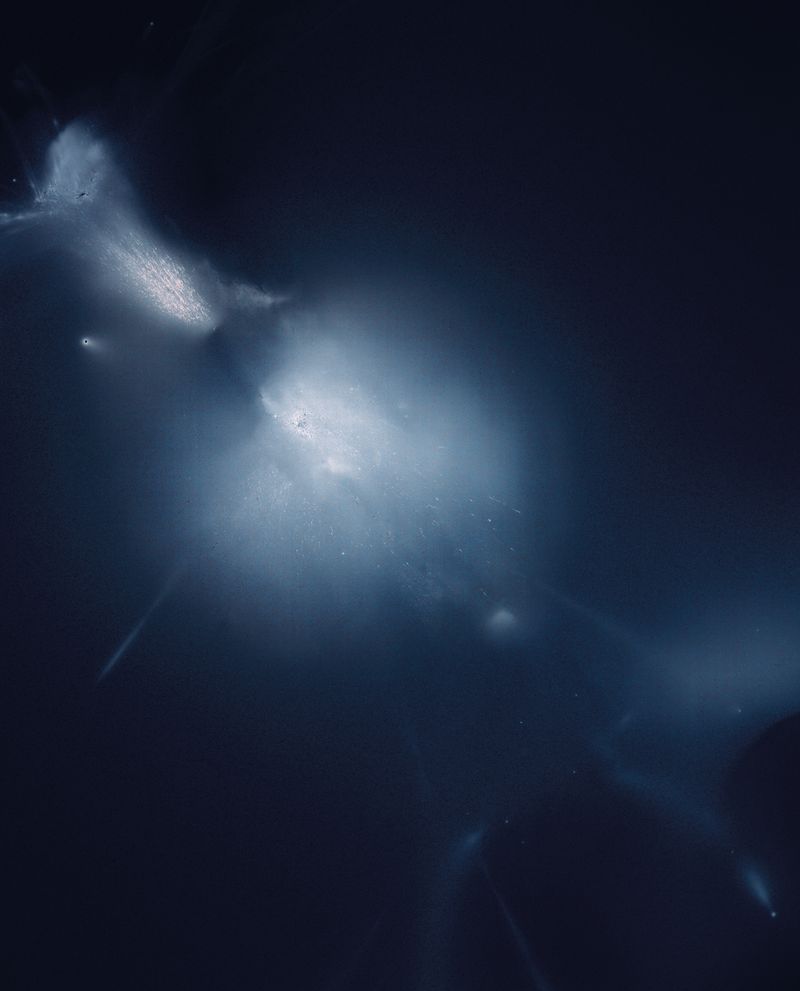
This stems from a phenomenon known as flash blindness, which Richard F. Haines studied at length in his book Observing UFOs. It is a highly technical work, focusing on observation conditions, the subtle mechanisms of perception, and an analysis of the physiological mechanisms of vision. In a way, this is precisely what I seek to recreate by producing these flashes, these burns on 4x5-inch negatives made in the lab without using a camera; I artificially reproduce these forms of “visual impairment.” I intervene directly on 4x5-inch silver gelatin film sheets, subjecting them to brutal exposures—burns that alter the very surface of the negative. The resulting series of abstract images functions as a false collection of apparitions. It creates a tension between the materiality of the image and its capacity to produce the visible, or even the believable. The process remains deliberately rudimentary; it is sometimes extremely random. But it is precisely within this instability that I select the images, when they evoke, despite everything, a scientific imagery such as, for example, that which the Hubble telescope might produce.
You exhibited The Skeptics multiple times: how do you approach exhibitions in your practice, and what do you hope people will take away from them?
The Skeptics is a project comprising several series, each exploring a specific line of inquiry. This structure is reflected in the exhibitions through a variety of forms: photography, video, documentary research, as well as work on sound and soundscapes.
The sculptures, for their part, introduce another perspective, one that is more embodied, almost phenomenological, on these practices related to scientific ufology. They allow us to shift our gaze, to move beyond an interpretation based solely on the image. What interests me, through these juxtapositions of media, is creating friction between different modes of representation. By combining various forms, visual, auditory, and material, I try to put photography under tension, shifting it from its status as a documentary image toward something more reflective.
The installation at PhMuseum Days functioned as a sculptural intervention, placing the work on industrial shelving, like an open archive. What are the main aspects of your work that you think emerged from this presentation?
As part of the PhMuseum Days, the installation became a space where the project's different layers could coexist, sometimes contradicting one another, and opening up zones of uncertainty. When I exhibit my work, my hope is that the viewer will not seek to make a definitive judgment, but rather take the time to investigate, to observe how these forms of belief and evidence are constructed.
The Skeptics was recently published by RVB Books. What was the process like? Did the experience of making a book show you anything new about this project?
A central question in my research, and particularly in The Skeptics is: how do people come to believe? The creation of the book, a collaborative effort with RVB Books and graphic designer Clément Gicquel, provided an opportunity to delve once again into the archives I have been compiling for nearly ten years. In particular, I focused on the phenomenon observed in the Canary Islands on June 22, 1976, which played a major role in shaping the UFO myth surrounding the archipelago. In this context, the book allowed me to strengthen the anthropological dimension of the project by giving more space to the collective construction of belief. The process unfolded in a way that was both highly structured and quite intuitive. Structured, in the organization into three main sequences and in the way the connections between the images were conceived: a first sequence centered on the archives related to the birth of the myth in the Canary Islands; a second, more central sequence, composed of my own images—landscape-fiction and abstraction; and a third that focuses on forms of contemporary rituality, through images of gatherings of believers on the archipelago. Intuitive, then, in the connections, visual echoes, and shifts between different registers. In my view, the texts by Michel Poivert and Gil Bartholeyns at the end of the book also play an important role: they open up other levels of interpretation, without seeking to close the project, but rather to extend its lines of thought.
Your exhibition at PhMuseum Days was in dialogue with nine more works, displayed in the open space of DumBO. How do you feel about the exhibition path, and the kind of experience it created for visitors?
I found that each of the selected artists’ proposals succeeded in developing a unique way of existing within the DumBO space. The exhibition layout allowed for very different artistic approaches, while maintaining a sense of coherence in the way the works interacted with one another. I was also struck by the quality of the opportunities for interaction—the discussions and talks—which truly extend the exhibition experience while offering moments to delve deeper into the photographer’s research project. One senses that PhMuseum is developing a genuine exploration of the book as a form, but also, more broadly, of documentary photography and its modes of presentation. This creates a context where the image is not merely displayed, but truly placed in tension within the space; I’m thinking of the beautiful installations by Pacifico Silano, Camilla de Maffei, Kush Kukreja, Tara L. C. Sood, and Thomas Mailaender.
What was it like to join us in Bologna for the opening weekend, as part of a group of international artists?
The stay in Bologna was both very smooth and quite intense. Being brought together with artists from very different backgrounds quickly fosters a concentrated exchange, where discussions continue beyond the more formal sessions. What I found particularly interesting was how these encounters extended beyond the simple framework of the exhibition. There is a genuine exchange of practices, of ways of thinking about images, but also of perspectives on documentary and fiction. The context of the opening inevitably accentuates this dynamic; everything is quite intense over a short period of time, which generated a wonderful collective energy during the 2024 edition.
Any advice to share with other photographers on how to present their work for the application?
I submitted my application fairly intuitively, drawn by what the theme might bring out in relation to my work and by how the jury might interpret it. In that sense, I proposed a selection of images that directly echoed this theme, and I also prioritized and included numerous views of the exhibition and installation of my work, The Skeptics. I think that’s what caught the jury’s attention—namely, the way the work can exist beyond the images alone and blend different photographic bodies, whether in a book, an installation, or other forms. Today, this way of presenting work is an integral part of my practice.
--------------
David De Beyter's The Skeptics was selected in 2024 through the PhMuseum Days Open Call. The 5th edition is now welcoming submissions, giving visual artists the opportunity to exhibit at our International Photography Festival taking place on 1-4 October in Bologna, Italy. For the first time, the festival will happen jointly with Photobook Mania, the 2nd edition of our publishing fair, offering a complete platform to enjoy contemporary photography in person.
The deadline is set for 7 May, while there is a reduced entry fee option until 16 April. Learn more and apply at phmuseum.com/d26