CURAE 2025/26 Alumni On The Online Curatorial Practice Masterclass
-
Published18 May 2026
-
Author
Ahead of the upcoming edition, we’re looking back at CURAE 2025/26 to talk with participants about their experience working with Erik Kessels and how their perspectives have shifted.
CURAE - Online Masterclass on Artistic Development is designed to guide artists in exploring how "taking care" of their personal identity, career trajectory, and deepest obsessions can be distilled into a powerful personal brand and authentic photographic projects. Running from October 2026 to May 2027, the upcoming edition will be led by the artist, designer, and curator Erik Kessels.
With enrollment open until 28 May, we touched base with Antigoni Papantoni, Charalambos Artemis, Dumitrita Razlog, Kathy Anne Lim, Linzi Bugeja, and Maxim Zmeyev, who are just now concluding the 8-month program on Curatorial Practice with Erik Kessels.
Follow the evolution of their projects by joining CURAE’s Year-End Live Presentation this Thursday, 21 May, at 3pm CEST.
Can you give us a glimpse of the project you have been developing during CURAE?
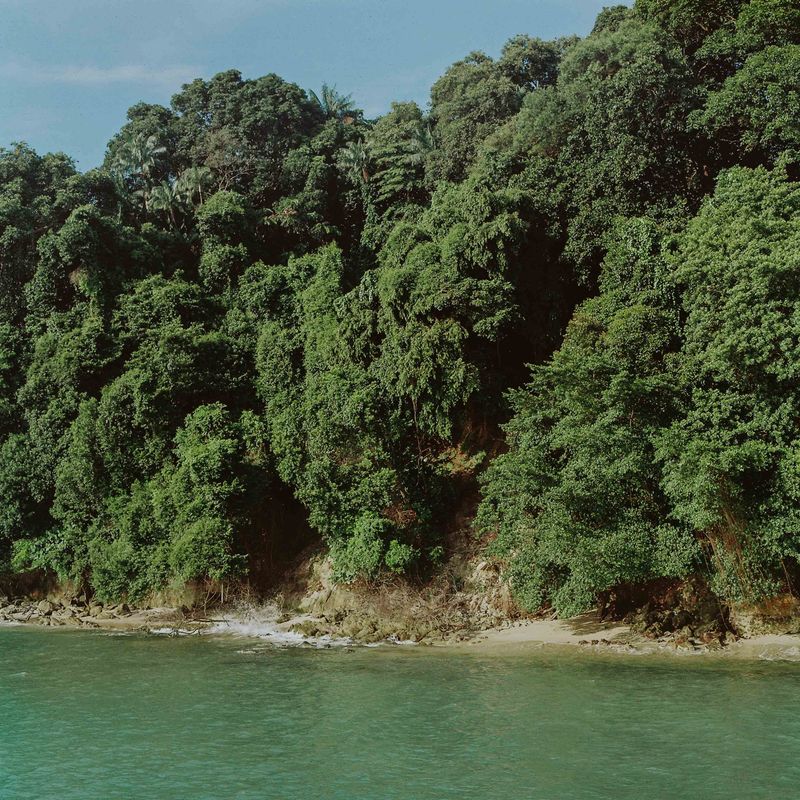
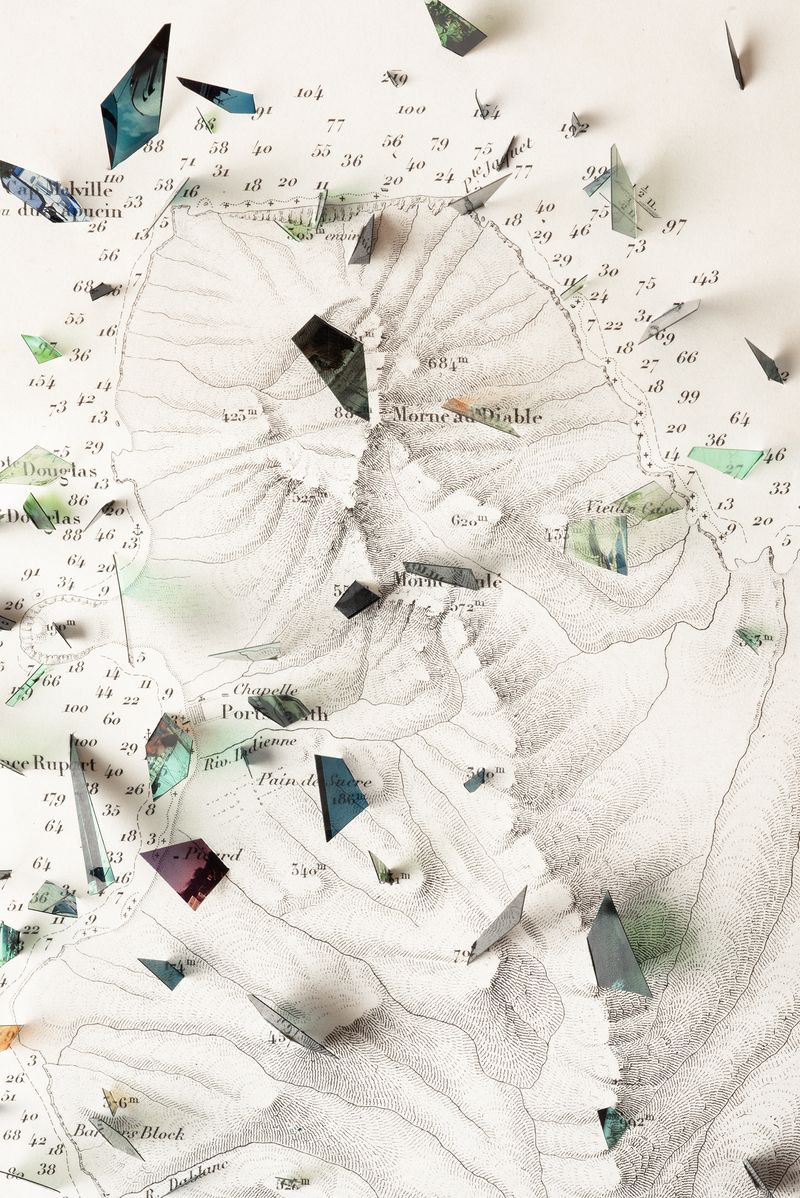
Charalambos Artemis: The project intervenes in the archive of colonial measurement. Working with found objects accumulated over years without a predetermined plan, including maps, scientific illustrations, video footage, and sailing photographs, I began bringing these materials into conversation with each other and then physically disrupting them. Fragments cut from a private sailing archive are imposed onto a maritime chart of Dominica, puncturing its surface and forcing new configurations from the wreckage. Mapping pins pierce a 19th-century illustration of the Sisserou parrot, named "imperial amazon" by British colonial zoologists, turning the gesture of territorial marking back on the very document that performed it. The work does not attempt to restore what was fragmented. It honours the fracture and finds in it what Glissant called a poetics of relation, where multiple irreducible histories become visible precisely where the claim to one truth collapses.
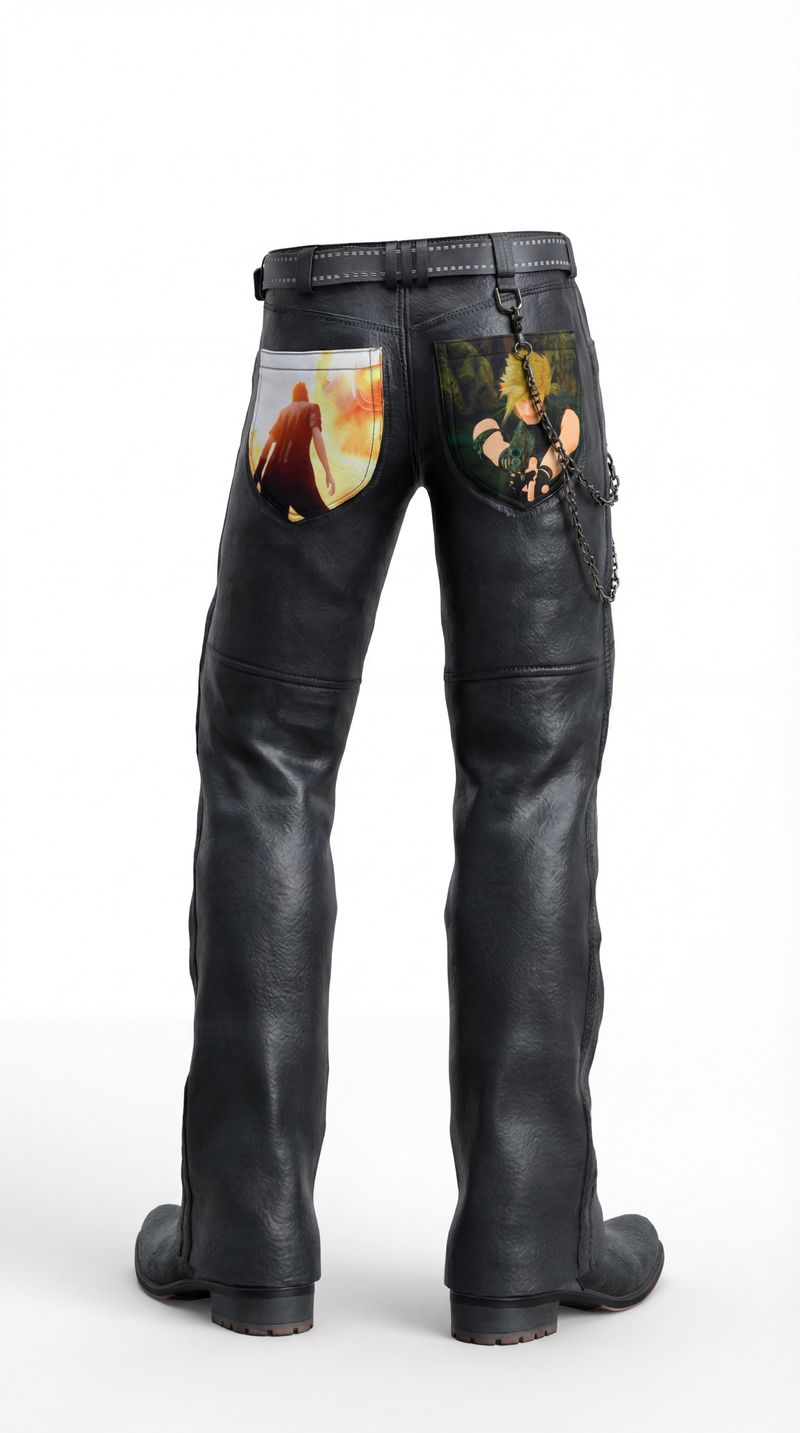
Maxim Zmeyev: I developed Prompto 5.36., a project based on the image-making system in the video game Final Fantasy XV. I focus in particular on Prompto, a non-playable character and one of the three companions who accompany the gameʼs main character – the character controlled by the player – throughout the journey, while producing an ongoing photographic record of what unfolds along the way. What interests me is a layered form of delegated vision: first inside the game, where images are produced through an NPC and a game system rather than directly composed by the player, and then beyond the game, where chains of AI tools work through that archive – selecting photographs, constructing a narrative, writing interpretive and curatorial texts, and eventually helping shape the exhibition objects themselves. The project reflects on distributed authorship, automated image production, and the migration of virtual images into physical exhibition form. During CURAE, a crucial part of the process was thinking through how this work could move beyond the screen and become physical, spatial, and installational.
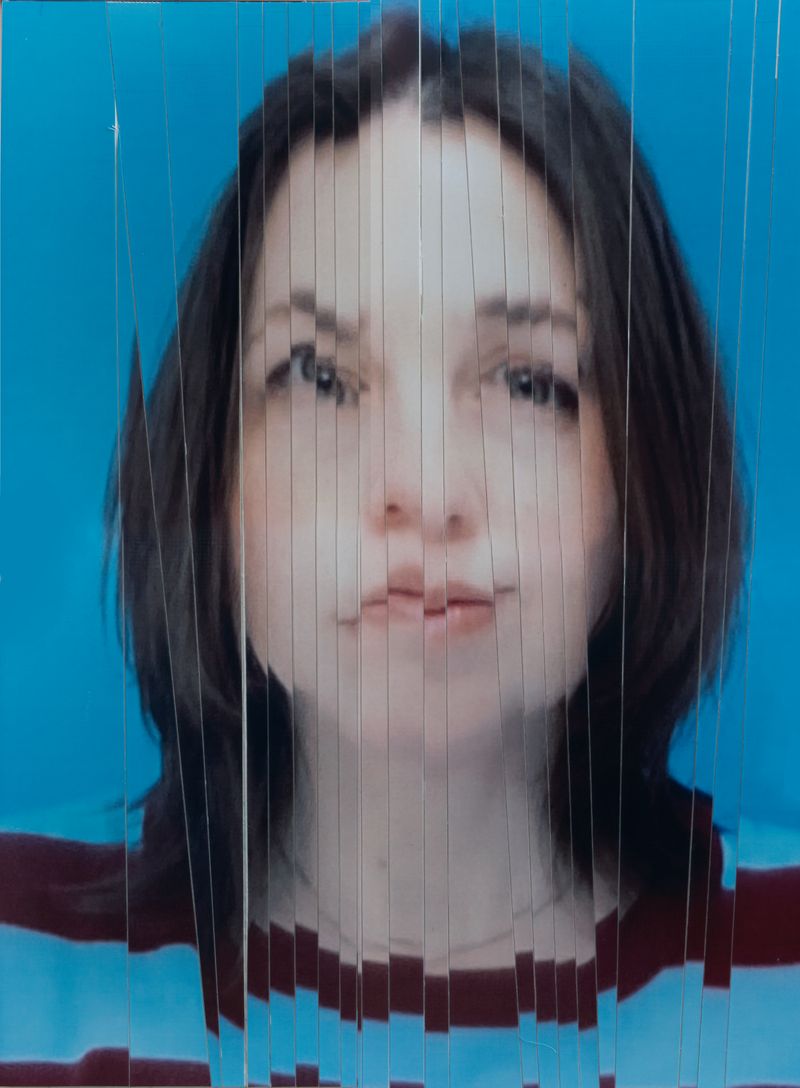
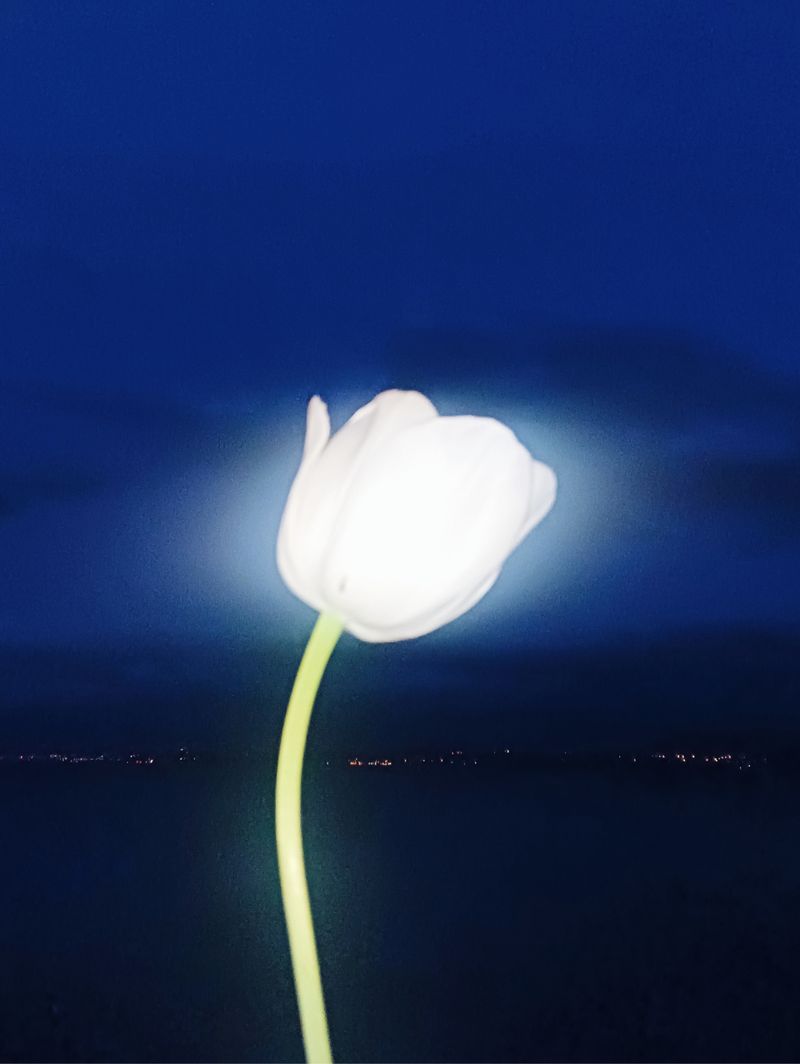
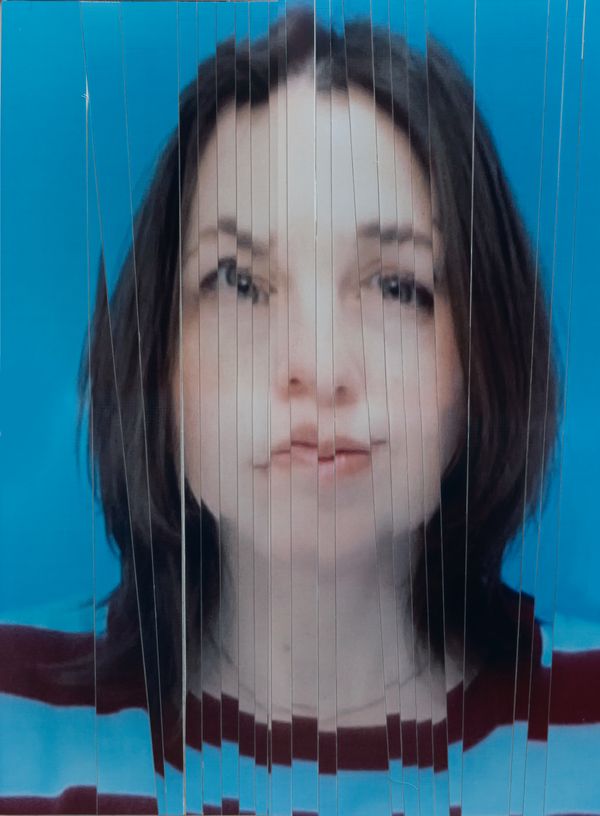
Linzi Bugeja: Before the class began, I was already working on this project. I had started with the realisation that an aesthetic from my own youth was resurfacing in a new generation, and from this, I was pulled back into nostalgia. The images were beautiful, but did not communicate the underlying discomfort I was feeling about this, the gap between what femininity promises and what it actually delivers. The work evolved into a form of physical interventions – portraits of myself and friends, cut apart and reassembled, occasionally referencing florals, blood, and the body. I do not feel the work has yet been fully resolved.
Dumitrita Razlog: The project started from the first assignment I received from Erik: to write an artist statement as if I were ten years older. At first it seemed like a simple exercise, but then I took some time to weigh just how much loneliness, isolation, and financial discomfort I could still endure in order to continue being an artist. Up until this assignment, I used to tell myself periodically that in a few months I would get a job and start a normal life. Erik cut the umbilical cord I had for years with that idea. The project is called I Found Myself In The Silence Of A Missingness, and it’s about all the things I gave up during the masterclass in order to continue being an artist.
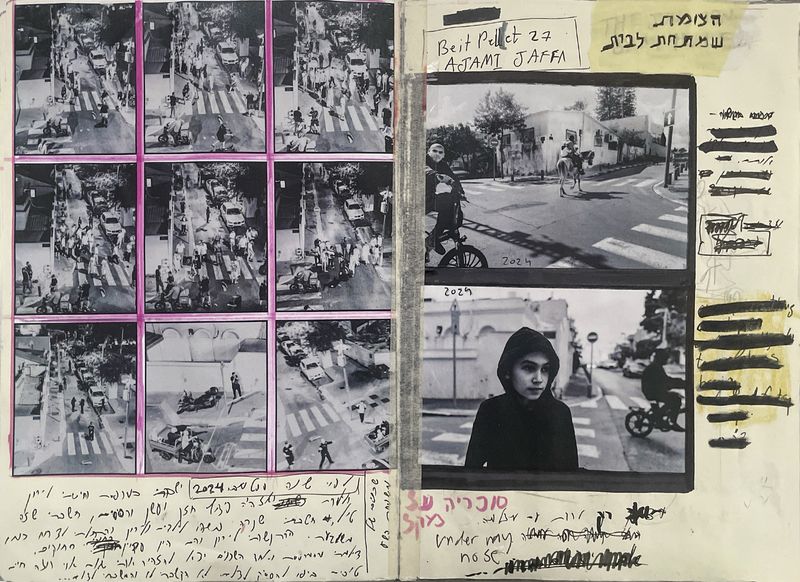
Antigoni Papantoni: I focused on the curation of two of my long-term projects. In You Can’t Go Home Again, I reflect on my experiences of the past decade, feeling like a sailor adrift between cultures, gradually losing my sense of belonging. This sense of disorientation inspired me to develop an intuitive, autobiographical photography practice that explores elusive concepts of home and identity. The work unfolds as a visual road movie, mirroring a journey from unfamiliarity to intimacy. KAIROS explores the lasting impact of violence and the ways it is often denied, minimized, or silenced. Drawing from the same fifteen-year archive of image-making and combining photographs with personal texts, it examines how reclaiming memory can challenge erasure and rebuild a sense of agency.
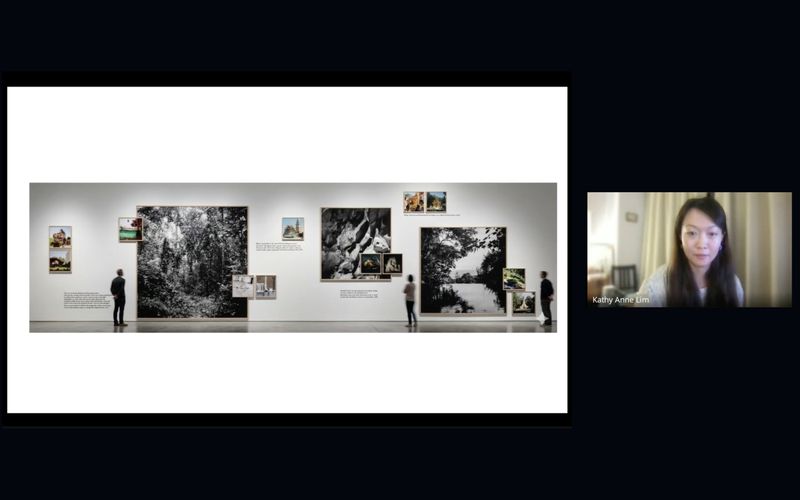
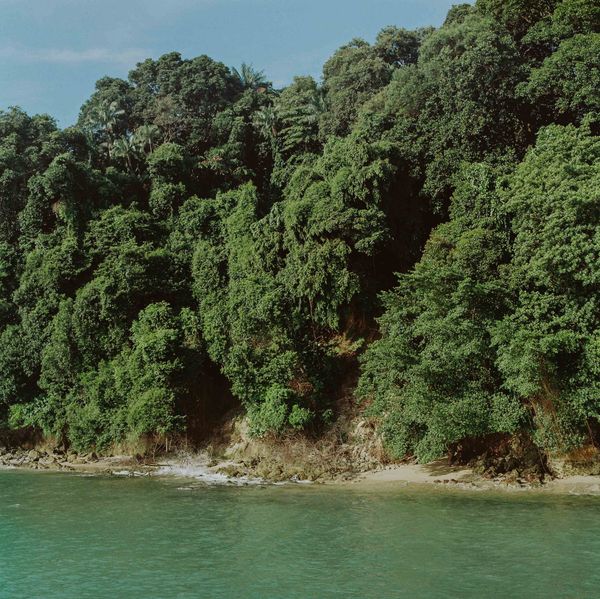
Kathy Anne Lim: Echoes Of A Solstice undertakes biannual repeat photography anchored to the June and December solstices, beginning in 2023 and continuing onward. The work is built on a simple premise: that constancy of vantage, (almost) of frame, can render perceptible what otherwise escapes notice. A typological method holds Singapore’s southern shoreline steady within the images, allowing change to surface not as spectacle but as accumulation. What appears at first glance to be the same scene becomes, over the years, a palimpsest of small departures. The project tests whether repetition can be a form of revelation. In this convergence, the photographs attempt to inhabit a charged intersection: between documentation and anticipation, between the empirical and the speculative. They record a landscape on the cusp of redesign by man or by nature, where seawalls, shifting shorelines and environmental disasters gesture toward futures not yet built, and where adaptation becomes both promise and erasure.
Erik Kessels’ teaching style is personal and direct, excelling at instantly breaking the ice and getting the conversation started. Is there an aspect in his approach that particularly resonated with you?
Maxim Zmeyev: Erik Kesselsʼ teaching style is personal and direct, excelling at instantly breaking the ice and getting the conversation started. What I appreciated most was Erikʼs directness and his ability to keep the conversation anchored in the work itself. We did not waste time circling around external agendas or ready-made positions; we spoke about projects, form, ideas, decisions, and possibilities. For me, that was extremely valuable. Artists need spaces where the work can be confronted honestly and clearly, without unnecessary noise around it. Erik created exactly that kind of space, and I found it both refreshing and energizing.
Dumitrita Razlog: Through his way of being, Erik created a space of comfort for me within a state of discomfort. Although my work is always connected to the way I experience life, I have never imagined I would have the courage to make a project about giving up art. Maybe I cheated a little, because in the end I realized that what I can actually give up is something else – I can move from one country to another and leave behind everything I’ve built and accumulated so far, just to find new resources to continue being an artist.
Charalambos Artemis: He doesn't ease you in gently. He cuts straight to the point, which can feel like a jolt at first, but that directness does have a way of cutting through the noise. His bluntness, though not an approach I would personally adopt, forces you to assess your work without the cushioning of context, and that is a useful discipline. I learned to filter what was relevant to my practice and let the rest go, which is itself a valuable skill.
Kathy Anne Lim: What stayed with me was the candour. Conversations weren’t polished; they were rather lived-in. We spoke about making, about money, about the uneasy act of putting work into the world. At times, it felt less like an online classroom and more like a space where people admitted what usually stays unspoken during these challenging art-making processes. I think we’re often surrounded by support that is generous but careful, encouragement that stops short of saying what might actually move the work forward sometimes. Erik Kessels doesn’t really operate that way. He says the difficult thing, but does so with a kind of precision that makes it useful rather than deflating. Honesty lands constructively. It gives you something to work against, or with. There was a sharpness to his feedback, but never without humor, of course. It arrives, settles, and stays, less as judgment, more as a suggestion to improve on your work, place more thoughtfulness into the project, or prompt to look again.
Linzi Bugeja: Erik encourages us to be open and vulnerable very quickly – which I found to be helpful for an online setting. We do not have the time or luxury of being in the same space with one another to get to know one another. There have been times when I have felt a little too vulnerable, but I don't necessarily think it was a bad thing. He often says that discomfort is the best place to be, because it pushes you the farthest. Having encouragement to be unsure helped me sit with uncertainty more comfortably.
Antigoni Papantoni: Erik’s ability to open up perspectives on curation beyond the beaten track particularly resonated with me. His encouragement to focus on each artist’s personality as the foundation of the work felt both refreshing and grounding – placing personality first, and the work after, offered a meaningful shift in how I approach curation.
What pushed you to take part in CURAE at this particular stage in your practice? Were you motivated by any specific goal, or need?
Dumitrita Razlog: I wanted to work with Erik because I really appreciate his artistic practice. Recently, I began a PhD in photography, even though my background is in painting, and I felt that working with him would be a meaningful way to expand my perspective. In the end, I received much more than I expected.
Charalambos Artemis: My primary motivation was curiosity. Finding new ways to look at my own work through a different set of eyes. I was at a point in my practice where I needed a structured yet flexible framework that could accommodate my schedule and push my thinking without dictating its direction. CURAE offered exactly that: a program broad enough to allow independent development, while providing the critical environment to interrogate the work more rigorously. The opportunity to engage with a different curatorial perspective than I might have sought out on my own turned out to be instructive in its own right.
Linzi Bugeja: When I applied, I was on the verge of a lot of upheaval. After spending years in a job that was about to end, and a desire to return to art, what I actually studied, but never fully pursued. It was an opportunity to get some guidance in a world I felt/feel distanced and disconnected from.
Antigoni Papantoni: Before enrolling in CURAE, I had primarily focused on presenting my work through photobooks rather than exhibitions. At that particular stage, I felt the need to expand my practice into exhibition-making. The timing proved ideal, as during the course I had the opportunity to work on three exhibitions. Given the prolific nature of my practice and my extensive image archive, I was especially motivated to work with Erik, whose approach to editing and working with large bodies of images strongly resonated with my own needs.
Maxim Zmeyev: Yes, I had a very concrete reason for joining. My practice is based in virtual photography, and I had reached a point where I felt a real crisis in how I was exhibiting my work. Too often it remained at the level of photographs on a wall, and I wanted to transform that approach. I wanted my work to become more object-oriented, more spatial, and more installation-based, but I did not yet feel fully equipped for that shift. It is exciting to enter a new field, but it can also be intimidating. In that sense, Erik was the perfect person to learn from. His way of rethinking photography beyond the flat image and into the realm of objects and exhibition forms is extraordinary and deeply encouraging. When you see that someone has managed to do this so powerfully, it gives you courage to think: maybe I can do it too.
Kathy Anne Lim: I tend to stay behind the camera, both by habit and by temperament. This particular project, Echoes Of A Solstice, though, asked for something longer; I was considering that it might stretch across a decade. I wasn’t sure yet if it could hold that kind of time. CURAE felt like a place to test that uncertainty. To share the work out loud, to see it from a distance. I came in trying to understand if it was worth continuing. I am leaving with the sense that it had begun to take shape, not finished, but carrying enough clarity to move forward, with a steadier confidence in what it could become.
Has your perception of your own work evolved during CURAE? Are there aspects of it that you could better understand, either in its essence, or in the way you communicate it to an audience?
Maxim Zmeyev: One of the most important changes was that I became less defensive about the personal layer in my work. Before CURAE, I deliberately kept my projects at a distance from my own biography and emotions. I preferred to think of myself as an observer, almost coldly rational, with the work, the meanings, and the personal sphere kept apart. But during the course, I understood that this separation is never complete. Even when I try to remove myself from the work, it still carries my perspective, my sensitivities, and my inner structure. Erik helped me accept that the personal dimension does not weaken a project; it can actually give it more depth and precision. That was an important shift for me.
Dumitrita Razlog: This year has been a very intense one for me, both professionally and personally. Working with Erik was one of the experiences that helped me grow in a direction that feels right for me, while navigating change and new opportunities without losing myself along the way. On the contrary, I gained a clearer understanding of the kind of artist I am, and I now feel a stronger sense of confidence in – and respect for – my practice. I feel more grounded and realistic, which, surprisingly, also makes me more optimistic.
Linzi Bugeja: As someone who had floated away from art and questioned my ability to even make it anymore, I found CURAE helpful in finding a voice that I had thought I had lost. It pushed me to be more intellectually rigorous with myself and to examine my motives for making. I do feel that there has been an evolution, and I have started to gain some much-needed confidence in my perspective.
Kathy Anne Lim: The shift was less about the images themselves and more about how they live beyond the screen and frame. I began to think about sequencing, about design, about the space a photograph occupies when it is no longer standalone. Just as important was the act of speaking about the work. Letting it circulate, even in unfinished form. That openness led to unexpected connections and conversations, collaborations, and a publisher taking interest in an earlier series. The work extended itself simply by being shared.
Charalambos Artemis: The most important shift was understanding that my work is asking for opacity, not transparency. I had been approaching presentations and contextualisation with the instinct to clarify, to make the work accessible by explaining its intentions. CURAE helped me see that this was working against the images rather than for them. Allowing the work to speak for itself, to hold its ambiguity, is not a weakness. It is where its power lives. That realisation has changed not only how I present the work, but how I make it.
Antigoni Papantoni: My perception of my work is part of a continuous evolution, and being exposed to Erik’s perspective as well as the feedback and practices of fellow photographers has significantly contributed to this process. The masterclass strengthened my confidence in embracing the experiential nature of my work, while also helping me articulate and communicate my ideas more clearly.
How has the masterclass challenged the way you think of curation? Have your ideas on what you think is "acceptable" or "expected" in curatorial practice shifted along the path?
Antigoni Papantoni: More traditional approaches to curation – such as presenting work as framed prints on a wall – don’t naturally resonate with my practice. Working with Erik challenged me to rethink what is considered “acceptable” or expected in curatorial formats. His approach, which is bold, provocative, and consistently pushes beyond conventional boundaries, encouraged me to embrace more experimental and open-ended ways of presenting work that feel more aligned with my own.
Kathy Anne Lim: For me, curation used to feel distant, something formal, almost inaccessible. I had only worked in small formats: books, zines, and contained spaces. The masterclass shifted that. It made me think in terms of how people experience work, bodies moving through space, of images unfolding over time, and how a work is encountered rather than just seen. In a place like Singapore, where space is always negotiated, that question becomes sharper. At one point, I imagined an exhibition in the water, something you would have to kayak through, moving from image to image. It may or may not happen, but the thought itself opened something. The boundaries are more flexible than I had assumed.
Charalambos Artemis: CURAE reinforced for me that curatorial practice is deeply shaped by the individual sensibility behind it, and that when a single perspective anchors an entire programme, it is worth approaching with both openness and a degree of critical distance. I came in with a reasonable sense of Erik's curatorial world, so there were few surprises in terms of aesthetic outlook. What the experience did crystallise, however, is that encountering a curatorial voice very different from your own, even one you don't fully align with, sharpens your understanding of your own instincts and values. In that sense, the challenge was productive.
Maxim Zmeyev: What changed most was not only my idea of curation, but the scale on which I allow myself to think. I live with very limited means, and over time, I had become used to imagining my work in a kind of “sticks and scraps” mode, always adapting the form of a project to poverty before even asking what the project itself actually wanted to become. This is a strange contradiction in my practice, because I work with digital technologies and complex image systems, yet when it comes to materialising the work, producing it, printing it, and installing it, my thinking would suddenly collapse into self-limitation. CURAE helped me break out of that mentality. Erik managed to shake it loose and return ambition to my thinking. He reminded me that not being able to afford something right now does not mean I should stop imagining it. I began thinking again in terms of large-scale, precise, ambitious exhibitions, without immediately censoring myself. Whether I can realise them or not is another question, but recovering that ambition was a crucial transformation for me.
Linzi Bugeja: There is some tension for me with this answer. I have a genuine appreciation for photo-based installation, but also want a single image to be able to stand alone. I don't think that my perception of what is acceptable or expected has changed much, but I have a deeper understanding of the need or desire for more interventionist exhibitions. We are already so saturated with photographic images that perhaps this is now more of a necessity. I have begun to see ways in which I can be more ambitious with my own presented work.
Dumitrita Razlog: The masterclass helped me understand curating as an extension of the artistic concept, and the works as forming a body that collectively tells a story. It was something I had already been doing intuitively, but the process allowed me to deepen and consolidate this approach within my practice.
Which Studio Visit particularly stuck in your mind, and why?
Maxim Zmeyev: Without any doubt, Claudia Küsselʼs session. She is brilliant, sharp, generous, and incredibly experienced, but what impressed me most was her openness. She spoke about curatorial work not as an abstract cultural ideal, but as a real practice with all its complications, hidden structures, practical obstacles, and financial realities. She was precise, generous with references and materials, and completely unafraid to address the difficult parts directly. That honesty made a deep impression on me. It was an exceptional session.
Dumitrita Razlog: It’s hard for me to choose just one, because all the Studio Visits were inspiring in different ways. Each one added an important piece to my understanding of what it means to be an artist – from working across disciplines, to organizing ideas, managing energy and finances, and developing a project. What stayed with me most was the openness of the people we met. Many of them shared their vulnerabilities very honestly, which created a sense of closeness and recognition between us, even though we come from different contexts. It made the whole experience feel more human and helped me navigate my own questions and uncertainties more easily.
Linzi Bugeja: It is incredibly difficult to pick one specific Studio Visit as they were each enriching in different ways. Personally, after each one, I felt such a rush of inspiration that I felt it almost impossible to sleep despite it being 2:30 am for me. Lebohang Kganye was very engaging as she discussed her process and materiality. I felt such inspiration and permission to be more personal with my own practice. Thomas Struth has been an artist I have long idolised, so being in the same virtual space with him alone was enough to feel wholly special. Ann Griffin spoke about how the industry is changing with quickly evolving AI and why art is so important. And Claudia Küssel gave us all very practical advice on funding and presentation, as well as how to get your work seen by someone helpful.
Kathy Anne Lim: Thomas Struth spoke about exhibition-making as rhythmic, about pacing, about where to pause, perhaps where to let the eye rest. He reframed the space as something almost musical. That stayed with me.
Charalambos Artemis: The Studio Visits were perhaps more akin to focused portfolio presentations than traditional studio encounters, which is an inevitable consequence of the online format. Within that constraint, the sessions that stayed with me most were those where the artist allowed genuine vulnerability into the conversation. When someone shares not just the finished work but the doubt, the process, the false starts... Those moments reminded me that being open about uncertainty is not a liability in artistic practice. It is often where the most honest and resonant work is located.
Antigoni Papantoni: The Studio Visit with Lebohang Kganye particularly stayed with me, as I was not familiar with her work beforehand. Her presentation was both warm and deeply moving, offering a very personal entry point into her practice. At the same time, the session with Thomas Struth was equally memorable – his presence and perspective as a highly experienced and influential artist brought a different kind of depth and reflection.
What was it like to share this experience with peers across different continents? How do you believe participating in group sessions contributed to developing your project or ideas?
Linzi Bugeja: The time zones made the class more difficult. Showing up from Japan very late at night and early morning was not easy. However, it was worth it to be able to access a European sensibility that has never been readily available to me as a Canadian living in Asia. Everyone was supportive and made interesting suggestions of different ideas, artists, and aesthetics to explore.
Maxim Zmeyev: I was very lucky with my group. It was incredibly diverse, and at the same time very strong: different practices, different sensibilities, different visual languages, but a very serious level of commitment from everyone. That kind of environment is invaluable. It gives you support, but it also gives you perspective. The group sessions helped me understand how my work resonates outside my own frame of reference, and they gave me the chance to test ideas in front of people who approached images and projects very differently from me. That was both stimulating and genuinely useful.
Kathy Anne Lim: There’s a quiet generosity that comes from people looking at your work from elsewhere with different contexts, different ways of seeing. In a way, I guess distance can sharpen certain things? What feels obvious to you isn’t always so to someone else. The group became a kind of testing ground. Ideas moved, shifted, returned with new weight. Sometimes it was a suggestion, sometimes just a question that stayed with you longer than expected.
Dumitrita Razlog: This was one of the most beautiful parts of the masterclass. Sharing the experience with people from different continents meant entering very different cultural realities, rhythms of life, even time zones – and yet trying to meet in the same shared space. Despite these differences, a very warm and safe space was created, where vulnerability and jokes could be shared quite openly. That had a strong impact on me and on my project. It made me realize that what I was struggling with was not so unique – in many ways, it was something shared. It made me feel less alone. As a painter, I spend a lot of time in isolation. And meeting people from such different contexts broke the idea that our problems are specific to where we come from. It reminded me that being an artist is not separate from being a person. Underneath all the roles we attach to ourselves, we are dealing with very similar questions. And there is something quietly grounding in that realization.
Antigoni Papantoni: Connecting and reflecting with peers from across the world created a highly valuable sense of community. Being able to test ideas and see how they resonated with others provided meaningful and constructive feedback. At the same time, following the development of each participant’s project was consistently inspiring and offered new perspectives that enriched my own process.
Charalambos Artemis: The group sessions produced real moments of exchange, perspectives I wouldn't have encountered otherwise. That said, there is an intimacy and spontaneity to working physically alongside others that a screen simply cannot replicate. The online format works, but it asks more of everyone involved. What I took from the group dynamic above all was that vulnerability shared across a group, even a virtual one, tends to resonate. Showing uncertainty, showing where you are still searching, connects people in a way that polished presentations rarely do.
What advice would you give to future participants to make the most of the experience?
Maxim Zmeyev: If you are ready for a friendly kick that can be transformed into real energy for your work, this is the right place. CURAE is especially valuable if you are willing to stay open, accept pressure as something productive, and turn that momentum into work rather than paralysis. Bring your unfinished thoughts, your uncertainty, your ambition, and your discipline. If you engage seriously, the course can shift something fundamental in the way you think and work.
Charalambos Artemis: Do your research before you apply, thoroughly. Look carefully at the mentor's body of work, read their interviews, and watch any available talks or videos. Try to understand not just what they make, but how they think, how they communicate, what they value in the work of others. Ask yourself honestly whether their perspective is one that can genuinely challenge and expand your own practice, rather than simply confirm what you already believe. A programme like CURAE is only as valuable as the investment you bring to it. Arrive with real questions, stay open to being uncomfortable, and trust that the moments of friction are often the most instructive ones.
Linzi Bugeja: Be prepared to be challenged in the best possible way.
Dumitrita Razlog: I would tell them to have the courage to be a bit playful and not too serious. In that space, real exchange happens – ideas move more freely, things become more open, and less fixed. It’s a space that encourages you to shift perspectives, expand how you see your practice, and connect with new people in meaningful ways.
Antigoni Papantoni: To be as present and engaged as possible, as the online sessions can be demanding in terms of concentration. It’s also important to trust the process and the group, as much of the value comes from openness, exchange, and collective reflection.
Kathy Anne Lim: Come into the sessions willing to sit with uncertainty. Progress doesn’t always look like resolution. Sometimes it’s just voicing out loud what you feel that isn’t working yet. Speak openly, even when the work feels unfinished. Often that’s where it’s most alive. And listen, your peers will see things you don’t. Not all of it will fit, but something will move the work forward or even take an unexpected direction.
--------------
CURAE - Online Masterclass on Artistic Development is part of PhMuseum's educational program, comprising five different masterclasses that will all share a single intake period running until 28 May, with classes beginning in October 2026 and ending in May 2027. Alternating collective tutoring, seminars, individual sessions, and studio visits, each masterclass exists in a community-driven environment, while providing concrete opportunities to exhibit, publish and distribute your work.
You can take part in one or more programs. Check them out at phmuseum.com/m26
--------------
Participation fee
Before 28 May – If you apply by this date, you can join the program by paying the Regular Fee of €2,200. Since applications will be reviewed on a continuous basis, early submissions receive priority for seat allocation.
If you are offered a place, PhMuseum is happy to write you a supporting letter when you try to secure any external funding opportunities. In previous editions of our masterclasses program, the candidates' fees were covered thanks to the generous contribution of the IWMF Howard G. Buffett Fund for Women Journalists, Mondriaan Fonds, Arts Council Malta, and other programs. Read our guide to 2026 Education Funding for Visual Artists to discover opportunities.