CRITICAE 2025/26 Alumni On The Online Documentary Photography Masterclass
-
Published25 May 2026
-
Author
As we’re anticipating the next iteration of the program, we spoke with CRITICAE 2025/2026 participants about their progress, challenges and the value of peer to peer exchange.
CRITICAE - Online Masterclass On Documentary Photography is designed to guide photographers in expanding their creative practice and research methods. Its goal is to lead participants to complete a personal project, while refining their photographic voice, relationship with the medium, and their own critical documentary strategies. Running from October 2026 to May 2027, the upcoming edition will be led by the photographer, writer, curator and educator Aaron Schuman.
With enrollment open until 28 May, we touched base with Kamila Rustambekova, Maria Beatriz de Vilhena, Kelsy Macuacua, Naoual Peleau, Paula Madrigal and Maria Boy, who are just now concluding the 8-month program led by the documentary photographer Laura El-Tantawy and editor and curator Elisa Medde.
Follow the evolution of their projects by joining CRITICAE’s Year-End Live Presentation this Thursday, 28 May, at 3pm CEST.
Can you tell us about the project you developed during CRITICAE? How has your narrative evolved over the course of the eight-month program?
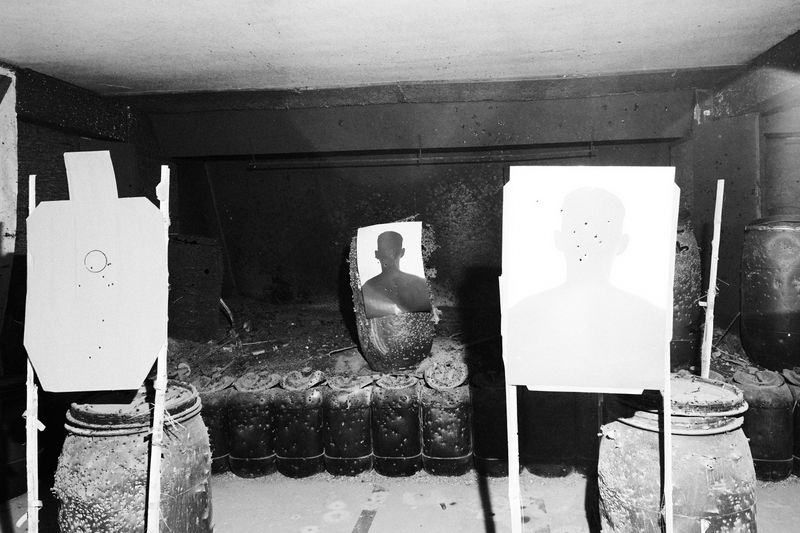
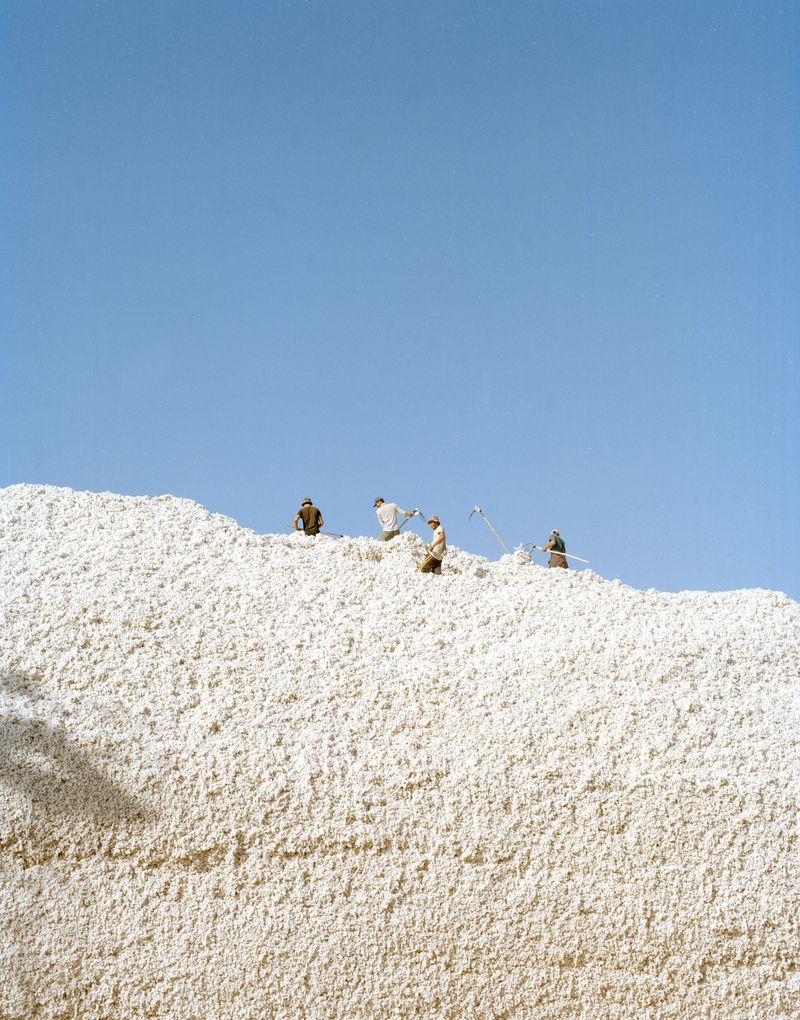
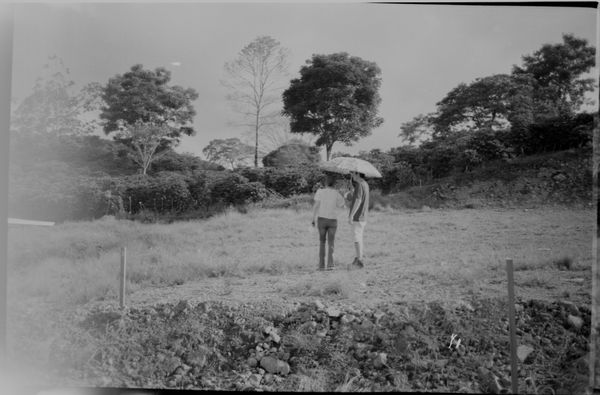
Kamila Rustambekova: In The Home, The Field And The Flux, I follow the life of workers on the fields and try to construct a portrait of these specific agricultural practices in Uzbekistan. I follow how each year farmers migrate to cultivate rented land in the Farish region, constructing temporary settlements that function as villages for eight months at a time, from February till September. These cyclical migrations form a recurring social architecture: communities assembled around labor, then dismantled. During the program, I worked on framing the project and narrowing down the focus. I was also working on the text and planning the last trip to add the images that need to be added.
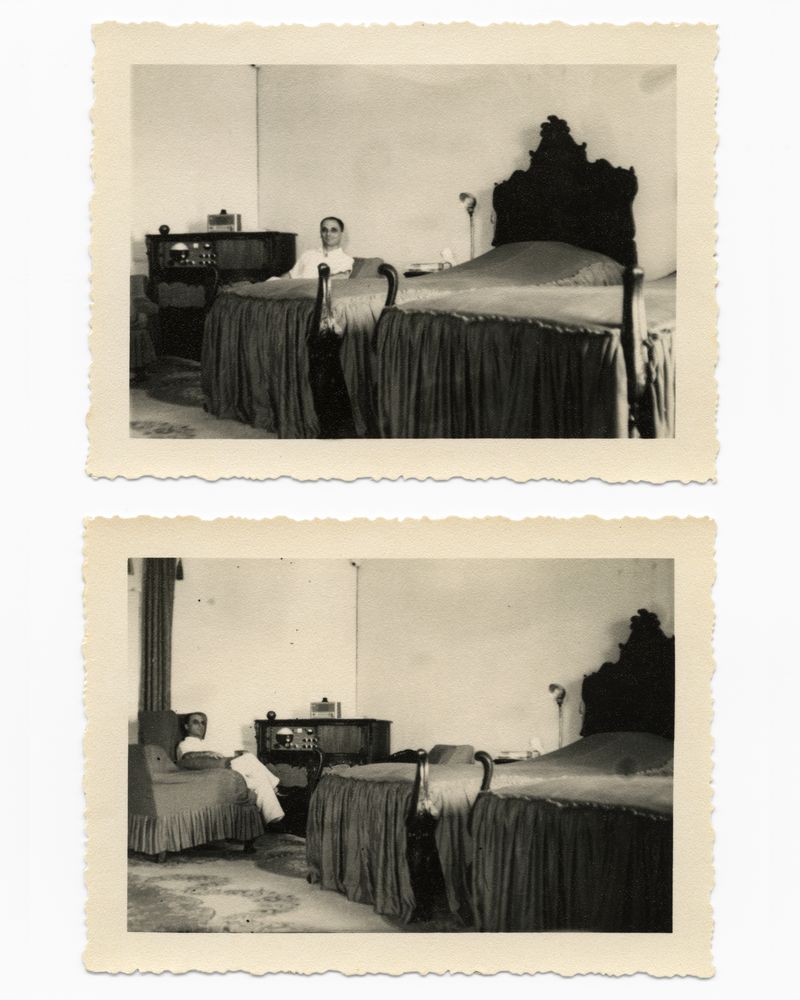
Maria Beatriz de Vilhena: The project I developed during CRITICAE follows a personal narrative and a subject I have been wanting to investigate for a long time. I have been developing my artistic practice around personal and family issues, and I have been specifically interested in working with myths and tales, exploring the barrier between reality and fiction in these tales. The work is entitled Stolen Ink From The Equator Line, and it investigates the period between 1953 and 1954 when a relative of mine was the Governor of a small island country in the Equator line, São Tomé and Principe, a former Portuguese colony in Africa. He was appointed governor after a massacre occurred against the native population, upheld by the regime and the colonizers, and my investigation tries to unfold what happened in that massacre, and what his presence there meant for this territory and its people. I am working between the family perspective, nostalgia, and memory, and the history of São Tomé.
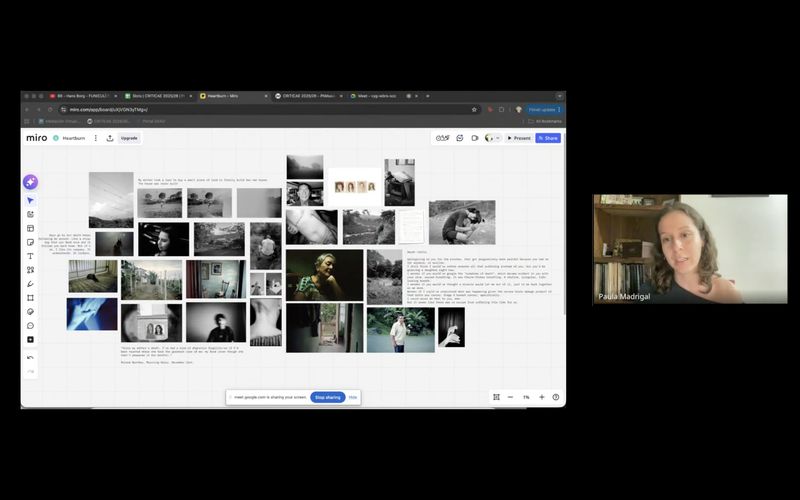
Paula Madrigal: The program has made me visit places I didn’t know were possible for me and this body of work. I began the program feeling stuck and not really knowing where to head. CRITICAE kind of forced me (for good) to explore the many endless possibilities and shapes my work could take form of.
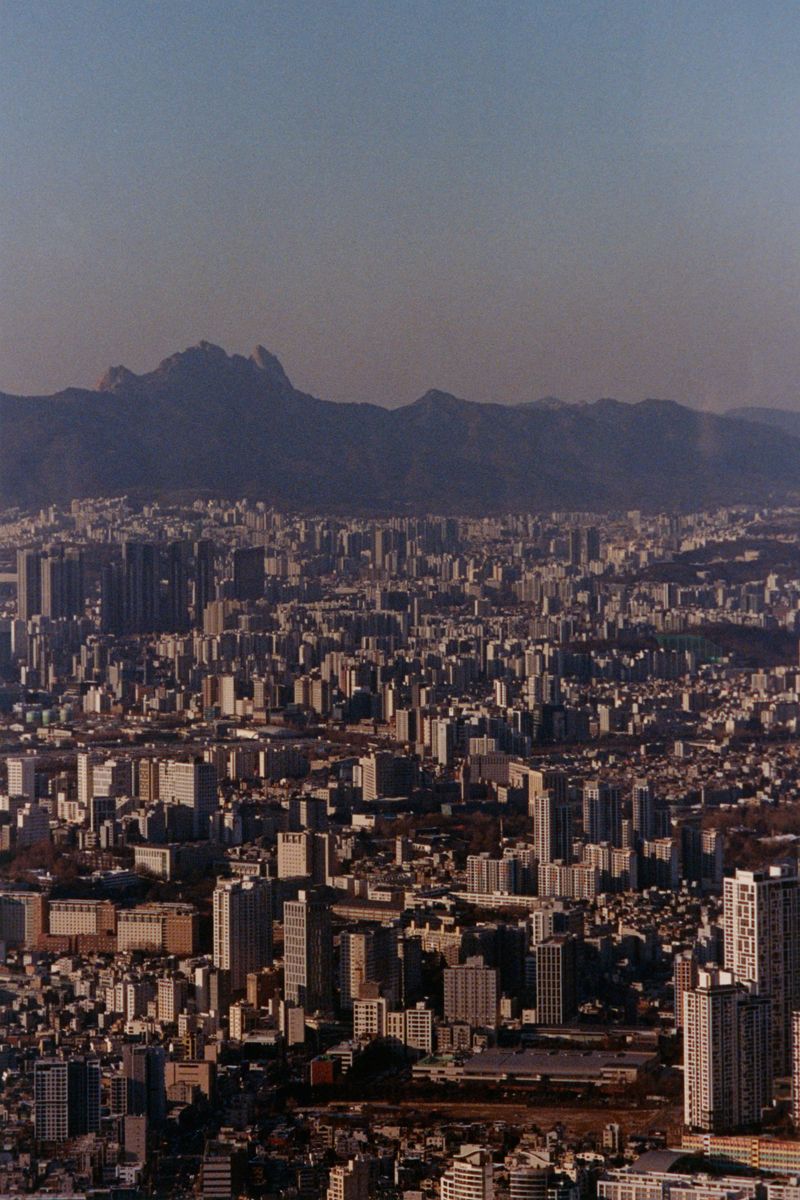
Kelsy Macuacua: Traços Da Maré Azul (Traces Of The Blue Ocean) follows the lives of small-scale fishermen of the Maputo Bay in Mozambique. Initially, the narrative for this project revolved around the rampant emergence of illegal fishing by foreign large fishing corporations in Mozambique’s expansive coast. I wanted insight as to how the small-scale fishermen have been affected and forced to adapt. Although I find importance in having documented the narrative from this pressing perspective, I also wanted to highlight how they are an important element to an expansive ecosystem located in the fishermen village, its immediate surroundings, and local consumers. It’s undeniable that we readily see the by-products of their efforts and hard work, but we rarely get an insight into their process that helps sustain the lives of many. Fishing is a worldwide practice, and as a Mozambican, I felt instant curiosity in knowing how this worldwide practice was ours. From the tools we use, to the different techniques, to the different types of fishermen and how they’re distinguished in my tribal language, depending on how they fish. This process allowed me to really get up close to a community that often lives in the background of the daily commuter and that, prior to this experience, I had observed and occasionally photographed from a distance.
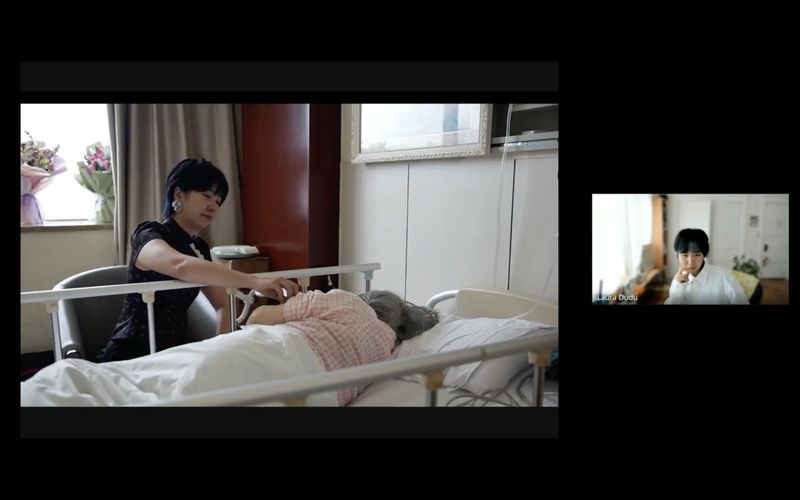
Naoual Peleau: The project I developed explores my relationship with my mother as she approaches the end of her life, alongside my connection to my Algerian heritage. It is a deeply emotional body of work, and not one I believe I could have carried through alone. I began the project a few weeks before the Masterclass. The sessions with Laura, Elisa, and the group were essential in helping me clarify my direction. Before the sessions, I was approaching the subject in a relatively superficial way, without fully engaging with its complexity. Through the exchanges, I was able to shift my perspective and develop a more nuanced and emotionally grounded narrative.
Maria Boy: I developed a project that confronts diverse trajectories of mobility – ranging from forced migrations out of conflict zones to individual searches for new living spaces – with the process of constructing 'home' as an autonomous practice of identity. This work also serves as my current BA thesis project at film school. My narrative evolved significantly over the eight-month program. Initially, I intended to pursue a completely different project. However, as the months passed, my thesis topic became so vital and deeply personal that I decided to shift my focus within CRITICAE to align with it. The program was a period of intense growth. Most notably, it pushed me to embrace color – a medium that was previously 'uncharted territory' for me. My way of thinking about the project transformed not only through the guidance of mentors and lectures but also through the invaluable experience of observing my peers' work. This collaborative environment helped me refine my visual language and find a more profound way to communicate my story.
What motivated you to apply at this particular stage in your practice, and what were you specifically hoping to challenge or 'unlock' in your work?
Maria Beatriz de Vilhena: I was hoping to gain a perspective on the subject I am working on, unlock a new layer in my practice since I am working with archives for the first time, and insert my work in an international community from which I can learn and challenge myself.
Naoual Peleau: I was looking for structured guidance and regular feedback to help me define a clearer direction. I am not used to approaching photography in such a narrative way; my work is usually more abstract and rooted in experimentation. I wanted to challenge this habit by exploring new ways of constructing images and telling a story. I was seeking to rethink my approach to photography and expand how I engage with the medium.
Kamila Rustambekova: As I was working on this project for quite some time, I needed guidance in how to finish it, how to bring it to a close-to-finish state, so I can work with it as a proposal for the book in the future.
Maria Boy: I applied for this program at a pivotal moment in my practice – just as I was beginning to bridge the gap between academic requirements and my personal artistic voice. I was looking for a space that would provide professional external mentorship outside of the traditional film school environment. Specifically, I wanted to challenge my reliance on familiar aesthetic patterns. I felt 'stuck' in a certain way of seeing, and I was hoping to 'unlock' a more courageous approach to visual storytelling.
Kelsy Macuacua: I will be honest and say that I had applied to this program on a whim and was pleasantly surprised that I was one of the selected few to participate in such an enriching experience. I had never before taken initiative on a deliberate project from a clear beginning to its conclusion. This Masterclass experience is the first time I deliberately found myself developing a creative photography project from its inception. I was really hoping that this process would simply start and allow me to evolve, grow, and learn from insightful individuals in the field of photography, both through mentorship and interaction with peers with their own creative touch, and compelling, meaningful stories. All of which allowed me to gain greater confidence and a scope to not only embark on a creative journey for my project, but to also bask in the unknown with an open mind and heart for learning.
Paula Madrigal: When I applied, I just had some pictures that were lying around, not really knowing what to do with them and how to create something out of them. I applied in hopes that sharing my work in this space with other similar people with similar objectives, experiences, pains, or worries would help in feeling that I wasn’t alone when being faced with these challenges.
How did the masterclass expand or complicate your understanding of documentary photography – not just as a genre, but as a way of thinking, researching, and positioning yourself within the world?
Kelsy Macuacua: I have to admit that there were so many factors I hadn’t ever been exposed to or considered before this masterclass. I carry this tool with me that freezes time in a way, and that can at times give a voice to those who otherwise wouldn’t have one. I only truly came to learn the delicacy of telling these stories not from my perspective, but that of those whom the stories belong to, through open conversations with both mentors. Their truth requires a level of care, a level of understanding not only on my part observationally or conceptually, but I’ve also come to understand the privileged standpoint I come in from, as an “outsider” of sorts; even as a woman photographing predominantly men. The research portion of it was also novelty in my practice. There’s a depth that comes with documentary photography that transcends mere visuals, although the visuals are a highly important component. They either enlighten or distort, and it’s our job to come as close as we can to what’s true to the community at hand.
Paula Madrigal: The program sparked many interesting discussions about what documentary photography can be, and it’s much broader than what I initially thought. Possibilities and languages in documentary photography are truly endless, and knowing this, I was able to find a unique voice for this specific body of work. It was very interesting to see it come to life, learning when to let it run its course and do what it needs to do with me just being there to follow it, and at times being the one leading too. One of the important lessons I got was sometimes you just have to let the work be and let it lead you and see what it has to show you, so just allow it.
Kamila Rustambekova: It was helpful to meet and discover different artists along with their practices and methods. I learned different approaches towards the medium in general, but also sequencing and building the narrative. What was most important for me was to realize that the industry is much more democratic and there is a place for every book or project.
Naoual Peleau: The masterclass changed my understanding of documentary photography. Before it, I felt distant from this practice and did not think I was capable of working in that way. I’m an introvert, my work was mostly introspective, and I tended to remain disconnected from the outside world. The program challenged this distance by pushing me to engage more directly with reality. I used to create within a kind of internal monologue, and I now feel more ready to engage in dialogue with the world.
Maria Boy: The masterclass completely redefined my practice. Before joining the program, I focused primarily on conceptual photography, but CRITICAE showed me how to use the medium in a way that is socially engaged and impactful. Coming from a background in journalism and political science, I have always had a strong foundation in research and archival work. This program allowed me to solidify those skills and integrate them directly into my artistic process. In many ways, this was my first true encounter with documentary photography – a genre I fell in love with through CRITICAE. I managed to merge my academic rigour and interest in archives with the conceptual language that was already part of my practice. This synergy expanded my understanding of photography from a purely aesthetic form into a vital way of thinking and positioning myself within the world, allowing me to address complex social realities with both depth and precision.
Maria Beatriz de Vilhena: It helped me expand my concept of documentary photography, especially since it’s not my primary background. I think in my context, Portugal, documentary photography is still heavily associated with photojournalism, and not coming from that background, I always struggle with doing work in that scope. With this masterclass, I learned that documentary photography goes far beyond that, and it can approach different themes, from personal to global stories, and new mediums and forms of expression.
What did working within an eight-month structure teach you about the role of time, both in relation to deep research and the natural maturation of ideas?
Naoual Peleau: I tend to work on long-term projects, and I move at a relatively slow pace. I prefer to let ideas mature over time, both through research and by allowing myself to grow alongside the subject. The eight-month framework felt almost like a pregnancy: a process that naturally leads to something being brought into the world at the end. This structure taught me that there is no need to rush and that taking breaks is possible and even necessary. At the same time, a fixed deadline can be both stressful and reassuring: it creates pressure, but also provides a clear point in time where you need to be ready and have produced a coherent body of work.
Maria Beatriz de Vilhena: It gave me the time to let the work “sink in” and to let learning, reading, and thinking become the main vehicle for the project structure, instead of just producing images and content.
Maria Boy: I would say it was a lesson in the necessity of 'slow' looking. Coming from a background in journalism, I am used to intensive research, but this program taught me that the maturation of an artistic idea cannot be rushed. It requires time to breathe and even to fail. The fact that I pivoted from my initial proposal to my BA thesis project halfway through was a direct result of this timeline. It gave me the space to realize that my most vital work needed more than just a quick execution – it needed a period of incubation. Working over several months allowed me to move beyond surface-level observations and integrate archival research with a more personal, conceptual narrative. It taught me that time is a tool of its own; it allows the project to shift from a planned concept into a lived experience, where the visual language – especially my new relationship with color – could evolve naturally.
Kelsy Macuacua: In order to evolve, we need a sense of direction whilst relinquishing a sense of control. Just like any other journey, we come across a few hiccups along the way, but at the end of it all, we stumble upon even more gems and added perspectives that further spark your creative flow in directions you might’ve never considered at the beginning of it all. You do, however, have to choose to sift through it all, even if what the process requires of you is taking a step back. What I learned through this process is that yes, we can write out our ideas as essential road maps, but actually going out and allowing yourself to do the work a lot of the times allows for more direction. Not only do you get more answers, but more questions arise that ignite more depth to your creative process.
Kamila Rustambekova: I am quite familiar with long-term research, and I appreciate having time to process information, to grow, to move to a new stage.
Paula Madrigal: The flexible modality really allows you to immerse yourself in the process when you need to, and the official and extracurricular sessions hold space for sharing what’s going on in your head and bits of your process. The collective sessions were very nurturing for my own experience within the masterclass because, at times, I could empathize with their struggles and obstacles found in the way, so their solutions could work for me too. That exchange was very enriching for my process as well, and seeing everyone’s work change through the program and collective inputs has been so inspiring as well. The teachers also reminded us to be mindful of the limited timeframe we had to develop the work, but at the same time, the eight months allow you to organically create these connections with yourself and the project, your teachers, and your classmates.
Which Studio Visit particularly stuck in your mind, and why?
Kelsy Macuacua: The Studio Visit we had with Renée Mussai stuck with me the most without a doubt. I was engaged from the very beginning and found her deeply inspiring. There’s a level of care that she carries towards the artist she works with and their bodies of work. She allowed us into her world in a way that made it undeniably clear that she not only works with exceptionally established artists and institutions, but also artists and bodies of work she believes in, even if there isn’t a financial benefit to her. She believes in the art of co-creation, and as an up-and-coming artist, I must say that I felt deeply seen and held throughout our visit with Renée.
Kamila Rustambekova: The one with Brian Paul Lamotte, he is a brilliant designer, and it was so precious to have access to his process of working. He was very generous in sharing how he works, how he makes certain decisions, and how each form of decision is informed by the context. Such a brilliant mind. Another one is with Lebohang Kganye, who is a beautiful artist. I was curious to know her approach to the projects and how she comes up with certain ideas.
Naoual Peleau: The Studio Visit with Lebohang Kganye. I was particularly drawn to her work around her family and the way she uses and plays with documentary fiction.
Paula Madrigal: For me it has to be the first one with Brian Paul Lamotte. I had so much fun lurking at his process when editing and creating books. He was super generous with the class, even sharing his methodologies with us. It really struck me that he said that ideas can be manifested into something, so they hold a lot of power, and to look at everything that you have at hand surrounding you for inspiration, not only other photographers or photobooks.
Maria Beatriz de Vilhena: I think the one with Thomas Struth, particularly, since he's an artist whose work I have been following for a long time, and it was really interesting to go into his practice in depth.
Maria Boy: There were many great visits, and each was a unique chance to meet real professionals. One of my favorites was the session with Brian Paul Lamotte. We discussed different approaches and methodologies to book design, walking through the entire process – from the initial idea to production and publishing. Being able to have a real dialogue with someone of his experience was a huge benefit for me. I’m grateful that CRITICAE made these meetings possible; I only wish the program lasted longer.
The group often "met up" outside the official sessions. How has this peer-to-peer interaction changed your perspective on online education and the potential of digital group dynamics?
Paula Madrigal: It felt good to know that the space was available for us, and I just had to send my classmates a text to see if they wanted to organize a call and talk for a bit about what we’ve been up to or just vent about how we feel in this particular context, or even life in general at times. My classmates were very supportive when I was feeling doubtful and had very kind advice for me, and I was there to offer the same space for them when needed.
Kamila Rustambekova: Our group is very sweet, and the dynamics are very positive, horizontal, and supportive. We don’t compete with each other, but rather try to help each other.
Kelsy Macuacua: Reflecting through these last eight months has allowed me to come to the realization that I have experienced a lot of firsts in the program. These sessions changed my perspective on online learning. Before CRITICAE, I had never had any online learning experience, and now eight months later, I can confidently say that I am now open to having these interactions with people who live in different continents, cities, and time zones that I wouldn’t have otherwise had the opportunity to learn from and grow with. We all use the same medium to express ourselves, yet there’s something so unique and different in how everyone chooses to express themselves through their individual signature within the art form.
Naoual Peleau: I am used to working in remote groups, as I completed my studies after high school through distance learning. I feel comfortable being physically distant while still connected through a shared interest in photography. Online education is a valuable tool. It has allowed me to connect with people I would not have met otherwise, creating exchanges that would not have been possible in a different context.
Maria Beatriz de Vilhena: Unfortunately, due to my work schedule, I couldn’t attend many of these informal meet-ups, but I think they are really valuable. But for me, it would still be great to be able to attend a physical meetup at some point, with the people who can join, or at some photography festival or event.
How has CRITICAE contributed to your educational path and your personal growth as an artist?
Maria Beatriz de Vilhena: It helped me get in touch with different approaches to documentary photography. I learned a lot from everyone’s path in developing their own projects, and it “forced” me to finally develop this project that I had been maturing for a long time.
Naoual Peleau: The program allowed me to turn toward a different type of photography that I did not think I was capable of. It led me to produce work that is very different from what I was used to, and it pushed me to challenge and disrupt my own habits. In terms of personal growth, I see this experience as a starting point. The Masterclass set me on a new path, opening up many directions to explore and leaving me with a strong sense that there is still much for me to develop and create.
Kamila Rustambekova: I definitely gained some important knowledge, but also new connections. I feel like I am more “in the industry” now. Knowing Elisa and Laura in person is very precious.
Kelsy Macuacua: I can finally say that I have the confidence to feel the inspiration, and to follow through with that deep inner nudge to bring to life whatever story that chose me, even if I don’t have a clear path forward. It all feels more possible to me, in the sense that I feel more capable of putting myself and my work out there whilst knowing that it’ll reach those it’s meant to, and that it will resonate with those it most speaks to. I have also come across some incredible artists in the variety of Studio Visits, and have had the opportunity to gain an inside scope in spaces that aren’t readily available to me, where I reside. Ultimately, it’s instilled in me: share your gifts with the world, trust your creative impulses, and allow some time for play along the way.
Paula Madrigal: I think being able to share this experience with others has been essential for my evolution as a photographer and an artist. Before that, I didn’t really have a space with the people in my immediate context to talk about these matters, express my concerns, empathize with their own concerns, and share feedback, so it was important and is a place I will cherish from now on. There was one time in the collective feedback sessions when I shared excerpts from my diaries, which I wrote when the main cause of my project had just happened, and then, in that moment, one of my classmates shared something from their experience, saying that what I shared had made them remember they had written something many years ago when they were a kid. After the session ended, they shared their writings from when they were children, and I thought that moment was one of the most beautiful ones I’ve gotten from this program, and it made me remember that this is what you should do it for, to connect with others.
Maria Boy: Participating in CRITICAE has been a true milestone in my development. While my academic background remains a vital foundation for me, the program allowed me to step beyond the traditional school framework and confront my work with a broader, international perspective. It was exactly what I needed to break through an 'academic' way of thinking that, at times, felt limiting. The program helped me move past a local mindset, opening new 'compartments' in my mind and revealing fields of exploration that I hadn't considered before. This exposure to diverse perspectives and global discourses allowed me to approach photography with much greater awareness. It wasn't just about learning new techniques, but about finding the courage to evolve. The program bridged the gap between my formal education and my personal growth as an artist, giving me the tools to position my work within a much wider, contemporary context.
For those considering applying, what mindset or preparation would you recommend in order to truly make the most of the experience?
Naoual Peleau: Be prepared to stay focused and fully committed. It is an intensive process, but also a very stimulating one. I would also recommend not coming with a project that is already fully developed. Starting at the early stage of a new idea allows for more openness and freshness in the work. In my experience, beginning from scratch makes it easier to fully benefit from the opportunity to develop and grow throughout the program.
Maria Beatriz de Vilhena: I think it helps to have a project in mind that you have been wanting to develop for a long time, questions that you want to pose, and challenges that you want to face in your practice.
Kelsy Macuacua: I would say: don’t be afraid to put yourself out there and don’t compare your journey to someone else’s, as all are equally beautiful and being watered in their undeniably unique stages. Ask as many questions as you need to, and don’t hesitate to reach out to your mentors as they’re more than happy to help you in whichever way they can. Connect with your peers often; you’re all going through your individual processes together, and you can and will learn so much from one another whilst building meaningful connections along the way. Whether you need help sequencing, developing a compelling narrative, or are beginning a creative process from scratch, I genuinely believe everyone who participates in this wonderful journey leaves with an added perspective for their own individual paths as creatives.
Kamila Rustambekova: I think it is important to know what your goals are, give yourself space for experimentation, be more in the process, and try to be aware of your positionality and subjectivity. Practically be more active, present, invested, and contributing to the group.
Maria Boy: I would recommend coming in with a completely open mind and the willingness to absorb every meeting to the fullest. My advice is to analyze, research, and constantly ask critical questions – not only of the materials presented but, most importantly, of your own artistic decisions. This self-critique shouldn’t be negative; rather, it should be a tool to question established patterns and break out of your comfort zone. Be alert to even the smallest cues or suggestions, as they often have the potential to completely expand your practice and shift your way of thinking. Finally, do not be afraid to speak your mind. The program thrives on dialogue, and being brave enough to share your perspective, while remaining receptive to others, is key to making the most of this experience.
Paula Madrigal: I would say to be very open to what the program, teachers, and classmates have to teach you. With that openness, you will learn to listen not only to the more academic and/or technical feedback but also to what your own voice and work have to say to yourself. Also, to have trust in your process and that you have something powerful to say, the images you make are only the final result of it all.
--------------
CRITICAE - Online Masterclass On Documentary Photography is part of PhMuseum's educational program, comprising five different masterclasses that will all share a single intake period running until 28 May, with classes beginning in October 2026 and ending in May 2027. Alternating collective tutoring, seminars, individual sessions, and studio visits, each masterclass exists in a community-driven environment, while providing concrete opportunities to exhibit, publish and distribute your work.
You can take part in one or more programs. Check them out phmuseum.com/m26
--------------
Participation fee
Before 28 May – If you apply by this date, you can join the program by paying the Regular Fee of €2,200. Since applications will be reviewed on a continuous basis, early submissions receive priority for seat allocation.
If you are offered a place, PhMuseum is happy to write you a supporting letter when you try to secure any external funding opportunities. In previous editions of our masterclasses program, the candidates' fees were covered thanks to the generous contribution of the IWMF Howard G. Buffett Fund for Women Journalists, Mondriaan Fonds, Arts Council Malta, and other programs. Read our guide to 2026 Education Funding for Visual Artists to discover opportunities.