An Infrastructure Of Care: Beatriz de Souza Lima On Exhibiting At PhMuseum Days
-
Published12 May 2026
-
Author
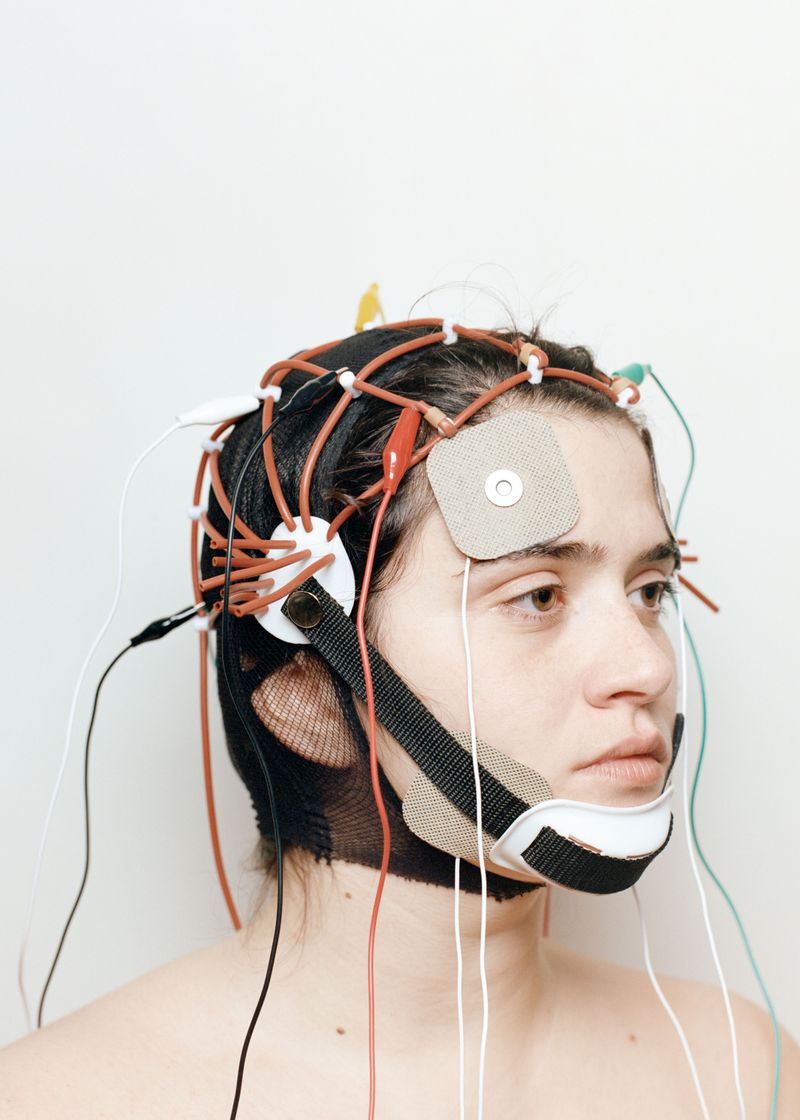
Through a system of wires and electrodes, Trajectories by Beatriz de Souza Lima reveals a hybrid ecosystem where alienation and deep connection intertwine.
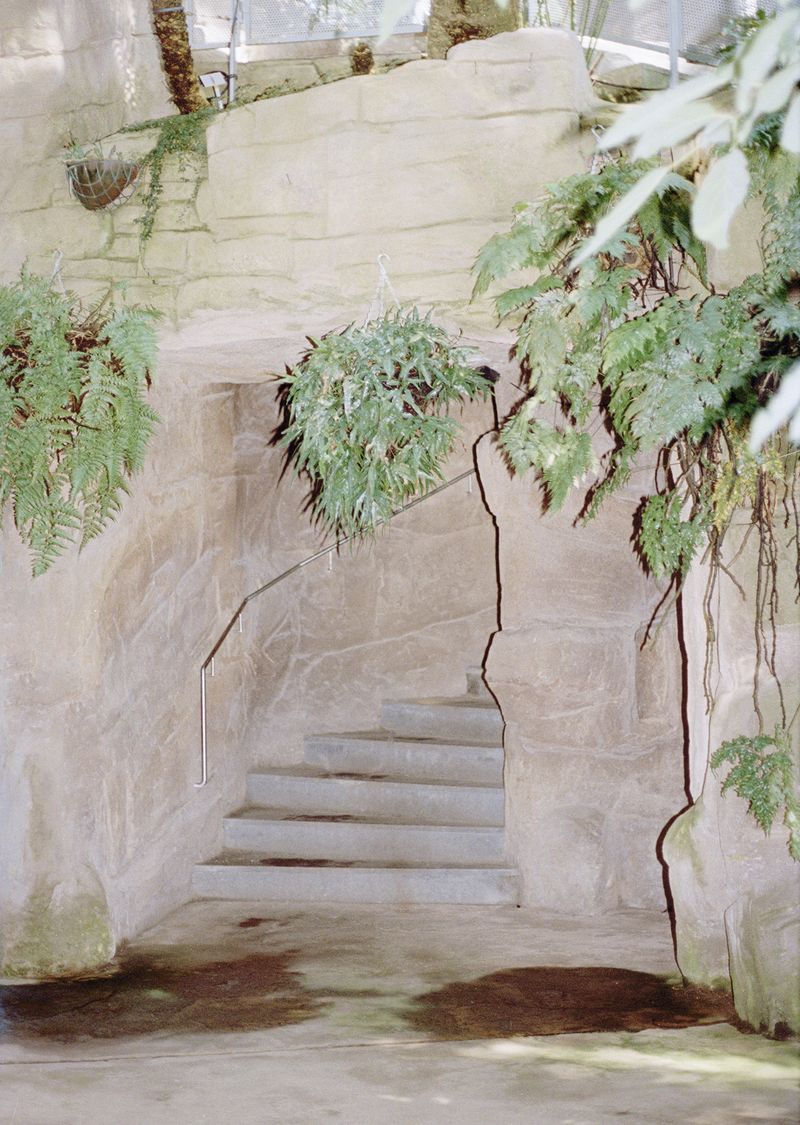
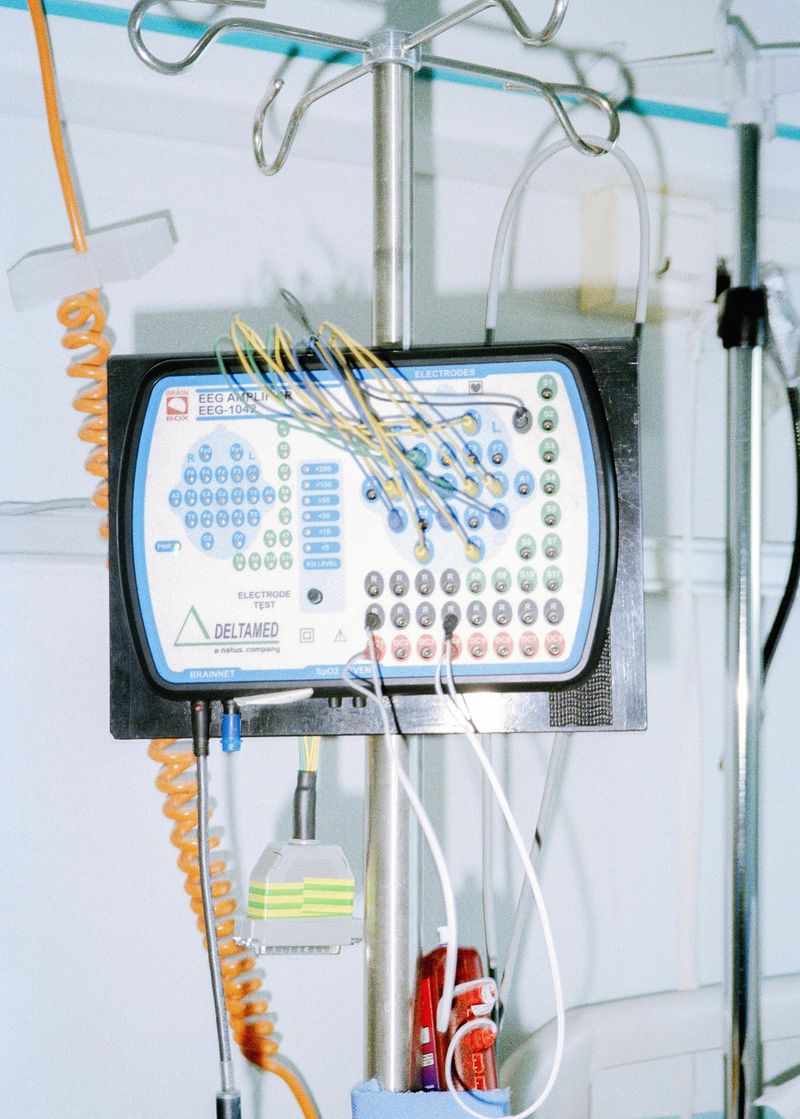
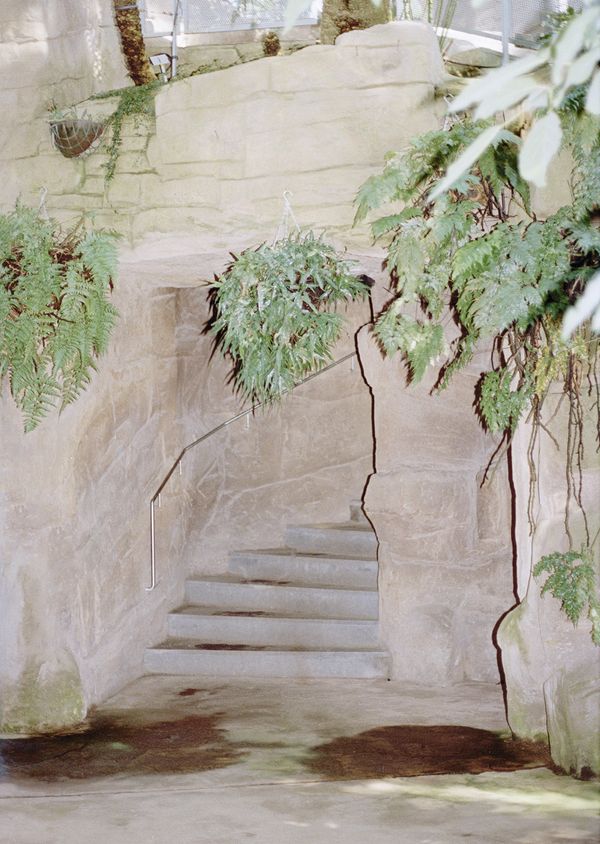
On her usual way to the hospital, Beatriz de Souza Lima crosses a botanical garden. Nature in artificial space is often alienating: surrounded by fake tropical decor, the plants are almost cumbersome, kept alive in through an infrastructure of humidifiers, irrigation conduits, and electrical wires. Suddenly the hospital doesn’t look so different. Every step along the way connects one place to the other: their physical proximity becomes conceptual.
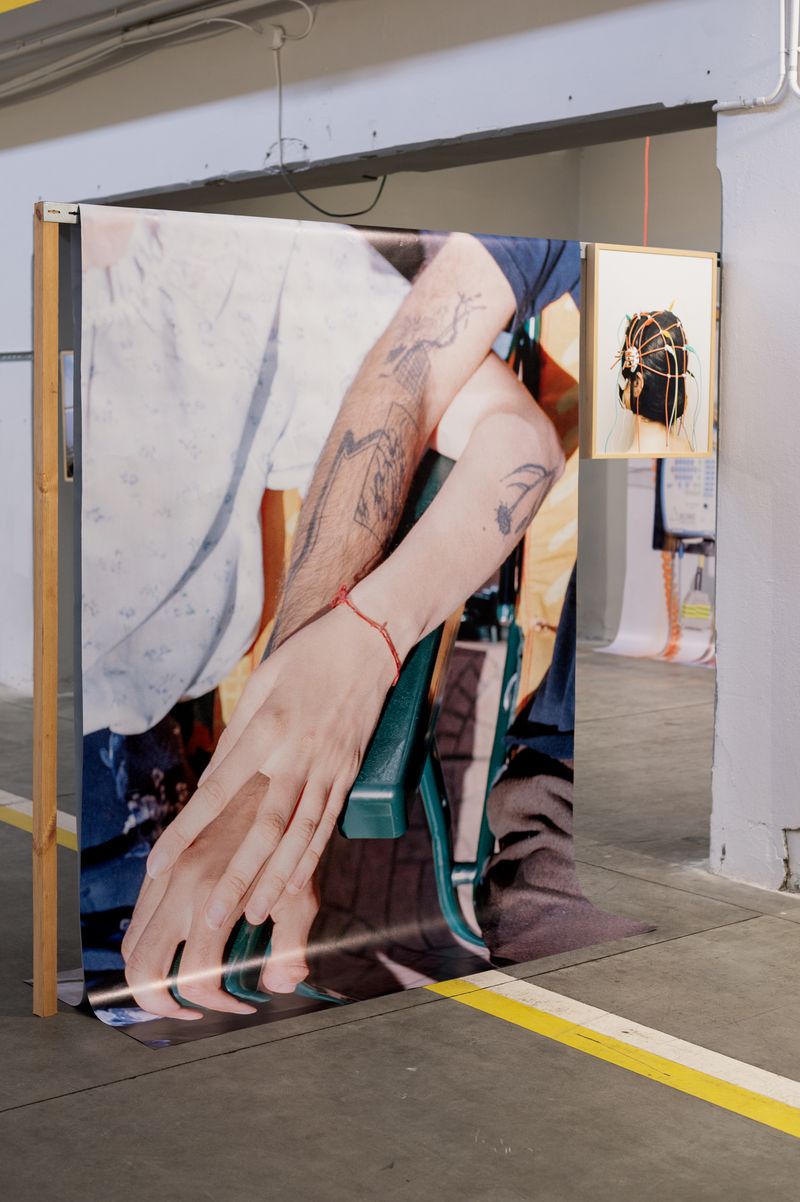
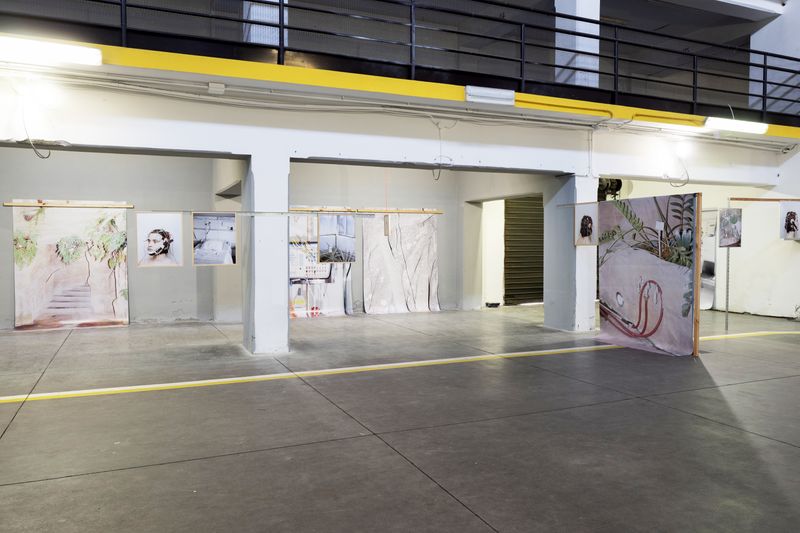
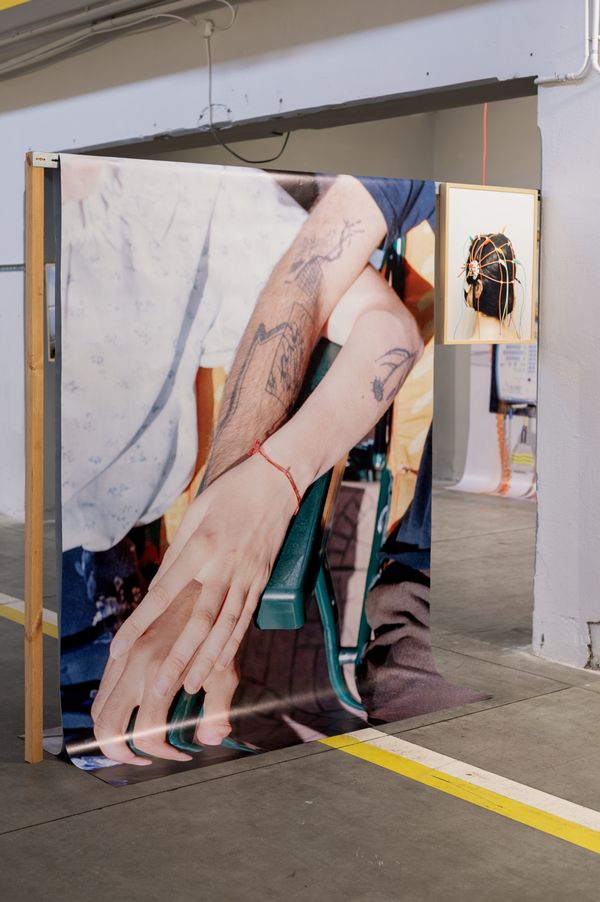
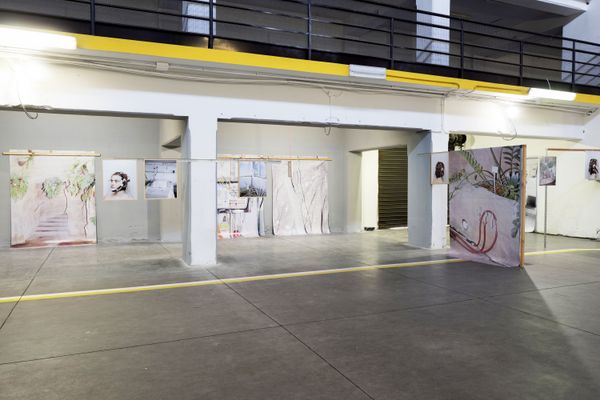
Exhibited in Bologna through the PhMuseum Days 2024 Open Call, the curation of Trajectories brings the two spaces so close that they become inextricable. It is not possible to look at an image of the hospital without seeing the botanical garden at the same time – and the other way around. Structures that merge wooden and metal pieces create a third, hybrid place – one where the feeling of being foreign, never at one’s place, coexists with a positive tension. Here, care is the ultimate end.
With the PhMuseum Days 2026 Photography Festival Open Call open for submissions until this Thursday, 14 May, offering more artists the opportunity to exhibit in October, we caught up with Beatriz de Souza Lima to delve into her project and the experience of exhibiting it in a post-industrial space.
Ciao Beatriz. When and how did you start drawing a parallel between the hospital and the greenhouse?
It all started during my first monthly visits to the hospital I regularly attend. I initially noticed the plants in the hospital, which, like the patients, were being treated and cared for. Around the same time, I began visiting a botanical garden near the hospital. I realised that, much like the plants and patients in the hospital, the plants there also require care and artificial structures to survive: heating, irrigation, electricity. That’s when I started including the botanical garden in my monthly visits and began developing a photography project around these two places.
What was the role of photography in the way you experienced this route – to what extent did it document things, to what extent did it transform them?
Photography played a key role in how I began to see these two places. Through the lens, I was able to capture singularities and details that only emerge through careful attention. I think that transforming these images into a project made me realize that there is a real ecosystem behind them.
How are alienation and care balanced in your work?
These two concepts are deeply connected to my everyday life, particularly living with an invisible disability. Being cared for, while at the same time being part of something beyond our control, creates a certain tension, a force that heightens our awareness of the beauty and strangeness of specific places. My work is directly inspired by this personal experience, almost functioning as a mirror. I believe I have always had a critical perspective on how care operates in our society. Working on this project felt almost therapeutic, it allowed me to better understand the importance not only of medical care, but also of care in our daily lives and relationships. It made me realise how essential care is to our survival.
Exhibiting your work literally means dragging the hospital and the greenhouse in a new space, creating an environment where they live together. What do you think happens when your project is made physical, and how have you navigated this aspect so far?
It has been a wonderful experience. There is a real pleasure in seeing your work move beyond the computer and exist in a physical space. It has changed the way I perceive my images and their individual importance within the project. Thinking about the installation allowed me to consider the placement of each photograph and to create new layers of meaning.
At PhMuseum Days your images inhabited a post-industrial architecture. How did you perceive your work in this dimension?
I was completely satisfied with the installation we developed together with the curatorial team. Exhibiting the work in a post-industrial space gave additional strength to the images, creating a contrast that highlighted how both the botanical garden and the hospital can be cold environments while also being spaces of care. Showing the images in both small and large formats helped build a narrative that visitors could follow. It was truly an amazing experience.
Your exhibition included a screen installation that you designed and built. Can you tell us more about it?
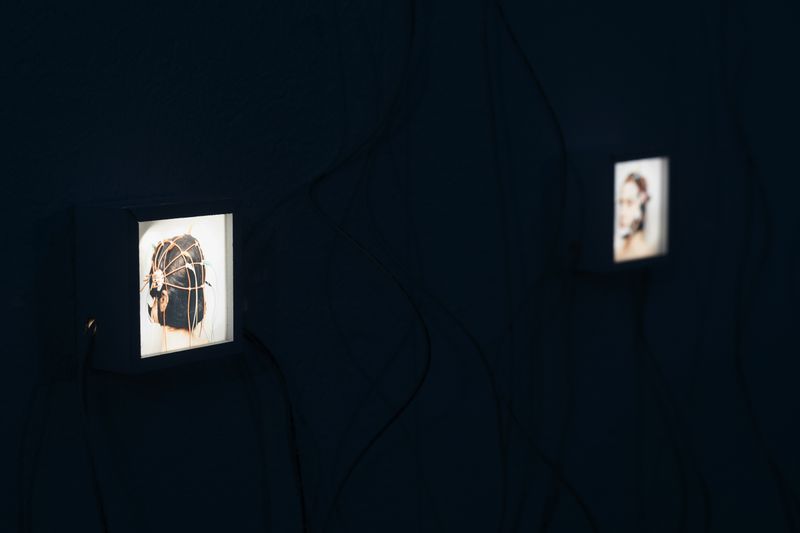
The screens were a way of interconnecting self-portraits showing myself in different positions, surrounded by cables. The idea emerged when I realised I wanted to present them in small light boxes, reminiscent of medical imaging screens, such as X-rays. I decided to connect them all, reflecting the structure of a hospital and the infrastructure required to care for someone. I arranged them so that my head appears to rotate 360 degrees, giving a sense of movement, almost like a moving image.
At what stage of your project did the exhibition of PhMuseum Days come about, and how did this opportunity help in sharing your work with a wider audience?
The exhibition came at an important moment in the project, almost like the end of a cycle. It was meaningful to finally see the images take shape within an exhibition and exist independently. Showing the work for the first time at PhMuseum was a privilege and it allowed me to fully grasp what I had achieved and to see the work in a public space. It was also rewarding to observe visitors engaging with the images and moving through the installation. I could sense that a narrative was unfolding and that people were genuinely curious.
What are the next steps for Trajectories? Any new aspects of it that you are developing?
Since Trajectories explores a subject that deeply interests me and is part of my daily life, I feel it is important to continue developing the project. I plan to explore new media, such as video, experiment with different framing approaches, and create more self-portraits.
Do you have any advice to share with photographers who are currently preparing their submissions?
I would say: trust the process, and try to understand what your images need in order to build a narrative within a space. Working collaboratively and discussing the work with others was very valuable for me, it helped me see the images from new perspectives and imagine them in different exhibition contexts. And most importantly, enjoy the experience, you’ll have a great time.
-------------
Beatriz de Souza Lima's Trajectories was selected in 2024 through the PhMuseum Days Open Call. The 5th edition is now welcoming submissions, giving visual artists the opportunity to exhibit at our International Photography Festival taking place on 1-4 October in Bologna, Italy. For the first time, the festival will happen jointly with Photobook Mania, the 2nd edition of our publishing fair, offering a complete platform to enjoy contemporary photography in person.
The deadline is set for 14 May. Learn more and apply at phmuseum.com/d26