GU.PHO 2026

-
Opens18 Jun 2026
-
Ends26 May 2026
-
Founded2022
-
Link
-
Author
- Location Guiglia, Italy
The fifth edition of GU.PHO. Festival revolves around ethics, reflecting on the use of images created by others. It opens a dialogue on authorship, consent, and the cultural and political dimensions of visual material.
Overview
At a historical moment in which the production, circulation, and reactivation of images take place with unprecedented speed and pervasiveness, the fifth edition of GU.PHO. Festival proposes a critical reflection on the ethics and legitimacy of using visual materials created by others. On Ethics positions itself as a moment of collective inquiry: not a set of definitive answers, but an open space that brings artistic practices, archives, and modes of seeing into dialogue.
At the core of the project lies a fundamental question: does ethics concern only the subjects depicted, or does it also extend to objects, authors, and the contexts in which images are produced and circulated? In an era in which consent is often absent, ambiguous, or impossible to verify, vernacular photography and archival materials raise urgent questions. Images that are abandoned, sold at flea markets, or dispersed within digital flows testify to an act of relinquishment that does not necessarily coincide with a renunciation of memory or identity. If the intention were truly to withdraw these images from the gaze of others, their destruction would be the only coherent act. Likewise, online sharing and consent to be photographed imply a transfer—whether voluntary or unconscious—of control, making evident how ownership of the image begins to dissolve at the very moment the photograph is taken.
On Ethics considers photography as a non-neutral device: a tool historically implicated in processes of classification, normalization, and control. Every image carries with it not only what it represents, but also the structures of power, ideologies, and systems of knowledge that have shaped its production. In this sense, the archive is never innocent: it is a field of forces in which hierarchies are established, narratives are produced, and worldviews are consolidated.
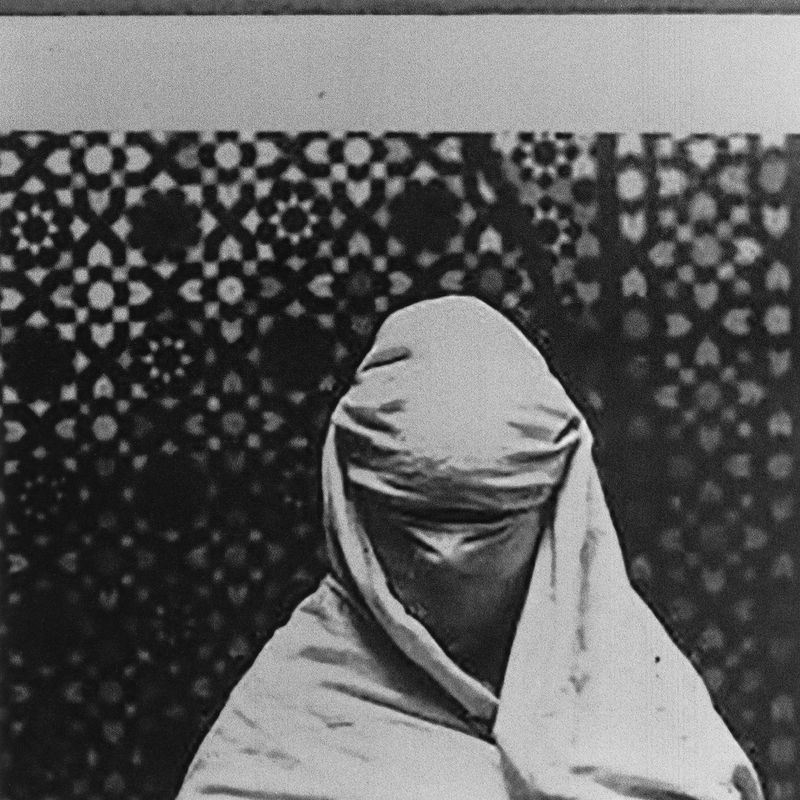
This edition invites a critical interrogation of the Western and Eurocentric gaze that has long dominated the reading of images. Vernacular archives are often interpreted through visual and cultural categories belonging to a limited horizon, risking the flattening of the complexity of other contexts and the reproduction of extractive and colonial dynamics. On Ethics proposes to deconstruct this gaze by promoting situated reading practices that are aware of power asymmetries and attentive to the cultural, social, and historical specificities of the materials.
The question of archival contextualization is central: incorrect captions, partial cataloguing, or imposed descriptive systems can generate misunderstandings and reinforce stereotypes, especially when archives are produced and managed by institutions belonging to the dominant culture. In response to these criticalities, counter-archives emerge: practices and projects that aim to destabilize hegemonic narratives, restoring complexity and multiplicity to marginalized or silenced histories.
Within the artistic field, the use of materials created by others constitutes ethically sensitive terrain, yet one that is also profoundly fertile. Images are reactivated through strategies of recontextualization, reinterpretation, and sometimes aestheticization, rarely with denigrating intentions, yet not free from ambiguity. Artists share a critical awareness of these practices: they often undertake research to trace the subjects depicted or their descendants, questioning the legitimacy of assigning new names, new stories, and new identities to orphaned images.
In this context, certain practices emerge as particularly virtuous: those that aim to restore agency to the people represented by reactivating relationships, involving communities, or creating spaces for co-narration. The aim is not to resolve ethical questions definitively, but to inhabit them responsibly, making them visible and shared.
On Ethics concludes—or rather, opens—with an invitation: to restore centrality to complexity. Recognizing the layered nature of images and archives means educating the gaze toward a more attentive reading, capable of grasping the political, cultural, and ethical implications that traverse every representation. In a world saturated with images, the real urgency is not to produce new ones, but to learn to look differently at those that already exist.
The wide program consists of exhibitions, guided tours, talks, and a book circle with publishers and bookshops such as Artphilein Editions, Fraglich Publishing, Leporello Photobooks et al., Momoe, S.T. Foto Libreria Galleria. Exhibiting artists include Matteo Ferrari, Martina Bacigalupo, Archivio Vivo, Salome Erni, Jean-Marie Donat, Manuela Nebuloni with PostBox Ghana, Joachim Schmid, Marco Lanza, Hoda Afshar, Enrico Fagiani and Francesco Scarfone.