How To Call A Ghost by Bouchra Khalil at Malmö Konsthall
-
Open6 Jun - 13 Sep 2026
-
Link
- Location Malmö, Sweden
The exhibition is the largest presentation of Bouchra Khalil's work in Scandinavia and her first show ever in the south of Sweden.
Overview
The Power of Storytelling
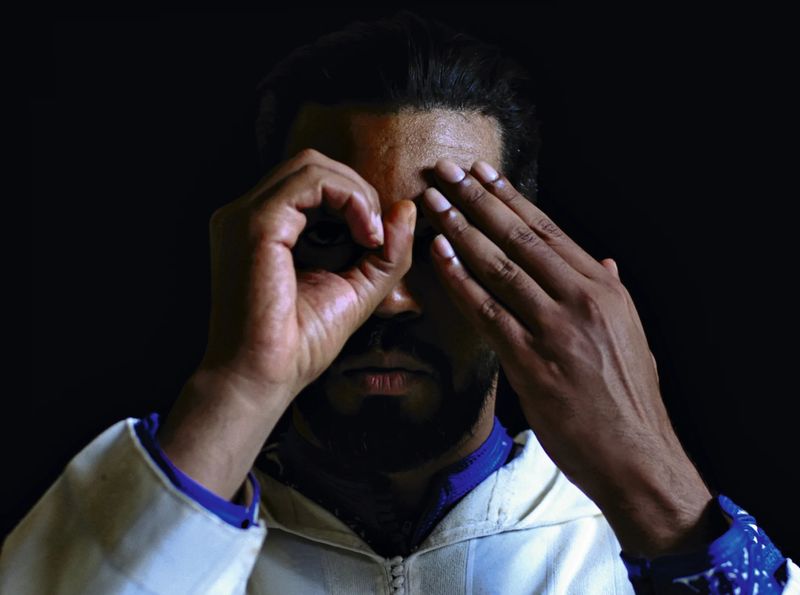
Since the early 2000s, Bouchra Khalili, currently based in Vienna, has been working with a wide variety of media, particularly film and video. In her work, she addresses issues related to belonging, community, and democracy. Using a collaborative method Khalili explores how filmic and sonic forms can create a space for subjects rendered invisible by the nation-state model. Central to her work is the belief in the power of storytelling. In her films, first-person singular accounts intersect with collective history and memory. The voices of her non-professional performers progressively transform into a collective voice, implicitly echoing Pier Paolo Pasolini’s practice of “poesia civile”, in which the civic poet’s voice carries a potential community.
The Right to Belong
Khalili’s work invites us to reflect on how our society functions and how the right to belong to our shared society is defined. Her work in many ways reflects the current situation in the EU (socially, politically, and historically), where the right to belong has been based on exclusion. Malmö Konsthall wishes to highlight the relevance of these issues for the region and for the City of Malmö, home to more than 180 different nationalities.
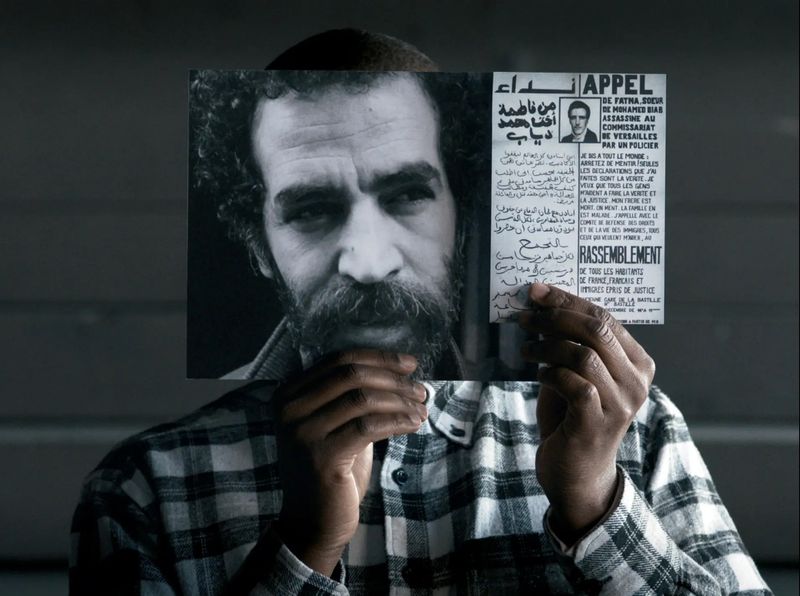
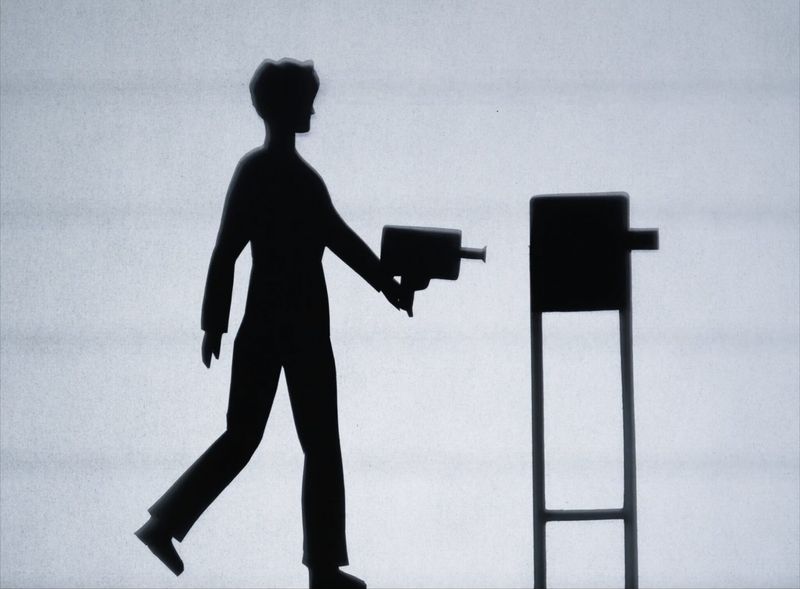
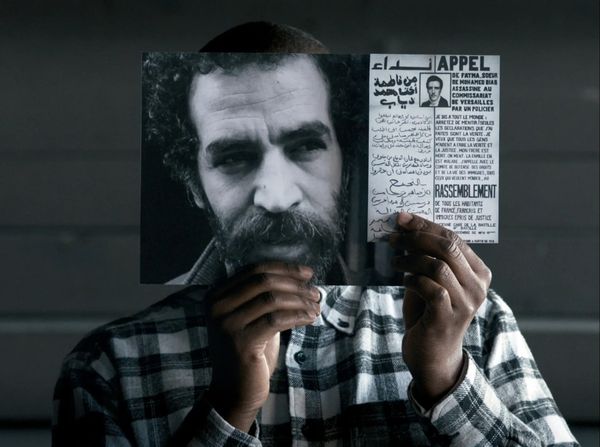
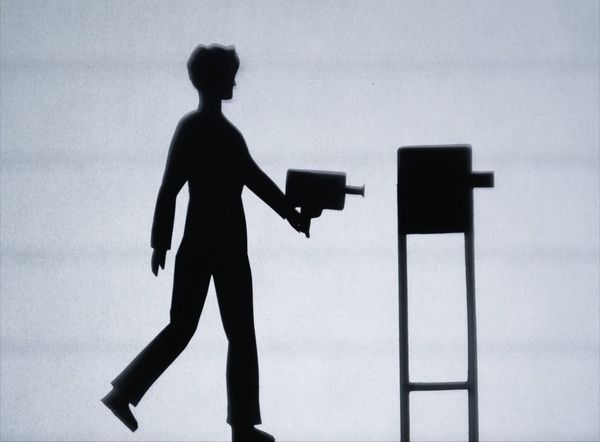
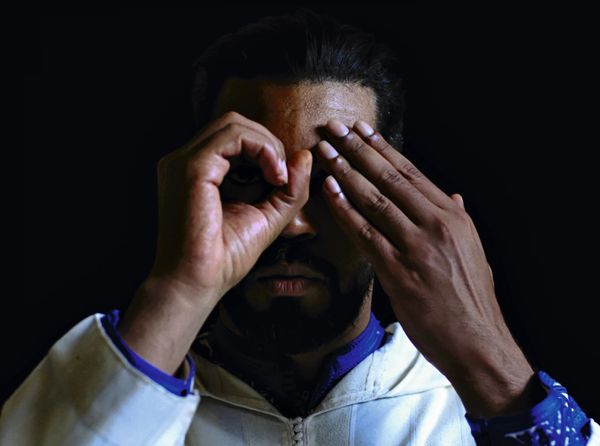
The exhibition seeks to weave together the various threads in Bouchra Khalili’s work from the 2010s to the present day and encompasses installation, film, printmaking and textile. Presented works include “The Tempest Society”, “The Circle Project”, “The Public Storyteller”, and Khalili’s latest film “The Public Scribe”, which were shown as part of her three solo exhibitions made for the Festival d’Automne 2025, a multidisciplinary arts festival featuring theatre, dance, music, performance and contemporary art, held every year in Paris.
A Chorus of Voices
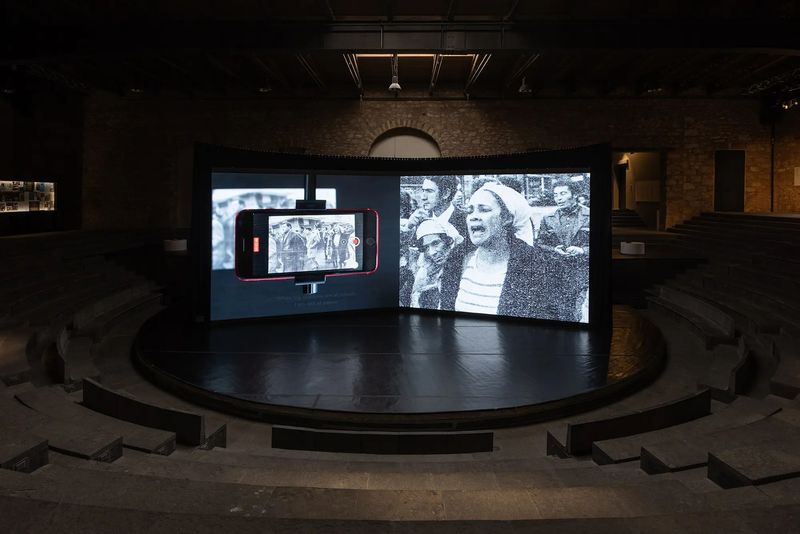
At Malmö Konsthall, Khalili let the works go in dialogue with the building’s existing architecture by creating a site-specific presentation. Newer works meet older ones and together they form a chorus of voices, where forgotten stories from the past are brought to light and resonate in our own time. The exhibition is based on the idea of the circle – the absence of a beginning and an end – but also on the circle as a gathering point for traditional oral storytelling. In Morocco, “al halaqa”, gathering in a circle around the storyteller, is a tradition that is several hundred years old. Halaqa literally means “circle”, “ring” or “assembly” in Arabic.
Based on how we move through the space, links, connections, and constellations between the works will crystallize. No single path is given, and all stories are equally important. Bouchra Khalili’s work allows us to envision a potential future in which the frameworks and hierarchies of the nation-state can be broken, and new, more equal conditions created.
The exhibition is supported by Phileas – The Austrian Office for Contemporary Art, Institut français and Austrian Federal Ministry of Housing, Arts, Culture, Media and Sport.
About The Artist
Bouchra Khalili is a Moroccan-born (1975, Casablanca) and Vienna-based artist. She studied Film History at Sorbonne Nouvelle and Visual Arts at the École Nationale Supérieure d'Arts de Paris. Encompassing film, video, installation, photography, printmaking, and publishing, Khalili's practice explores imperial and colonial continuums as epitomized by contemporary forced illegal migrations and the politics of memory of anti-colonial struggles and international solidarity. At the intersection of history and micro-narratives, her work combines documentary strategies and conceptual practice to investigate questions of self-representation, autonomous agency, and forms of resistance of suppressed communities. Deeply informed by the legacy of post-independence avant-gardes and the vernacular traditions of her native Morocco, Khalili's approach combine performative strategies of storytelling and the old tradition of Northern Africa storytelling to develop civic platforms for first person accounts eventually forming collective stories of resistance and emancipation. Khalili's work has been subject to numerous solo exhibitions, such as at Museum of Fine Arts (Boston), Museum Folkwang (Essen), Jeu de Paume (Paris), MAXXI Museum (Roma), Museum of Modern Art (New York). She also participated to several international exhibitions such as at the 12th Bamako Biennial, BienalSur (Buenos Aires), Documenta 14th Kassel, 55th Venice Biennale, among others. As a cultural activist, she’s a co-founder of the Cinémathèque de Tanger, Northern Morocco's first cultural center dedicated to the preservation and promotion of film culture in the region.