Body as Resistance by Yumna Al-Arashi at Huis Marseille
-
Open14 Feb - 21 Jun 2026
-
Link
-
Author
- Location Amsterdam, Netherlands
Huis Marseille is showing the first solo museum exhibition of work by the Yemeni-Egyptian-American artist Yumna Al-Arashi, who makes use of a wide variety of media to oppose the oppression and stereotyping of women that she observes worldwide.
Overview
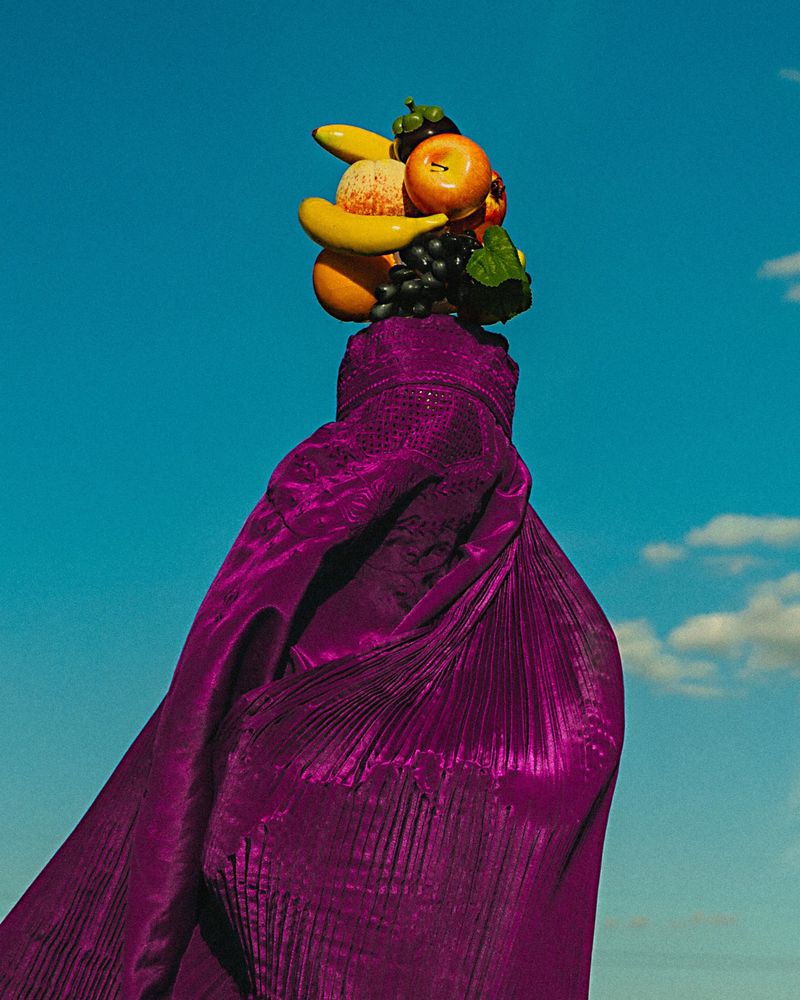
She focuses on the ways the Arab world is depicted, explores the legacy of colonialism in our thoughts, and contemplates matriarchal traditions that are all but lost. Al-Arashi’s work switches effortlessly between registers – sometimes playful and provocative, sometimes poetic, defiant or enraged – and more often than not, all of these things at once.
Yumna Al-Arashi began her career as a self-taught documentary photographer, making images for National Geographic, The New York Times and The Guardian. However, she found herself conflicted about the power of image-makers like herself, who were in a position to present their subjects – whether intentionally or unintentionally – in a one-sided way. ‘Photography carries a kind of violence within it that’s revealed in the words we use for it, words like “capturing”, shooting”, and “taking”,’ she says. As a result her work became more political and conceptual.
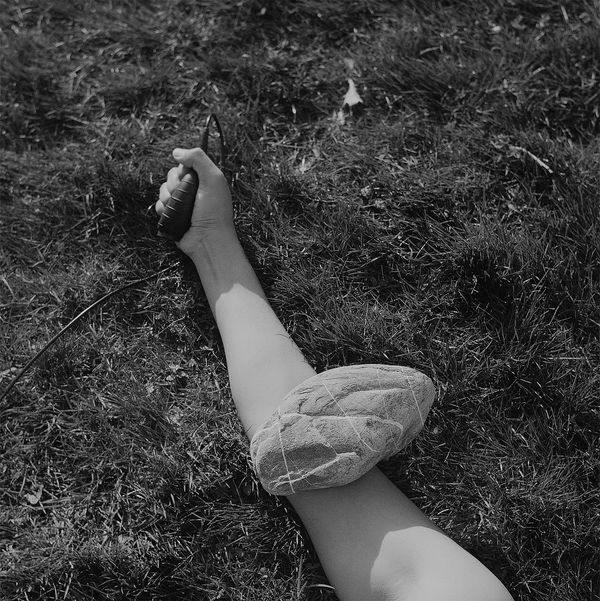
Al-Arashi cherishes the women in her photographs: she depicts them as strong and resilient and emphasises their beauty. She does not hide behind the camera, but displays herself, playful and defiant, in conceptual self-portraits. In doing so she short-circuits the power dynamic between photographer and subject and asserts that her body is a key component of the political conversation she seeks to cultivate.
Looking back, Yumna Al-Arashi, who has lived in Switzerland since 2020, acknowledges that the early years she spent in Washington D.C. anchored politics in her identity. Following the attacks of 11 September 2001, the Bush administration launched a propaganda campaign against Arab countries in order to influence public opinion on his ‘War on Terror’. The surrounding political debate and image culture emphasised the differences between the East and the West, while never leaving doubt about which world was the more righteous.
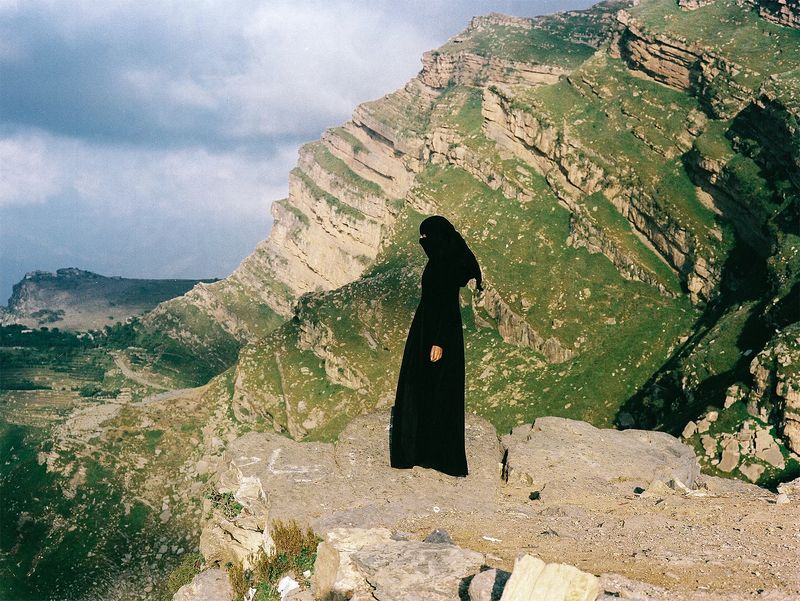
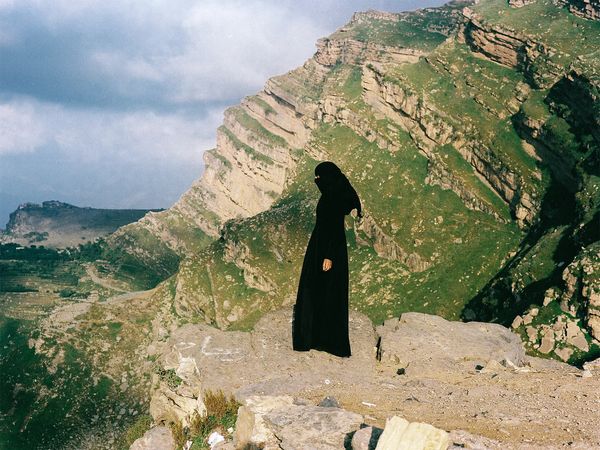
Yumna Al-Arashi directly confronts this negative representation of the countries of her ancestors. Her photos show veiled women pose in powerful positions that express their pride. The diptych Axis of Evil (2020) depicts four women from countries designated ‘rogue states’ by the US government. By depicting them first in profile and then full face, she emphasises their shared facial features. The women gaze into the lens with solidarity and a fighting spirit. In the series Shedding Skin (2017), too, made in a bathhouse in Beirut, Al-Arashi emphasises female solidarity, thereby reappropriating the Orientalistic view of the hamam.
A high point in Al-Arashi’s oeuvre is the 2024 artwork in book form Aisha, to which an exhibition gallery is devoted. Inspired by the three surviving photographs of her Yemeni grandmother, Al-Arashi set off to research into the history behind the vanishing tradition of facial tattoos in older generations of North African women. The book, which depicts a photographic journey through several countries and many women, is an ode to Arab women and a loving counterbalance to the narrow – and colonially tinted – representation of these women in Western archives. This project presents the body as the carrier of memories and a bridge between different generations of women. In 2025 Aisha was awarded a prize as the year’s most beautiful Swiss book, it was declared Photo Book of the Year by PhotoEspaña, and it was long-listed for the Kraszna-Krausz Book Awards.
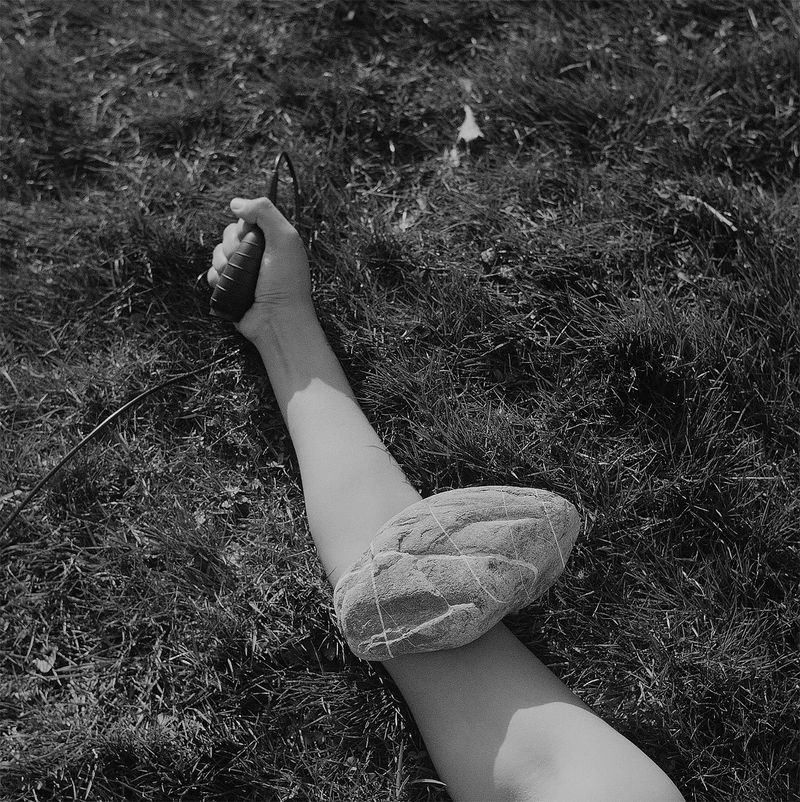
A recurring theme in Yumna Al-Arashi’s work is the female body. One of her key inspirations is the text ‘Uses of the Erotic. Erotic as Power’ (1978) by Audre Lorde, in which Lorde describes the erotic as a source of life energy, a power that – just as the mythological Eros was born from Chaos – stands for intuition, creativity and harmony. However, warns Lorde, in women this vitality is systematically oppressed. Al-Arashi similarly combats the societal urge to control the female body: ‘It is told how to move, how loud or quiet it must be and how it should be dressed. […] To choose how I look becomes my greatest rebellion; to push myself again and again through the motions of shame — a sport I have mastered — this is my greatest political act.’
About The Artist
After gaining a Bachelor’s in Social Inquiry (2011, The New School, New York) Yumna Al-Arashi began her career as a self-taught documentary photographer. Over the next ten years her focus shifted towards autonomous art, and she completed a Master’s in visual arts at the Zurich University of the Arts (2022). Her work has been exhibited worldwide, including at MoMA PS1, the International Center for Photography in New York, Helmhaus Zürich, the Institut du Monde Arabe in Paris, and City Salts in Basel.