Where the Desert Forgets
Where the Desert Forgets is a photographic project along Western Sahara's coast under Moroccan control. Through images of absence and repetition, it reveals a territory reconfigured to conceal its history, fifty years after Spanish withdrawal.
Where the Desert Forgets is a photographic project developed along the coast of Western Sahara under Moroccan control, fifty years after Spain's withdrawal from the territory. The work is situated in a space marked by the absence of recognized sovereignty and by a prolonged conflict that has been progressively displaced from the international public imagination.

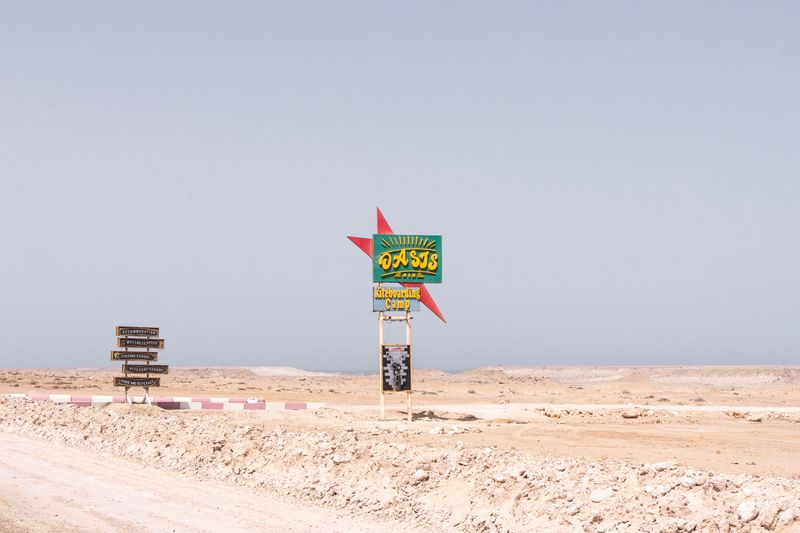
The project examines how a new visual, symbolic, and ideological layer has been imposed over a previous one that has been deliberately erased or relegated, through tourism development, infrastructure expansion, natural resource exploitation, and official discourses of progress and normalization. These transformations produce a landscape that appears neutral and functional, but is profoundly political, where history is silenced and memory becomes uncomfortable.

The project focuses on absence, repetition, and surface. Coastal spaces, generic architectures, transit zones, and intervened landscapes reveal a territory reconfigured to conceal its own historical condition. This series of images portray minimal signs of a structural violence that manifests itself through order, cleanliness, and visual continuity.
© Jorge Gutierrez Lucena - Image from the Where the Desert Forgets photography project
i

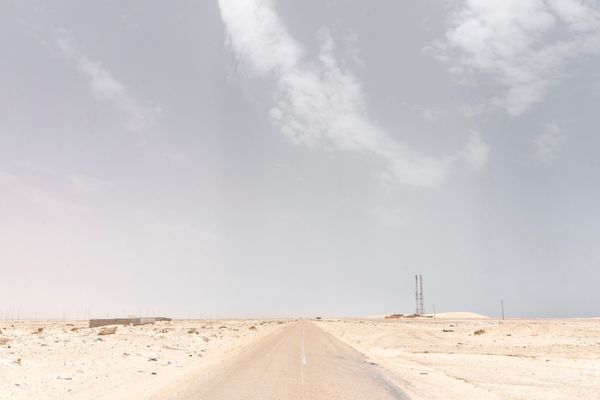
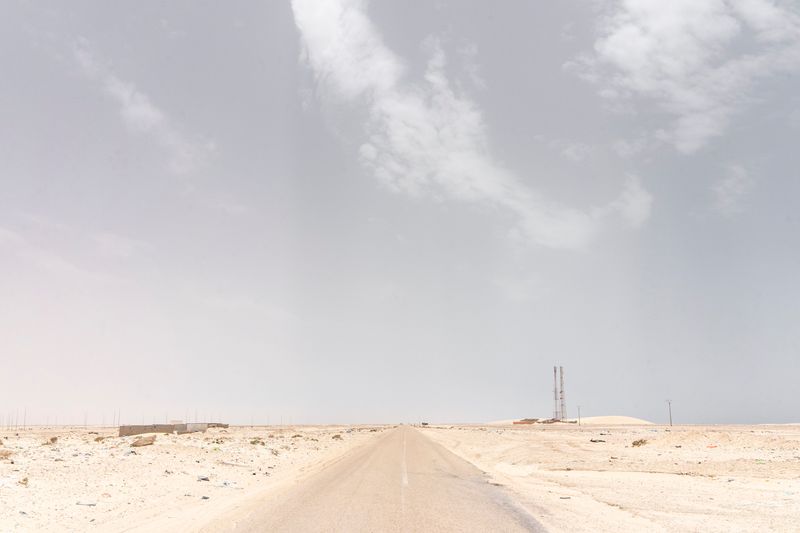
The road that links Dakhla to Guerguerat cuts through an almost silent desert. It is the main artery connecting Morocco to sub-Saharan Africa, a corridor of trade and migration. Paved and expanded in 2016, the road facilitates the extraction of phosphates and fish northward while enabling trade and migration flows s

© Jorge Gutierrez Lucena - Image from the Where the Desert Forgets photography project
i

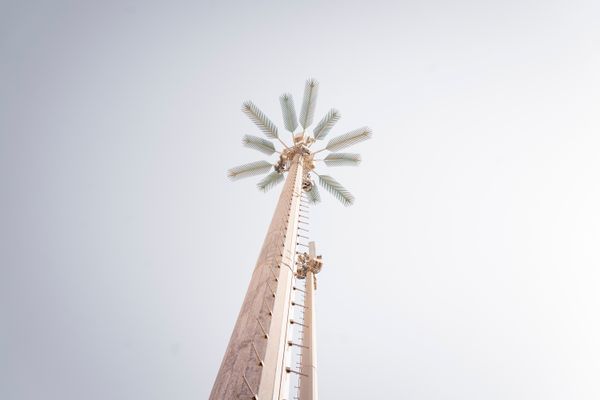
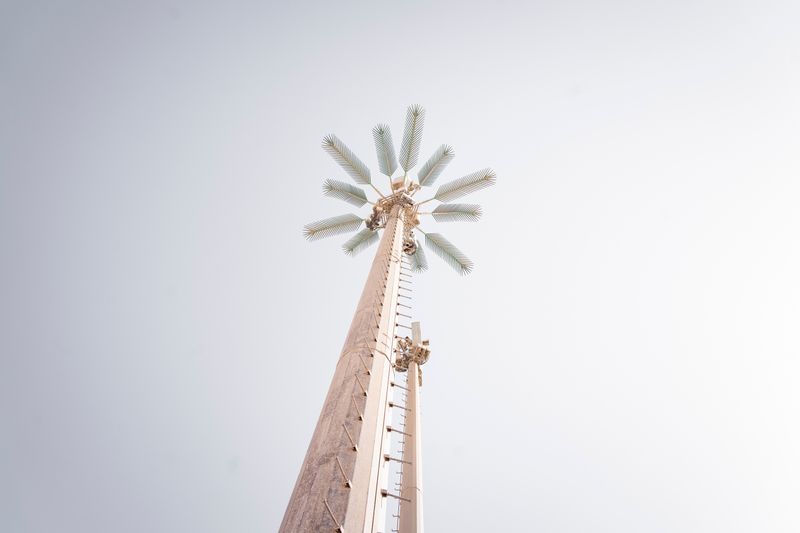
In the growing outskirts of Dakhla, antennas are shaped as palm trees. Designed to blend with the desert landscape, they symbolise the new image Morocco is projecting onto Western Sahara; a fusion of modernity and artificial nature.

© Jorge Gutierrez Lucena - Image from the Where the Desert Forgets photography project
i

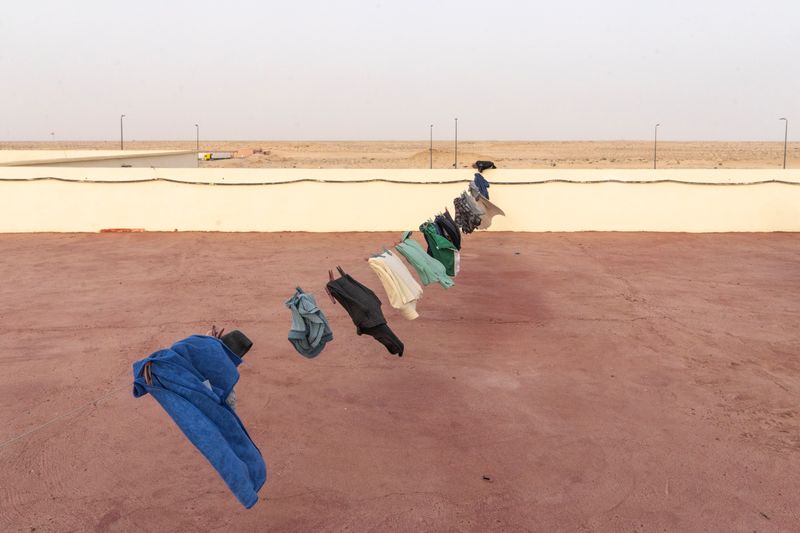
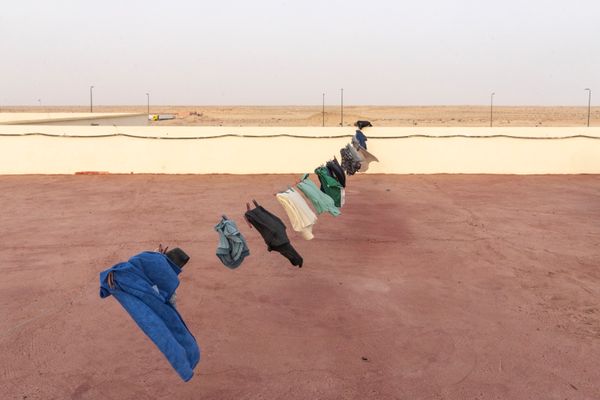
Clothes dry in the desert air on the terrace of a small hostel near the Mauritanian border. This is a place of passage, where migrants, truck drivers, and workers rest before continuing their journey south or north.The Guerguerat border crossing has gained greater importance since 2016 when Morocco paved the highway connecting it to Dakhla, transforming it into a crucial commercial corridor betwe

© Jorge Gutierrez Lucena - Image from the Where the Desert Forgets photography project
i

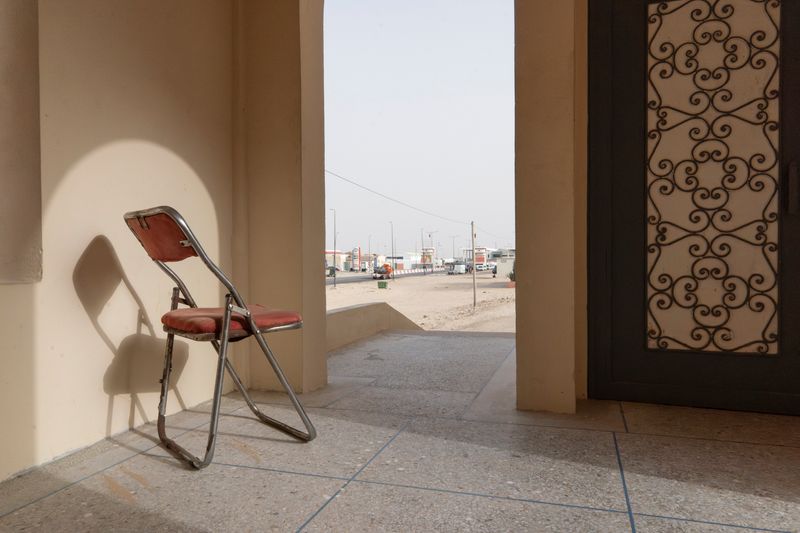
Between the silence of prayer and the constant passing of trucks, an empty chair outside the mosque in Guerguerat faces the border crossing with Mauritania.Images of the King of Morocco bid farewell to vehicles leaving Western Sahara.

© Jorge Gutierrez Lucena - Image from the Where the Desert Forgets photography project
i

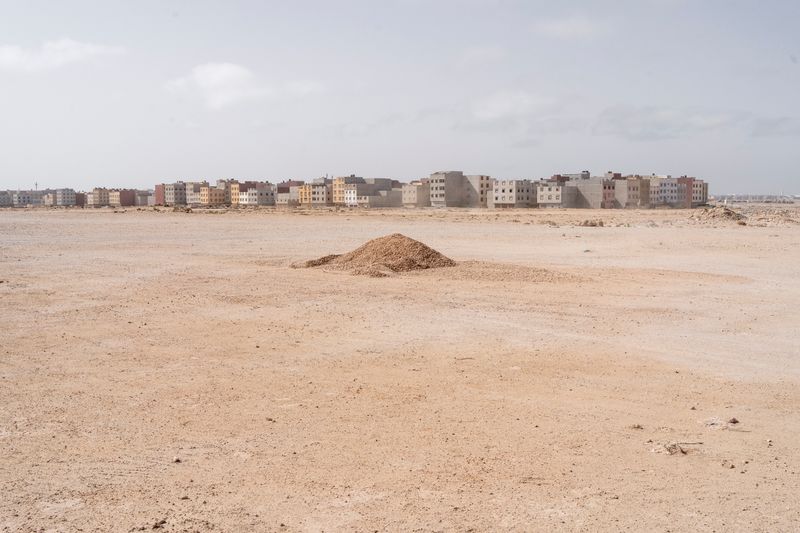
At the edge of Dakhla, rows of new apartment blocks rise from the desert, their facades waiting for inhabitants to arrive. An urban dream imposed on emptiness. This rapid development is part of Morocco’s strategy to transform Dakhla into a hub for tourism, logistics, and trade, the so-called “new Dubai” of the Atlantic.

© Jorge Gutierrez Lucena - Image from the Where the Desert Forgets photography project
i

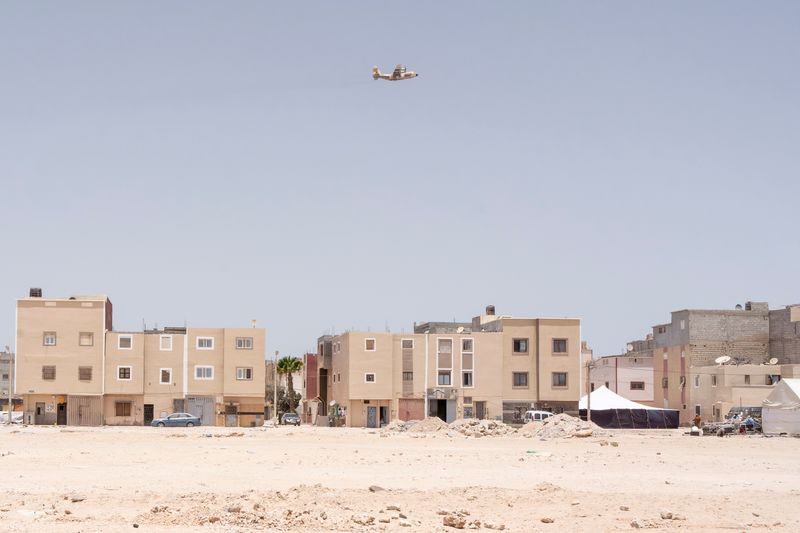
A military plane flies over housing blocks in Dakhla. The city grows fast, construction sites, pastel façades, and cranes filling the horizon, while the military presence remains constant.

© Jorge Gutierrez Lucena - Image from the Where the Desert Forgets photography project
i

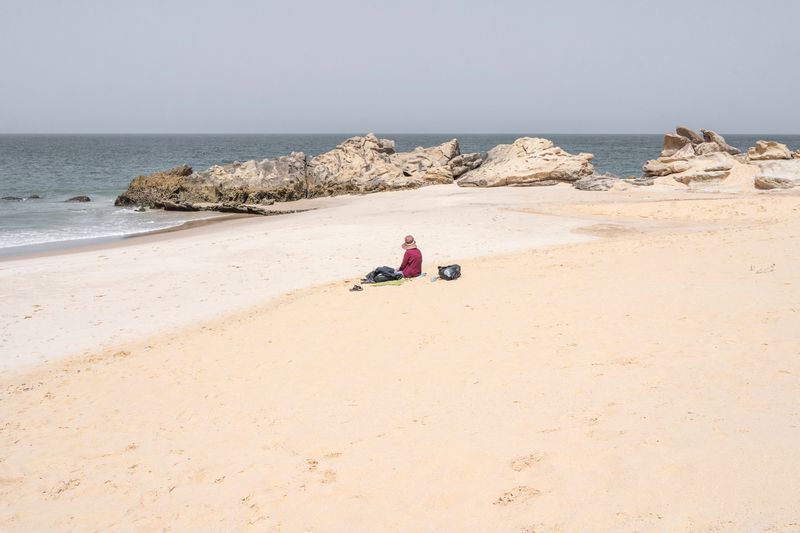
Dakhla and its surroundings has become a destination for surfers and travellers seeking wind, waves, and sun, unaware of the political weight of the ground beneath them.

© Jorge Gutierrez Lucena - A lone tourist sits on the sand, facing the Atlantic in the southern reaches of Western Sahara.
i

A lone tourist sits on the sand, facing the Atlantic in the southern reaches of Western Sahara.

© Jorge Gutierrez Lucena - Image from the Where the Desert Forgets photography project
i

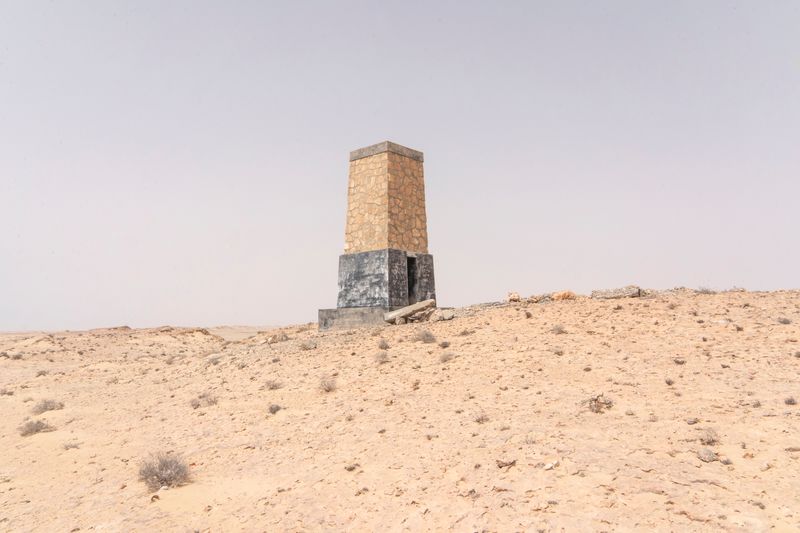
An old Spanish watchtower stands alone on a hill overlooking the Atlantic coast. Built during the colonial period, it once formed part of a chain of outposts used to monitor the territory and the sea.

© Jorge Gutierrez Lucena - Image from the Where the Desert Forgets photography project
i

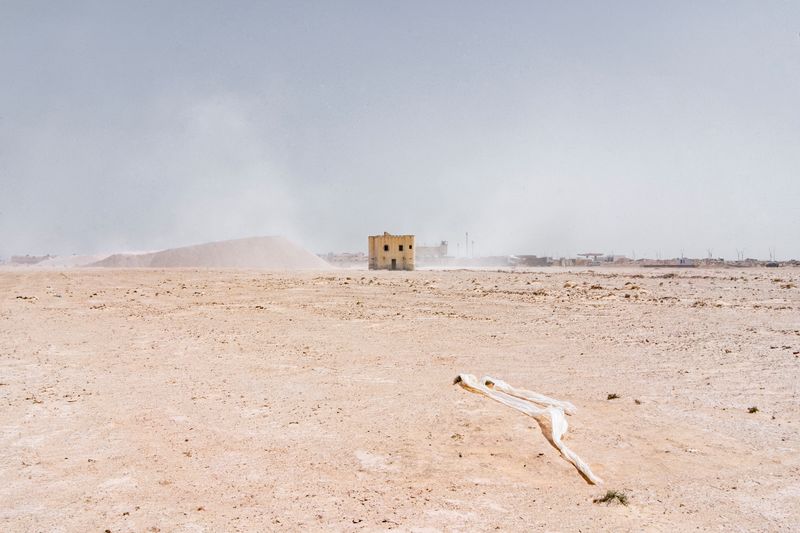
An old Spanish military fortine from the 1928 "Villa Cisneros" defensive line, built to seal the Río de Oro peninsula and guard what is now Dakhla. Spain left in 1976; the tower remains, surrounded by today's construction boom. Of the four fortines, one is razed, one sits in a Moroccan military compound, another is lived in.

© Jorge Gutierrez Lucena - Image from the Where the Desert Forgets photography project
i

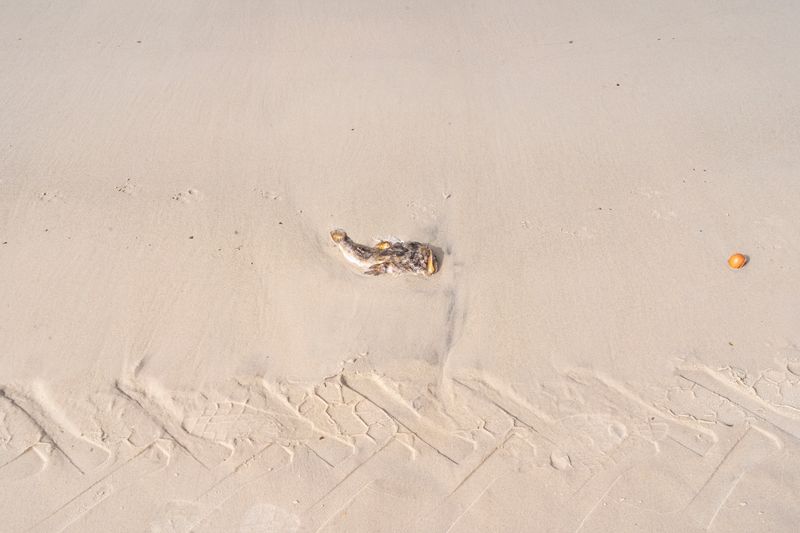
A fish lies stranded on the shore, surrounded by the marks of tractor tyres used to drag fishing boats from the Atlantic.Tractors haul boats and their cargo from the surf—octopus, hake, sardinella—destined for processing plants and then international markets, primarily in the European Union and Asia.

© Jorge Gutierrez Lucena - Image from the Where the Desert Forgets photography project
i

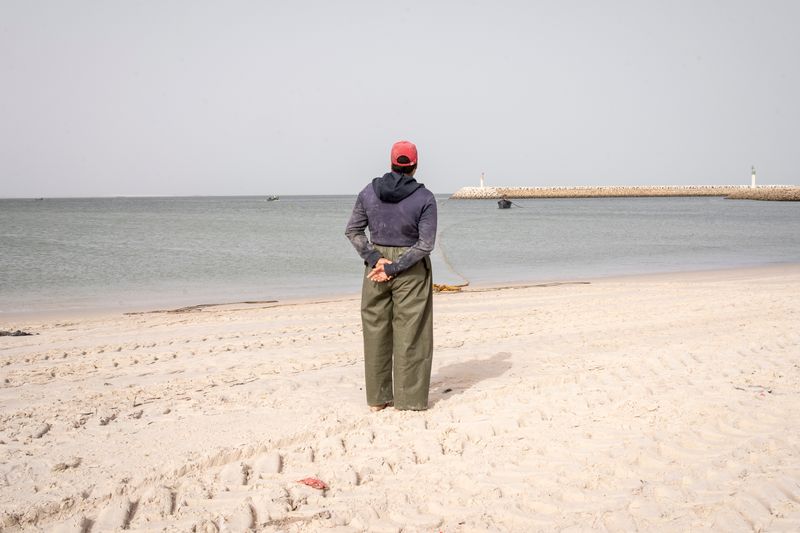
A fisherman stands at the edge of the Atlantic watching the horizon.After a day of work, calm returns to the fishing landing zone of Lamhiriz. The tractors have hauled the last boats ashore, the day's catch has been loaded onto trucks bound for processing plants and northern markets.

© Jorge Gutierrez Lucena - Image from the Where the Desert Forgets photography project
i

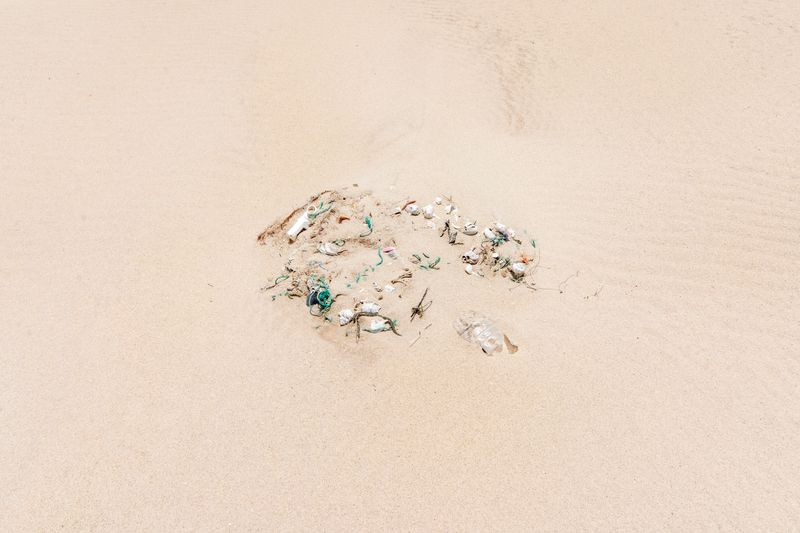
Near Tchla, a small fishing settlement on the Saharan coast. Remnants of fishing activity, plastic fragments and discarded nets accumulate on the sand, carried and rearranged by the wind.

© Jorge Gutierrez Lucena - Image from the Where the Desert Forgets photography project
i

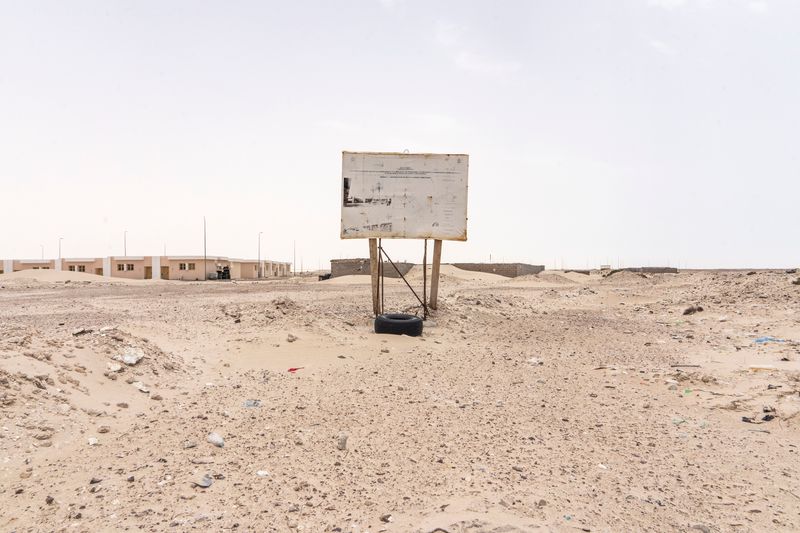
Near Tchla, Saharan coast.A printed plan for 100 housing units outlines the operationalisation of fishing villages in the Dakhla region, surrounded by incomplete buildings.

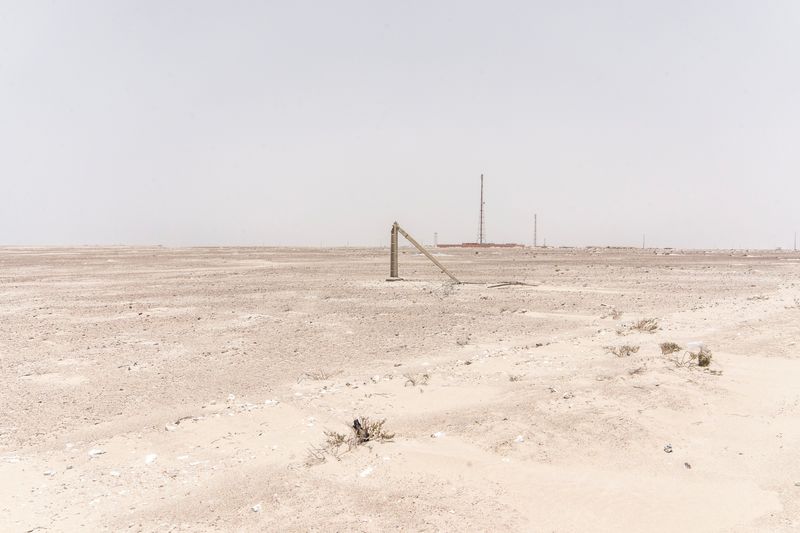
© Jorge Gutierrez Lucena - A damaged electricity pole in the foreground. In the distance, a coastal security post with communication towers.
i

A damaged electricity pole in the foreground. In the distance, a coastal security post with communication towers.

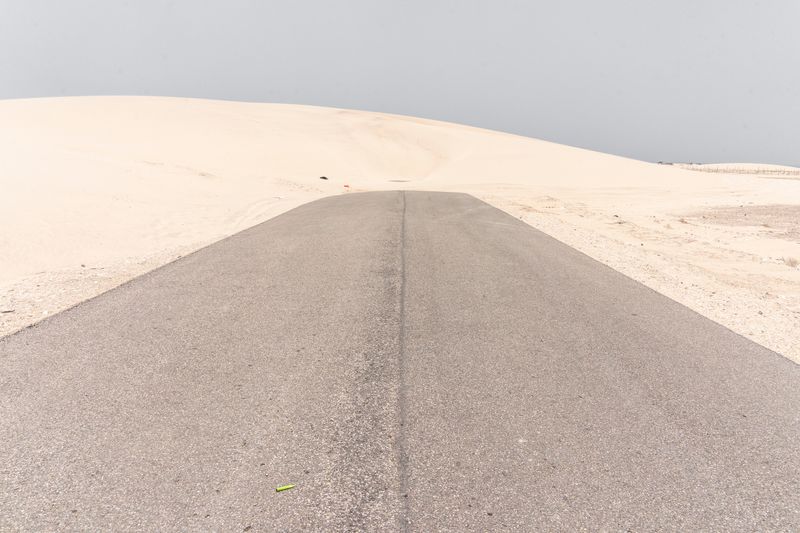
© Jorge Gutierrez Lucena - Road connection between the main highway and a fishing village obstructed by sand accumulation.
i

Road connection between the main highway and a fishing village obstructed by sand accumulation.

Where the Desert Forgets by Jorge Gutierrez Lucena

Prev Next Close