TOMATOES
-
Dates2020 - 2022
-
Author
- Location Spain
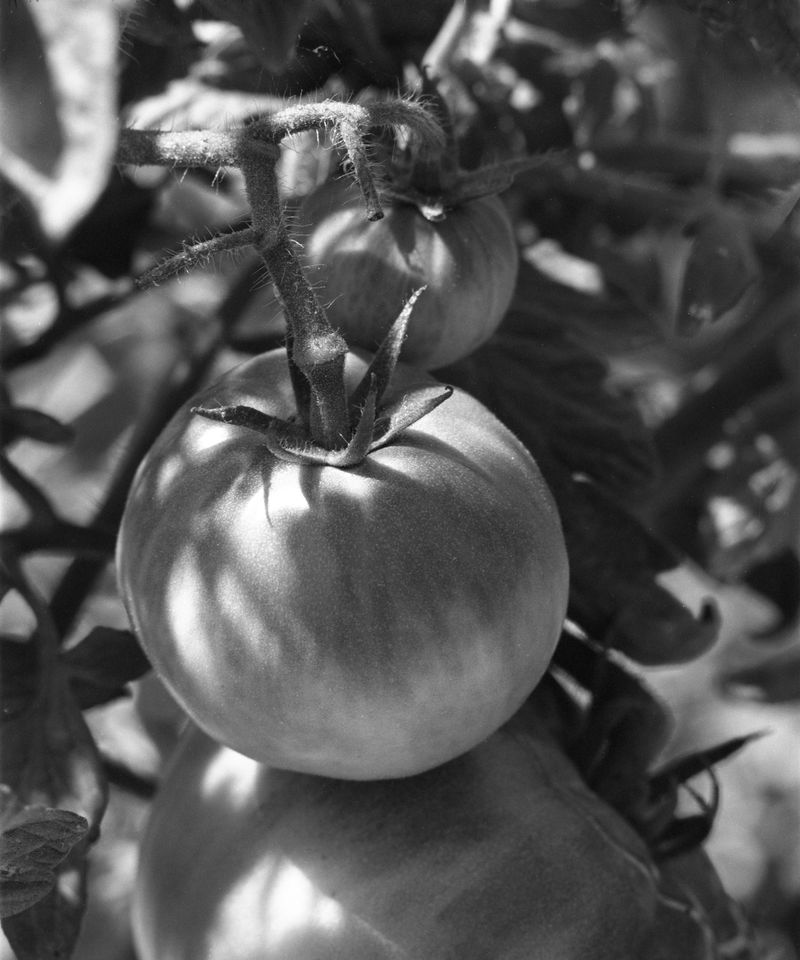
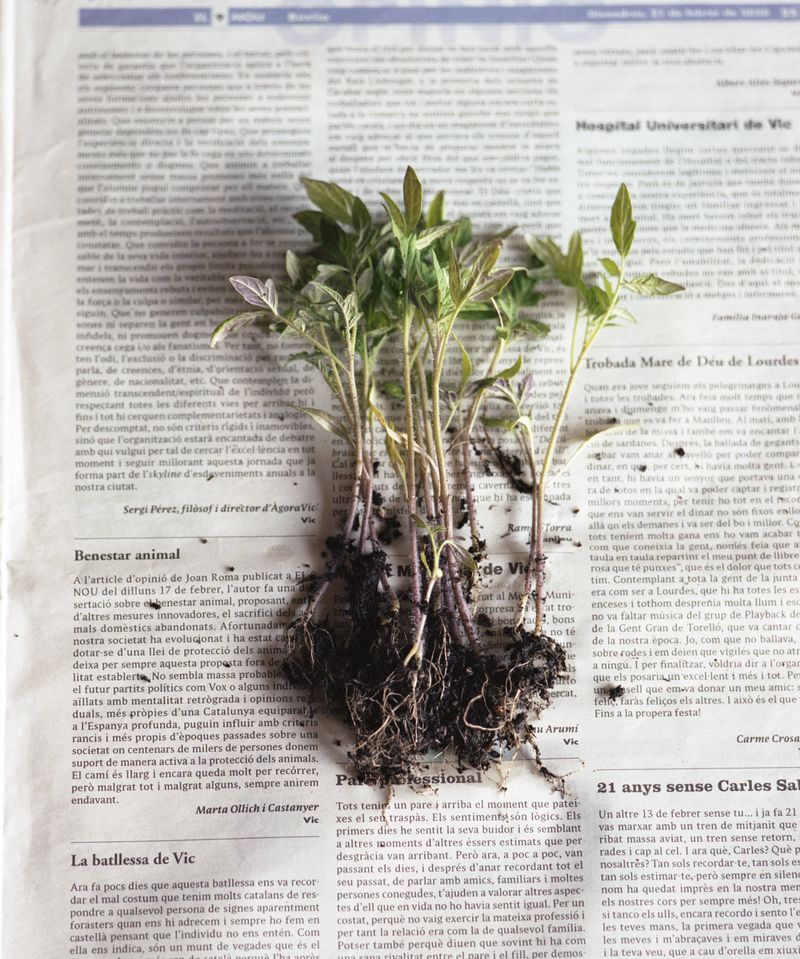
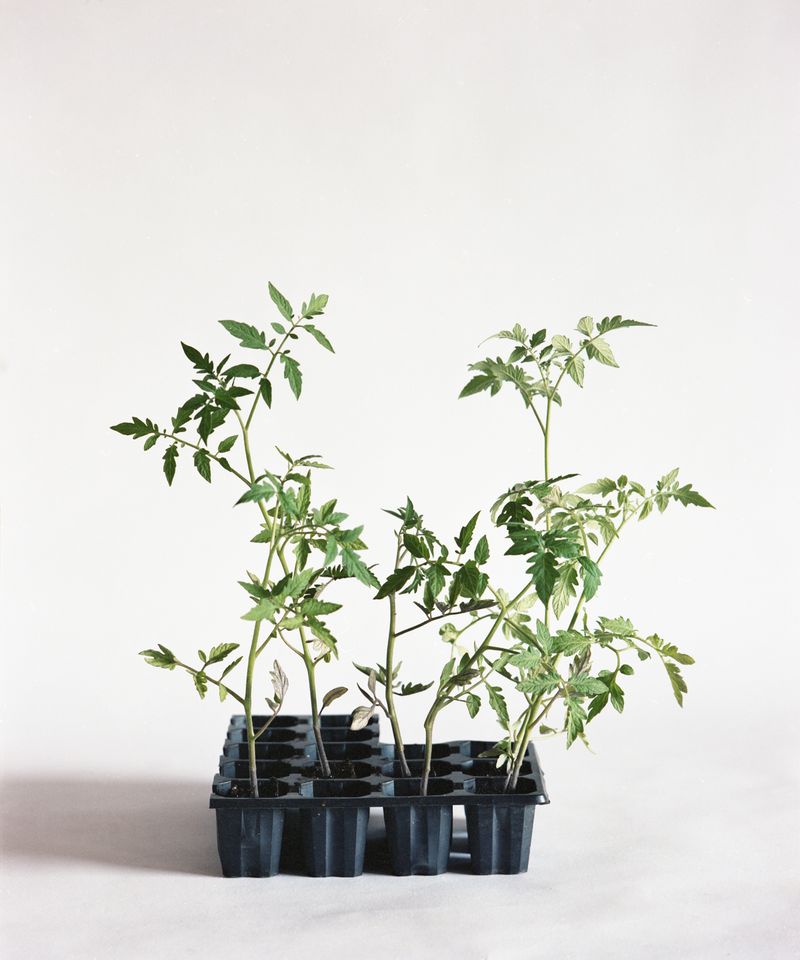
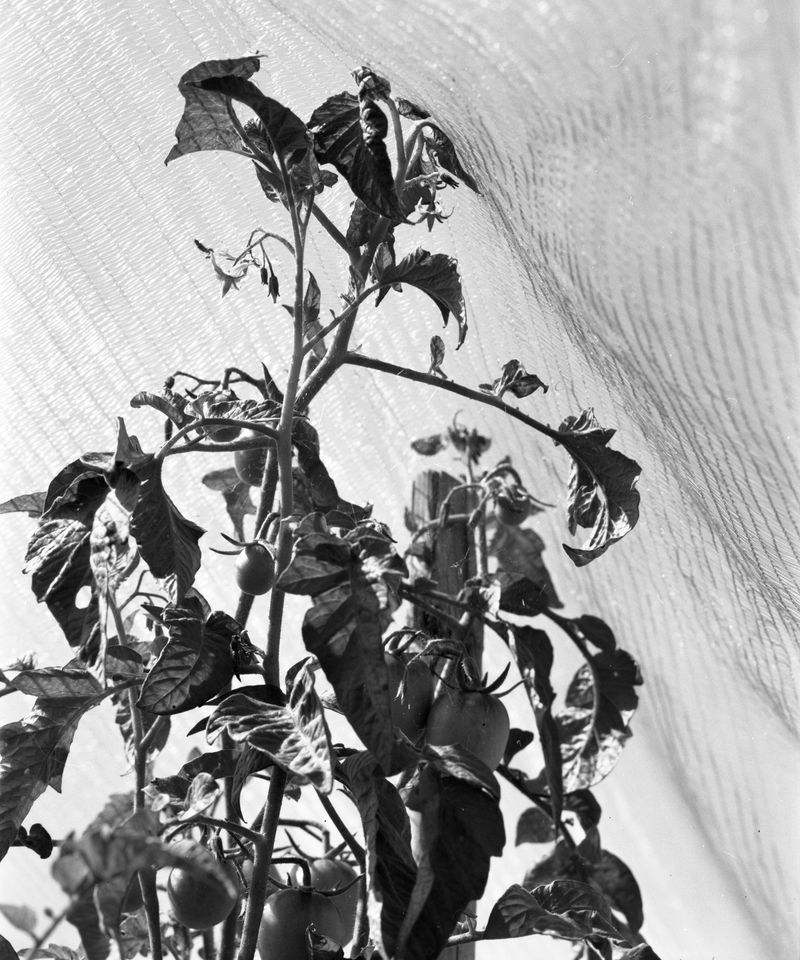
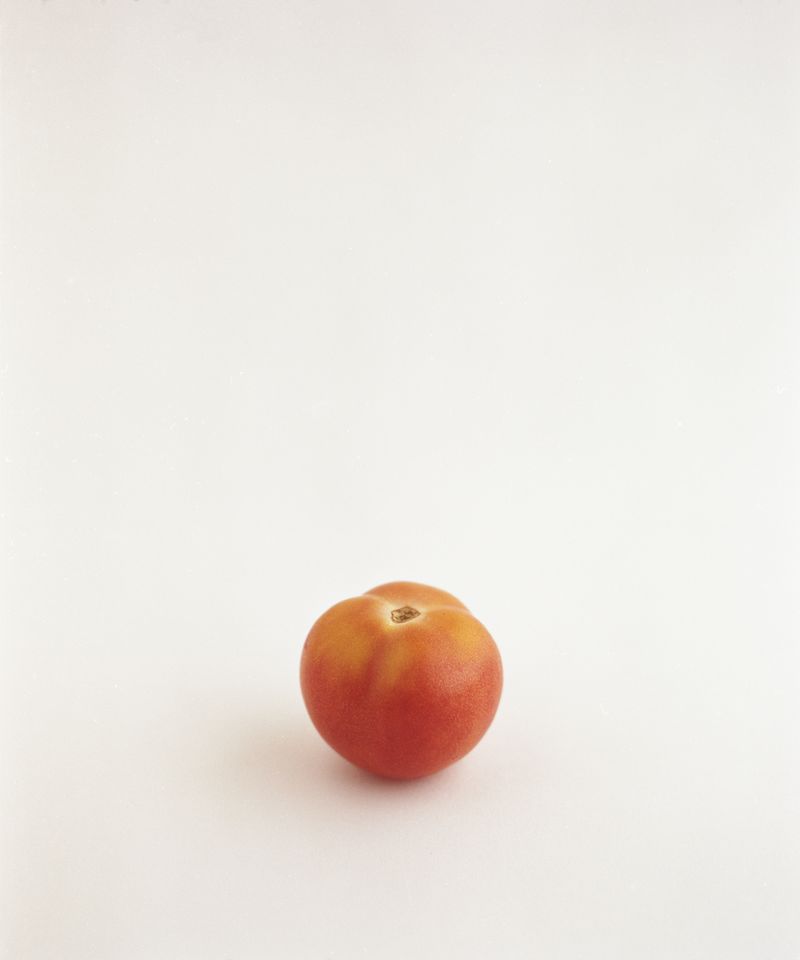
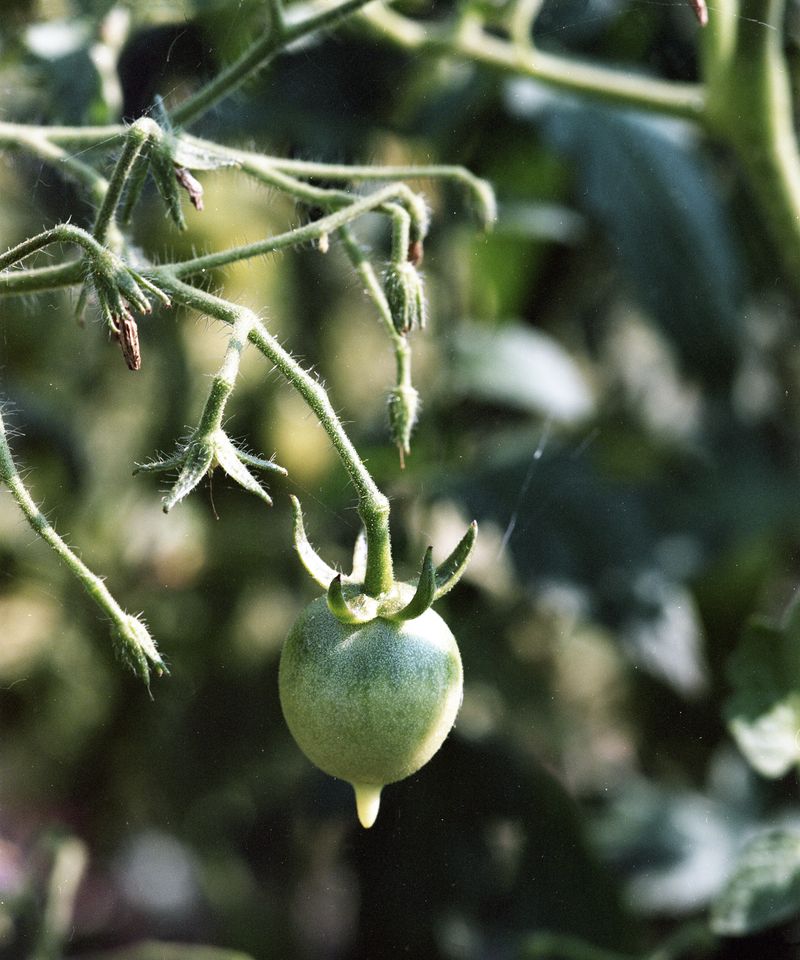
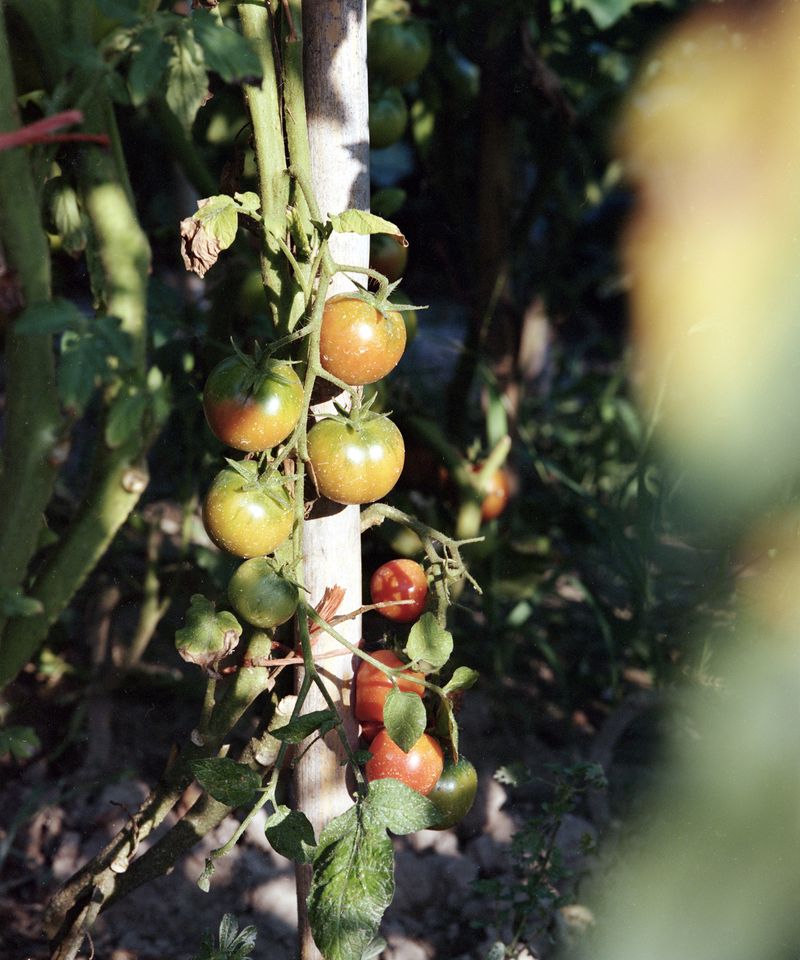
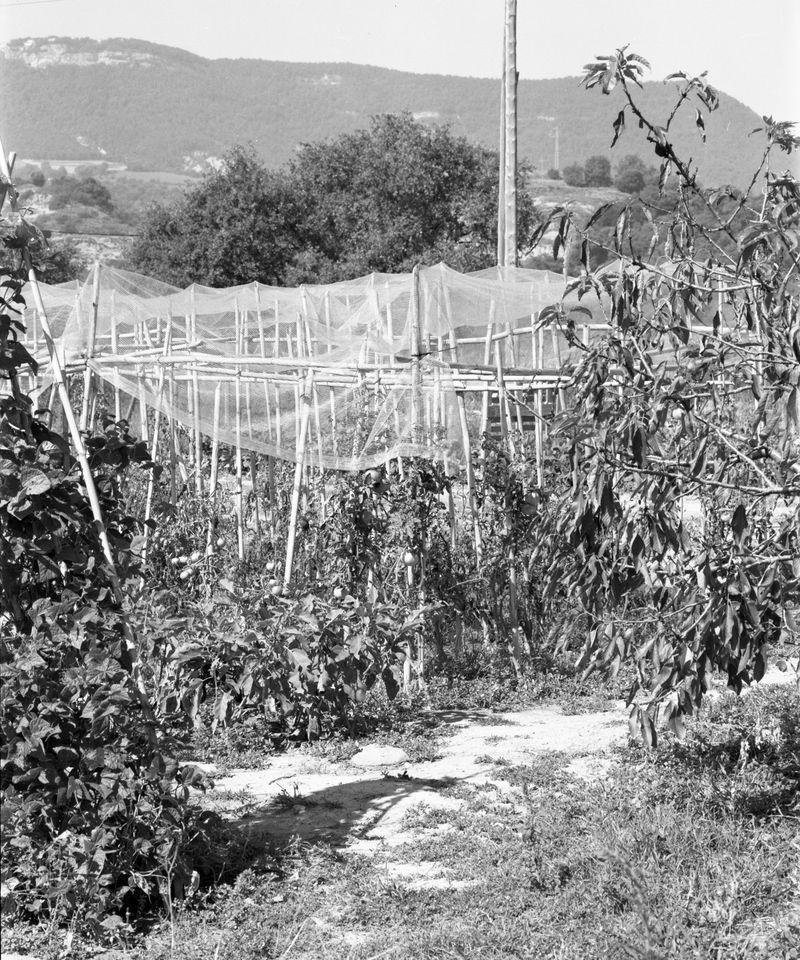
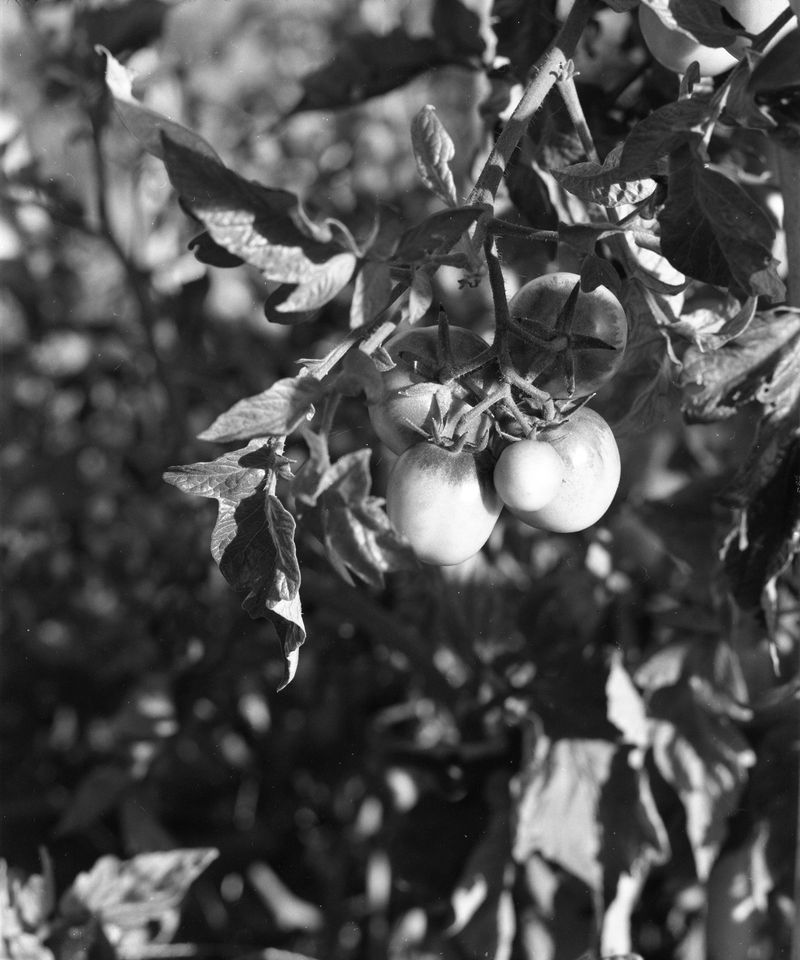
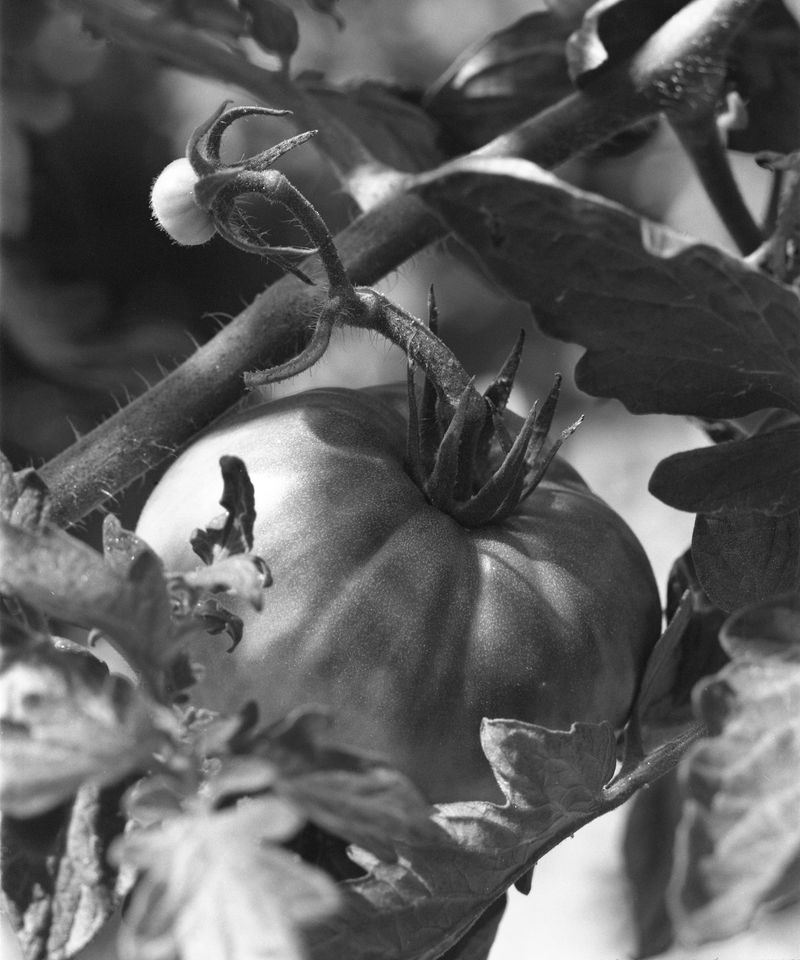
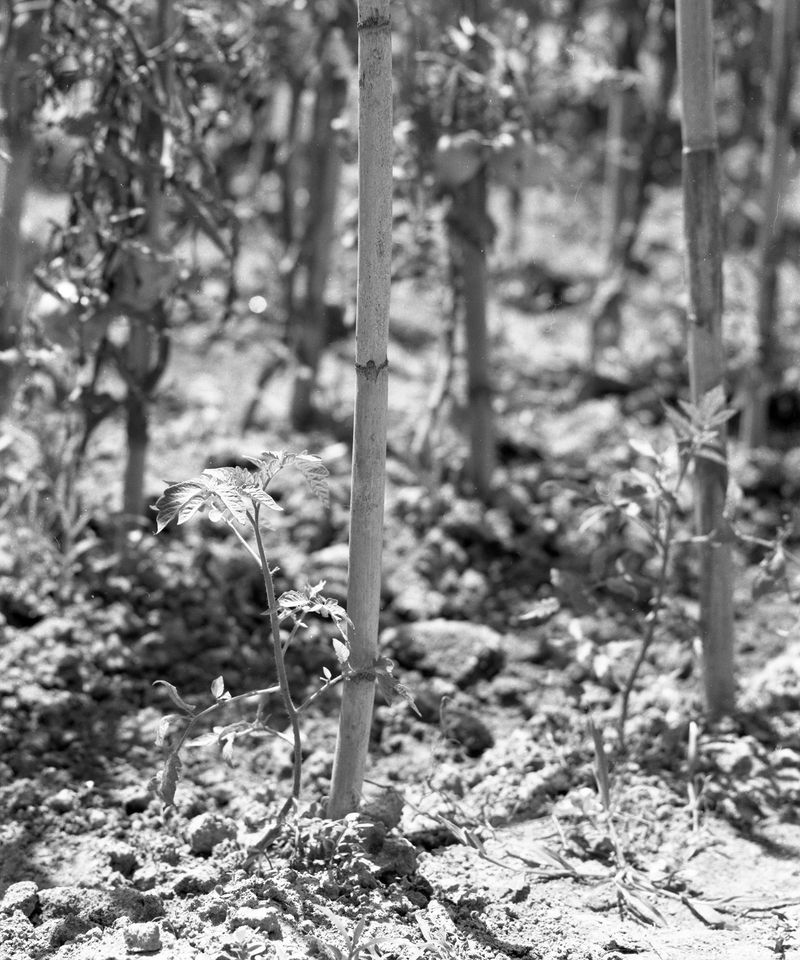
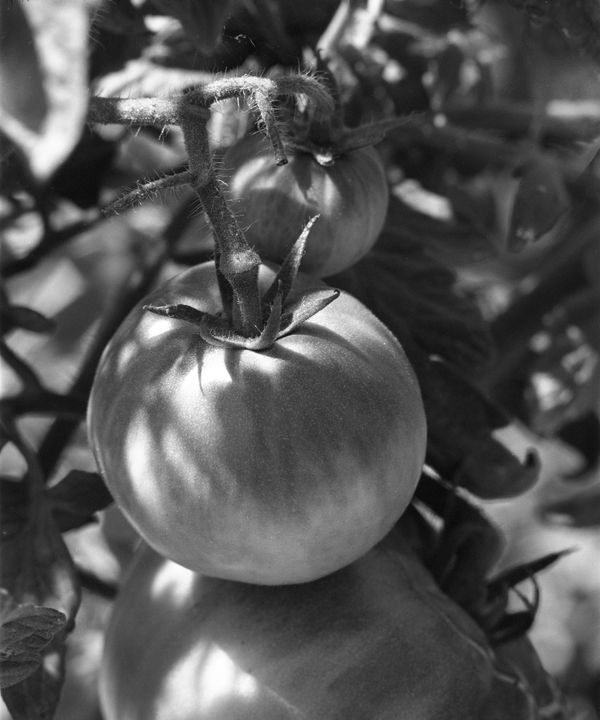
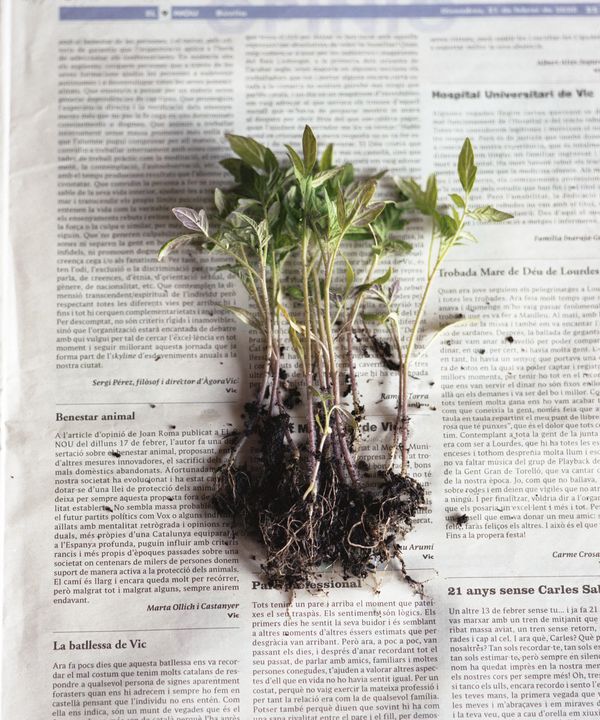
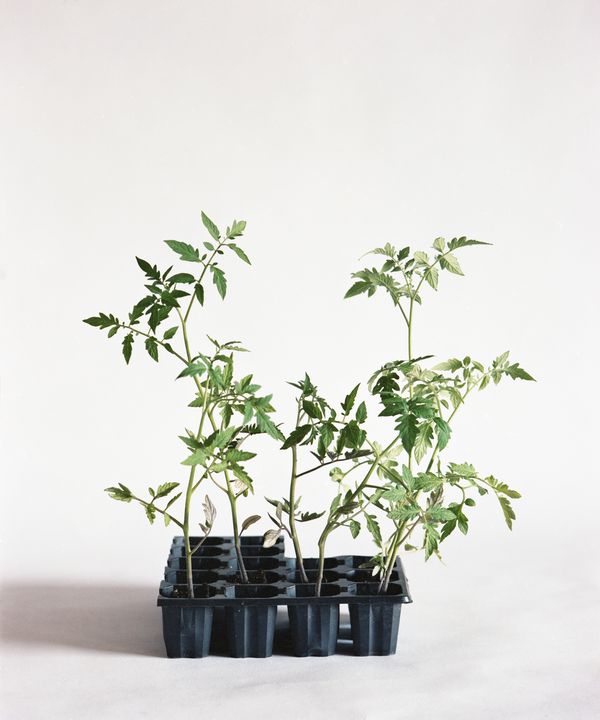
A seed that becomes a tomato plant, a tomato plant that blossoms, a flower that produces fruits. The soil is first dry, then wet, then hard, then my grandpa shovels and it is soft. The sky blue, then grey. It rains, and now it’s sunny. There’s an industrial estate 5km away, factories blow smoke, trucks leave. The air is stale, later we can breathe a lighter air. It looks clean; the breeze is nice. At night it’s freezing, twenty tomato plants die, but the rest bounce back and live. The sun goes down and the hill changes. Now it’s grey, dull grey. Two bees on the hill, flying among lilac flowers. My grandma calls them violets. Now they’re flying among tomatoes, some unripe, two already orange. From the tomato plant a thread hangs. The sun shines above with zenithal light and shadows are short. Red, orange, green, and purple tomatoes. Yellow flowers. Big and small tomato plants, some to flourish and others fully blossomed, growing or about to dry.
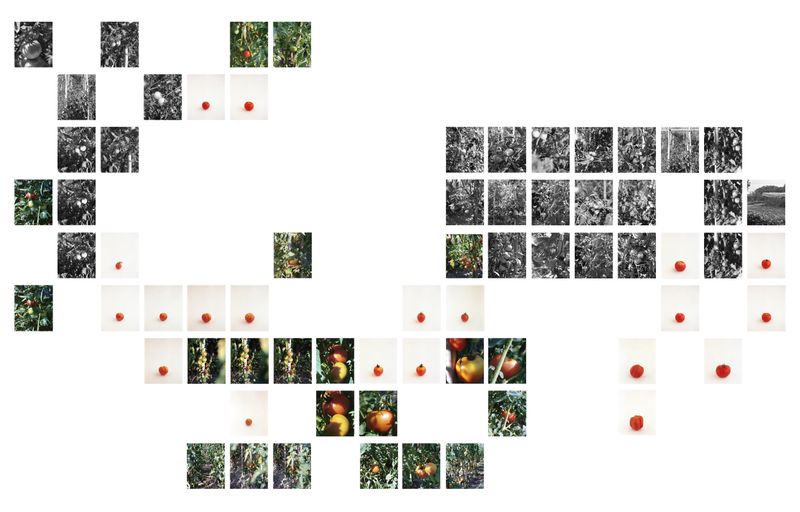
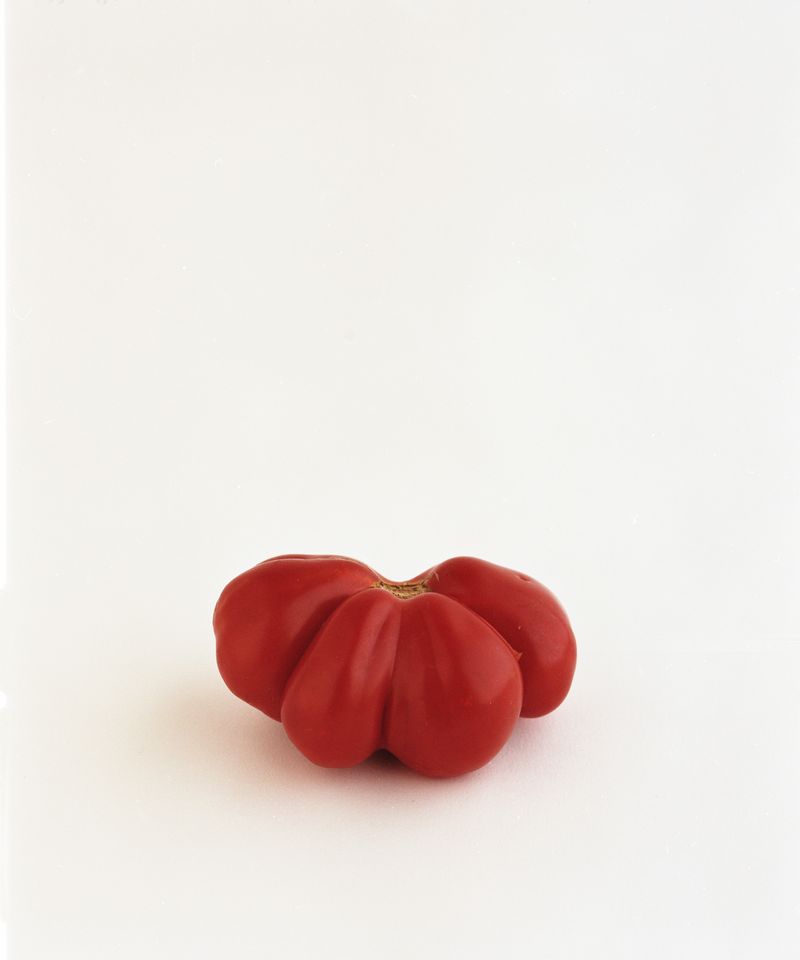
“Tomatoes” delves into a relatable and quotidian reality, my grandpa's home garden, with the desire to photograph each and every tomato that grows in a year. With this proposal, I attempt to scale an entirety I feel unfathomable due to the impossibility of capturing all the fruits in a constant growing and ripening process; every bud of a tomato plant. The impossibility that supposes capturing (using photography) the linearity of the present time that conveys reality.
Agriculture and the farming of the land demand effort and consistency; you need to work the soil and plants for them to blossom and produce fruit. I observe for twelve months the results of a consistently worked land and the effect of time on the soil and fruits.
I pay attention to everything that happens in a specific portion of land. What processes intervene? Which ones can I see? The same soil while raining, sunny, covered in snow and frosted. Shoveled and watered with the same tools a year before and after. There are relations that escape me… compost, insects, flowers, herbage. Birds flying above the land, worms and moles writhing underneath. I study the relations of what I can see, what looks the same and different at the same time.
Each individual element is substance in itself, besides being part of a bigger network with other substances and elements in time and space. “Each element is a shape that glues its components together and a matter from which other substances can form. In that way, elements constitute at the same time a substance and a connexion. A connexion which is always a new type of reality. In addition, each object, element or substance exists in a reality separate from the one in which an individual can observe it.”
In what moment does an element become another? Does the element stop being the substance it had been in order to become another? Or does it continue to be the same substance in addition to the one it will become? What is fixed and what is variable in an element that is always in contact with other elements, substances and objects that condition and modify it? Is a connexion synonym of variability? Is it synonym of staticity?
I am interested in these new realities that are constantly generated when elements connect with each other. I am also interested in the way in which everything as a whole gets shaped through specific elements that have established similar relations in a time and place alike. Elements that are equal despite being irreducible from one another; each being unique and different. The sum of these elements generate a cartography from details and image saturation.
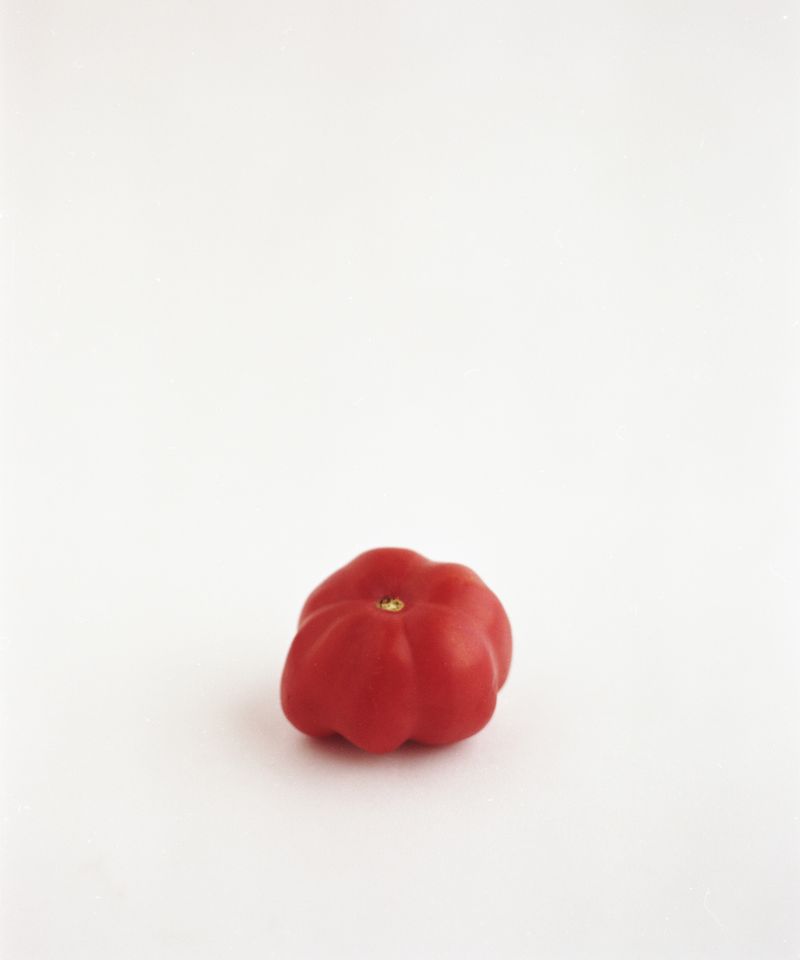
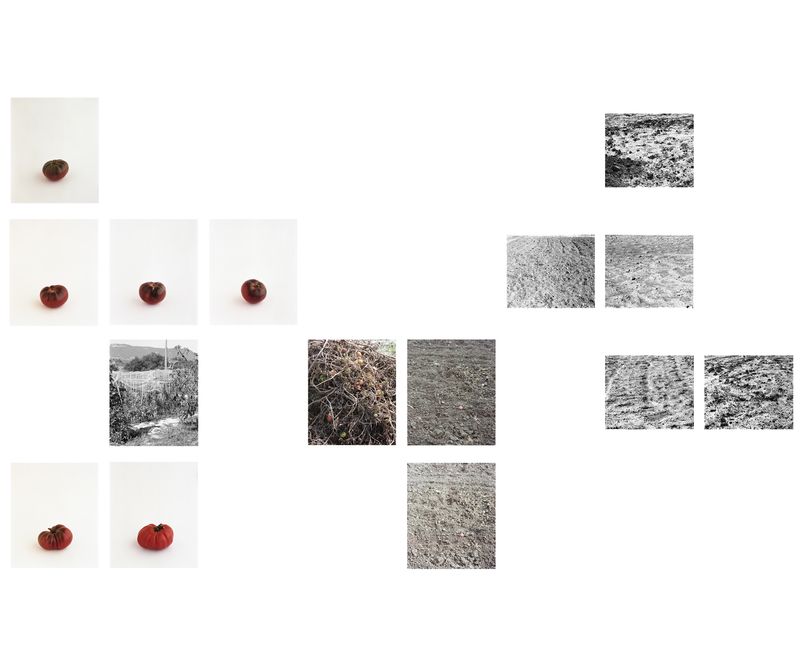
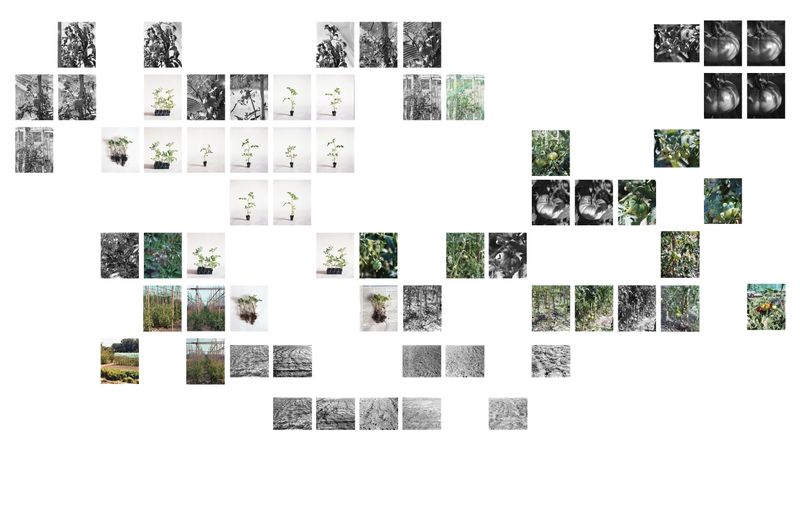
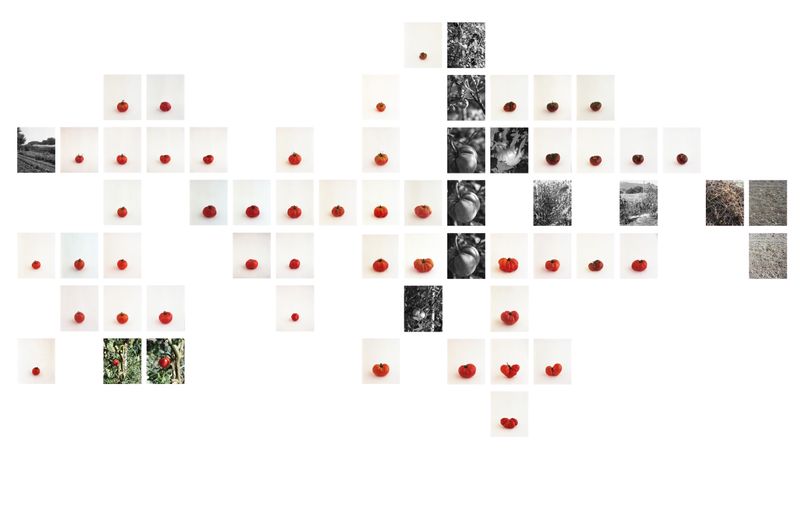
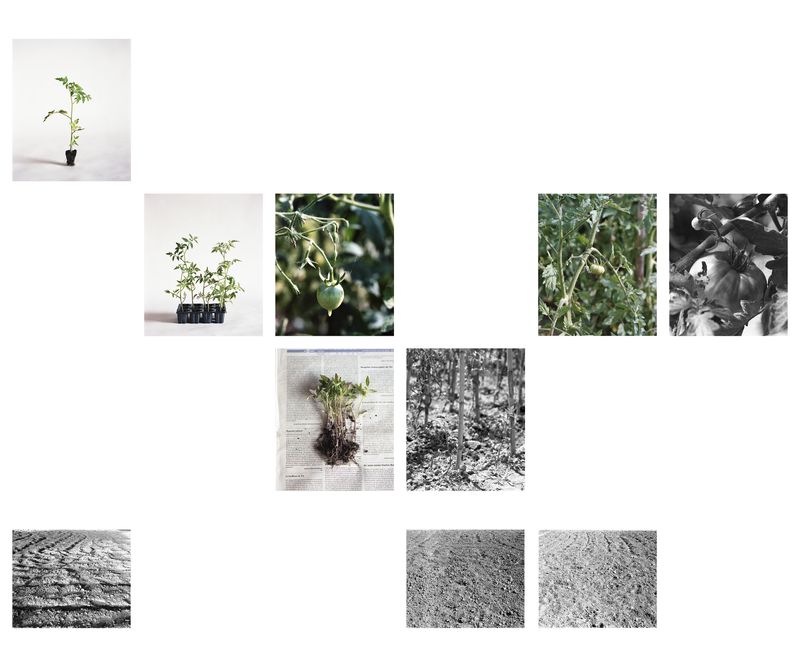
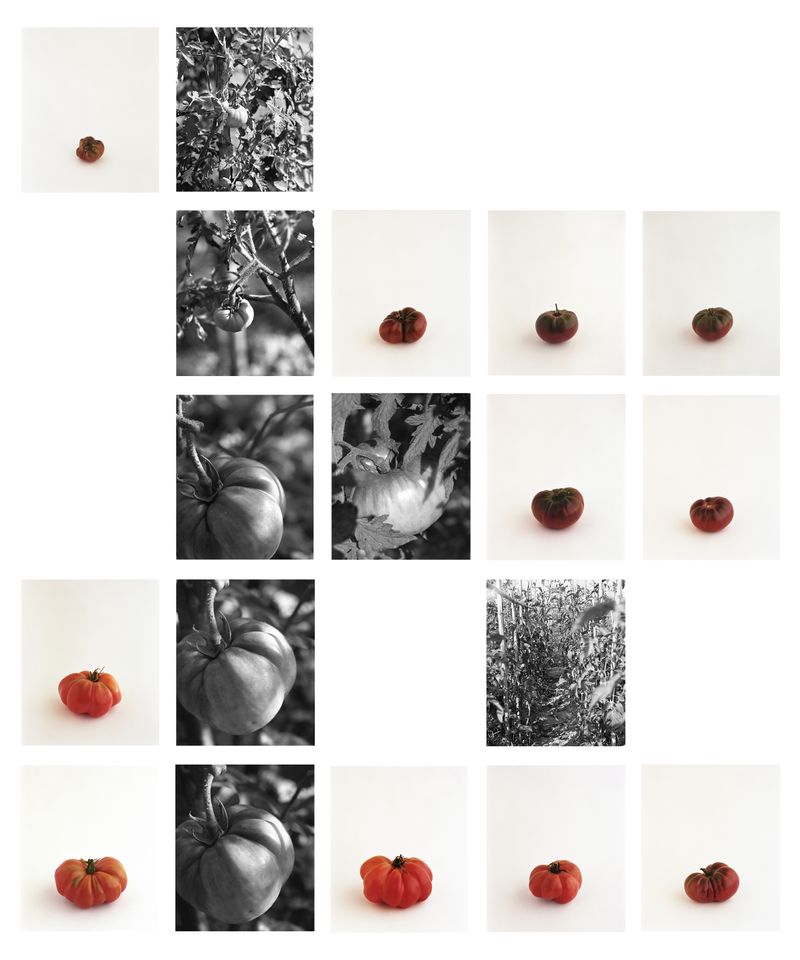
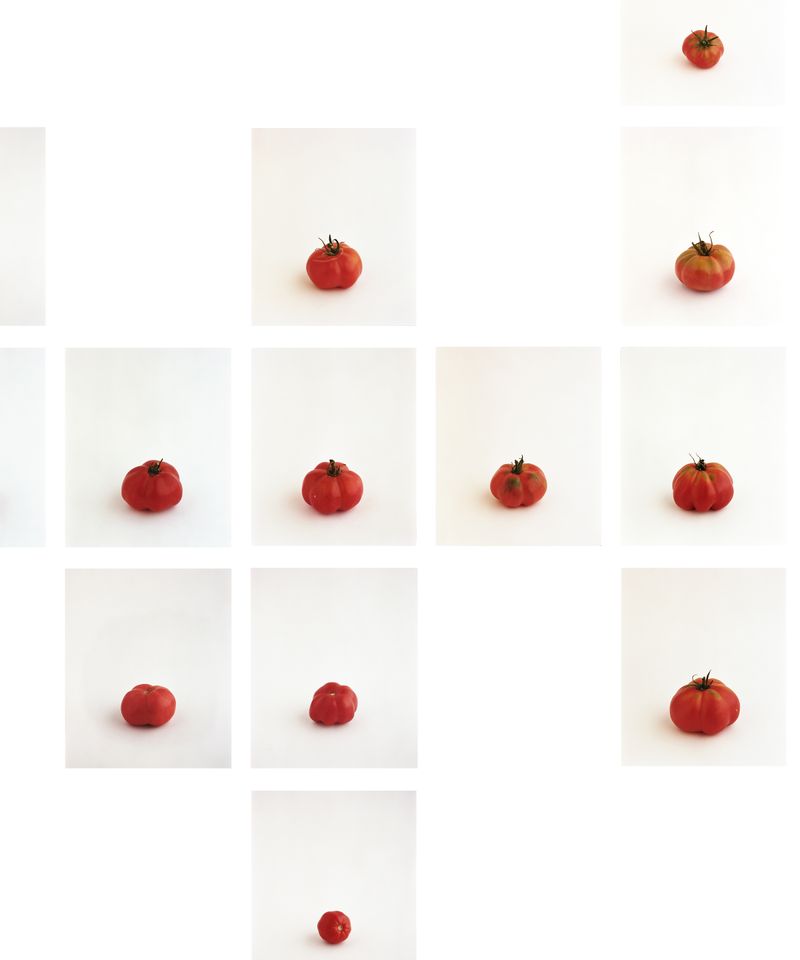
The project “Tomatoes" dissects a wholeness in parts, fragments, and reunites them afterwards in a structure. In this way, “Tomatoes” is a collection of many variants that have been generated during a specific lapse of time and in a unique place and conditions. These variants are intertwined in a unique structure where each tomato, tomato plant or piece of land is or becomes a unit of measure that completes it. This structure seeks to communicate as a whole, in its entirety, beyond each separate unit. It maps and connects a myriad of details and nuances that emerge as a tomato ripens, and this has been photographically captured at various stages. This has created analogies and associations among images that relate through time, formal or sensed factors, and constitute new or varied realities.
This proposal connects the different temporalities present in a specific piece of land in the span of a year. In this way we can see at the same time the nuances generated during the year and of which their evolution has deprived us otherwise to see them in their entirety. We can see them so clearly that, perhaps, we question our own capacity to observe and sense the evolution and nuances of the vegetal collective. A collective that follows concrete rhythms and developmental periods of time different to ours. By the time I capture the tomato plants in a picture they have already become something different than when I started.
When it comes to the structural composition, it is presented by connecting the images. The relations are established chronologically, using formal matters and resemblance. Sometimes, resemblance occurs across different periods of time. Structure is also generated through micro and macro relations. That is to say, as a sum of images of analytic nature constitute a collective in a specific context, among other typologies and relations.
The structure proposed has a cyclic nature that could be expanded indefinitely toward any direction as long as the the land is continuously farmed and seeds continue to germinate.
I choose an organic form of presentation in which the pictures are directly attached to a wall, without a frame or interferences, preserving the structure proposed. This structure has modifiable parameters, following the established structural line depending on the characteristics of the venues where my project is presented.