Propulsion
-
Dates2023 - 2026
-
Author
- Locations United States, Los Angeles, Atlanta, Las Vegas, California, Japan, Tsuruoka
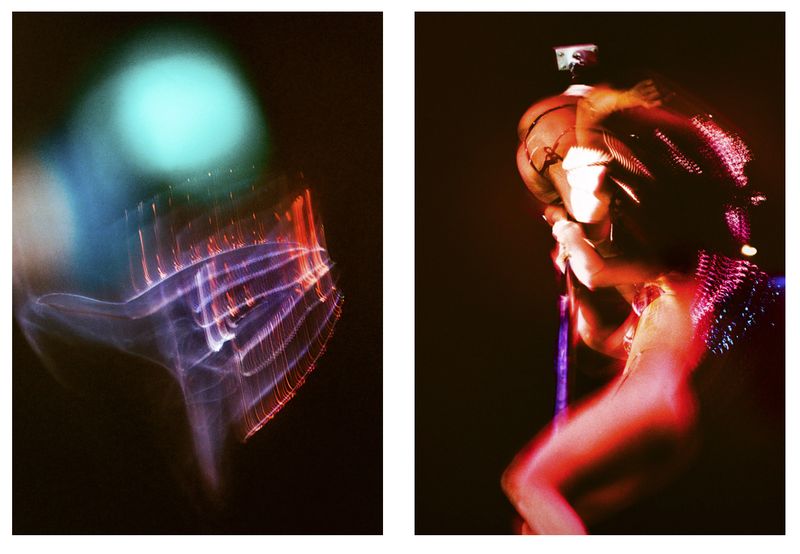
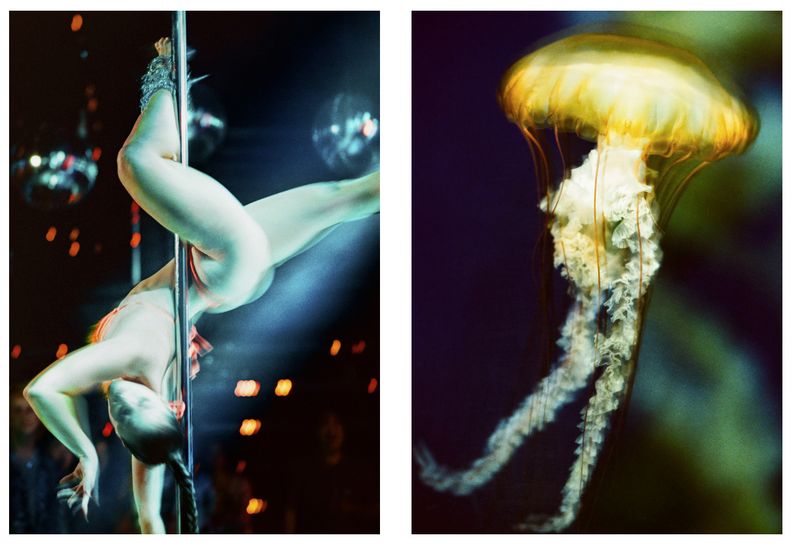
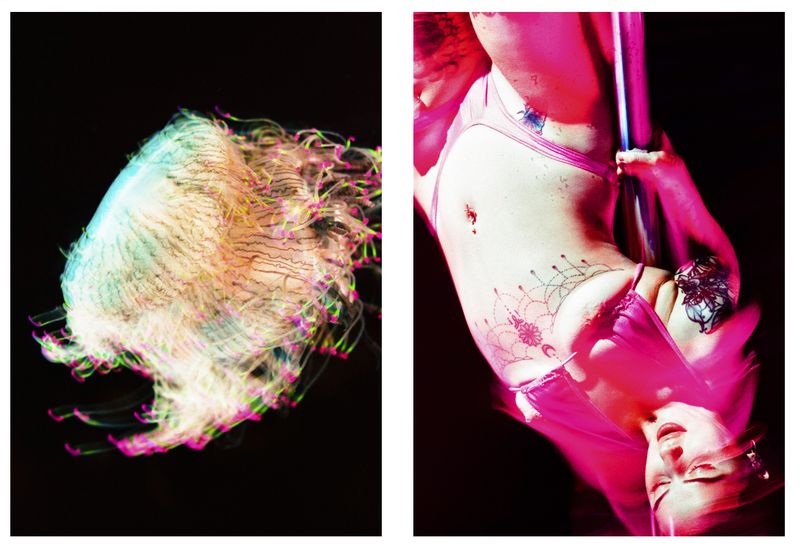
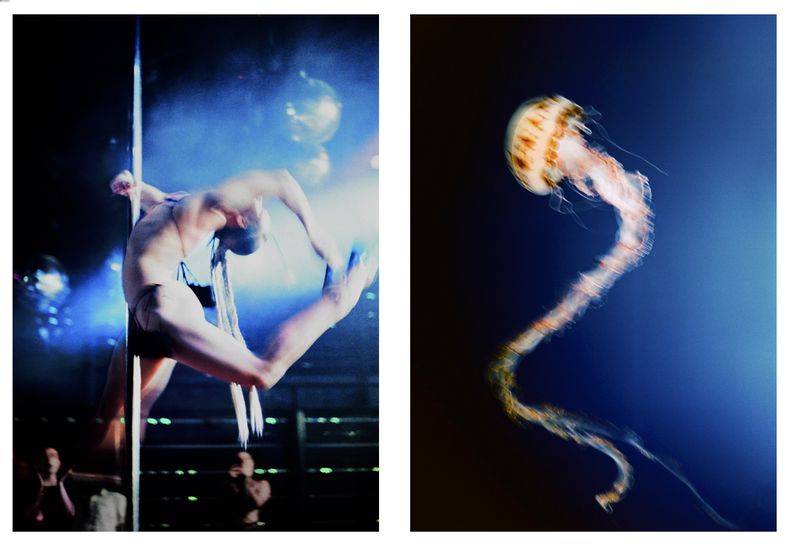
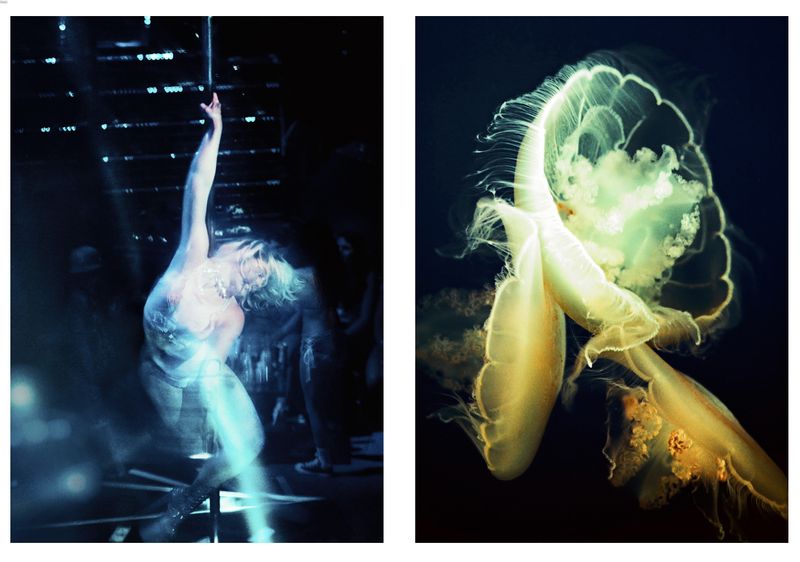
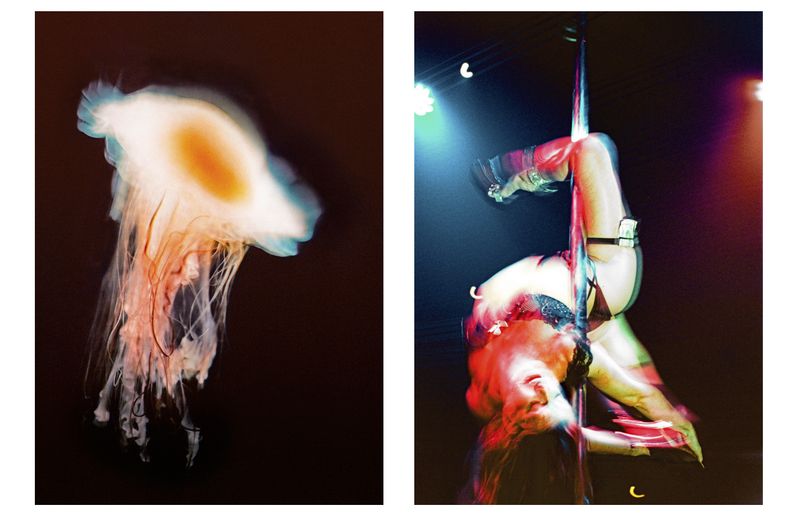
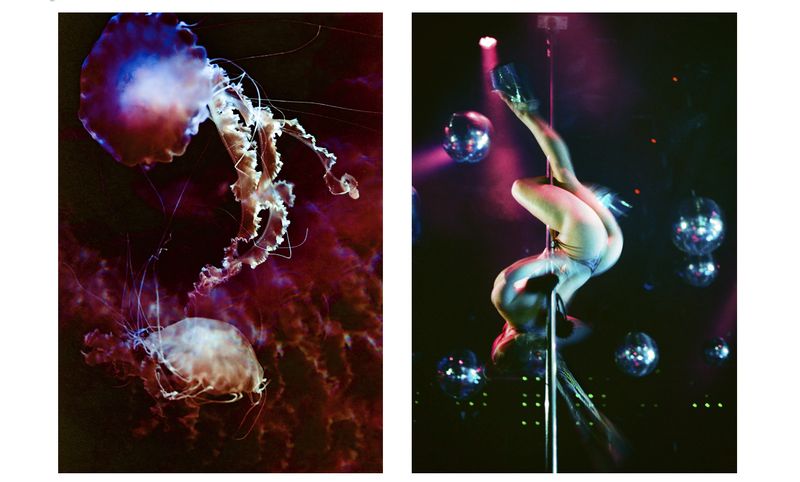
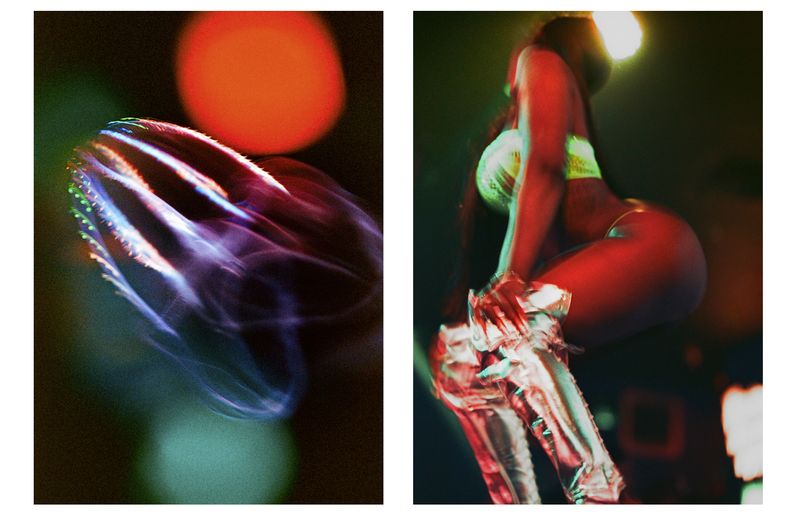
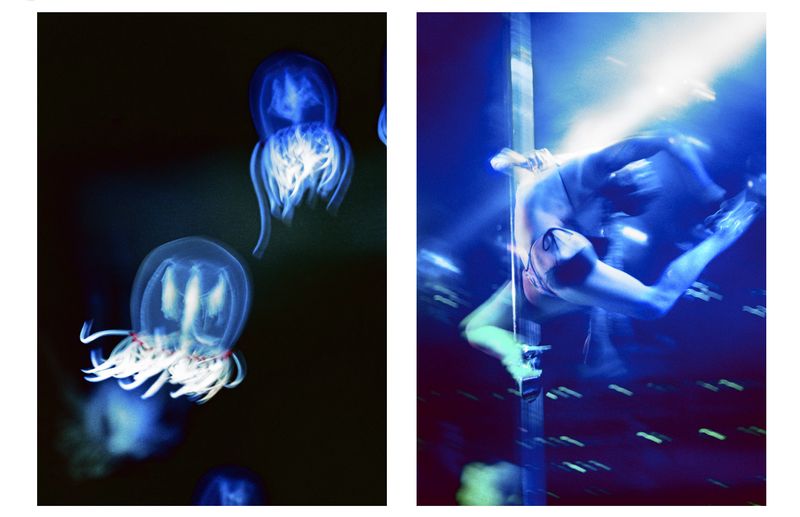
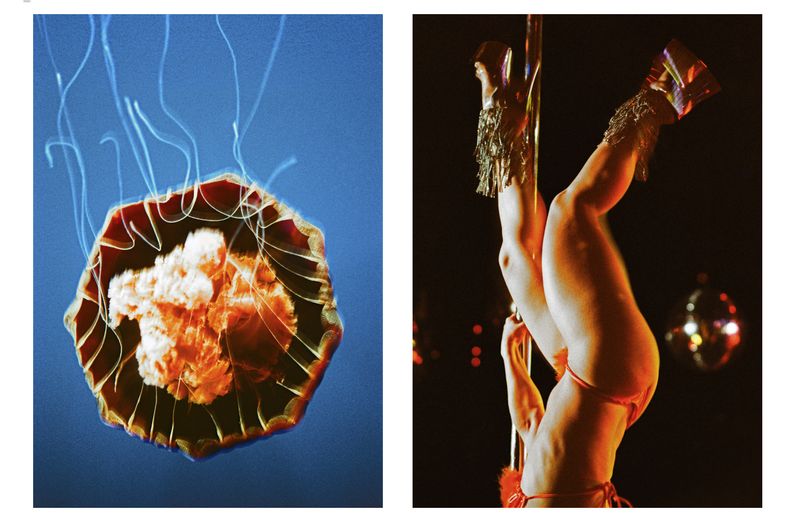
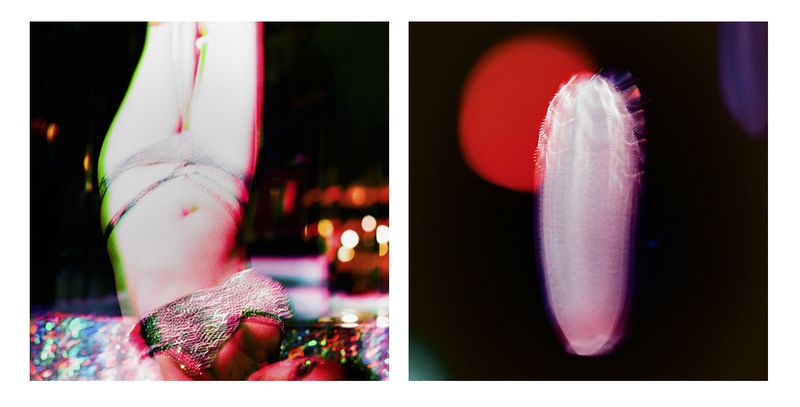
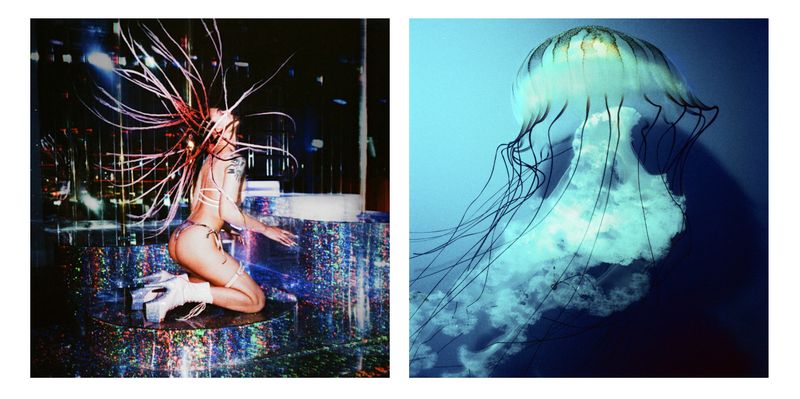
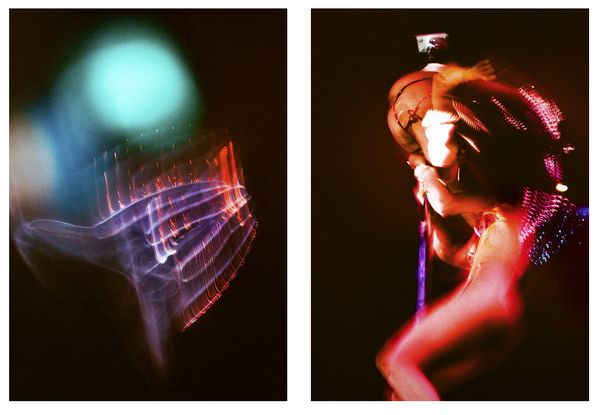
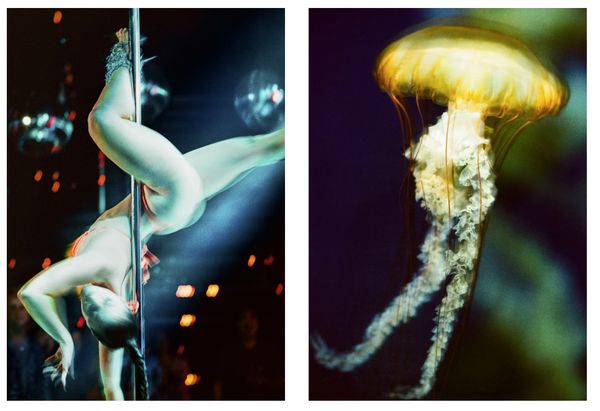
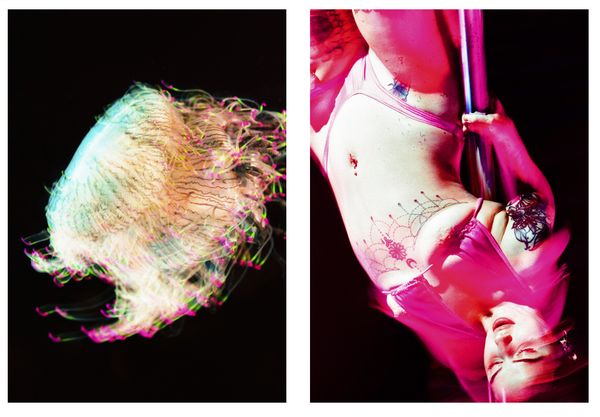
PROPULSION pairs analog photographs of pole dancers and jellyfish in 59 diptychs, made in clubs and aquariums and joined only in the edit. The work traces a shared language of suspension, control and endurance, and the act of looking.
PROPULSION pairs 35mm film photographs of women performers in clubs with jellyfish in aquariums, in fifty-nine diptychs. It explores shared principles of propulsion, suspension and control, and the kinship between pole artistry and the ancient, rhythmic movement of jellyfish. The images are not literal comparisons. Meaning emerges in the space between them.
For years, women performers and entertainers in clubs were central to my work, first through documentary projects such as MONEYGAME. In 2023, after a single visit to an aquarium, I set one of my jellyfish photographs beside an image from that existing work and saw the first pairing. Over the next three years I kept photographing both, in clubs and aquariums, always in separate shoots. No diptych was shot as a pair. In early 2026 I began building the pairings in the edit.
Some of the noisiest places I photograph are where my mind becomes quiet. In a club, with music pounding and lights changing, my attention narrows to movement, color and timing. Watching jellyfish drift through a dark tank gave me the same quiet. Both are dark, artificial environments where illuminated bodies emerge from blackness, and both demand the same quality of attention.
Images of female entertainers arrive with enormous cultural baggage. In Ways of Seeing, John Berger wrote that women "watch themselves being looked at." The performers I photograph understand this deeply. They know weight, rhythm, balance and how the smallest gesture can redirect an audience's attention. The jellyfish, on display behind glass, has no awareness of being watched at all. Placed side by side, they interrupt the usual response just enough to make another kind of looking possible. A shift of weight or a moment of balance can register before a judgment about who the woman is. I have no interest in removing sexuality to make the women more acceptable. A woman can be sexual and disciplined, vulnerable and powerful, and be looked at without being reduced to what someone else sees.
Beauty is the invitation. Color, light and movement pull the viewer in, and then the photograph can become more complicated. In his book Bright Earth, Philip Ball shows how artists have always worked within the color technologies available to them. My palette came from its own material system: 35mm film, often slide film cross-processed in color-negative chemistry, which pushed the work toward the cyan and blue that bind the clubs and aquariums together. I preserved ambient light while adding strobe. With no way to check results, every frame had to be deliberate. The constraint did not narrow the work so much as give it a language.
The goal is not to replace one fixed idea of these women with another, but to loosen the molded view that comes before them. The photographs do not need to tell the viewer who the women are. They only need to interrupt the certainty that we already know.
Twelve diptychs from PROPULSION were presented by Albumen Gallery at Photo London in May 2026. The complete project will be published as a monograph by Skira in 2027, with a foreword by Shepard Fairey.