Ojos de perro azul
-
Dates2022 - Ongoing
-
Author
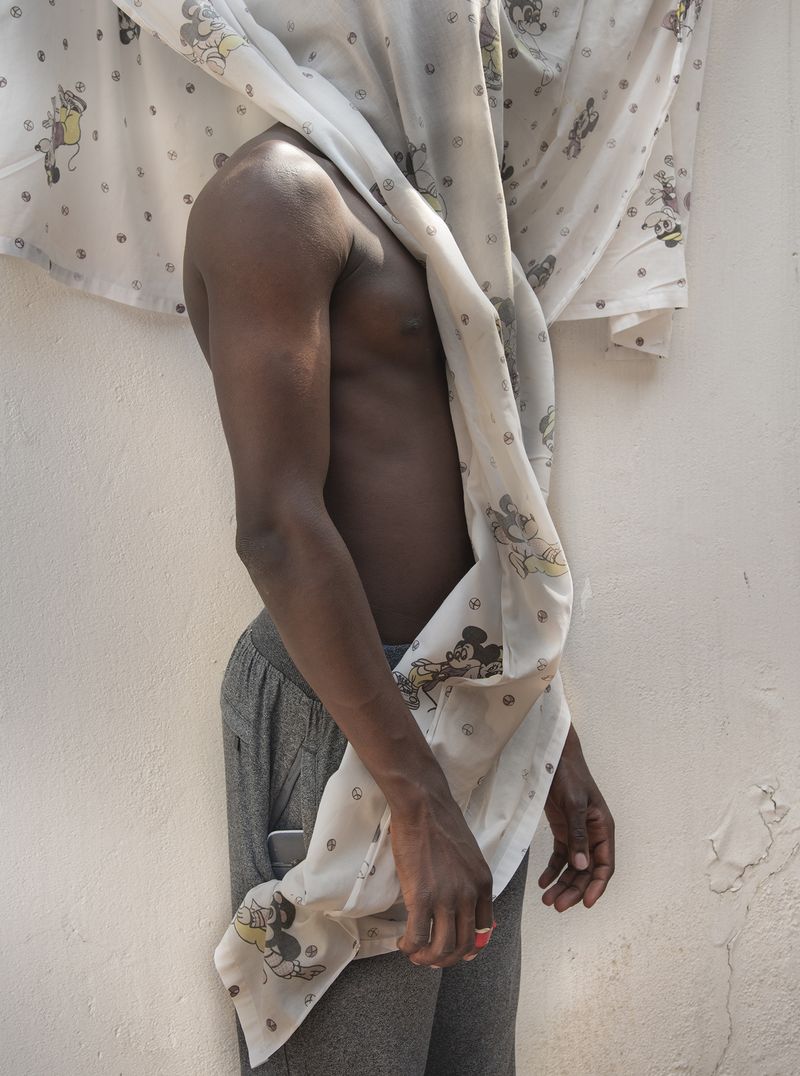
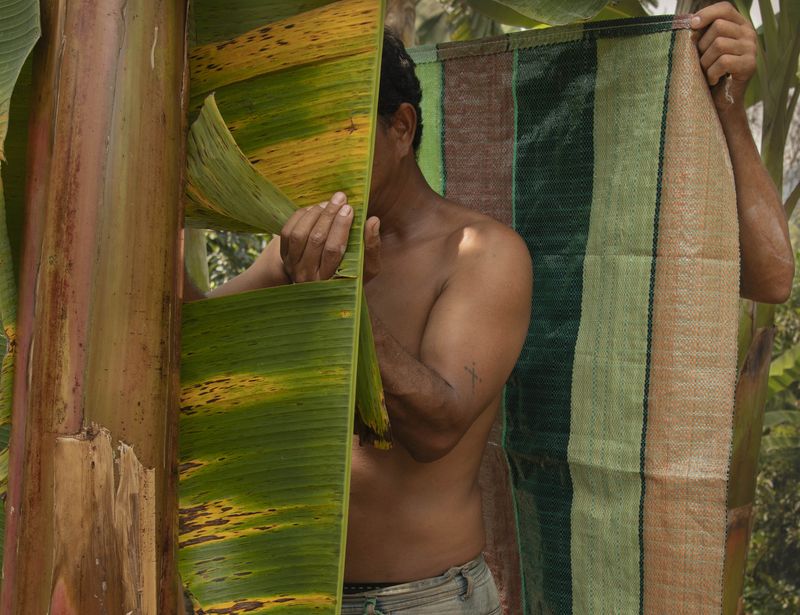
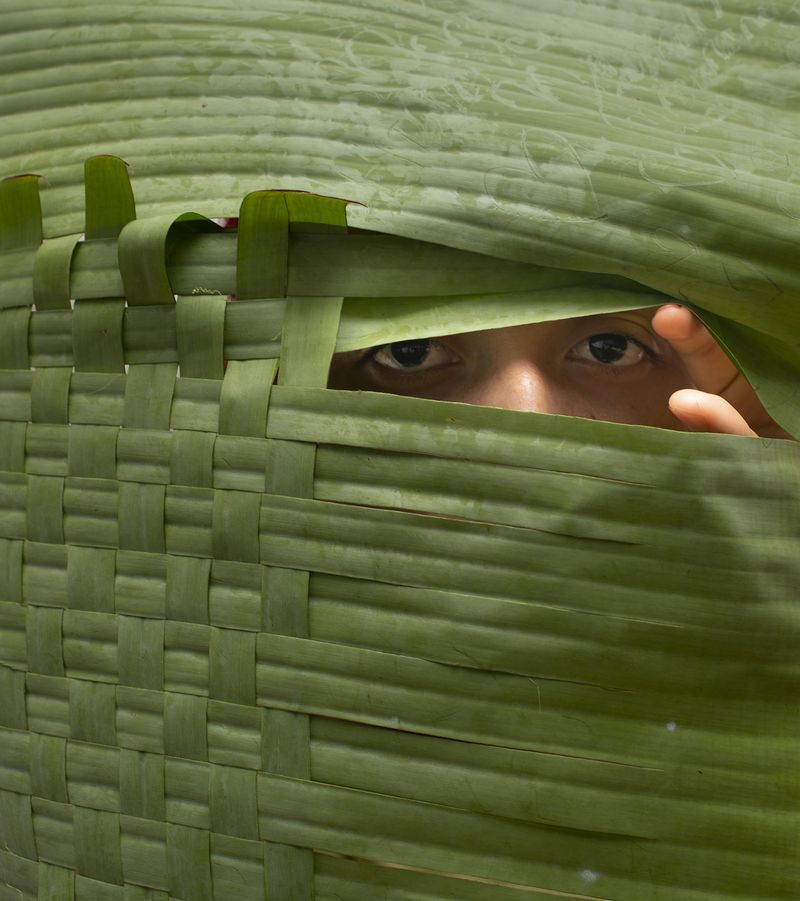
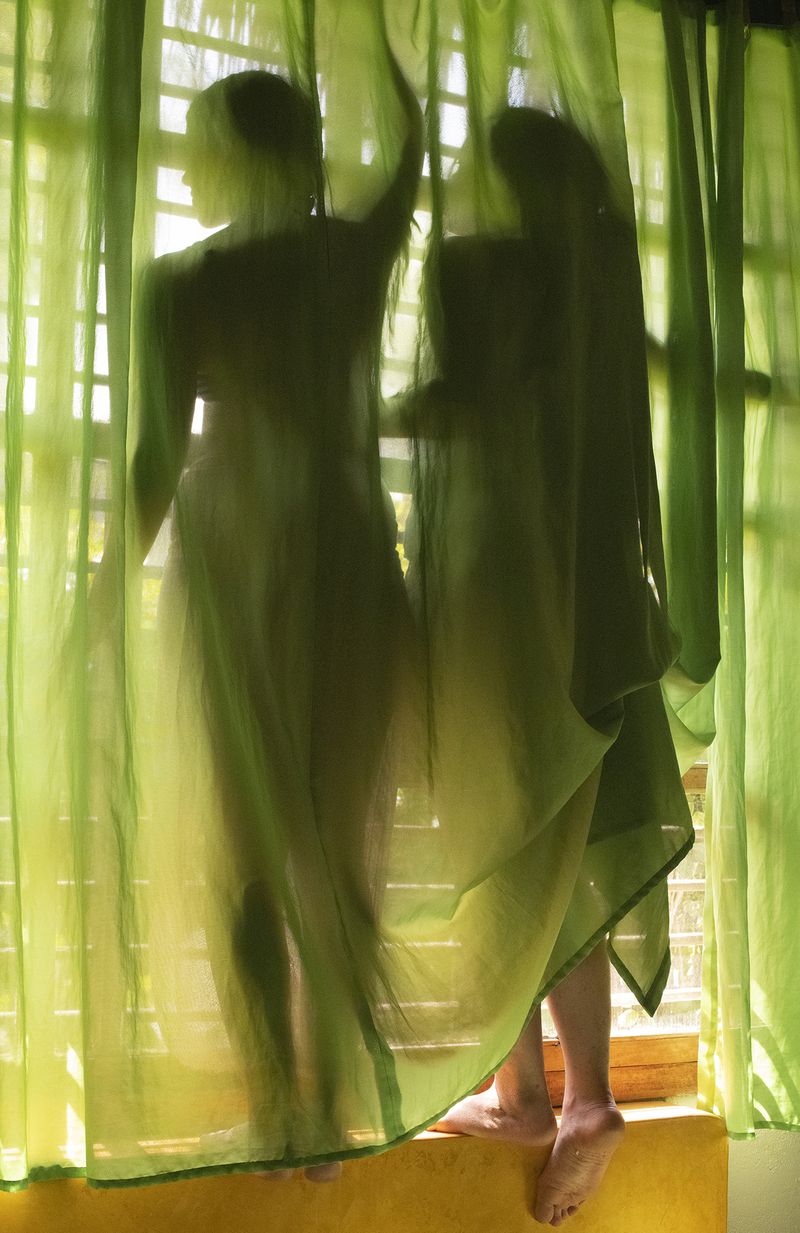
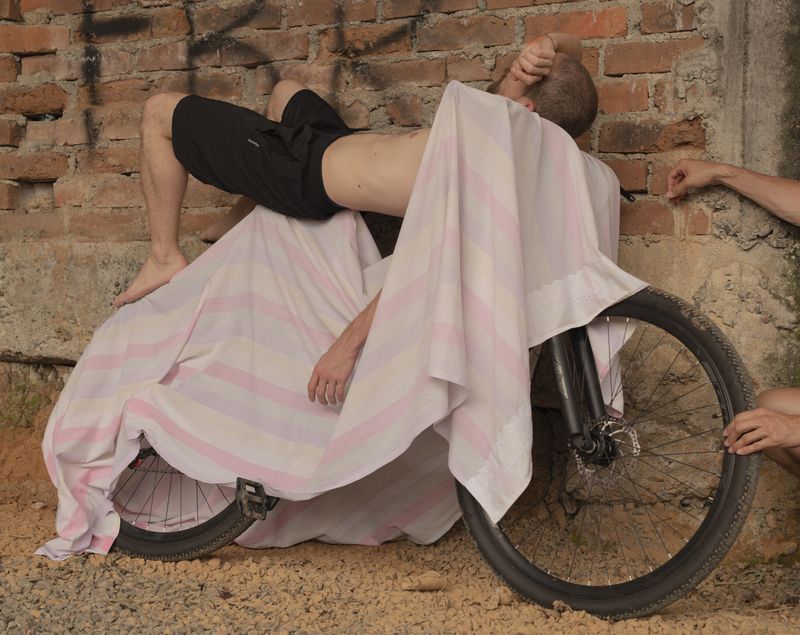
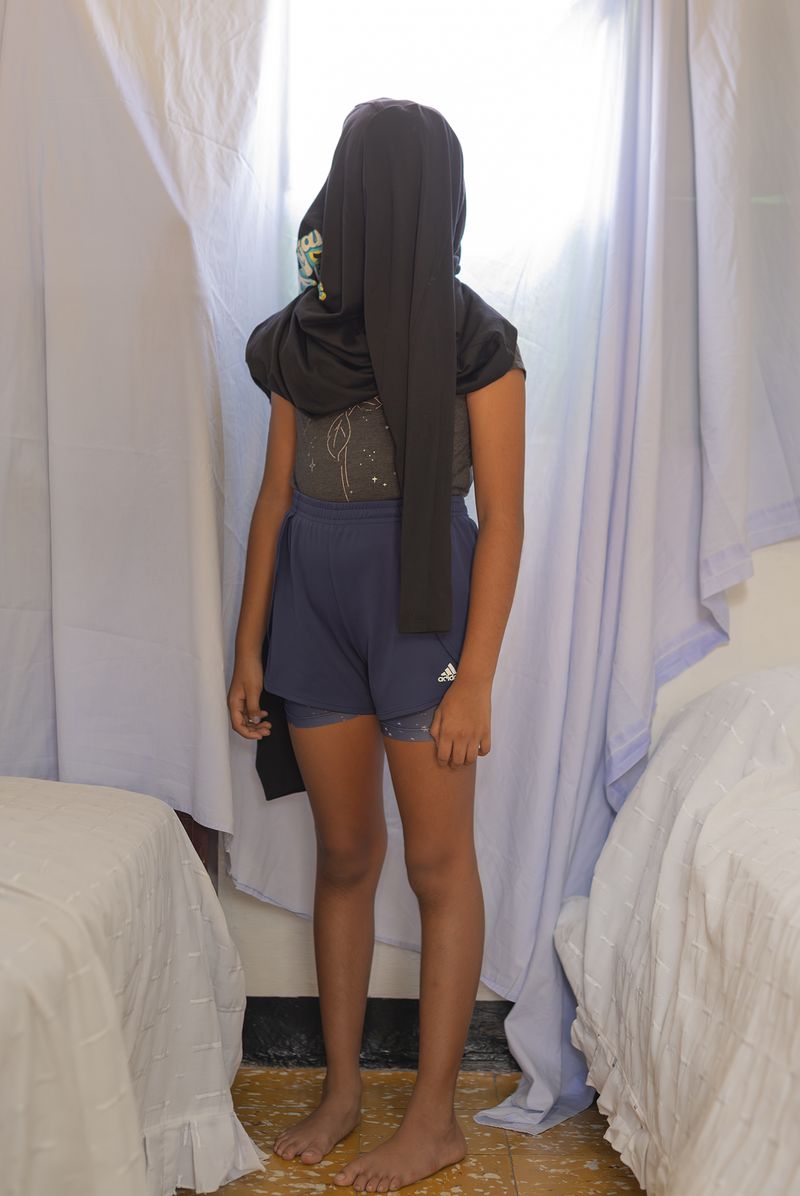
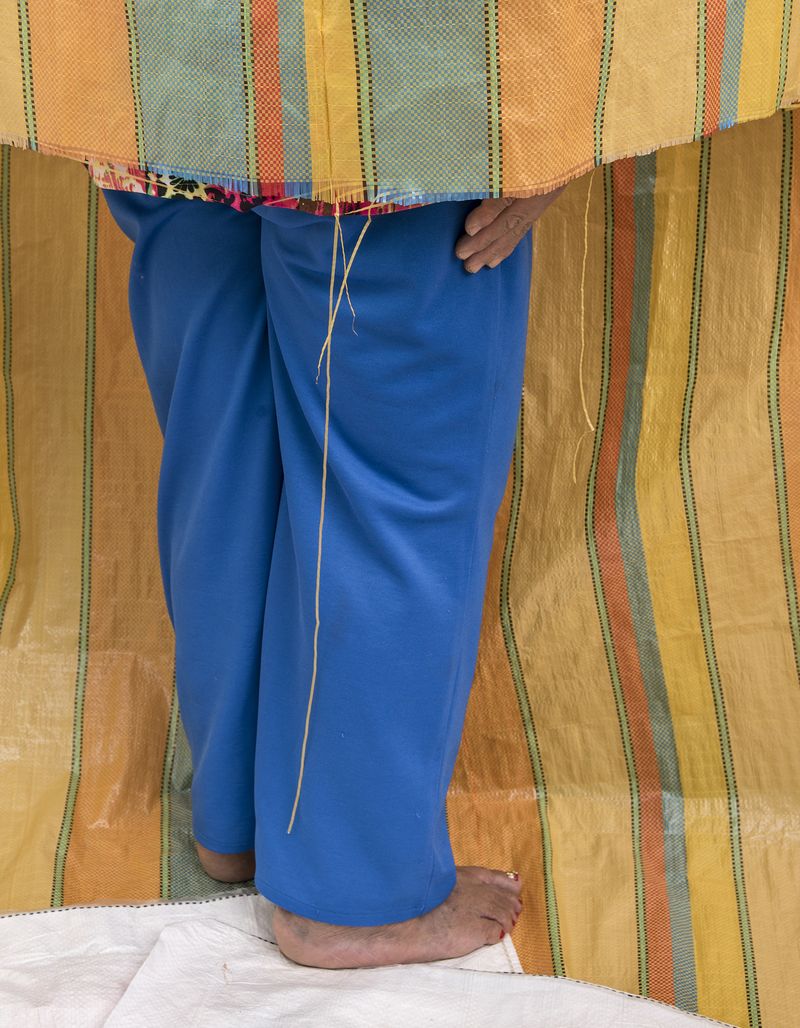
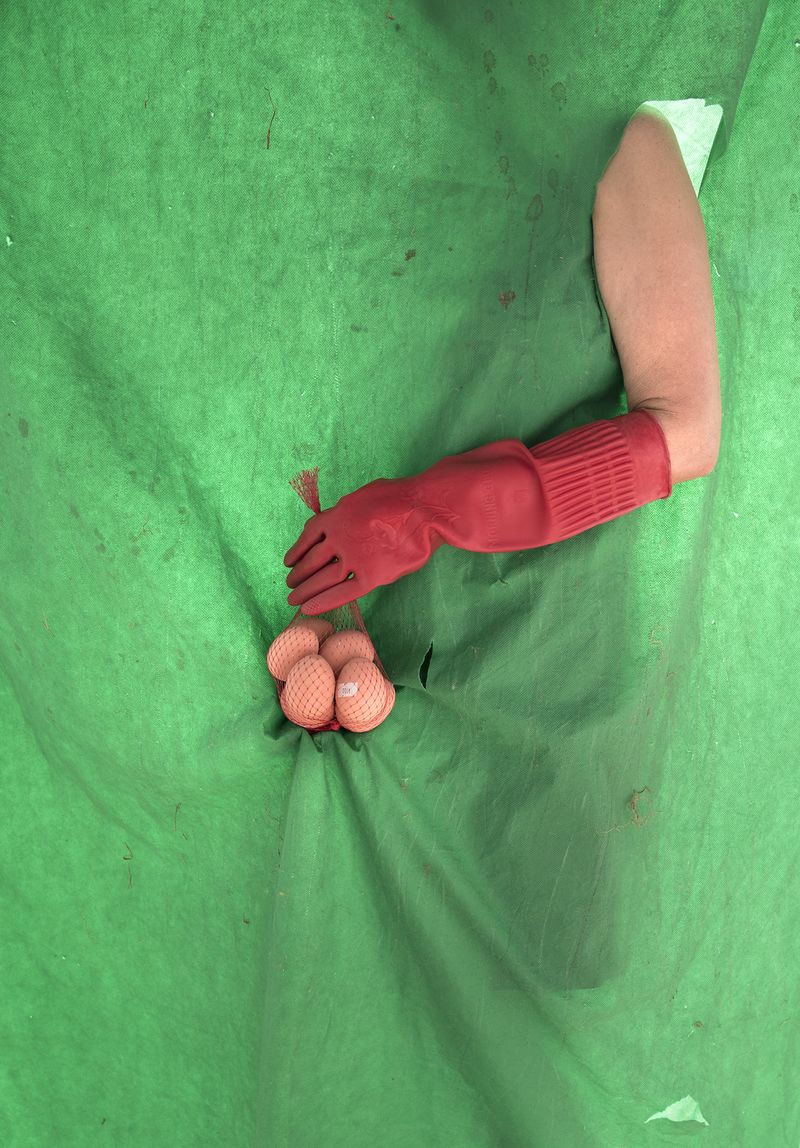
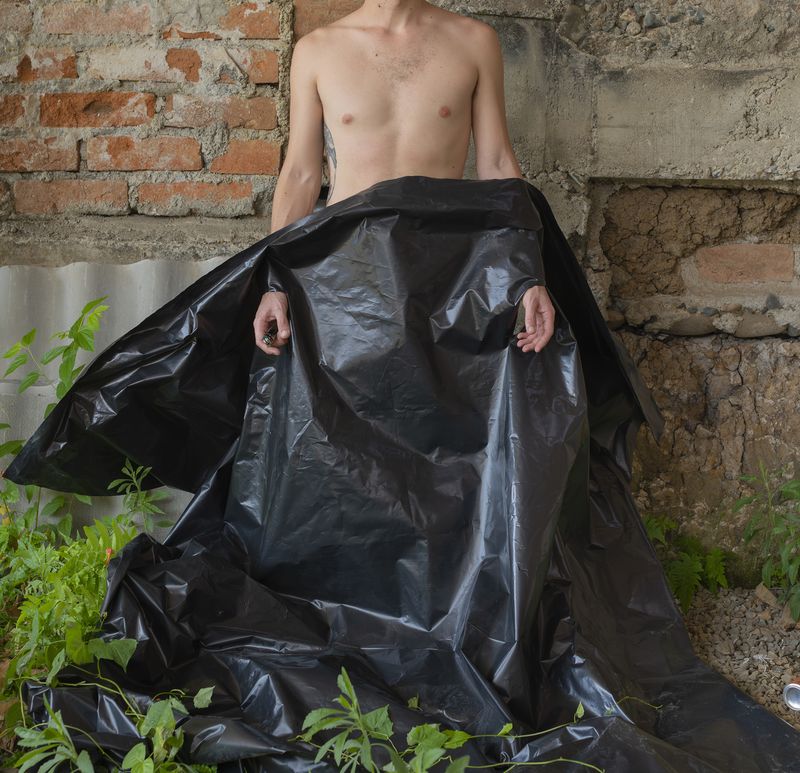
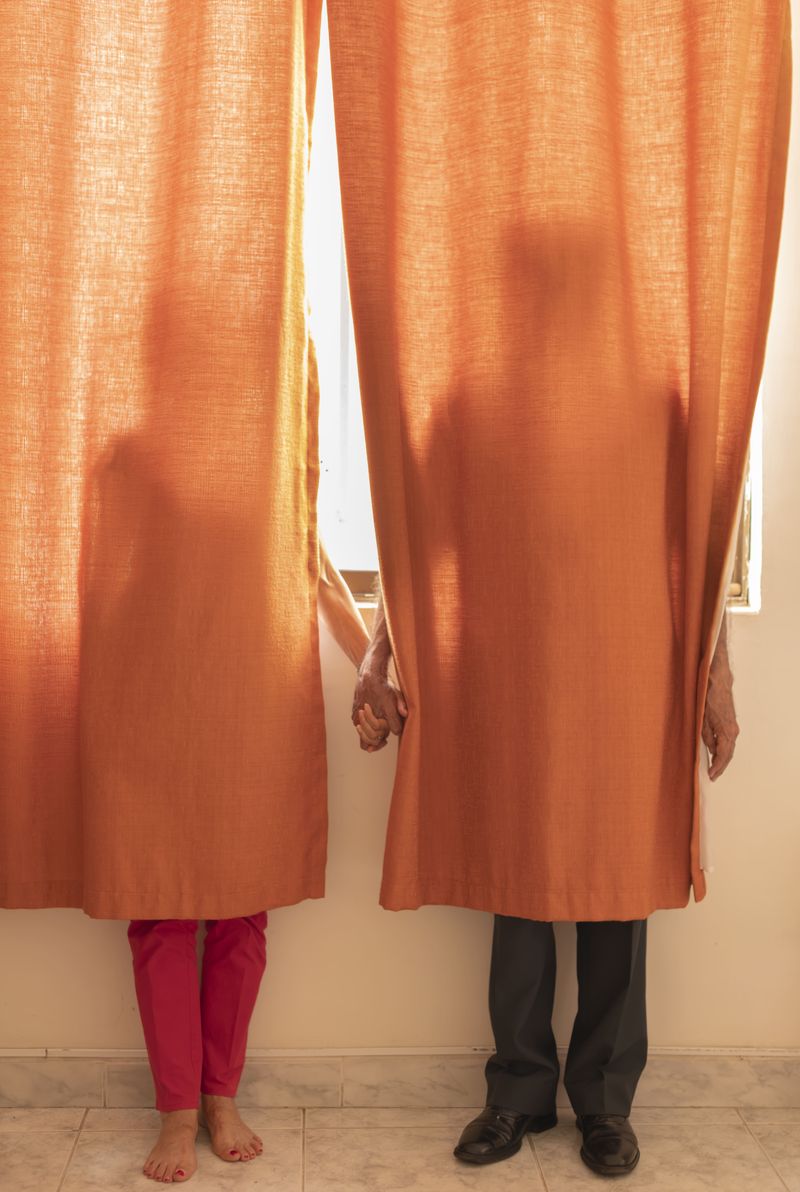
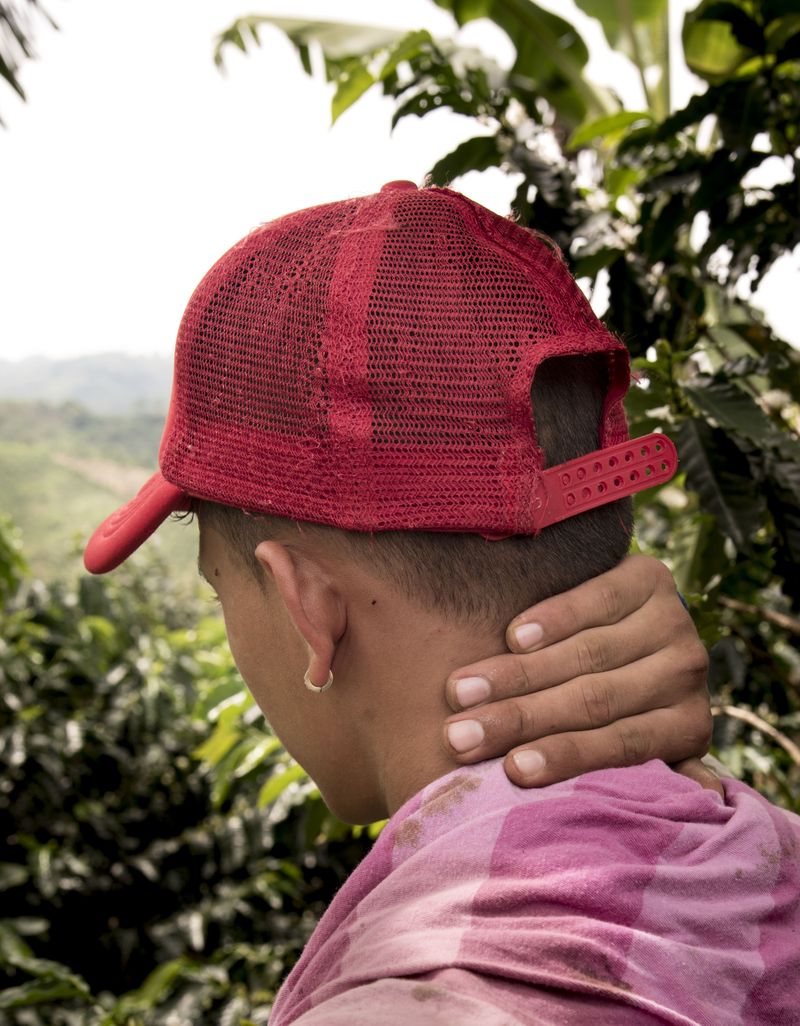
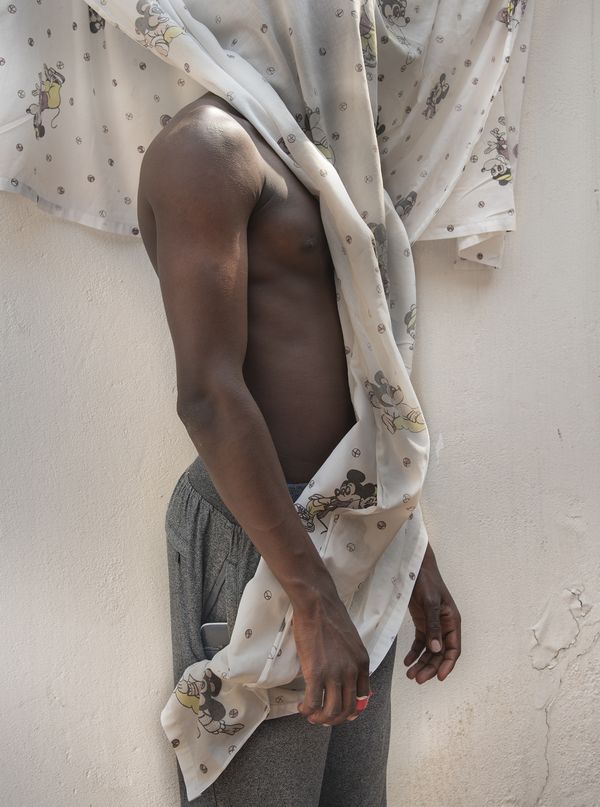
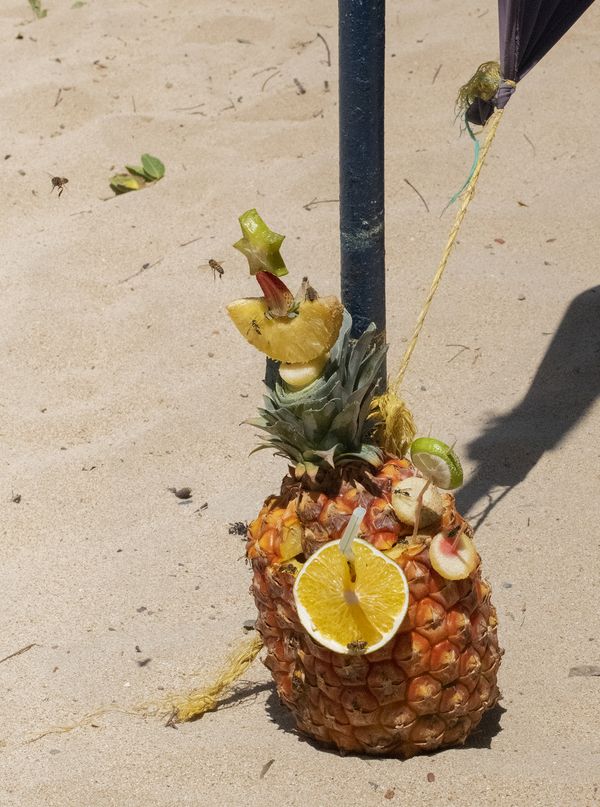
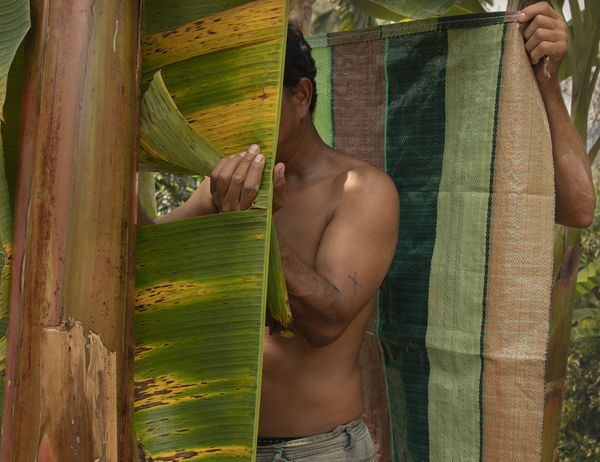
In this body of work, the notion of identity is displaced: it is no longer a fixed face, it is a captured accident, which in the following second can be another. What remains, the identitary, is a certain tropical light and the structure of weaving.
"Eyes of a Blue Dog"
Carolina Sanín says that Gabriel García Márquez’s great genius lies in revealing the secret of what it means to be an American. According to the writer, being an American means being awake when the one before is asleep and being asleep when the one before is already awake. It means being displaced in time, lost. It is to conceive time from the perspective of being perceived—aligned with the realization that the Earth is round—and, because of this, to live in a game of mirrors, contradictions, and speculation in relation to the other.
This relationship of searching and frustration is also an unrealizable love story between the Old World and its expectation that the New World would be either an earthly paradise —the far past— or the utopia of a radical future —a new chance for humanity.
America, then, is life after death, since those who arrived had to cross through death to find us. Going to the western limit also meant becoming another and being beyond life itself. To be American is to be the other who became atrocious, and it is also to be the other who welcomed that other and was annihilated by them.
For years, I have been exploring the question of what it means to be an American through photography. And, like García Márquez, it is in my grandparents' home and the intimacy of my family where I find the seed of my inquiries.
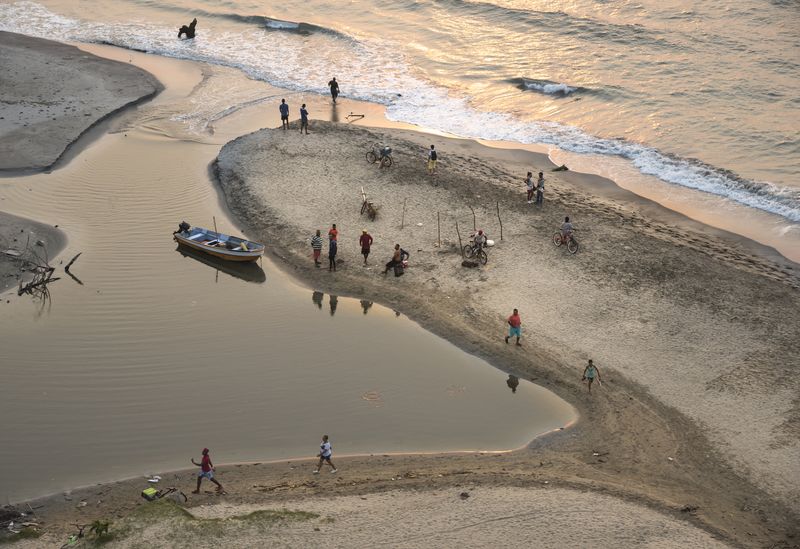
My work is primarily photographic, but I introduce weaving – inside and outside the composition – to shape an experimental counterpoint that challenges and expands on traditional Latin American portraiture. I'm interested in emphasizing the connection between people and territory and I insist on considering the perceptual rather than the exclusively visual dimension of the photographic experience.
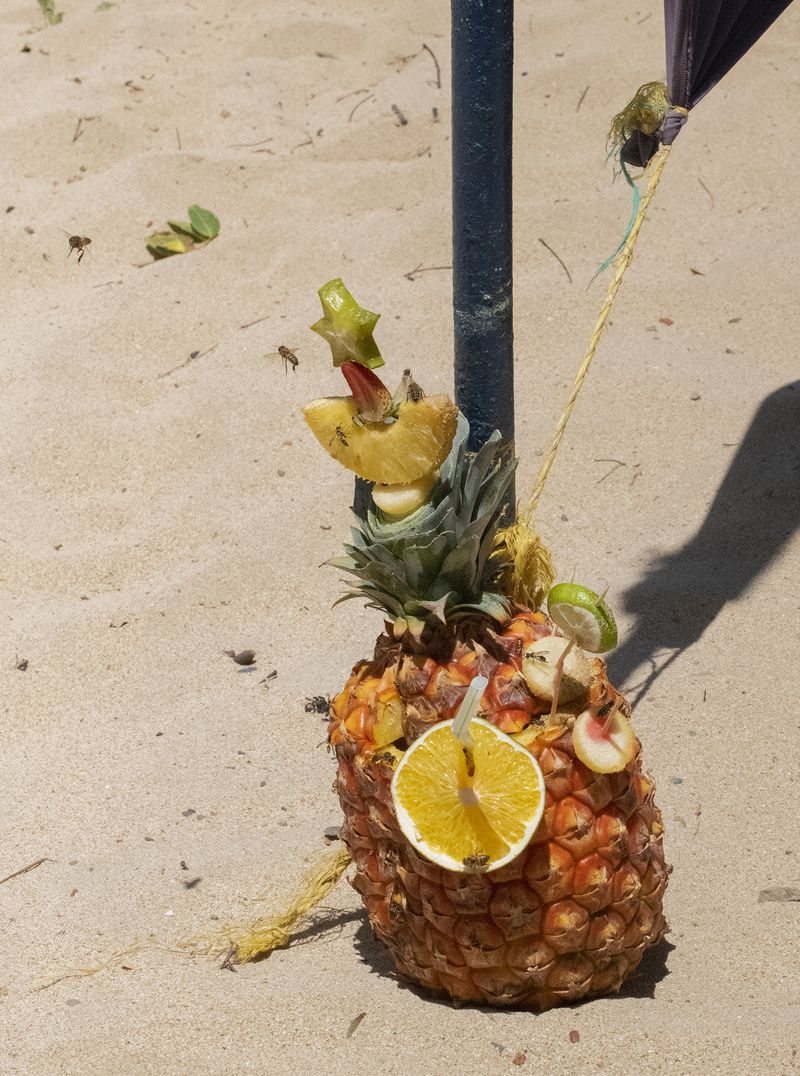
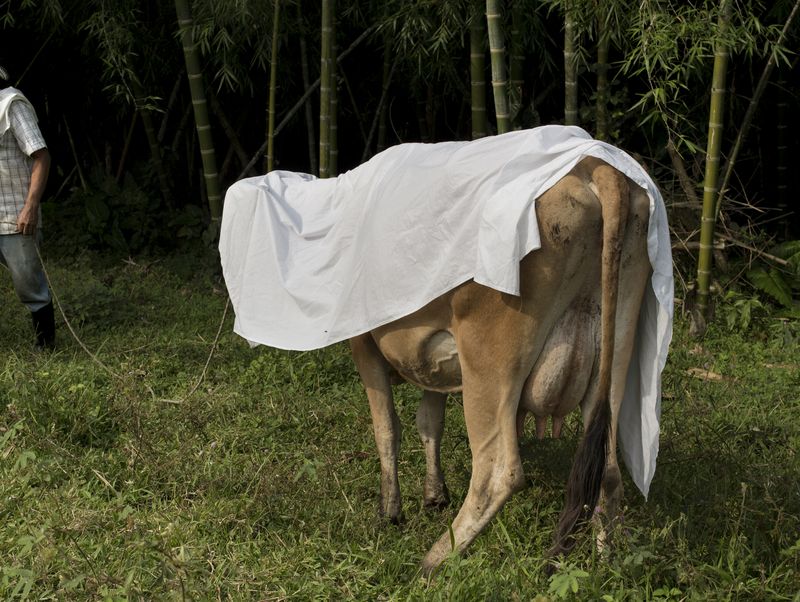
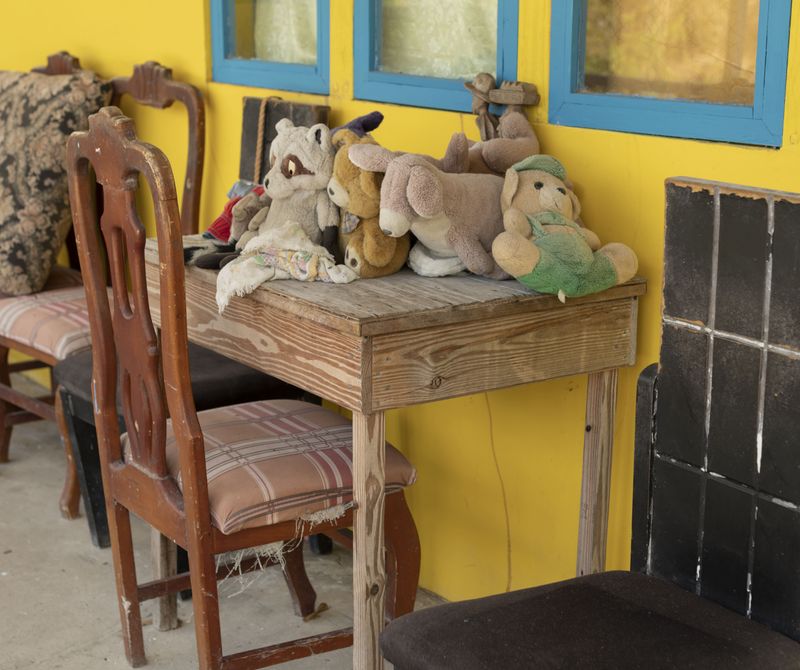
My photographs carry documentary conventions into the ground of pictorial depiction while introducing elements of fiction and artifice to animate underlying tensions and re-imagine. Additionally, I borrow language from “studio photography” and “still life” to compose portraits that begin and end in the human figure but point to realities and desires beyond the frame. These photographs move away from the documentary notion of the “single version” offering the viewer fragments for speculation, where the narrative is always multiple.
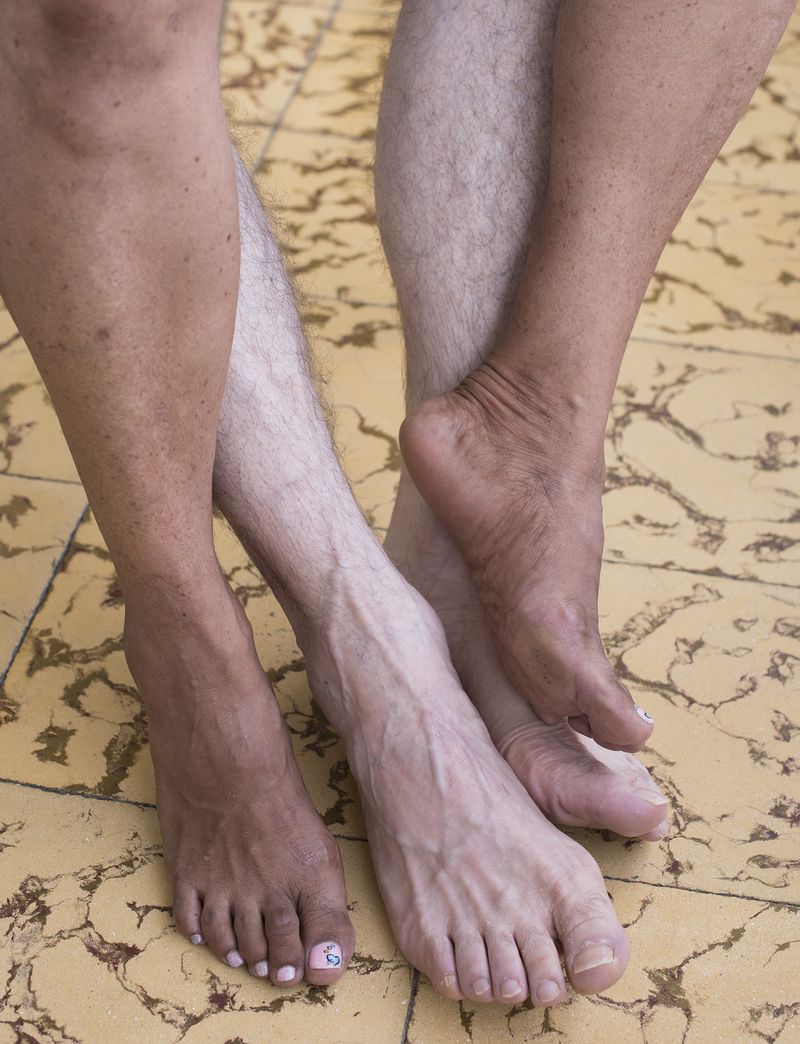
My photographs relate to weaving, not only because of the presence of textiles, sheets, curtains, fruit sacks, and meshes but also because of how bodies are woven together and/or with objects. I apply weaving to guide the viewer's gaze through moments of revelation and concealment. Textiles - with their way of draping - give the composition its character of accident, of fortuitous finding. These are the agents that veil, unveil, and structure from its formless form. Individuals are mediated by weavings, creating warps between themselves and the objects, blurring the illusion of separation and bringing back the attention to material reality. I consider the embodied experience of photographs, the social histories attached to their materiality, and how we process and absorb what the images show.
In my work, identity is obscured as if saying that the self is not in oneself, but scattered throughout space, intertwined with memories, objects, and people, expanded in territory. Here, the notion of identity is displaced: it is no longer a fixed face, it is a captured accident, which in the following second can be another. What remains, what we could call “the identitary”, is a certain tropical light and the structure of the weaving.
“The quality of light by which we scrutinize our lives has a direct bearing upon the product which we live, and upon the changes which we hope to bring about through those lives. It is within this light that we form those ideas by which we pursue our magic and make it realized”. Audre Lorde
My work speaks to the complexities of negotiating overlapping imaginaries, the global circulation of popular culture, and the process by which objects, images, and people carry meaning