Nocturnes
-
Dates2019 - Ongoing
-
Author
- Topics Archive, Editorial, Fine Art, Social Issues, Studio
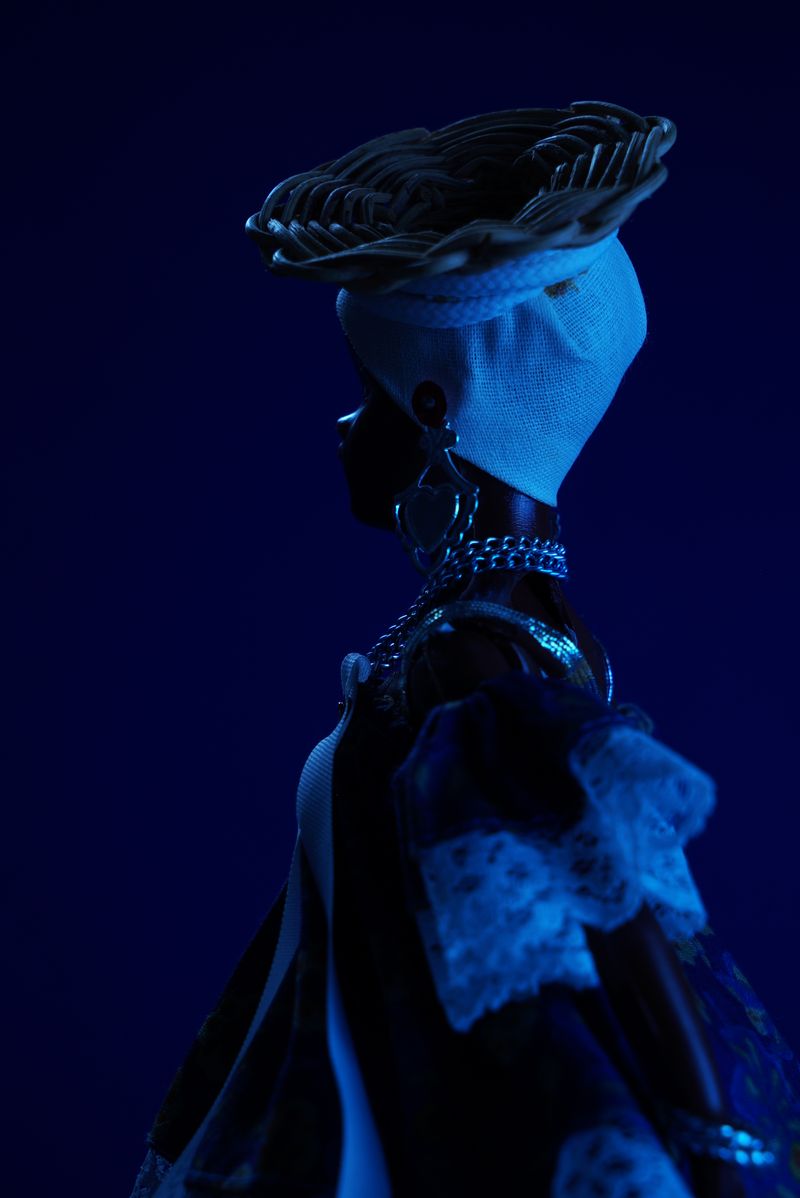
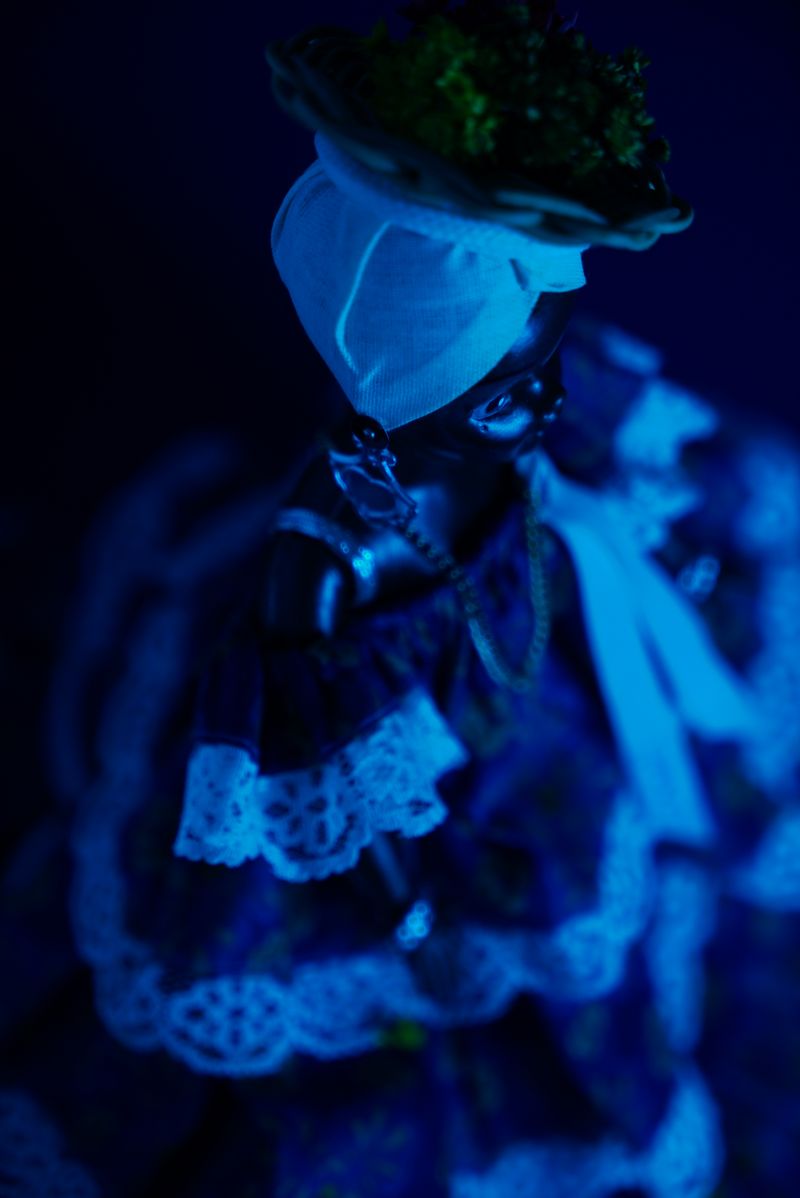
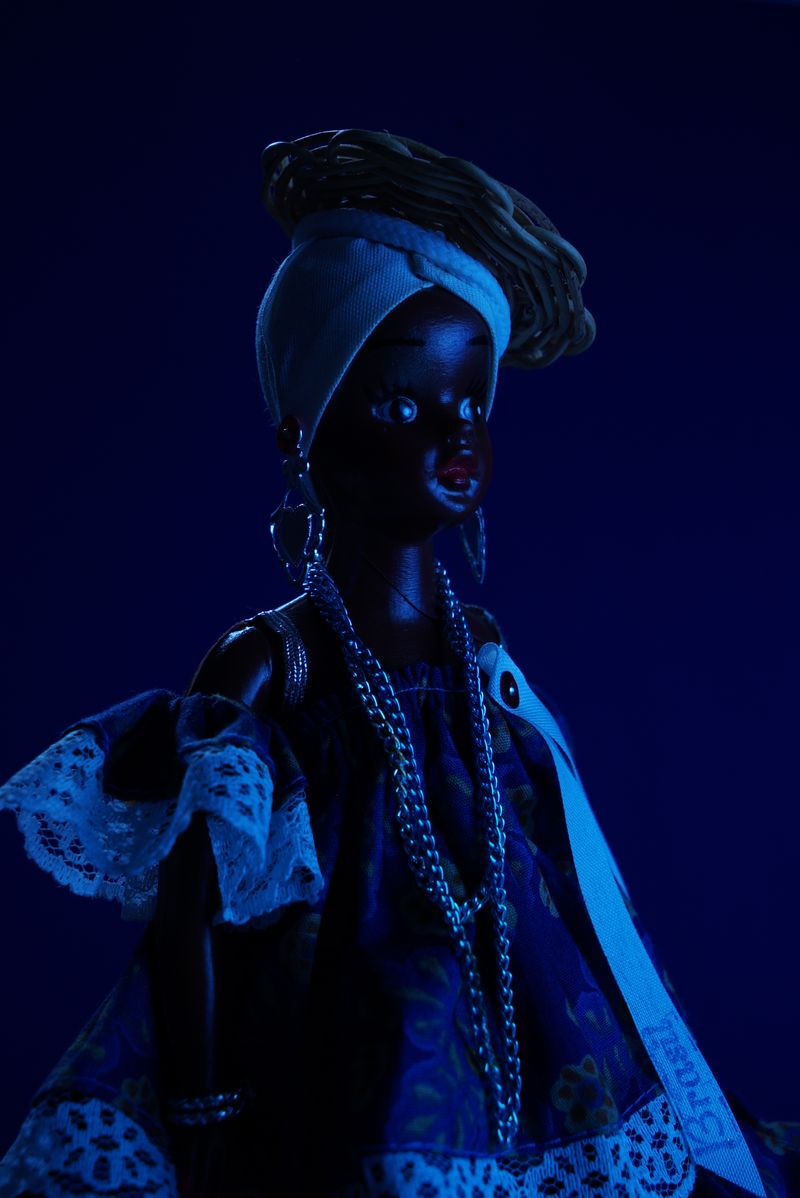
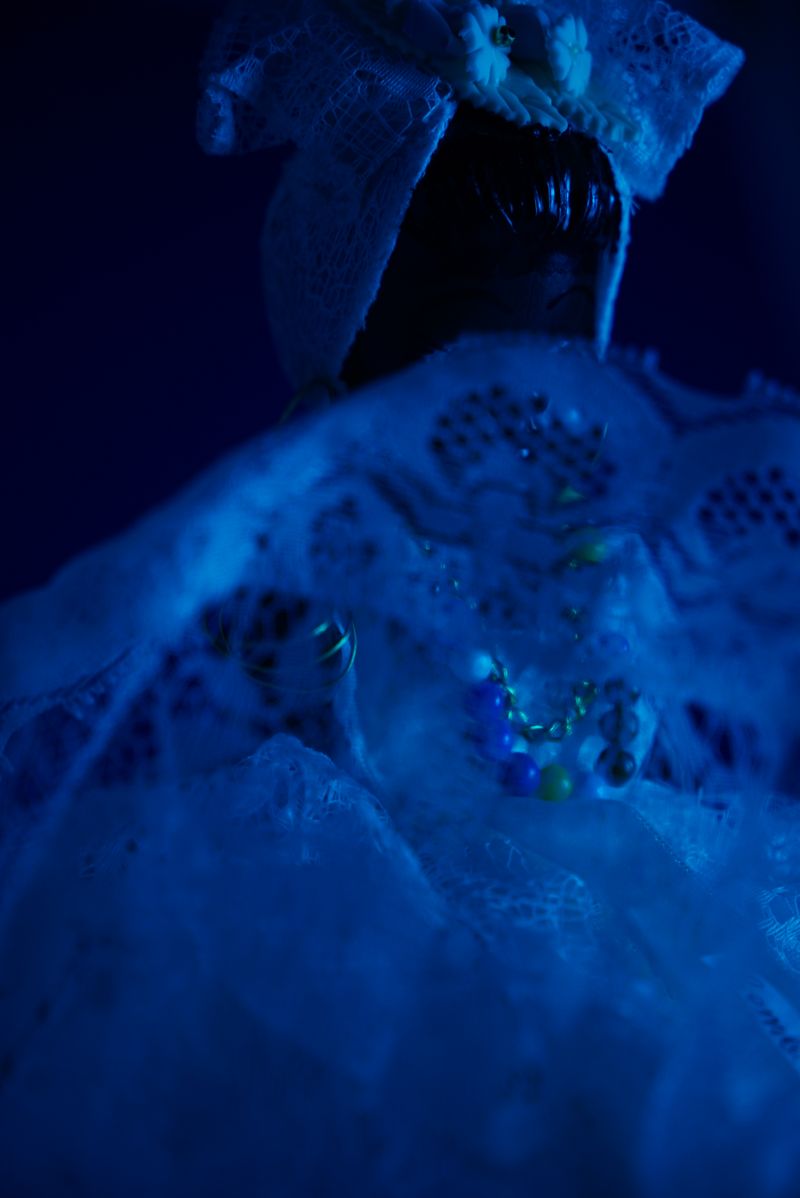
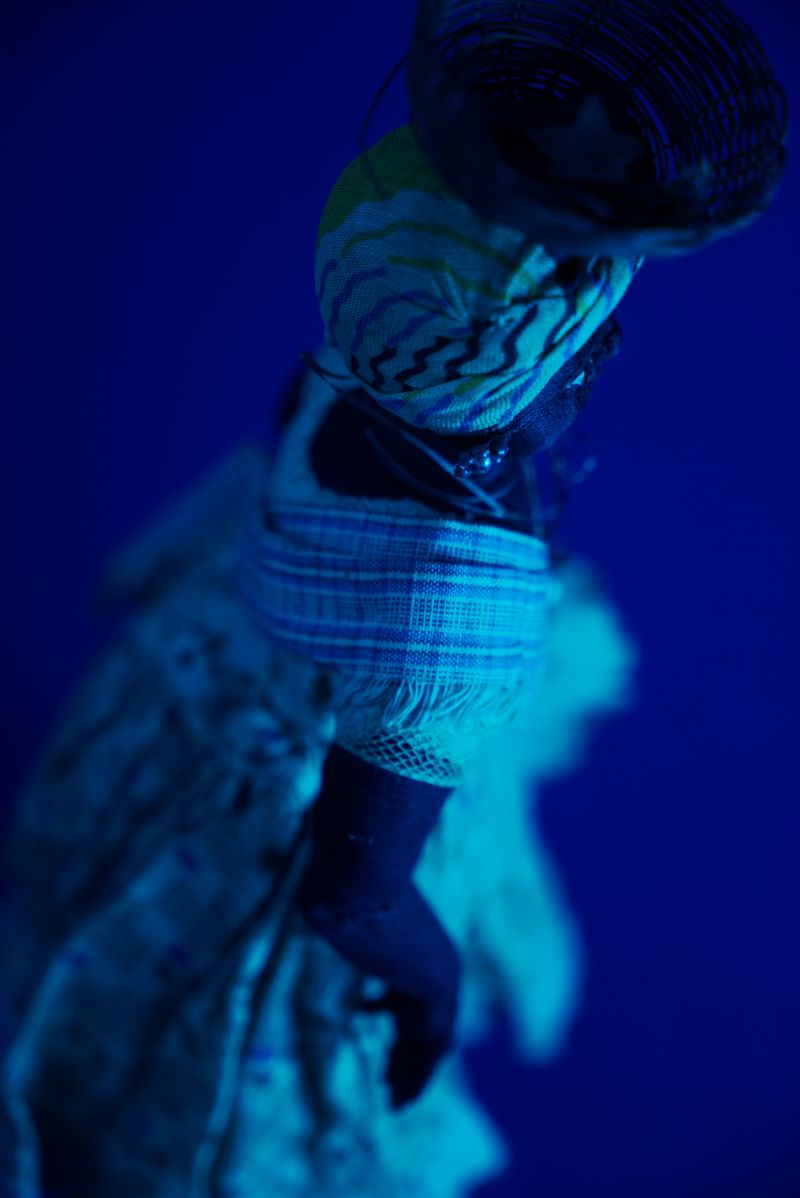
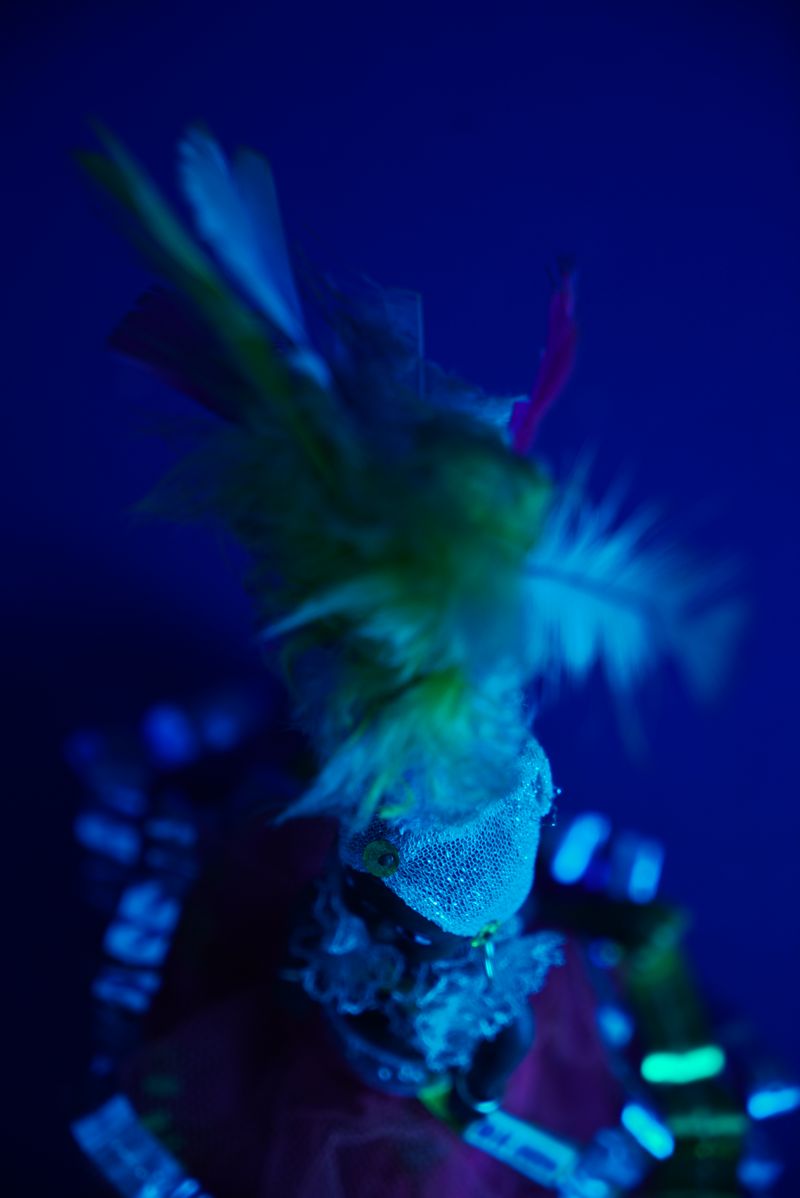
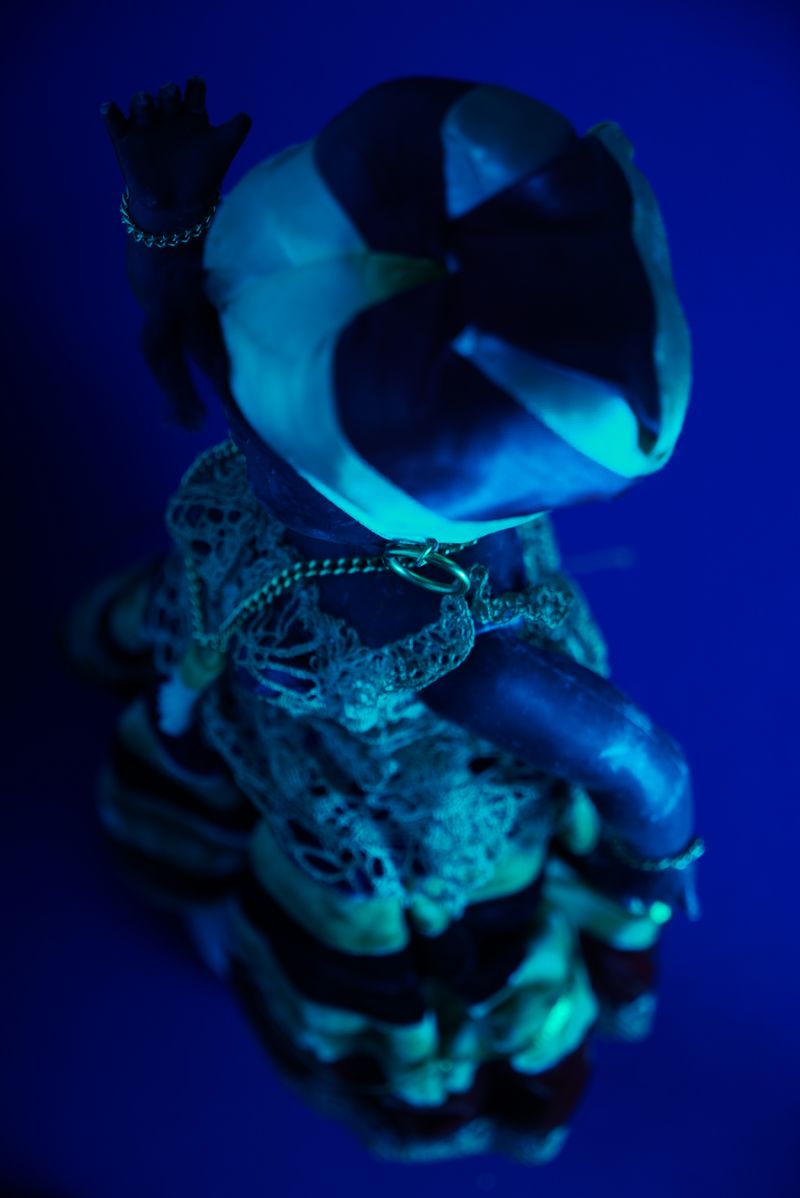
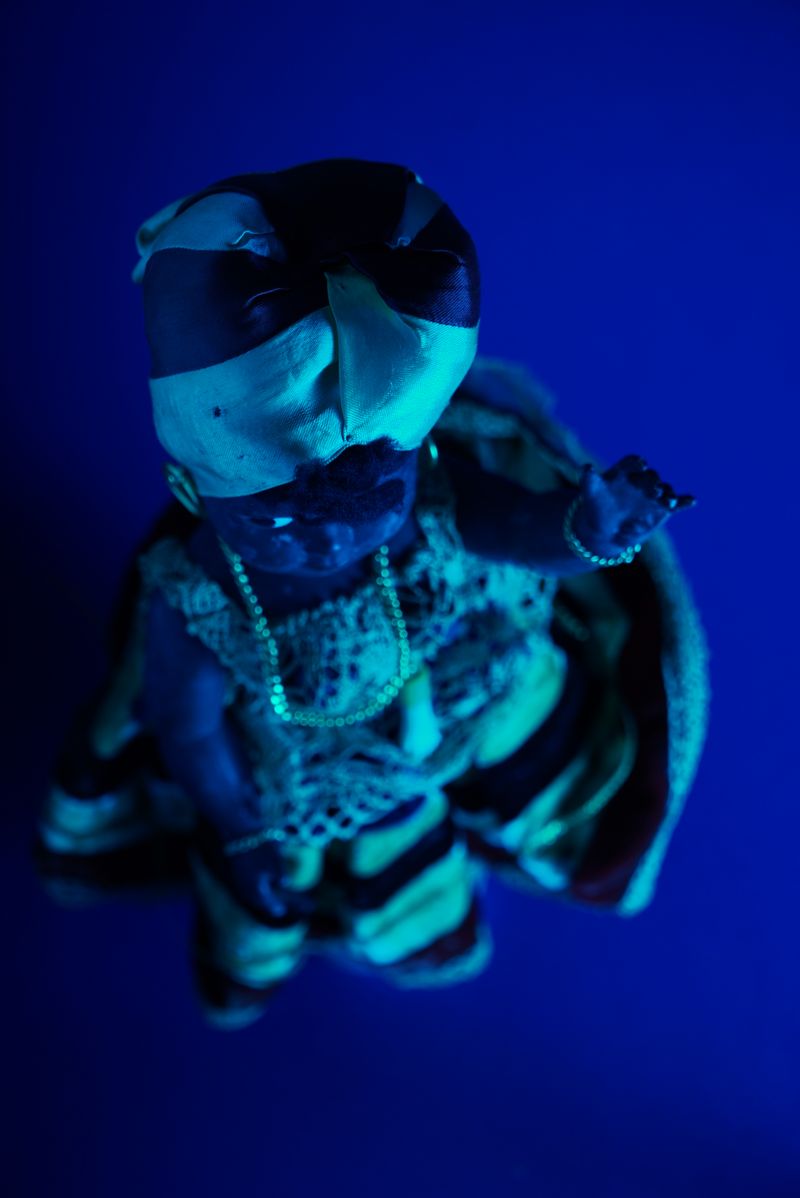
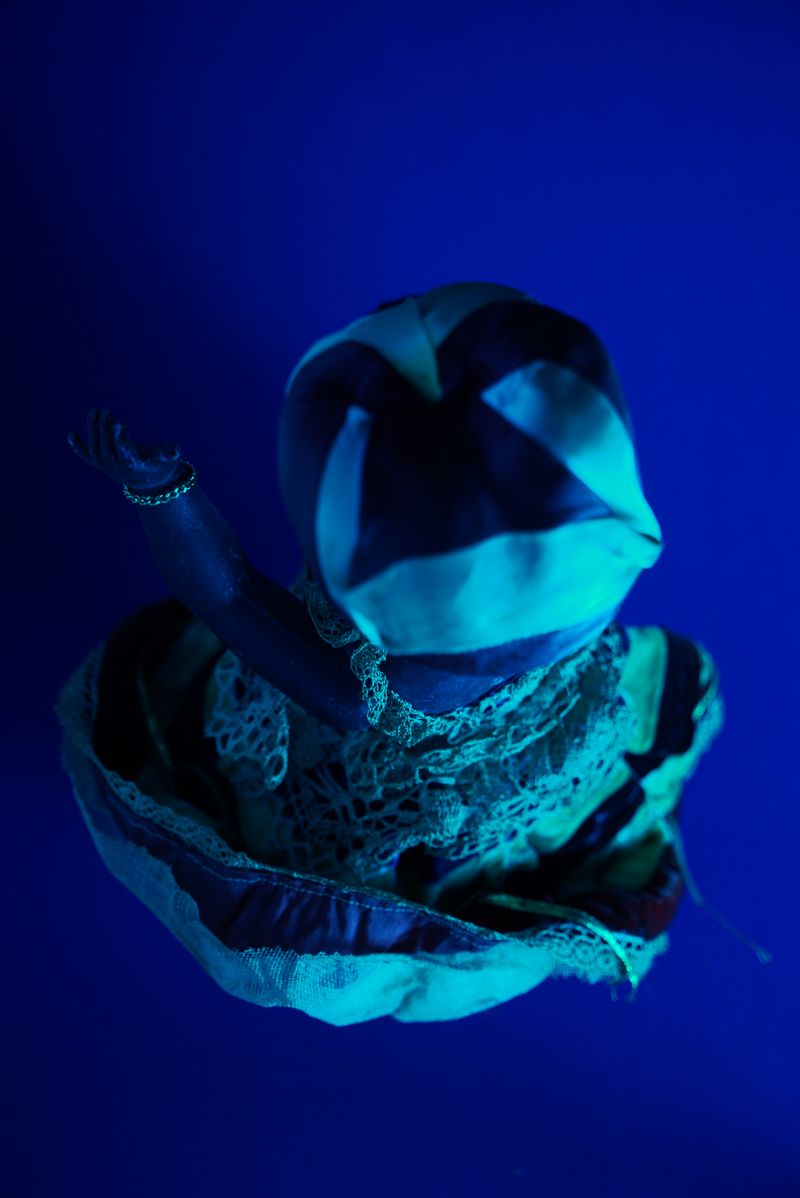
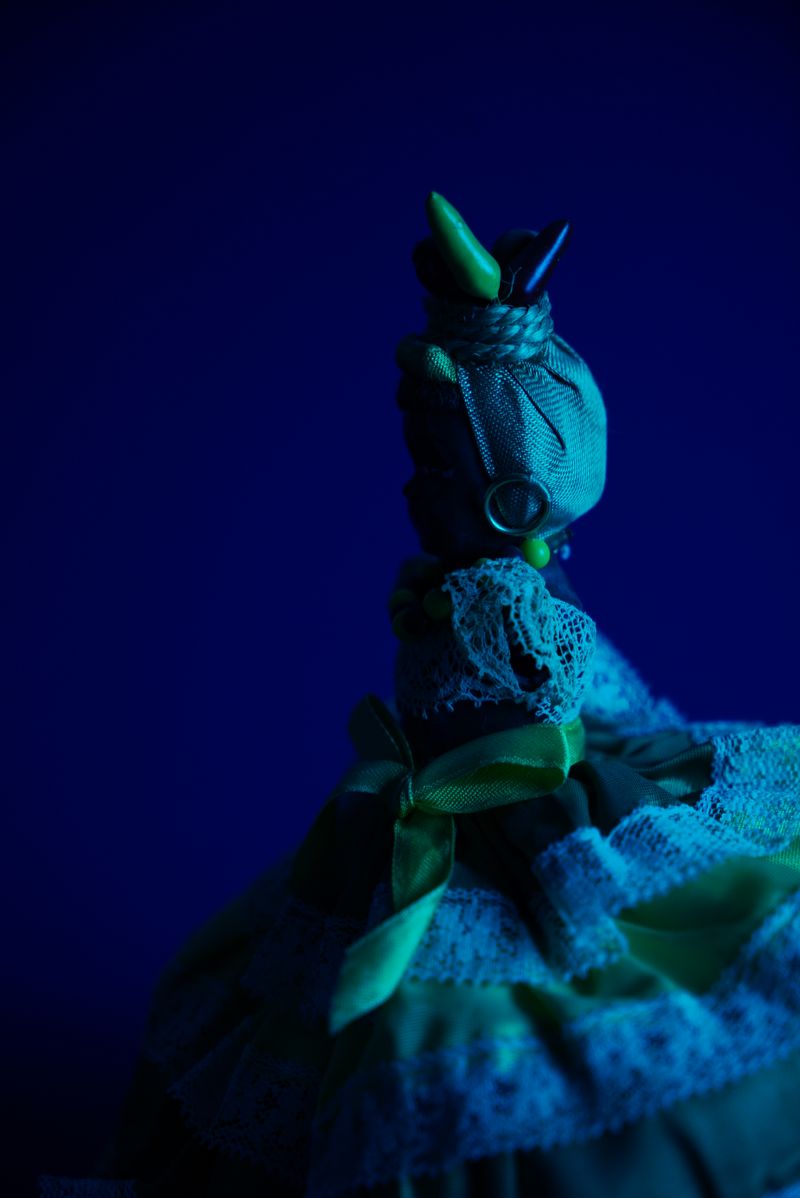
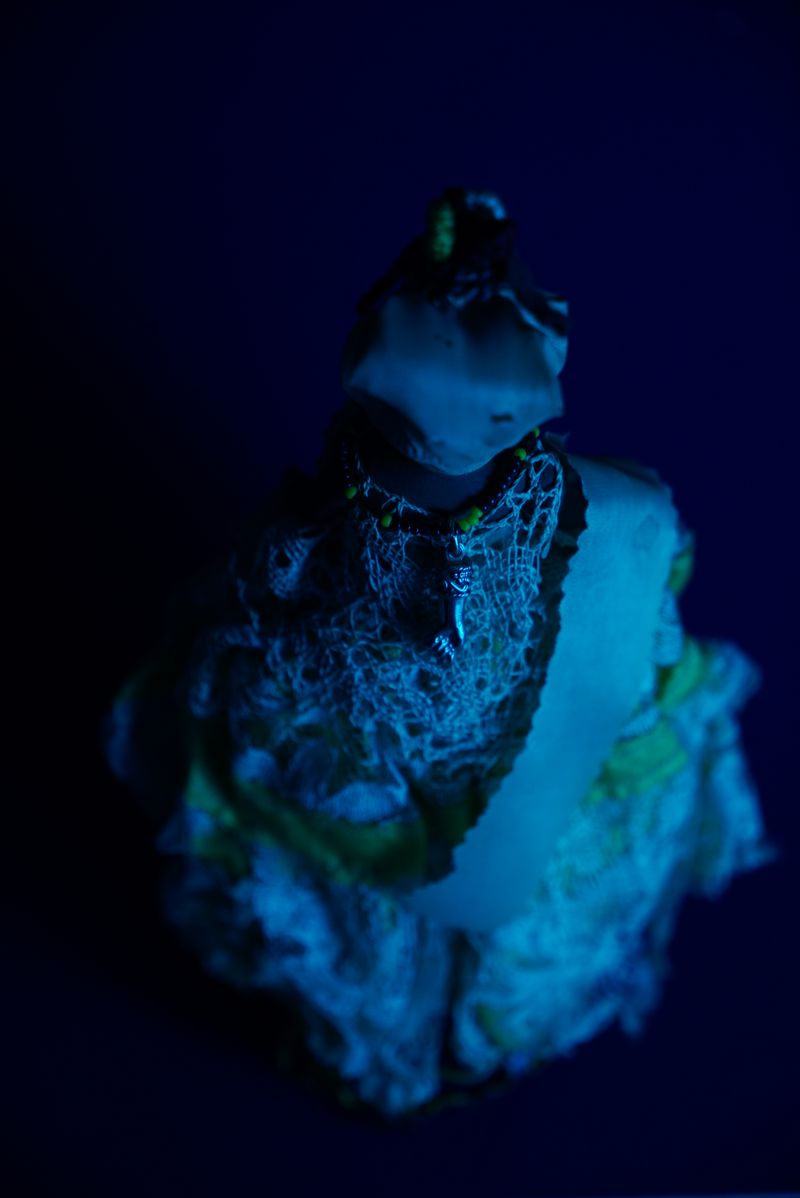
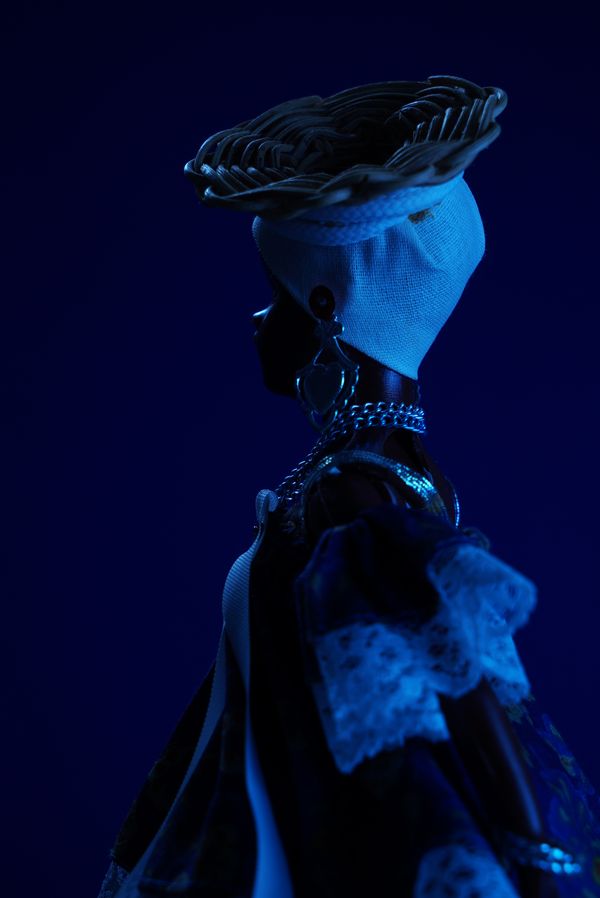
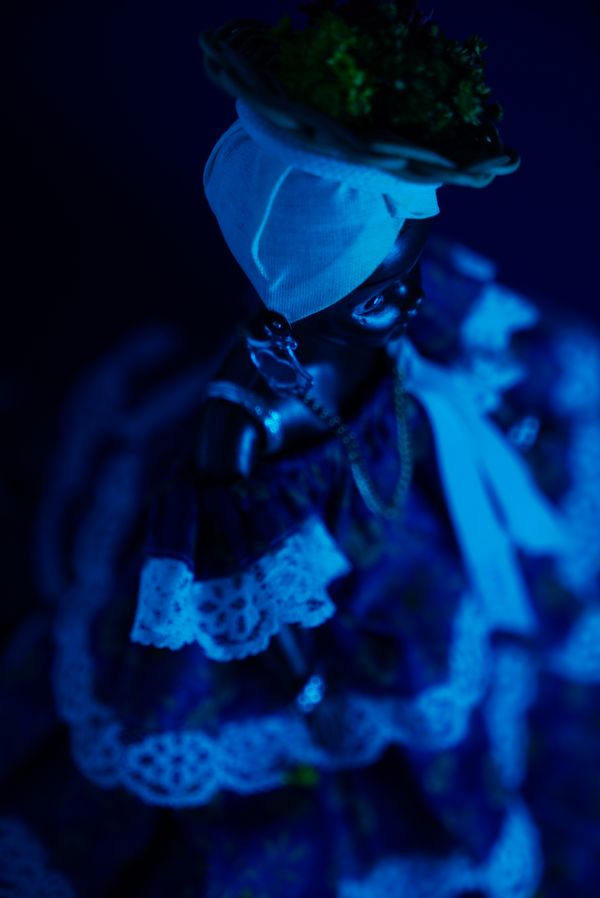
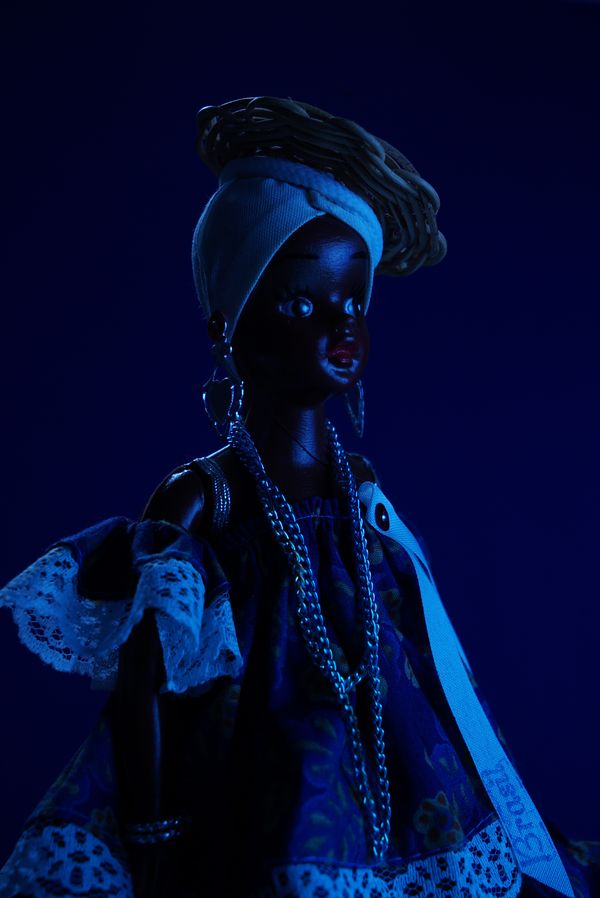
I have been (re)collecting those Baiana dolls on eBay since 2019, reflecting on their lives, their haptics, and their fate of being objects of folklore. How can light and shadow create a new cosmos where they rest from folklore and emanate their mystery?
I have been (re)collecting those Baiana dolls on eBay since 2019, reflecting on their lives, their haptics, and their fate of being objects of folklore. How can light and shadow create a new cosmos where they rest from folklore and emanate their powerful silence?
The Baianas are women of African descent born in the State of Bahia in the Northwest of Brazil. They have been forcibly moved and/or migrated in great numbers to Rio de Janeiro, in the Southwest of Brazil. In the late 18th century, the capital of Brazil moved from Salvador, Bahia, to Rio de Janeiro, Rio de Janeiro. The Baiana dolls are symbols of national folklore created around them. I pose them under blue light so their features are opaque, so their shadows may speak louder, and light delineates a restorative space and time - Nocturnes.
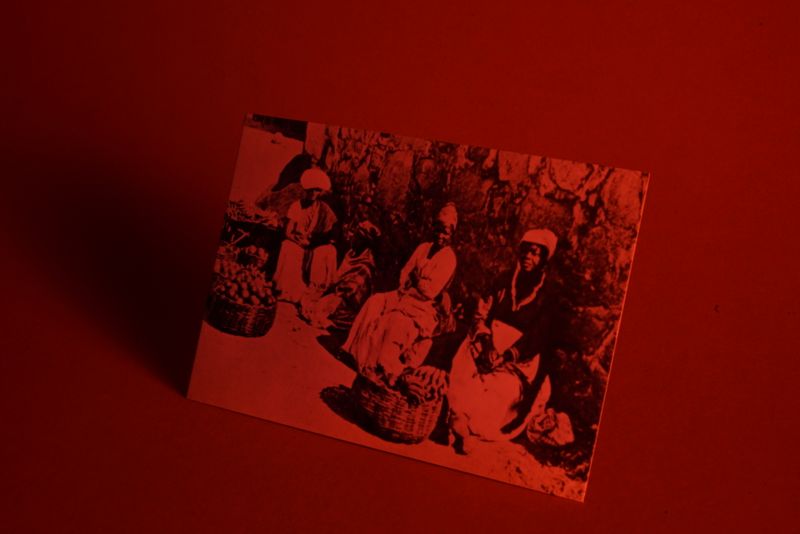
The one postcard photographed under red light is an anonymous one - both the photographer and the woman in it are unknown - that I have carried with me since the 90s, when it was released by a Rio de Janeiro press in Brazil. The three women in are Baianas are seated on the sidewalk of the colonial streets of Rio, selling their goods, dressed in what became part of the folklore and at the same time their tradition. Their ancestral redness meets the blueness in the contemporary Nocturnes as an archive - the photograph - and counter-archive - as redness pressed against the blueness of the folklore.