Maska Bun and Migration: Irani Cafés of Bombay
  • Dates
    2018 - 2019
  • Author
  • Topics Portrait, Daily Life, Street Photography, Documentary
  • Location Mumbai, India

One needs to appreciate the cafés while there is still a chance. Step in, grab a quaint corner, enjoy the bun maska dipped in chai and the other delicacies they have to offer. Maybe grab a flavoured soda or two and get submerged in the slow-paced Bombay.

My fascination with the history of Mumbai began when I joined Sir J.J. College of Architecture in 2012. As students, my friends and I would always look out for eateries which were not heavy on our pockets. That is when I first stumbled upon the iconic Irani cafes of Mumbai (then Bombay), which were famous for their maska (butter) buns and Irani chai. Years later, as an architecture graduate, I decided to document these fast-disappearing heritage eateries which form an important chapter in the evolution of Mumbai as a multicultural city. 

The Irani cafes get their name from the Iranian people who migrated to India in the nineteenth and twentieth century. Though collectively termed Irani, they came from different regions of Iran at different periods. Many of them were Zoroastrians and, like the Parsis who also migrated to India from Iran earlier, were fleeing from persecution at the hands of Iran’s Muslim majority. There were non-Zoroastrian Iranis as well, who were trying to escape a severe famine that hit their country in 1870–72. Though Irani people just as the Parsis followed Zoroastrianism as their religion, they have a distinct culture and social status in India.

These difference exist because of various reasons including the fact that the Parsis arrived in India much earlier, from the tenth century onward, and deeply integrated themselves with the country’s political, social and business class over a millennium with their presence in banking, textile, shipbuilding and real-estate industries. Add to that, the Iranis spoke Dari, a dialect of Persian, and had arrived from Iran with very little capital. They had to build a new life from scratch; however, the hardworking Iranis soon found their feet in Bombay, a city that had always been welcoming to migrants.

The Irani migration to India continued till Independence in 1947. While many travelled by land, passing through Baluchistan, Sindh and Gujarat on the way, some came the way of the Arabian Sea. They settled in Bombay, Karachi, Pune, Hyderabad and other places on India’s western coast.

A significant majority of Iranis who settled in Bombay came from the cities of Yazd and Kerman in Central Iran. Yazd was already famous for its confectioneries, and the sweet-making skills of the immigrants brought them immediate success in their business in Bombay. Although low on money, luck favoured them because the corner plots on buildings were considered inauspicious by Indian businessmen, and were available at much lower prices. This is the reason why many old Irani cafes are located at intersections of streets.

The migration of the Iranis coincided with the dawn of the industrial revolution in India. Between 1860 to 1900, Bombay underwent rapid expansion and industrialisation. The railways had arrived in 1853 and the first cotton mill opened the following year. During the American Civil War (1861–65) high demand for cotton resulted in an explosion of new textile mills. Maritime trade with Europe was further bolstered by the opening of the Suez Canal in 1869. As the economy soared, the British government set up the Bombay Port Trust (1873) which constructed the Sassoon Dock in 1875, followed by two more wet docks in 1880 and 1888. These developments led to high labour demand and vast numbers of migrants started pouring into Bombay through the newly constructed Victoria Terminus which opened in 1888. This new class of labourers, mostly factory workers, railway workers and dock workers, became the core market for the Irani cafes which sold biscuits, bread and tea to them at very cheap prices. Depending on the location, the clientele also included naval officers and military personnel who were stationed at Bombay.

Before Independence, the Irani cafes were very popular with the European community, the Anglo-Indians, Indian Christians, Parsis and Jews, who ordered cakes and pastries during Christmas, Nowruz, birthday parties and weddings. At a time when public eating was highly segregated, the Iranian cafes welcomed one and all. As the Irani community prospered, they expanded their cuisine to suit their changing clientele and turned the cafes into larger restaurants. This ability to adapt has been a reason for the survival of the cafes for over a century.

Britannia and Co. at Ballard Estate and Leopold Cafe at Colaba Causeway are keeping the Iranian cafe culture alive, but most of the smaller cafes are struggling to keep their business relevant in the age of app-based home delivery and competition from global fast-food giants. Other than the increasing competition, Irani cafes are closing down due to both economic and social factors. Apart from the cost of running the place (while keeping food quality high and prices low), the cafes have had to deal with harassment from the municipality over adherence to new safety rules and regulations. The eateries are located on prime real estate and, if sold, they can fetch astronomical prices for the owners. Thus, new opportunities and personal ambition of the new generation of Iranis are also reasons for the closure of some of the cafes. With an increase in social mobility and international travel, many Iranis either work in higher-paying jobs or emigrate to foreign countries, and see no point to engage with the family-run cafes in the future. The traditional cafe owners are either very old or dead now, with no one to fill their void. Over time, ownership has also changed hands, and although some Irani cafes have retained their old names, the current owners are perhaps no longer Iranis.

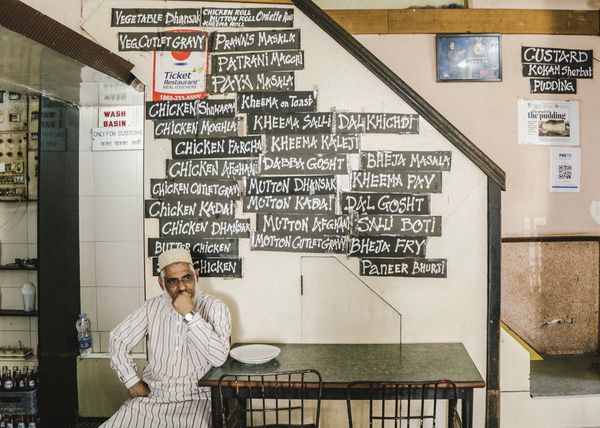
I focused my documentation on the smaller Irani cafes in Bombay. Mapping these structures was an eye-opener for me and I realised how the Iranian community has enriched the multicultural fabric of the city, not only through their cuisine but also through their Zoroastrian faith which is amply represented in the cafes. The cafes are not just restaurants, but cultural spaces where the Iranis have preserved their collective memories of Iran in the form of newspaper cuttings, flags, family photographs and vintage photographs of Persepolis, the ancient capital of Persia. While interacting with the owners, I became acquainted with the sheer tenacity that allows them to continue with the cafes and bakeries against all odds, and their deep love for the art of baking and serving their loyal clientele.

One needs to appreciate the Irani cafes while there is still a chance. Step in, grab a quaint corner, enjoy the bun maska dipped in chai and the other delicacies they have to offer. Maybe grab a flavoured soda or two and get submerged in the slow-paced Bombay of the seventies and eighties. If you have time on your hands, have a friendly chat with the proprietors of these cafes, who will entertain you with stories of the bygone eras. As you step out to leave, the nostalgia of olden times will beckon you, and I am sure you would want to come again, and again.

© Aakriti Chandervanshi - Image from the Maska Bun and Migration: Irani Cafés of Bombay photography project
i

Food not only provides us gastronomic gratification, but also a great convergence of cultural narratives. By investigating food, we can trace trade routes, human migrations, climate change, religious practices, innovations in science and technology, and a range of other factors which affect the production, distribution and consumption of different cuisines.

© Aakriti Chandervanshi - Image from the Maska Bun and Migration: Irani Cafés of Bombay photography project
i

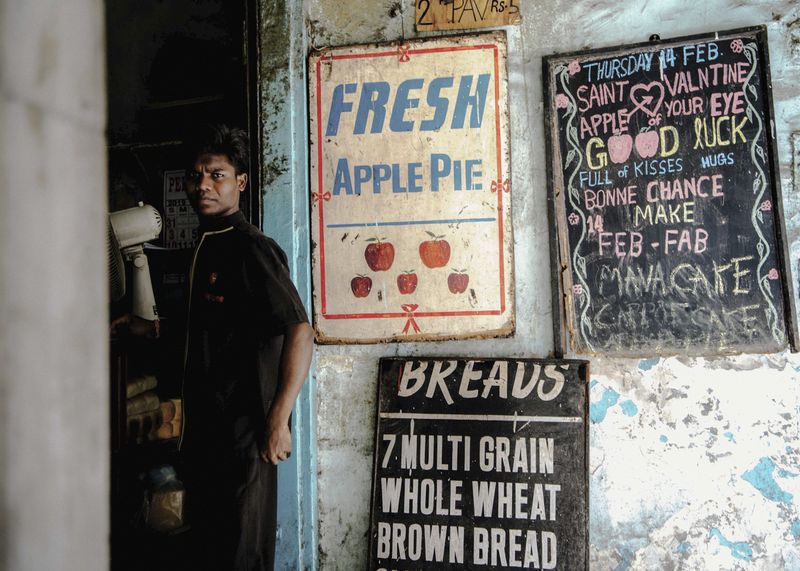
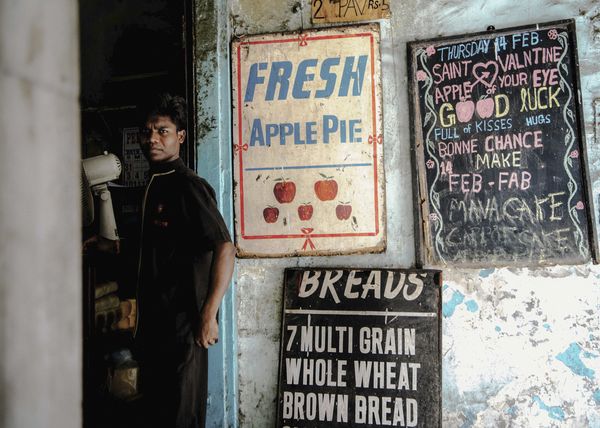
A blackboard announcing the bread varieties available for the day at Yazdani Restaurant and Bakery. The cafe is noted for its highly affordable multigrain breads. Zend Meherzan Zend, the current co-owner of Yazdani, reveals how the bread dough is kneaded with hands instead of machines. This is a daily ritual as the bakery serves fresh bread, to ensure that their aroma and flavour are not lost.

© Aakriti Chandervanshi - Image from the Maska Bun and Migration: Irani Cafés of Bombay photography project
i

Ardershir Mazkoori, grandson of the founder of Cafe Excelsior at Fort. The cafe took its name from the former Excelsior Theatre (today’s New Excelsior Mukta Cinema) which stood on its opposite side. The iconic cafe completes a century this year. It was established in 1919 by the late Ardershir Mazkoori, and is now run by his grandson who shares the name.

© Aakriti Chandervanshi - Image from the Maska Bun and Migration: Irani Cafés of Bombay photography project
i

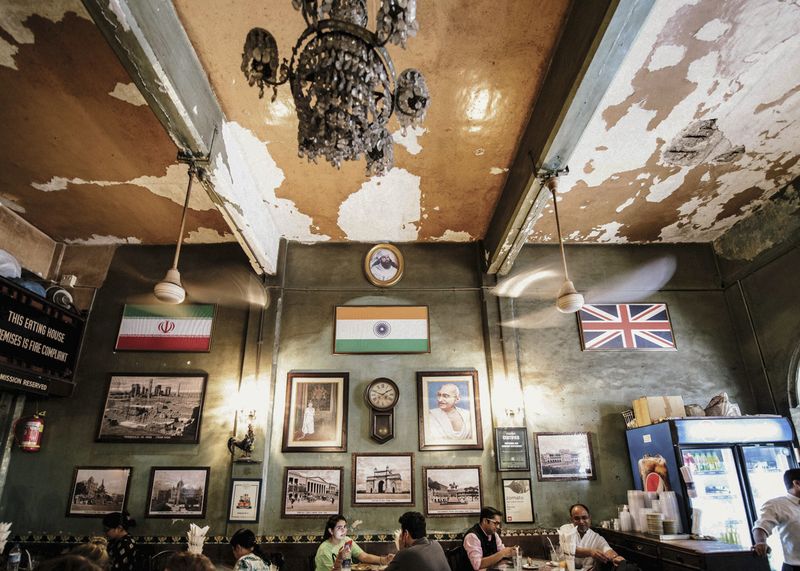
Flags of India, England and Iran adorn the top of the wall of Britannia & Co. The interior decor of the cafe pays tribute to the three countries. Hence, old images of Bombay and Persopolis (the ancient capital of Persia) find place on the walls along with photographs of Mahatma Gandhi and Queen Elizabeth on either side of a vintage pendulum clock.

© Aakriti Chandervanshi - Image from the Maska Bun and Migration: Irani Cafés of Bombay photography project
i

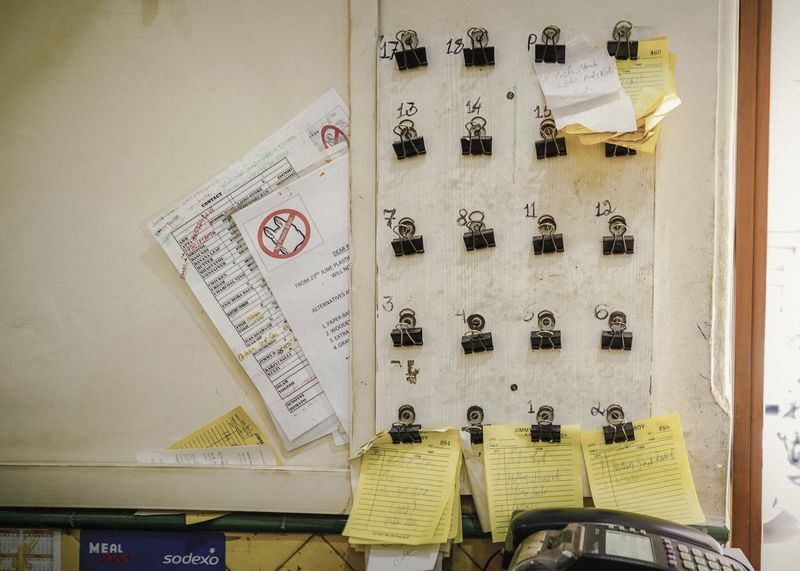
Bills stuck to a board on the wall of the counter at Jimmy Boy at Fort. Billing and payment is still done the old way. Every order is tagged and cross-checked first-hand by the owners. Only cash transactions are accepted and modern-day digital payments are not entertained. Writings such as ‘Tender exact change’ and ‘No Cards/No PayTm’ are often found at the counter where the owners are seated.

© Aakriti Chandervanshi - Image from the Maska Bun and Migration: Irani Cafés of Bombay photography project
i

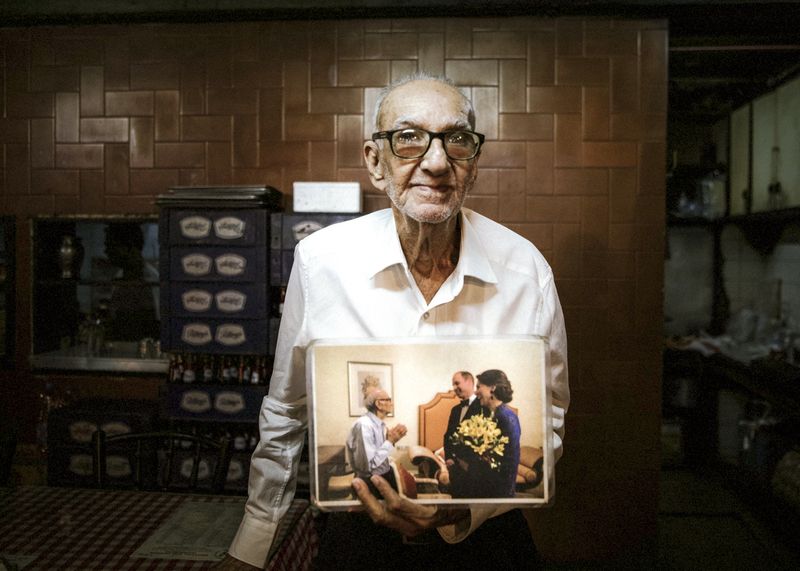
Boman Kohinoor, 97, was the owner of Britannia & Co. Boman was proud of the cafe’s historic link to the British Raj. He called himself ‘the Royal family’s fan number 1’. His long-harboured dream to meet the British royal family was fulfilled when he was invited to meet Prince William and Catherine, current Duke and Duchess of Cambridge, when they visited India in April 2016.

© Aakriti Chandervanshi - Image from the Maska Bun and Migration: Irani Cafés of Bombay photography project
i

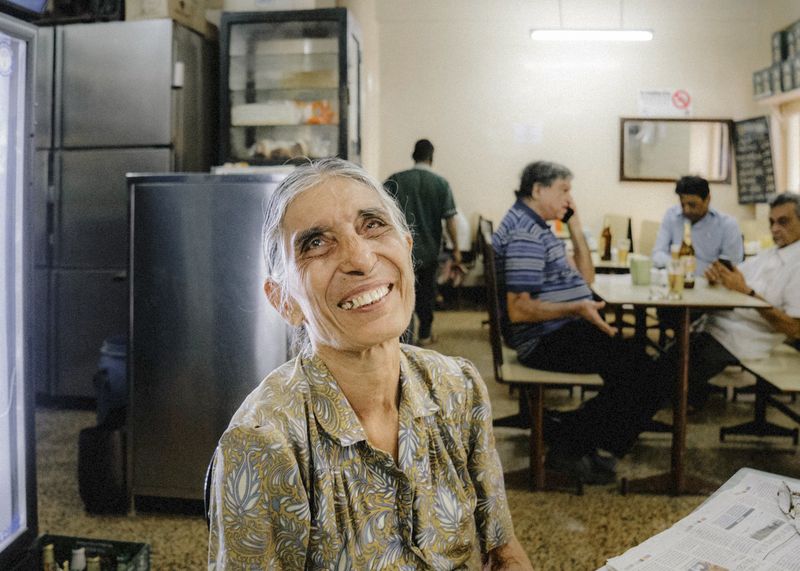
Mrs Shireen Khosravi, seen in the photo, and her husband Behram K. Khosravi are the owners of Cafe Military, located at Fort. Cafe Military was established in 1933, at a time when Fort was full of military and naval officers of the British Raj. Thus, the history of the location and customers justify the name of the cafe.

© Aakriti Chandervanshi - Image from the Maska Bun and Migration: Irani Cafés of Bombay photography project
i

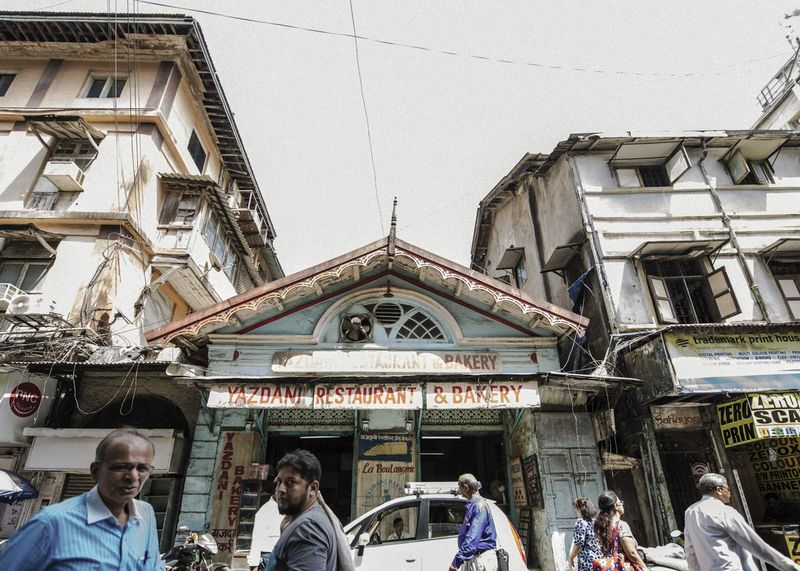
Outside view of Yazdani Bakery, located on Cawasji Patel Street. Established in 1953, this quaint bakery is sandwiched between tall buildings in the narrow lanes of Fort. The name Yazdani originates from the town of Yazd, capital of Yazd province in Iran. The bakery was established by Meherwan Zend and is currently run by his son Zend Meherwan Zend, with his brothers Rashid and Pervez.

© Aakriti Chandervanshi - Image from the Maska Bun and Migration: Irani Cafés of Bombay photography project
i

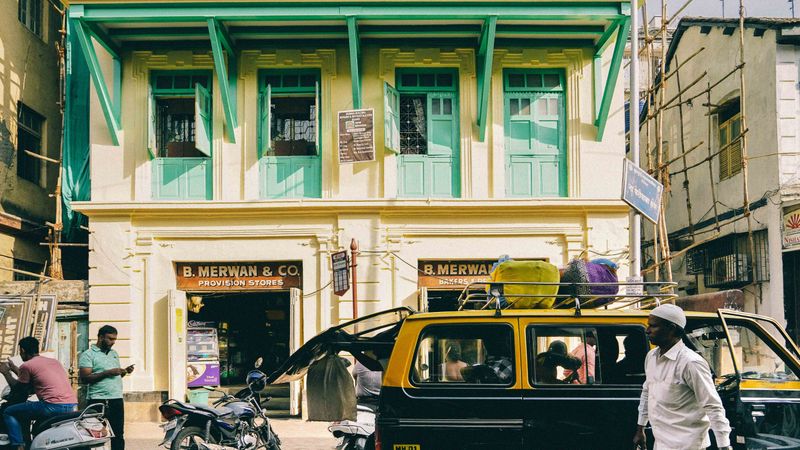
The entrance of B. Merwan and Co. which has been serving staple Iranian cuisine at the same location, behind the hustle and bustle of Grant Road Station, since it was established way back in 1914 by Boman Merwan. The cafe opens at 7 am every day, welcoming customers with the smell of freshly baked goods. The current owner carries on the tradition of baking bread and pastries in wood-fired oven.

© Aakriti Chandervanshi - Image from the Maska Bun and Migration: Irani Cafés of Bombay photography project
i

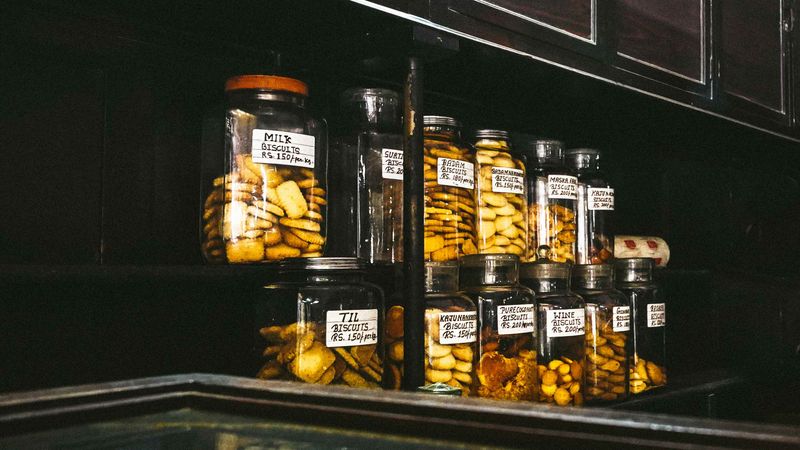
Biscuits and confectionery, neatly arranged on the shelves of Kyani and Co. Freshly baked and with varieties to choose from, these snacks are stored in large glass jars which keep them crisp and tasty for long. One should definitely order them with Irani chai or purchase them as souvenirs from these beloved cafes.

© Aakriti Chandervanshi - Image from the Maska Bun and Migration: Irani Cafés of Bombay photography project
i

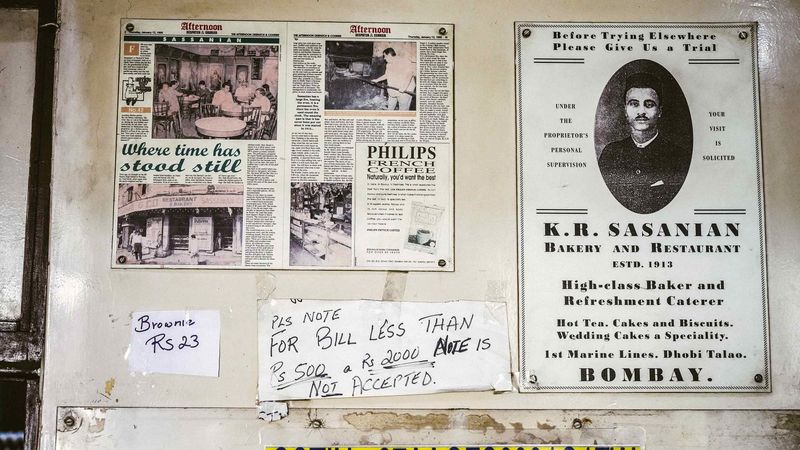
The advertisement leaflet on the right was distributed when Sassanian Boulangerie was established in 1913 as K.R. Sasanian. They served hot tea, cakes and biscuits. Wedding cakes were a speciality, popular with the European, Anglo-Indian, Parsi and Indian Christian communities living in South Bombay.

© Aakriti Chandervanshi - Image from the Maska Bun and Migration: Irani Cafés of Bombay photography project
i

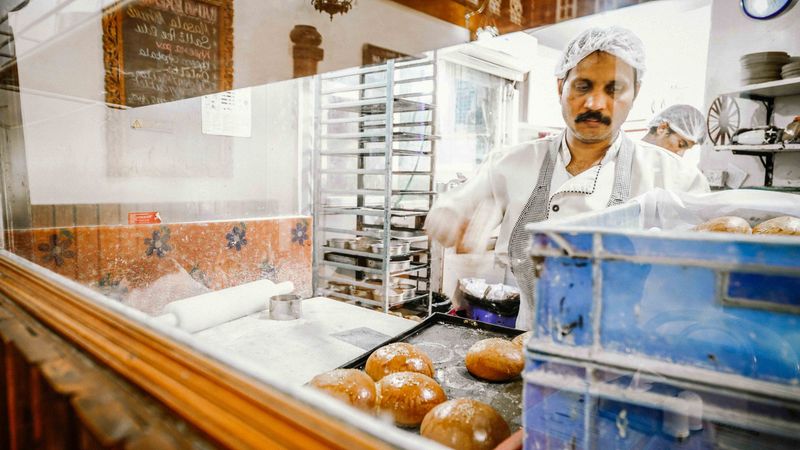
A baker preparing fresh bread at the bakery of Jimmy Boy situated near Horniman Circle. Jimmy Boy was established in the 1920's as Cafe India. The cafe was converted to a restaurant and renamed in 1999 after the current owner’s great-grandfather Jamshed Irani, fondly known as Jimmy. Jimmy Boy is a cosy Irani cafe with a bakery and a takeaway counter serving the fast-paced corporate executives.

© Aakriti Chandervanshi - Image from the Maska Bun and Migration: Irani Cafés of Bombay photography project
i

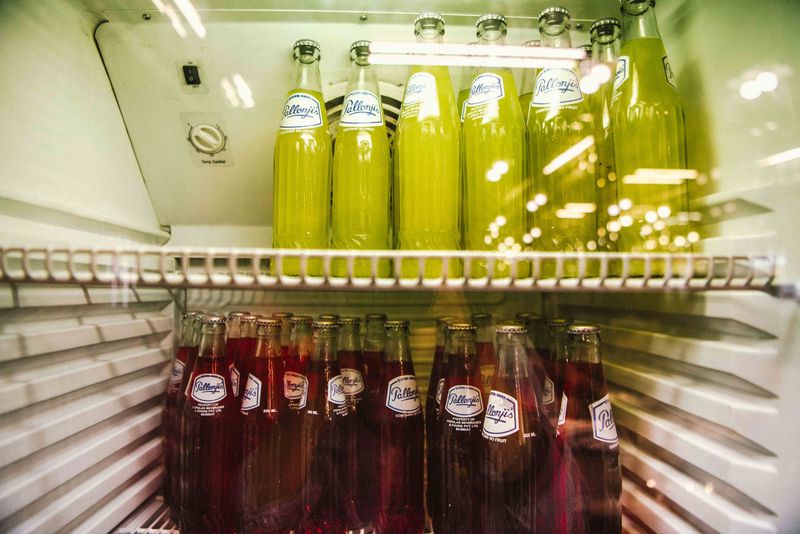
The refrigerator of Cafe Irani Chaii at Mahim, stacked with flavoured sodas. These locally manufactured soft drinks are integral to any meal at an Irani cafe. They are identifiable by their attractive colours. Two very popular brands are Pestonjee and Duke which has almost disappeared from the competitive market. Pestonjee soda comes in various flavours, the most famous being the Raspberry soda.

© Aakriti Chandervanshi - Image from the Maska Bun and Migration: Irani Cafés of Bombay photography project
i

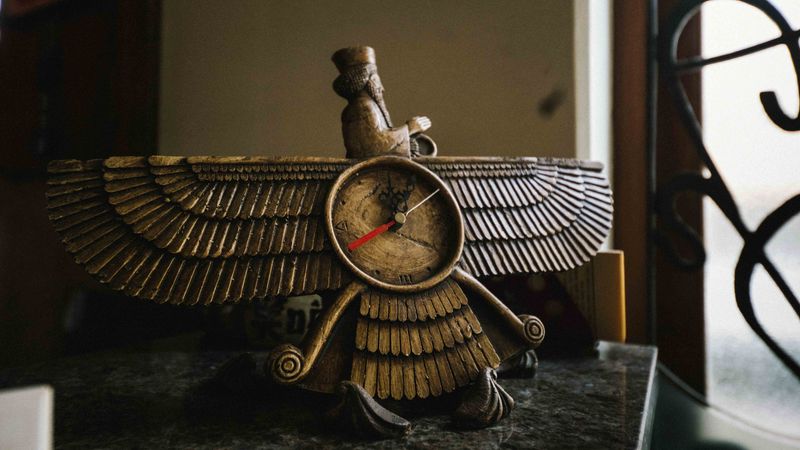
Faravahar, an important Zoroastrian symbol, on the table of Cafe Universal at Fort. The cultural artefact here has been cleverly converted into a table clock. Many symbols associated with ancient Iran and Zoroastrianism can be found at the Irani cafes. They have deep cultural meanings for the Parsis and Iranis.

© Aakriti Chandervanshi - Image from the Maska Bun and Migration: Irani Cafés of Bombay photography project
i

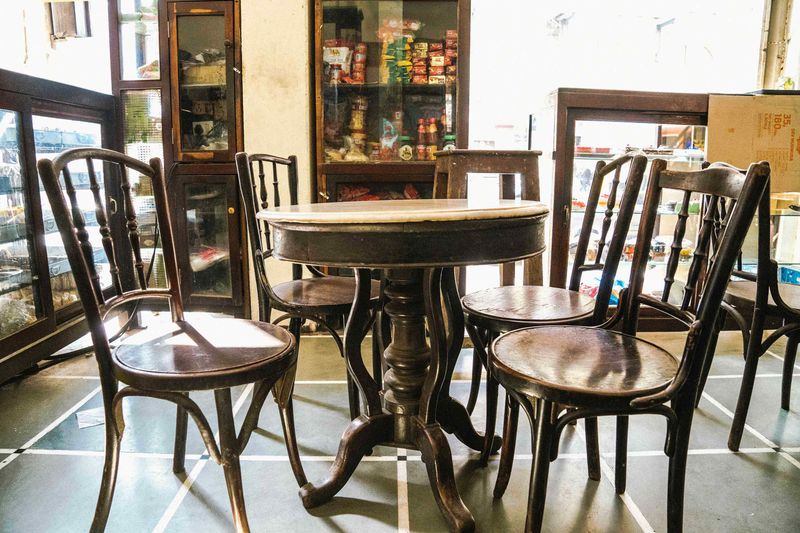
The bentwood chairs at Cosmopolitan, Girgaon. The chairs made from wood which is bent using steam, a technique invented by Michael Thonet in the nineteenth century, are imported from Koritschan (a town in modern day Czech Republic). These are sturdy yet lightweight chairs, made from mahogany and copper beech sourced from forests in Moravia and assembled in workshops in Vienna.

© Aakriti Chandervanshi - Image from the Maska Bun and Migration: Irani Cafés of Bombay photography project
i

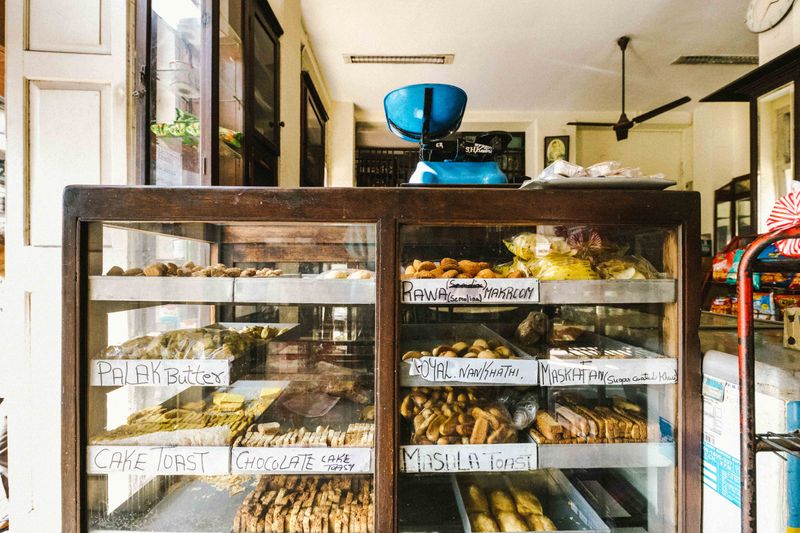
A large glass-paned hot box with delicacies such as rawa makroom, maskatan, masala toast and royal nankhatahi at Cosmopolitan Restaurant & Store, Girgaon. Rustic cabinets, dark wood-panelled showcases and antique wood-framed photographs, all add to the charm and old-world ambience of the cafe at Girgaon.

Maska Bun and Migration: Irani Cafés of Bombay by Aakriti Chandervanshi

Prev Next Close