Fragments of Climate Change
  • Dates
    2022 - Ongoing
  • Author
  • Location Germany

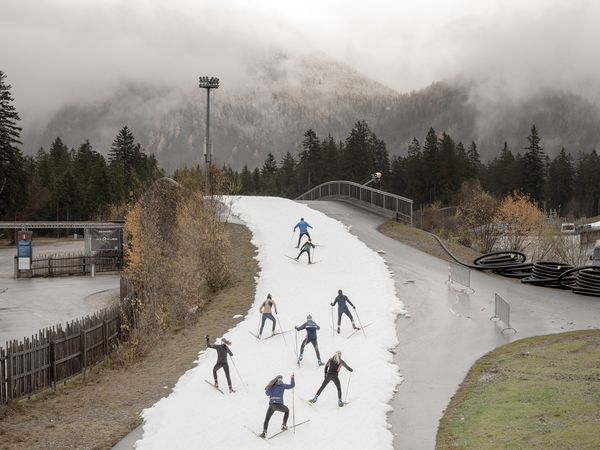
Climate change is probably the greatest threat humanity has ever faced. Germany has been a country with few problems economically and geographically. All seems to be given to achieve climate goals by 2045. But by far it's not enough.

"Fragments Of Climate Change" portrays a society that is only a wink away from climate collapse and documents Germany's ambitious plans to become a climate-neutral industrial nation by 2045.

The nuclear phase-out has already been decided. And coal-fired power generation should also be phased out by 2038. Germany's climate law also stipulates that Germany will reduce greenhouse gas emissions by at least 65 percent compared to 1990 by 2030 and by as much as 88 percent by 2040. The “Green Deal” also plans to plant 3 billion new trees by 2030.

Germany is one of the international pioneers in the fight against the crisis, but in order to break this climate-damaging normality and create a climate-friendly reality of life, there must be three times as many solar systems and wind farms in Germany by 2030. In order to become CO2-neutral worldwide by 2050, six and a half times as much copper would have to be mined globally per year by then, for example, as is currently the case, thirteen times as much nickel and around 300 times as much lithium. Only Germany's demand for these raw materials would simply overwhelm the world market.

Even though Germany is one of the economically strongest and financially richest countries, it seems almost impossible to face the coming extremes. Germany has achieved its climate goals for 2022. However, according to Dirk Messner, President of the Federal Environment Agency, progress is still far too slow. We are approaching the tipping point and must honestly ask ourselves what a sustainable future can look like. Actually, most people know what needs to be done and there is just a lack of political will to implement these measures. Society has probably never been more divided between selfishness and fear than it is now. My photos are just fragments of an event that is too big to contain. They are snapshots showing the values ​​and norms of our society at this point in time.

© Gil Bartz - Image from the Fragments of Climate Change photography project
i

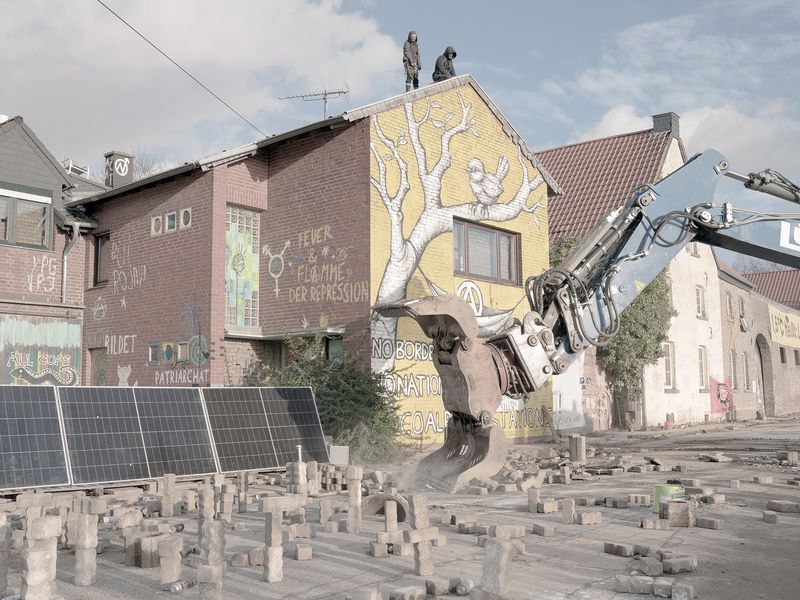
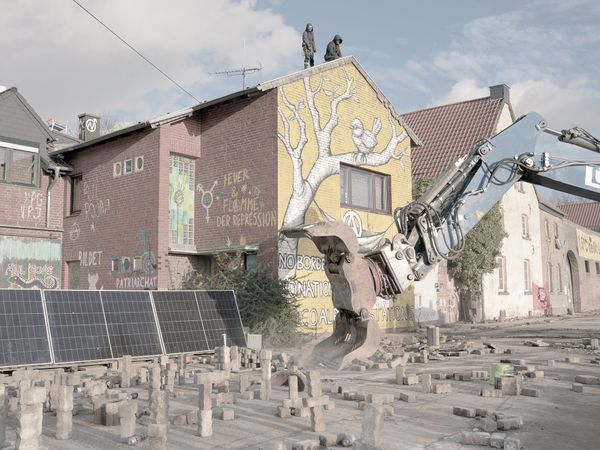
Activists stand on a roof and watch as an excavator tears away street barricades. Lützerath was a small village in the North Rhine-Westphalia lignite mining area and was demolished by the energy giant RWE in 2023 in order to get to the lignite underneath.

© Gil Bartz - Image from the Fragments of Climate Change photography project
i

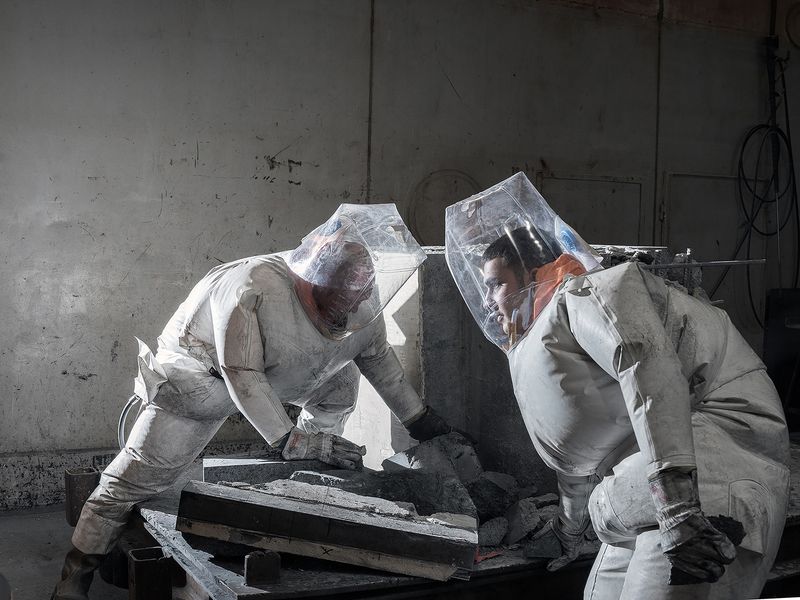
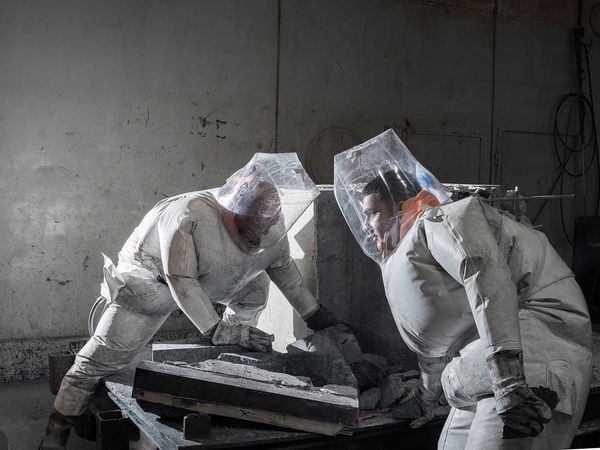
Two workers dispose low-level radioactive material in Karlsruhe, Germany. The Nuclear waste disposal company Karlsruhe is responsible for the dismantling of decommissioned nuclear facilities in Karlsruhe.

© Gil Bartz - Image from the Fragments of Climate Change photography project
i

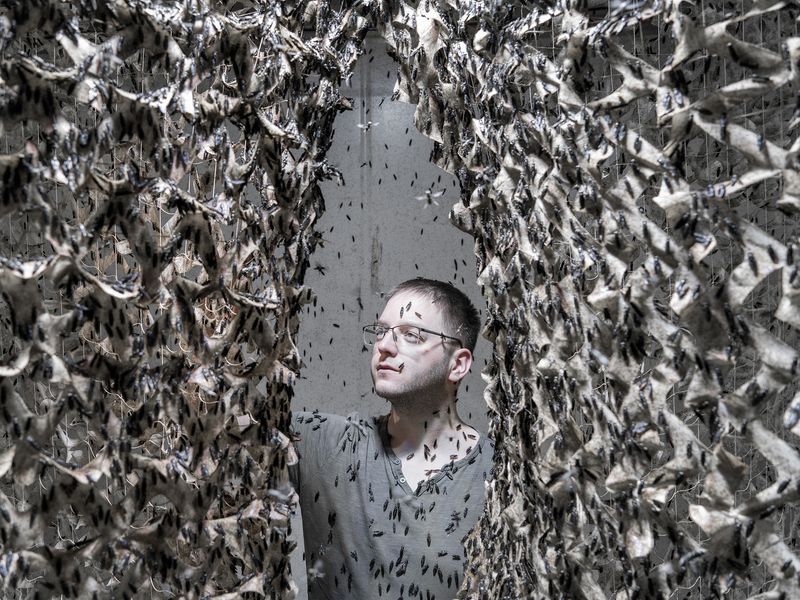
The founder of a fly farm in Pegau, Saxony inspects a breeding station for black flies. There is a steady increase of demand for proteins on a global scale.

© Gil Bartz - Image from the Fragments of Climate Change photography project
i

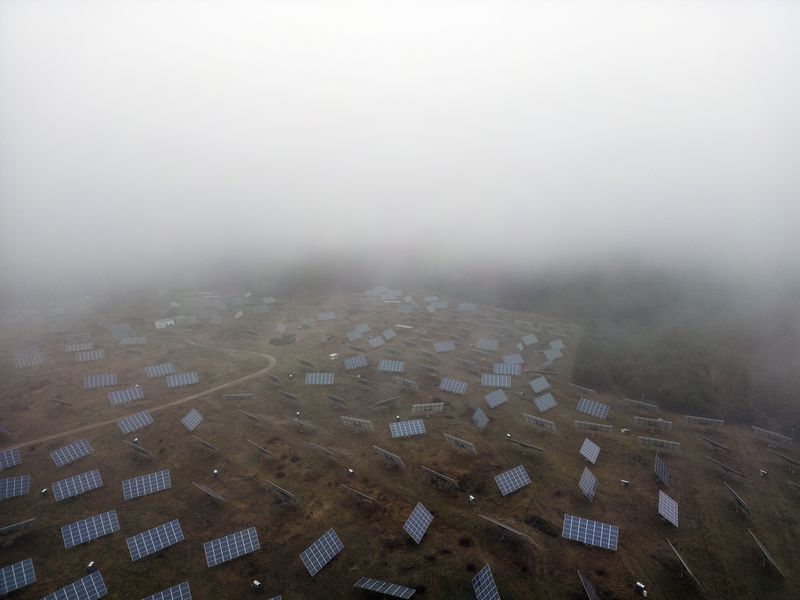
A solar farm near Feldheim in Brandenburg. It generates enough energy to power 600 homes. The Feldheim district of the city of Treuenbrietzen has been energy self-sufficient since 2010.

© Gil Bartz - Image from the Fragments of Climate Change photography project
i

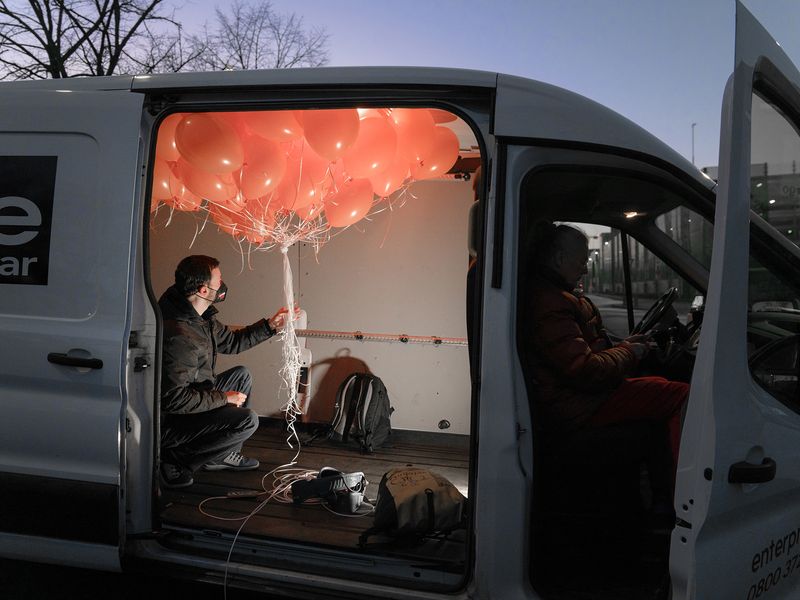
An activist of the group „Last Generation” waits in a van with 99 red balloons near Frankfurt Airport. The group wanted to use the balloons to disrupt air traffic at one of Europe's largest airports.

© Gil Bartz - Image from the Fragments of Climate Change photography project
i

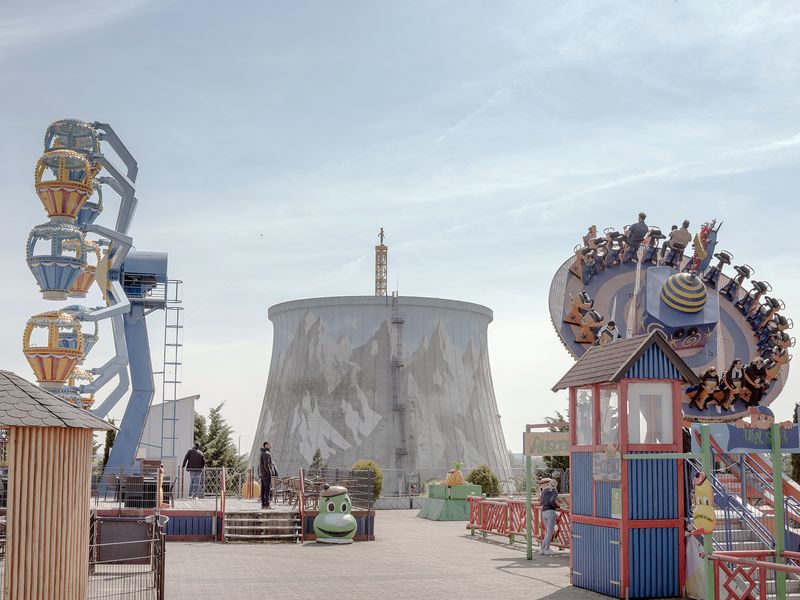
The former Kalkar nuclear power plant was completed in 1985 but never went into operation. Later, the former nuclear power plant was bought and an amusement park was built on the site.

© Gil Bartz - Image from the Fragments of Climate Change photography project
i

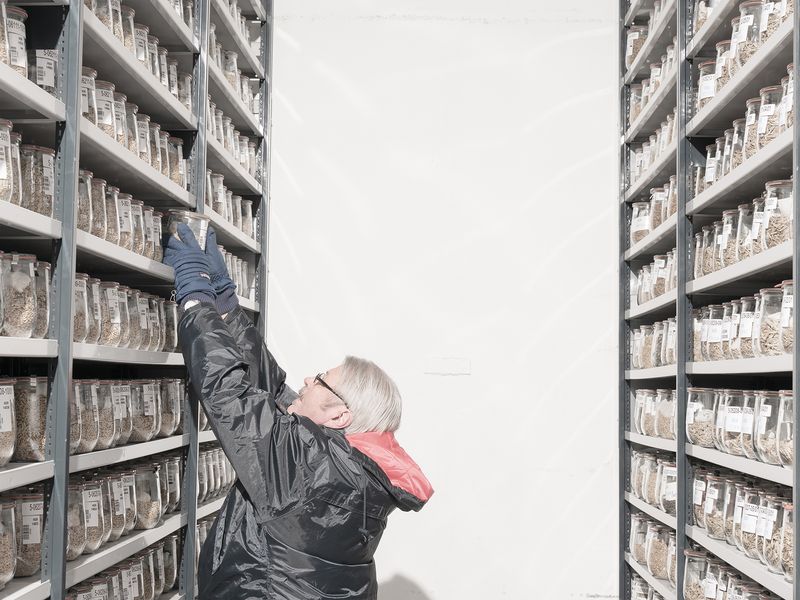
Dr. Andreas Börner stands in a cooling chamber and examines plant seed samples. The Leibnitz Institute for Plant Genetics and Crop Plant Research in Gatersleben has the largest gene bank in Europe. 151,348 seed samples are stored in five cooling chambers.

© Gil Bartz - Image from the Fragments of Climate Change photography project
i

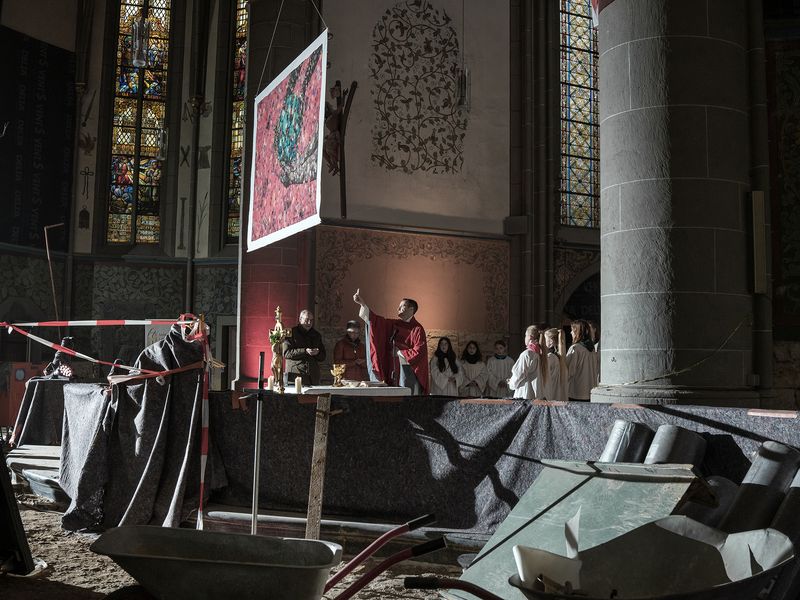
Service in a church in Bad Neuenahr-Ahrweiler that was destroyed by flooding. On July 15, 2021, a huge flood overwhelmed the Valley, killing 134 people. Scientists agree that the floods are a result of climate change.

© Gil Bartz - Image from the Fragments of Climate Change photography project
i

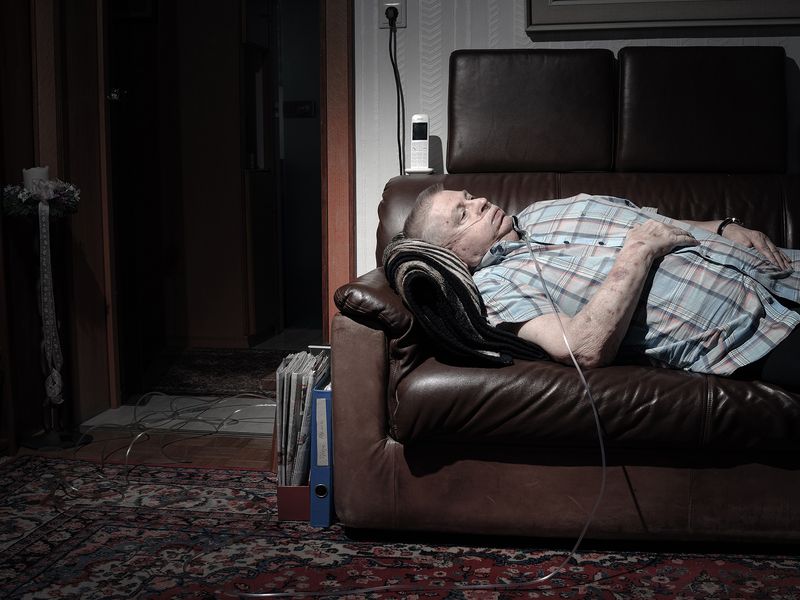
Rudolph is 83 years old and has been diagnosed with silicosis for 40 years. He was a hard coal miner in Bochum. The Ruhr area was once the largest coal mining area in Germany. His lungs are only working at 70%. since 2014 he needs additional oxygen.

© Gil Bartz - Image from the Fragments of Climate Change photography project
i

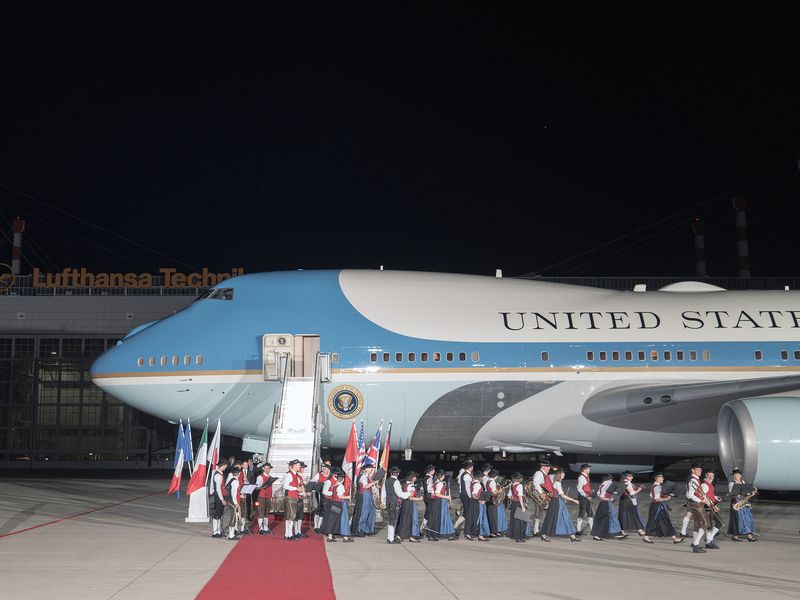
A Bavarian folk group passes by the Air Force One after receiving the American president at Munich airport in Munich, Germany.With a total cost of 166 million Euro and more than 18.000 security forces the 48th Group of 7 (G7) was held in Elmau.

© Gil Bartz - Image from the Fragments of Climate Change photography project
i

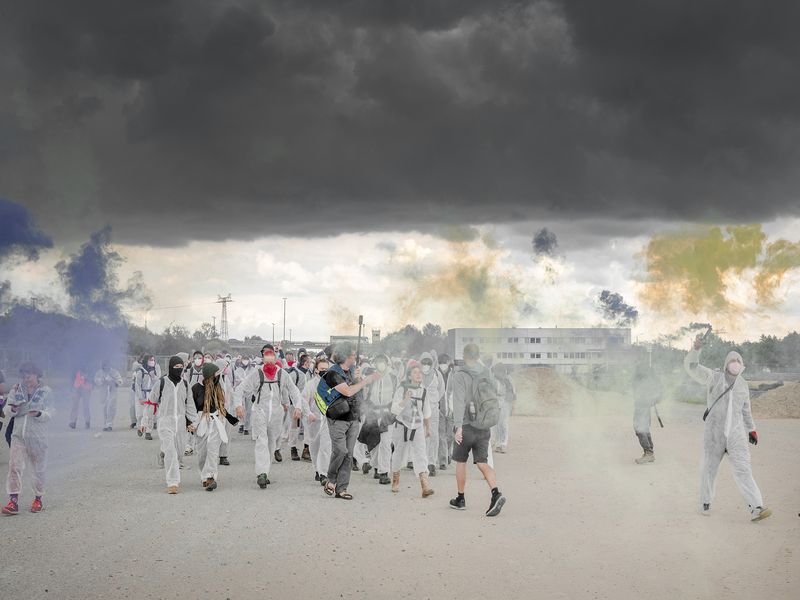
Climate activists of the group “Ende Gelände” walk onto an area where pipes for the construction of a gas pipeline are stored near Mukran on Rügen, Germany. They want to point out the risks associated with the largest LNG terminal in Europe.

© Gil Bartz - Image from the Fragments of Climate Change photography project
i

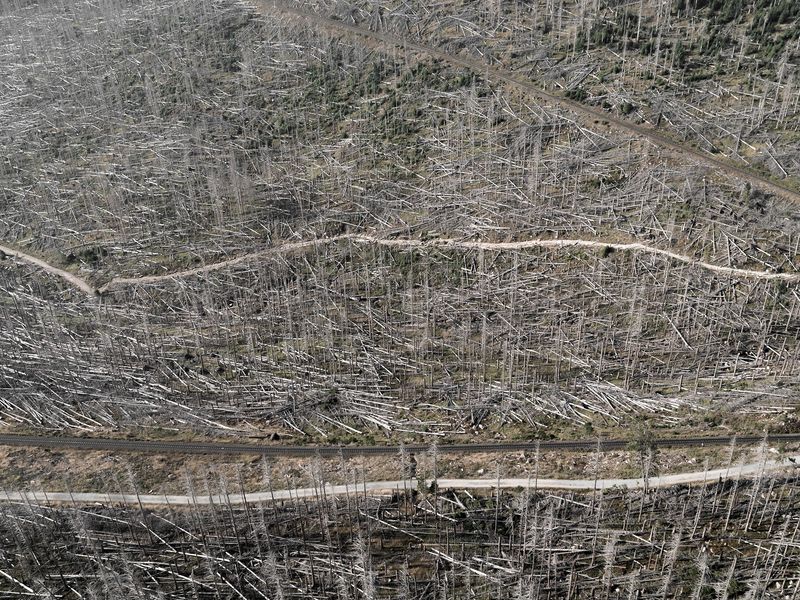
A dead forest in the Harz National Park, Germany. According to the German Aerospace Center (DLR), almost five percent of Germany's total forest area (around 501,000 hectares) was destroyed between January 2018 and April 2021 by drought.

© Gil Bartz - Image from the Fragments of Climate Change photography project
i

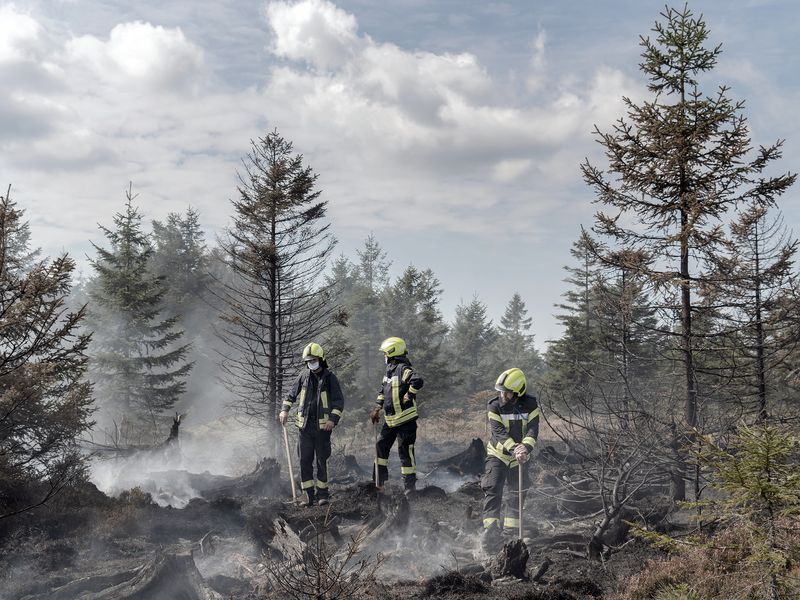
Firefighters take a short break standing on a large underground ember nest in the National Park Harz, Germany. In September 2022 a wildfire broke out in the Park.

© Gil Bartz - Image from the Fragments of Climate Change photography project
i

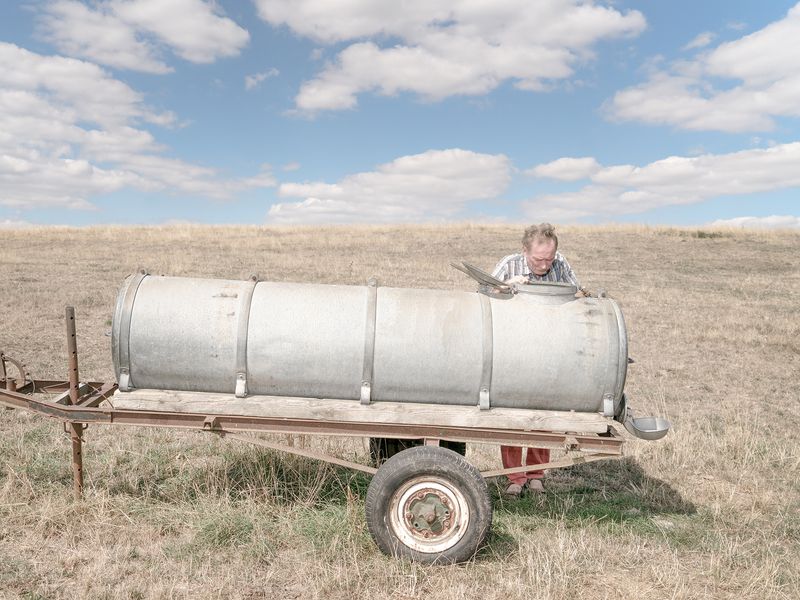
Peter Hamel checks a water tank that is on his grassland in Schotten, Germany. He is an organic farmer and has around 70 dairy cows. Due to the drought in 2022, the cows have been in the barn since mid-July and have to be fed with the winter supplies.

Fragments of Climate Change by Gil Bartz

Prev Next Close