Extant Erosions
-
Dates2020 - Ongoing
-
Author
- Location Albuquerque, United States
Meandering through archived materials stored in natural history collections including glass slides and taxidermy, my work poises the natural history museum as a prism through which we refract our understanding of nature, time, and longing.
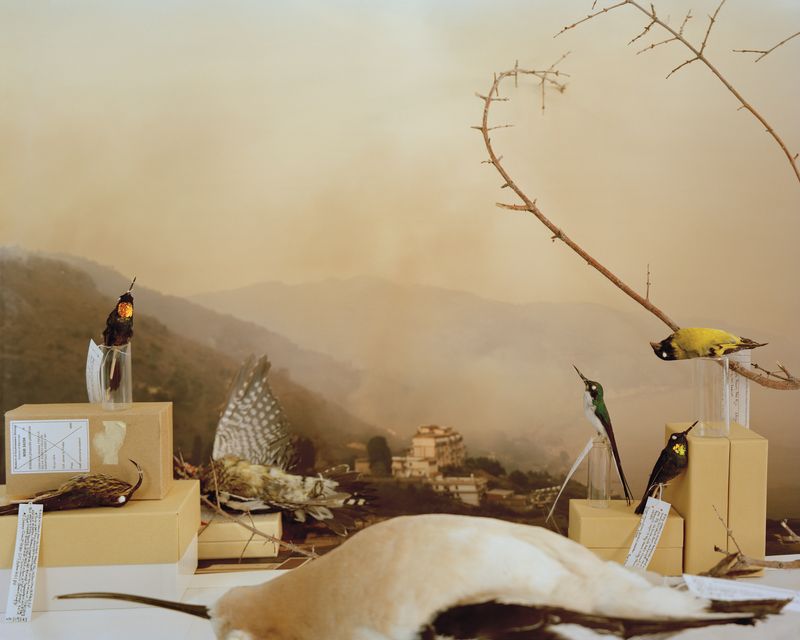
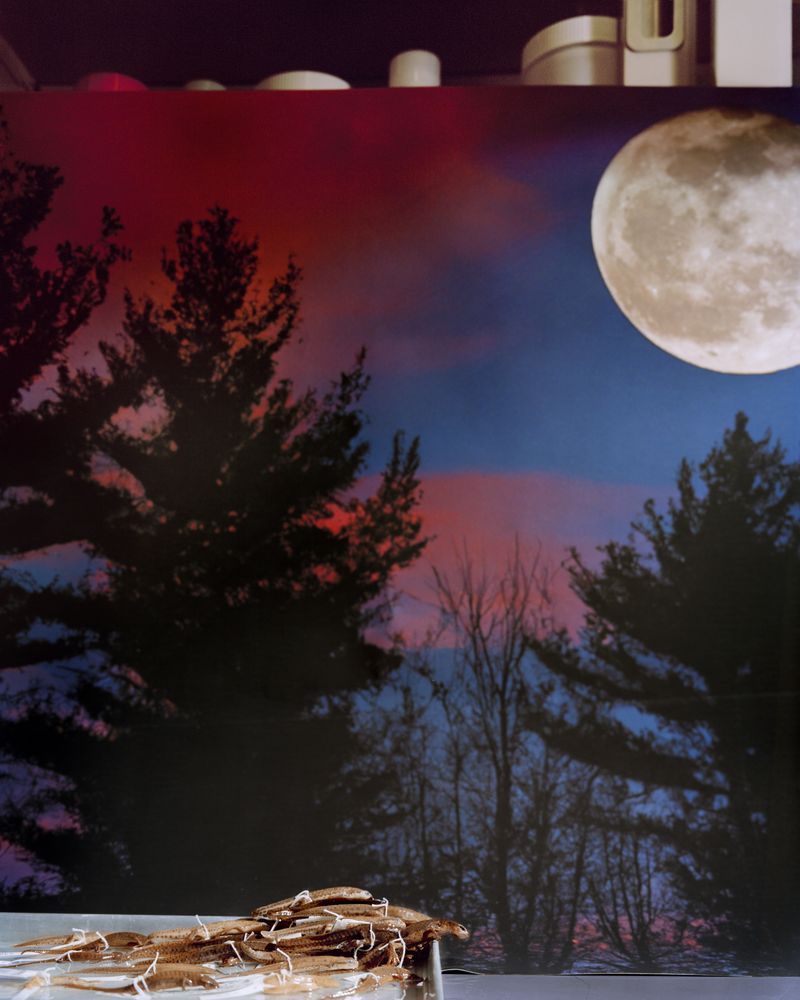
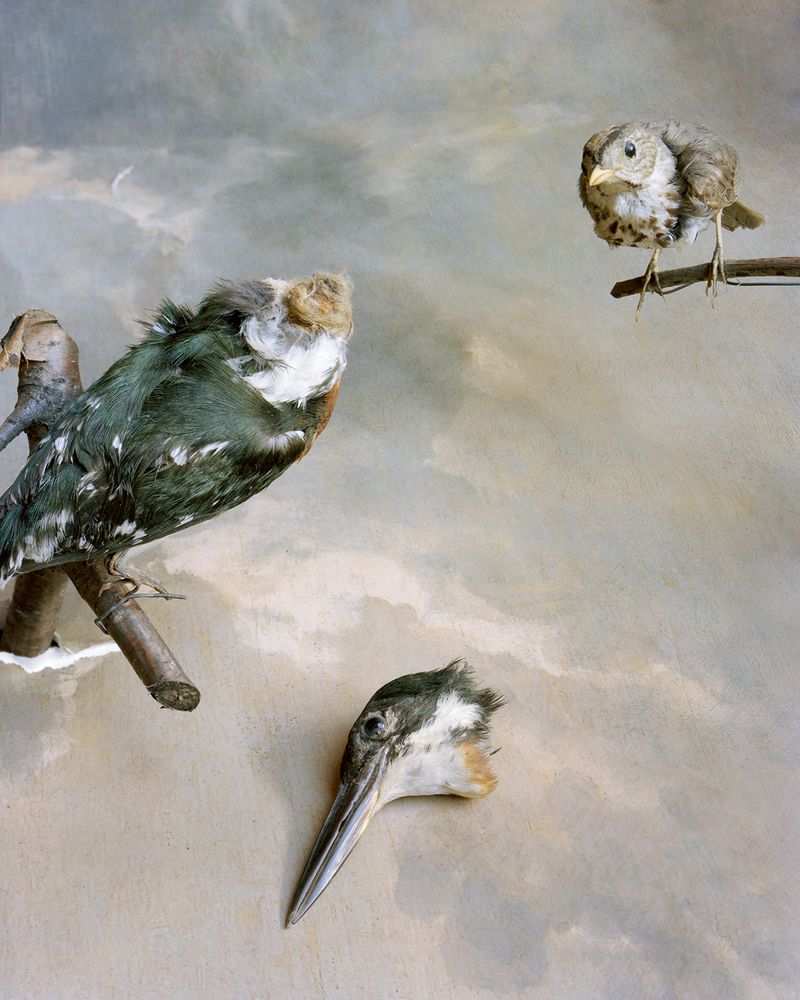
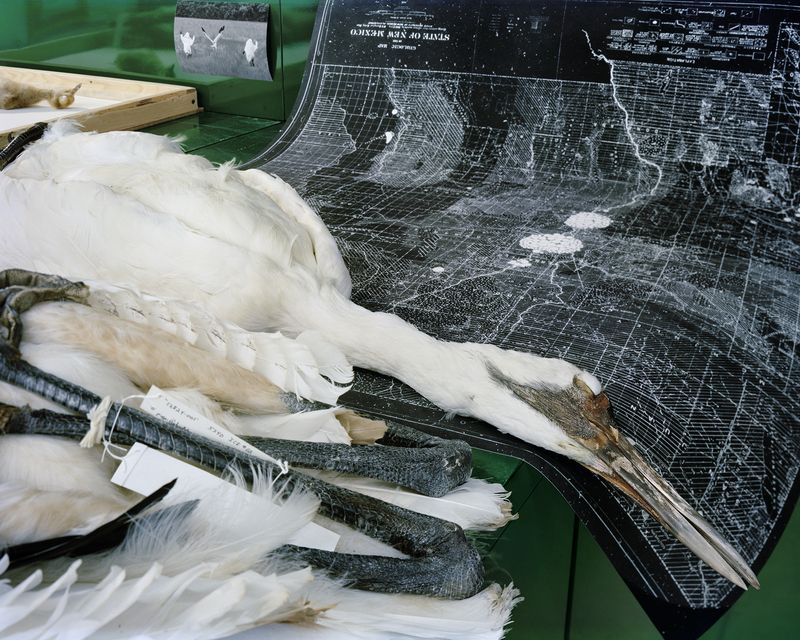
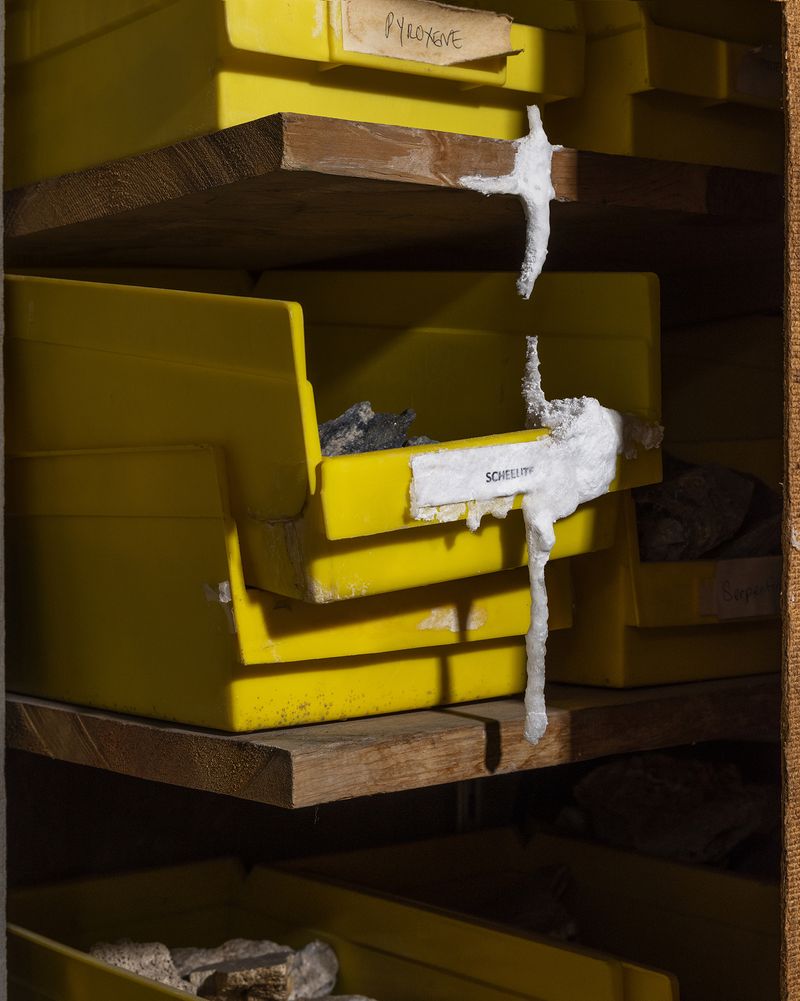
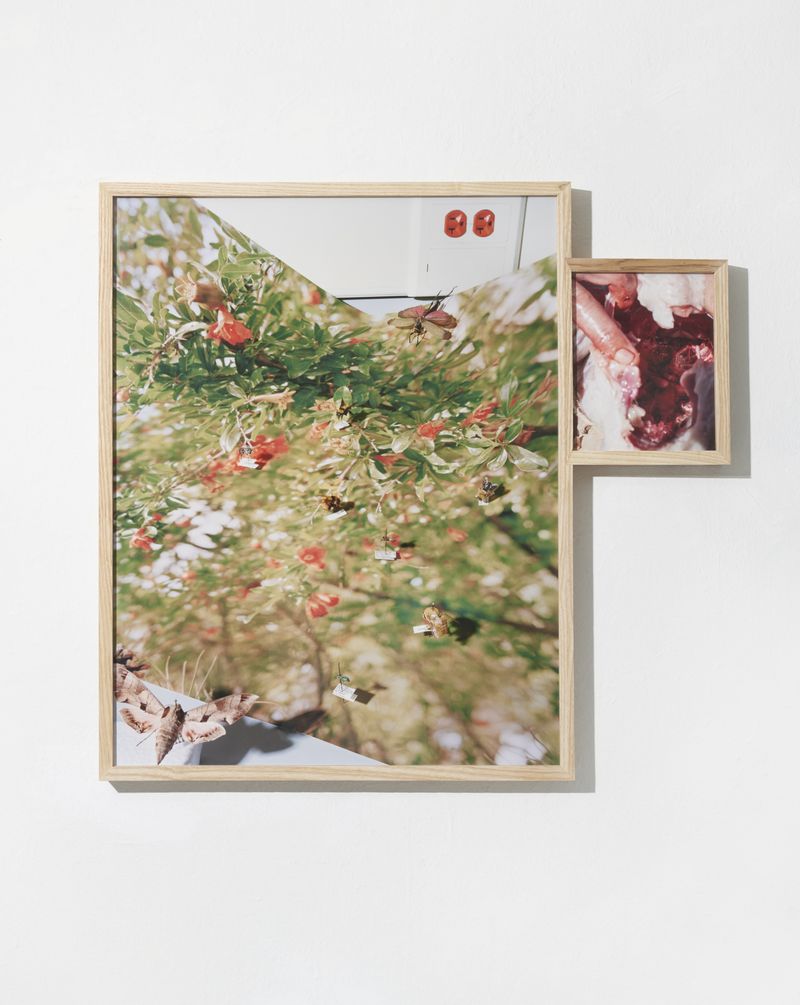
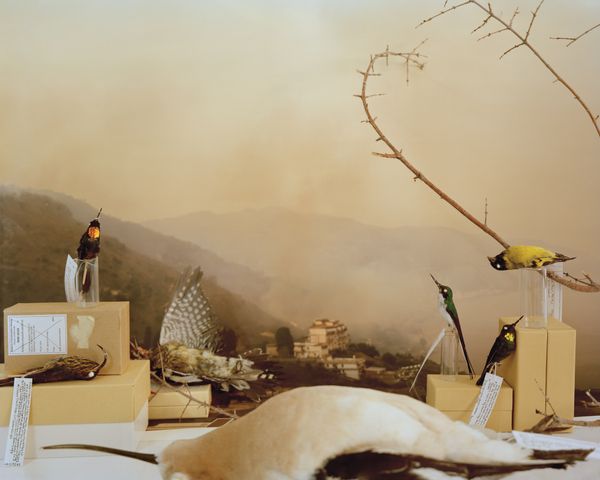
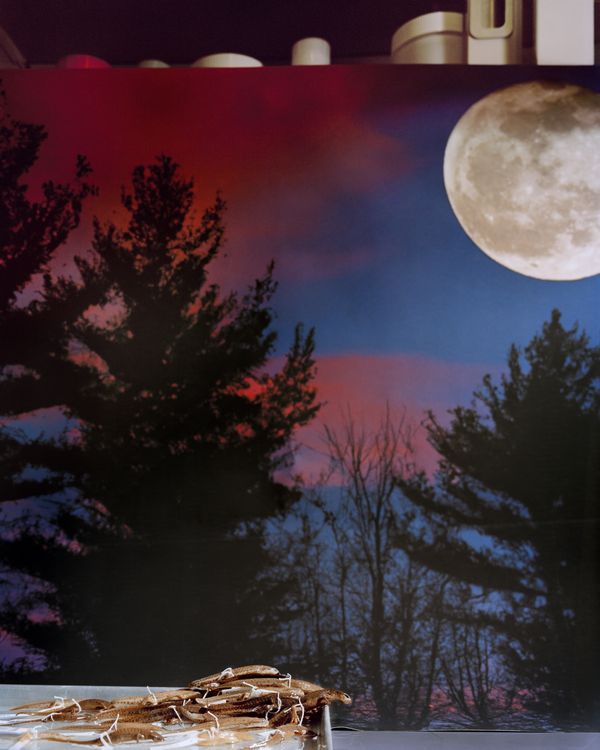
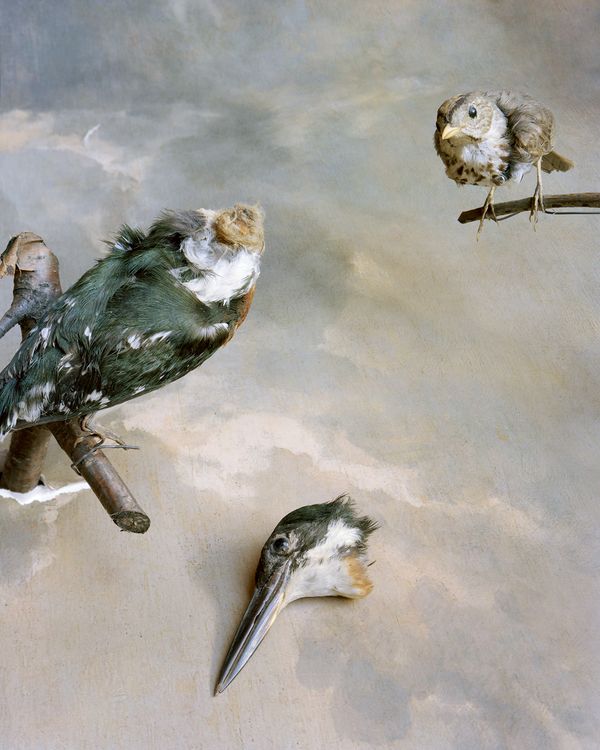
In Extant Erosions, I utilize large format photography, still life, and re-photography to examine the natural history institution as an important space for the general public to remember extinct and extant life, but also an insufficient and even perverse gesture to “save”.
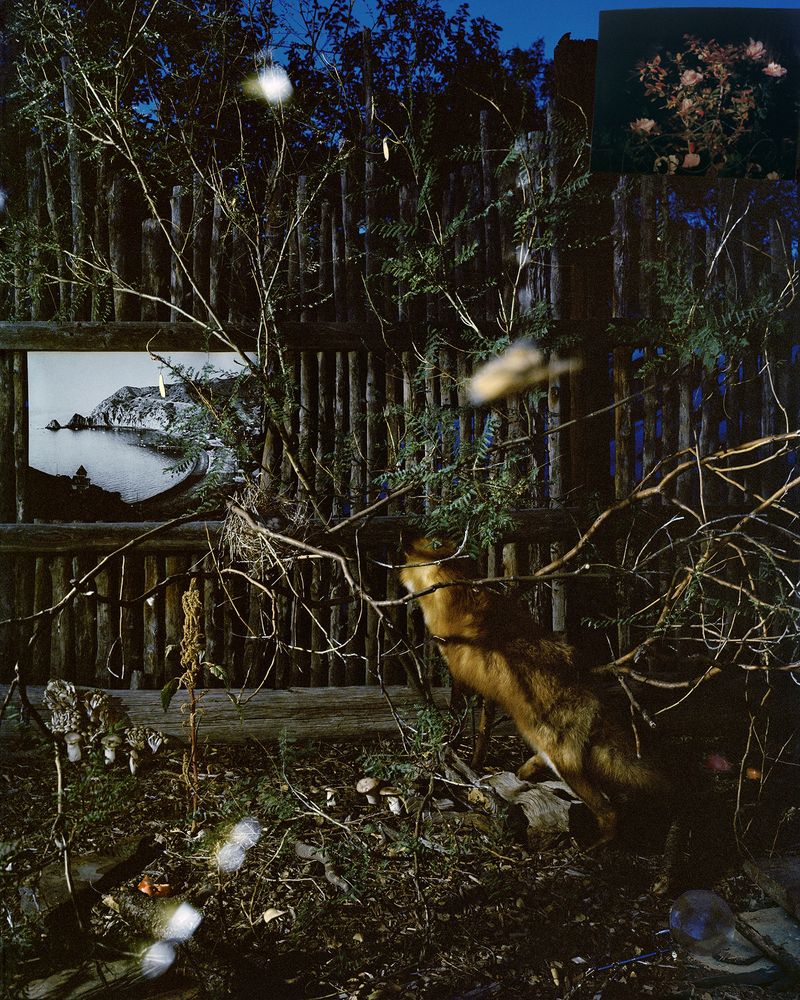
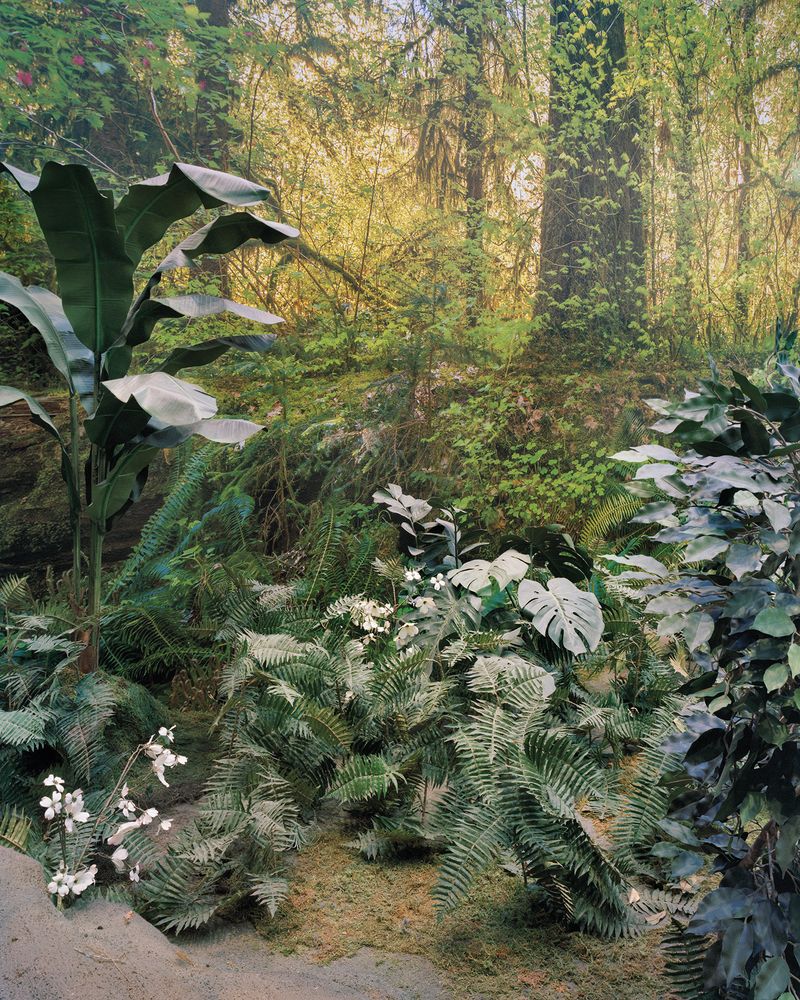
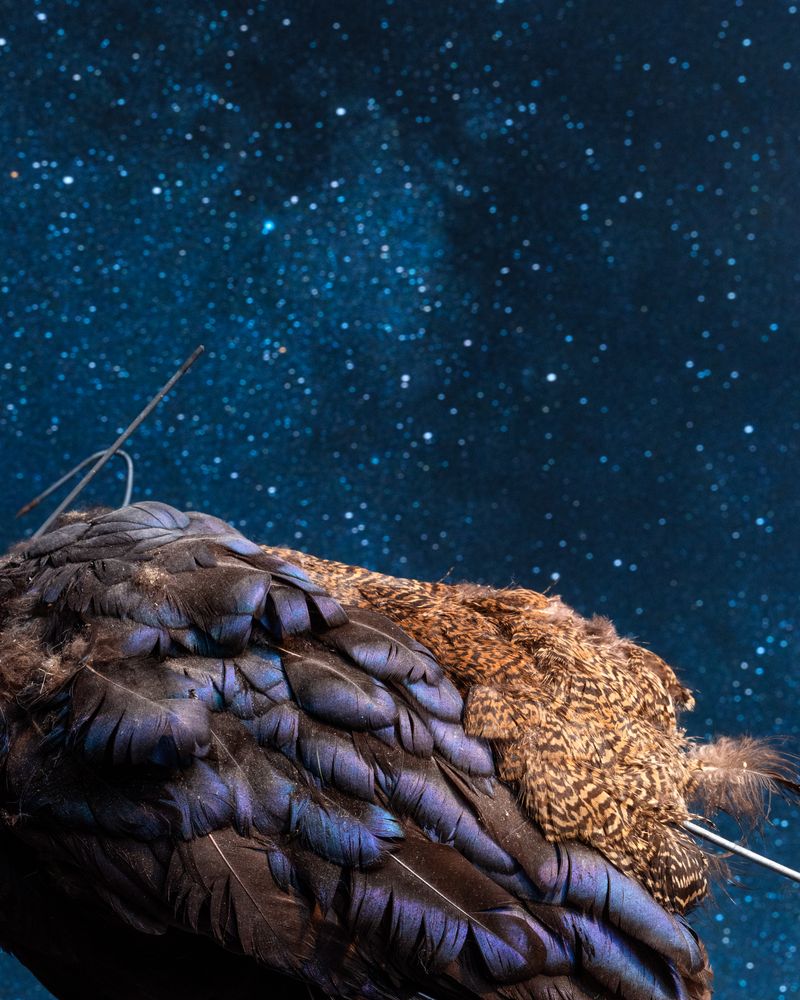
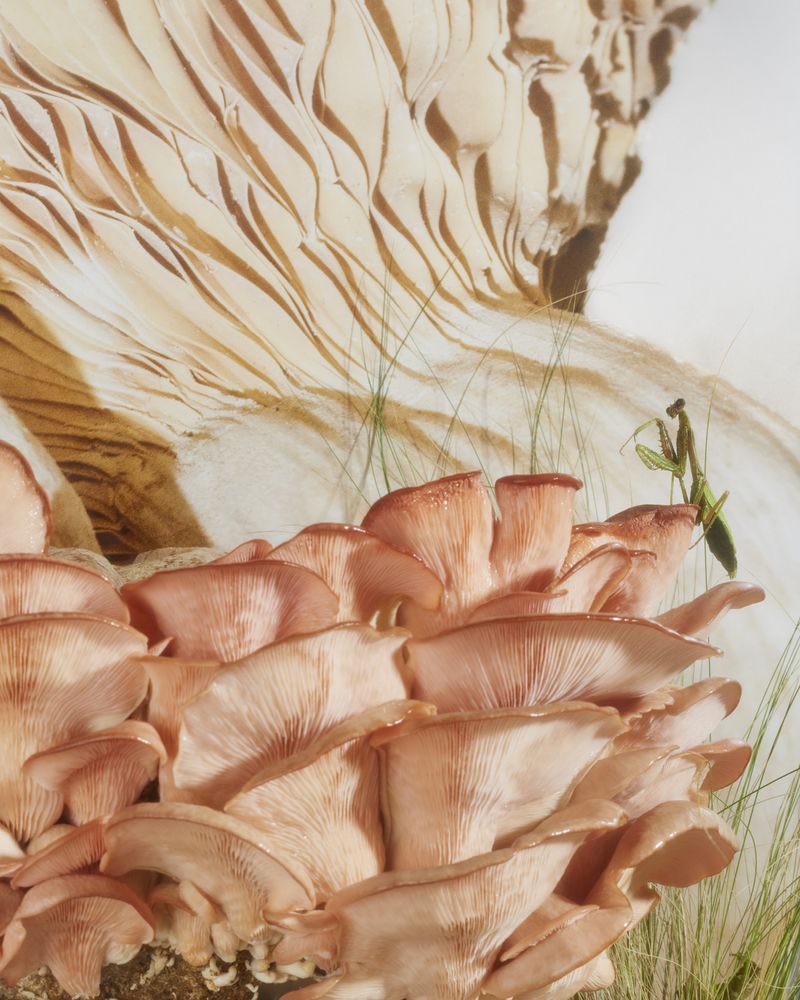
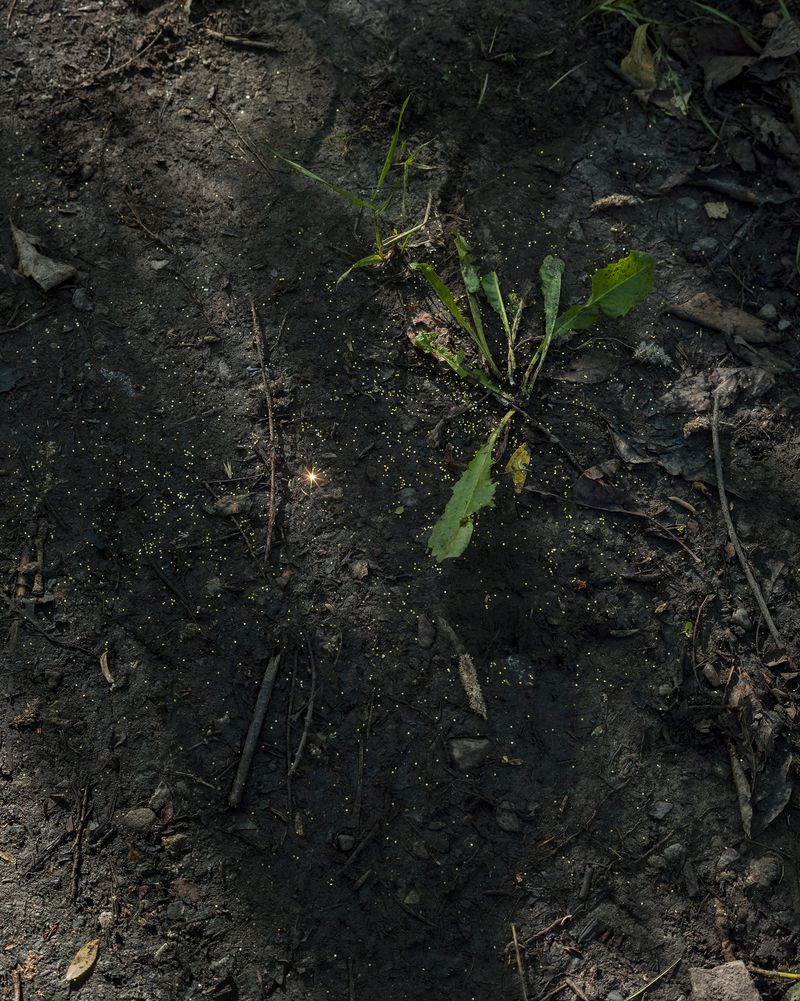
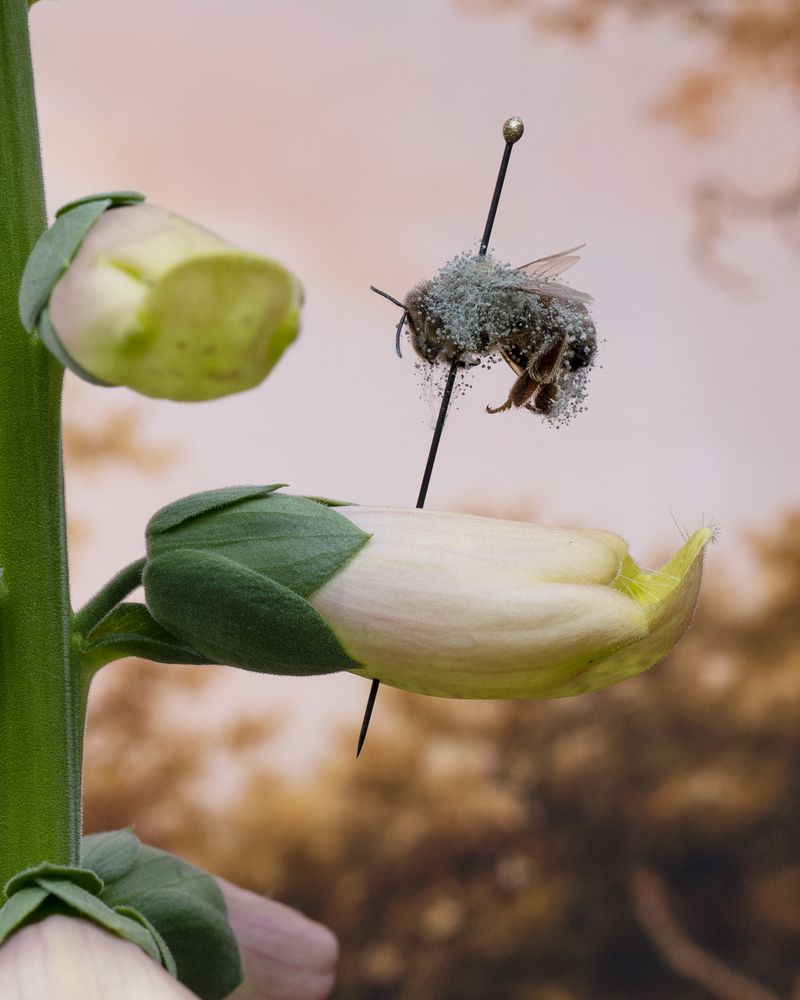
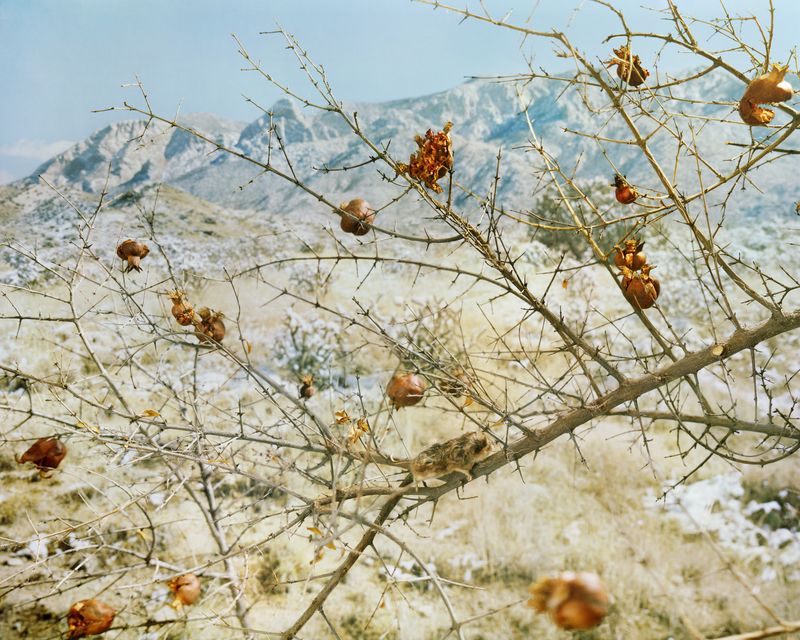
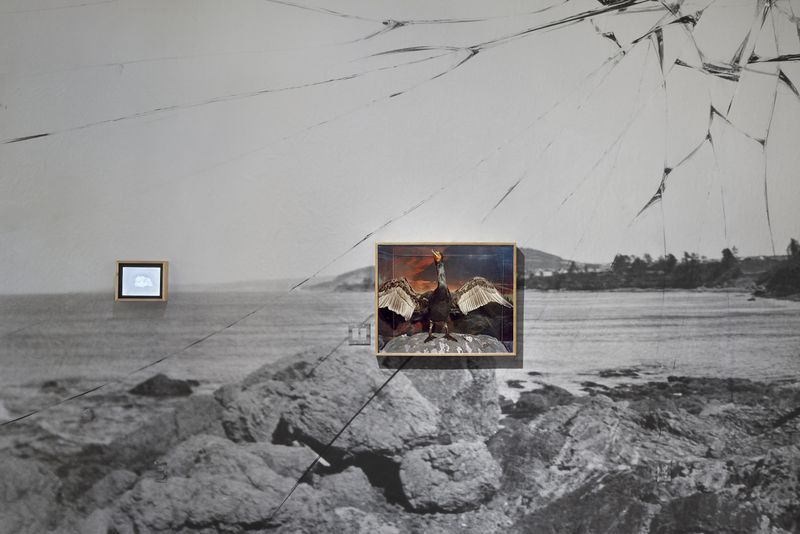
This exhibition and accompanying artist book spans three modes of working. In the first, I construct still life photographs with taxidermy, preserved animals, and minerals housed in museum collections. To make these images, I position specimens and printed backdrops before my camera to construct still life tableaus that I call fictional habitat dioramas. Some of the backdrops contain imagery of wildfire-smoke-filled skies or Hudson River School paintings that romanticize and fictionalize the landscape. These images demonstrate not only my fear about our environmental futures, but also a sense of sublime awe about the mystery of what’s to come.
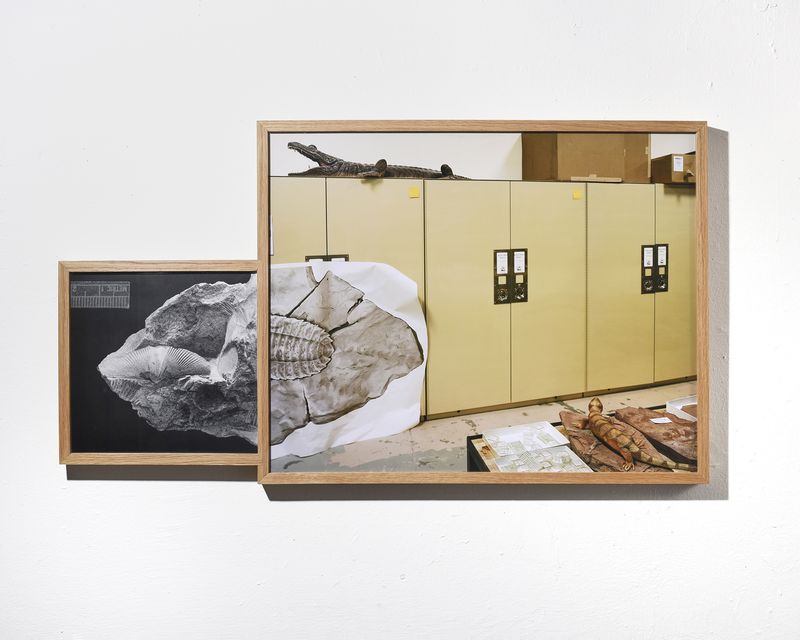
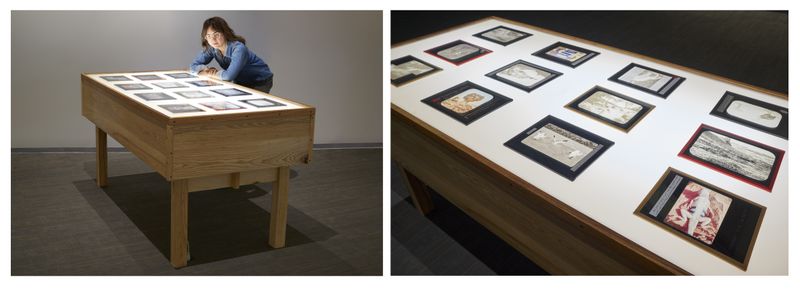
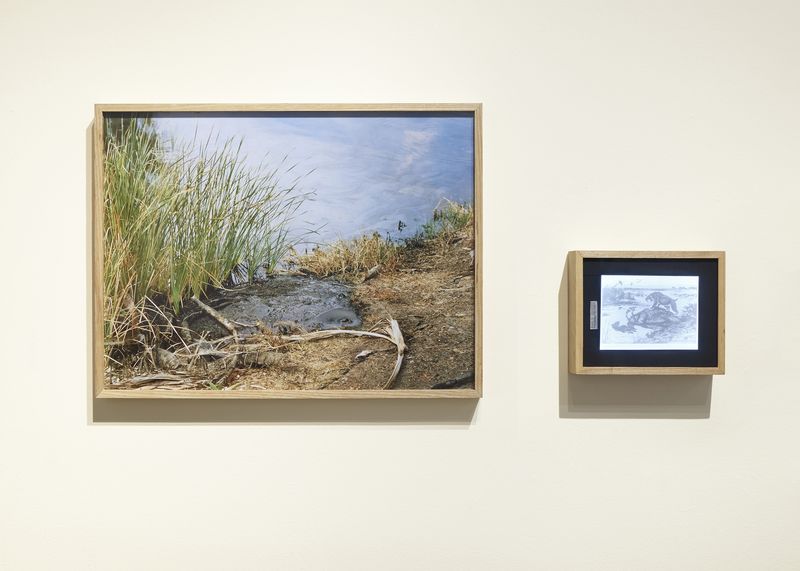
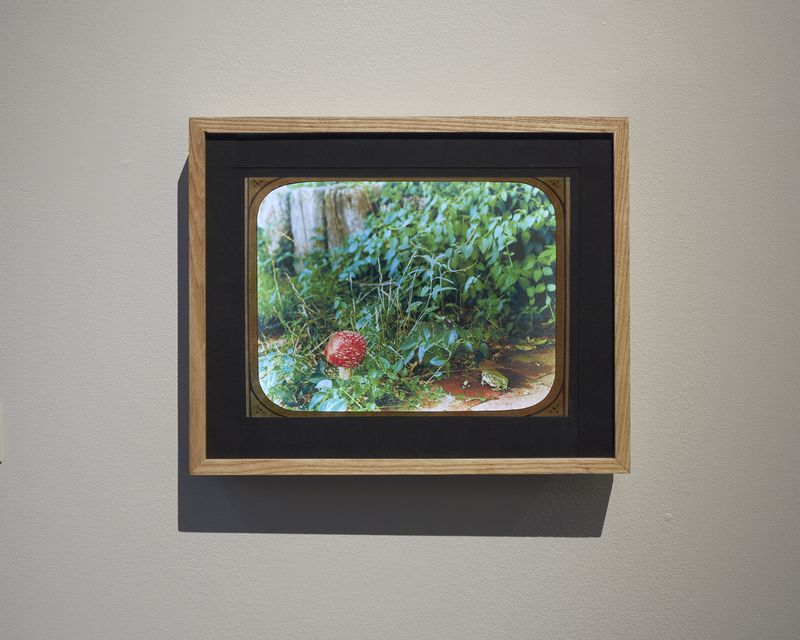
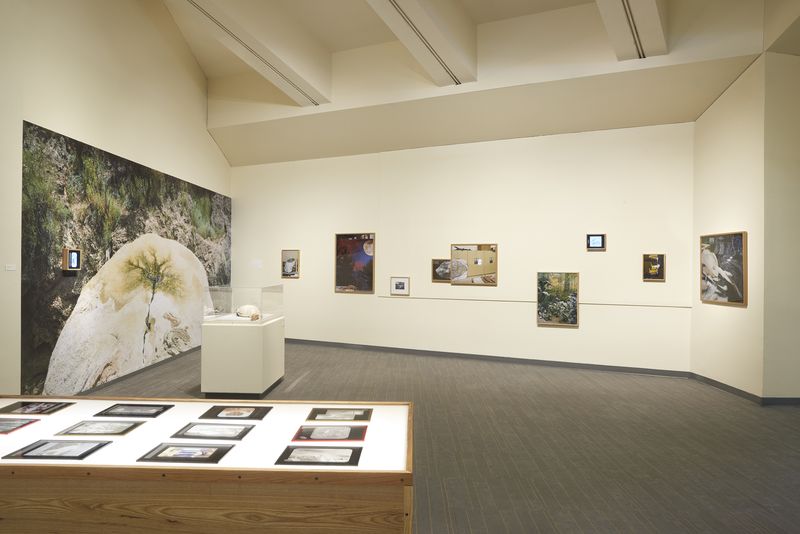
Secondly, I scanned and reworked a collection of glass lantern slides that are housed in the geology collection at the University of New Mexico and were used by Prof. Stuart A. Northrop to teach geology and paleontology 100 years ago. They are lost to time and none of the current faculty know anything about them. I scanned the collection, re-fabricated them as larger, 8x10 glass slides, and displayed them on a custom 3x6 ft light table that I built, as well as in light boxes on the wall.
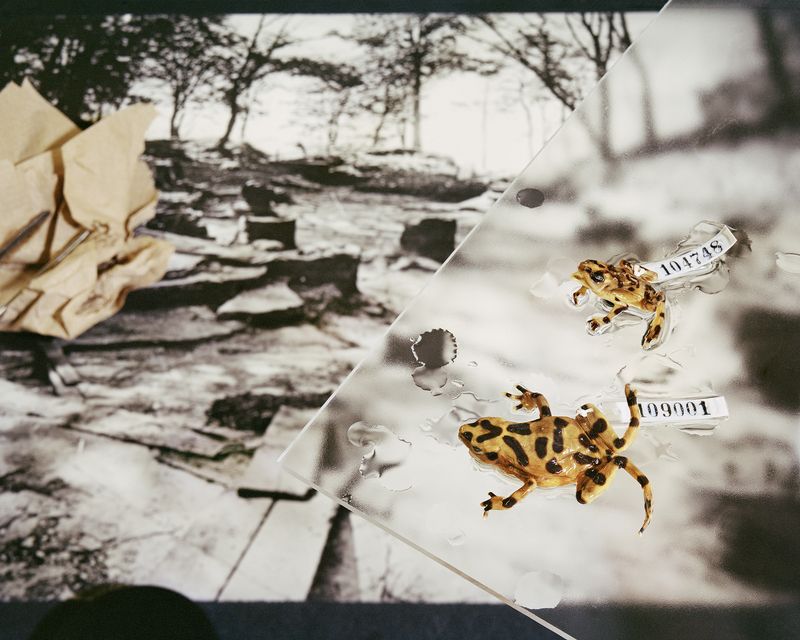
In my third mode of working, I talk back to the slide collection by adding images from my own personal photo archive to the 8x10 glass slides. This method engages with Dr. Nancy Marie Mithlo’s “talking back methodology” wherein Native artists are disrupting institutional archives by remixing the archive’s materials. The personal images I added to the slides include pictures of reptiles and amphibians made by my biologist dad and I over the last 30 years. I also used the imagery from the slides as backdrops in my still lifes.
I exhibit this work in custom frames and install the framed prints on top of photo wallpapers. The function of the wallpapers is to engulf the audience in a particular environment and turn the gallery into a suggestion of a diorama, which implicates the audience as the diorama’s subjects.
Together, the still life photographs, backlit slides, and wallpapers leap across time, asking how animal preservation, dioramas, and photo documentation shape our perception of the natural world. Through witnessing, capturing, cataloging, and preserving, we wrestle with describing nature—first to create meaning, and now to remember what we are rapidly losing. Both in terms of large format film photography and natural history collections, this work is about things slipping away and our gestures to hold on.