Cocks
-
Dates2002 - 2009
-
Author
- Location San Andrés, Colombia
For seven years I photographed San Andrés, Colombia—its people, architecture, and cockfighting tradition. Made during teaching breaks, “Cocks” presents double portraits of roosters and their arenas, created through close access to an insular community.
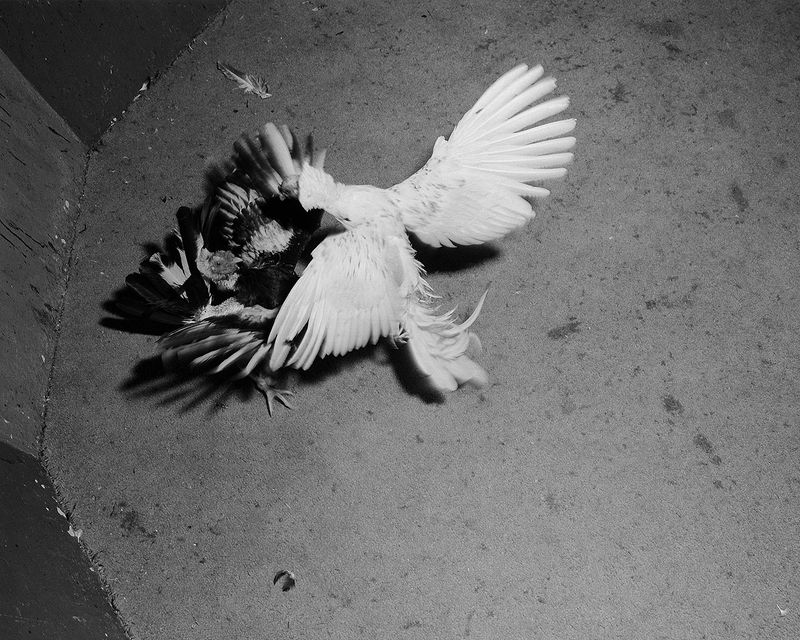
For seven years, I photographed on the island of San Andrés, capturing its people, architecture, and the rich tradition of cock fighting. San Andrés Island of Colombia is home to three fighting rings; this small island has a tradition of cock fighting that stem from its Spanish and Portuguese ancestry and the influence of coastal cities like Cartagena and Santa Marta. I learned of San Andrés through my ex-wife, who shared her experiences of life on the island as a young adolescent. Her stories spurred my desire to visit the island, and eventually, my first journey was set, beginning my love affair with San Andrés.
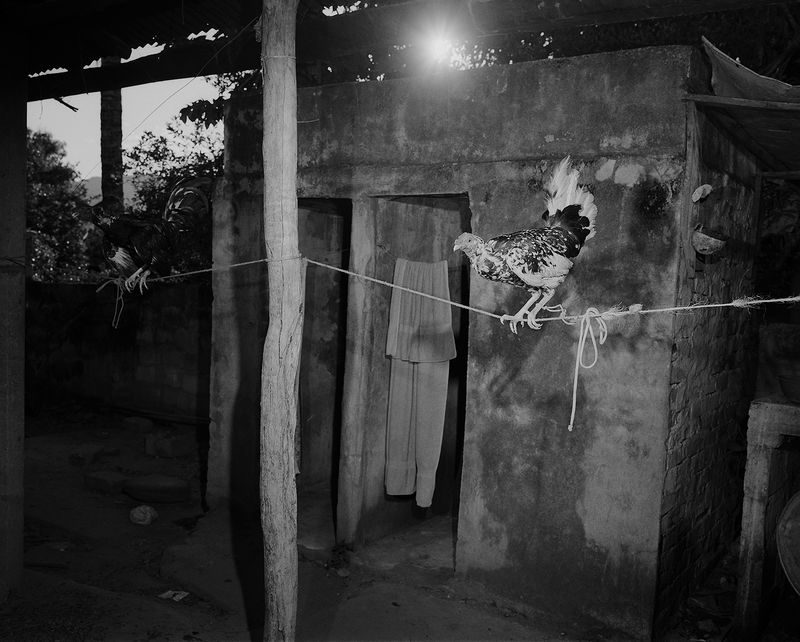
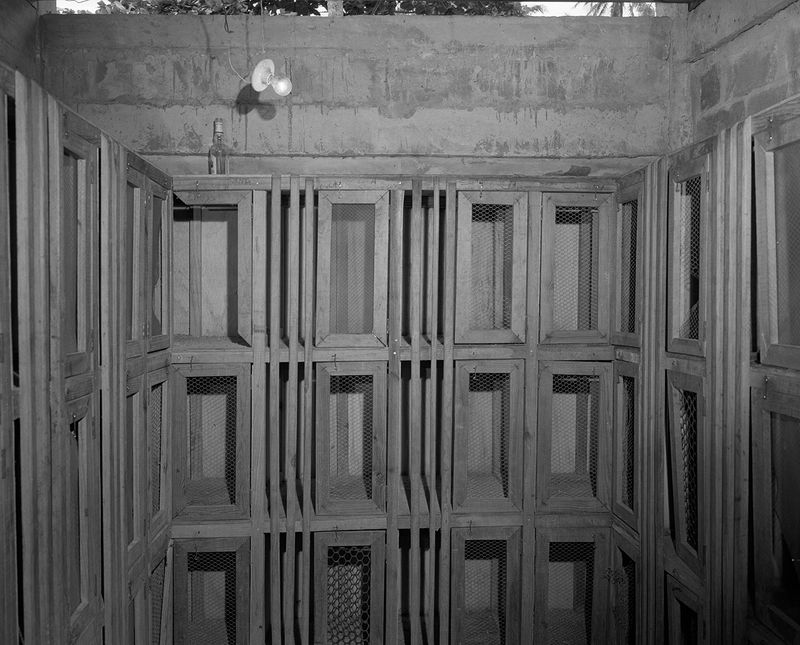
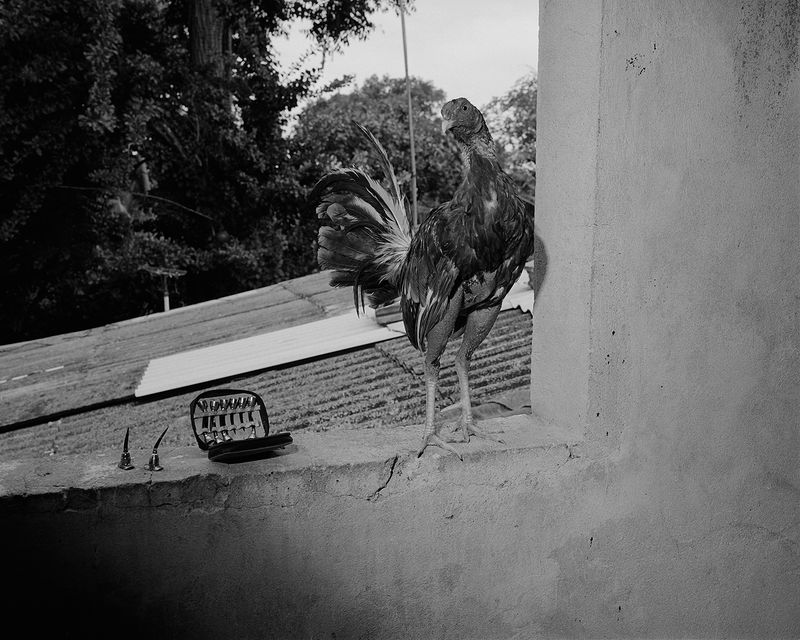
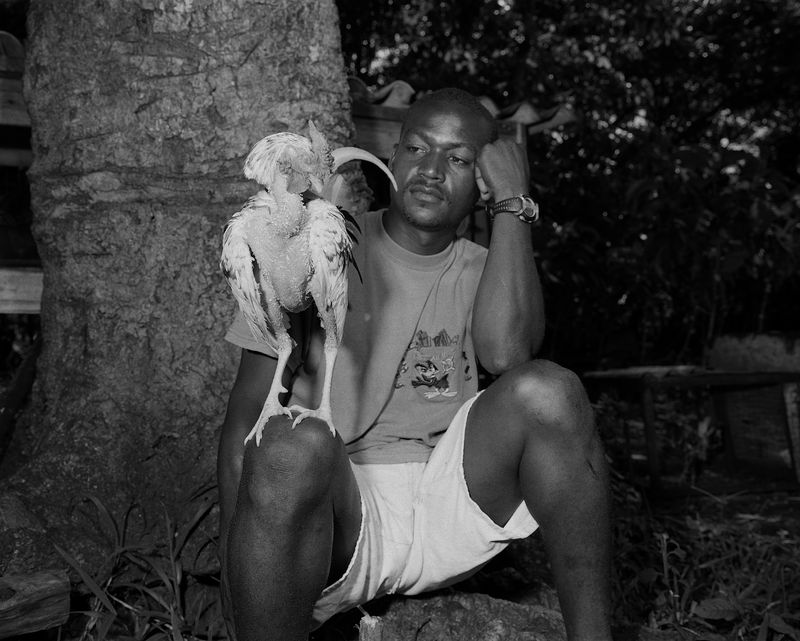
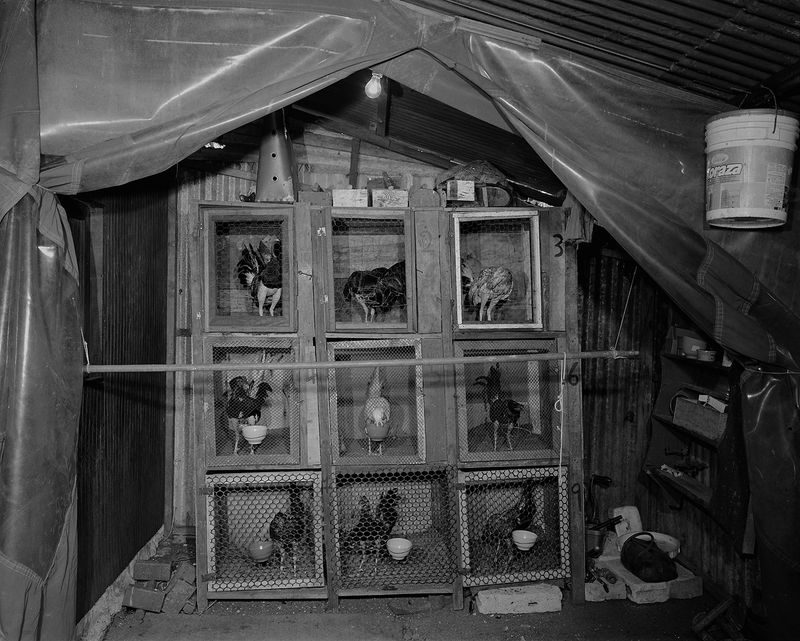
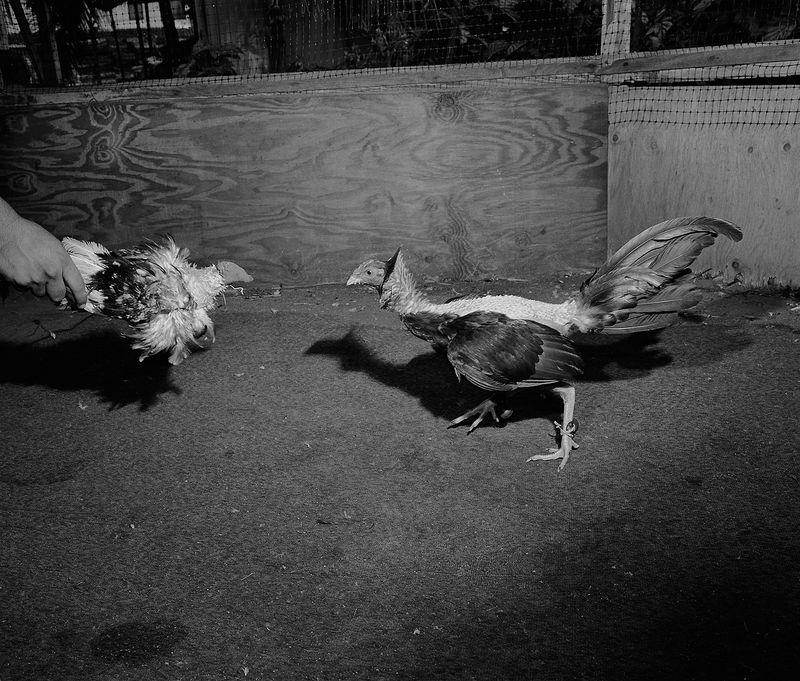
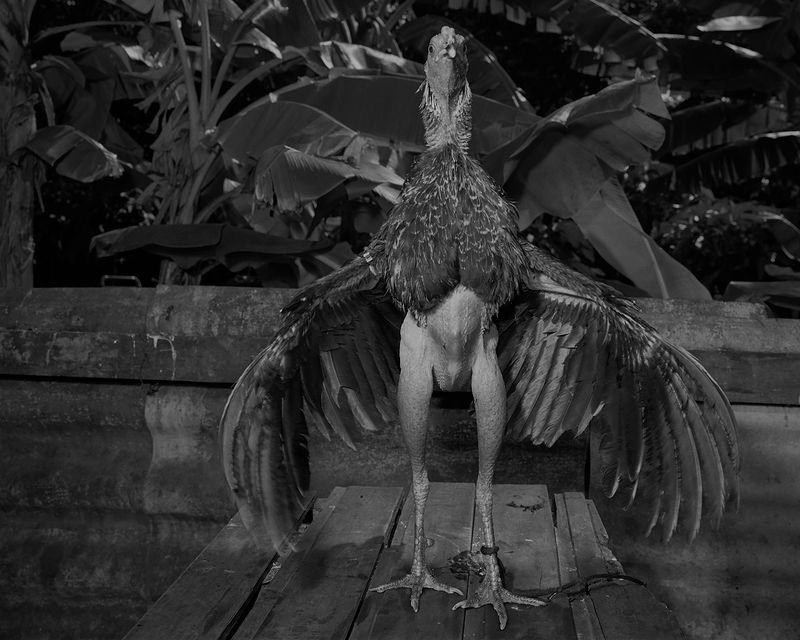
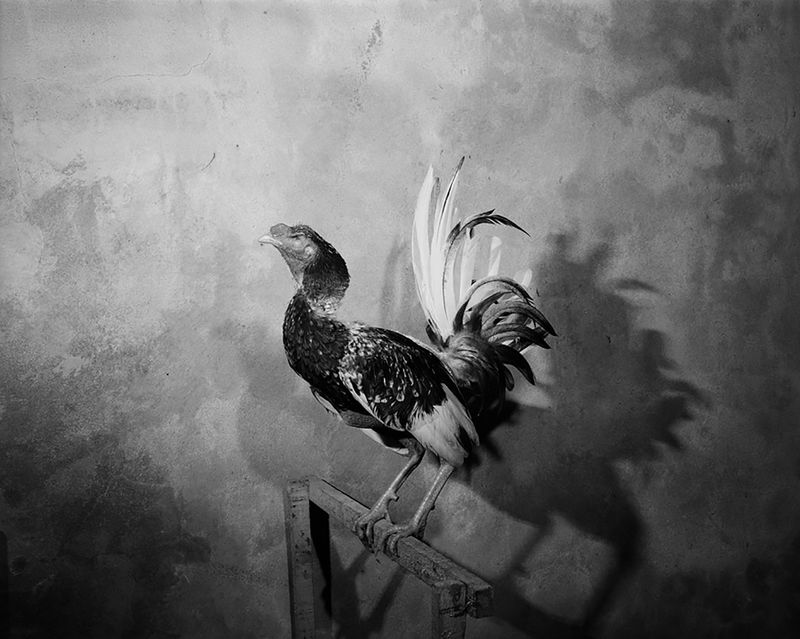
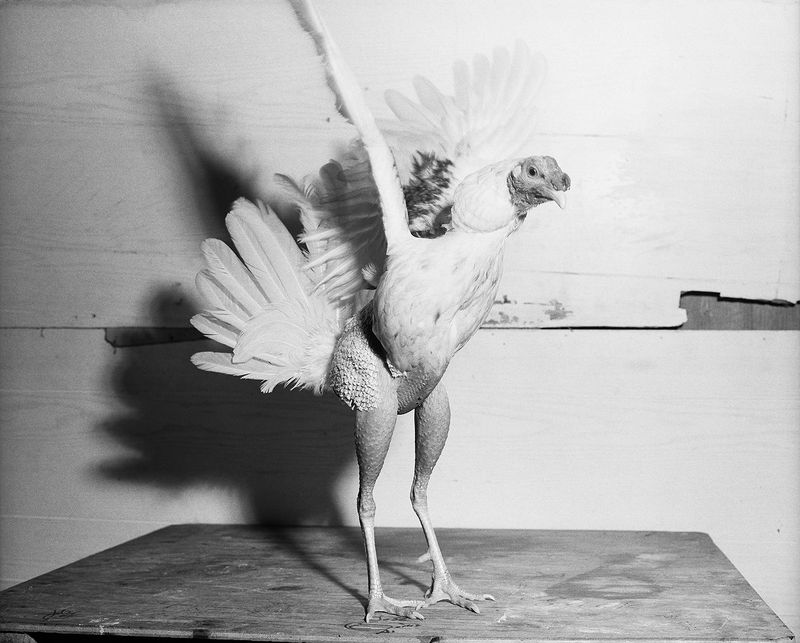
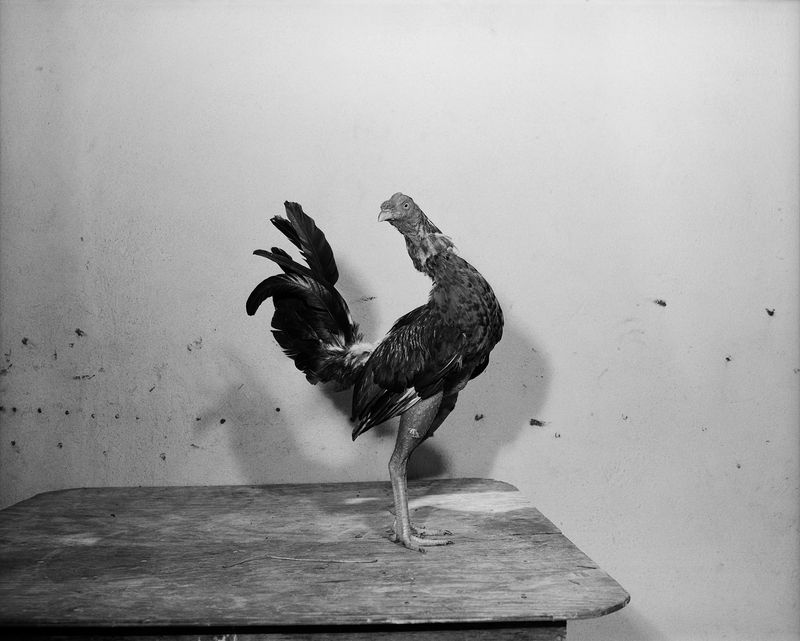
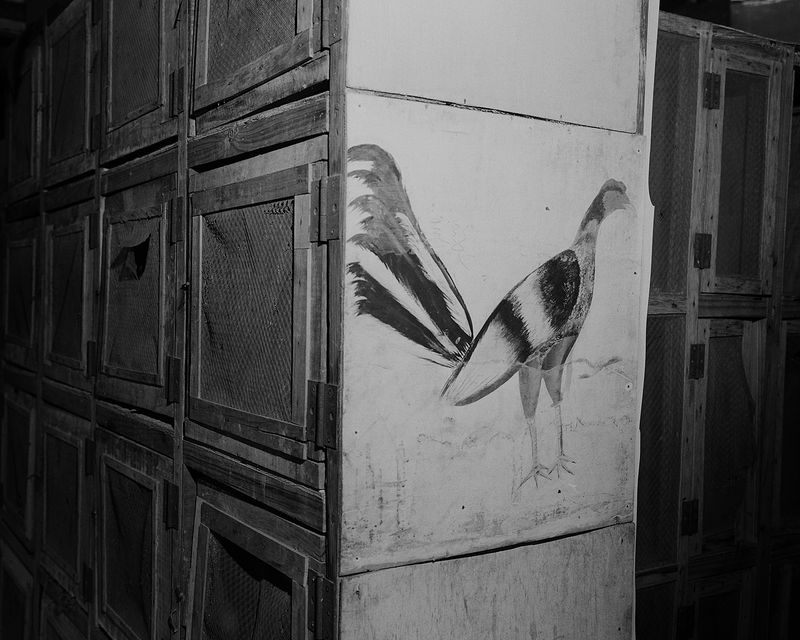
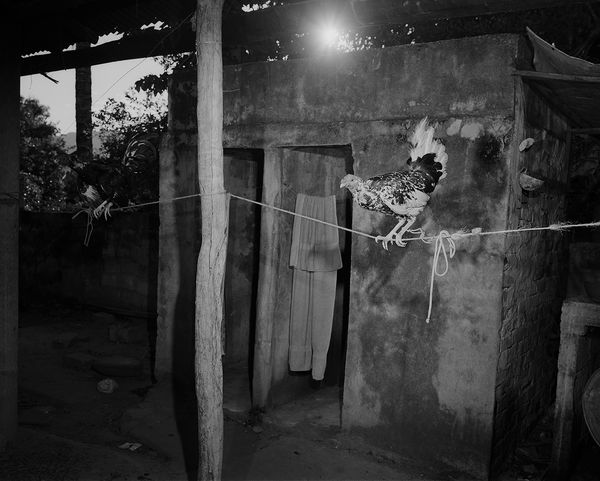
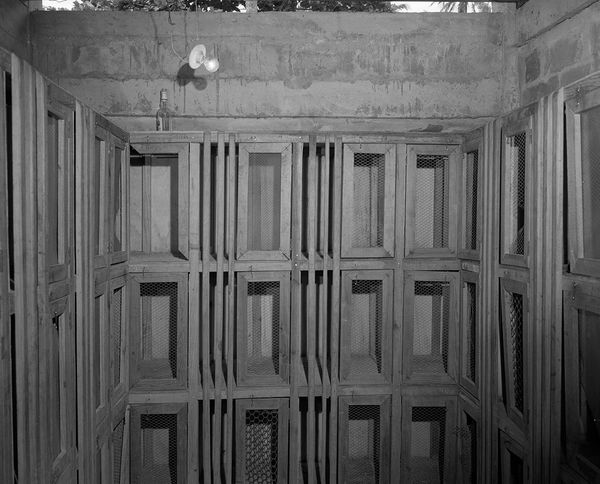
The photographs from this series, entitled “Cocks,” were made during my summer and winter breaks from teaching. This site-specific project depicts what I call a double portrait of fighting cocks. At first glance, you see a rooster embodying personality, and at the same time, a stage is apparent that references the world surrounding it. Using my camera as an ambassador, I was privileged to explore the tradition of cock fighting, learn about the handling of roosters, and integrate myself socially into an exclusive community.
I first heard about the tradition of rooster fighting as a child, listening to my father’s stories of his cock fighting adventures in Cuba. One of his tales was about his friend Julio (El Chino) Chane, a man who cared for his roosters even more than his own family. According to my father, Chane’s family often went to bed hungry because he would spend money on the roosters’ feed and vitamins rather than on food. Years later, I discovered a short story with a similar plot, “No One Writes to the Colonel” by Gabriel Garcia Marquez, about a poor couple whose son was killed in a civil war, leaving behind a champion rooster. The family is conflicted because they do not know whether to sell the bird right away to make ends meet or to fight the bird and stake everything for the possibility of becoming rich. I wanted to experience firsthand the essence of these stories.
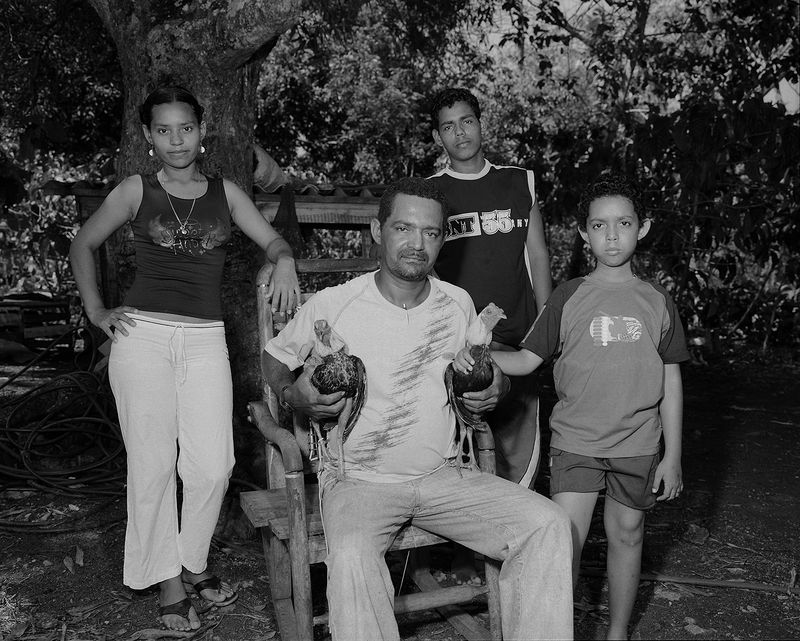
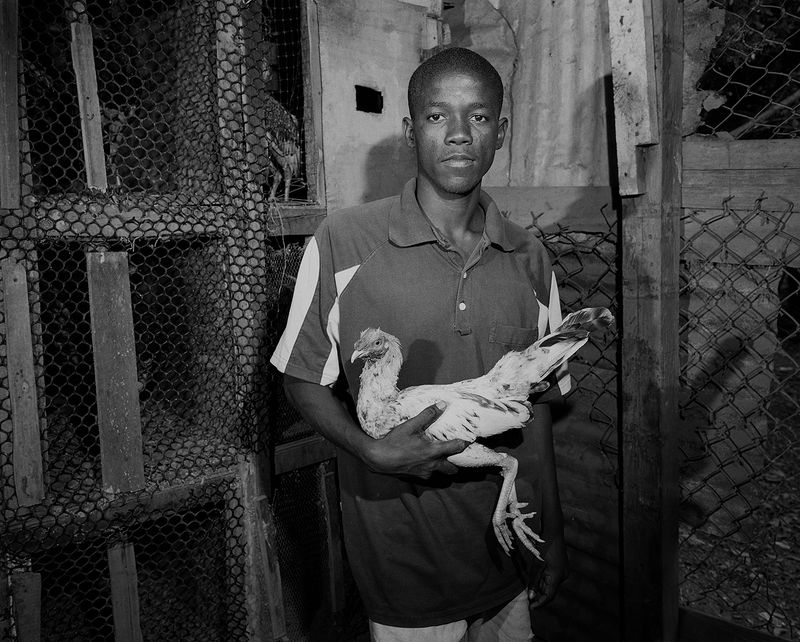
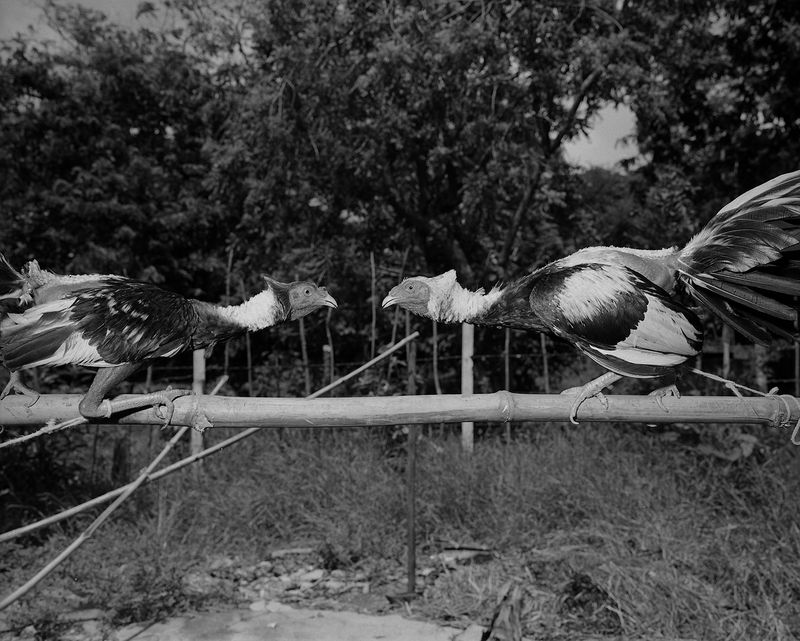
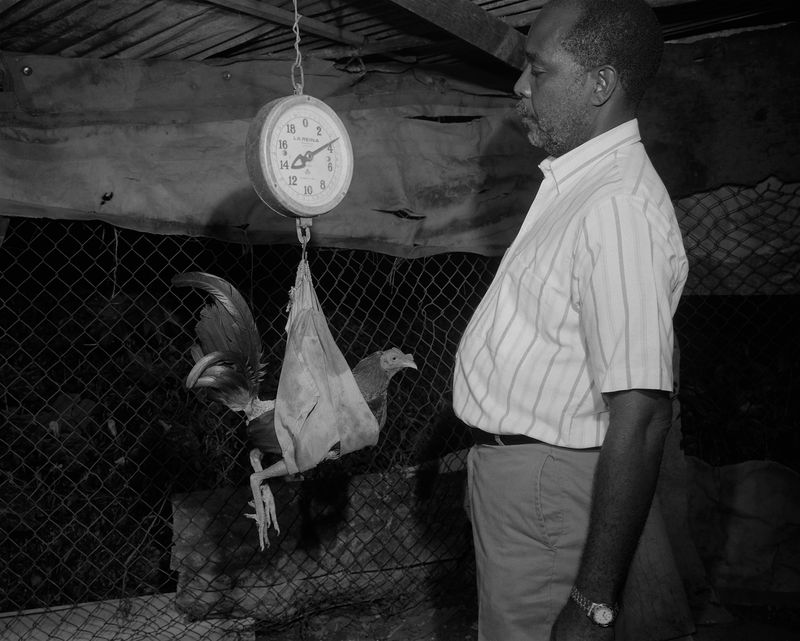
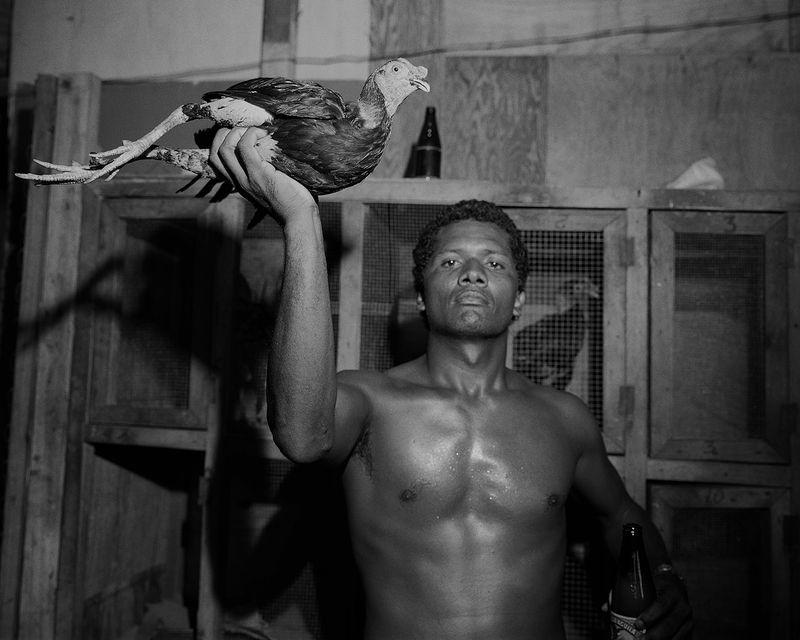
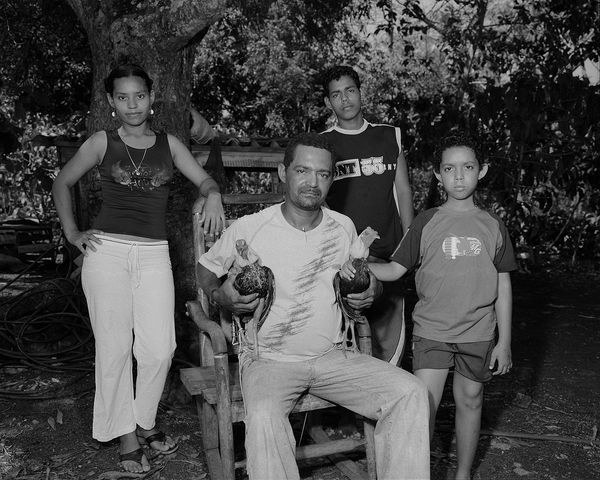
I am intrigued by the entire sub-culture of cock fighting, which considers this event a serious sport. When I began this project, my aim was to first learn the rules and regulations from a primary source by becoming acquainted with the islanders. One player who greatly influenced my perception of cock fighting was Wolly Thime, an avid participant admired by all in this circle of fighting roosters on San Andrés. Wolly owns over seventy fighting roosters, all considered an extended part of his family. Each cock had a unique name, such as El Machetero, Nelson Mandela, Coño, and La Virgen. Naming the birds is a ritual event that occurs during the debut bout, where the bird displays characteristics associated with warriors, which the owner can then use in naming the bird. Wolly Thime exudes pride as a successful bird owner and breeder, and his roosters directly or indirectly reflect this attitude.
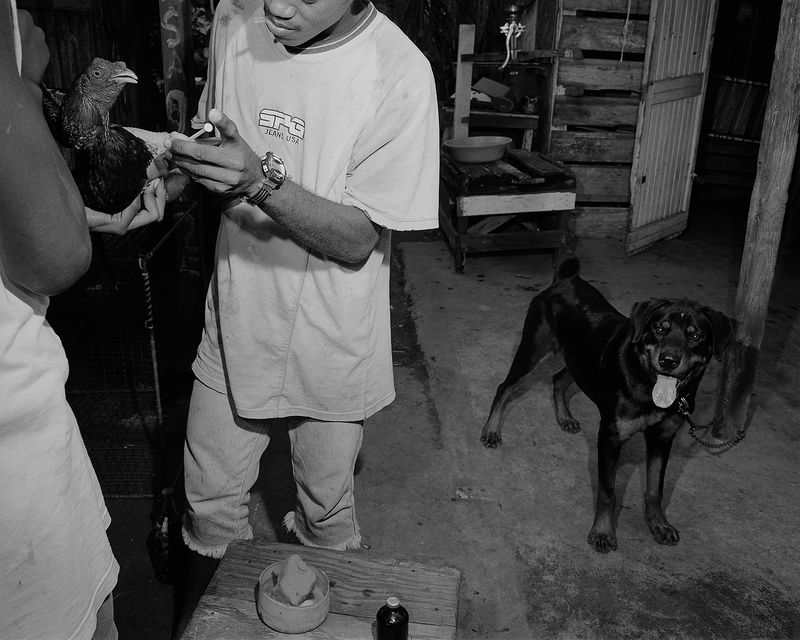
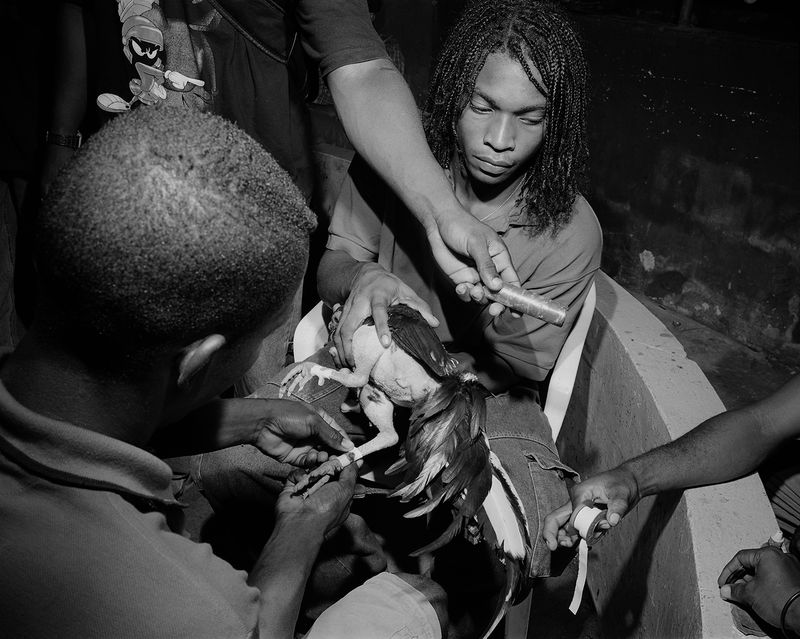
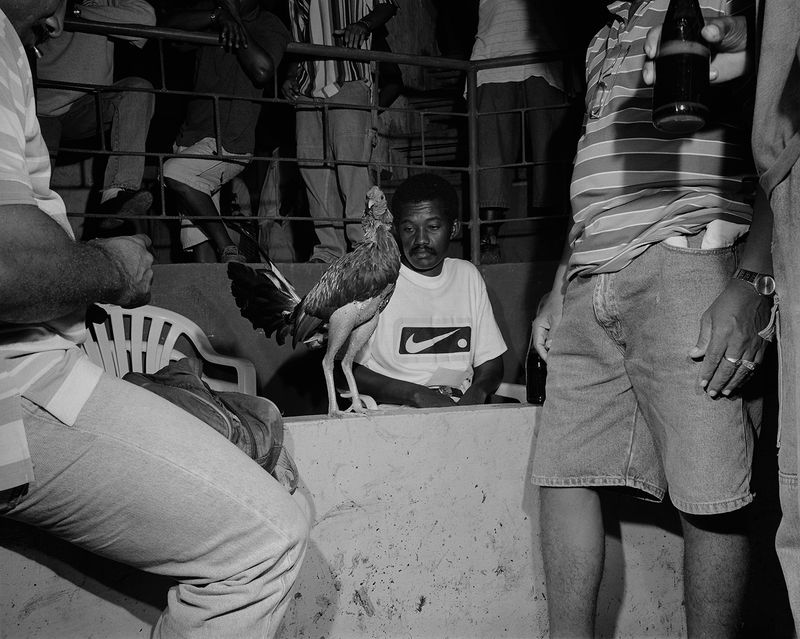
To better understand the spectator’s perspective, I spent most of my time watching the fights, the breeders, and the ritual of bird grooming. This made a great difference in the creation of this project, allowing me to integrate better into this harsh environment and heighten my appreciation of the subject. My presence with the camera and its accessories was not unwelcome; on the contrary, I felt accepted by the entire cock fighting community. In my photographs, I create a rich visual quality and an appearance of depth through a technical innovation of a bracket with multiple flash heads. The different projects I create in San Andrés and the images produced from these projects can be considered as having a documentary style referencing the history of photography. In the Cocks project, I reference the Teutonic affection for sorting and cataloging depicted by the portraits of August Sander and the photo reproductions of crime scene images taken in New York and Paris in the 19th century. My portraits of the fighting cocks evoke the hidden horror of the spectacle, which is mentally produced by the individual viewer.
My goal with the project is to produce images that respect the cultural tradition of cock fighting in San Andrés without imposing a westernized ideology concerning the practice. This attitude allows me to pay close attention to the birds, the bird handlers, and the ritual of bird grooming. In this way, I uncover through a visual understanding the meaning of this sub-culture, which is an important part of my Hispanic family heritage.