Between Sand And Water
My project “Between Sand and Water” documents the relationship between the people living along the Volta lake and river, its estuary where it enters the Atlantic Ocean in my hometown Ada, the land and the environmental challenges surrounding it.

Ghana’s Volta lake is one of the world’s largest man-made lakes. It extends from the northern part of the country near Yapei, where the White Volta and Black Volta Rivers merge, to the Akosombo Dam.  From there, the Volta river continues to the coast, and reaches the ocean at Ada-Foah - it thus travels the full length of the country, solidifying it as the heart of the country. The vastness and beauty of the water body - be it the lake or the river - hold many secrets and mysteries of time past before modern Ghana was built. 

My project “Between Sand and Water” documents the relationship between the people living along the Volta lake and river, its estuary where it enters the Atlantic Ocean in my hometown Ada, the land and the environmental challenges surrounding it. Through the project, I also reflect on my journey of exploring a deep connection with the water body, telling stories of people from my hometown who have a long history of traveling to different parts of the river and lake. Since 2019 I have been exploring the resilience of the communities along the coast of Ada Foah and the estuary of the Volta river and how they cope with the consequences of environmental challenges in their everyday lives. I was exposed to my own family’s experience as I learnt from my father how my grandfather’s home was washed away by the ocean in the 1980s along with other homes in Ada Foah which caused a separation among families, some resettling more inland of Ada while others moved elsewhere completely. 

Hearing these stories and witnessing the impacts of climate change first-hand some 40 years later, has left me feeling amazed by the resilience of the communities affected by rising water levels, coastal erosion and the pollution of water bodies. 

From the Volta Delta, where people engage in a wide range of activities to sustain their life, where rituals to appease the marine spirits are part of community life, where people come together to revive the important mangrove forests or to rebuild after events of flooding, to day-to-day life in a new found home around the sunken forest of the Volta Lake - the stories have one thing in common: a close relationship to the water which I share

This project is a candidate for PhMuseum 2026 Photography Grant

Learn more Present your project
© Ofoe Amegavie - Image from the Between Sand And Water photography project
i

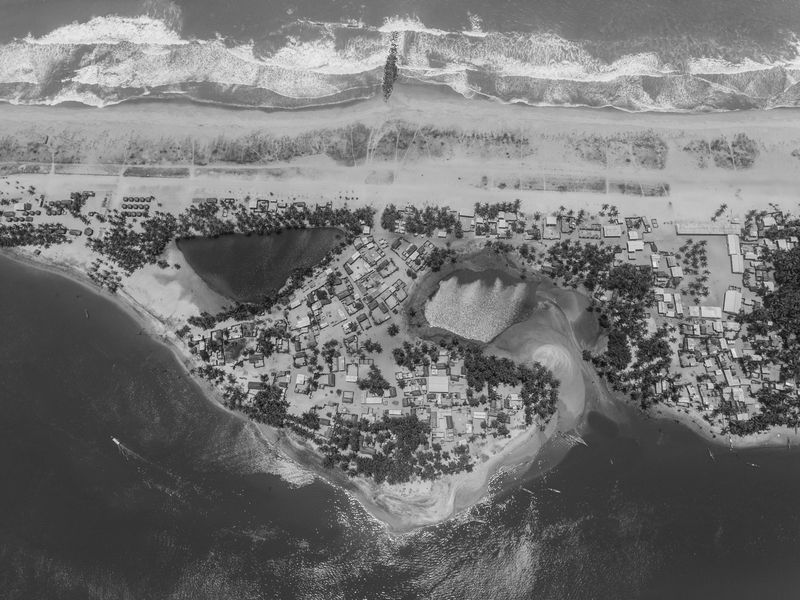
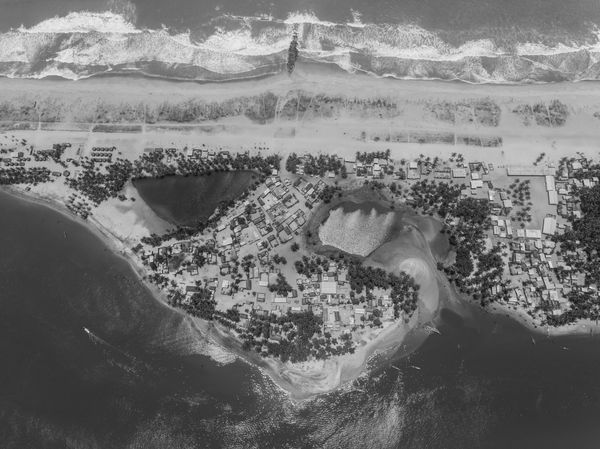
Ada-Foah is located on Ghana’s coast about 100km East of Accra. This is where the Volta river flows out into the Atlantic ocean. The neighbouring communities are communities of fishermen; the ocean and riverside is life to them. This geographical area is home to important mangroves and other aquatic life which the communities depend on economically.

© Ofoe Amegavie - Image from the Between Sand And Water photography project
i

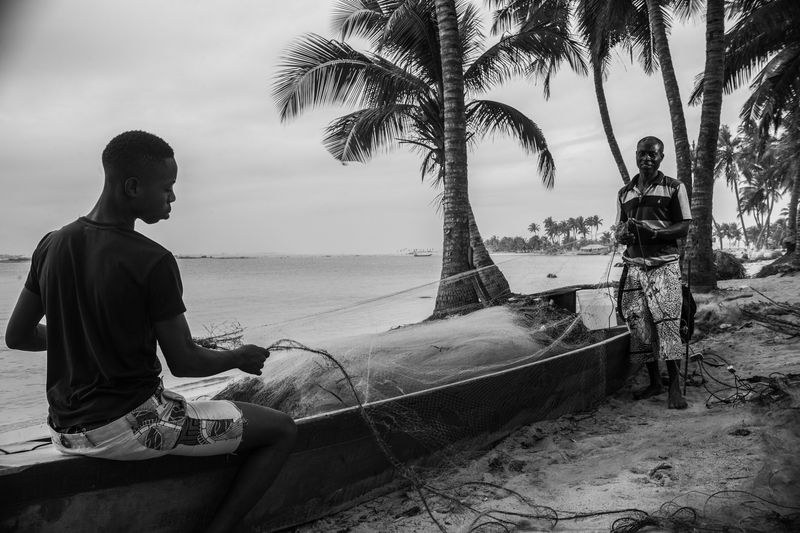
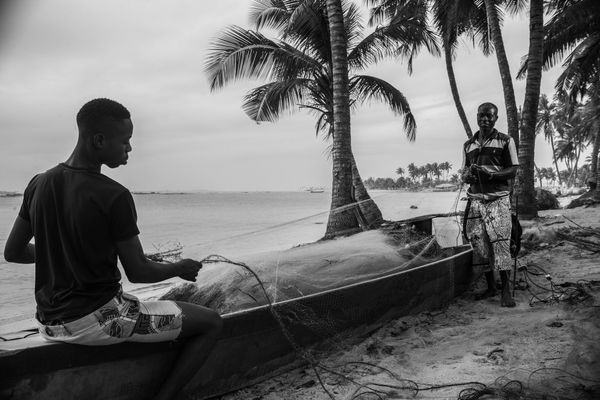
A fisherman and his son are mending their fishing net in Kewunor, a community on the Volta river close to Ada-Foah. The main occupation in the village is fishing.

© Ofoe Amegavie - Image from the Between Sand And Water photography project
i

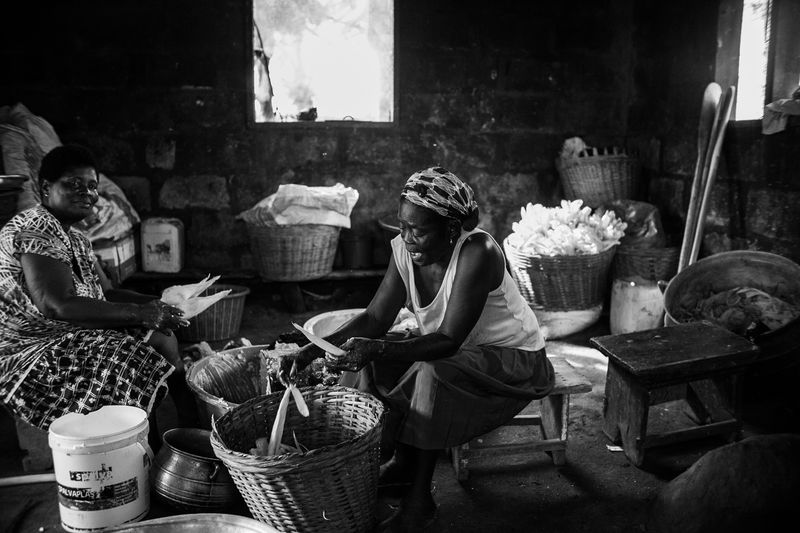
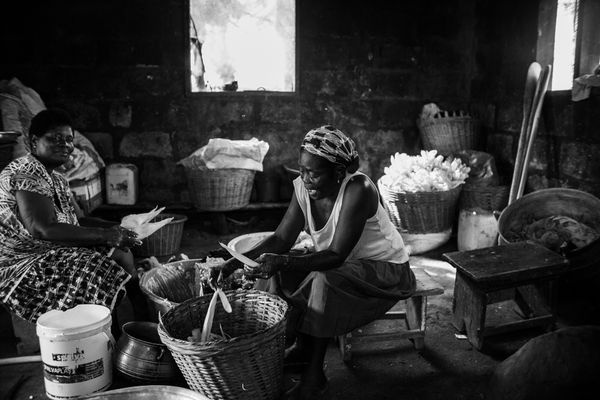
Women of Azizanya are making kenkey, a local dish sold in Ghana which is mostly eaten with fried fish. The women´s work is crucial in generating income for the families. It is also during these moments of working together that stories are shared and passed on to the next generation.

© Ofoe Amegavie - Image from the Between Sand And Water photography project
i

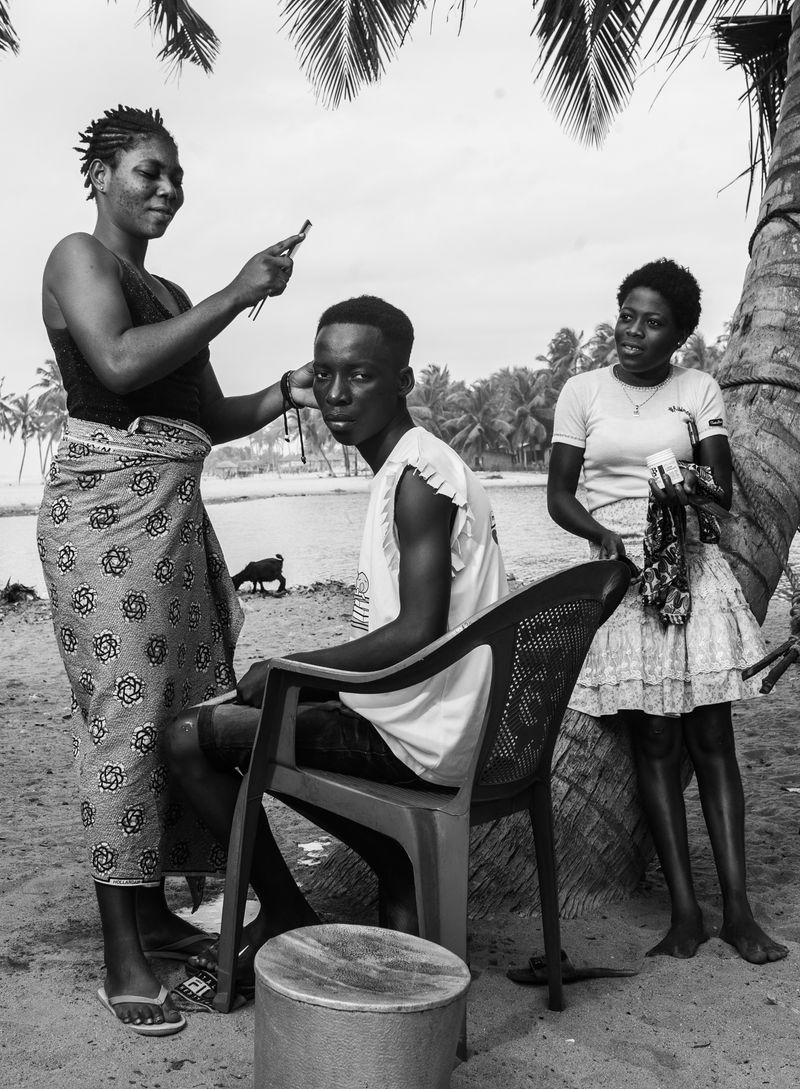
Young people in Kewunor share their daily activities, including making their hair. It is often during everyday gatherings like these that they share their dreams and hopes for the future. The population of the community located on the estuary of the Volta Delta is majority youth however, due to the effects of coastal erosion there isn't much available in terms of livelihood aside from fishing

© Ofoe Amegavie - Image from the Between Sand And Water photography project
i

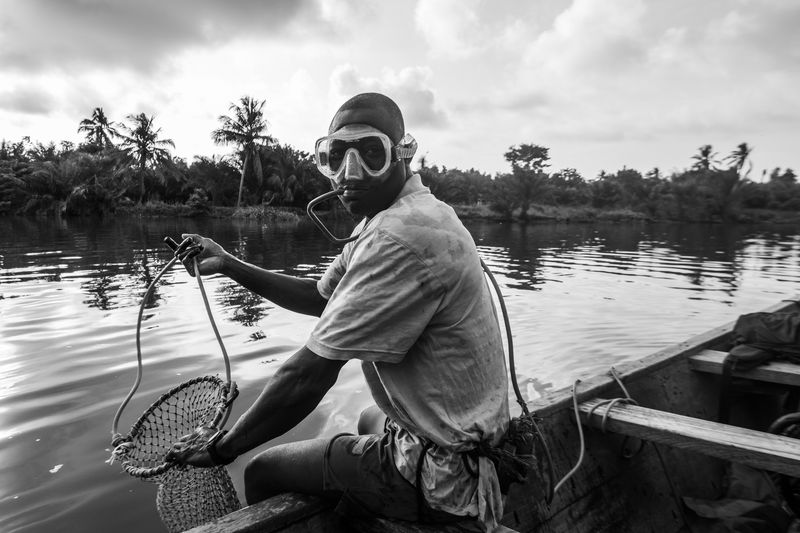
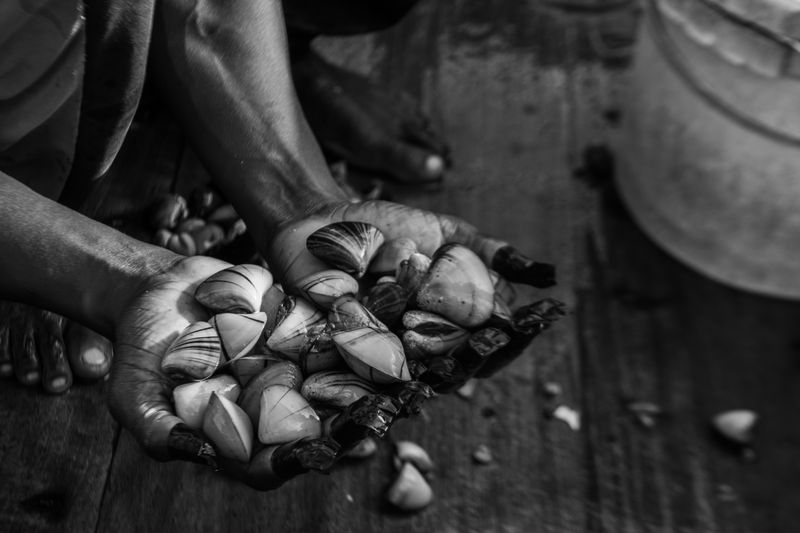
In exploring my own identity as an Ada and our relationship with the Volta River, I discovered another commonality with Jonathan - we are both freedivers in our very different ways. Jonathan is a clamfisher who works with a group of about five men. From his wooden canoe, they dive down between three and 12 metres to collect the clams from the bed into baskets they hang around their necks.

© Ofoe Amegavie - Image from the Between Sand And Water photography project
i

At the bottom of the river, the divers dig the clams with their fingers. They wrap their fingers in layers of duct tape to protect them from injury. They collect the gathered clams into the net they hang on their neck. They do this repeatedly until they have enough clams and then signal to the canoe above to draw up the catch. They take turns until there is enough catch for the day.

© Ofoe Amegavie - Image from the Between Sand And Water photography project
i

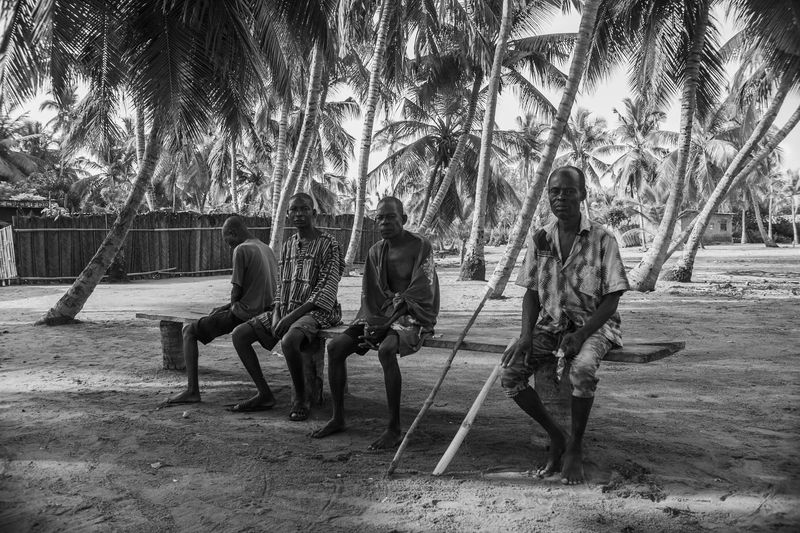
"My father moved to the bigger and original Azizakpe Island (Dwarf Island) before I was born. Where we stand today, was part of the Delta. The banks were closer to each other. I do not remember this place as my birthplace. I live in the middle of the river now," says Efo Amanortey Kisseh.

© Ofoe Amegavie - Image from the Between Sand And Water photography project
i

A man is taking a last look at his damaged home before setting off to a shelter inland after Azizakpe was flooded. Some community members stayed behind to rebuild their homes and safeguard what was left of their properties. While many stay and face the challenges, others have been looking for opportunities elsewhere.

© Ofoe Amegavie - Image from the Between Sand And Water photography project
i

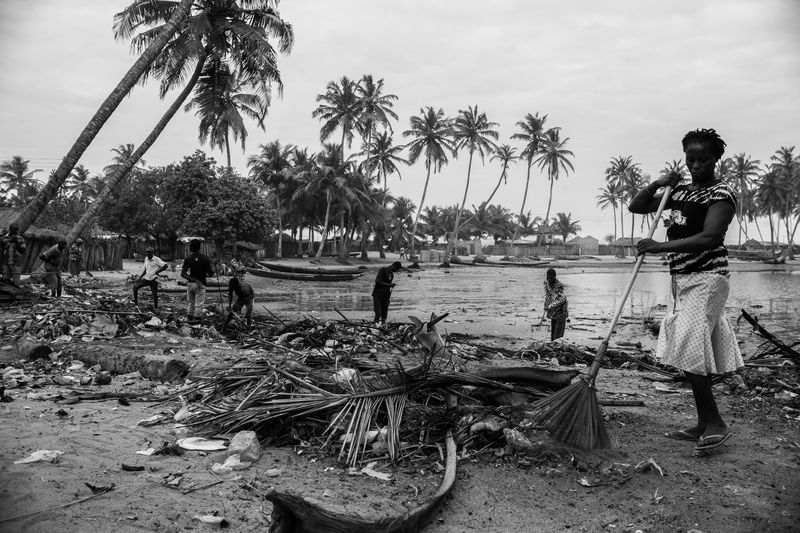
Community members of Kewunor are organising a clean-up exercise to clear rubbish washed into the community after a flooding event in July 2019. During high tide periods the community is faced with sanitary problems. Surrounded by the ocean and the river, the community receives rubbish from other places. Without any proper means of disposing of the rubbish, the community uses it to build walls to d

© Ofoe Amegavie - Image from the Between Sand And Water photography project
i

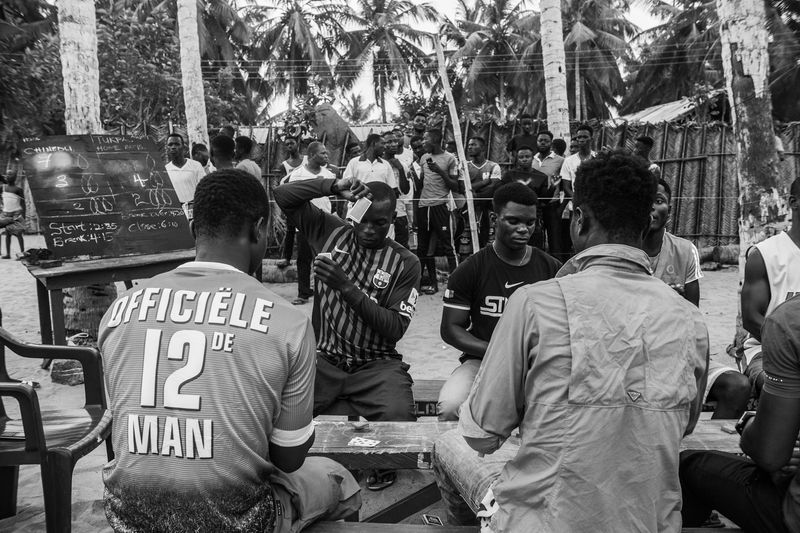
The youth of Kewunor stands in solidarity with each other. Here, they come together to organise a tournament of playing cards after the clean-up exercise. This is evident of their resilience in whatever adversities they face.

© Ofoe Amegavie - Image from the Between Sand And Water photography project
i

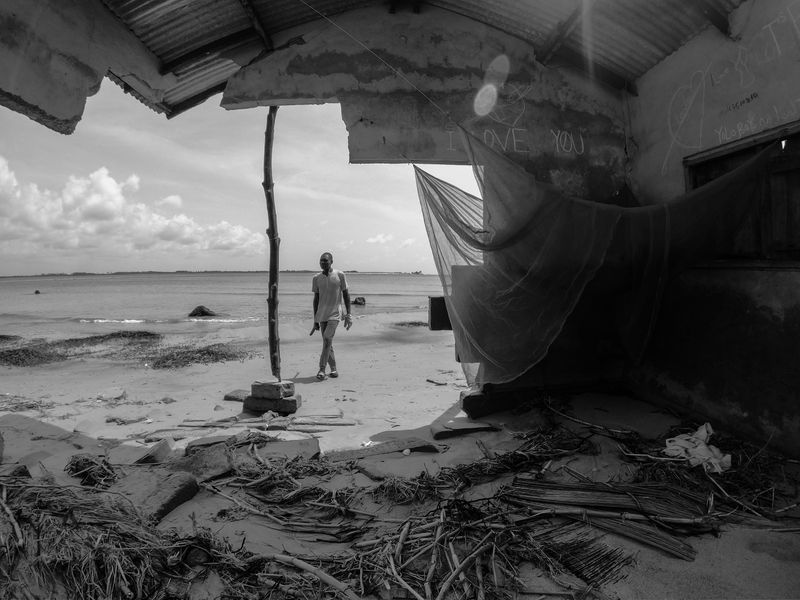
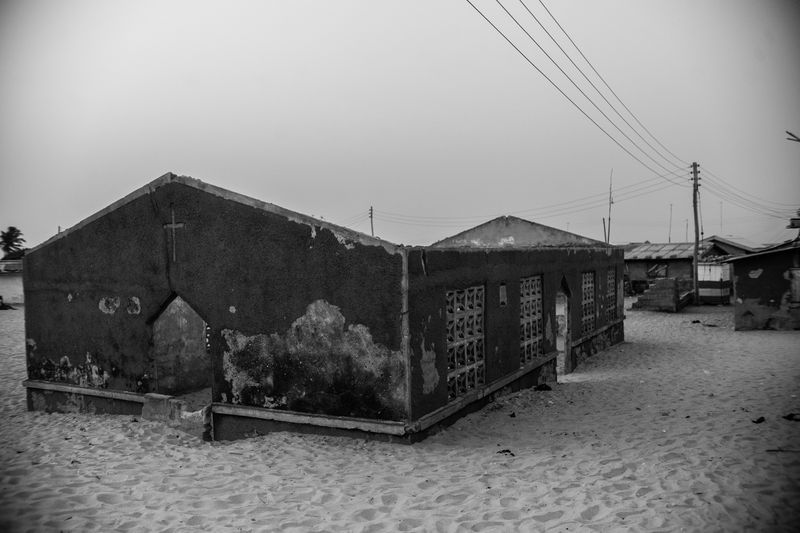
The shores of Totope community, located a few kilometers west of Volta Delta, are littered with abandoned homes due to the effects of coastal erosion. The community is sandwiched between the Ocean and the Songor lagoon. The lagoon was designated as a Ramsar wetland site on June 22, 1988. In 2011. A part of the lagoon is considered a sacred site, adding another reason for protection.

© Ofoe Amegavie - Image from the Between Sand And Water photography project
i

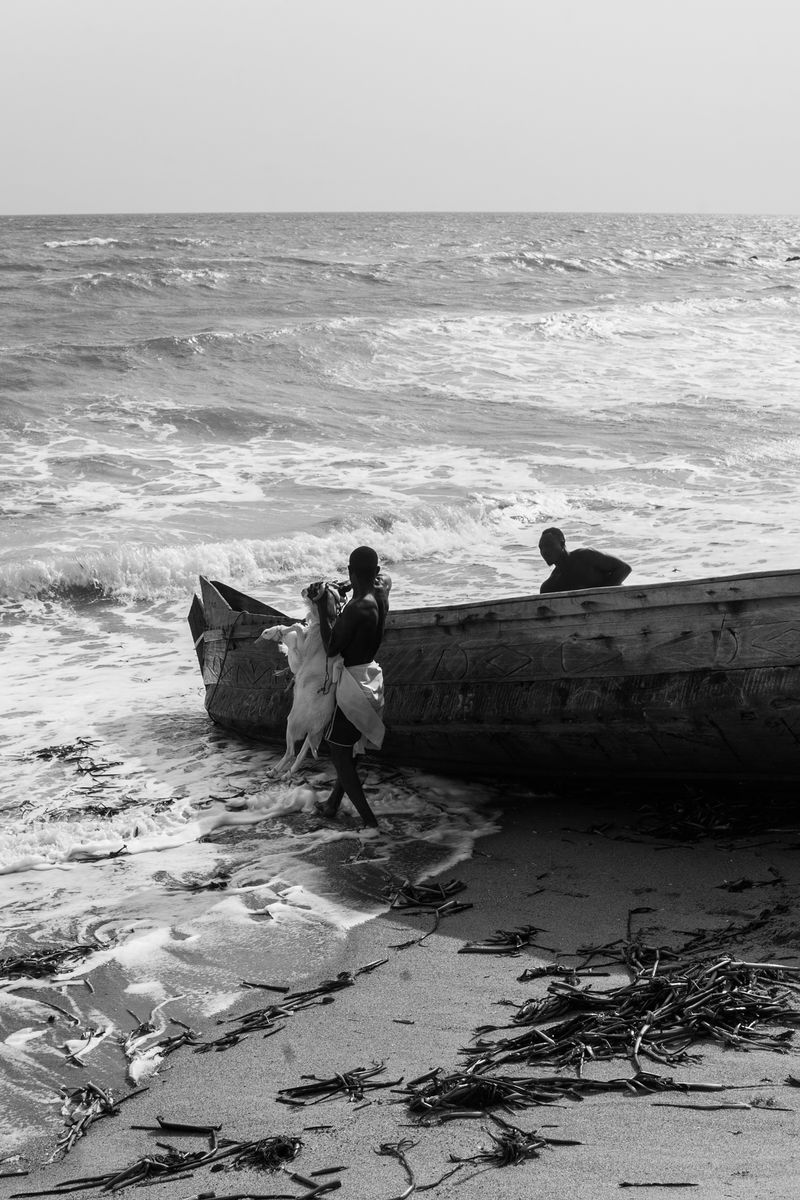
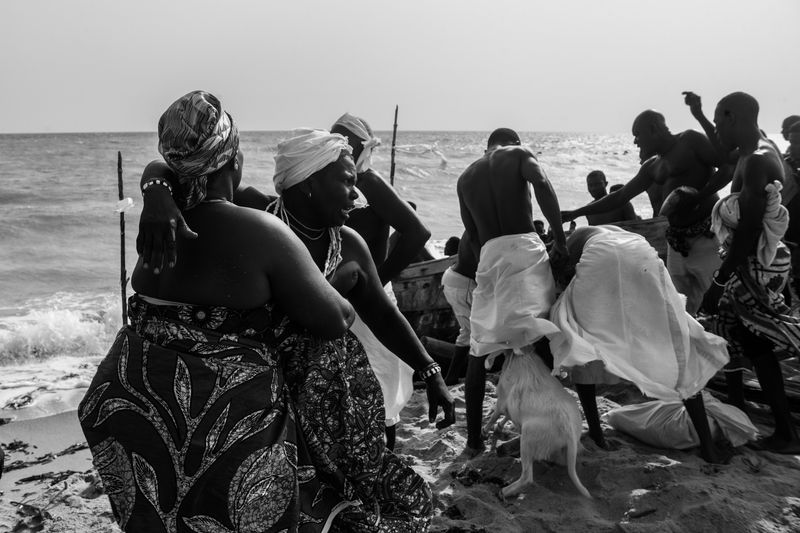
Priests in Ada carry sacrifices consisting of a white ram, ducks and alcoholic schnapps into a canoe to be sent out into the ocean. They do this every six months to appease the marine spirits, mainly Mame Water, in thanks giving for protection and to continue helping and allowing them to catch fish. The whole community gathers to observe the ritual.

© Ofoe Amegavie - Image from the Between Sand And Water photography project
i

“The Ocean is angry at us for the taboos we are committing against her, we keep polluting and overfishing her. We perform our traditional ceremony twice a year to cleanse and pacify the Ocean so she will be favourable to us when we go fishing. If we do not appease the mermaids they will take all the fishes from us and continue to wash our lands from beneath us.” - Chief Priest Nene Setse Otsibu

© Ofoe Amegavie - Image from the Between Sand And Water photography project
i

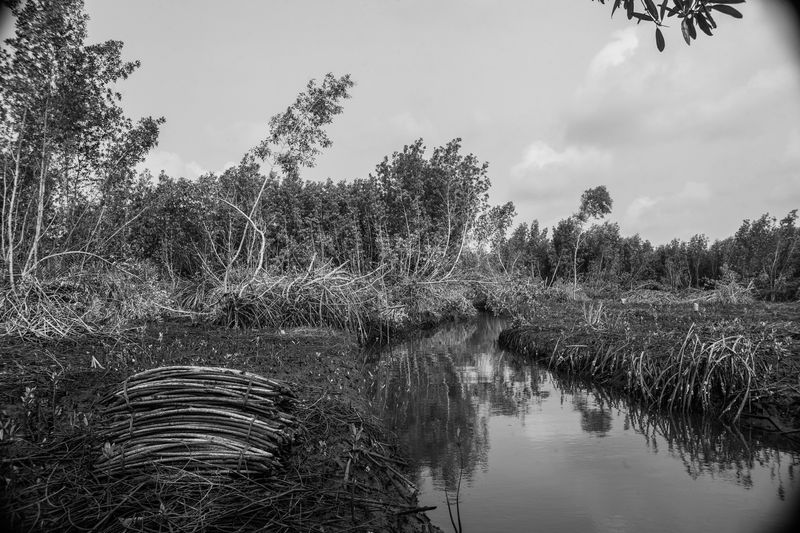
This pile of harvested red mangrove wood represents a huge conflict the community is challenged to navigate. For decades, Island dwellers around the Delta have harvested mangrove trees to sell as firewood mainly for the smoking of fish since it burns slowly, even though mangrove vegetation is known to be one of the effective ways of fighting against the effects of coastal erosion

© Ofoe Amegavie - Image from the Between Sand And Water photography project
i

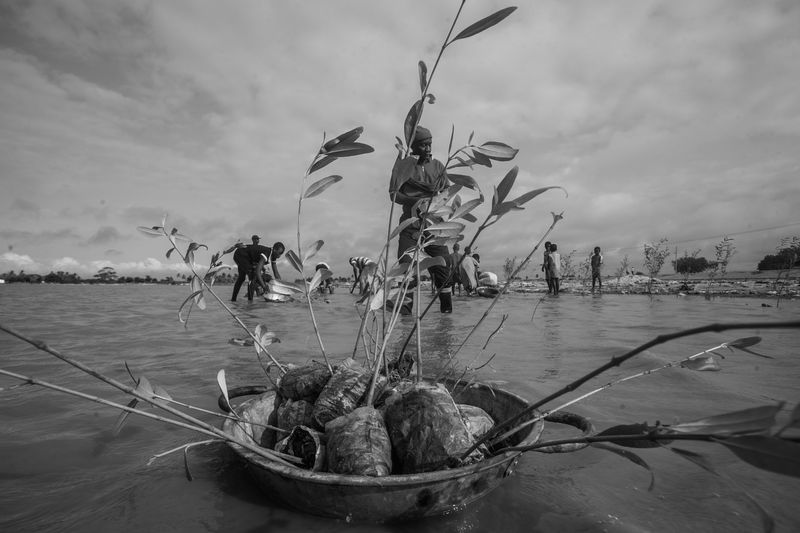
To sustain the mangrove forests, communities have started replanting. These mangrove seedlings are ready for planting. In some parts of Ada the mangroves form sacred sites into which entry is forbidden. They are considered sacred living spaces of deities. In communities such as Wasakuse and Togbloku, mangrove restoration and replanting efforts have been initiated by the Ghana Forestry Commission,

© Ofoe Amegavie - Image from the Between Sand And Water photography project
i

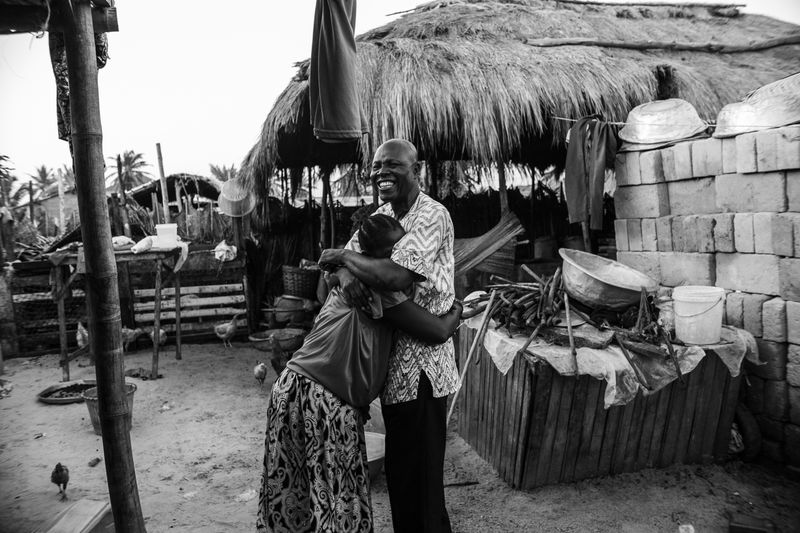
In 2019 my father reconnected with a family member in Ayigbo. Families were displaced and separated when rising sea levels destroyed homes. Some families resettled more inland of Ada while others moved elsewhere completely.

© Ofoe Amegavie - Image from the Between Sand And Water photography project
i

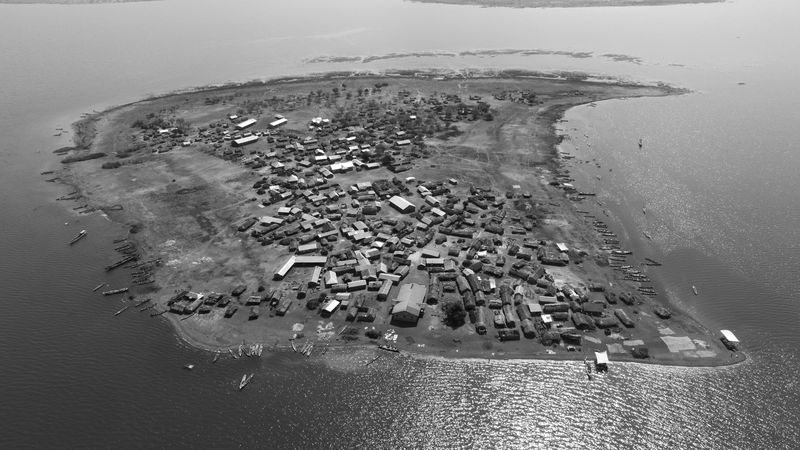
Accra Town Island is located close to Yeji. It consists of migrant fishermen and women from the lower Volta river, mostly from Tongu, Ada and Ningo. The population of about 2,000 people form part of a larger migrant fishing community that settled between the Northern and Southern parts of the waterbody.

© Ofoe Amegavie - Image from the Between Sand And Water photography project
i

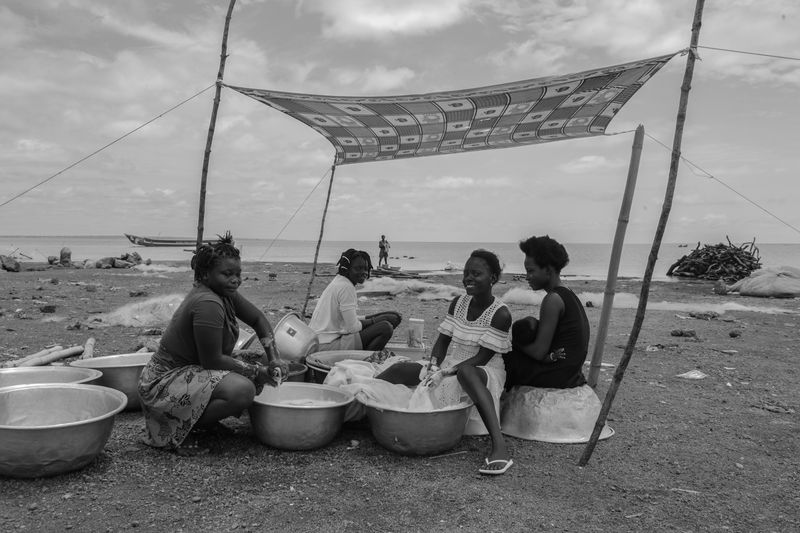
The concept of an ‘abala’ - a shed - it is a communal space where fisherfolks sit to mend their broken nets, repair their canoes and engage in conversations. Fishermen created these spaces by setting up a canopy made out of recycled fabric to protect themselves from the scorching sun. They are the actual archives where more information their environmental changes and challenges, can be discovered.

© Ofoe Amegavie - Image from the Between Sand And Water photography project
i

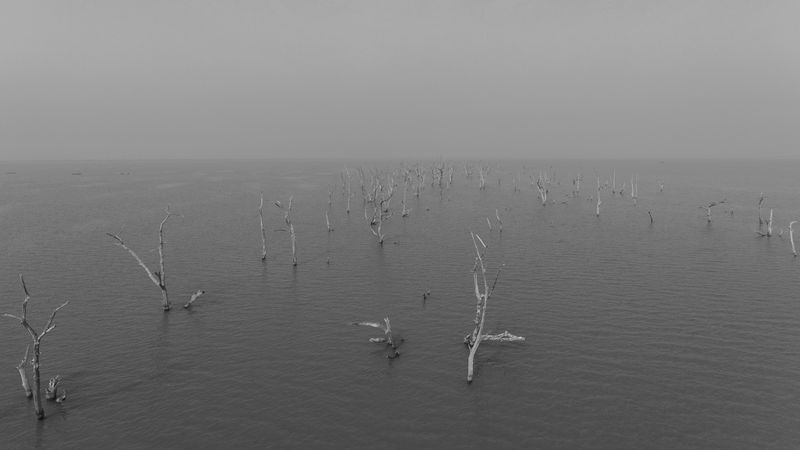
Historically, the Volta River and Lake gained significance with the Akosombo hydroelectric project initiated in 1961 by Ghana’s first President Kwame Nkrumah. The dam was constructed on the Volta river for the generation of hydropower. The result was the formation of the Volta Lake between 1961 and 1966. The creation of the lake meant the flooding of a large area of forests of approximately 850,00

© Ofoe Amegavie - Image from the Between Sand And Water photography project
i

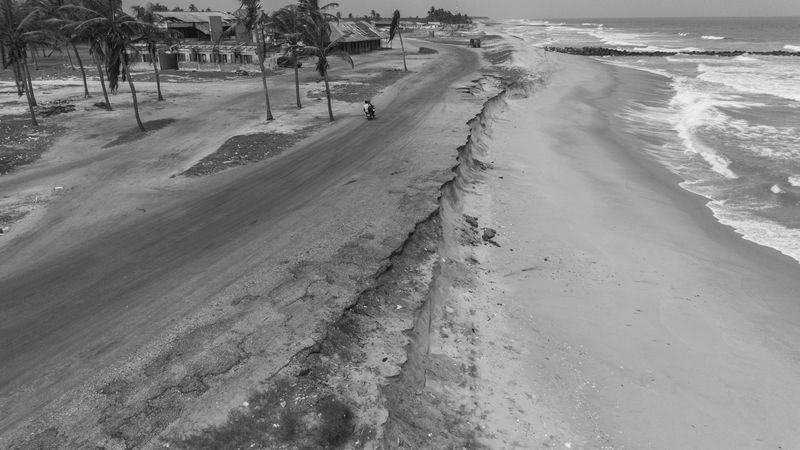
This aerial photograph shows the oceanfront in Ada-Foah - where we see the ocean, some 50 years ago, my grandfather´s house was part of the community washed away by rising sea levels. Today, the sea level rises at a rate of 2.3 to 3mm globally, in Ada and the Volta Delta region of Ghana it is pegged at 3-5mm yearly. Ada-Foah is located on Ghana’s coast about 100km East of Accra.

Between Sand And Water by Ofoe Amegavie

Prev Next Close