A' Muntagna

Mount Etna and the surrounding area is an island within an island. It’s the highest active volcano in Europe, a majestic presence that touches all of Sicily and all Sicilians but, for those who live on its slopes, it’s a real and significant presence to live with day after day. They simply call it ’a Muntagna – dialect for “the Mountain” – and they do not let its shadow dim their lives; in fact eruptions are considered an unmissable sight, so much so that at the first rumblings you can hear people call out: “The Mountain has burst, let’s head for the summit!”

Recently, the volcano has once again made its voice heard strongly and in the first six months of 2021 more then 50 eruptions have been recorded, eruptive columns have risen up to nine kilo-meters above the sea level, lapilli and ashes have covered entire villages around the volcano itself. In this cycle of activity Mount Etna erupted about 60 million cubic meters of magma, especially through particularly energetic lava fountains, as reported by the INGV researchers who constantly monitors volcanic activity.

"'A Muntagna" is a long journey around Mount Etna and the surrounding area, telling the deep bond that unites the volcano to the women and men who live there, and the extraordinary normality of lives lived in the presence of such a giant, which at any time can generate seismic events. An ambiguous relationship, halfway between the most total devotion and the constant fear for it. They say that when an eruption ends, Etna is already preparing the next one: it’s the eternal confrontation between the volcano and the human beings who have decided to rely on his benevolence.
© emanuele occhipinti - Image from the A' Muntagna photography project
i

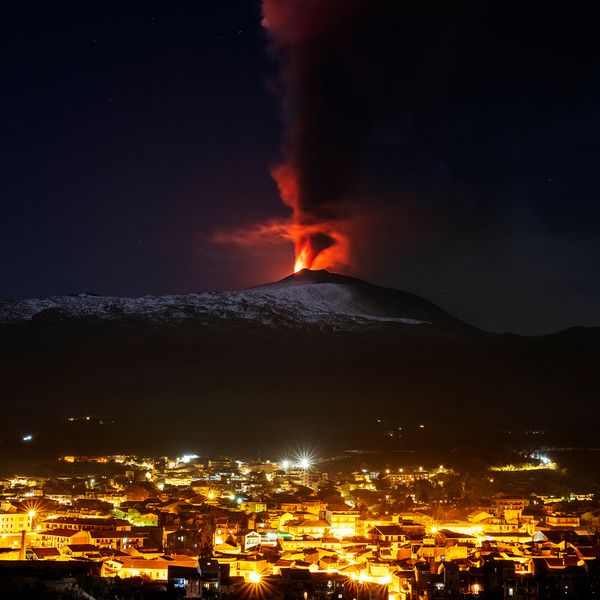
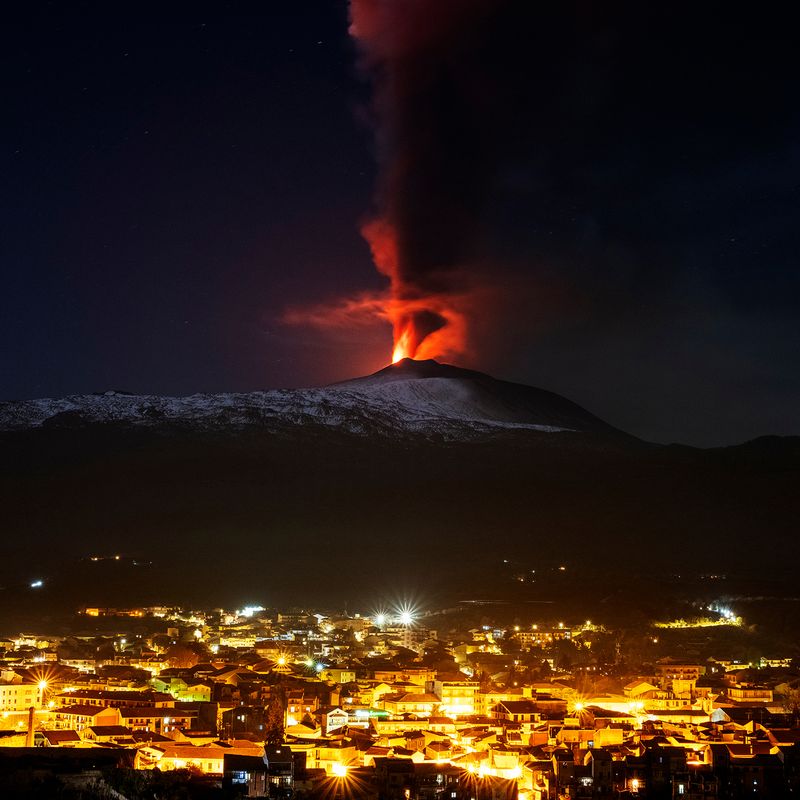
Randazzo, Sicily 2021. A view from the town of Randazzo during the paroxysm on February 26th, the sixth in eight days, a record for the southwest crater. From January to the end of March, the volcanic paroxysms have occurred with a fairly constant frequency and marked the entry into activity of the volcano accompanied by eruptions, small earthquakes, and the release of materials of various sizes. At the begin, it was a paroxysm every 24 hours, then the interval became larger. Sometimes it erupts every two or three days, but increases the power of the episodes. People begin to look at the volcano with a new fear. What happens on Mount Etna?

© emanuele occhipinti - Image from the A' Muntagna photography project
i

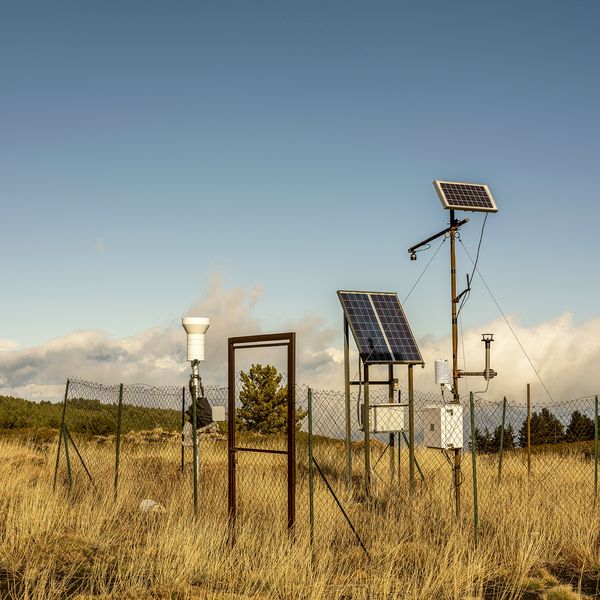
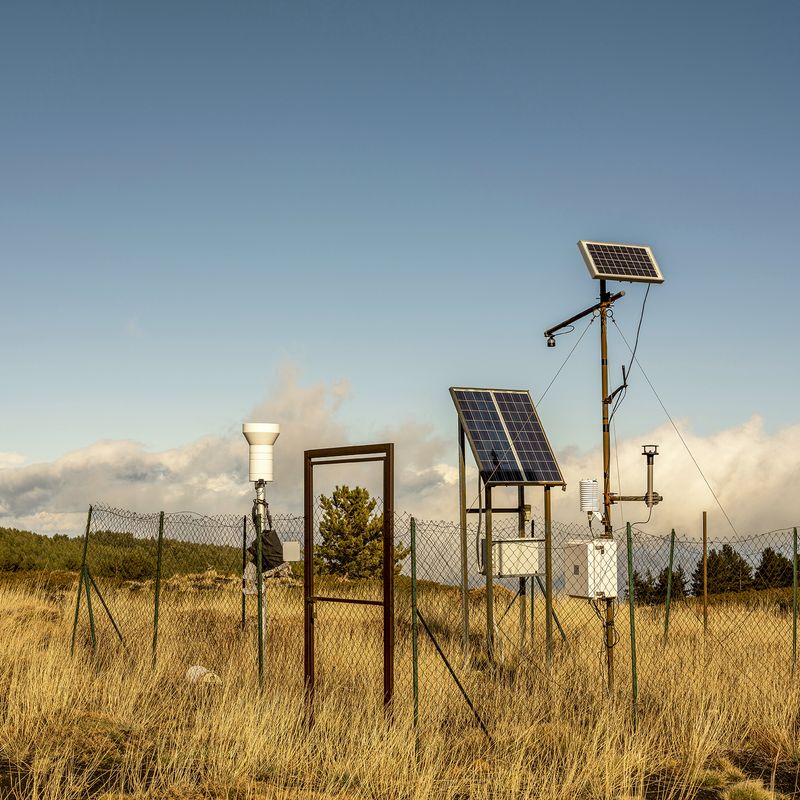
Monitoring tools near Piano Provenzano on the North side of the volcano. Mount Etna is among the most monitored volcanoes in the world, with about two hundred instruments that give information on many parameters to the Operation room at INGV.

© emanuele occhipinti - Image from the A' Muntagna photography project
i

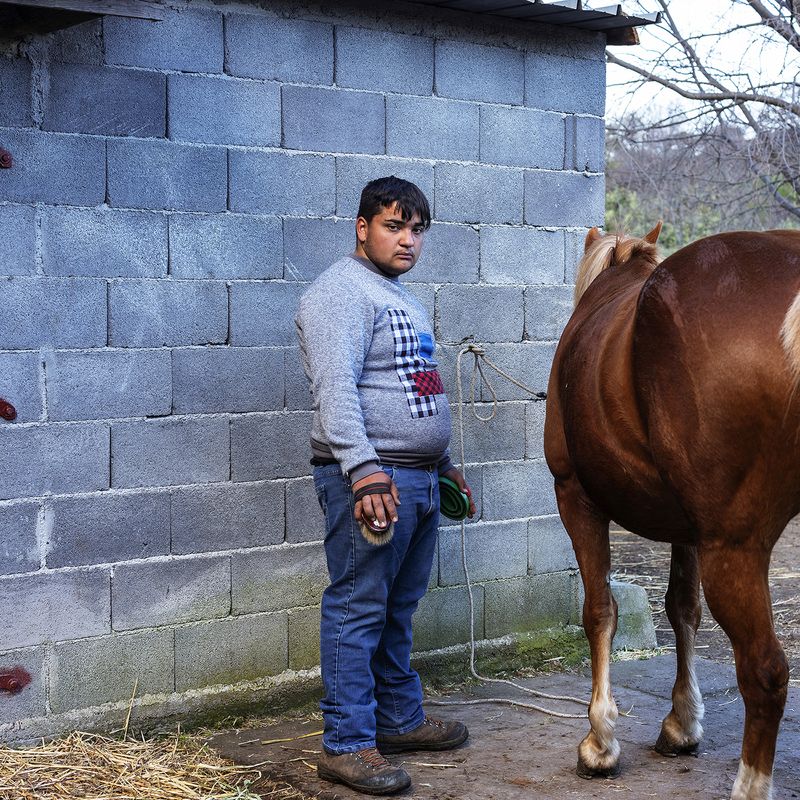
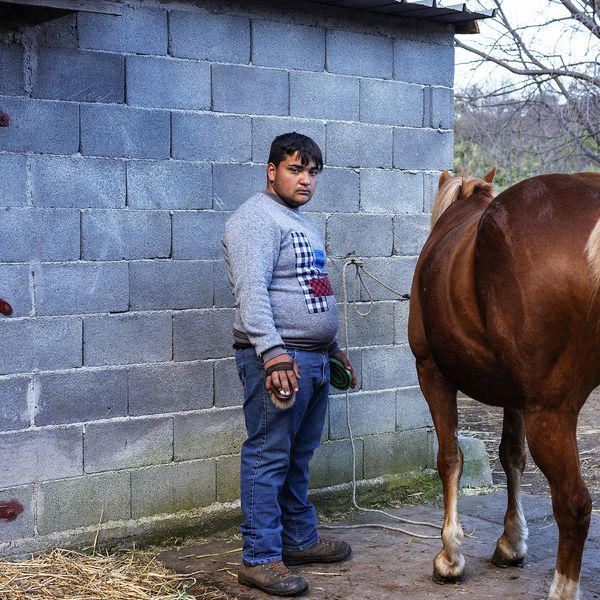
Verzella, Sicily 2021. Giacobbe, 18 years old, and his horse Stella. "It’s not just living next to a volcano, the most correct definition is that we are children of this land, “Figghi ra’ Muntagna", perennially alerted, fascinated by this "giant" who wakes us up in the middle of the night to remind us that we are her children but also her guests" he says.

© emanuele occhipinti - Image from the A' Muntagna photography project
i

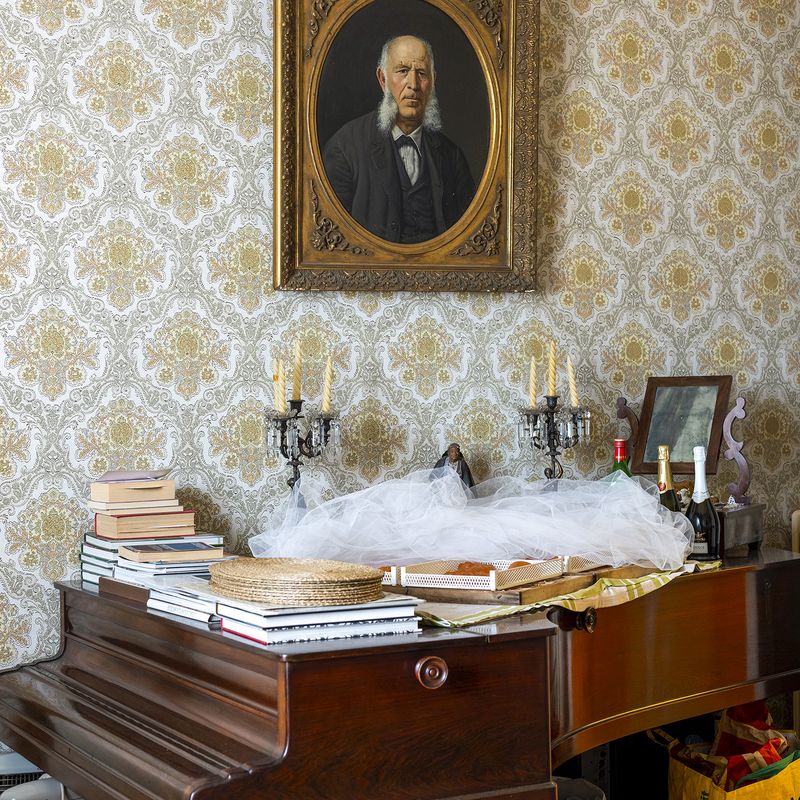
The interior of a wealthy middle-class family in Trecastagni, a small village sitting in the hills on the lower slope of Mt. Etna. The painting is a portrait of Antonino Torrisi Lanzafame, who built the house between 1883 and 1889.

© emanuele occhipinti - Image from the A' Muntagna photography project
i

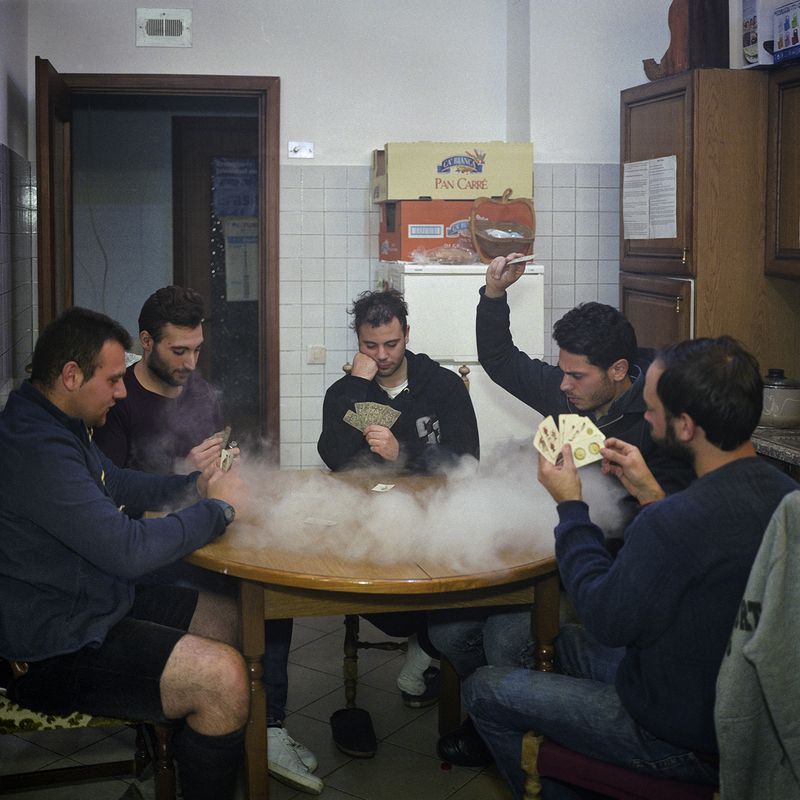
Zafferana Etnea, Sicily 2019. A group of friends playing cards’s game. The nightlife in the Etna villages is usually very quiet and encourages youth to live a more calm and homely life.

© emanuele occhipinti - Image from the A' Muntagna photography project
i

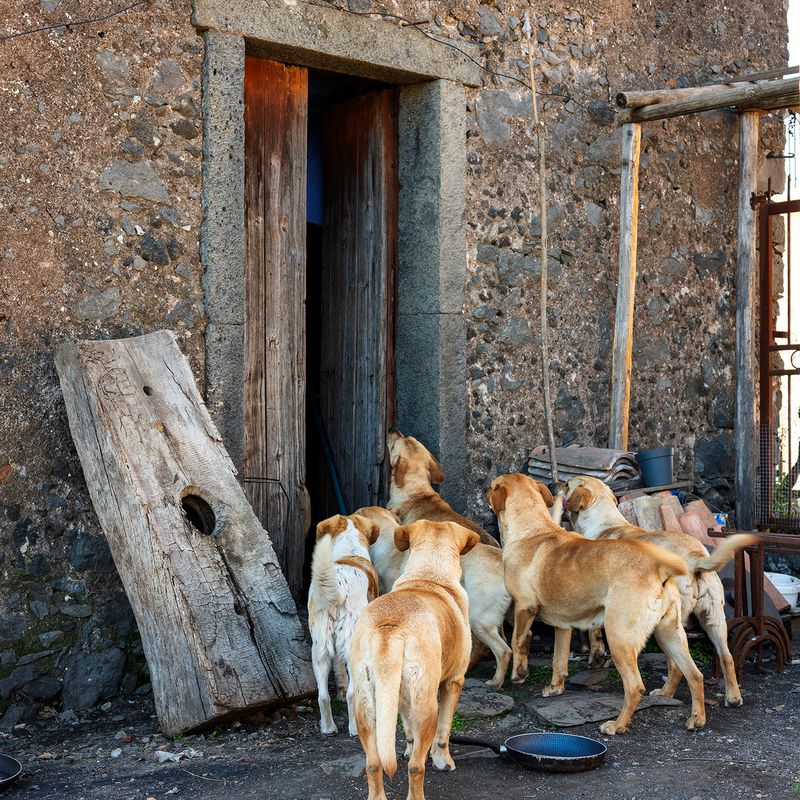
Linguaglossa, Sicily 2021. Dogs are eagerly awaiting the food that Bruno is preparing to give them. Bruno has decided to emancipate himself from civil life and devote, body and soul, to agriculture and to the work that his grandfather bequeathed him.

© emanuele occhipinti - Image from the A' Muntagna photography project
i

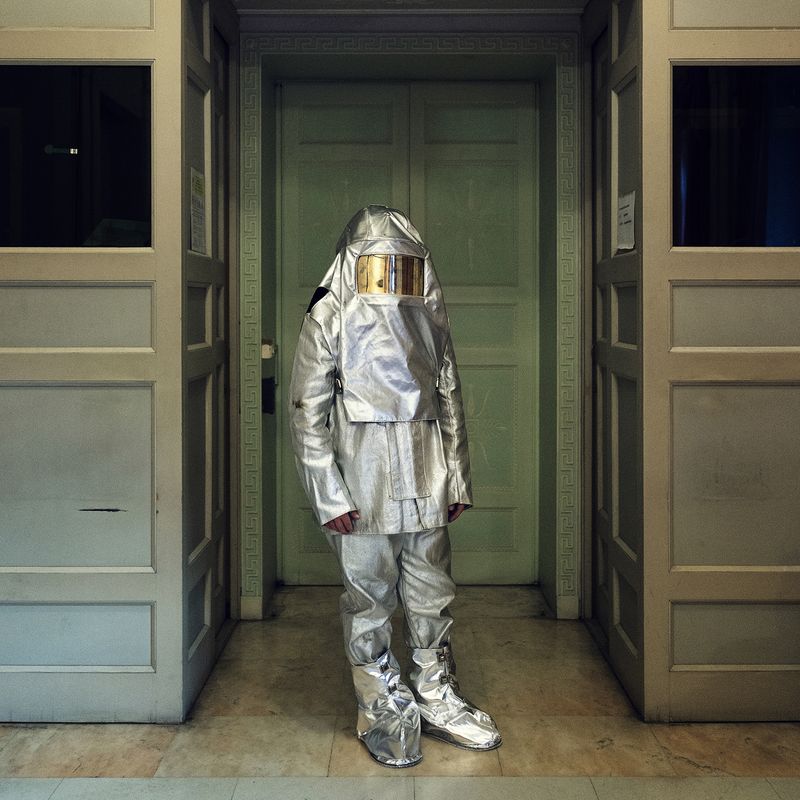
Catania, Sicily 2019. A volcanologist tries on a thermal and fireproof suit in aramid fiber, aluminum and carbon. This type of suit is designed to deal with operations that foresee the stationing at a short distance from the lava in order to carry out the sampling.

© emanuele occhipinti - Image from the A' Muntagna photography project
i

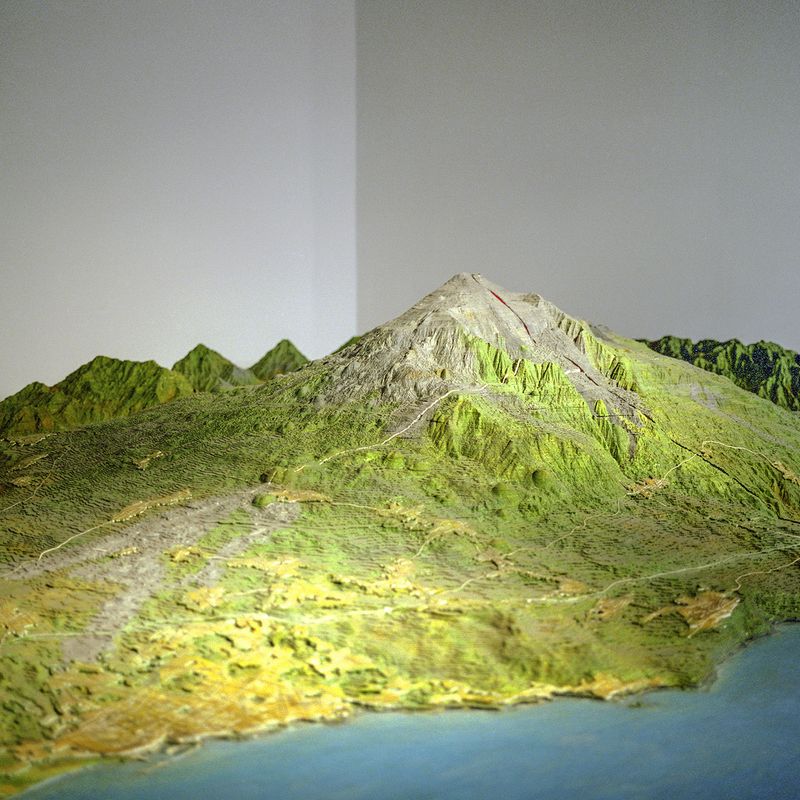
Nicolosi, Sicily 2019. A scale representation of the Mount Etna and the entire Etna-area. The volcano occupies a total area of around 1,600 km2, with a base perimeter of around 130 km. High 3326 (variable), Mount Etna it is the highest active volcano in Europe. In 2013 UNESCO included Mount Etna in the World Heritage Site.

© emanuele occhipinti - Image from the A' Muntagna photography project
i

Pennisi, Sicily 2018. Nicola D’Alescio. Sometimes the fracture that generates the earthquake, called the fault, is visible on the surface and forms the fault escarpment, a permanent deformation which is the effect of the process that took place in depth. After the earthquake of December 26, a huge fault opened, more than a meter wide and more than three deep, in the ground of Nicola D’Alescio, in Pinnisi.

© emanuele occhipinti - Image from the A' Muntagna photography project
i

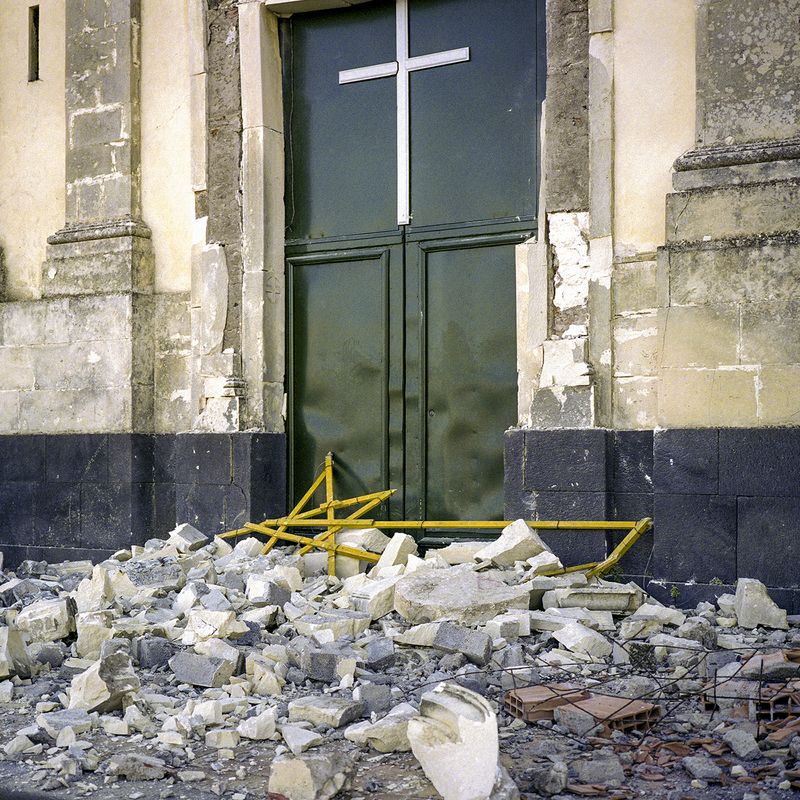
Fleri, Sicily 2018. Church of Saint Mary of the Rosary. On December 26th 2018 an earthquake of magnitude 4.8 at a depth of only 1.2 km hits the south-eastern slopes of Mount Etna causing the collapse of houses and churches in 6 villages, in addition to the displacement of more than 600 people. This seismic event, the strongest recorded in the past 70 years, took place 3 days after the eruption on Etna began. From the beginning of the eruption to the night of the earthquake (24th to 26th) 73 minor shake were registered by the National Earthquake Institute.

© emanuele occhipinti - Image from the A' Muntagna photography project
i

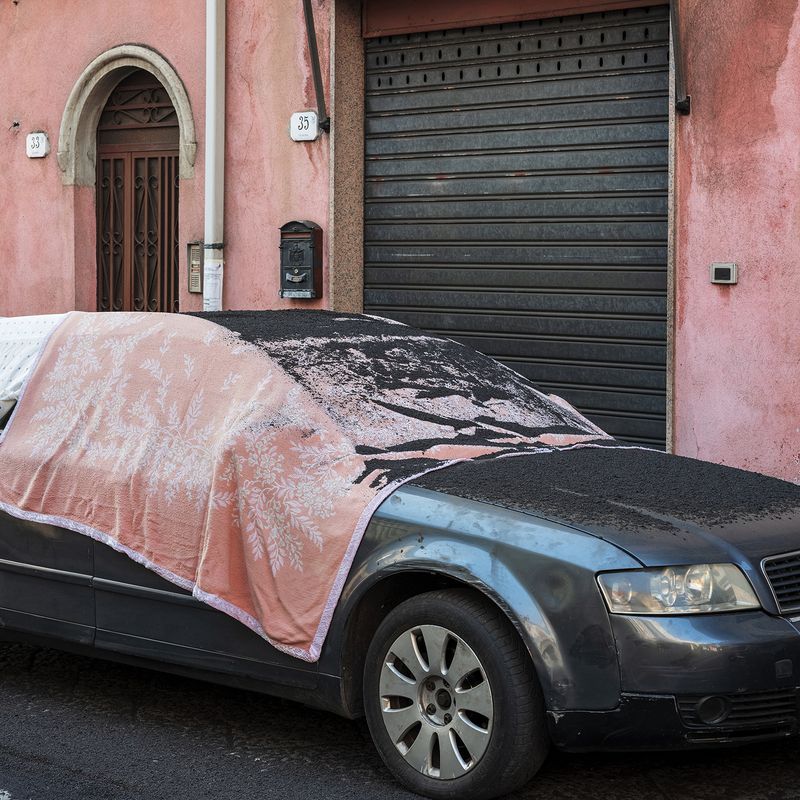
 Zafferana Etnea, Sicily 2021. One of the areas most frequently affected by the fallout of pyroclastic material is certainly the eastern side because the wind direction in the Etna-area normally blows from the western quadrants towards the eastern ones. Zafferana Etnea is one of the villages most affected by this type of phenomena with a quantity of ash that can reaches 1 kg per square meter.

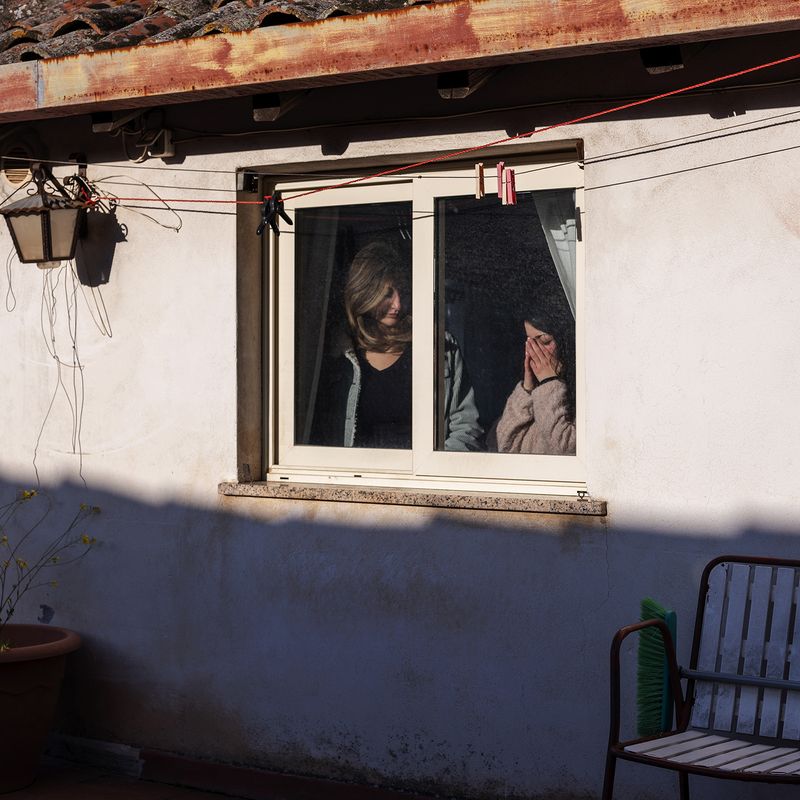
© emanuele occhipinti - Linguaglossa, Sicily 2021. Liliana (left) and Giuliana.
i

Linguaglossa, Sicily 2021. Liliana (left) and Giuliana.

© emanuele occhipinti - Image from the A' Muntagna photography project
i

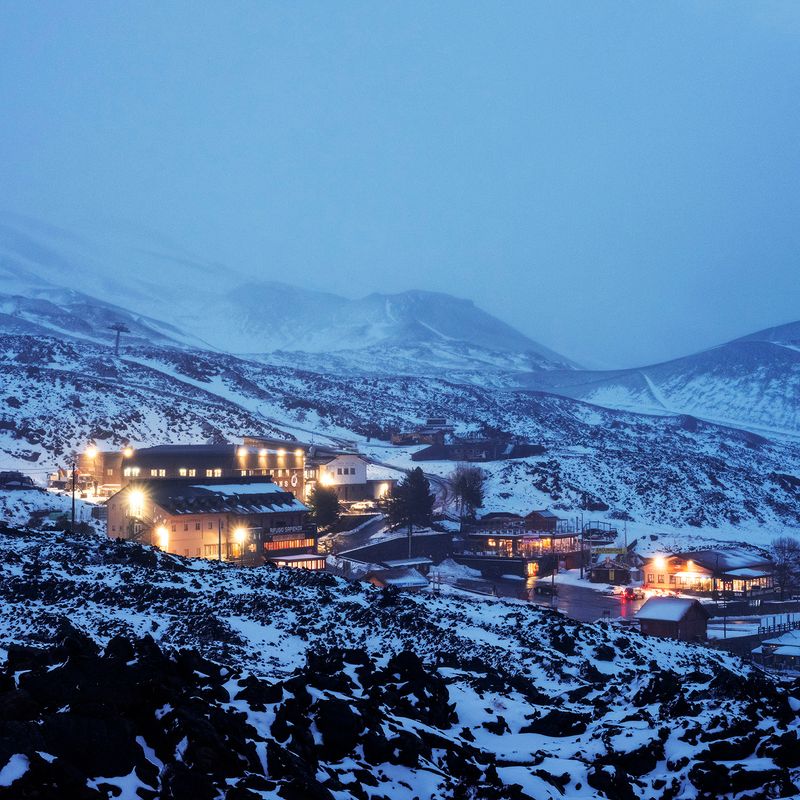
Rifugio Sapienza, Sicily 2020. Mount Etna is one of Sicily’s main tourist attractions, with thousands of visitors every year. The Sapienza refuge is an historic reference point for visitors and it’s located on the southern side of the Vulcano. It is the highest point of arrival for cars (1910 mt) and from there, through the ski lifts, its possible to reach some of the most significant places on Etna as well as the summit craters.

© emanuele occhipinti - Image from the A' Muntagna photography project
i

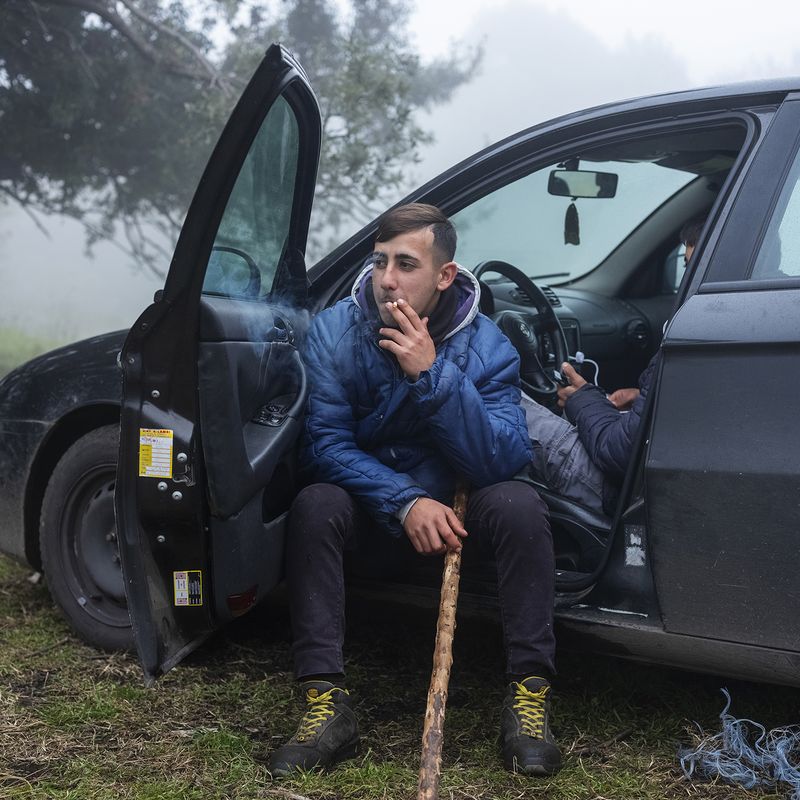
Monte Ilice, Sicily 2020. Sebastiano,17 years old, is one of the young shepherds from the villages on the slopes of the volcano. For him, the relationship with the mountain is sacred. “I feel grounded like a tree that has its roots here and I couldn't live anywhere else” he says.

© emanuele occhipinti - Image from the A' Muntagna photography project
i

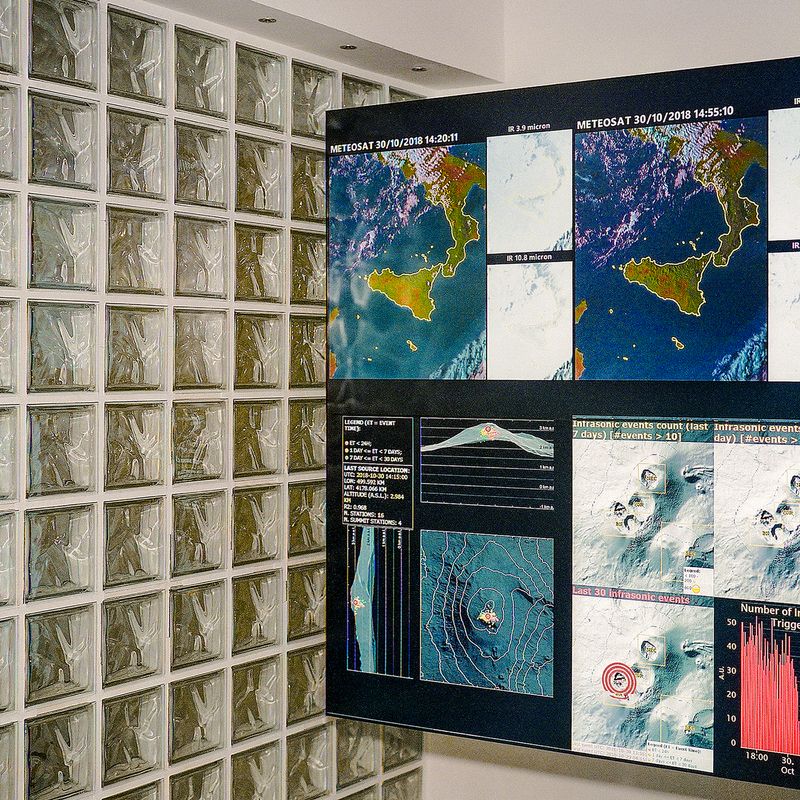
Catania, Sicily 2019. A corner of the Operations Room of the National Institute of Geophysics and Volcanology of Catania-Etneo Observatory (INGV-OE). Born in 2000 from the merger of several research institutes, INGV guarantees a service of seismic and volcanic monitoring and surveillance of the Italian territory 24 hours a day.

© emanuele occhipinti - Image from the A' Muntagna photography project
i

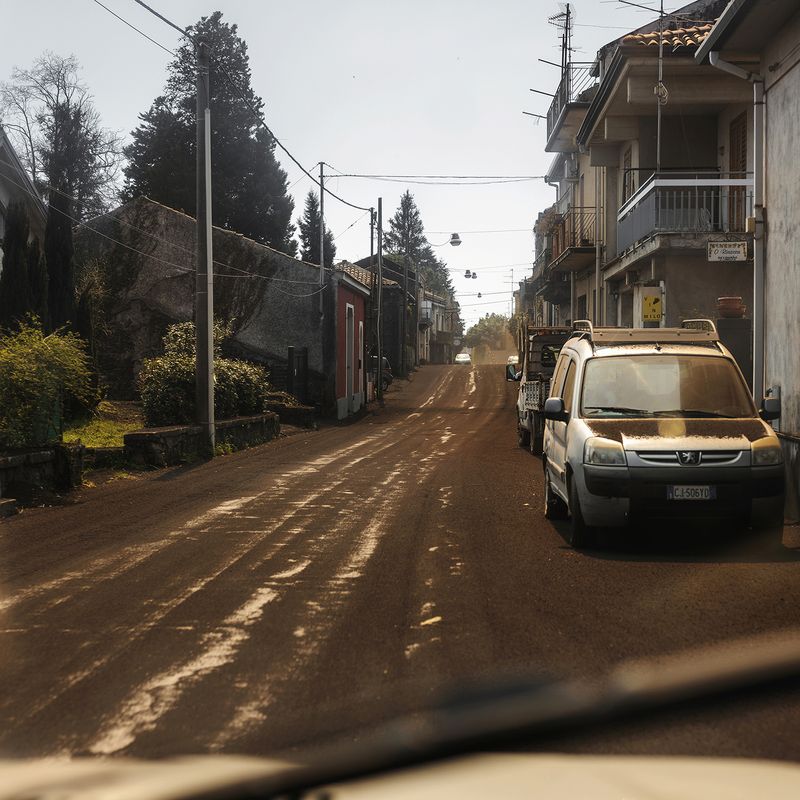
Milo, Sicily 2021. The road that connects Fornazzo to Milo on the eastern side of Mount Etna which was the area most affected by the fall of ash and lapilli. Apart from the discomfort caused by the fallout of pyroclastic material, roads that become slippery and dangerous or gutters and drains that become clogged not allowing the correct flow of rainwater, there are no real dangers for the population.

© emanuele occhipinti - Image from the A' Muntagna photography project
i

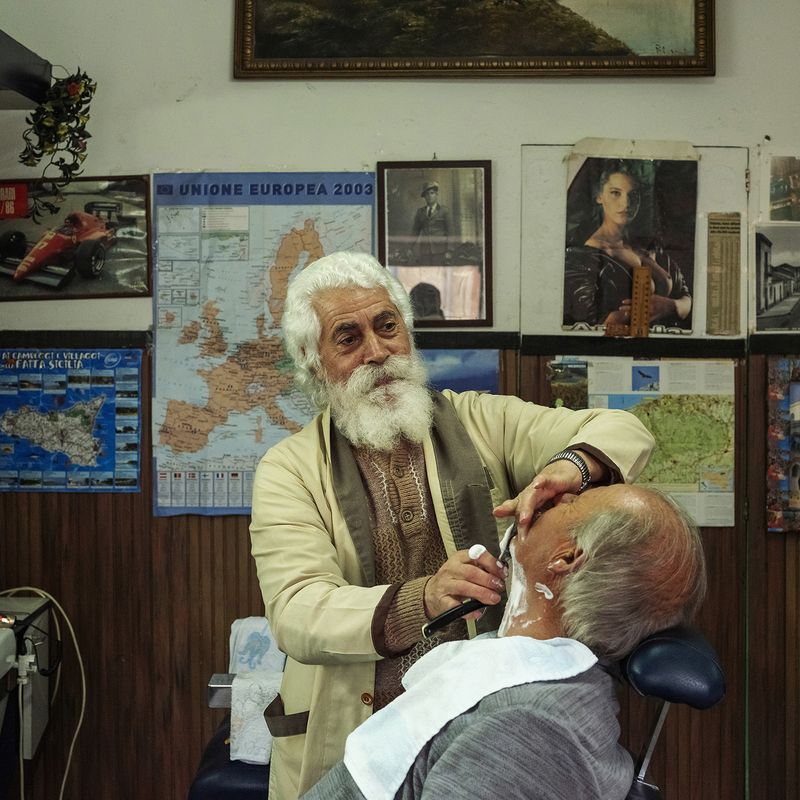
Passopisciaro, Sicily 2021. Salvatore Mobilia, 68 years old, in his barbershop, one of the oldest in the Etna’s area, where he has been working for more than 50 years.

© emanuele occhipinti - Image from the A' Muntagna photography project
i

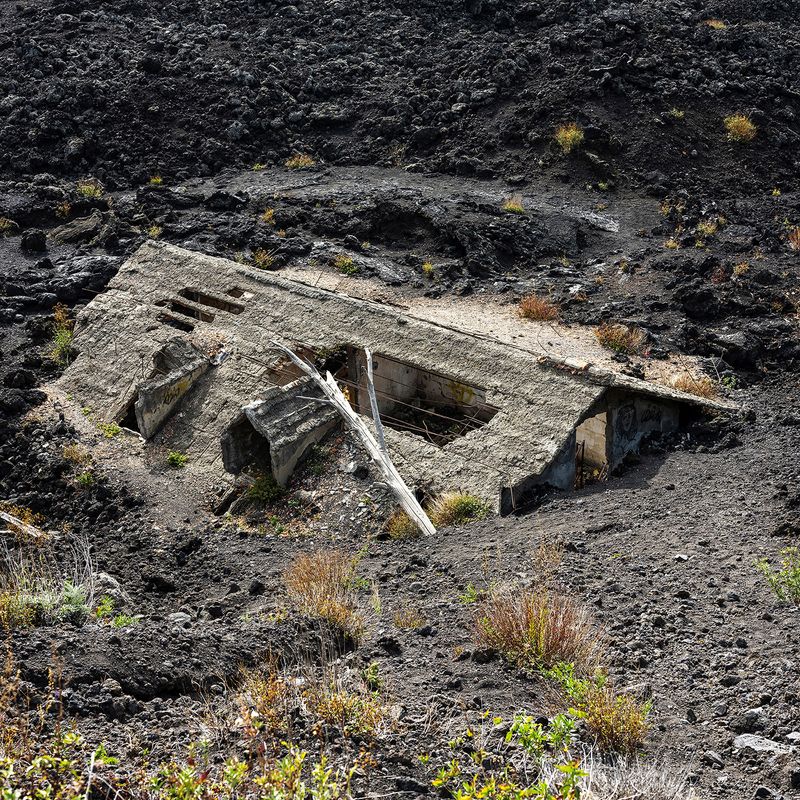
Nicolosi North, Sicily 2020. A house almost completely submerged by lava along the S.P. 92 in the section between Nicolosi and the Sapienza Refuge. The 1983 eruption lasted 131 days and destroyed the Etna’S cableway, sports facilities, various restaurants and businesses as well as long stretches of the S.P. 92.

© emanuele occhipinti - Image from the A' Muntagna photography project
i

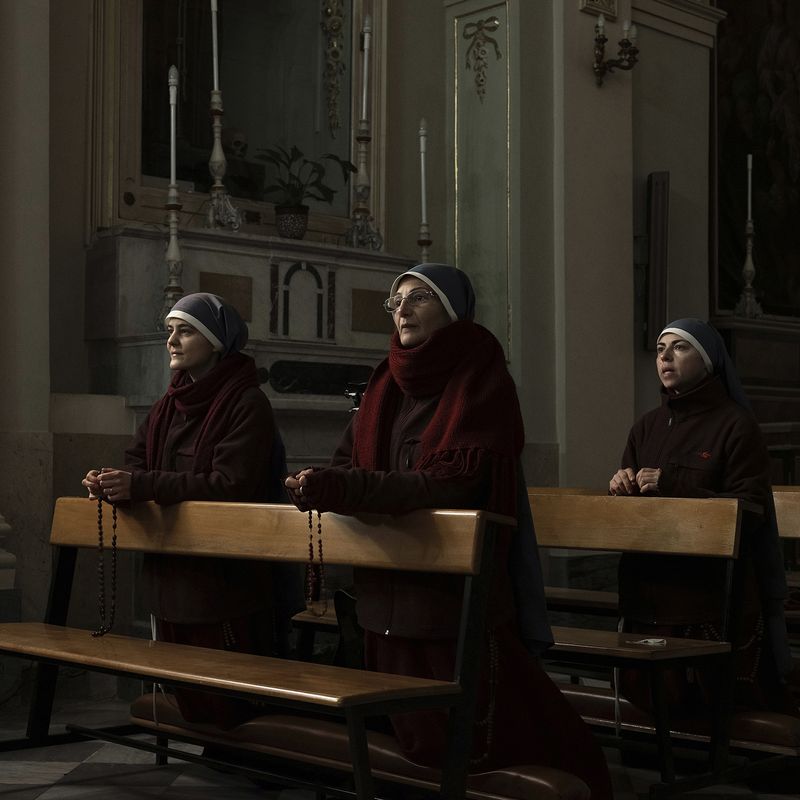
Linguaglossa, Sicily 2021. The Mother Superior, Sister Maria Benedetta (in the center), recites the Rosary together with two other sisters in the Church of the Immaculate Conception. They are part of FIAT TOTUS TUUS, a contemplative Marian community inspired by the spirituality and life of the Servant of God Luisa Piccarreta.

© emanuele occhipinti - Image from the A' Muntagna photography project
i

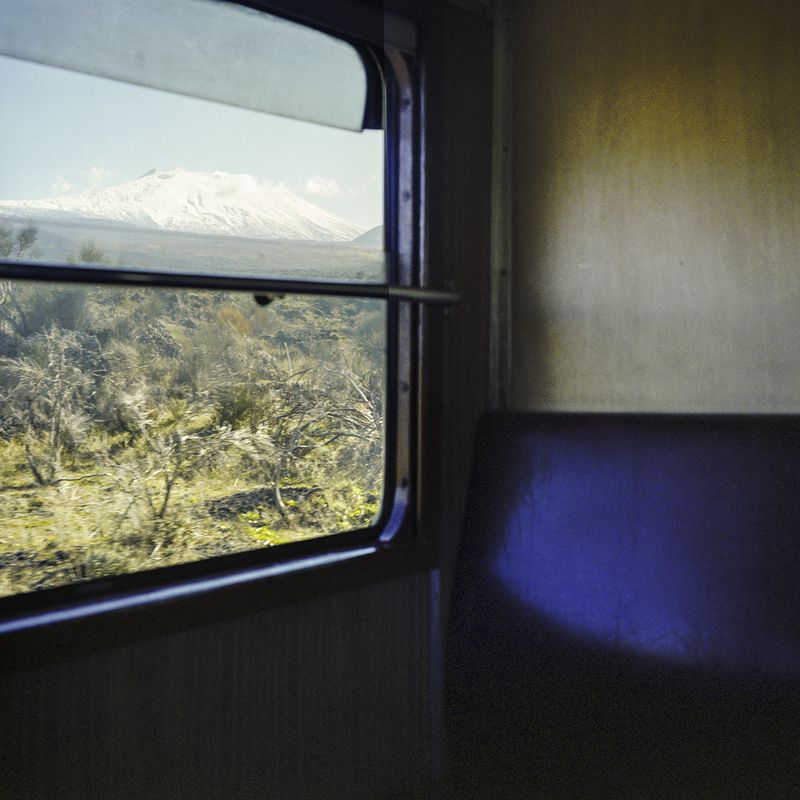
Bronte, Sicily 2018. Inside the "Circumetnea" , the historic 110 km long railway line, which almost completely surrounds the volcano and crosses the various Etna villages. Over time, the railway has undergone minor changes to the route, some of which following interruptions due to Etna's lava flows. Today it is also used for tourism, an original and alternative way to visit the landscape around the volcano.

A' Muntagna by emanuele occhipinti

Prev Next Close