Sander Coers On His Exhibition Eulogy At PhMuseum Lab
-
Published24 Feb 2026
-
Author
Showcased in Bologna thanks to the PhMuseum 2025 Photography Grant, Eulogy is a material elaboration of the constructions of memory under the shadows of colonial history.
In 2020, Sander Coers came across a newspaper photograph published by the Bali Post showing the recovery of his grandfather’s body. He was the son of an Indonesian woman and a Dutch soldier, a man whose life was marked by silence and the consequences of colonialism. Perceived as an intrusion into the private sphere, the image triggered an inquiry into personal legacy and collective remembrance. Eulogy started there.
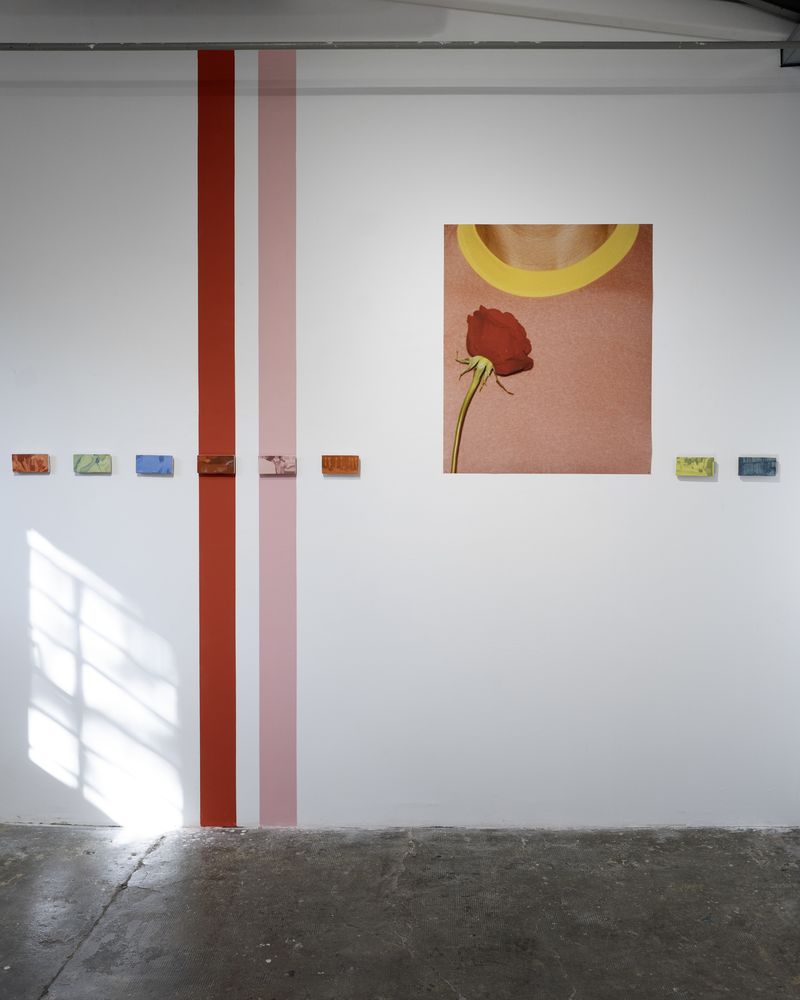
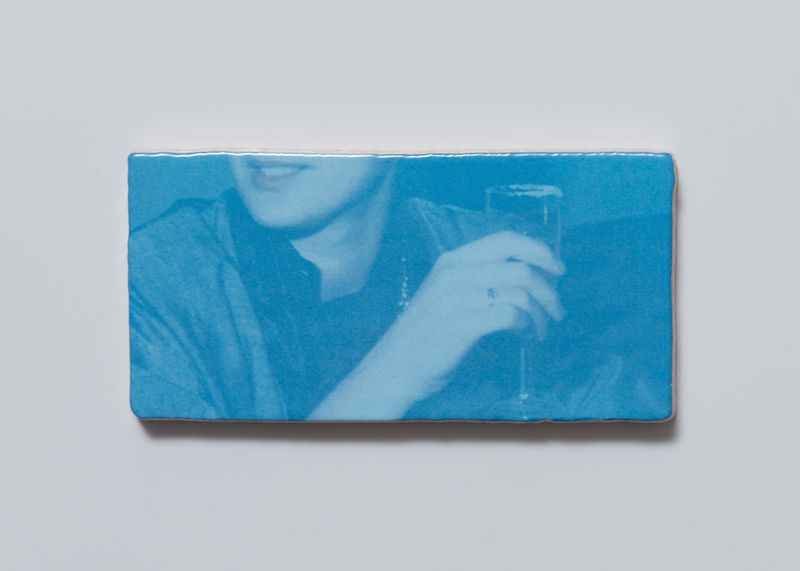
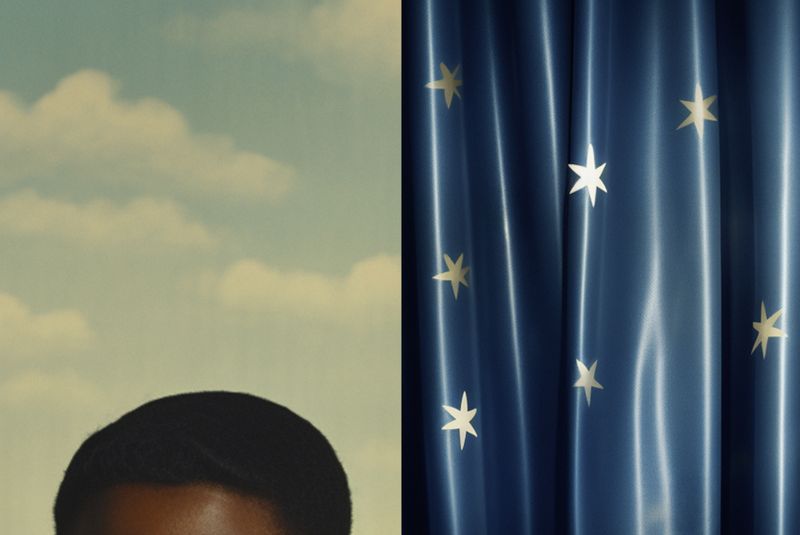
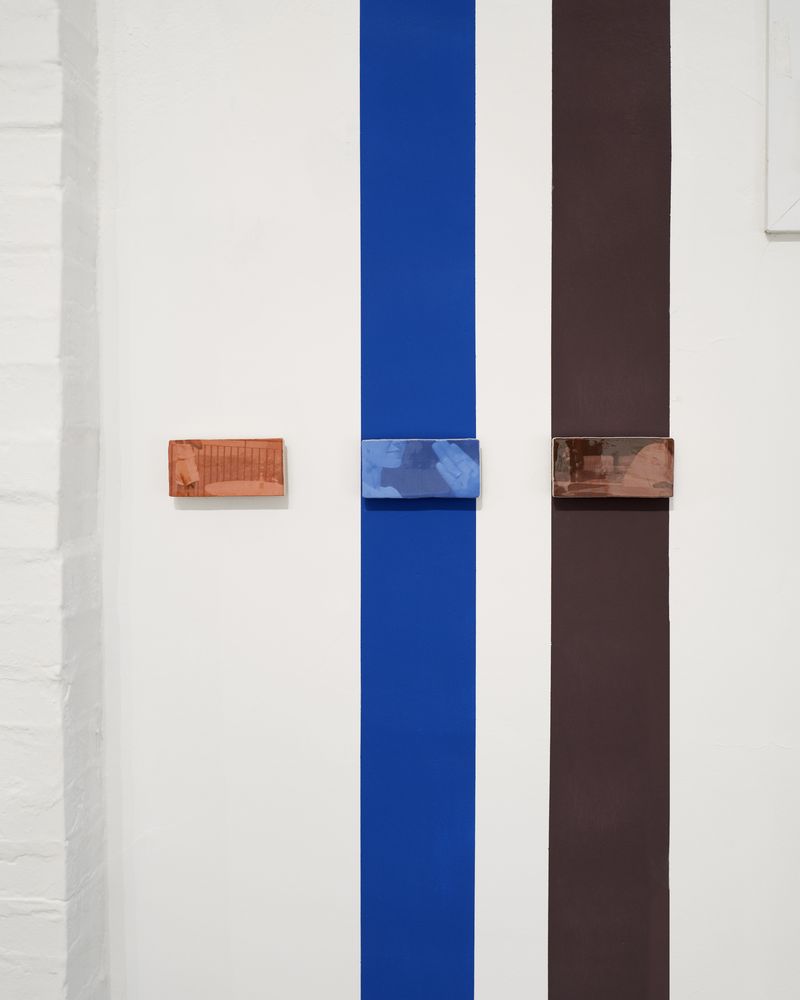
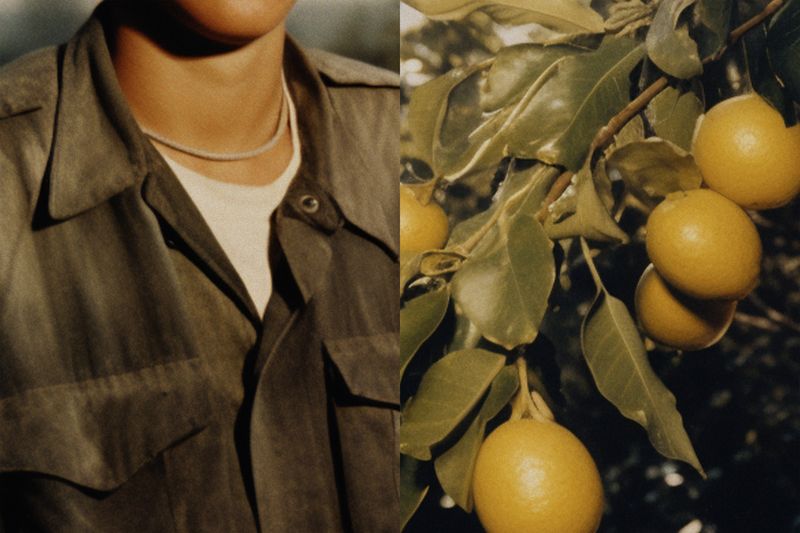
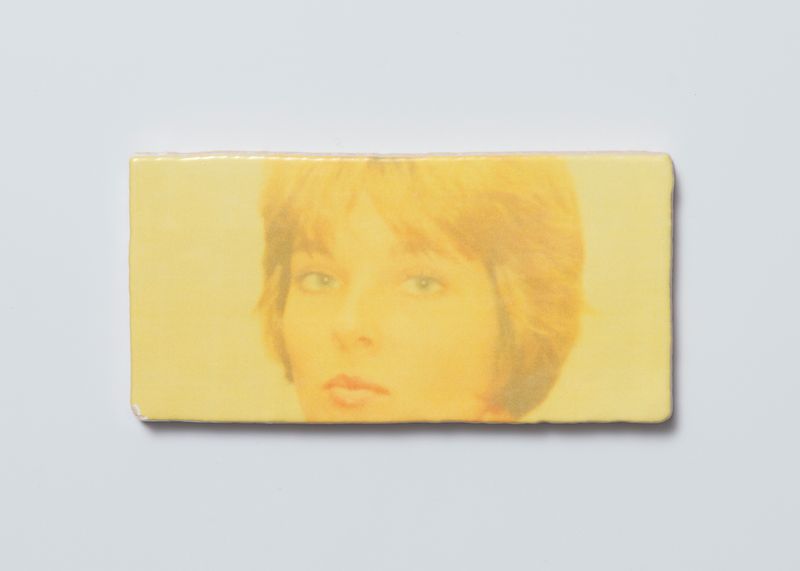
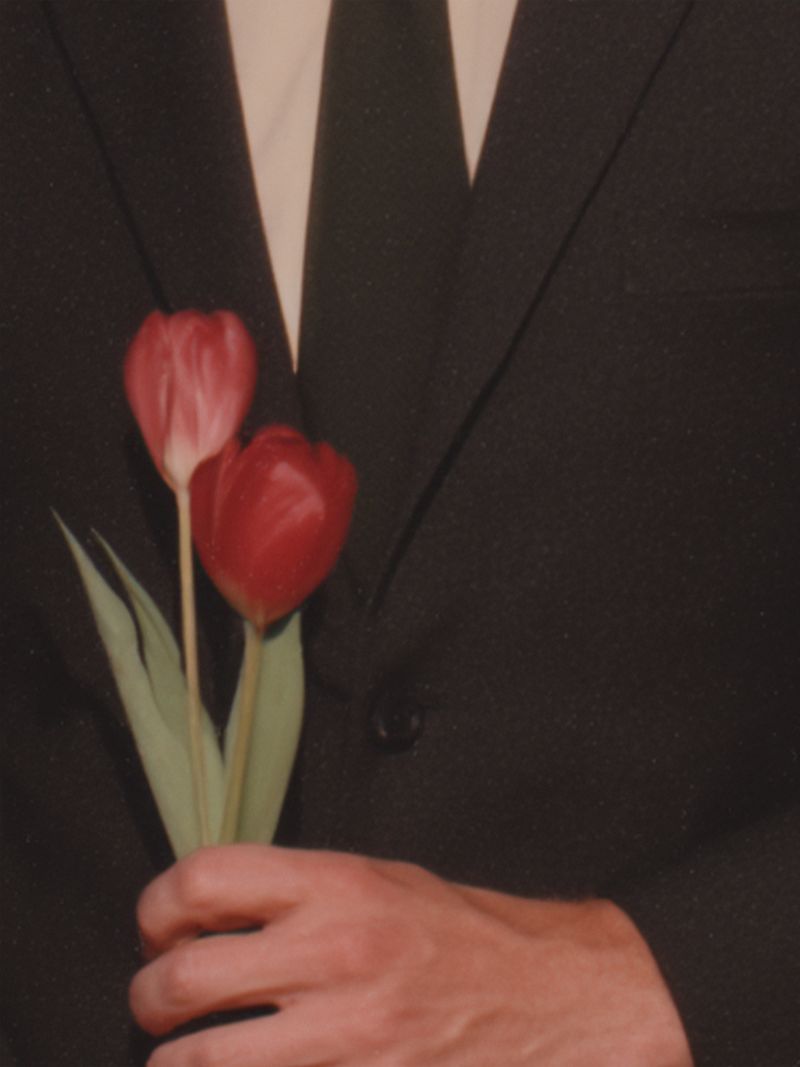
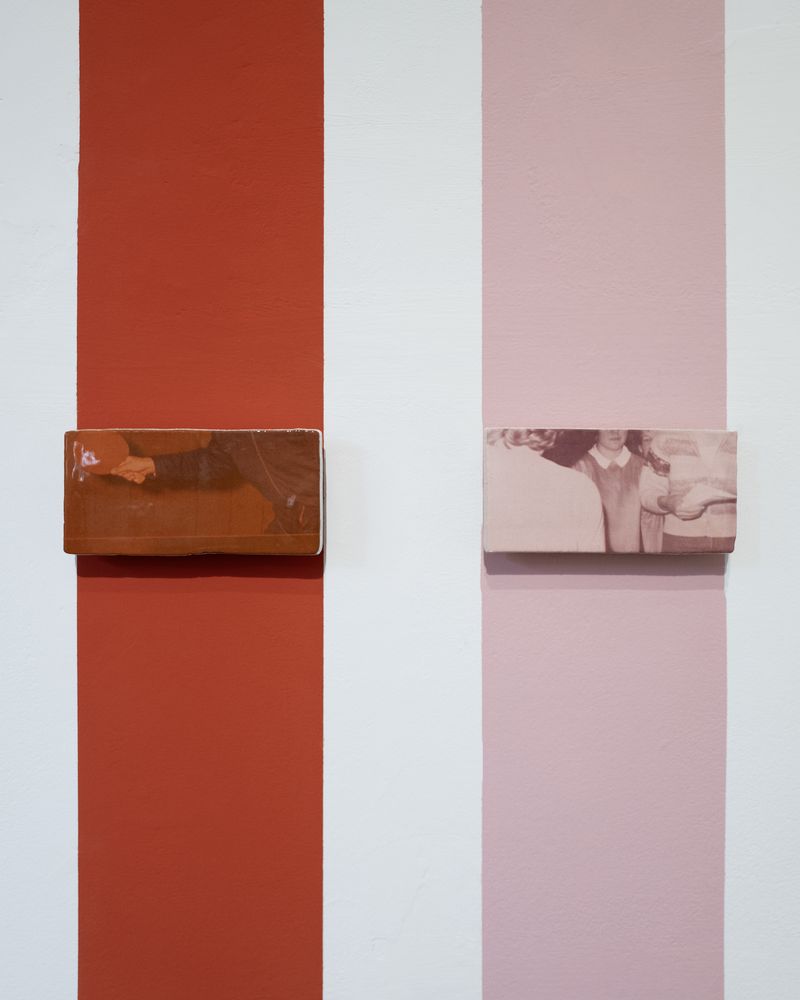
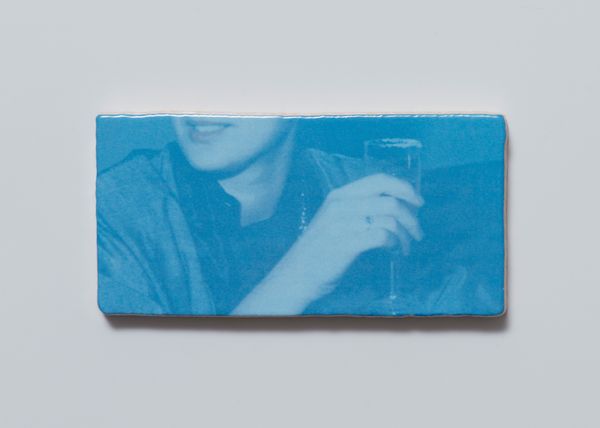
Coers' work investigates memory, migration, and personal inheritance. His use of the family archive smoothly shifts between original pieces and AI-generated interpretations, prompting reflection on algorithms and the visual culture they are trained on. Materiality is a central aspect of the project: images are UV-printed onto ceramic tiles, hand-glazed using a palette inspired by the original Bali Post photograph, hence turning color into an emotional anchor for remembrance.
With the PhMuseum 2026 Photography Grant submission period closing on 26 February, opening up the opportunity for another artist to exhibit in Bologna during Art City 2027, we spoke with Sander Coers to explore the ideas, processes, and questions behind his work.
Ciao Sander, you said that objects in Indonesia carried “history within them”. Do you believe material objects remember in a way that humans cannot? What role do you think touch has in the way memory takes shape?
Yes, I think objects hold memory differently than we do. Human memory shifts and fades, while objects often carry traces that persist without being interpreted. In Indonesia I became very aware of how domestic objects move through generations and geographies, carrying histories that remain largely unspoken. They act as quiet witnesses.
Touch is central in this. Memory is not only visual, it is also tactile. When you hold something that belonged to a parent or grandparent, you encounter a physical continuity that exists outside language. In Eulogy I try to approach images in that same way. UV printing on wood or ceramics gives the image weight and surface, so it behaves more like an object than a distant photograph. That material presence allows memory to be felt rather than only seen.
Color becomes an anchor in your pieces, evoking emotion and memory. How does the interplay of color and form help you communicate what words cannot?
Color often functions as emotional residue. Many palettes come from specific source images, like the Bali Post photograph that initiated Eulogy. When those colors are extracted or translated into beams, glazes, or printed surfaces, they detach from representation but keep an atmosphere. They carry mood rather than description.
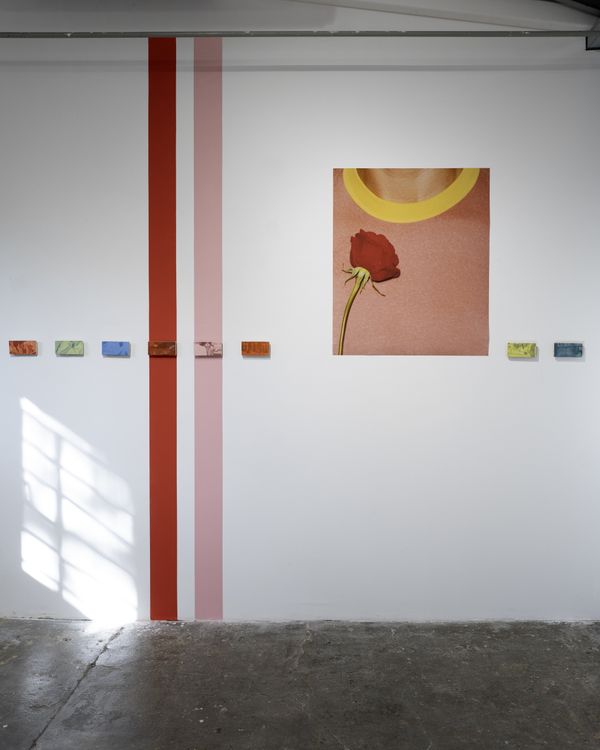
Form gives that atmosphere a body. Fragmented panels, tiles, and layered surfaces introduce interruption and spacing. This lets color exist in gaps and transitions, not only inside an image. I’m interested in how these breaks mirror memory itself, partial, unstable, sometimes present and sometimes absent. Together, color and form create something closer to sensation than language.
How was your experience visiting PhMuseum Lab and working with PhMuseum's curation, and how do you think memory and trauma were visually articulated throughout the space?
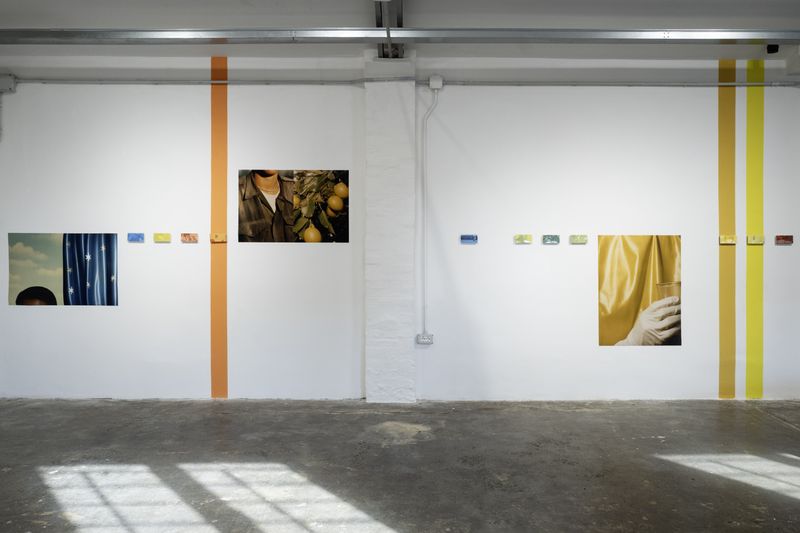
PhMuseum was very generous in inviting me over to Bologna to visit the exhibition. It allowed me to experience the work in a new context and engaging with a new audience. The space allowed for the work to be considered spatially rather than as isolated images.
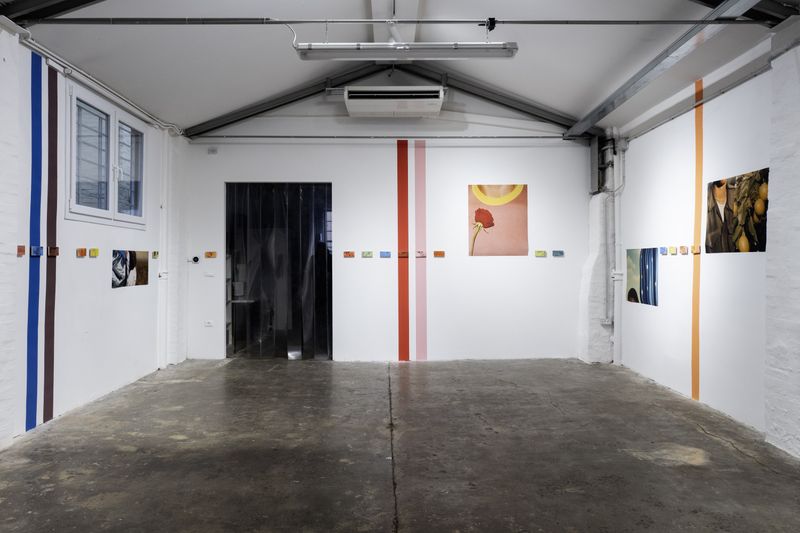
Trauma in Eulogy is not shown directly. It appears through absence, obstruction, and repetition. In the exhibition this became visible through intervals, empty wall sections, shifts in scale, and the alternation between ceramic, prints and video.
How did the physical environment of the gallery influence the narrative of your work? Has this specific setup opened up new creative possibilities for your future installations?
The architecture of the PhMuseum space encouraged a different unfolding. We chose for a very minimal and fragmented set up, allowing the work to breath, which reinforced the idea that memory is encountered in fragments over time and place.
When reconstructing images, digitally altered or AI-generated, how do you decide which truths to preserve and which silences to honor? How do you allow technology to generate new interpretations without distorting the past?
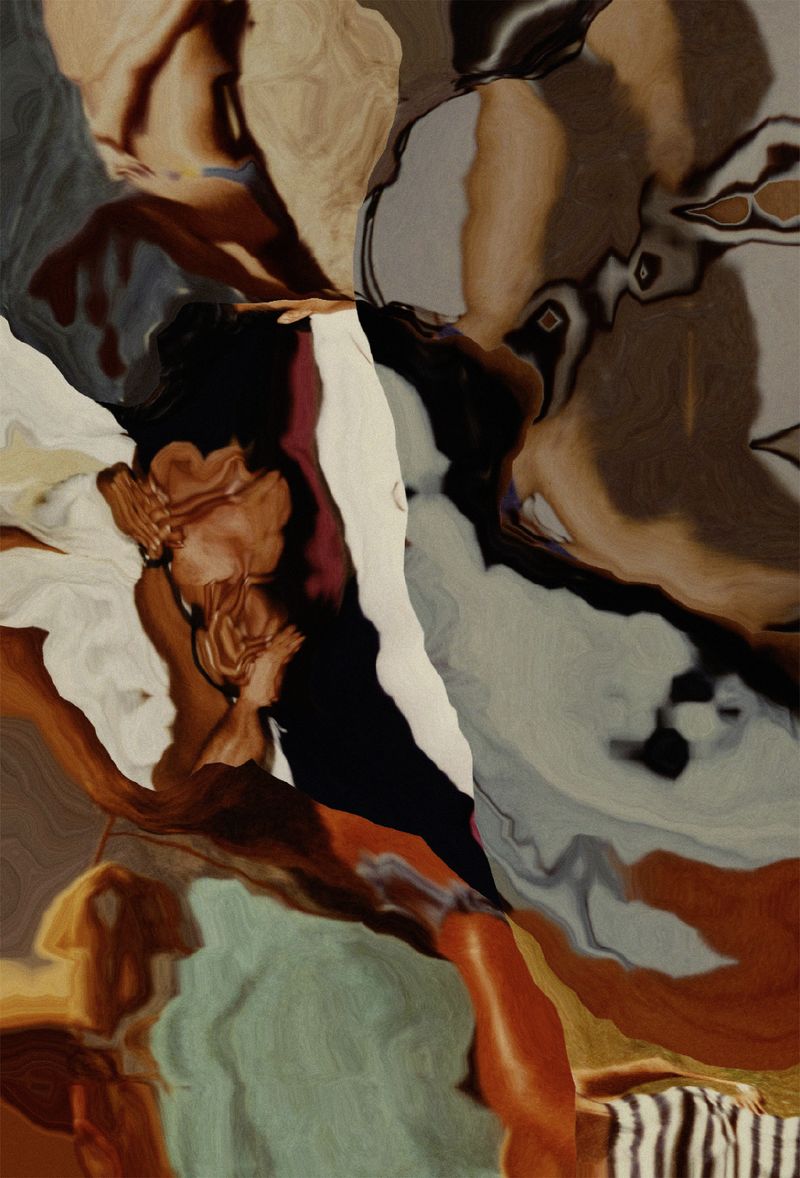
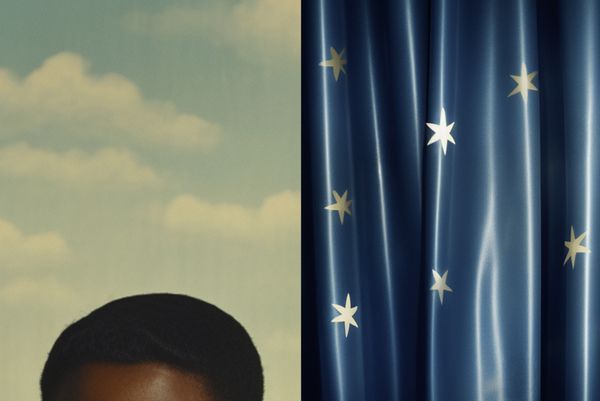
I don’t use AI for accuracy but to visualize the instability of memory. Many family histories contain gaps that cannot be resolved. Instead of filling them with factual reconstruction, I prefer to acknowledge that uncertainty. AI can produce images that feel plausible but slightly displaced, closer to recollection than documentation.
The decision is not about factual truth but emotional truth. If an AI image resonates with the atmosphere of remembered experience, it can enter the work. If it feels explanatory, it doesn’t. Silences matter because they mark what cannot or should not be fully retrieved. Technology is useful when it helps hold that tension between presence and absence rather than smoothing it over.
How do you hope viewers will confront their own inherited silences or the untold stories within their families or societies after experiencing Eulogy?
I don’t expect viewers to read my family story directly. What I hope is that the work creates a space where people recognize their own fragments. Most families contain silences, breaks, or things that were never spoken about. By showing memory as unstable and incomplete, the work might allow viewers to reflect on those gaps without needing resolution.
Last but not least, as a recipient of the PhMuseum 2025 Photography Grant, do you have any advice for future applicants?
I think it helps to approach the application as an articulation of your long term questions rather than a single project. Be clear about what drives your work and why it matters to you now. And don’t try to resolve everything. It’s okay if a project still contains uncertainty. That openness is often where the work is most alive.
-----
Sander Coers (b. 1997) is a visual artist based in Rotterdam. His research looks at how photographs shape our understanding of both past and present, often working with physical materials like wood, textiles, and ceramics to give these memories a more tactile, physical form. Alongside this, he uses digital tools like AI and photo manipulation to play with the line between real and imagined. By combining these methods, he highlights how easily memory can shift, blur, or break apart. His work often touches on themes like masculinity and nostalgia, especially within the context of family life and inherited experience.
Since graduating in 2021 from Willem de Kooning Academie in Rotterdam, Sander has published three books: Come Home, This Naked Incident, and Blue Mood (Al Mar). His work has been shown in museums and galleries in places like Los Angeles, Tokyo, London, Milan, Amsterdam, and Berlin, and featured in The Guardian, Vogue, Die Zeit, and i-D. He was named a “Rising Star of 2022” by Dutch newspaper NRC and selected for Foam Talent in 2024. His work is held in public and private collections across the Netherlands and internationally.
The PhMuseum Photography Grant has established itself as a leading prize in the industry over the last 13 years, renowned for recognising the importance of contemporary photography and for supporting emergent artists through cash prizes, exhibitions at international festivals, educational activities and exposure on online media. This year, PhMuseum Lab will offer a new solo show to one work selected from our open call. Learn more and apply at phmuseum.com/g26.