Books That Feel Effortless: Vasantha Yogananthan and Chose Commune’s Publishing Practice
-
Published30 Mar 2026
-
Author
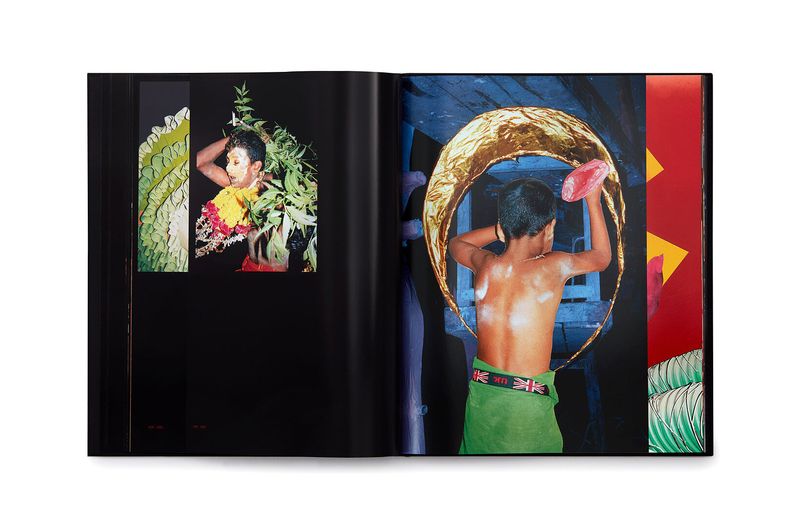
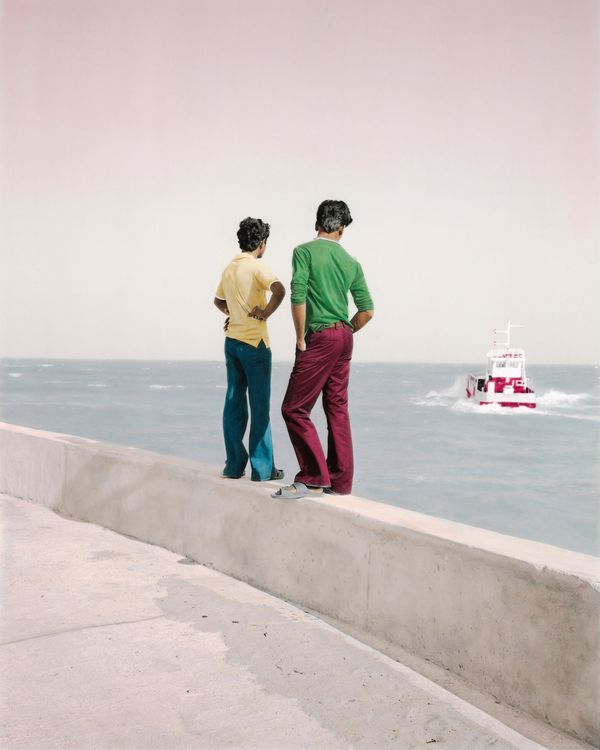
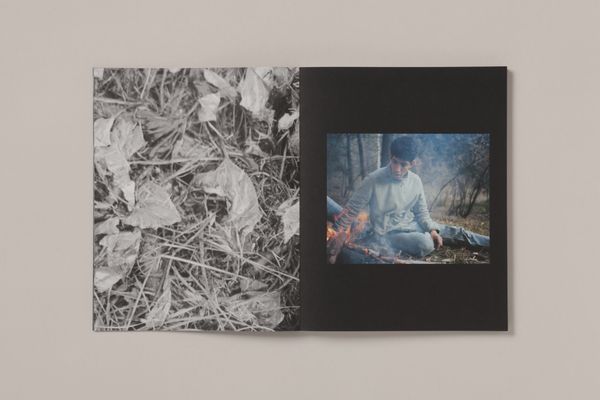
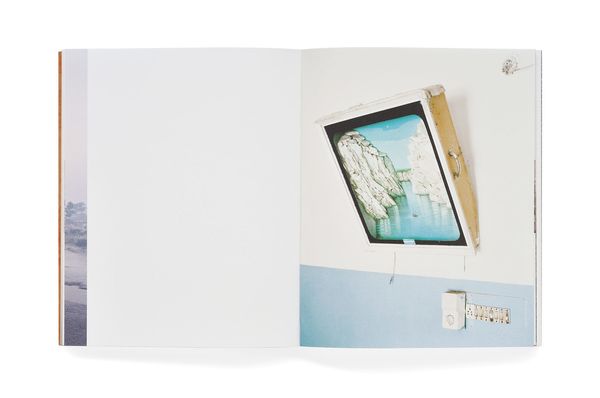
Since the founding of the independent publishing house Chose Commune, photographer Vasantha Yogananthan and creative director Cécile Poimbœuf-Koizumi have worked with photobooks as objects meant to live with, and to shape collective memory.
"Can you think of a picture you saw on Instagram yesterday that you can still remember?", Vasantha Yogananthan asks. Even if the answer were ‘yes’, there is something overwhelming and dissatisfying about images appearing and disappearing as vertical, scrolling surfaces with no sense of duration.
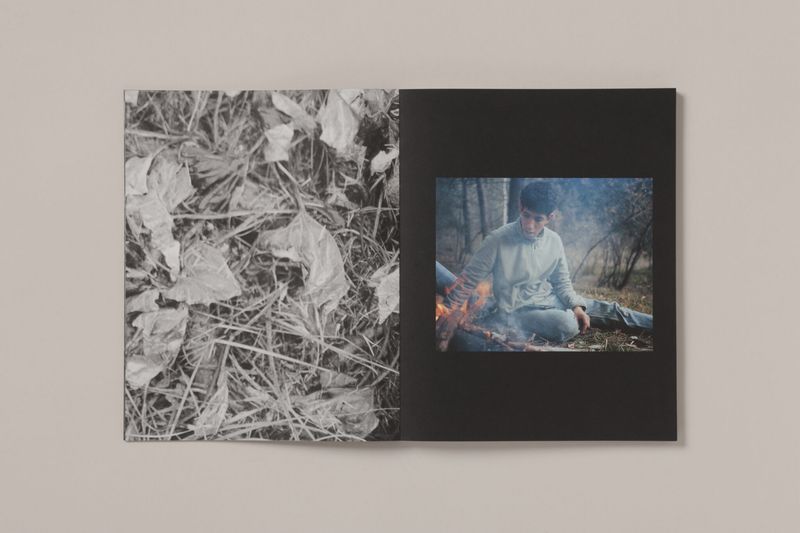
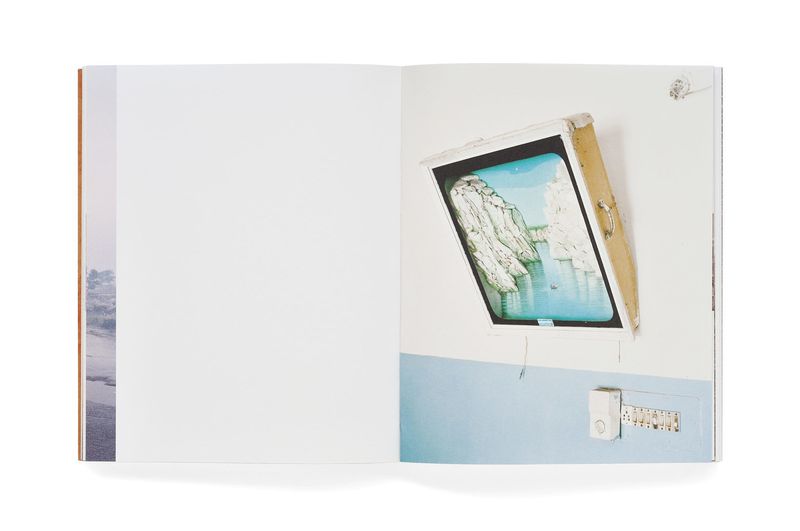
Photobooks do stay. Their physicality carves out a space for them to exist and push against transience. Their size allows them to travel, reaching places one cannot anticipate; their tactility implies that they somehow live within the viewer’s body. Both Yogananthan and Poimbœuf-Koizumi are dedicated to an honest, experimental, and instinctive exploration of this medium: Yogananthan as an artist whose practice is rooted in publishing, and Cécile Poimbœuf-Koizumi as the co-founder and creative director of the Marseille-based Chose Commune.
The 7th edition of FOLIO – PhMuseum’s Masterclass on Photobook Making – will be held by Yogananthan in conjunction with Poimbœuf-Koizumi. While he extensively follows participants in the process of concluding a body of work and developing a book dummy, she will lead seminars offering practical and theoretical guidance across the publishing field. We met to learn more about their engagement with printed matter; their instinctual, D.I.Y. approach; and why curiosity remains the most vital tool.
Ciao Vasantha & Cécile, and thank you for joining the PhMuseum Masterclass Program this year.
Vasantha, your work A Myth Of Two Souls consists of seven books published between 2016 and 2021. Why do you think the photobook was the right shape to tell that story, and how did this experience inform your practice as a photographer engaging with publishing?
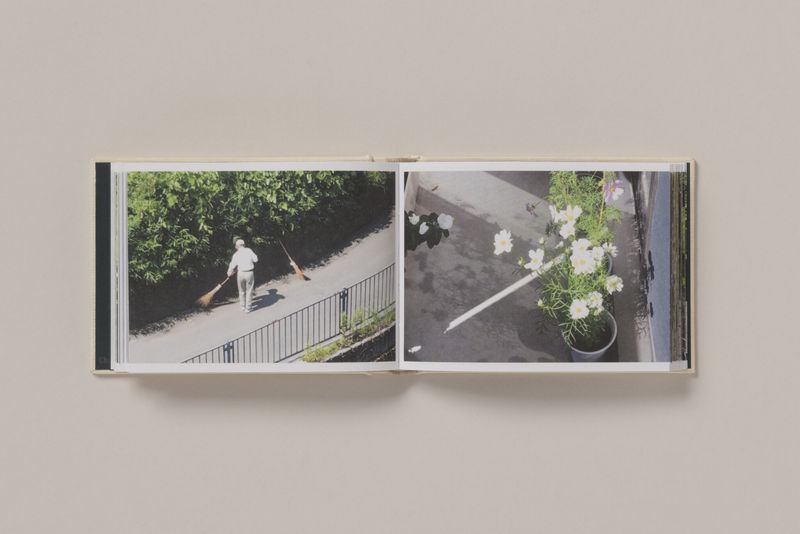
Vasantha: As a self-taught photographer, I have always found inspiration in books. When I started out, they were more accessible and less intimidating than museums. While studying the history of photobooks, I developed a keen interest in editing and sequencing as effective tools for shaping photographic work. This was particularly evident in the seven-book project A Myth Of Two Souls, for which creating images was only one part of my work. Whenever I start a new project, I think about what the finished book could look like as I'm making the pictures.
While they clearly belong to a common, greater body of work, each of the seven volumes has a specific, personal character emerging from the story and its concepts. How did you find the right balance between freedom and coherence?
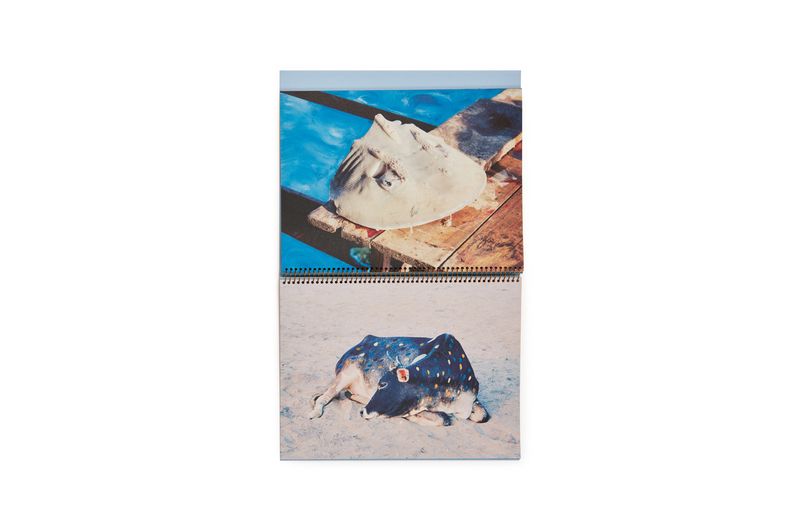
Vasantha: When it comes to books, I see playing and trying things out as essential. While I can appreciate classical approaches, for my own work I usually gravitate towards experimentation. The most important thing is that a book's design always supports its story. The seven books that make up A Myth Of Two Souls only have one thing in common: their size. Although everything else changed from chapter to chapter, they are still very much connected.
As a photographer, why is it important for you to understand and navigate the photobook form? Where do you think the work of a photographer ends, and that of a publisher and designer begins – or do you see these roles as blurred?
Vasantha: I think photography is the only medium in which the book format can be as powerful as an exhibition. For example, a catalogue of the work of a painter I love can never replace the emotion of seeing the pieces in person. When it comes to the boundaries between the photographer's work and that of the publisher, I don't think there's a single answer. Some photographers like to design their own books, while others prefer to hand their work over. The most important thing, though, is not to do it alone. This is because you lack hindsight on your own work.
Cécile, can you provide an overview of your experience and philosophy when it comes to publishing? What do you think distinguishes Chose Commune from other publishing houses?
Cécile: I’ve been publishing books for 12 years now. I’m completely self-taught, so I’ve always worked on instinct. I strongly believe in learning by doing. For me, publishing starts with a very simple question: do I envision a book when I see this work? If the answer is yes, then I know it should become a book. If not, I know it’s not for me. That doesn’t mean it doesn’t deserve to exist as a book—it just won’t be a Chose Commune book.
Usually, I know very quickly. Just by standing in front of a photograph or a series of photographs, I can already imagine the format, the binding, and the paper. I’m not sure whether this is what distinguishes Chose Commune from other publishing houses, but there is a deeply personal involvement in every book we make. We stand behind each one with pride—no compromises, no exceptions. We never publish a book simply because someone asks us to; we only do so when we feel strongly aligned with both the content and the artist behind the work.
I also don’t work with ready-made dummies. I like to be involved from the very beginning of a project. If I join later, I tend to deconstruct what already exists—this is an essential step for me to truly engage with the work and propose the most appropriate form for it.
Since 2014, Chose Commune has published 9 books authored by Vasantha. What was your experience working on them together? What was the process like?
Vasantha: It was crazy and chaotic! I cannot fathom how we managed to publish seven books in six years while I was still creating the pictures. I remember Cécile being such a tough publisher, ruthlessly cutting my ‘darlings’ (an essential part of the process). I also need to acknowledge the incredible team of designers at Kummer&Hermann who accompanied us on this journey.
Cécile: It has been a challenge, to say the least. My approach to Vasantha’s books is very different, because he is extremely clear about what he wants and how he envisions his photographs in book form. And because we are partners in life, it’s impossible to maintain the same distance I have with other artists. Sometimes I feel I know him too well—I anticipate his preferences. That can be an advantage, but it can also be limiting. It’s not always easy to look at the work with a completely fresh eye, without seeing the person behind it.
Chose Commune – or “common thing” – carries a sense of intimacy and shared experience. How do you approach making photobooks that can exist both as carefully constructed objects and as something that resonates within everyday life?
Cécile: A book, no matter how beautiful, is meant to be touched, leafed through, carried, and shared. It’s not meant to be a precious object you handle with gloves. Of course, I worry about things like ink coming off a cover—that’s partly why I prefer tinted paper—but in the end, that wear is a sign the book has lived, passed through many hands. That’s the goal. As a publisher, I aim to make books that are carefully designed and constructed, but where that effort remains invisible. Ideally, the book feels simple and effortless—like it came together in a few weeks, even if it actually took years. Books are part of my daily life. I’m surrounded by stock at the studio and by our personal collection at home. I wouldn’t have it any other way.
Vasantha: A book is a physical object. There are books in our library that I truly love and that I can just take for a quick browse, purely for the pleasure of holding them in my hands. I love touching the cover and feeling the paper. There are books everywhere in our house, and they fill us with joy.
In a time when images circulate so quickly online, what continues to make the photobook a relevant and powerful form for you?
Vasantha: We see lots of things online, but we don't remember much of them. Can you think of a picture you saw on Instagram yesterday that you can still remember? Books are here to stay — it's just the way it is. They travel the world, and the good ones contribute to our collective memory of the world. Books are more relevant than ever before.
Cécile: A photobook endures. I sometimes imagine a book I’ve made being discovered in a library a hundred years from now, or at a flea market, inspiring future generations.
Vasantha, what draws you to teaching, and what kind of space do you hope to create for exchange, experimentation, and reflection?
Vasantha: So far, I have taught two workshops. I remember doubting myself because I am a self-taught photographer. Now, however, I see this as a strength. My role is not to make you fit into a box; it is to help you find your inner voice. This is a slow process in which both participants and teachers must be open-minded. I hope that, as a group, we will learn from each other with care and honesty, so that we can grow as photographers and as human beings. I do feel that photography is mostly a lonely pursuit, which is why I am so excited about FOLIO.
For those considering applying, what would you encourage them to bring into the experience?
Vasantha: An open mind.
Cécile: Curiosity.
--------------
FOLIO Online Masterclass On Photobook Making is part of PhMuseum's educational program, comprising five different masterclasses that will all share a single intake period running until 28 May, with classes beginning in October 2026 and ending in May 2027. Alternating collective tutoring, seminars, individual sessions, and studio visits, each masterclass exists in a community-driven environment, while providing concrete opportunities to exhibit, publish and distribute your work.
You can take part in one or more programs. Check them out phmuseum.com/m26
--------------
Scholarships and participation fee
Before 30 April – If you apply by this date, you are eligible for the full scholarship. In your motivational letter, explain why you’d be a strong candidate, and how you would benefit from this support.
Before 30 April – If you apply by this date, you can save €350. All applications will be automatically eligible for the Early Bird Fee of €1,850.
Before 28 May – If you apply by this date, you can join the program by paying the Regular Fee of €2,200. Since applications will be reviewed on a continuous basis, early submissions receive priority for seat allocation.
If you are offered a place, PhMuseum is happy to write you a supporting letter when you try to secure any external funding opportunities. In previous editions of our masterclasses program, the candidates' fees were covered thanks to the generous contribution of the IWMF Howard G. Buffett Fund for Women Journalists, Mondriaan Fonds, Arts Council Malta, and other programs. Read our guide to 2026 Education Funding for Visual Artists to discover opportunities.